
Table of Contents
A one-day Pisa itinerary should not mean rushing straight to the Leaning Tower, taking a few photos, and leaving. Pisa is compact, walkable, and easy to visit in one day, but the route must be planned carefully, with time for monuments, food, coffee, rest, and slow walking.
This Pisa itinerary starts at Pisa Centrale, the city’s main railway station, because most first-time visitors arrive by train. The route moves gradually toward Piazza dei Miracoli, passing through modern art, shopping streets, river views, medieval squares, university areas, and finally the famous monumental complex.
The direct walk from Pisa Centrale to the Leaning Tower is about 2 kilometres and usually takes 25 minutes. This itinerary makes the walk more interesting by dividing it into useful stops. Instead of treating Pisa as a quick photo destination, it turns the city into a full-day experience.
The ideal structure is simple: arrive in the morning, walk slowly through the historic centre, reach Piazza dei Miracoli before midday, climb the Tower if you booked a ticket, visit the Cathedral, stop for lunch, continue with the Baptistery and Camposanto, and end along the Arno.
9:00 am – Start at Pisa Centrale Station
Begin the day at Pisa Centrale, the main railway station of Pisa. Before leaving the area, buy water, use the bathroom, and check whether you need luggage storage. The itinerary works much better with a small bag, especially if you plan to climb the Leaning Tower later.
From the station, walk north toward Piazza Vittorio Emanuele II. This first section is short, around 300 to 400 metres, and usually takes about 5 minutes. Do not rush toward the Tower immediately. Starting slowly helps you understand Pisa as a real city, not just one monument.
9:10 am – Tuttomondo by Keith Haring
Your first stop is Tuttomondo, the large mural painted by Keith Haring on the wall of the Church of Sant’Antonio Abate. It is one of the most surprising sights in Pisa, especially because it appears so close to the station, before the medieval streets and marble monuments.
Spend around 10 to 15 minutes here. The stop is short, but it gives the day a contemporary beginning. Take a few photos, look at the colourful figures, then continue toward Corso Italia, the main pedestrian street connecting the station area with the historic centre.
9:30 am – Walk Along Corso Italia
From Tuttomondo, continue along Corso Italia. The walk toward the Arno is about 600 to 700 metres and usually takes 8 to 10 minutes. This street is practical rather than spectacular, but it shows the everyday side of Pisa, with shops, cafés, locals, and students.
Do not stop here for a long breakfast unless you arrived very early. A better coffee break comes after crossing the Arno, in Borgo Stretto. For now, keep walking at a relaxed pace and use Corso Italia as a pleasant transition from the station to the historic centre.
9:45 am – Santa Maria della Spina and the Arno
Before crossing the river, make a short detour to Santa Maria della Spina, a small Gothic church near the Arno. Its rich exterior decoration makes it one of the most elegant monuments in Pisa, even if the visit is very brief compared with the great buildings of Piazza dei Miracoli.
For a one-day Pisa itinerary, it is enough to admire Santa Maria della Spina from outside. Spend around 10 to 15 minutes here, then walk along the Lungarno toward Ponte di Mezzo. This short river section adds atmosphere without making the morning route too long or tiring.

Church of Santa Maria della Spina
10:10 am – Cross Ponte di Mezzo
Walk to Ponte di Mezzo and cross the Arno slowly. The bridge offers one of the simplest and most pleasant river views in Pisa, with historic buildings lining both banks. It is not a major attraction in itself, but it helps you feel the structure of the city.
Once you cross the bridge, you arrive near Piazza Garibaldi, at the entrance to Borgo Stretto. By this point, you have already walked around 1.5 kilometres from the station, with several short stops. This is the right moment for the first real pause of the day.
10:15 am – Coffee Break in Borgo Stretto
Borgo Stretto is one of the most characteristic streets in Pisa. It has porticoes, historic buildings, shops, cafés, and a more intimate atmosphere than Corso Italia. It is also a practical place to stop before continuing toward the older northern part of the city.
Take 20 to 25 minutes for coffee, a pastry, or a glass of water. Do not turn this into a long breakfast unless your Leaning Tower ticket is later in the day. The purpose of this break is to rest, not to lose the best part of the morning.
10:45 am – Piazza delle Vettovaglie
From Borgo Stretto, continue toward Piazza delle Vettovaglie. The distance is short, around 150 metres, and usually takes 2 to 3 minutes. This square shows a more local and informal side of Pisa, connected with markets, students, cafés, and the everyday rhythm of the historic centre.
Spend about 10 minutes here, mainly walking through rather than stopping. Piazza delle Vettovaglie is often more interesting later in the day, especially around aperitivo time, but in the morning it works well as a transition between Borgo Stretto and Piazza dei Cavalieri.
11:00 am – Piazza dei Cavalieri
Walk from Piazza delle Vettovaglie to Piazza dei Cavalieri. The distance is about 400 metres and usually takes around 5 minutes. This is the most important square in Pisa after Piazza dei Miracoli, and it deserves a proper stop before reaching the Leaning Tower.
Piazza dei Cavalieri was once connected with the political power of medieval Pisa and later with the Order of the Knights of Saint Stephen. Today, it is strongly associated with the Scuola Normale Superiore, one of Italy’s most prestigious academic institutions.
Spend 20 to 25 minutes in the square. Look at Palazzo della Carovana, the decorated façade, the statue of Cosimo I de’ Medici, and the surrounding buildings. Do not plan an interior visit on a one-day Pisa itinerary. The square itself gives enough historical and architectural context.

Palazzo della Carovana
11:30 am – Walk Toward Piazza dei Miracoli
From Piazza dei Cavalieri, walk toward Piazza dei Miracoli through Via Santa Maria or nearby streets. The distance is about 700 metres and usually takes 8 to 10 minutes. This is one of the best approaches to the monumental complex because the Tower appears gradually.
Try to arrive in Piazza dei Miracoli around 11:40 or 11:45 if your Tower ticket is around midday. This gives you enough time to orient yourself, find the entrance, deposit bags if necessary, and avoid stress before the timed visit.
11:45 am – First Look at Piazza dei Miracoli
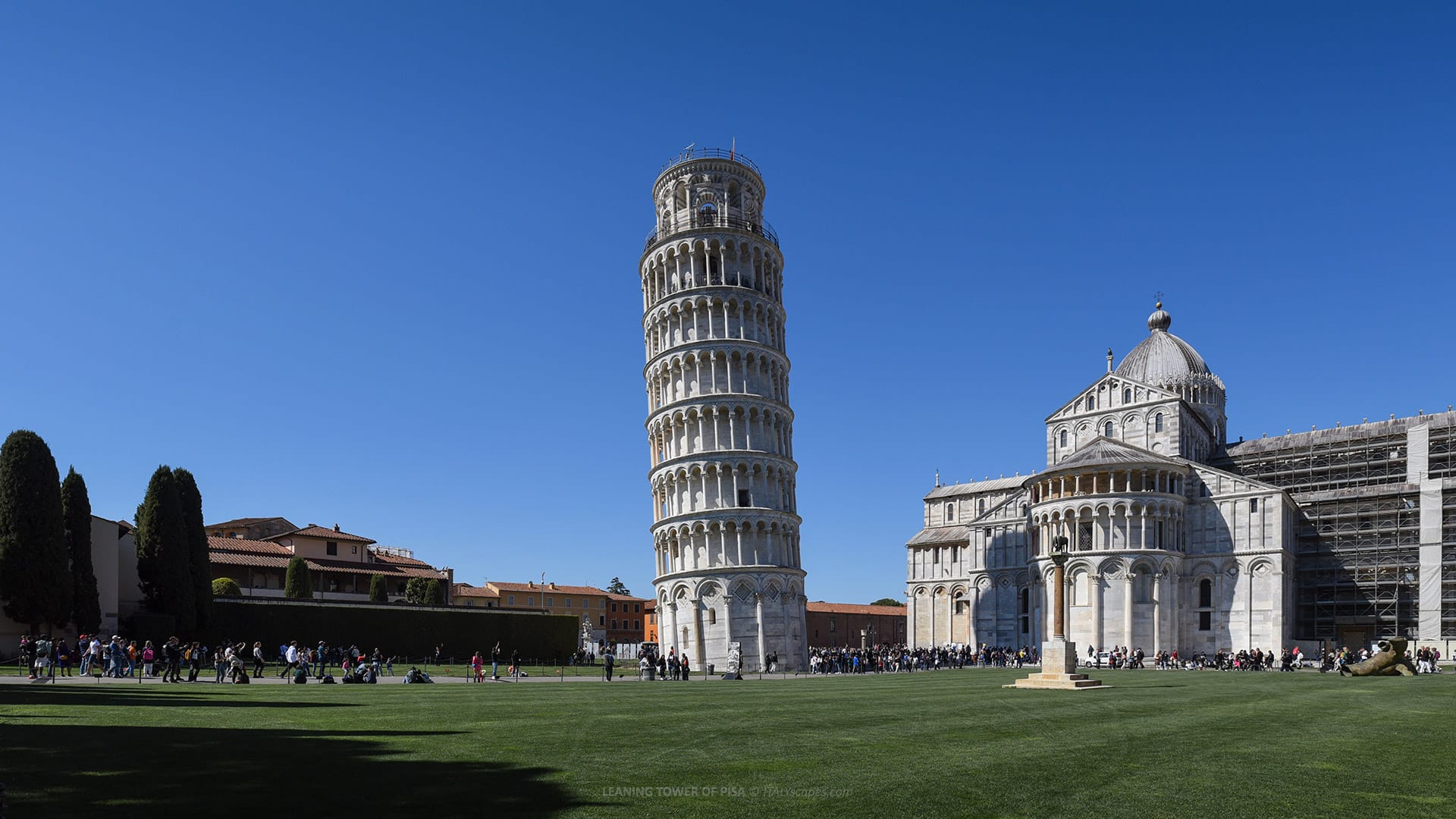
When you enter Piazza dei Miracoli, do not start immediately with the classic Tower photos. First, walk slowly and understand the layout. The Baptistery stands to the west, the Cathedral in the centre, the Leaning Tower to the east, and Camposanto along the northern side.
Spend the first 10 to 15 minutes looking at the square as a whole. The power of Piazza dei Miracoli comes from the relationship between the buildings, the white marble, the green lawn, and the open space. The Tower is famous, but it is only one part of the complex.
Piazza dei Miracoli, with the Tower in the background
12:00 pm – Climb the Leaning Tower of Pisa
If you want to climb the Leaning Tower of Pisa, book a timed ticket in advance. A midday slot works well for this Pisa itinerary because you arrive gradually through the city and do not have to wait too long in the square before the main scheduled visit.
The climb usually takes around 30 minutes. Allow about 45 minutes in total, including arrival, security, bag storage, the ascent, time at the top, photos, descent, and collecting your belongings. The staircase is narrow, uneven, and physically unusual because of the Tower’s famous tilt.
The climb is not only a panoramic experience. It is also a physical way to understand the building. Inside the staircase, the inclination becomes very clear. If you have mobility problems, heart issues, vertigo, or discomfort with narrow stairs, admire the Tower from outside instead.
12:45 pm – Visit Pisa Cathedral
After the Tower, visit the Cathedral of Santa Maria Assunta. This order works well because the Tower has a fixed entry time, while the Cathedral is more flexible. Do not treat the Cathedral as a secondary attraction. It is the central building of the entire religious complex.
Spend around 30 to 40 minutes inside. Look at the nave, the columns, the marble decoration, the apse, the pulpit, and the scale of the interior. Many visitors give too much time to Tower photos and too little time to the Cathedral. Try not to make that mistake.
The Cathedral also helps you understand the Leaning Tower correctly. The Tower is the bell tower of the Cathedral, not an isolated monument. Seeing both buildings together makes the square more meaningful and gives the visit a better historical and architectural balance.
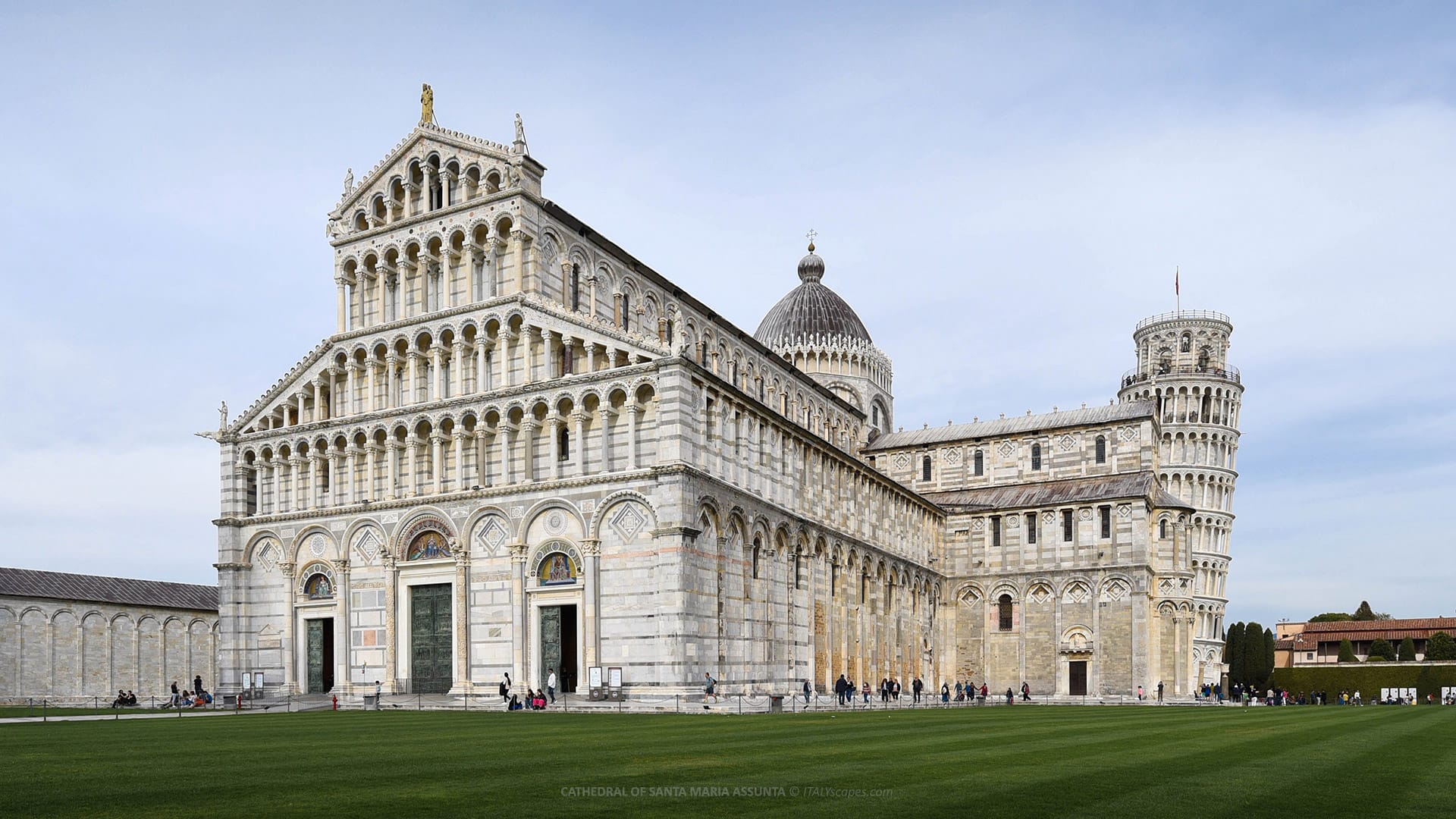
Cathedral of Santa Maria Assunta
1:30 pm – Lunch Near Piazza dei Miracoli
Have lunch after the Tower and Cathedral, not before. This keeps the most important timed part of the day safe. Choose a restaurant, trattoria, sandwich place, or simple local spot near Piazza dei Miracoli, Via Santa Maria, Borgo Largo, or the streets leading back toward the centre.
Allow 60 to 75 minutes for lunch. This should be the main rest of the day. By now, you have walked from the station, explored several streets and squares, climbed the Tower, and visited the Cathedral. A proper pause is necessary before continuing with the afternoon monuments.
Avoid an extremely heavy lunch if you still want to visit the Baptistery and Camposanto. A practical meal, water, coffee, and a little time sitting quietly are more useful than a long, tiring lunch. The goal is to recover energy, not to slow the day completely.
2:45 pm – Visit the Baptistery of San Giovanni
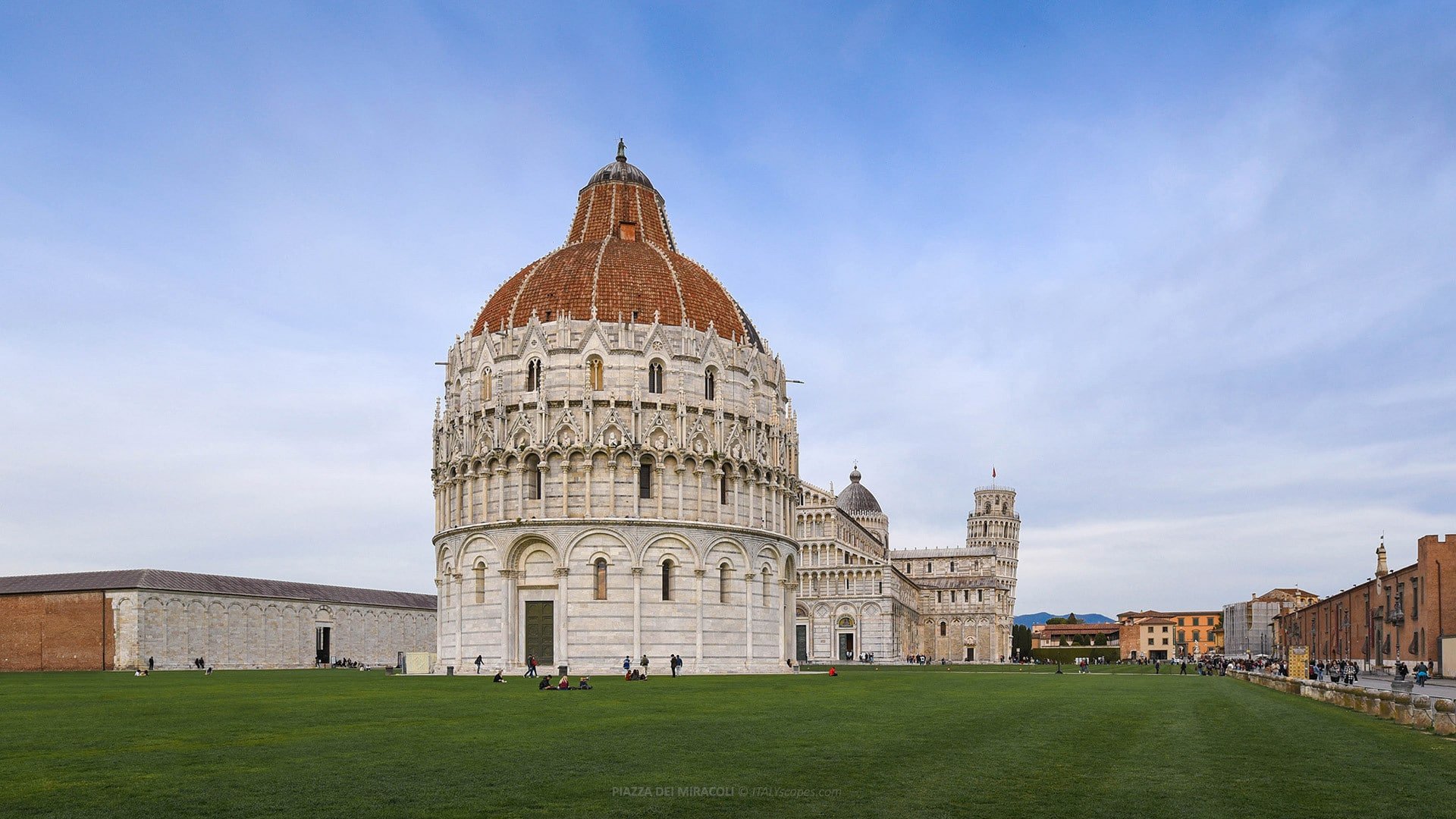
After lunch, return to Piazza dei Miracoli and visit the Baptistery of San Giovanni. The building stands opposite the Cathedral façade and completes the religious axis of the square. For a first visit, allow around 25 to 35 minutes inside.
The Baptistery is important for its scale, position, and atmosphere. From outside, it balances the Cathedral and the Tower visually. From inside, it feels more concentrated and vertical. It is a very different experience from the Cathedral, which makes it worth visiting if you still have energy.
If you are tired, you can admire the Baptistery from outside and continue directly to Camposanto. However, if you bought a combined ticket for the monuments, the Baptistery is one of the best afternoon visits and should not be skipped too easily.

Baptistery of San Giovanni
3:25 pm – Visit Camposanto Monumentale
Next, visit Camposanto Monumentale, the long cemetery building on the northern side of Piazza dei Miracoli. Allow around 35 to 45 minutes. It is usually quieter than the Tower area and gives the afternoon a slower, more reflective rhythm.
Camposanto changes the emotional tone of the visit. The Tower is famous and physical, the Cathedral is solemn, the Baptistery is architectural, and Camposanto is peaceful. This stop helps the itinerary feel complete rather than dominated only by the most photographed monument.
Do not rush through the cloister. Walk slowly along the long sides, look at the tombs, fragments, frescoes, and the calm geometry of the space. If the square outside feels crowded, Camposanto can be the best place to regain attention and enjoy silence.
4:15 pm – Choose One Museum or Take a Break
At this point, choose carefully. You can add the Opera del Duomo Museum or the Sinopie Museum, but do not force both into the itinerary unless you are very interested in medieval art. After several hours of sightseeing, too many interiors can make the day feel heavy.
For most first-time visitors, the better choice is either one short museum visit or a proper break. If you choose a museum, allow 35 to 45 minutes. If you are tired, skip the museums and save your energy for the evening walk along the Arno.
4:30 pm – Coffee, Gelato, or Rest
Take 25 to 30 minutes for coffee, gelato, or simply sitting down. Good itinerary planning is not only about adding monuments. It is also about knowing when the mind stops absorbing details. After the Tower, Cathedral, Baptistery, and Camposanto, a pause is necessary.
Stay near Piazza dei Miracoli or walk a few minutes toward Via Santa Maria. This keeps you close to the route back into the centre without remaining trapped in the busiest part of the square. Drink water, especially in late spring, summer, and early autumn.
5:15 pm – Walk Back Through Via Santa Maria
Leave Piazza dei Miracoli by walking back toward the historic centre through Via Santa Maria. The distance to the river area is about 1 kilometre and usually takes 12 to 15 minutes without stops. Walk slowly, because the main sightseeing block is already complete.
This is a good moment to look back at the Tower from nearby streets. The building feels different when it appears between façades rather than standing alone on the lawn. Late afternoon light can also make the return walk more pleasant, especially outside the hottest summer hours.
If you skipped Piazza dei Cavalieri in the morning, stop there now. If you already visited it, continue toward the Lungarni. Avoid adding too many extra detours unless you still have energy. The purpose of this part is to move slowly back into the living city.
5:45 pm – Walk Along the Lungarni
Return to the Arno for the late-afternoon part of the day. The Lungarni, the streets along the river, are ideal for slowing down after the monument-heavy middle of the itinerary. This section should feel like a relaxed walk, not another item on a checklist.
You can aim for Ponte Solferino, Ponte di Mezzo, or the area near Santa Maria della Spina. From Piazza dei Miracoli to the Lungarno, the walk is usually around 1 to 1.3 kilometres, depending on the exact route, and takes about 15 to 20 minutes.
Spend 30 to 45 minutes walking, sitting, or taking photos. The river gives Pisa a different identity from the one seen in Piazza dei Miracoli. It also makes the day feel complete: station, modern mural, medieval streets, monumental square, and evening riverfront.
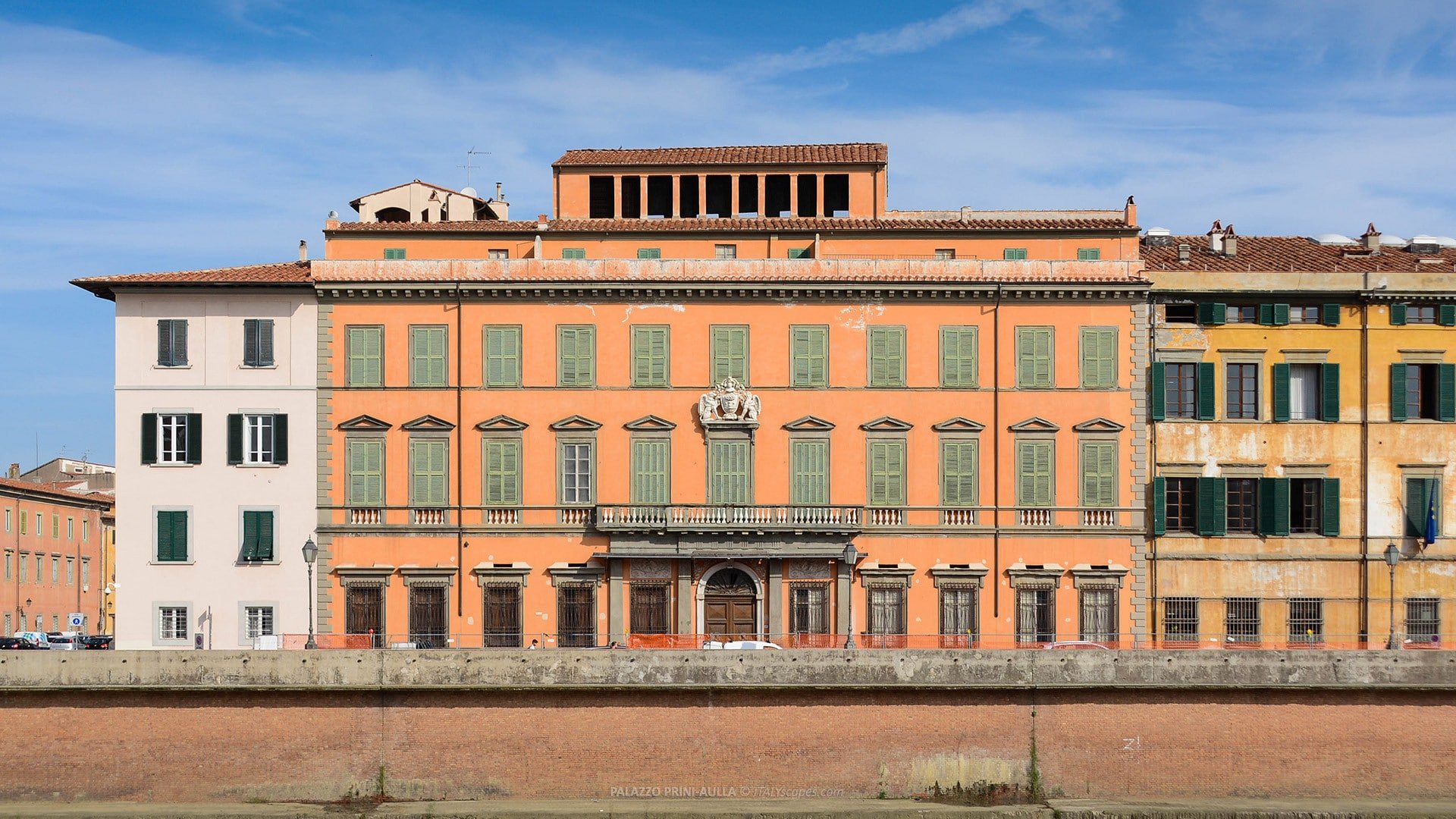
Palazzo Prini-Aulla
6:30 pm – Aperitivo in the Historic Centre
For aperitivo, choose the area around Piazza Garibaldi, Borgo Stretto, Piazza delle Vettovaglie, or the streets near the Arno. This is a logical stop because you are close to the river, inside the historic centre, and still within walking distance of Pisa Centrale.
Allow around 45 minutes for this break. It is especially useful if you plan to have dinner in Pisa instead of returning immediately to another city. Aperitivo gives your feet a rest and lets the atmosphere shift from daytime sightseeing to the slower rhythm of the evening.
Piazza delle Vettovaglie can feel more informal and student-oriented. Borgo Stretto and the Lungarno area are usually better for a calmer stop. Choose based on your energy, not only on location. At this point in the day, comfort matters more than checking another square.
7:30 pm – Dinner in Pisa
If you stay for dinner, eat in the historic centre rather than rushing back to the station area. Good zones include Borgo Stretto, Piazza delle Vettovaglie, Piazza Dante, and the streets near the Lungarni. Keep dinner simple, relaxed, and close to your return route.
Allow 75 to 90 minutes for dinner. After a full day of walking, climbing, and visiting monuments, dinner should not be squeezed into half an hour. The best ending is not another attraction, but a normal meal after seeing the city’s most important layers.
If you have an evening train, choose a restaurant within 15 to 20 minutes of Pisa Centrale. From the Arno and the central streets, the station is easy to reach on foot. Do not leave the return walk too late if you need a specific train.
9:00 pm – Return to Pisa Centrale
From the central river area to Pisa Centrale, allow 15 to 20 minutes on foot. From Piazza dei Miracoli, the direct walk back to the station is longer, around 25 minutes. Ending the evening near the centre makes the final part of the day easier.
If you are tired, carrying luggage, or travelling in bad weather, take a taxi or bus. However, for most visitors, walking remains the simplest option. Pisa’s central distances are manageable, and the route back to the station feels easy once you already know the city.
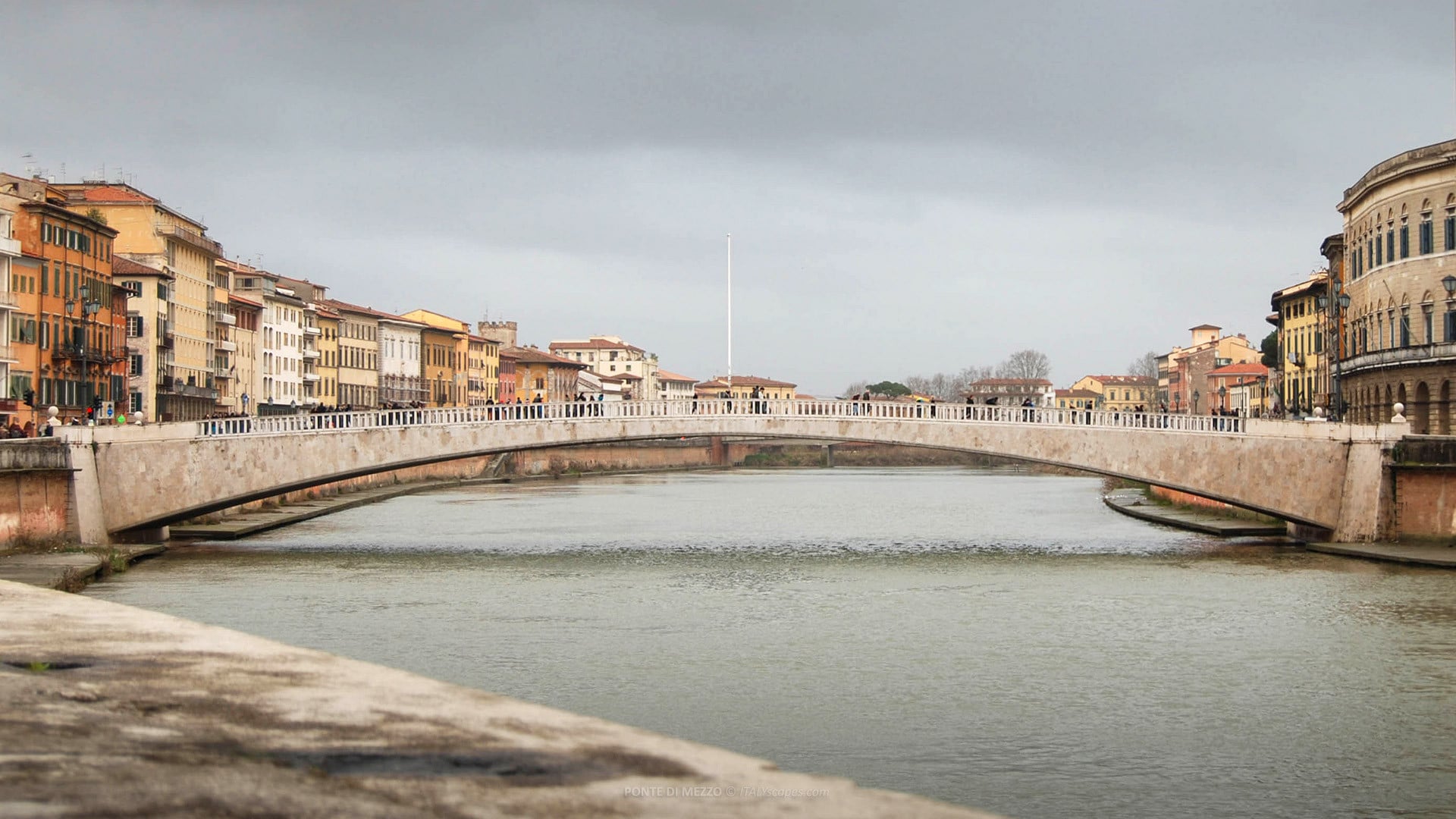
Ponte di Mezzo
Best Route Summary
The best first-time route: Pisa Centrale Station → Tuttomondo by Keith Haring → Corso Italia → Santa Maria della Spina → Ponte di Mezzo → Borgo Stretto → Piazza delle Vettovaglie → Piazza dei Cavalieri → Via Santa Maria → Piazza dei Miracoli → Leaning Tower of Pisa → Pisa Cathedral → Baptistery of San Giovanni → Camposanto Monumentale → Lungarni → Piazza Garibaldi → Piazza delle Vettovaglie → Pisa Centrale Station.
This route works because it avoids the common mistake of treating Pisa as a quick stop for Tower photos. Instead, it gives the city a beginning, a centre, a monumental climax, and a relaxed evening ending along the Arno.
The full route covers roughly 6.5 to 7.5 kilometres on foot, depending on detours, restaurant choice, and how much you walk around Piazza dei Miracoli. If you climb the Leaning Tower, add the staircase to the total effort. Comfortable shoes are essential.
What to Skip With Only One Day
Do not try to visit every museum in Pisa. The Opera del Duomo Museum and Sinopie Museum are valuable, but both are difficult to include after the Tower, Cathedral, Baptistery, and Camposanto without making the day too dense.
Skip distant attractions unless you are spending the night. San Paolo a Ripa d’Arno, the Cittadella area, Giardino Scotto, and the Museo delle Navi Antiche can be interesting, but they pull the route away from the compact first-time logic.
Do not spend the whole day in Piazza dei Miracoli. The square is extraordinary, but Pisa also needs the Arno, Borgo Stretto, Piazza dei Cavalieri, and the student atmosphere to feel like a real city rather than a one-monument stop.
Food and Rest Strategy
The best structure is simple: coffee in Borgo Stretto around 10:15 am, lunch after the Tower and Cathedral around 1:30 pm, coffee or gelato around 4:30 pm, aperitivo near the Arno around 6:30 pm, and dinner after 7:30 pm.
Do not plan lunch before the Leaning Tower if you have a timed ticket. Slow service, delays, or a heavy meal can create unnecessary stress. It is better to finish the climb first, then eat properly once the most rigid part of the Pisa itinerary is complete.
Carry water, especially from late spring to early autumn. Piazza dei Miracoli is open and exposed, and the white marble, lawns, crowds, and waiting time can feel tiring. Shade, hydration, and realistic pauses are more important than adding one extra monument.
Best Time to Follow This Pisa Itinerary
Spring and autumn are the most comfortable seasons for this Pisa itinerary. The walking distances are easy, the light is pleasant, and the afternoon river walk feels natural. Summer is also possible, but you should slow down at midday and protect your lunch and coffee breaks.
In winter, start earlier and shorten the evening part if daylight is limited. The route still works, but the Lungarni and exterior photography are better with natural light. If you visit in colder months, keep the itinerary flexible and check opening times before travelling.
Weekdays are usually better than weekends, especially around the Tower and Cathedral. Pisa is popular throughout the year, so the most important practical rule is to book the Tower in advance if you want to climb it and organize the rest of the day around that slot.
Final Advice for One Day in Pisa
One day is enough for Pisa if the itinerary is disciplined. The goal is not to see every church, museum, and street, but to understand the city’s main structure: railway arrival, modern art, the Arno, medieval streets, civic square, monumental religious complex, and evening river atmosphere.
The Leaning Tower is the famous reason many people come, but it should not be the only memory. Pisa works better when the Tower becomes the centre of the day, not the whole day. The walks before and after Piazza dei Miracoli are what make the visit complete.
For a first-time visitor, this is the most balanced version of Pisa: enough monuments, enough walking, enough rest, and enough local atmosphere. Start at Pisa Centrale, move slowly toward the Tower, reserve the timed climb, protect your lunch break, and finish along the Arno.

Frequently Asked Questions about a Pisa Itinerary
Is one day enough to visit Pisa?
Yes, one day is enough to visit Pisa’s main sights. You can see Piazza dei Miracoli, climb the Leaning Tower, visit the Cathedral, walk through the historic centre, and enjoy the Arno without rushing too much.
How far is the Leaning Tower from Pisa Centrale?
The Leaning Tower is about 2 kilometres from Pisa Centrale. The direct walk usually takes around 25 minutes, but this Pisa itinerary makes the route more interesting by adding several short stops along the way.
Do I need to book the Leaning Tower in advance?
Yes, booking in advance is strongly recommended if you want to climb the Tower. Tickets are timed, and availability can be limited, especially during weekends, holidays, and the busiest travel seasons.
Can I enjoy Pisa without climbing the Tower?
Yes, Pisa is still worth visiting without climbing the Tower. You can admire it from outside, visit the Cathedral, Baptistery, and Camposanto, walk through the historic centre, and enjoy the riverfront.
What should I visit inside Piazza dei Miracoli?
For a first visit, prioritize the Leaning Tower, Cathedral, Baptistery, and Camposanto. Add one museum only if you still have time and energy after the main monuments.
Is Pisa easy to visit on foot?
Yes, Pisa is very easy to visit on foot. This Pisa itinerary covers about 6.5 to 7.5 kilometres in total, depending on detours, restaurants, and how much time you spend around Piazza dei Miracoli.
What should I skip in Pisa with only one day?
With only one day, skip distant sights and too many museums. Focus on Piazza dei Miracoli, Piazza dei Cavalieri, Borgo Stretto, the Arno, and a realistic rhythm with proper food and rest breaks.
Sources:


