Table of Contents
Monza is a historic city in Lombardy, located northeast of Milan, with a compact medieval centre, important religious monuments, a former royal residence, and one of Europe’s largest enclosed historic parks. This Monza itinerary connects the city’s principal attractions in a single day, beginning and ending at Monza railway station.
The route follows a logical progression from the commercial streets of the historic centre to Monza Cathedral, the Arengario, and the Lambro River. In the afternoon, it continues north toward the Cappella Espiatoria, the Royal Villa, the Royal Gardens, and a short section of Monza Park.
Designed for visitors arriving by train, this walking route takes approximately nine hours, including indoor visits, a lunch break, and time for photography. It works best on Fridays and Saturdays, when the opening hours of the main attractions allow visitors to explore the city without rushing between monuments.
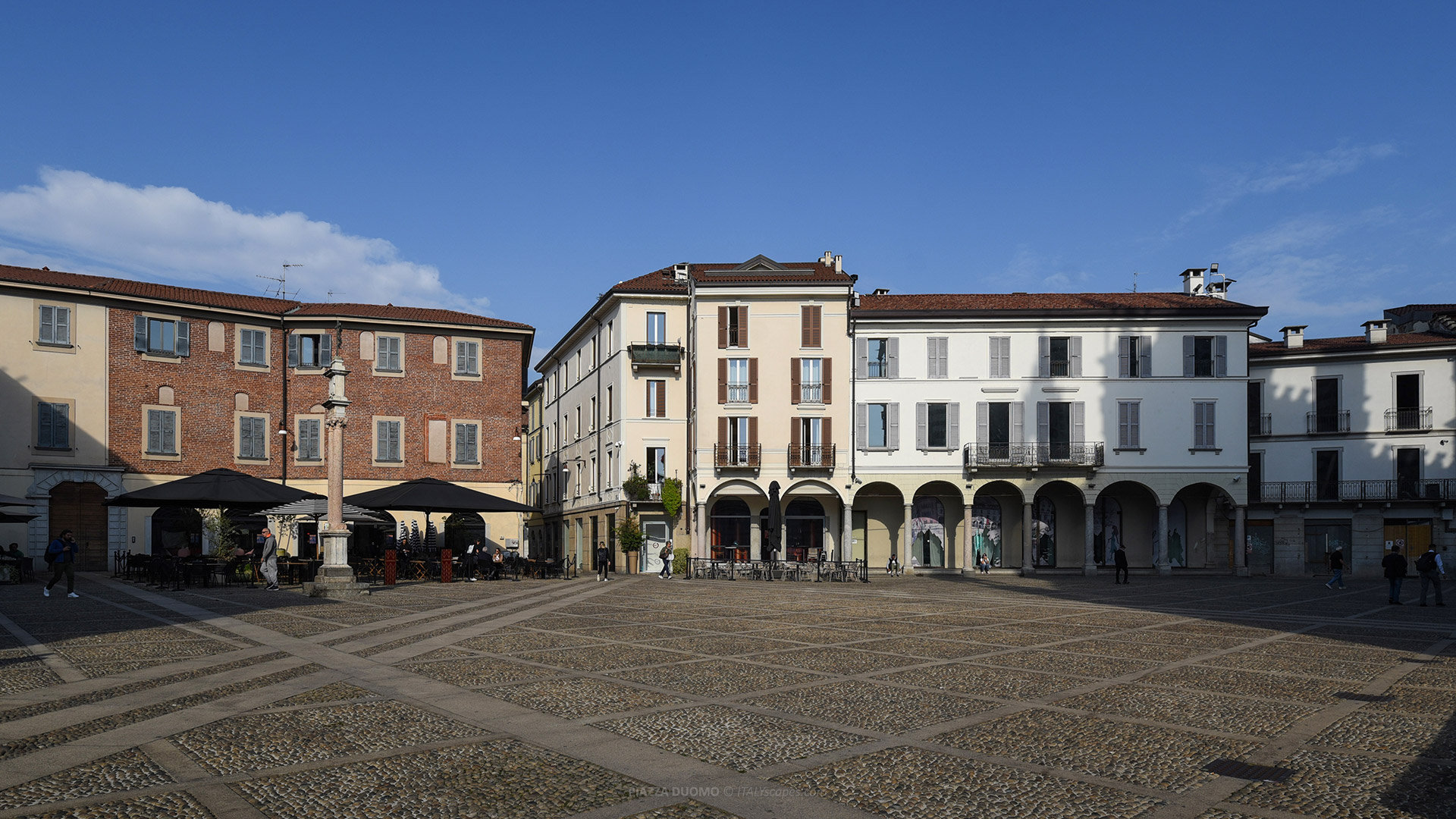
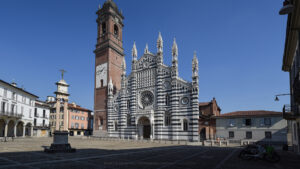
Historic buildings and arcades surrounding Piazza Duomo in Monza
Why This One-Day Monza Itinerary Works
Monza’s principal historic attractions occupy a relatively small area between the railway station and the northern edge of the centre. The Cathedral, Arengario, medieval streets, and Ponte dei Leoni can be explored on foot, while the Royal Villa stands approximately two kilometres north of the main railway station.
The route concentrates most indoor visits in two periods: the Cathedral complex in the morning and the Royal Villa in the afternoon. Smaller monuments are included as short exterior stops, avoiding unnecessary detours and allowing sufficient time for the city’s most significant historical and artistic collections.
A complete Monza itinerary following this route involves approximately 6 to 8 kilometres of walking, depending on the paths chosen through the gardens and park. The schedule assumes a confirmed morning reservation for the Chapel of Theodelinda and an afternoon entrance to the Royal Villa, with flexibility for short breaks.
9:00 am – Start at Monza railway station
Begin at Monza railway station, the city’s principal train station, served by regional and suburban services connecting Monza with Milan and other destinations in Lombardy. Use the main exit toward Via Enrico Arosio, then continue along Corso Milano toward Largo Giuseppe Mazzini, on the southern edge of the historic centre.
From Largo Mazzini, enter Via Italia, one of Monza’s principal pedestrian streets. The walk from the station to this point normally takes approximately 10 minutes. The route is straightforward, with no need to use buses or taxis for the first part of the itinerary.
Allow a few additional minutes if you need breakfast or coffee before beginning the historical visits. Shops, cafés, and bakeries are available along the central streets, but the first scheduled interior visit requires arrival at the Cathedral complex before the reserved entrance to the Chapel of Theodelinda.
9:15 am – Via Italia and the Church of Santa Maria in Strada
Via Italia follows an important historical route connecting Monza with Milan. Today, it is a pedestrian commercial street lined with shops and buildings from different periods. Continue north, passing the Church of Santa Maria Maddalena and Santa Teresa before reaching the more architecturally distinctive Church of Santa Maria in Strada.
Santa Maria in Strada originated in the 14th century and was associated with a convent belonging to the Brothers of Penitence. Although the church has medieval origins, its façade was substantially reconstructed during the 18th century. The building remains one of the important religious monuments along Monza’s principal commercial street.
Spend approximately 10 minutes examining the exterior before continuing toward Piazza Duomo. From Via Italia, turn into the square through the opening between the surrounding buildings. The Cathedral is only a short distance away, making this section of the Monza itinerary particularly convenient for visitors exploring the city on foot.
9:40 am – Piazza Duomo and Monza Cathedral
Monza Cathedral, officially the Basilica of San Giovanni Battista, stands in Piazza Duomo and is the city’s most important religious building. Its origins are connected with Queen Theodelinda, who established a church dedicated to Saint John the Baptist during the Lombard period, transforming Monza into an important royal and religious centre.
The present Cathedral developed through successive medieval building campaigns and later alterations. Its distinctive façade, associated with Matteo da Campione, combines alternating light and dark marble, pointed architectural elements, and a large rose window. The building displays important features of Gothic architecture, together with decorative additions from subsequent centuries.
Inside, the basilica contains richly decorated chapels, religious artworks, and architectural elements reflecting its long history. The bell tower, constructed between the late 16th and early 17th centuries, rises beside the church. Allow approximately 25 to 30 minutes for the square, the exterior, and any accessible interior areas.
Visits to the Cathedral are subject to religious services, and the ordinary Saturday schedule includes morning Mass. Consequently, access to particular areas cannot be guaranteed at every moment. Plan to reach the ticket office in Via Lambro 2 at least 15 minutes before the reserved visit to the Chapel of Theodelinda.
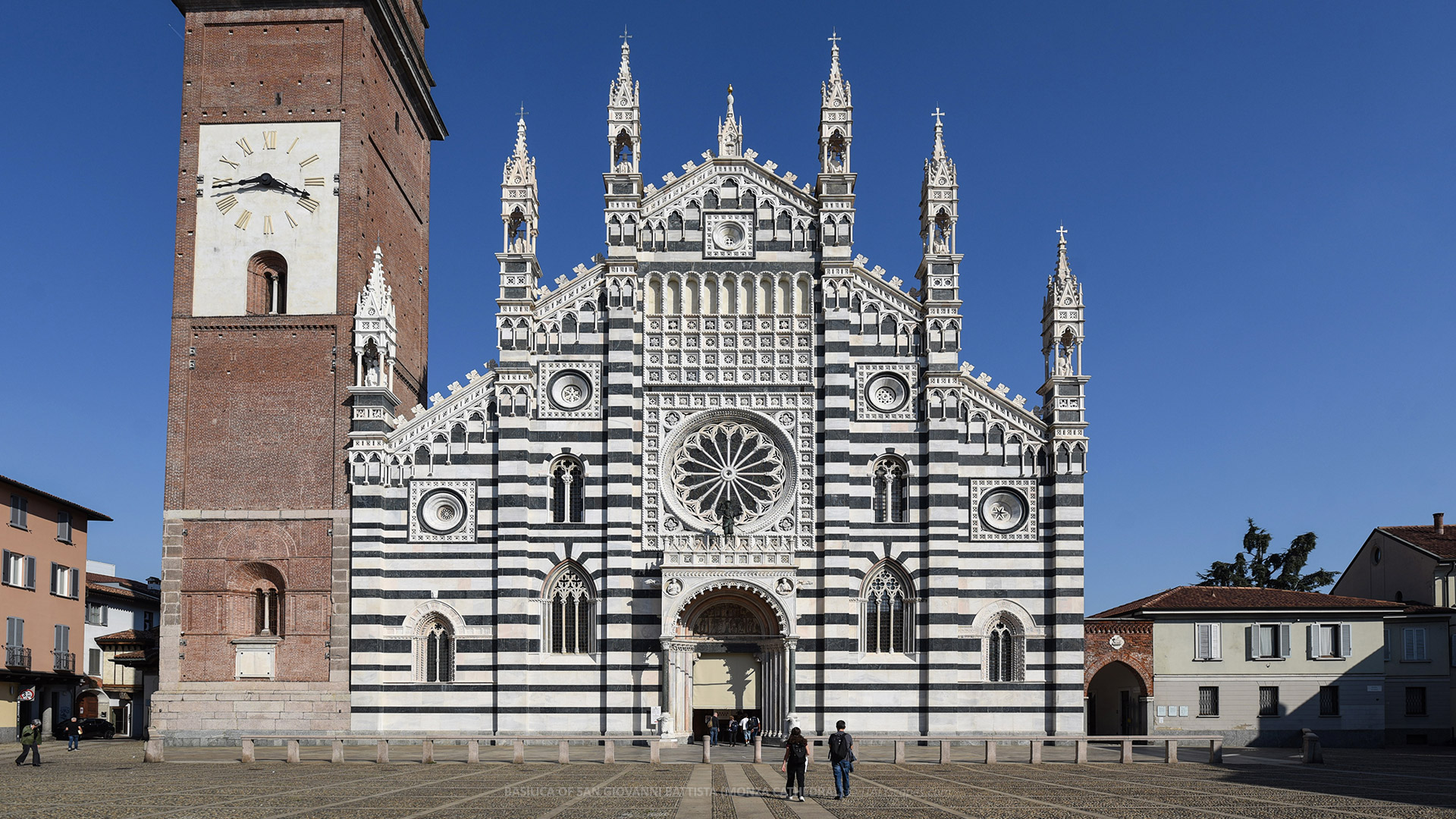
10:30 am – Chapel of Theodelinda and the Iron Crown
The Chapel of Theodelinda occupies the northern transept of Monza Cathedral. Its principal attraction is the remarkable cycle of 45 painted scenes depicting the life of the Lombard queen. Executed by members of the Zavattari family during the 15th century, the paintings represent an important achievement of International Gothic art.
The fresco cycle, known as Stories of Theodelinda, depicts royal marriages, ceremonies, journeys, and episodes of court life. The compositions contain elaborate costumes, architectural settings, and ceremonial details. Their historical importance extends beyond the queen’s biography, providing valuable evidence of artistic and courtly culture in 15th-century Lombardy.
The chapel also preserves the Iron Crown of Lombardy, a historic diadem associated with the coronation of several rulers of Italy. Decorated with gold, gemstones, and enamel, it contains a metal band traditionally connected with a nail from the Crucifixion, although scientific investigations have questioned the material’s identification.
Visits to the chapel and crown are guided and require advance reservation, including for individual visitors. The official visit lasts approximately 30 minutes. Morning availability can be limited because of religious services, so the proposed 10:30 am appointment is a planning target rather than a guaranteed departure time.
11:05 am – Museum and Treasury of Monza Cathedral
Continue with the Museum and Treasury of Monza Cathedral, located beside the basilica. Its collections preserve objects associated with the Lombard monarchy and the Cathedral’s religious history, including medieval goldsmithery, manuscripts, reliquaries, and liturgical objects. A focused visit takes approximately 40 to 45 minutes, matching the museum’s recommended duration.
Among the important historical objects are the celebrated Hen with Seven Chicks, traditionally associated with Theodelinda, and the Cross of Berengar. The collection documents the exceptional artistic wealth accumulated by the Cathedral over many centuries. Finish around 11:50 am before continuing into the medieval civic centre.
11:55 am – Piazza Roma and the Arengario
From the Cathedral complex, walk a few minutes toward Piazza Roma, where the Arengario occupies a prominent position at the intersection of the historic pedestrian streets. Built during the late 13th century, it originally served as Monza’s communal palace, accommodating civic assemblies and administrative functions.
The building combines an open ground-floor portico, pointed arches, brick upper walls, and a civic tower. Its architectural arrangement reflects the organisation of medieval municipal government, when public markets occupied the lower spaces and official activities took place above, separating commercial functions from civic administration.
Notice the Parléra, the small projecting stone balcony associated with public announcements. The Arengario’s upper hall has also served as an exhibition space, although interior access depends on its current availability. For this itinerary, an exterior visit lasting approximately 15 to 20 minutes is sufficient.
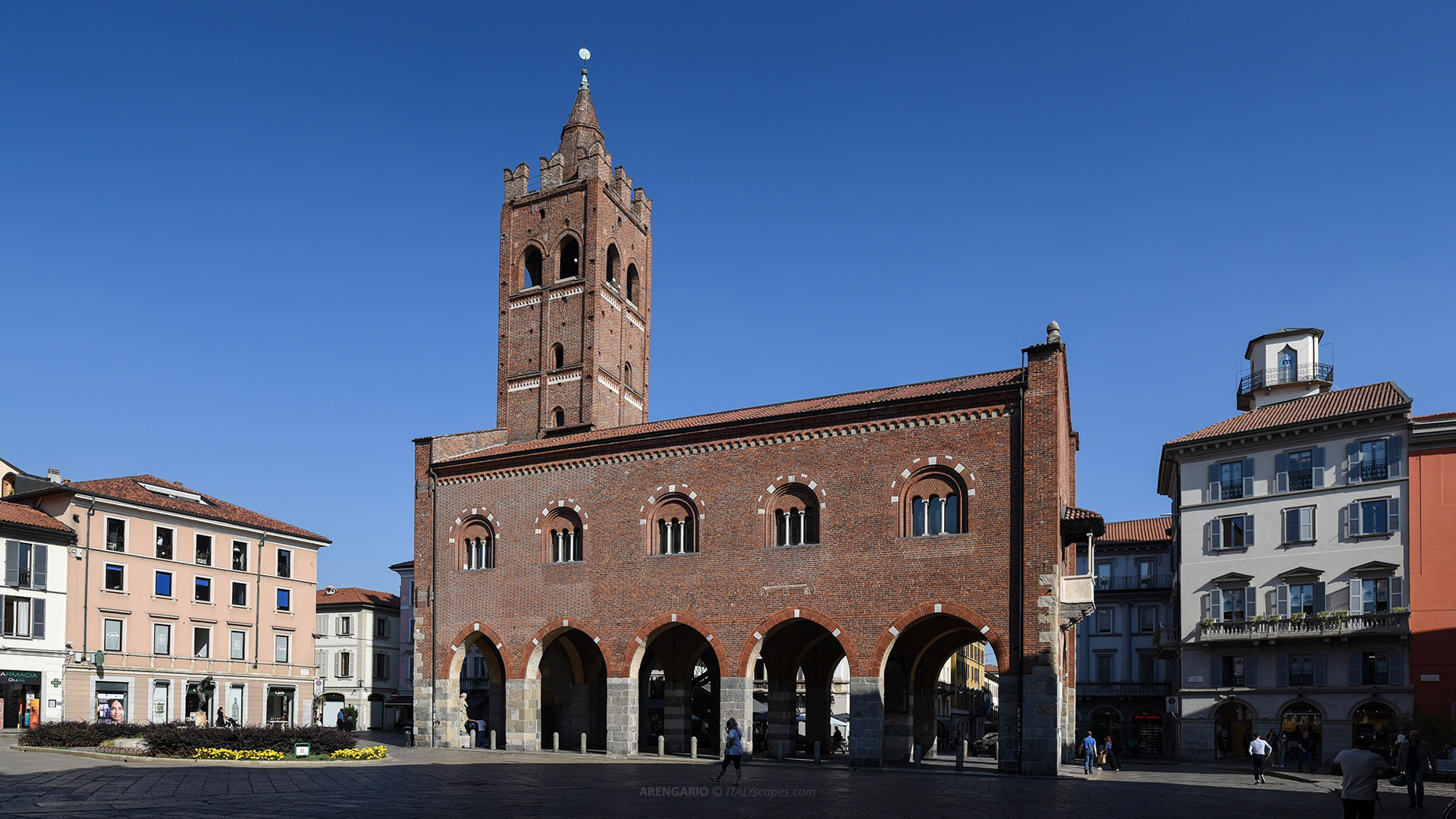
The Arengario and its civic tower in Piazza Roma, Monza.
12:20 pm – Via Lambro, Torre di Teodolinda, and Ponte dei Leoni
From Piazza Roma, continue toward Via Lambro, one of the historic streets connecting the Cathedral area with the river. Here stands the medieval Torre di Teodolinda, also known as the medieval tower of Via Lambro, whose arched ground floor allows the street to pass directly beneath the building.
Despite its traditional name, the tower was not built by Queen Theodelinda. It dates to the 13th century and formed part of Monza’s medieval defensive and commercial infrastructure. It was subsequently associated with the movement of merchandise from the river toward the markets of the town.
Continue toward Via Vittorio Emanuele II and the Ponte dei Leoni, built across the Lambro River in 1842. The bridge has three lowered arches and four marble lions sculpted by Antonio Tantardini. It replaced the nearby ancient Ponte d’Arena, whose surviving remains preserve evidence of Monza’s Roman past.
Spend approximately 15 to 20 minutes examining the bridge and the surrounding riverfront. The Lambro crosses the historic centre here, creating a visible distinction between its densely built streets and the river corridor. Afterwards, return toward the central pedestrian area for lunch rather than continuing farther east.
12:45 pm – Lunch Break in the Historic Centre
For lunch, choose a restaurant or café around Piazza Roma, Via Vittorio Emanuele II, or Via Carlo Alberto. These streets offer several dining possibilities within a short walk of the morning attractions. Staying in the historic centre avoids unnecessary travel and keeps the afternoon route directed north toward the Royal Villa.
Allow approximately 50 minutes for lunch, including ordering and a short rest. A quick restaurant meal is more practical than a lengthy multi-course lunch because the schedule still includes another monument, the Royal Villa’s interior, and a substantial walk through its surrounding green spaces.
Traditional Lombard food can include risotto, polenta, meat dishes, and regional cheeses, although menus vary between restaurants. There is no need to select a specific restaurant in advance unless visiting during a busy weekend or major event. Try to resume the Monza itinerary by approximately 1:35 pm.
1:40 pm – San Pietro Martire and Santa Maria al Carrobiolo
From the central area, follow Via Carlo Alberto north toward Piazza San Pietro Martire. The square contains the Church of San Pietro Martire, built during the first half of the 14th century as part of a Dominican convent complex. Its exterior underwent later alterations, including restoration in Neo-Romanesque forms.
The adjoining convent historically accommodated the tribunal of the Inquisition. The square also contains a monument dedicated to Mosè Bianchi, the painter born in Monza in 1840. This part of the walk combines medieval religious architecture with a monument commemorating one of the city’s important 19th-century artists.
Continue a short distance toward Piazza Carrobiolo and the Church of Santa Maria al Carrobiolo. The church originated in the 13th century and retains medieval elements, including its bell tower. At this hour, concentrate on the exterior because the church’s ordinary visiting schedule includes a midday closure.
Allow approximately 20 minutes for the two squares and their principal monuments. From Piazza Carrobiolo, continue northwest toward Viale Cesare Battisti and Via Matteo da Campione. This transition leads away from the oldest pedestrian streets and toward Monza’s historical connections with the Italian monarchy.
2:10 pm – Cappella Espiatoria
The Cappella Espiatoria stands in Via Matteo da Campione, near Viale Cesare Battisti. It marks the location where King Umberto I of Italy was assassinated by the anarchist Gaetano Bresci on July 29, 1900, following a sporting event held in Monza.
King Vittorio Emanuele III commissioned the memorial to commemorate his father. Designed by architect Giuseppe Sacconi, the monument was completed in the early 20th century and features a tall commemorative structure above a decorated chapel and an underground crypt, where a black marble memorial marks the assassination site.
The interior contains marble decoration, mosaics, and symbolic representations associated with the royal family. The monument is open with free admission, subject to its published schedule. Friday and Saturday afternoon opening hours make a visit at this time feasible, with approximately 20 minutes sufficient for a focused exploration.
After leaving the memorial, continue toward the Royal Villa along the nearby streets. The walk is relatively short, generally around 10 minutes, depending on the exact pedestrian route. Aim to reach the palace shortly before the reserved entrance, allowing a few minutes for ticket checks.

Church of Santa Maria al Carrobiolo
2:45 pm – Royal Villa of Monza
The Royal Villa of Monza, known in Italian as Villa Reale, stands at Viale Brianza 1, north of the historic centre. Its construction began in 1777 under architect Giuseppe Piermarini, who designed the residence for Archduke Ferdinand of Austria during the period of Habsburg rule in Lombardy.
The palace is one of the region’s important examples of Neoclassical architecture. Its symmetrical composition includes a central building and two lateral wings enclosing the ceremonial courtyard. The residence was subsequently associated with the Napoleonic administration and the House of Savoy, reflecting several political periods in Italian history.
Today, the public visiting route includes approximately 28 rooms, with ceremonial halls, historic apartments, furnishings, and decorative interiors. The available route may also incorporate contemporary artworks or temporary exhibitions. A standard palace visit takes approximately 60 minutes, making it suitable for the afternoon portion of this itinerary.
For a Monza itinerary combining the Cathedral and Royal Villa, advance ticket purchase is recommended. An entrance around 2:45 pm fits both the summer and winter Friday schedules, although winter admission closes earlier. On Saturdays, the afternoon visiting window is generally longer.
Spend the complete scheduled hour inside rather than attempting to include additional museum stops elsewhere. The palace’s main significance lies in its residential architecture and the succession of political dynasties connected with it. The extensive surrounding gardens and park form the next portion of the visit.
3:50 pm – Roseto Niso Fumagalli and the Royal Gardens
After leaving the palace, visit the Roseto Niso Fumagalli, situated near the Royal Villa. Established in 1964, the rose garden is associated with the Italian Rose Association and the international rose competition held in Monza. Flowering depends on the season, with the main displays generally occurring in late spring.
Continue into the Royal Gardens, which extend behind the palace and form a landscaped area with mature trees, paths, lawns, and water features. Developed during the late 18th century, the gardens include elements associated with the English landscape tradition, contrasting with the palace’s formal architectural composition.
A short garden circuit can include the ornamental lake and the small Doric temple overlooking the water. Other features include artificial rock formations, a grotto, and landscaped watercourses. Allow approximately 40 minutes for the rose garden and this limited section of the Royal Gardens rather than attempting to explore every path.
4:35 pm – A Short Walk Through Monza Park
Continue north into Monza Park, the enormous historic green space surrounding the northern section of the royal estate. Established during the Napoleonic period under Eugène de Beauharnais, the park was designed by Luigi Canonica and developed between 1806 and 1808 as an extensive landscaped and agricultural complex.
Covering approximately 685 hectares, the park contains historic farmhouses, woodland, agricultural areas, avenues, and the Lambro River. Its extensive network of paths makes it suitable for walking and cycling, but its considerable size means that exploring the entire complex is impossible within a single-day itinerary.
For this Monza itinerary, remain in the southern section, close to the Royal Gardens and the main entrance area. Spend approximately 25 to 30 minutes walking along the nearby paths before returning toward the palace. This provides an introduction to the park without creating a lengthy detour.
The famous Autodromo Nazionale Monza occupies another part of the park, farther north. Reaching the racing circuit and exploring its facilities would require substantial additional walking time and, depending on the activity, separate arrangements. For a first visit focused on the historic city, the circuit is better reserved for another day.
5:15 pm – Return to Monza Railway Station
Leave the park and return toward the southern entrance of the Royal Villa. From there, follow Viale Regina Margherita toward the historic centre, continuing through the streets around Via Carlo Alberto. The return walk from the palace area to Monza railway station generally takes approximately 25 to 30 minutes.
Allow 35 to 45 minutes if you are starting from inside the southern section of the park, including the time required to reach the palace entrance. Continue south through the central pedestrian area, then follow Via Italia, Largo Mazzini, and Corso Milano back toward the railway station.
You should reach Monza railway station at approximately 5:50 to 6:00 pm, depending on your walking speed and departure point. For an evening train, add a reasonable margin for finding the correct platform. The route ends at the same station where the day began, without requiring public transport.

Royal Villa of Monza
Best Route Summary for First-Time Visitors
The simplest route is: Monza railway station → Via Italia → Santa Maria in Strada → Monza Cathedral → Chapel of Theodelinda → Cathedral Museum → Arengario → Torre di Teodolinda → Ponte dei Leoni → San Pietro Martire → Santa Maria al Carrobiolo → Cappella Espiatoria → Royal Villa → Roseto Niso Fumagalli → Royal Gardens → Monza Park → Monza railway station.
This route follows a logical geographical progression, beginning in the southern part of the city, crossing the medieval centre, and continuing north toward the royal estate. The return journey follows a relatively direct route through the historic centre, avoiding unnecessary detours while connecting Monza’s principal religious, civic, and royal monuments.
If you prefer a shorter itinerary, skip the Cathedral Museum and reduce the time spent in Monza Park. Visitors interested primarily in architecture can concentrate on the Cathedral, Arengario, Cappella Espiatoria, and Royal Villa, while those interested in history and art should prioritise the Chapel of Theodelinda and the Cathedral Museum.
The Monza itinerary is designed to be completed entirely on foot, with approximately 6 to 8 kilometres of walking. Public transport is unnecessary for most visitors, although buses can shorten the return journey from the Royal Villa to the railway station if needed.
What to Skip With Only One Day
The Autodromo Nazionale Monza is one of the city’s most famous attractions, but it is not conveniently located within the compact historical walking route. The circuit opened in 1922 and occupies the northern part of the park. A visit deserves separate time, particularly when guided experiences or motorsport events are available.
The Musei Civici di Monza, housed in the historic Casa degli Umiliati in Via Regina Teodolinda, represent another possible addition. Their collections cover local history and artistic production, but a proper museum visit would require approximately an additional hour and the removal of another activity from the proposed schedule.
Other monuments, including the Church of San Maurizio and Santa Margherita, the Mulino Colombo, and the Church of Santa Maria delle Grazie, are worth considering on a longer visit. Including them all would turn the Monza itinerary into an unnecessarily crowded route with insufficient time for its principal indoor attractions.
Food and Rest Strategy
The proposed itinerary includes one main lunch break and several opportunities to sit or pause briefly. The central pedestrian area is the most practical place to purchase food or drinks before continuing toward the royal estate. Bring water, especially between June and September, when afternoon temperatures can make walking more demanding.
A second short rest is possible after the Royal Villa visit, before entering the gardens. This is useful because the final portion involves extended walking on landscaped paths rather than the compact streets of the historic centre. Comfortable footwear is recommended, particularly after rain when some park surfaces may be wet.
Best Time to Follow This Monza Itinerary
April, May, June, September, and early October are generally practical periods for walking through Monza. Spring offers the additional attraction of flowering plants in the rose garden, while early autumn can provide comfortable conditions for sightseeing. Actual temperatures and rainfall vary, so the weather forecast remains important.
Friday and Saturday are particularly convenient for this route because the Cappella Espiatoria normally remains open into the evening. The Royal Villa operates different summer and winter schedules, while the Cathedral’s guided visits depend on reservations and religious celebrations. Verify opening hours and availability before fixing your arrival time.
In late autumn and winter, daylight becomes an additional consideration. The final park section may need to be shortened or omitted, especially in December and January. On days with heavy rain, preserving the Cathedral, museum, and palace visits is more practical than following the full outdoor route.
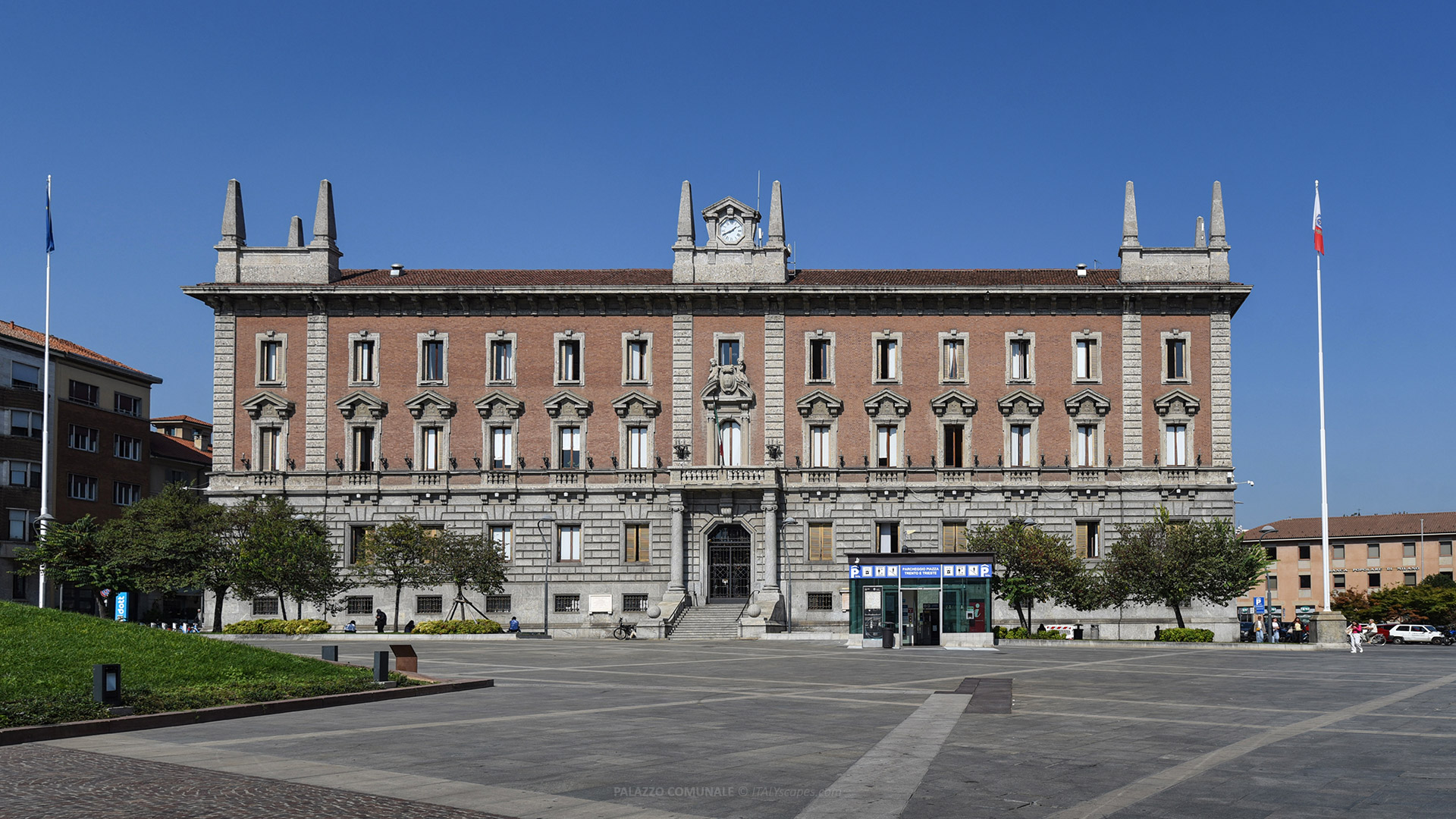
Palazzo Comunale, the municipal headquarters of Monza, facing Piazza Trento e Trieste.
Final Advice for One Day in Monza
A successful Monza itinerary requires two principal reservations: the Chapel of Theodelinda in the morning and the Royal Villa in the afternoon. The remaining stops are mostly exterior visits with flexible durations, allowing modest adjustments without disrupting the overall geographical sequence of the day.
Prioritise the Cathedral complex and Royal Villa if delays occur. The smaller churches and the final park walk can be shortened without losing the central historical content of the route. Beginning and ending at the railway station makes the itinerary suitable for a day trip from Milan.
Frequently Asked Questions About a One-Day Monza Itinerary
Can I visit Monza on a Monday?
Monday is not a suitable choice for this museum-focused Monza itinerary. The Museum and Treasury of Monza Cathedral and the Royal Villa are normally closed, as is the Cappella Espiatoria.
What changes if I visit Monza on a Sunday?
Sunday requires a different order of visits because Monza Cathedral normally allows tourist visits only from 3:00 pm, while guided tours of the Chapel of Theodelinda begin in the afternoon.
Are separate tickets required for the Cathedral Museum and the Chapel of Theodelinda?
The Museum and Treasury and the Chapel of Theodelinda have separate admission arrangements, although a combined ticket is available. Entry to the Cathedral itself is free, subject to religious services.
Is Monza accessible for visitors with reduced mobility?
Several major attractions provide accessibility arrangements, but conditions differ between buildings. The Royal Villa has lifts serving its exhibition floors, while the Cappella Espiatoria is only partially accessible because of its architectural configuration.
How can I reach Monza from Milan?
Monza has frequent railway connections with Milan, including services from Milano Centrale and Milano Porta Garibaldi. Journey times vary according to the departure station and the type of train.