Table of Contents
Venice has confirmed that its tourist access charge will apply on 72 days in 2027, an increase from the 60 days scheduled in 2026. The Venice entry fee will cover selected dates between March 26 and August 15, primarily targeting weekends, public holidays, and periods traditionally associated with high visitor numbers.
The new calendar was approved on October 15, 2026, continuing a system first introduced in 2024 to manage tourism in the historic city. While the dates and operating hours have been established, the final 2027 prices, booking procedures, and exemption requirements have not yet been fully confirmed.
Venice Entry Fee 2027 – Confirmed Dates and Hours
When Will Tourists Have to Pay?
The Venice entry fee will apply from March 26 to August 15, 2027, on 72 selected days. The first charging period coincides with the Easter holidays, beginning on Good Friday and continuing through Easter Monday, while the final date falls on Ferragosto, Italy’s national holiday on August 15.
The daily charging period will run from 8:30 am to 4:30 pm, half an hour longer than in previous years. On dates outside the official calendar, visitors will not have to pay the access charge. The same applies outside the designated charging hours, subject to the applicable registration rules.
The calendar includes two particularly long periods of continuous application: April 23-May 2 and May 28-June 6. These periods coincide with important Italian holidays, including Liberation Day on April 25, Labour Day on May 1, and Republic Day on June 2.
Complete Venice Entry Fee Calendar for 2027
In March, the Venice entry fee will apply on four consecutive days: March 26, 27, 28, and 29. These dates correspond to the Easter holiday period, traditionally associated with increased visitor numbers in Venice. No additional charging dates have been scheduled for the remainder of the month.
In April, the charge will apply on 17 days: April 2, 3, 4, 9, 10, 11, 16, 17, 18, and every day from April 23 through April 30. The final eight days of the month form part of a longer charging period extending into early May.
In May, the fee will apply on 15 days: May 1, 2, 7, 8, 9, 14, 15, 16, 21, 22, 23, 28, 29, 30, and 31. The month includes several consecutive weekend charging periods, followed by another extended period beginning on May 28.
In June, visitors will have to pay on 15 days: June 1, 2, 3, 4, 5, 6, 11, 12, 13, 18, 19, 20, 25, 26, and 27. The first six days complete the continuous charging period that begins at the end of May.
In July, the access charge will apply on 14 days: July 2, 3, 4, 9, 10, 11, 16, 17, 18, 23, 24, 25, 30, and 31. The calendar concentrates the fee on weekends, rather than applying it throughout the entire summer holiday season.
In August, the Venice entry fee will apply on seven days: August 1, 6, 7, 8, 13, 14, and 15. The final charging weekend coincides with Ferragosto, one of Italy’s principal summer holidays. No additional dates have been confirmed beyond August 15.
Unlike a conventional entrance ticket, the Venice entry fee does not provide admission to museums, churches, palaces, or other attractions. It is a separate municipal charge associated with access to the historic city during designated periods. Tickets for individual attractions and public transportation must be purchased separately.
What Changes Compared to Previous Years?
Venice introduced its experimental access contribution in 2024, initially applying a flat fee of €5 on 29 selected days. The following year, the charging calendar expanded to 54 days, and a two-tier pricing system was introduced to encourage visitors to organise their trips in advance.
In 2026, the Venice entry fee applied on 60 days, between April 3 and July 26. The charge operated from 8:30 am to 4:00 pm, with prices of €5 or €10 depending on how early the visitor completed payment before the scheduled arrival date.
The 2027 calendar introduces 12 additional charging days, representing a 20% increase compared with 2026. The application period also extends into March and August, while the daily charging window becomes 30 minutes longer. These changes broaden the number of occasions on which day visitors may be required to pay.

How Much Will the Venice Entry Fee Cost in 2027?
Possible Prices Based on Previous Years
The definitive Venice entry fee prices for 2027 have not yet been announced. The municipal decision establishing the calendar specifies a maximum amount of €10, but the exact pricing structure will be determined through additional measures before the scheme becomes operational.
In 2024, the charge was €5 per person, regardless of when payment was completed. In 2025, the municipality introduced two prices: €5 for advance purchases and €10 for last-minute payments. The same arrangement continued in 2026, maintaining the incentive for visitors to plan ahead.
The most plausible scenario for 2027 is a continuation of the €5 and €10 pricing system. However, the city has not confirmed that the lower rate will return. The maximum of €10 is established, while the availability of a discounted price remains a reasonable prediction rather than an approved tariff.
Will Tourists Receive a Discount for Paying in Advance?
In 2025 and 2026, tourists could obtain the lower €5 rate by paying no later than the fourth calendar day before their visit. Those paying during the final three days before arrival, including the day itself, were required to pay €10.
For example, someone planning to enter Venice on a Sunday could obtain the lower rate by completing payment by the preceding Wednesday. Paying on Thursday, Friday, Saturday, or Sunday resulted in the higher charge. The system rewarded early payment, not simply completing an online information form.
If this arrangement continues in 2027, advance payment could again reduce the cost by 50%. Nevertheless, visitors should not assume that registering early automatically guarantees a discount. The final booking deadlines and prices will only become definitive when the authorities approve the detailed regulations.
Who Must Pay the Venice Entry Fee?
Day Visitors and Tourists Staying Outside Venice
Under the rules used through 2026, the Venice entry fee primarily applied to day visitors aged 14 and older entering the historic centre during charging hours. This included tourists arriving by train, bus, car, or other transport methods, provided they did not qualify for an exclusion or exemption.
Visitors staying in accommodation outside the Municipality of Venice were generally treated as day-trippers when travelling into the historic centre. This distinction also concerned cruise passengers who entered the city independently or during shore excursions, unless they qualified for an exemption under another provision.
The charge was calculated per person and per applicable day, not according to the number of attractions visited. Tourists entering the historic centre on several charged dates had to obtain valid access authorisation for each day, even when travelling within the same holiday period.
Does the Venice Entry Fee Apply to Murano, Burano, and Other Islands?
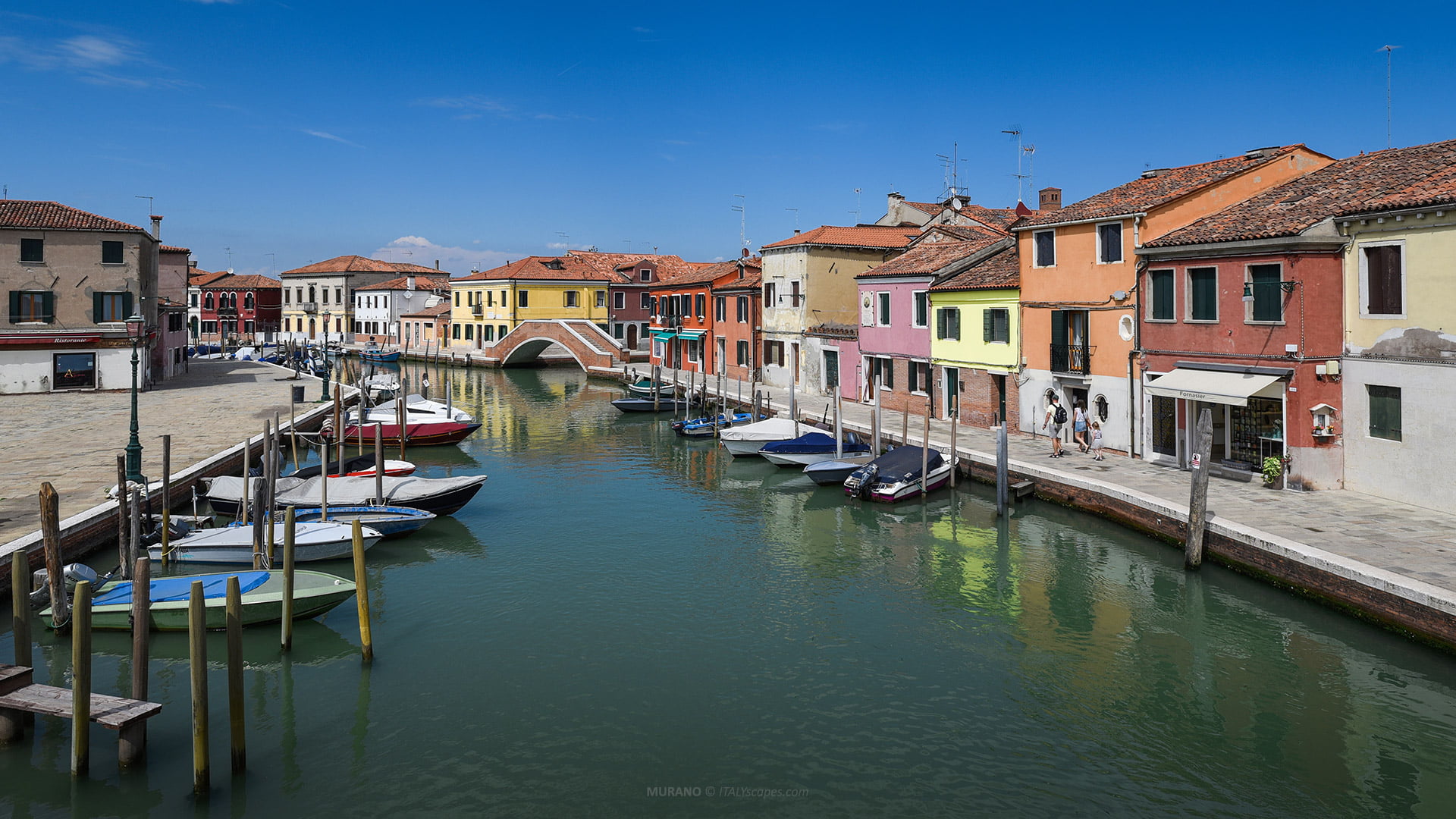
During the previous experimental periods, the Venice entry fee applied to the historic centre, rather than the entire Venetian Lagoon. Visitors travelling exclusively to islands such as Murano, Burano, Torcello, Lido di Venezia, Sant’Erasmo, or Pellestrina were not required to pay.
The previous rules also excluded certain transport and transit areas, including parts of Piazzale Roma, Venezia Santa Lucia, and Tronchetto, provided visitors did not continue into the chargeable historic centre. The precise geographical exclusions for 2027 remain subject to confirmation in the implementing regulations.
Do Tourists Staying Overnight in Venice Have to Pay?
Hotels and Apartments in the Historic Centre
Under the previous system, tourists staying overnight in registered accommodation within the Municipality of Venice were exempt from paying the access contribution. This included guests staying in hotels, bed-and-breakfast establishments, and tourist apartments, who were ordinarily subject to the separate municipal overnight accommodation tax.
The exemption applied from the day of arrival through the day of departure. Consequently, tourists booking one night could visit the historic centre during that period without paying the additional access charge, although they still had to comply with the relevant documentation requirements.
The overnight tourist tax and Venice entry fee are different charges. The former is associated with accommodation, while the latter concerns eligible day visitors. Paying for accommodation within the municipality therefore prevented the additional access charge under the previous regulations, rather than creating a second tourist tax.
What About Mestre, Marghera, and Mainland Accommodation?
An important distinction concerns the municipality’s geographical boundaries. Mestre and Marghera are part of the Municipality of Venice, even though they are located on the mainland. Tourists staying overnight in registered accommodation in these districts qualified for the same access-fee exemption as visitors sleeping in the historic centre.
The exemption also covered qualifying accommodation in other municipal areas, including Favaro Veneto, Chirignago, Zelarino, and the lagoon islands. Staying outside the historic centre did not automatically mean paying the access fee, provided the accommodation was located within Venice’s administrative territory.
However, tourists staying in nearby municipalities, such as Mogliano Veneto or Treviso, did not qualify for this exemption merely because their accommodation was close to Venice. The decisive factor was the municipality where the accommodation was located, not the distance from the historic centre.
For 2027, the authorities have indicated that the detailed exemption framework may still be adjusted. Overnight guests should therefore verify the final requirements once published. During previous years, qualifying visitors generally needed to obtain an exemption code or provide the documentation required to demonstrate their accommodation status.
Who Is Exempt From Paying the Venice Entry Fee?
The exemption system previously included several categories of visitors whose presence in Venice was not considered ordinary day-trip tourism. Children under 14, residents of Venice, people born in the municipality, and residents of the Veneto Region were among the categories excluded from payment under the 2026 rules.
Other qualifying groups included students attending educational institutions in Venice, workers entering the historic centre for professional reasons, people receiving medical treatment, and individuals visiting patients in local healthcare facilities. Specific provisions also covered certain family members of residents and people attending qualifying official or sporting events.
People with disabilities and an accompanying person also benefited from exemptions under specified conditions. However, documentation requirements differed between categories: some could demonstrate their status with identification, student cards, or a European Disability Card, while others needed registration or supporting declarations.
How to Register and Pay the Venice Entry Fee
Online Registration and QR Codes
During the previous charging periods, visitors subject to payment registered through the municipal access-fee platform. The process required selecting the visit date, providing identifying information, and completing payment. Successful registration generated a personalised voucher containing a QR code, which served as proof of compliance.
The QR code could be stored on a smartphone or presented in another accepted format during inspections. Visitors needed to retain the correct documentation throughout the charging period. Tourists travelling together could complete a combined registration, although the resulting access vouchers remained associated with individual visitors.
For 2027, the online booking portal has not yet opened for the new season. The municipality has indicated that operational arrangements will be announced by December 31, 2026, including further details about payments, exemptions, and checks.
What Happens If You Enter Without Paying?
The access contribution is not enforced through a continuous physical barrier around the historic centre. During previous editions, authorised personnel conducted checks at entry points and other locations, requesting proof of payment or exemption from visitors covered by the regulations.
Tourists who failed to comply could face administrative penalties. Previous regulations provided for fines of €25 to €150, in addition to the applicable charge, while false declarations could have further legal consequences. The enforcement provisions for 2027 will need to be checked against the final approved rules.
No Venice Entry Fee During Venice Carnival 2027
The Venice Carnival 2027 will take place from January 23 to February 9, well before the access-fee season begins on March 26. Consequently, visitors attending Carnival will not have to pay the Venice entry fee, even when arriving for a single day without overnight accommodation.
Carnival is one of Venice’s best-known annual celebrations, featuring elaborate costumes, traditional masks, performances, parades, and cultural events. Its historical roots extend back to the Venetian Republic, while the modern festival attracts international visitors interested in the city’s distinctive traditions and ceremonial atmosphere.
Although the municipal access charge will not apply, Carnival is not entirely free. Public celebrations can be attended without purchasing a special entry ticket, but private masquerade balls, the Official Dinner Show, and certain organised experiences require separate reservations and payments.
The absence of an access charge does not necessarily mean lower overall travel expenses. Accommodation prices and demand can increase during Carnival, particularly around the final weekend. Visitors planning to attend should arrange accommodation and transport in advance, especially if they intend to stay in the historic centre.

What Tourists Should Know Before Visiting Venice in 2027
Visitors planning a trip during spring or summer 2027 should first check whether their arrival falls on one of the 72 charging dates. Travelling outside those dates avoids the access contribution altogether, while staying overnight within the municipality previously provided an alternative exemption.
The Venice entry fee should also be considered separately from train tickets, parking charges, water buses, and museum admissions. Visitors arriving at Venezia Santa Lucia or travelling from Venezia Mestre must assess their payment obligations according to their destination, accommodation arrangements, and the applicable charging period.
The expansion to 72 days marks the fourth consecutive year of Venice’s access-fee experiment. For visitors, the essential distinction remains between confirmed dates and provisional operational rules: the city has established when the charge will apply, but the precise conditions for paying or avoiding it have not yet been finalised.
Frequently Asked Questions about the Venice Entry Fee 2027
When will the Venice entry fee apply in 2027?
The Venice entry fee will apply on 72 selected days between March 26 and August 15, 2027, primarily covering weekends, public holidays, and periods of increased tourist activity.
How much will the Venice entry fee cost in 2027?
The maximum confirmed charge is €10 per person. Based on previous years, prices could remain €5 for advance bookings and €10 for last-minute payments, but this is not confirmed.
What are the daily charging hours in 2027?
The access fee will apply between 8:30 am and 4:30 pm on designated dates. Visitors entering the historic centre outside these hours will not have to pay the charge.
Can tourists get a discount by paying in advance?
In 2025 and 2026, tourists paying at least four calendar days before arrival received a 50% discount. Whether the same arrangement will apply in 2027 remains to be confirmed.
Do tourists staying overnight in Venice have to pay?
Under previous regulations, tourists staying in registered accommodation within the Municipality of Venice were exempt from payment, although documentation or registration requirements could apply. The 2027 rules remain pending.
Do visitors staying in Mestre or Marghera have to pay?
Tourists staying overnight in Mestre or Marghera qualified for exemption under previous rules because both districts belong to the Municipality of Venice. The final 2027 requirements have not been announced.
Who is exempt from the Venice entry fee?
Previous exemptions included children under 14, Veneto residents, qualifying overnight guests, workers, students, and certain medical visitors. The municipality may adjust exemption categories and documentation requirements for 2027.
Does the Venice entry fee apply to Murano and Burano?
Under previous regulations, tourists visiting only Murano, Burano, or other minor lagoon islands did not have to pay. Entering Venice’s historic centre could trigger the charge during designated hours.
Will tourists have to pay the entry fee during Venice Carnival 2027?
No. Venice Carnival runs from January 23 to February 9, 2027, while the access-fee calendar begins on March 26. Carnival visitors will therefore not be subject to this charge.
How can tourists pay the Venice entry fee in 2027?
During previous years, visitors registered online and received a QR code after payment. The booking portal and detailed payment procedures for 2027 have not yet been officially announced.