Table of Contents
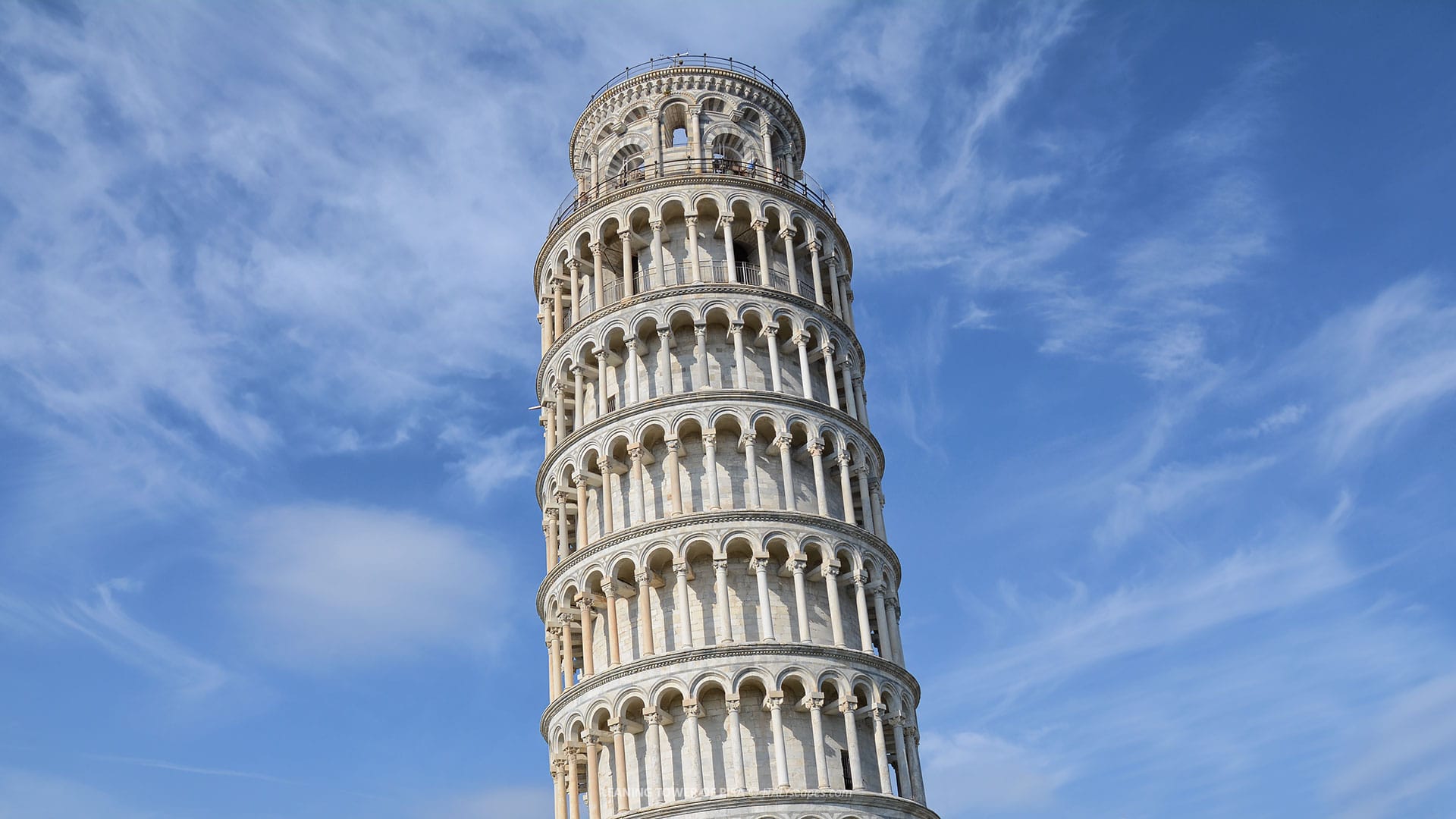
The Leaning Tower of Pisa is one of the most recognizable monuments in the world, but its fame began with a construction problem. The tower was not designed to lean. Its inclination appeared during the building process, caused by weak ground beneath a shallow foundation.
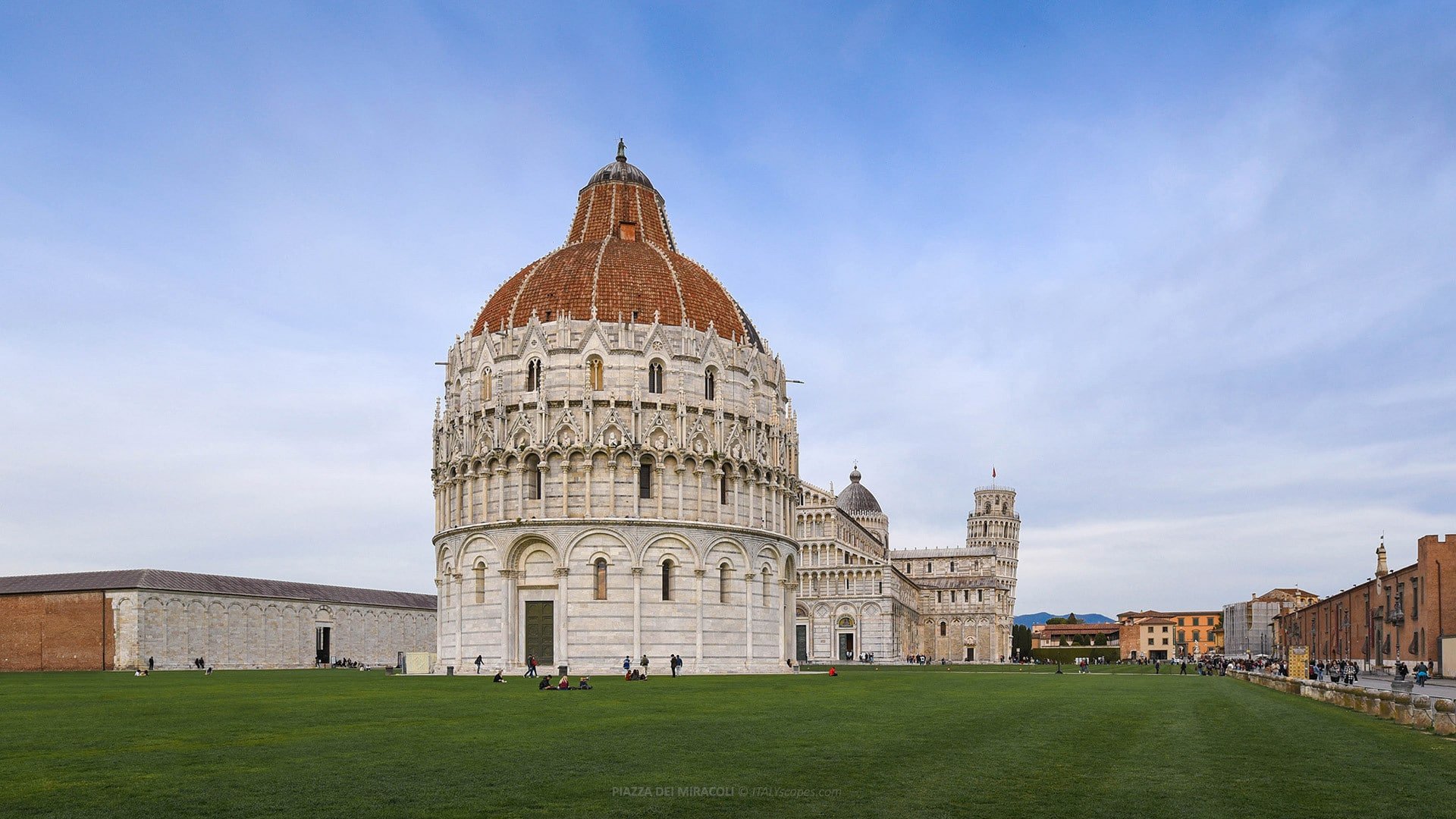
Built as the freestanding bell tower of Pisa Cathedral, the monument stands in Piazza del Duomo, also known as Piazza dei Miracoli. Construction began in 1173, and the tower was completed in the 14th century, after interruptions, corrections, structural problems, and long pauses caused partly by war.
The Tower of Pisa is about 58.36 meters high from its foundation level and weighs around 14,453 tonnes. Its external diameter at the base is about 15.484 meters, while the foundation diameter is about 19.58 meters. Its present inclination is commonly given as about 3.97 degrees from vertical.
The most important fact about the Leaning Tower of Pisa is that engineers did not fully straighten it. They stabilized it. Between 1990 and 2001, the monument was closed, studied, reinforced, and corrected just enough to reduce the danger of collapse while preserving its famous lean.
The Tower of Pisa Was Never Meant to Lean
The Leaning Tower of Pisa was not designed to lean. Its inclination was caused by the ground beneath it, not by architectural intention. The builders wanted a straight, freestanding bell tower for the cathedral, but the soil under the foundation was too soft and unstable.
Construction began on 9 August 1173, when the foundations were laid. The site contained layers of soft clay, sand, and water-rich soil. This weak ground could not support the tower’s weight evenly, so one side began to sink more than the other.
The lean appeared while the tower was still under construction. By the time the builders had completed the first levels, the structure had already started to settle unevenly. The problem became visible early enough to affect how the later floors were built.
Work stopped after the early construction phase, partly because of Pisa’s military conflicts and partly because the tower had already developed a serious structural problem. This long interruption may have helped the monument survive, because the ground had time to settle before more weight was added.
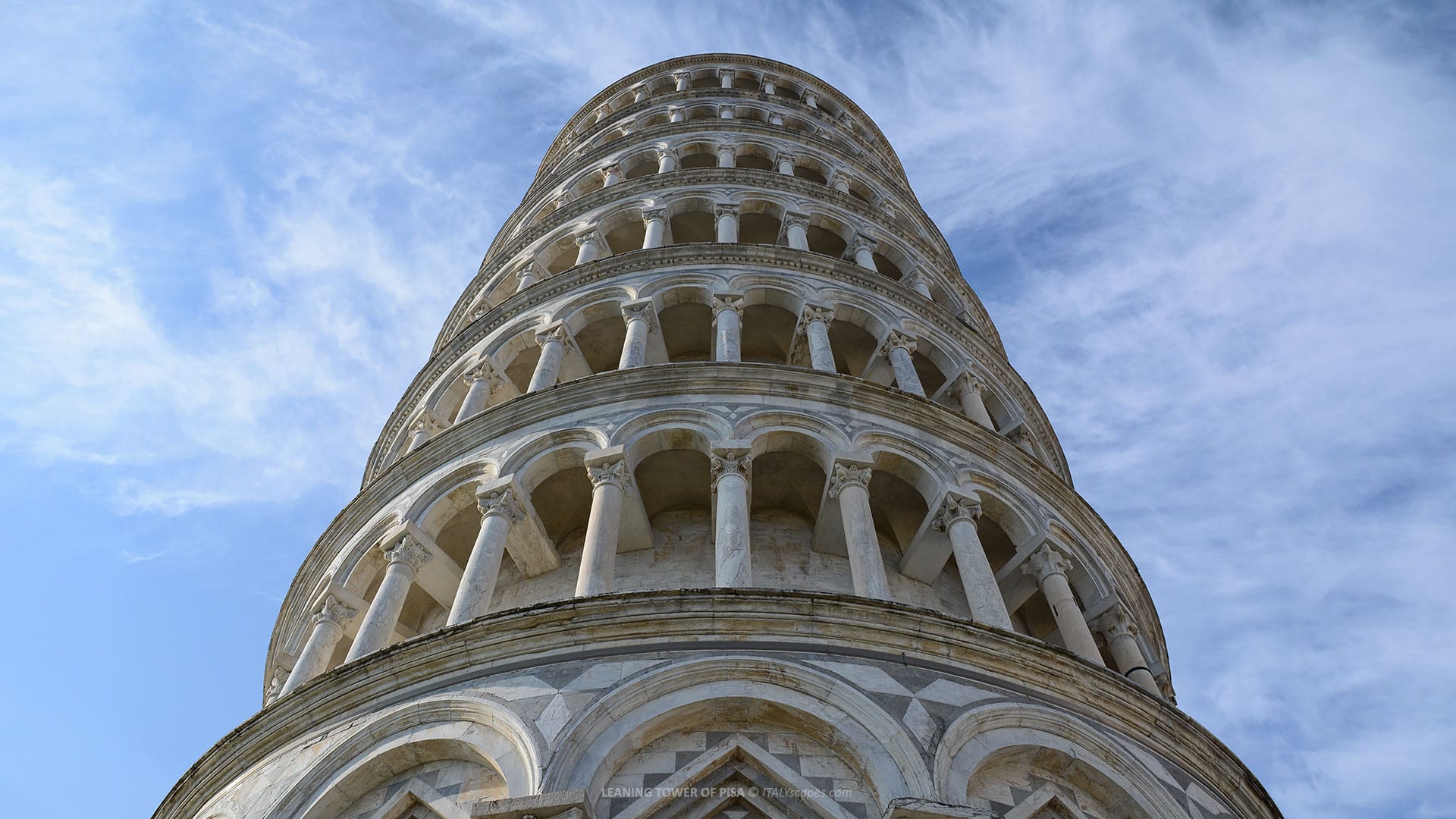
When construction resumed, later builders tried to compensate for the inclination. They built the upper floors slightly differently, attempting to bring the structure back toward the vertical. As a result, the Tower of Pisa is not simply tilted. It is also slightly curved.
This explains why the Tower of Pisa has such an unusual shape. The lower part reflects the original settlement problem, while the upper levels reflect medieval attempts to correct it. The monument is therefore both an accident and a record of centuries of engineering decisions.
The Leaning Tower of Pisa was finally completed in the 14th century, around 1372, almost two centuries after work began. By then, the lean had become part of its physical character. What began as a construction defect had become the feature that would later make it famous.
The Tower of Pisa Is Actually a Bell Tower
The Leaning Tower of Pisa is not a watchtower, a defensive tower, or a civic monument built to stand alone. It is a campanile, meaning a freestanding bell tower. It was built to serve Pisa Cathedral, officially dedicated to Santa Maria Assunta.
The tower belongs to the same religious and architectural complex as the cathedral, the baptistery, and the cemetery. These monuments form one of the most important medieval ensembles in Italy. The tower’s original purpose was to hold bells for the cathedral’s liturgical life.
The tower contains seven bells, traditionally associated with the musical scale. The largest is called Assunta, while other bells include Crocifisso, San Ranieri, Dal Pozzo, Pasquereccia, Di Terza, and Vespruccio. These bells connected religious ceremonies with the daily rhythm of Pisa.
Over time, however, the bell tower became more famous than the cathedral it was built to serve. Pisa Cathedral remains a masterpiece of Pisan Romanesque architecture, but the tower’s visible lean made it easier to recognize, photograph, remember, and reproduce.
This is one of the great ironies of Pisa. The cathedral was the main sacred building, while the tower was a functional addition. Yet the campanile became the global symbol of the city, precisely because it developed a problem no architect had planned.
The Tower Survived Earthquakes Because of the Same Soil That Made It Lean
The Tower of Pisa looks fragile, but it has survived several earthquakes that affected Tuscany and the surrounding region over the centuries. This survival is surprising because a tall, leaning masonry structure would normally seem vulnerable to seismic movement.
Researchers have studied why the tower did not collapse during earthquakes. Their conclusion is unusual: the same soft ground that caused the lean also helped protect the monument. The interaction between the tower and the soil changed how seismic energy affected the structure.
This phenomenon is known as dynamic soil-structure interaction. In simple terms, the tower, its foundation, and the soft soil beneath it respond together during ground motion. Their combined behavior can reduce dangerous vibrations that might otherwise damage the masonry.
This does not mean the Tower of Pisa is immune to earthquakes. It means that its survival cannot be explained only by luck. The very ground that created the leaning problem also helped reduce the forces transmitted to the tower during certain seismic events.
The result is one of the strangest facts about Pisa’s monument. The soil was both the tower’s enemy and its protector. It made the structure sink unevenly, forced centuries of correction, and created a collapse risk, but it also helped the tower survive earthquakes.
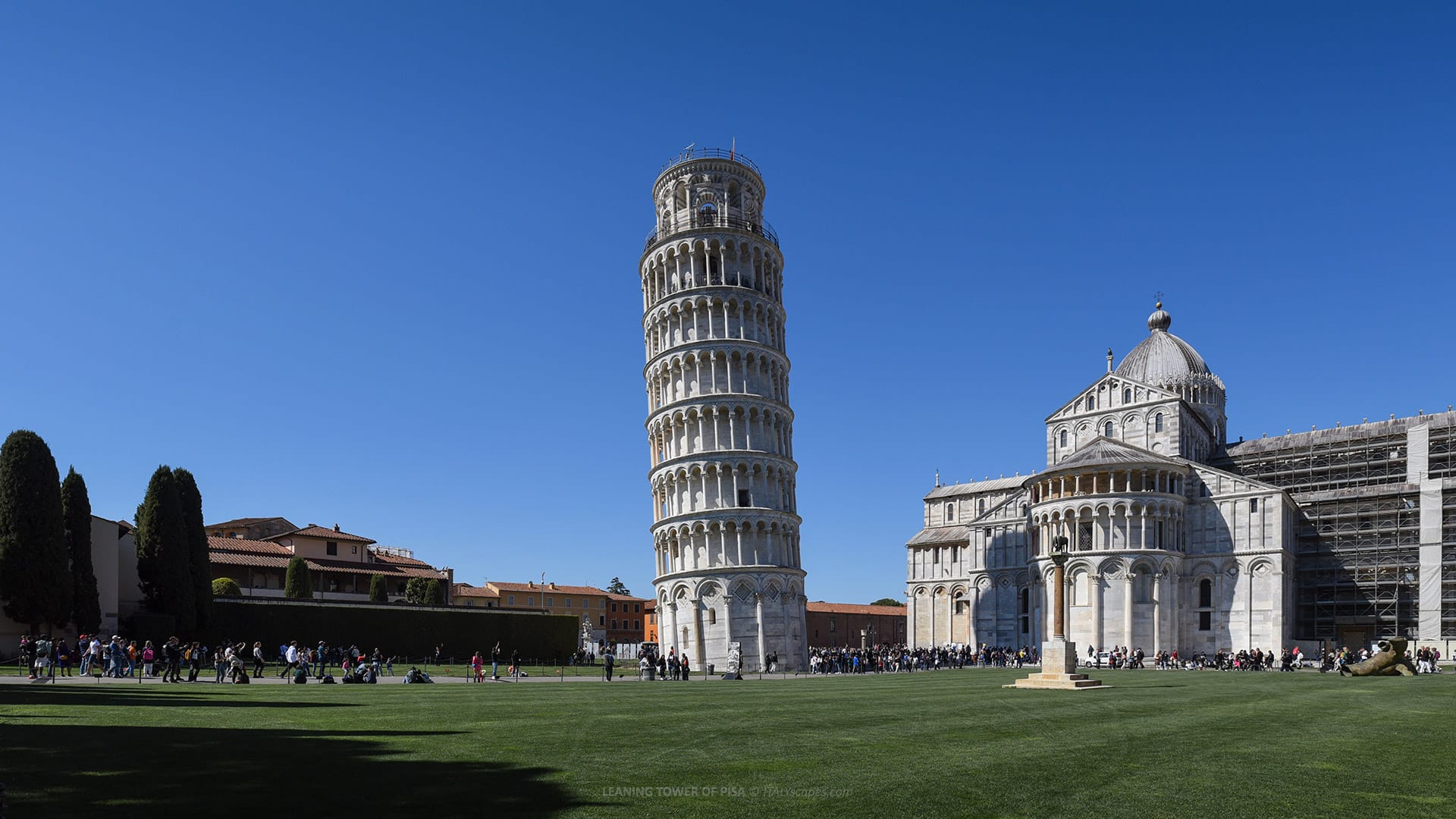
Piazza dei Miracoli, with the Tower in the background
Mussolini Tried to Straighten the Tower and Made the Problem Worse
In 1934, Benito Mussolini ordered an intervention intended to straighten the Leaning Tower of Pisa. The tower’s inclination did not fit the Fascist image of strength, order, and architectural control. The regime wanted the monument to appear more upright and more stable.
Engineers drilled into the foundation area and injected cement grout beneath the tower. The idea was to strengthen the base and reduce the tilt. In practice, the intervention disturbed the delicate balance between the foundation, the masonry, and the soft soil.
The operation failed. Instead of straightening the tower, it increased the problem. The injected material changed the behavior of the ground and contributed to further movement.
The mistake was important because it proved how sensitive the structure was. Small changes near the foundation could have large and dangerous consequences. The tower’s stability depended not only on the visible masonry, but also on the hidden soil conditions below.
Later engineering teams learned from this failure. Modern stabilization was based on careful monitoring, soil testing, structural modeling, and controlled movement. The goal was not to impose a political idea of vertical perfection, but to understand how the monument actually behaved.
Mussolini’s failed intervention is now part of the tower’s modern history. It shows that preserving a historic structure often requires restraint. A monument like the Tower of Pisa cannot be saved by force. It can only be saved by understanding its weaknesses.
The Tower of Pisa Was Almost Destroyed During World War II
During World War II, Pisa was exposed to military danger, and tall buildings could be suspected of serving as observation posts. The Leaning Tower of Pisa was high, visible, and strategically useful in theory. Because of this, Allied forces considered the possibility that it was being used by enemy troops.
A widely reported wartime account says that an American soldier, Leon Weckstein, was sent to observe the area and decide whether artillery fire should be called. If the tower had been confirmed as a German observation point, it could have been targeted.
According to that account, Weckstein did not call for fire. The monument was spared, partly because he was struck by its beauty and partly because the situation did not lead to an immediate attack. The story is usually presented as a reported episode, not as a technical record.
What remains clear is that the Tower of Pisa survived the war at a time when many Italian cities suffered serious damage. Its survival was not guaranteed.
This episode adds another layer to the tower’s story. It had already survived unstable soil, medieval construction errors, earthquakes, and failed repair attempts. In the 20th century, it also survived the risk of destruction during modern warfare.
Engineers Stabilized the Tower Between 1990 and 2001
By the late 20th century, the Tower of Pisa was in serious danger. Its lean had increased over time, and engineers feared that the monument could eventually collapse. In 1990, the tower was closed to visitors so that a major stabilization project could begin.
At that time, the tower leaned by about 5.5 degrees. The top was displaced several meters from the vertical axis, and the margin of safety was considered too small. The challenge was to reduce the danger without erasing the famous inclination.
An international team of engineers, architects, and restoration specialists studied the tower’s foundation, masonry, soil, and movement. Their aim was not to make the Tower of Pisa straight. Their aim was to return it to a safer position while keeping its historic appearance.
The first emergency measures included heavy lead counterweights placed on the north side of the base. These weights helped oppose the southward lean and temporarily stabilized the structure. They were not an elegant solution, but they bought time for a more permanent intervention.
The final method was underexcavation, meaning the controlled removal of small quantities of soil from beneath the higher side of the foundation. Engineers removed soil from the north side so that the tower could rotate slightly back toward a safer angle.
The work was extremely delicate. Engineers drilled inclined holes under the foundation and removed soil in small amounts, constantly measuring the tower’s response. Around 38 cubic meters of soil, roughly 70 tonnes, were removed during the final successful phase.
The project reduced the lean by about half a degree. When the Leaning Tower of Pisa reopened to the public on 15 December 2001, it still leaned visibly, but the risk of collapse had been greatly reduced. The current inclination is about 3.97 degrees.
Engineering assessments have described the tower as safe for at least 200 years, while other estimates suggest it may remain stable for even longer. The important point is that the intervention preserved the monument’s identity while solving the immediate structural danger.
The Leaning Tower of Pisa Is Taller on One Side and Still Moves Slightly
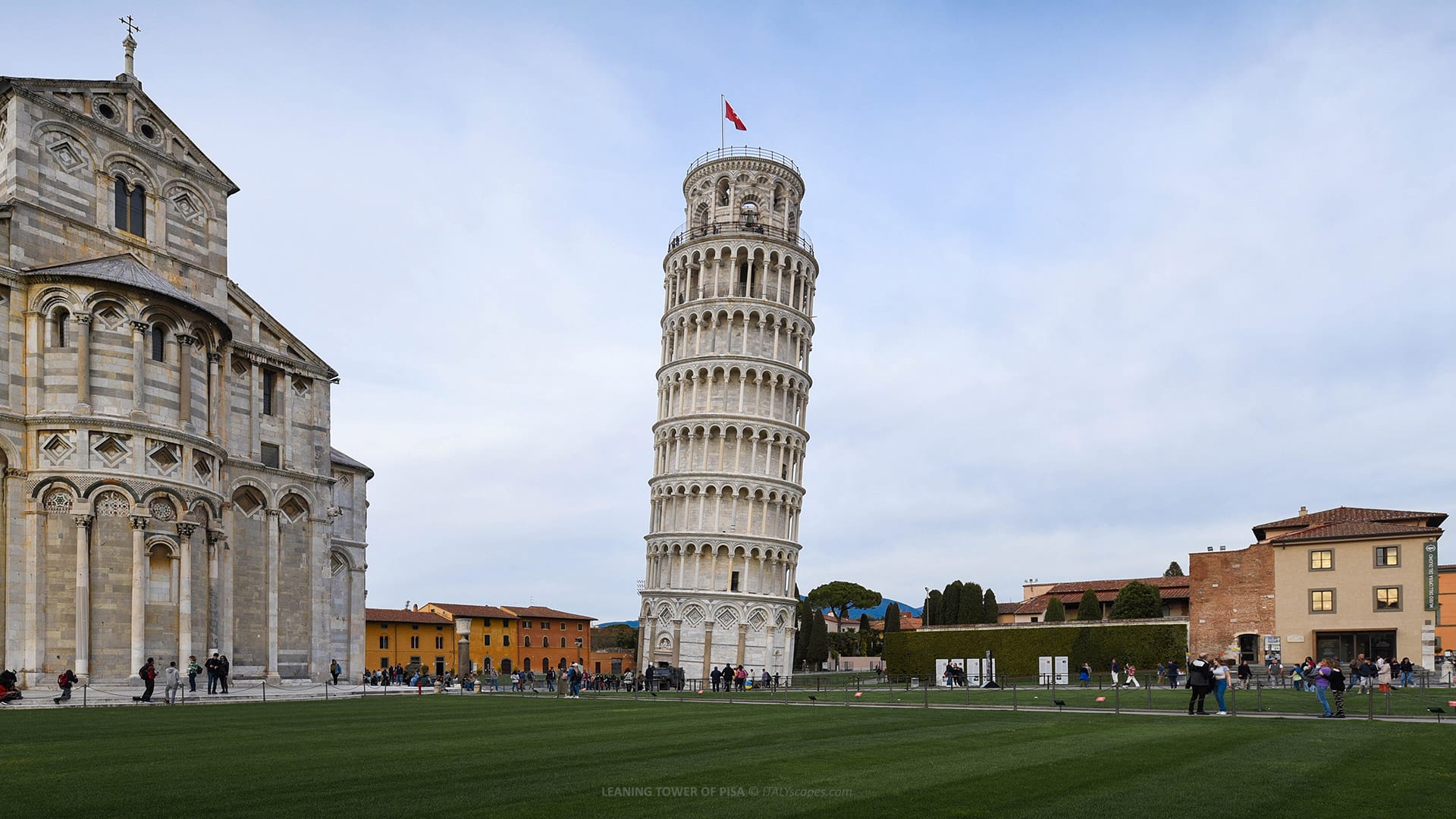
Because the Tower of Pisa leans, its height is not exactly the same on all sides when measured from ground level. On the lower side, it is about 55.86 meters high. On the higher side, it reaches about 56.70 meters.
From the foundation level, the tower’s height is given as about 58.36 meters. Its external diameter at the base is about 15.484 meters, while the internal diameter is about 7.368 meters. The foundation diameter is wider, at approximately 19.58 meters.
The Tower of Pisa also weighs about 14,453 tonnes, which explains why the foundation problem became so serious. This mass presses down on soil that was never strong enough to support it evenly. The lean is therefore the visible result of a deep foundation problem.
Even after stabilization, the tower is not perfectly still. It continues to move by tiny amounts because stone, soil, water, and temperature all change over time. These movements are monitored carefully to make sure they remain within safe limits.
Seasonal groundwater changes can affect the foundation. Rain can alter the water table around the tower, influencing how the soft soil behaves. Drainage work was introduced to reduce these variations and make the tower’s movement more predictable.
Temperature also has an effect. Stone expands and contracts with heating and cooling, especially between day and night or between seasons. These changes are small, but on a historic masonry structure they can be measured with modern instruments.
The fact that the Tower of Pisa moves does not mean it is falling. It means that it behaves like a complex structural system. Engineers continue to monitor it because stability is not a one-time achievement. It is a condition that must be watched over time.
The Leaning Tower Is Not the Only Leaning Building in Pisa
The Tower of Pisa is the most famous leaning monument in the city, but it is not the only one. Pisa’s soil has affected other buildings too. The same unstable ground conditions that damaged the campanile also caused visible inclinations in other structures.
One important example is the bell tower of the Church of San Nicola, located not far from the Arno. This tower also leans, though less famously than the cathedral campanile. Its inclination is another sign that Pisa’s ground conditions are difficult for tall masonry structures.
Another example is the bell tower of San Michele degli Scalzi, which has an even stronger visible inclination. The church itself also shows signs of structural movement. This confirms that Pisa’s leaning buildings are linked to the city’s geology, not to one isolated construction mistake.
These examples help explain why the Leaning Tower should not be seen as a mysterious exception. It is the most spectacular and best-known case of a broader local problem. Pisa’s soft, water-rich soils have challenged builders for centuries.
The fame of the cathedral bell tower comes from its size, beauty, location, and dramatic tilt. However, the existence of other leaning buildings shows that the problem was not unique to one architect or one construction team. It was partly a problem of place.
Climbing the Tower Feels Strange Because of the Tilt
Visitors climb the Tower of Pisa through an internal spiral staircase. The experience is unusual because the tower is not vertical. As visitors go up, the body senses the inclination, especially where the staircase curves through the thick masonry walls.
The tower has 296 steps up to the bell chamber according to the traditional technical count. Some tourist descriptions mention slightly different numbers, depending on which route or step count is being used, but the commonly cited number for the main climb is 296.
The staircase does not feel like a normal tower staircase. Because the whole structure leans, visitors feel pulled slightly toward one side at certain points. The effect changes as the spiral turns, creating a strange alternation of balance and imbalance.
Near the upper levels, the inclination becomes easier to perceive. The walls, floor, and openings do not align with the body’s expectation of verticality. Visitors can physically feel that the monument is not simply seen from outside as leaning; it is leaning inside too.
The climb also reveals the tower’s curved geometry. Later medieval builders tried to correct the inclination by adjusting the upper floors. This means the Leaning Tower of Pisa is not a perfectly straight cylinder tilted in one direction, but a structure shaped by centuries of correction.
Without the Lean, the Tower Would Probably Be Less Famous
The Tower of Pisa would still be an important medieval monument without its lean. It has elegant arcaded galleries, marble surfaces, Romanesque details, historic bells, and a privileged position in Piazza dei Miracoli. Architecturally, it belongs to one of Italy’s great religious complexes.
However, without the lean, it would probably be known mainly by specialists, pilgrims, and visitors already interested in medieval Pisa. The inclination made it instantly recognizable. Its silhouette can be understood in a second, even by someone who knows little about architecture.
The tower’s fame comes from a visual contradiction. It looks as if it should fall, yet it has stood for centuries. This tension between danger and survival is what makes people curious. The monument seems unstable, but history proves its extraordinary endurance.
The lean also gives the tower a story. Many beautiful medieval towers exist in Italy, but few have such a clear and memorable narrative. Pisa’s tower began as a construction failure, survived repeated threats, and became one of the world’s most recognizable landmarks.
Modern engineers understood this cultural value. They did not straighten the tower completely because doing so would have destroyed its identity. The aim was to preserve the monument safely, not to erase the defect that made it famous.
Millions of Visitors Recreate the Famous “Holding Up the Tower” Photograph
One of the most recognizable tourist rituals in Italy is the “holding up the tower” photograph. Visitors stand on the grass or pavement of Piazza dei Miracoli, stretch out their hands, and pose as if they are preventing the Tower of Pisa from falling.
The photo works because the tower’s inclination is clear from many angles. With the right position, a visitor can appear to push, pull, support, or kick the monument. The pose has become almost as famous as the tower itself.
Millions of visitors come to Pisa every year, and many of them take this type of picture. Not everyone climbs the tower, but almost everyone photographs it. The monument’s lean makes it interactive in a way that few historic buildings are.
The popularity of this image shows how a structural problem became part of global popular culture. The tower is not only admired as architecture. It is performed, imitated, joked with, and turned into a personal travel memory by visitors from around the world.
This playful tradition also helps keep the monument famous. Every tourist photograph repeats the same basic idea: the tower is leaning, and people pretend to save it. The joke is simple, visual, and universal, which is why it has lasted.
The final irony is clear. The tower became famous because it failed to stand straight, but that failure made it unforgettable.
Frequently Asked Questions about the Leaning Tower of Pisa
Why does the Leaning Tower of Pisa lean?
The Leaning Tower of Pisa leans because it was built on soft, unstable soil. The foundation settled unevenly during construction, causing one side of the tower to sink more than the other.
When was the Leaning Tower of Pisa built?
Construction began in 1173 and continued in several phases over almost two centuries. The tower was completed around 1372, after long interruptions and attempts to compensate for the growing tilt.
How tall is the Leaning Tower of Pisa?
The tower is about 58.36 meters high from its foundation level. Because of its tilt, its visible height differs slightly between the lower and higher sides when measured from ground level.
Is the Leaning Tower of Pisa safe today?
Yes. After major stabilization work between 1990 and 2001, the tower is considered safe for many decades. Engineers reduced the tilt without removing the famous lean completely.
Is the Leaning Tower the only leaning building in Pisa?
No. Pisa has other leaning structures, including the bell towers of San Nicola and San Michele degli Scalzi. Their inclinations are also linked to the city’s soft ground conditions.
Why did engineers not straighten the tower completely?
Engineers did not fully straighten the tower because the lean is central to its identity. The goal was to prevent collapse while preserving the monument’s historic and visual character.
Sources: