-
About
Table of Contents
Festa della Salute 2026 will take place on Saturday, November 21, 2026, in the beautiful and timeless city of Venice.
This event – formally known as the Festa della Madonna della Salute – is one of the city’s most treasured traditions, a ritual of gratitude and hope that unites Venetians and pilgrims each year.
On this annual feast day, thousands make their way to the Basilica of Santa Maria della Salute, crossing a specially constructed votive bridge spanning the Grand Canal, to offer prayers of thanks and seek ongoing protection for their city, their loved ones, and their health.
While perhaps less flamboyant than the famed Carnival or regattas, Festa della Salute carries a weight of history, memory, and communal devotion that resonates deeply with anyone who experiences it.
What is Festa della Salute 2026? Date & Significance
Festa della Salute is celebrated every year on November 21, the liturgical feast of the Presentation of the Blessed Virgin Mary.
In 2026, November 21 falls on a Saturday, giving the city’s residents and visitors a weekend opportunity to take part in the ceremonies and pilgrimage.
The event centers on the Basilica of Santa Maria della Salute, built as a votive church after a devastating plague.
On this day, Venetians – and many tourists – walk across a temporary pontoon (or boat-bridge) constructed over the Grand Canal, from near the historic centre to the Salute church, to attend mass, pray, light candles, and renew a centuries-old vow of gratitude.
Festa della Salute is not merely a tourist spectacle: it remains deeply spiritual and rooted in collective memory. For many Venetians, it is their most intimate festival – a day of reflection, hope, and community solidarity – a stark contrast with more commercialized celebrations.
Short History of Festa della Salute
To understand the modern celebrations of 2026, it helps to look back at origins that shaped Venetian identity for generations.
The Plague of 1630–1631 and the VowIn 1630, Venice was struck by a severe outbreak of plague that ravaged the city and its lagoon territories. Tens of thousands perished – a catastrophic loss that devastated families and disrupted life across the republic.
Amid this tragedy, the governing authorities of the city – led by the then-doge – made a solemn vow: if Venice was spared further devastation, they would build a magnificent church dedicated to the Virgin Mary.
That church would stand as both a thanksgiving offering and a public symbol of faith and hope.
By 1631, even though the plague had not yet been completely eradicated, the Senate commissioned construction of the new church.
The site chosen was at the tip of the city, adjacent to the old customs house (the Dogana da Mar) – a symbolic and strategic location at the entrance to the Grand Canal.
Building the Basilica – A Monument to SurvivalAn architectural competition was held, and the project was awarded to the young Venetian architect Baldassare Longhena. His design proposed an octagonal church surmounted by a grand dome, intended as a “crown” to the Virgin Mary. Construction began in 1631.
Because the site rested on unstable lagoon soils, building the basilica required extensive foundation work – piles driven deep into the mud, and careful preparation of the ground.
Construction stretched over decades. Only in 1687 was the church finally consecrated, on November 21 – the same feast day that is still celebrated annually.
First Processions and the Annual TraditionEven before the construction was complete, the citizens of Venice wanted to honour their vow.
The very first thanksgiving procession took place in November 1631 – within months of the end of the plague. Since then, the date of 21 November became the fixed day for the ritual pilgrimage.
Over centuries, despite wars, political changes, and the fall of the Venetian Republic, the tradition has held firm. The Feast of the Madonna della Salute became ingrained in civic and religious life, a powerful ritual of remembrance and gratitude still honoured each year.
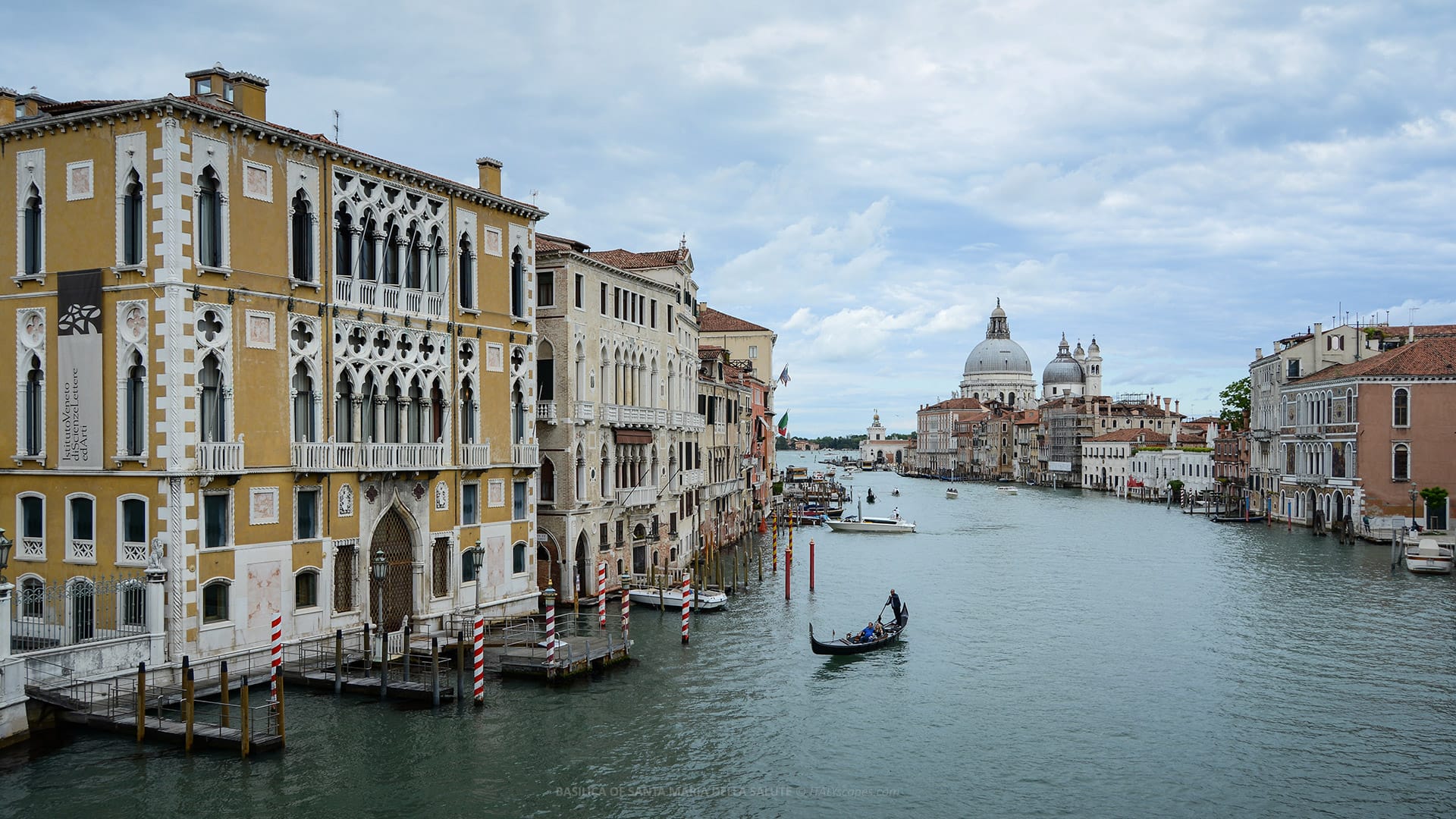
Basilica of Santa Maria della Salute seen from the Ponte dell’Accademia
What Happens Today: Festa della Salute 2026 Celebration
Though rooted in solemn vow and tragic history, Festa della Salute 2026 blends spirituality, community, tradition – and a sense of quiet joy.
The Votive Bridge – Crossing the Grand Canal in SolidarityOne of the most distinctive and moving aspects of the celebration is the construction of the temporary pontoon bridge (ponte votivo / ponte di barche) over the Grand Canal.
This floating bridge connects the area near Campo Santa Maria del Giglio (or Santa Maria del Giglio / San Moisè) with the walkway leading to the Basilica of Santa Maria della Salute.
Candlelight, Masses, and PrayerFrom dawn to late evening, the basilica remains open. Masses and rosary services take place throughout the day.
Faithful and pilgrims, both Venetians and tourists, may enter the church, light candles before the main altar – especially before the revered icon of the Madonna della Salute – and offer prayers.
Festive Traditions: Food, Stalls, and Community SpiritThough the festival remains fundamentally solemn and religious, over time Festa della Salute has acquired a more communal, almost festive dimension – without sacrificing reverence.
Around the Basilica and along the nearby streets, stalls and small vendors appear, offering sweets, traditional candies, toys for children, and – of course – candles to bring inside the church.
A traditional dish associated with the feast is the castradina – a hearty lamb or mutton stew with roots in the difficult times of the plague, when food supplies were scarce and simple meals had deep symbolic value.
A Living Tradition: Faith, Identity, and ContinuityWhat makes Festa della Salute truly extraordinary is its continuity: almost four centuries after the vow was made, the ritual remains alive and meaningful.
Modern Venetians still walk the same route, cross the same canal, light the same candles, and share in the same hope for health and protection that their ancestors did in 1631.
Event Schedule for Festa della Salute 2026
The Festa della Salute 2026 follows a multi-day program that blends religious rites, civic participation, and centuries-old traditions.
Wednesday, November 18, 2026 – Opening of the FestivitiesThe temporary wooden bridge across the Grand Canal will be officially opened in the presence of the Patriarch of Venice, along with local civil and military authorities.
Saturday, November 21, 2026 – Feast Day of the Madonna della SaluteThis is the central and most important day of the celebration. Holy Masses will be celebrated every hour, offering multiple opportunities for worshippers to attend:
- 10:00 am – Solemn Mass: Celebrated by the Patriarch of Venice, this is the most significant liturgical moment of the day and traditionally gathers the largest congregation, including clergy and civic representatives;
- 10:00 pm – Celebration of Compline: The final event of the day is the Compline (evening prayer), held inside the basilica. This contemplative rite provides a peaceful and spiritual conclusion to Festa della Salute 2026.
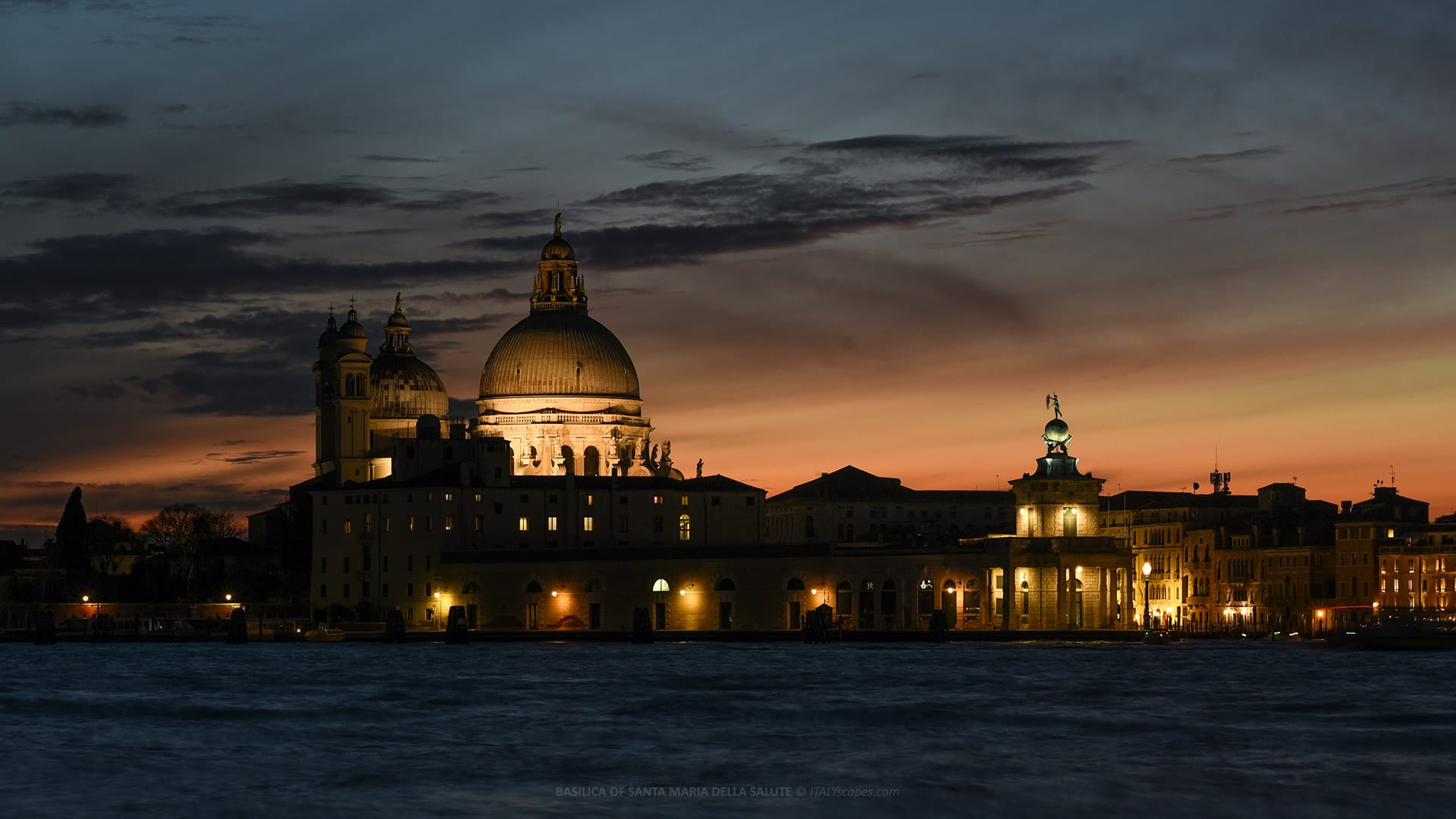
Basilica of Santa Maria della Salute at sunset
How to Get to the Basilica of Santa Maria della Salute
Reaching the Basilica of Santa Maria della Salute is easy whether you’re arriving at Venezia Santa Lucia railway station or already exploring Venice’s historic center.
On Foot from Santa Lucia StationWalking offers a more immersive way to experience Venice. Expect 35-45 minutes of pleasant strolling, depending on your pace.
A scenic walking route is as follows: exit the station, cross the Ponte degli Scalzi, continue through Campo Santa Margherita, head toward the Accademia Bridge, then follow the Grand Canal until you reach the basilica.
By Vaporetto (Waterbus)For a faster trip – and iconic views – take a vaporetto. Right outside Santa Lucia station, look for the ACTV stops labeled “Ferrovia.” From here you have two convenient options:
- Line 1: Directly to Salute. Travel time is about 25-30 minutes, and the route doubles as a scenic cruise along the Grand Canal.
- Line 2: To Accademia, followed by an easy 10-minute walk to the basilica.
Sources: -
Photos
-
Map
-
Reviews
21 November 2026