


Buy tickets:TicketOne Fontaines D.C. will perform in Rome on Friday, Ju Read more [...]
-
About
Table of Contents
Buy tickets:TicketOneRock in Roma 2027 will mark the 17th edition of one of the Italian capital’s most established summer music events. Founded in 2009, the festival has developed into an important stop on European touring schedules, bringing major international performers and leading Italian artists to Rome during the city’s summer concert season.
Unlike a conventional festival concentrated into a single weekend, Rock in Roma 2027 is organised as a series of separate concerts distributed across several weeks. Each performance has its own ticket, timetable, production, and audience, allowing visitors to choose individual shows without navigating simultaneous stages or purchasing admission for an entire multi-day event.
Despite its name, the festival is no longer limited to rock. Previous editions have included metal, pop, electronic music, rap, hip-hop, urban music, singer-songwriters, and numerous Italian performers. The official festival history records more than three million spectators and over 300 concerts since the event was launched in 2009.
The event is closely associated with the Ippodromo delle Capannelle, the historic racecourse that has served as its headquarters since the first edition. Its extensive outdoor areas can accommodate substantial concert productions, while several particularly large events in earlier editions have also taken place at other major venues in Rome.
When Will Rock in Roma 2027 Take Place?
The complete dates for Rock in Roma 2027 have not yet been announced. Based on the festival’s established scheduling pattern, the main programme is expected to take place during June and July 2027, with individual concerts scheduled on selected evenings rather than on consecutive days.
The calendar may extend beyond the main summer period, with additional concerts potentially scheduled through August or September. Visitors should therefore plan their trip around the specific performance they want to attend, as each concert will have its own date, venue, admission time, and ticketing arrangements.
Where Will Rock in Roma 2027 Take Place?
About Rome
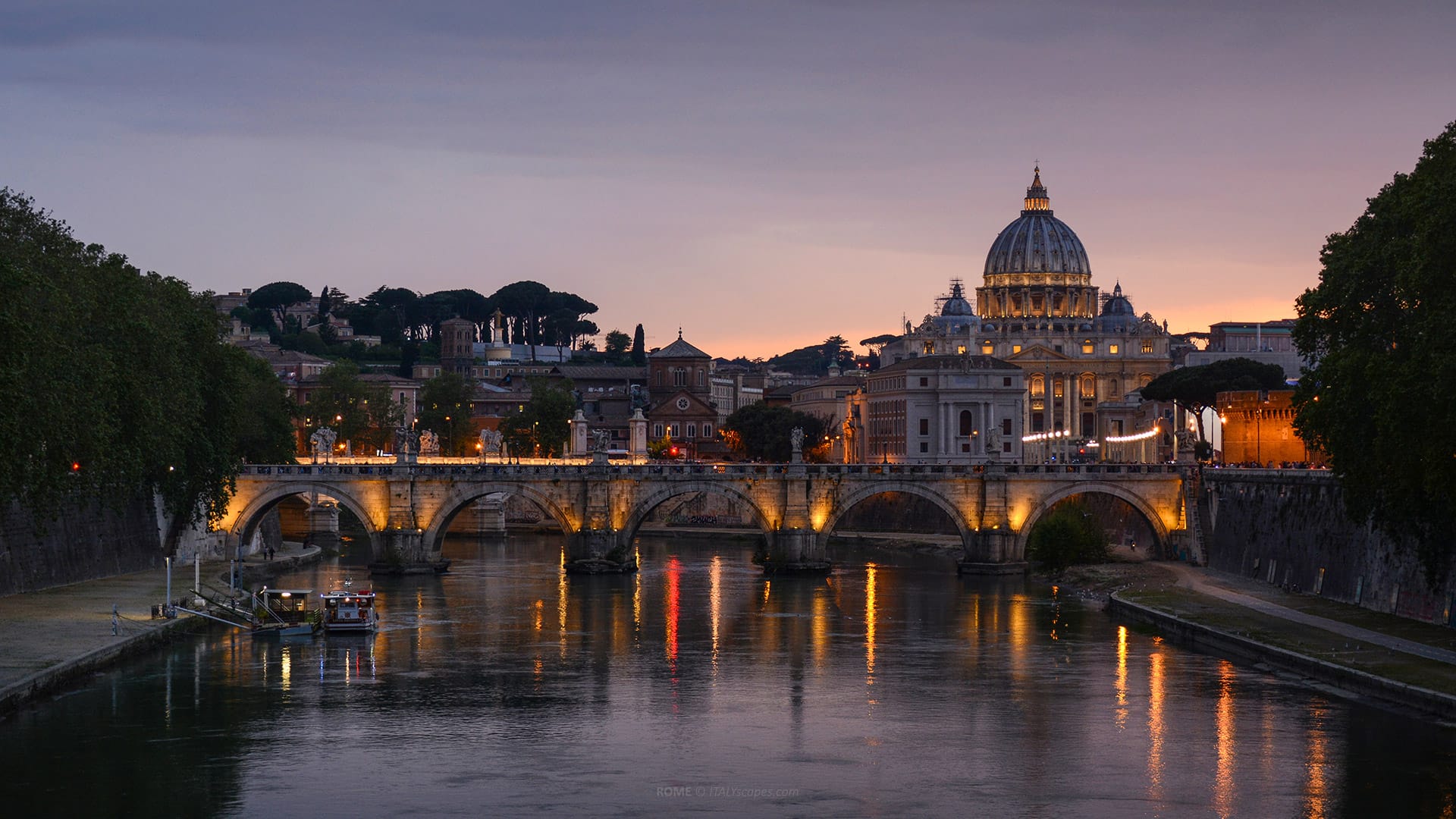
Rome is the capital of Italy and the Lazio region, located in west-central Italy along the Tiber River. The historic centre lies inland from the Tyrrhenian coast, while the modern municipality extends across a considerably larger territory containing residential districts, archaeological areas, parks, infrastructure, and stretches of the former Roman countryside.
Its central position on the Italian peninsula makes Rome accessible from both northern and southern Italy. High-speed railway services connect the capital with Naples, Florence, Bologna, Milan, Turin, and other major cities, while conventional intercity and regional services provide additional rail connections throughout Lazio and neighbouring regions.
International travellers primarily use Rome Fiumicino Airport, Italy’s largest airport, or Rome Ciampino Airport southeast of the city. Both serve the metropolitan area through different transport connections, while Rome’s principal long-distance railway hub, Termini, provides access to the metro network, regional trains, buses, and national high-speed services.
Summer temperatures require careful planning, particularly during June and July. Many archaeological areas contain relatively little shade, while an outdoor concert can involve several additional hours of standing. A practical festival day should therefore include sufficient water, meals, rest, and time for travelling toward the venue before admission begins.
What Is the Venue of Rock in Roma 2027?
The venue currently associated with the Rock in Roma 2027 programme is the Ippodromo delle Capannelle, located at Via Appia Nuova 1245 in southeast Rome. Capannelle has served as the headquarters of Rock in Roma since 2009 and remains the location most strongly identified with the festival’s history and annual summer programme.
The racecourse itself is considerably older than Rock in Roma. A permanent horse-racing facility opened at Capannelle in 1881, while the complex was substantially reconstructed in 1926 according to a project by architect Paolo Vietti-Violi, creating a modern sporting venue within the landscape southeast of central Rome.
Its extensive grounds later proved suitable for large-scale music events. Rock in Roma can create stages, audience sectors, hospitality facilities, food areas, technical compounds, security zones, lighting structures, and temporary infrastructure inside the site while using the large open spaces originally developed around the racecourse.
The concert configuration has changed repeatedly during the festival’s history. In 2013, the area dedicated to music events was substantially expanded and a new large arena was introduced, while subsequent editions used different performance zones capable of accommodating audiences ranging from several thousand to major open-air crowds.
This flexibility allows Capannelle to host productions with very different technical and audience requirements. Large international tours can install extensive staging, sound systems, screens, lighting rigs, backstage facilities, and crowd-control infrastructure, while smaller configurations can operate without using the maximum available area of the complex.
Other Roman venues have appeared during previous editions of Rock in Roma. Circo Massimo has hosted some of the festival’s largest special concerts, including events involving globally recognised performers.
Visitors can reach the Capannelle area using public transport. Capannelle railway station lies within walking distance of the racecourse and is served by regional trains, while Metro Line A can be combined with local bus services from stations including Cinecittà and Colli Albani.
The return journey deserves particular attention because concerts may finish after daytime transport frequencies have decreased. Previous editions have published dedicated travel information for specific shows, including additional services on selected dates, so attendees should check the transport instructions provided for their individual concert before travelling to Capannelle.
The Rock in Roma 2027 Line-Up
The Rock in Roma 2027 line-up is only beginning to take shape. As of September 17, 2026, the official programme contains a single confirmed concert for the 17th edition. This section will therefore remain deliberately concise and can be expanded as the organisers formally announce additional artists, dates, and performances.
Fontaines D.C. – June 18, 2027, Ippodromo delle Capannelle, 9:45 PM
Fontaines D.C. are an Irish band formed in Dublin, known for a sound that developed from post-punk roots toward a broader alternative rock style. Their discography includes Dogrel, A Hero’s Death, Skinty Fia, and Romance, with Grian Chatten’s distinctive vocals and the group’s intense live performances central to their international reputation.
Buy tickets:TicketOneA Short History of Rock in Roma
The First Editions
Rock in Roma was founded in June 2009, establishing the Ippodromo delle Capannelle as its principal home from the beginning. Its format centred on individually ticketed summer concerts rather than one uninterrupted festival weekend, enabling international touring acts and major Italian performers to appear in Rome on different dates.
Expansion followed quickly. The 2010 programme featured The Cranberries, Mika, ZZ Top, Skunk Anansie, The Cult, Gary Moore, Caparezza, Litfiba, and other performers, demonstrating that Rock in Roma was already prepared to combine international rock acts, Italian artists, and performers from neighbouring musical styles.
By 2011, the festival had grown to twenty-four concerts. Thirty Seconds to Mars, Korn, Dream Theater, The Chemical Brothers, Robert Plant, Jamiroquai, Moby, Slash, Ben Harper, and other artists appeared during an edition that attracted more than 200,000 spectators and strengthened its position on the Roman summer calendar.
The 2012 programme contained twenty-eight shows and attracted more than 220,000 spectators. Radiohead, The Cure, Portishead, Incubus, Cypress Hill, Snoop Dogg, Justice, Garbage, and other acts continued the expansion, confirming an eclectic programming strategy that was already moving beyond a narrowly defined rock audience.
International Growth
The 2013 edition became an important stage in the international development of Rock in Roma. Green Day, The Killers, Korn, Rammstein, Arctic Monkeys, Bruce Springsteen and the E Street Band, Mark Knopfler, The Smashing Pumpkins, Deep Purple, Neil Young, Sigur Rós, and Blur appeared during the summer.
Bruce Springsteen’s performance on July 11, 2013 became one of the notable concerts in the festival’s early history. The show at Capannelle lasted for more than three hours and was subsequently made available through Springsteen’s official live archive, preserving the complete Roman performance beyond its original audience.
The following year added one of the largest events ever associated with the festival. The Rolling Stones performed at Circo Massimo during their European tour, while the wider Rock in Roma programme also included Metallica, Queens of the Stone Age, The Prodigy, The Black Keys, Placebo, Franz Ferdinand, and Billy Idol.
More than 270,000 paying spectators attended the 2014 edition. Combining the regular Capannelle programme with an exceptionally large event in central Rome demonstrated that Rock in Roma could operate both as an extended summer concert series and a platform for major international productions requiring substantially different locations.
A Broader Musical Identity
During the middle of the 2010s, the festival’s musical range became increasingly broad. The 2015 programme included Slipknot, Slash, Mumford & Sons, Robbie Williams, Muse, The Chemical Brothers, Lenny Kravitz, Tame Impala, Interpol, and Linkin Park, alongside significant Italian performers and artists representing different generations and audiences.
The 2016 edition continued this approach with Duran Duran, Nightwish, David Gilmour, Slayer, The 1975, Skunk Anansie, Bruce Springsteen, Iron Maiden, Anthrax, and numerous domestic artists. Twenty-three concerts attracted more than 170,000 spectators, confirming Rock in Roma as a major component of Italy’s summer touring circuit.
During 2017 and 2018, audiences saw Red Hot Chili Peppers, Marilyn Manson, The Offspring, The xx, The Killers, Jeff Beck, Megadeth, Post Malone, Roger Waters, The Chemical Brothers, Cigarettes After Sex, and other performers. The programme increasingly demonstrated that the festival name no longer defined its musical boundaries.
The 2019 edition, the final regular season before the pandemic interruption, contained thirty-three concerts. Thirty Seconds to Mars, Skunk Anansie, Bad Bunny, Ben Harper and the Innocent Criminals, Kraftwerk, James Blake, Salmo, Subsonica, and numerous other artists represented the diverse contemporary identity developed during the festival’s first decade.
The Pandemic and the Return
Rock in Roma did not stage regular editions in 2020 or 2021, when the COVID-19 pandemic disrupted international touring, large public gatherings, venue operations, and travel throughout Europe. The interruption broke the festival’s annual sequence but did not end the event, which returned with a substantial programme in 2022.
The 2022 comeback edition contained thirty-nine concerts and attracted more than 370,000 spectators. Deep Purple, The Chemical Brothers, Patti Smith Quartet, Skunk Anansie, Paul Weller, Caparezza, Litfiba, Cigarettes After Sex, and numerous Italian and international performers took part in the largest programme by concert count to that point.
One of the major events of that summer was Måneskin’s performance at Circo Massimo. The Roman group had achieved international recognition after winning both the Sanremo Music Festival and Eurovision Song Contest in 2021, giving its large-scale hometown concert particular significance during the return of major live entertainment.
Rock in Roma recorded more than 280,000 spectators across twenty-five concerts in 2023. Arctic Monkeys, Imagine Dragons, Maluma, Paul Weller, Lindsey Stirling, La Femme, Salmo, Lazza, Geolier, and other performers illustrated the increasingly broad combination of rock, pop, rap, urban music, and alternative styles.
Recent Editions
The 2024 programme included thirty-three concerts and attracted more than 250,000 spectators. BABYMETAL, Placebo, Deep Purple, Bruce Dickinson, Loreena McKennitt, Die Antwoord, Cat Power, Geolier, Calcutta, Gigi D’Agostino, and numerous other acts demonstrated the extensive musical range accommodated under the Rock in Roma identity.
Rock in Roma 2025 ran from June 13 until August 1, presenting twenty concerts to more than 180,000 spectators. The Black Keys, Joe Bonamassa, Tananai, Lucio Corsi, Lazza, Ghali, Sfera Ebbasta, Willie Peyote, and other performers continued the mixture of international touring artists and important Italian names.
The 2026 edition ran from June 9 to July 18 and presented seventeen concerts to more than 190,000 spectators. The Offspring, Negramaro, Caparezza, Ben Harper and the Innocent Criminals, Mumford & Sons, Europe, OneRepublic, Marilyn Manson, Litfiba, Emma, and other performers appeared during the 16th edition.
Across its history, Rock in Roma has retained its fundamental structure while continually broadening its musical identity. Individually ticketed summer concerts remain the basis of the event, but its programmes now encompass several generations and genres, making it one of Rome’s most recognisable recurring large-scale live-music events.
Beyond Rock in Roma 2027
What to Visit in Rome
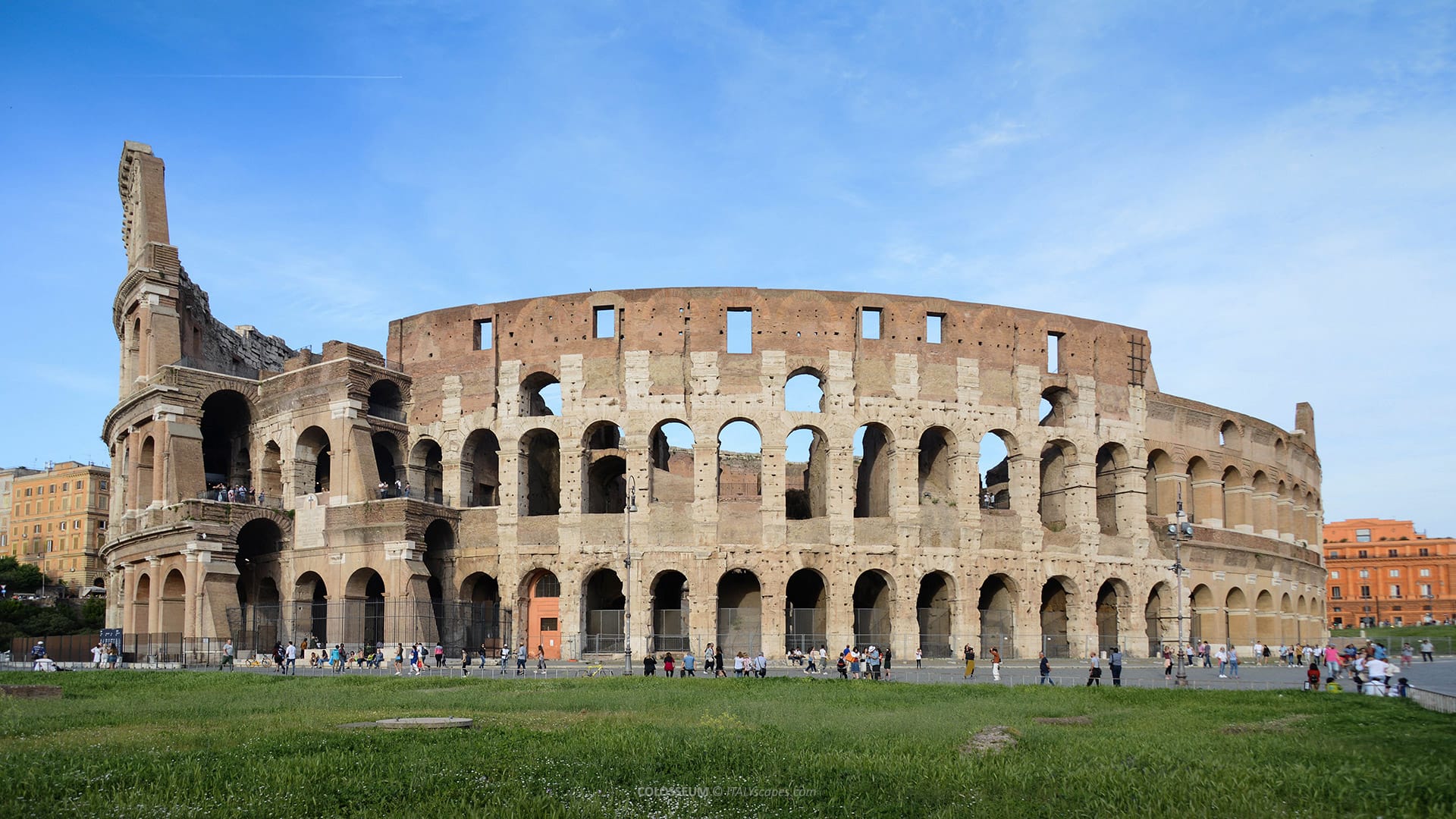
A first visit to Rome should include the archaeological area centred on the Colosseum, Roman Forum, and Palatine Hill. Together, these sites document imperial entertainment, politics, religion, commerce, public ceremonies, and elite residential life across some of the most important surviving remains of the ancient Roman capital.
The Pantheon provides a different perspective on Roman architecture and engineering. Its monumental concrete dome and central oculus remain exceptional achievements of antiquity, while its conversion into a Christian church contributed to its preservation. Piazza Navona and the Trevi Fountain can be reached easily through the surrounding historic centre.
Vatican City deserves a substantial part of a separate sightseeing day. St Peter’s Basilica, St Peter’s Square, and the Vatican Museums contain major religious, historical, and artistic collections, including the Sistine Chapel. Visitors entering the museums should reserve several hours rather than treating the complex as a brief stop.
Baroque Rome can be explored through Piazza Navona, the Trevi Fountain, Piazza di Spagna, historic churches, fountains, streets, and palaces. Villa Borghese provides gardens and cultural institutions, offering a quieter environment when visitors want a break from the densely visited archaeological and monumental areas of the centre.
Concert days are best organised conservatively during the hottest part of summer. Visiting major attractions during the morning, stopping for lunch, and allowing time to rest before travelling toward Capannelle is more practical than completing an exhausting full-day itinerary immediately before an outdoor evening concert.
Nearby Cities and Day Trips
Tivoli is one of the most rewarding excursions from Rome because it combines archaeology, Renaissance architecture, gardens, and landscape. Villa Adriana preserves the extensive imperial residence created for Emperor Hadrian, while Villa d’Este is renowned for its terraces, fountains, hydraulic systems, and Renaissance garden architecture.
Ostia Antica provides a different perspective on the ancient Roman world. The former port city preserves streets, baths, temples, warehouses, apartment buildings, houses, shops, and a theatre, offering detailed evidence of everyday urban functions that complements the monumental political and ceremonial structures found in central Rome.
The Castelli Romani southeast of the capital offer hill towns, volcanic lakes, historic villas, local food, and wine traditions. Castel Gandolfo overlooks Lake Albano and contains the Papal Palace, while Frascati is associated with historic villas and wine production, providing a contrasting environment to the centre of Rome.
Florence and Naples are also accessible from Rome by high-speed railway, but both are more practical as full-day excursions when no evening performance is scheduled. Travellers attending a concert should avoid tight return connections that could interfere with admission times and the onward journey toward the venue.
What to Eat
Roman pasta is represented by several famous dishes constructed from relatively few ingredients. Cacio e pepe combines pasta, Pecorino Romano, and black pepper, while gricia introduces guanciale. Traditional carbonara uses eggs, Pecorino Romano, guanciale, and black pepper, without the cream frequently added in non-Roman versions.
Amatriciana combines tomato, guanciale, Pecorino Romano, and pasta. Although its historical roots are associated with Amatrice, northeast of Rome, the dish became firmly integrated into the capital’s culinary tradition and today appears widely on menus in Roman trattorias and restaurants throughout the city.
For a faster meal, supplì are fried rice croquettes commonly containing mozzarella, while pizza al taglio is baked in large rectangular trays and sold in cut portions. Both work particularly well when visitors want traditional Roman food without spending a long period in a restaurant before travelling to Capannelle.
Traditional Roman cooking also includes saltimbocca alla romana and coda alla vaccinara, while artichokes appear in dishes such as carciofi alla romana and carciofi alla giudia when they are in season. For something sweet, the maritozzo, traditionally filled with whipped cream, remains one of Rome’s characteristic pastries.

Frequently Asked Questions About Rock in Roma 2027
When will Rock in Roma 2027 take place?
The complete Rock in Roma 2027 calendar has not yet been announced. Based on the festival’s usual scheduling pattern, the main programme is expected to take place during June and July 2027, with individual concerts possibly extending into August or September.
Where is Rock in Roma 2027 held?
The Rock in Roma 2027 programme currently uses the Ippodromo delle Capannelle, the historic racecourse located on Via Appia Nuova in southeast Rome. Capannelle has served as Rock in Roma’s principal headquarters since the festival was founded in 2009.
Is Rock in Roma 2027 a traditional multi-day festival?
No. Rock in Roma 2027 mainly consists of separately ticketed concerts distributed across several weeks rather than one uninterrupted weekend with multiple simultaneous stages. Each event operates with its own date, admission conditions, timetable, audience, and production arrangements.
How can I reach the Ippodromo delle Capannelle?
Visitors can use Capannelle railway station, which lies within walking distance of the racecourse, or combine Metro Line A with local buses serving the area from stations including Cinecittà and Colli Albani. Concert-specific transport information should also be checked before travelling.
Can I visit Rome before attending a concert?
Yes. The festival’s concert format makes it easy to combine daytime sightseeing with an evening performance. Visitors should nevertheless leave sufficient time for rest, travel to the venue, queues, security procedures, and admission, particularly during the hottest summer months.
What can I visit near Rome during the Rock in Roma 2027?
Popular excursions include Tivoli, Ostia Antica, Castel Gandolfo, and Frascati. These destinations provide different combinations of Roman archaeology, Renaissance villas, formal gardens, lakes, historic towns, religious heritage, local food, and landscapes outside the densely built centre of the capital.
Buy tickets:TicketOne -
Photos
-
Video
Table of Contents
-
Map
-
Reviews
-
Related events