-
About
Table of Contents
The Cathedral of Santa Maria Assunta, also known as Como Cathedral, is the principal Catholic church of Como, located in Piazza del Duomo, near the southern shores of Lake Como. Dedicated to the Assumption of the Virgin Mary, it is one of northern Italy’s most important religious monuments, combining Gothic, Renaissance, and Baroque architecture.
Construction began in 1396 and continued for approximately three and a half centuries, culminating in the completion of its monumental dome in 1744. The Cathedral of Santa Maria Assunta is renowned for its elaborate marble façade, remarkable sculptures, Renaissance paintings, historic tapestries, and magnificent interior. Today, it remains the seat of the Diocese of Como.
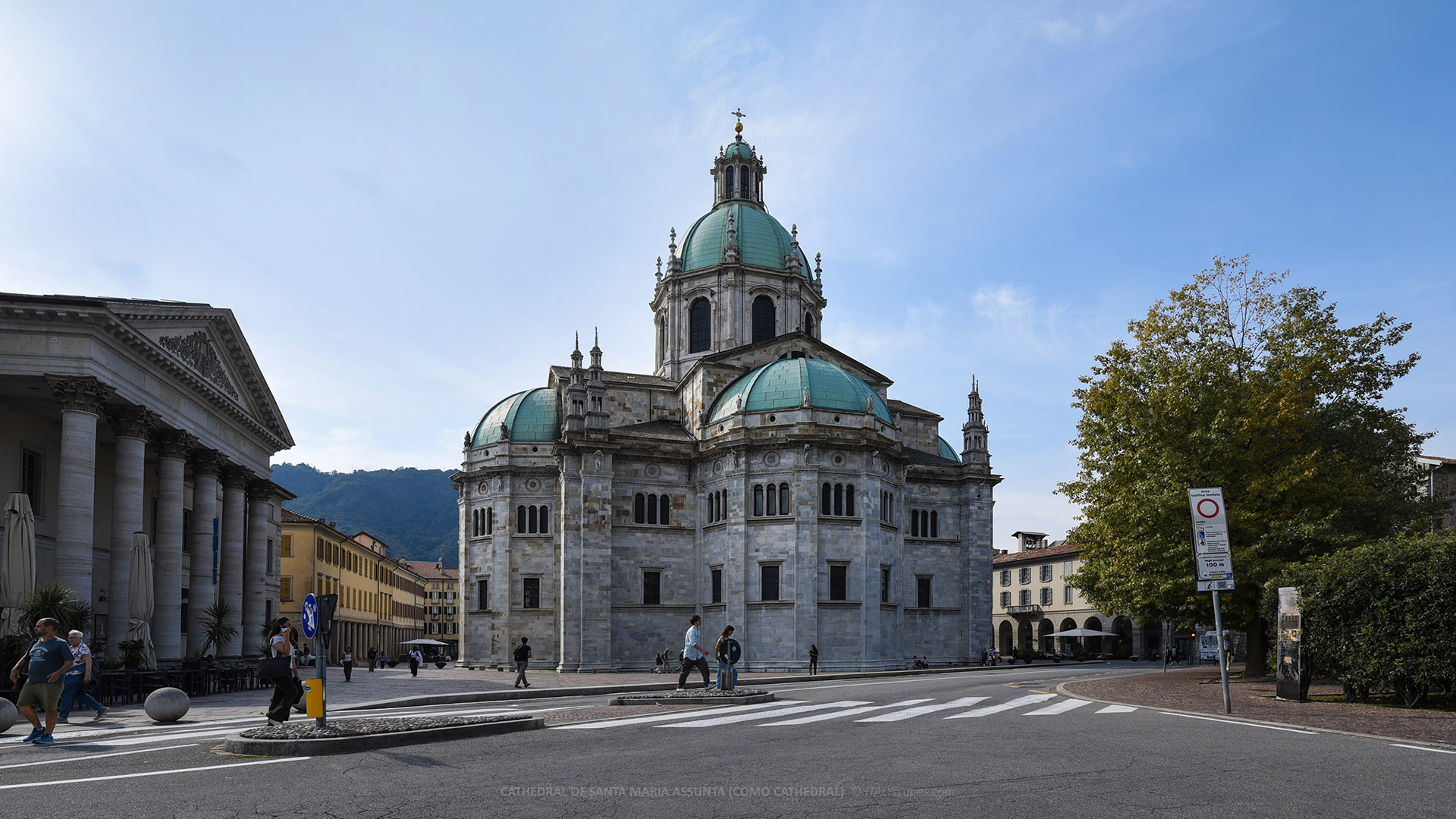
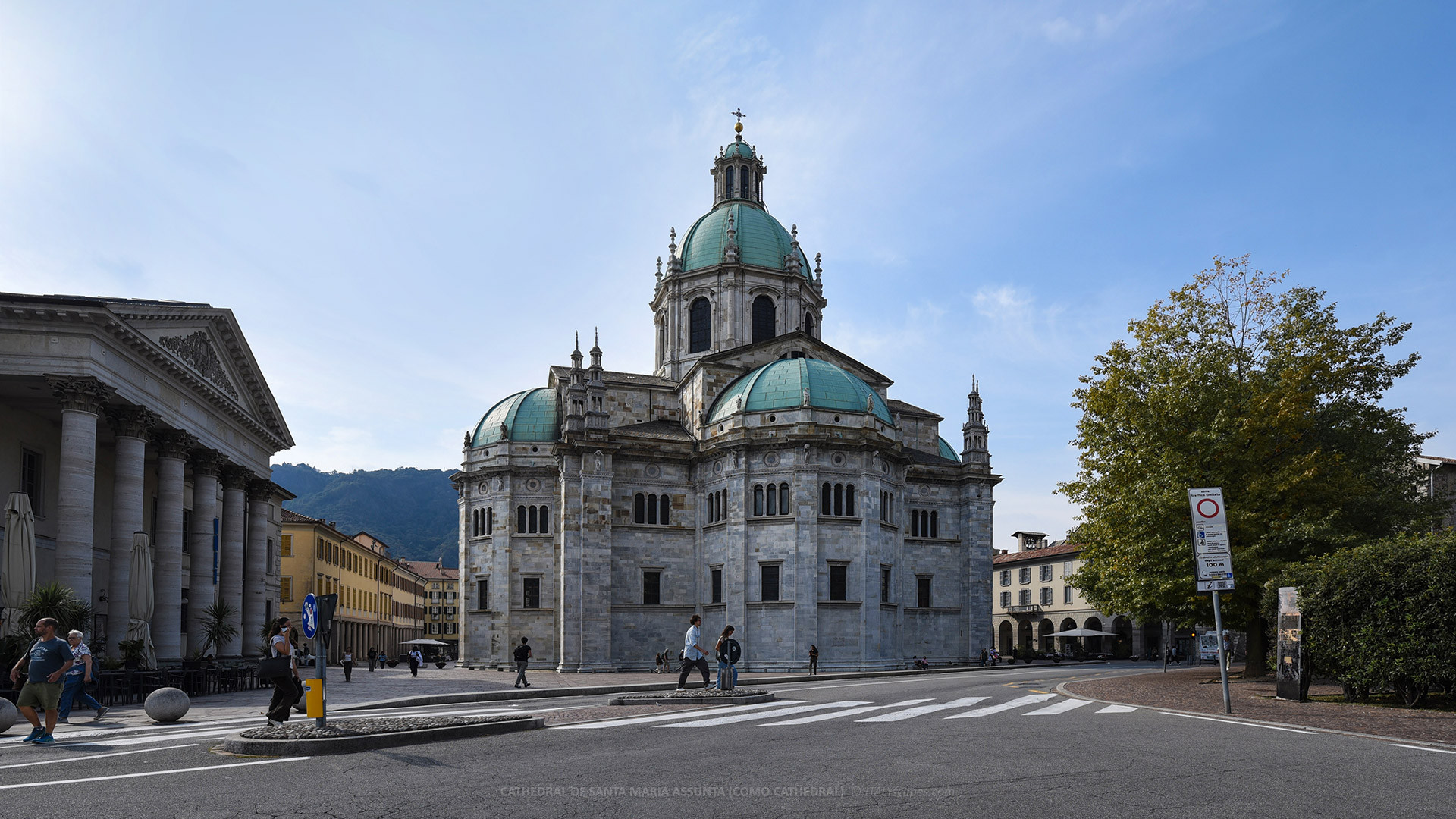
Como Cathedral, featuring its magnificent dome and Renaissance architecture.
Short History of the Cathedral of Santa Maria Assunta (Como Cathedral)
The Origins of the Cathedral
The history of the cathedral is closely connected with the establishment of Christianity in Como, which developed during the late Roman period. The first Christian communities constructed religious buildings outside the ancient city walls, while subsequent urban transformations gradually established important ecclesiastical institutions within the historic centre.
The cathedral’s immediate predecessor was the Church of Santa Maria Maggiore, which served as the episcopal church by the early 11th century. Its location near the former bishop’s palace reflected the importance of this area within Como’s religious administration and the development of the medieval city.
During the following centuries, Santa Maria Maggiore became increasingly inadequate for the growing urban community. Its relatively limited dimensions and problems associated with flooding contributed to the decision to construct a more substantial religious building, capable of accommodating important ceremonies and expressing the city’s ecclesiastical prestige.
The foundation of the new cathedral was established in 1396, during a period when the Visconti dynasty controlled Como and much of Lombardy. Its construction developed alongside other major religious projects within the duchy, including Milan Cathedral and the monumental Certosa di Pavia.
The Medieval Construction
The original architectural programme followed the principles of Late Gothic architecture, with an emphasis on vertical structures, pointed arches, and ribbed vaults. Lorenzo degli Spazzi, an architect associated with the construction of Milan Cathedral, provided advice during the earliest documented phase of the project.
Although the foundation date is recorded as 1396, building activities progressed irregularly during the following decades. An important interruption occurred between 1402 and 1426, demonstrating the financial and organizational difficulties associated with constructing such an ambitious monument over several generations.
In 1426, Pietro da Breggia assumed responsibility for important construction works, including the principal pillars and vaulted structures. He remained associated with the project until 1452, although his responsibilities elsewhere in the Duchy of Milan sometimes required his absence from Como.
The construction advanced considerably during the second half of the 15th century. Sections of the adjoining Broletto, Como’s medieval town hall, were demolished to provide additional space. This intervention permanently transformed the architectural relationship between the cathedral and the surrounding civic buildings.
Renaissance Expansion and Architectural Changes
During the late 15th century, architectural preferences gradually shifted towards the principles of the Renaissance. The cathedral’s governing authorities commissioned new designs intended to extend the building eastwards, introducing architectural forms different from those employed in the original medieval structure.
In 1487, Tommaso Rodari was appointed chief architect of the construction project. His responsibilities included preparing the eastern extension and supervising several building operations. Rodari worked closely with other architects and craftsmen, contributing to the transition towards a more classical architectural vocabulary.
The definitive arrangement of the eastern section was influenced by Cristoforo Solari, whose design principles introduced classical columns, entablatures, and semicircular arches. Construction of the apsidal structures continued throughout the 16th century, with further interventions undertaken during the following century.
Several architects contributed to these later works, including Franchino della Torre, Leonardo da Carona, Francesco Maria Richini, and Carlo Buzzi. Their involvement illustrates the unusually prolonged construction process, during which successive generations modified earlier proposals while preserving the cathedral’s overall architectural proportions.
The Completion of the Dome and Later Restorations
The final major construction phase concerned the enormous dome above the crossing. After several unsuccessful proposals, the Cathedral of Santa Maria Assunta authorities approved a design by Filippo Juvarra, one of the leading Italian architects of the Late Baroque period. Construction began during the 1730s and was completed in 1744.
The 19th century brought modifications to several interior furnishings and chapels, alongside the installation of stained-glass windows. These interventions reflected changing artistic preferences and devotional requirements, particularly the influence of Neoclassicism and the renewed appreciation of medieval architectural traditions.
On September 27, 1935, a serious fire damaged the dome, requiring extensive restoration. The reconstruction involved removing parts of an earlier protective covering and repairing the damaged structure. Restoration of the interior decorative elements continued during the following decades, extending into the early 1950s.
Another significant incident occurred in November 1990, when lightning struck the central pinnacle of the façade. Falling fragments damaged the surrounding area and prompted an extensive restoration campaign, completed in 1993. Further conservation interventions have continued to protect the cathedral’s architectural and artistic heritage.
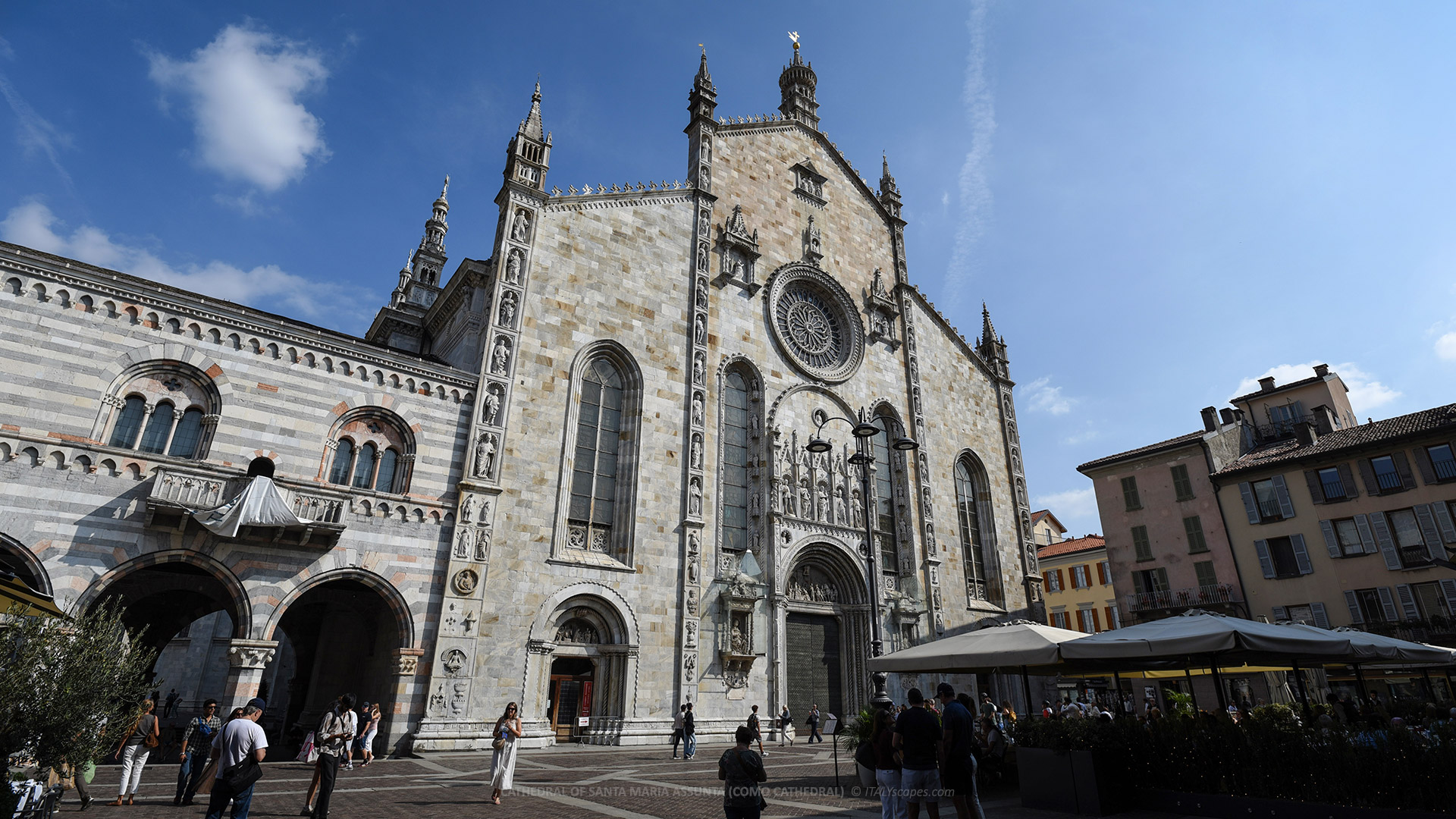
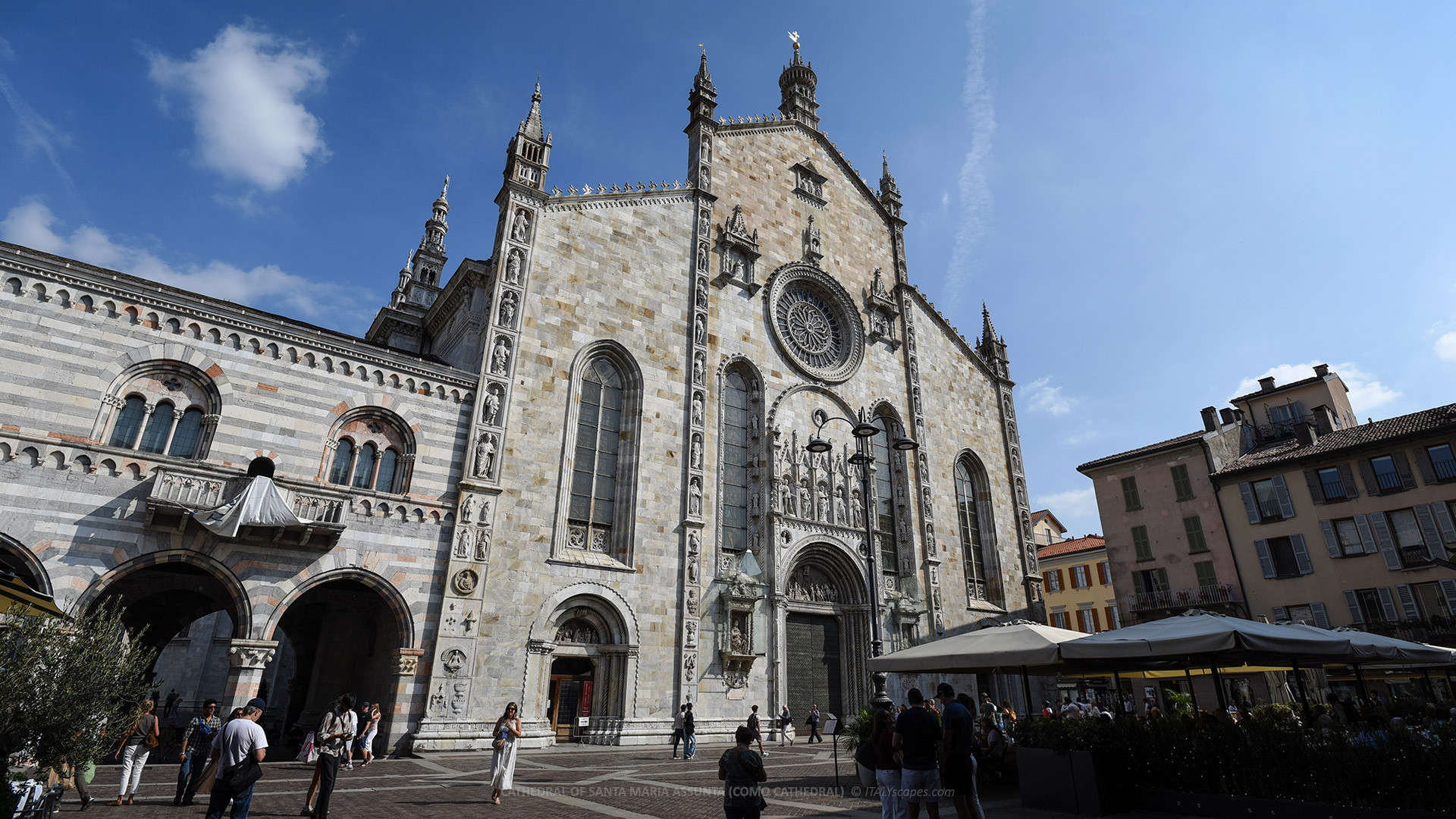
The Cathedral of Santa Maria Assunta, with its ornate Gothic façade and rose window.
Architecture of the Cathedral of Santa Maria Assunta (Como Cathedral)
The Main Façade and Its Sculptural Decorations
The cathedral’s monumental façade was constructed principally between 1457 and 1486, using white marble from Musso, on Lake Como. Its composition combines the vertical emphasis of Late Gothic architecture with decorative elements anticipating the Renaissance, creating an elaborate surface articulated by pillars, pointed arches, sculptures, and ornamental details.
The façade is divided into three vertical sections, corresponding to the interior naves. Four decorated pilasters establish the principal architectural divisions, while the central section contains the main entrance, a large rose window, and a triangular upper structure crowned by a decorative pinnacle.
The architectural programme involved several craftsmen, including Florio da Bontà, Amuzio da Lurago, and Luchino Scarabota. The latter contributed to the completion of the rose window and central pinnacle, while other sculptors worked on the decorative elements surrounding the entrances and upper portions.
Among the façade’s most remarkable features are the statues of Pliny the Elder and Pliny the Younger, two celebrated Roman authors associated with Como. Their presence on a Christian cathedral is unusual, reflecting the city’s pride in its classical heritage and the increasing influence of humanist culture during the Renaissance.
The Side Portals and Exterior Details
The cathedral’s lateral entrances preserve extraordinary examples of medieval and Renaissance sculpture. Many of these decorations were created by Tommaso Rodari and his brothers Giacomo and Donato, whose workshop contributed extensively to the architectural ornamentation of the building during the late 15th and early 16th centuries.
The northern entrance is particularly famous as the Porta della Rana, or Door of the Frog. Constructed around 1505-1507, the portal incorporates elaborate representations of plants, animals, and religious figures. A small sculpted frog, partially damaged in 1912, gives the entrance its distinctive popular name.
According to a local legend, the frog reached the cathedral during a period of severe flooding and remained there, eventually becoming part of the stone decoration. The story belongs to local folklore, while the sculptural figure itself is an authentic component of the portal’s elaborate ornamental programme.
On the southern side, the Porta delle Virtù presents another sophisticated sculptural composition. Its decoration includes representations of the theological and cardinal virtues, together with religious figures and scenes associated with the childhood of Jesus. The surrounding exterior walls incorporate additional architectural details, including historic inscriptions and decorative stonework.
The Interior Layout and Gothic Naves
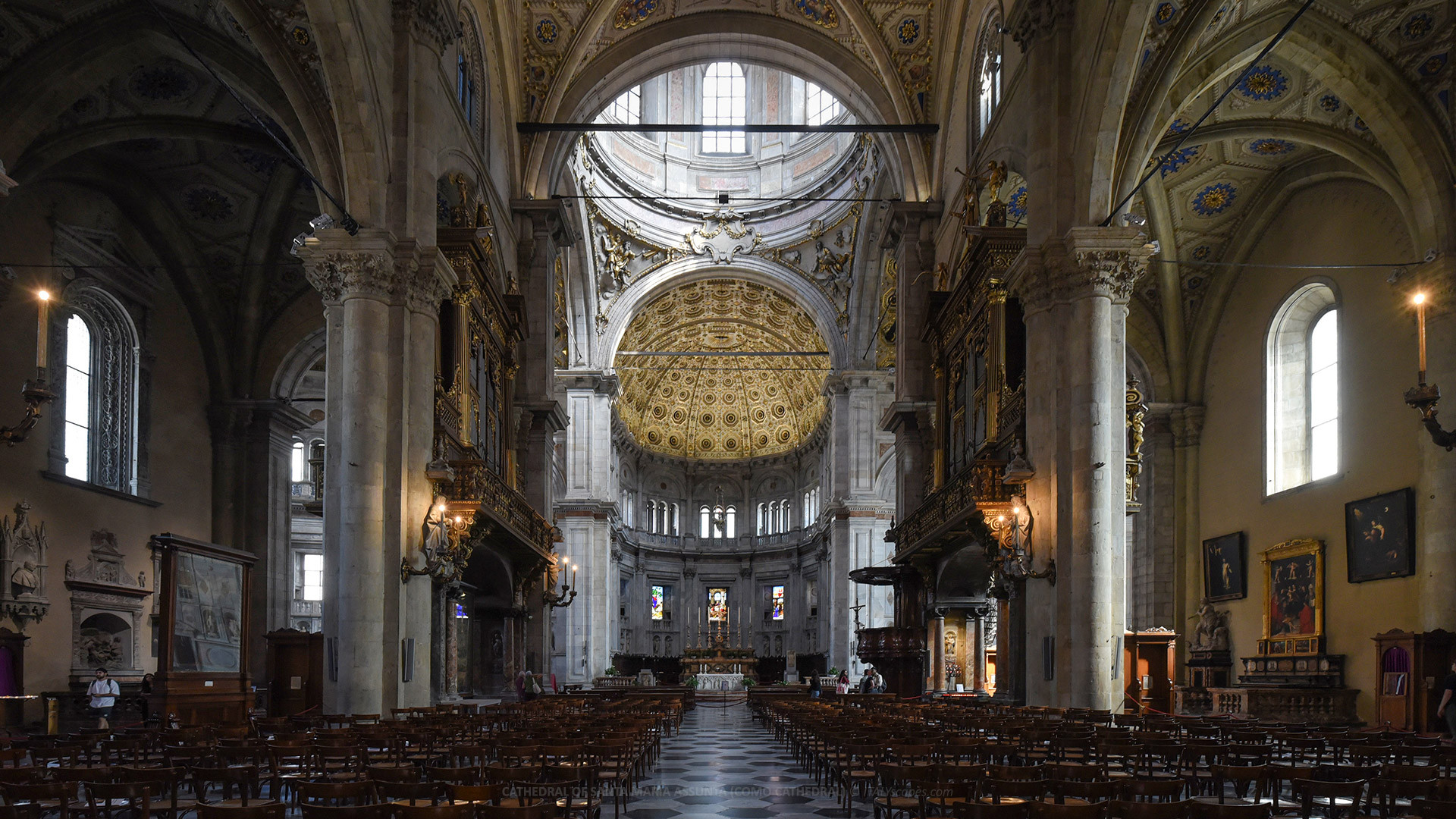
The cathedral has a Latin-cross plan, extending approximately 87 metres in length and reaching about 75 metres at the summit of its dome. Its interior is divided into three naves, connected with a large transept and a monumental eastern termination containing the principal sanctuary.
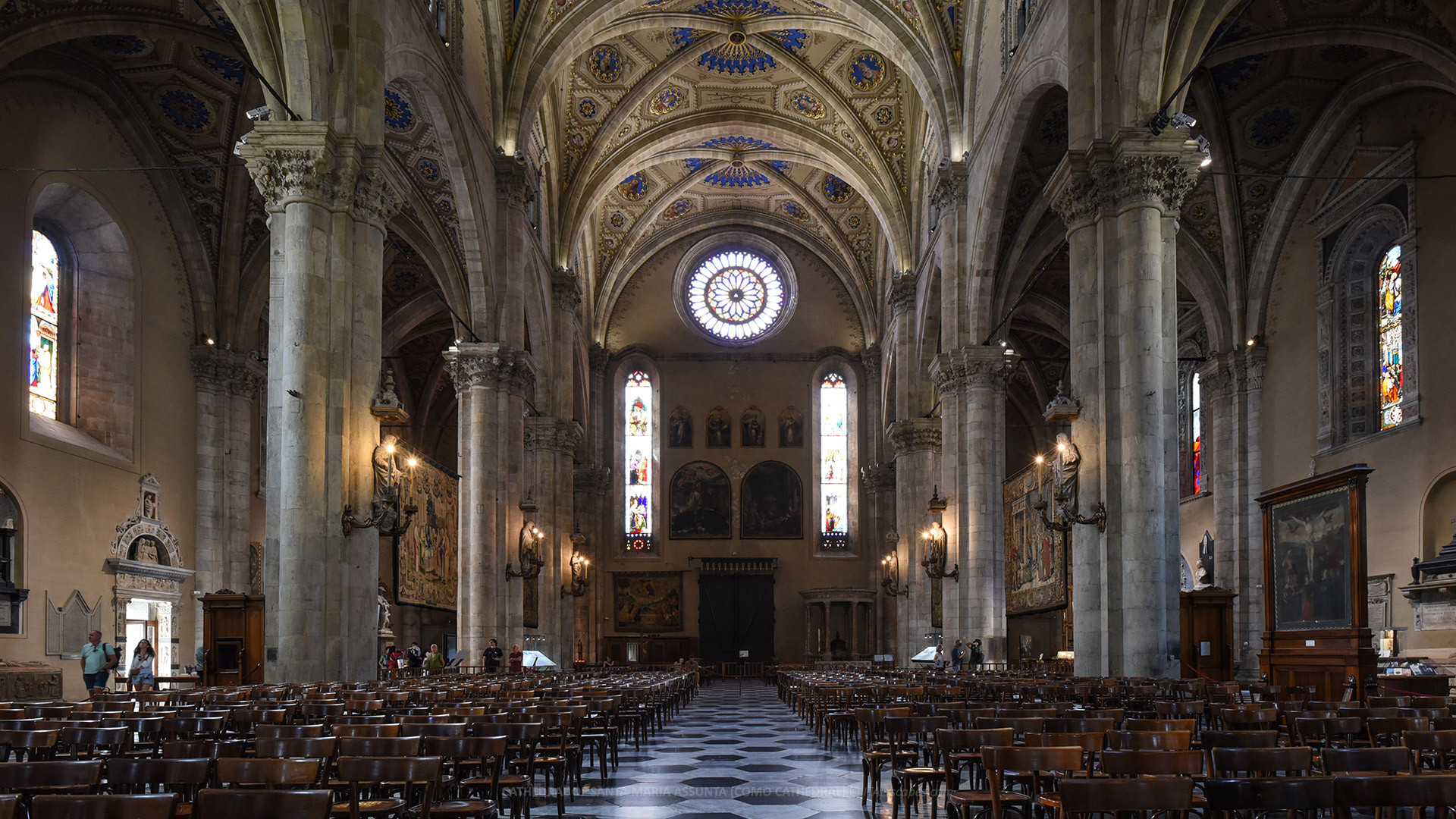
The medieval section is characterized by pointed arches and ribbed cross vaults, supported by twelve substantial clustered pillars. These elements establish a regular sequence of bays, creating a strong sense of verticality while distributing the weight of the vaulted ceilings through the supporting structures.
The interior pillars terminate in decorated capitals, incorporating carved foliage and other ornamental motifs. Their forms reflect the craftsmanship associated with northern Italian medieval construction, while the proportions of the central nave emphasize the relationship between structural efficiency and architectural monumentality.
The transition towards the eastern sanctuary introduces a noticeably different spatial arrangement. The classical architectural forms of the later sections contrast with the medieval naves, yet the continuity of proportions and carefully coordinated structural elements creates a coherent composition despite the centuries separating their construction.
The Apses and Monumental Dome
The eastern section incorporates three apsidal structures, developed primarily during the 16th and 17th centuries. Their exterior elevations feature classical pilasters, semicircular arches, and horizontal entablatures, demonstrating the influence of Renaissance architecture on the cathedral’s later construction phases.
The central apse provides the architectural setting for the principal sanctuary, while the lateral apses accommodate important devotional spaces. Their arrangement creates a monumental termination to the interior and establishes the structural foundations supporting the great dome above the crossing.
Designed by Filippo Juvarra, the dome represents the final major addition to the historic construction programme. Its architectural composition belongs to the Late Baroque tradition, characterized by dynamic proportions, a prominent drum, curved surfaces, and a carefully developed relationship between exterior mass and interior space.
The enormous dome dominates the skyline of Como, remaining visible from the lakefront and several surrounding streets. Its construction transformed the appearance of the historic centre, creating a monumental vertical landmark that complements the city’s medieval bell towers and neighbouring religious buildings.
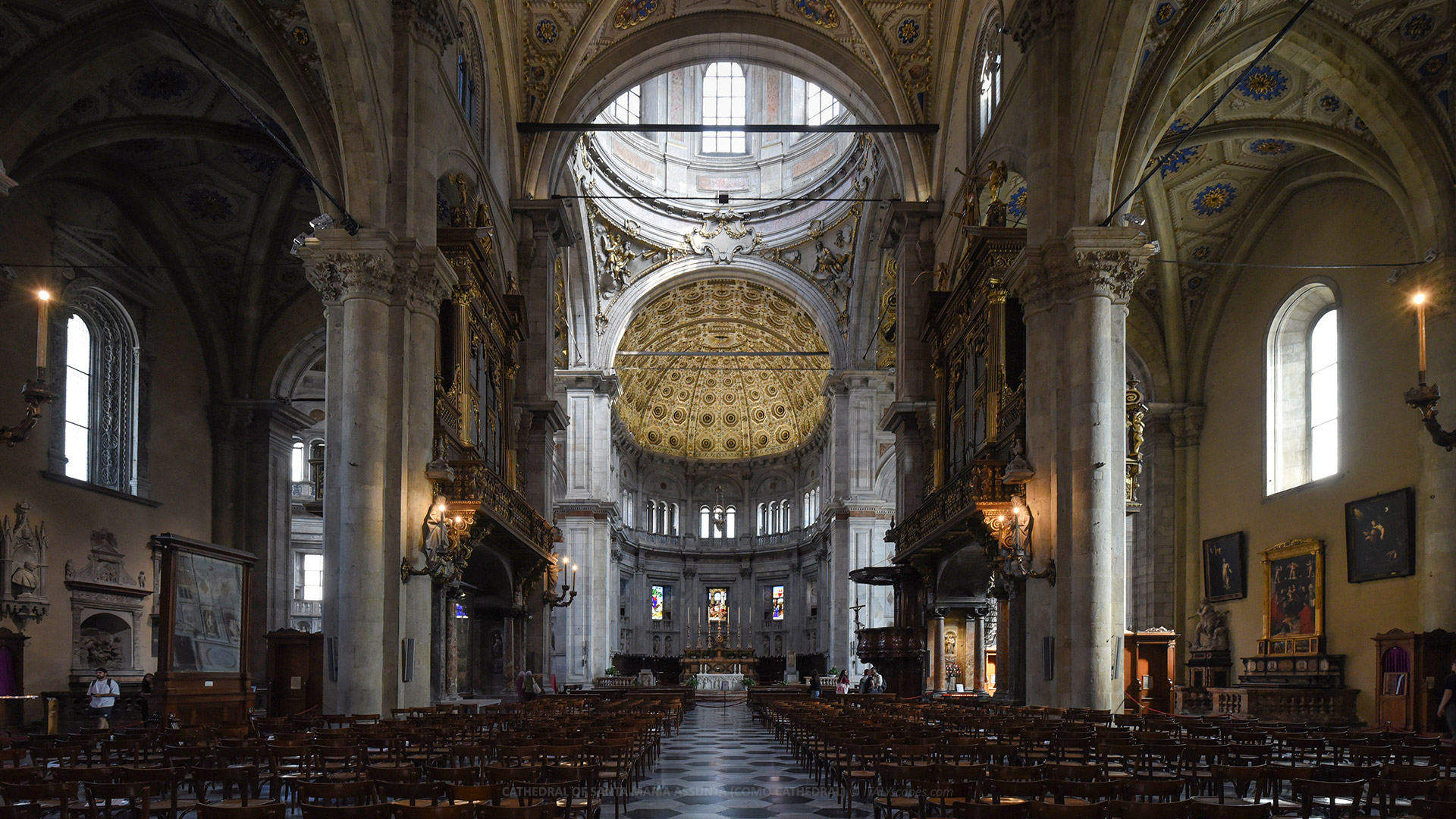
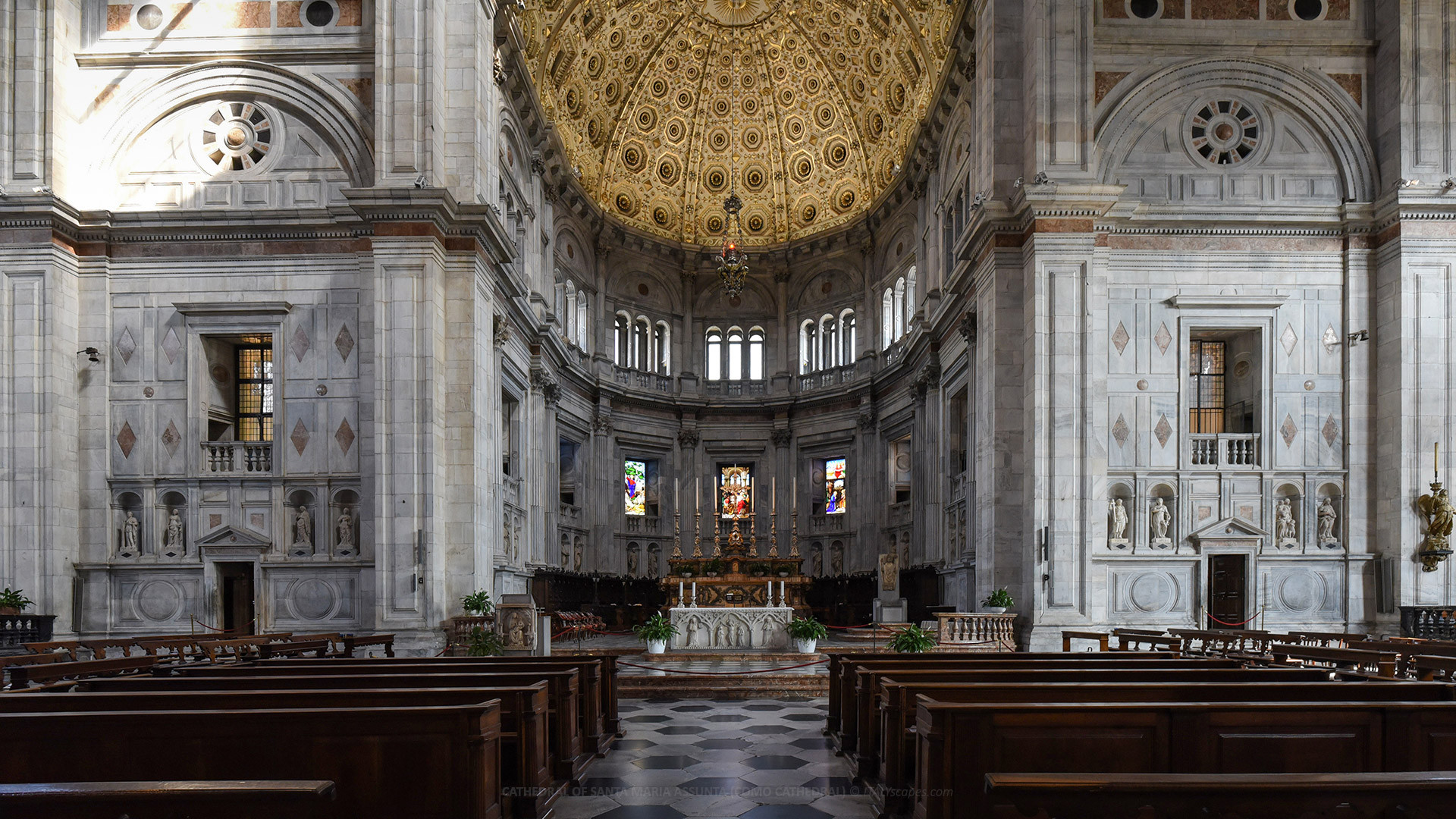
The magnificent interior of Como Cathedral, looking towards the main altar.
Art of the Cathedral of Santa Maria Assunta (Como Cathedral)
Renaissance Paintings and Religious Masterpieces
The cathedral preserves an important collection of Renaissance paintings, including works by Bernardo Luini, Gaudenzio Ferrari, and other artists active in northern Italy during the 16th century. Their compositions illustrate episodes from the lives of Jesus and the Virgin Mary, alongside representations of saints and religious devotion.
Among the most celebrated works is The Adoration of the Magi by Bernardino Luini, a painter strongly influenced by Leonardo da Vinci. The painting demonstrates the refined composition, delicate figures, and harmonious colours characteristic of Lombard Renaissance art during the early 16th century.
Another important painting is The Flight into Egypt by Gaudenzio Ferrari, an artist whose work combined expressive figures, dynamic compositions, and detailed landscape elements. The painting belongs to a period when northern Italian artists were developing increasingly sophisticated approaches to religious storytelling through visual imagery.
The cathedral also contains paintings by Giovanni Antonio de’ Sacchis, commonly known as Pordenone, and Pier Francesco Mazzucchelli, known as Morazzone. These artworks demonstrate the evolution of religious painting from the balanced compositions of the Renaissance towards the dramatic expressions associated with the Baroque period.
Sculpted Altars and Historical Religious Furnishings
Several important sculptures and furnishings originated in the earlier Church of Santa Maria Maggiore. Among them are medieval stone lions, subsequently adapted for use as holy-water basins. Their presence demonstrates how architectural fragments from previous buildings were incorporated into the new cathedral rather than discarded.
The cathedral also preserves a historic marble altar dating from 1317, decorated with Gothic reliefs. Additional medieval funerary monuments include the sarcophagi of bishops associated with Como’s religious administration, providing valuable evidence of artistic traditions preceding the present cathedral.
During the late 15th and early 16th centuries, Tommaso Rodari created several important sculpted altarpieces. These works incorporate biblical scenes, saints, and decorative elements inspired by classical antiquity, demonstrating the transition from medieval sculptural conventions towards the more naturalistic forms of the Renaissance.
The historic wooden altar dedicated to Saint Abbondius, one of Como’s most important patron saints, was carved by Giovan Angelo del Maino. Other important furnishings include the monumental Crucifix altar and later sculptural contributions by Pompeo Marchesi, associated with the development of Neoclassical religious art.
Tapestries, Stained Glass, and Decorative Arts
One of the cathedral’s most valuable artistic collections consists of historic tapestries dating from the 16th and 17th centuries. Produced in important European centres, including Brussels, Florence, and Ferrara, these textiles illustrate religious subjects and demonstrate the international artistic connections maintained by Como’s ecclesiastical institutions.
The tapestries incorporate sophisticated weaving techniques, extensive figurative compositions, and elaborate decorative borders. Their subjects reflect Christian traditions and religious teachings, while their production required considerable artistic and technical expertise. The collection represents an important example of European textile art preserved within an Italian religious monument.
The stained-glass windows introduce another significant decorative element. During the 19th century, artists including Pompeo and Giuseppe Bertini produced windows representing episodes from the New Testament. Their compositions introduced colour into the stone architecture, reflecting the period’s renewed interest in historic stained-glass traditions.
Additional decorations include stucco compositions representing The Assumption of the Virgin by Francesco Silva and The Resurrection by Agostino Silva. The dome’s pendentives contain representations of the Evangelists created by Gaspare Mola, while other decorative works belong to successive restoration and artistic campaigns.
The Monumental Organs and Sacred Music
The cathedral possesses an important tradition of organ music, documented as early as 1441. Over the following centuries, several generations of organ builders contributed to the development of increasingly sophisticated instruments, reflecting the central role of music within religious celebrations.
Two monumental organ cases occupy the final arches of the medieval section, forming a striking architectural transition towards the eastern sanctuary. Their Baroque decorations include carved wooden balustrades, angels playing musical instruments, and ornamental structures framing the impressive organ pipes.
The instruments underwent important modifications by renowned organ-building families, including the Antegnati, Serassi, and Mascioni. In 1649, the Flemish Jesuit Willem Hermans constructed an organ for the cathedral, while further renovations followed during the 19th and 20th centuries.
The present organ system incorporates approximately 6,515 pipes and 69 stops, distributed across different sections of the building. Its considerable dimensions and elaborate technical organization allow it to accompany religious celebrations and concerts, maintaining the cathedral’s long-standing association with sacred musical performance.
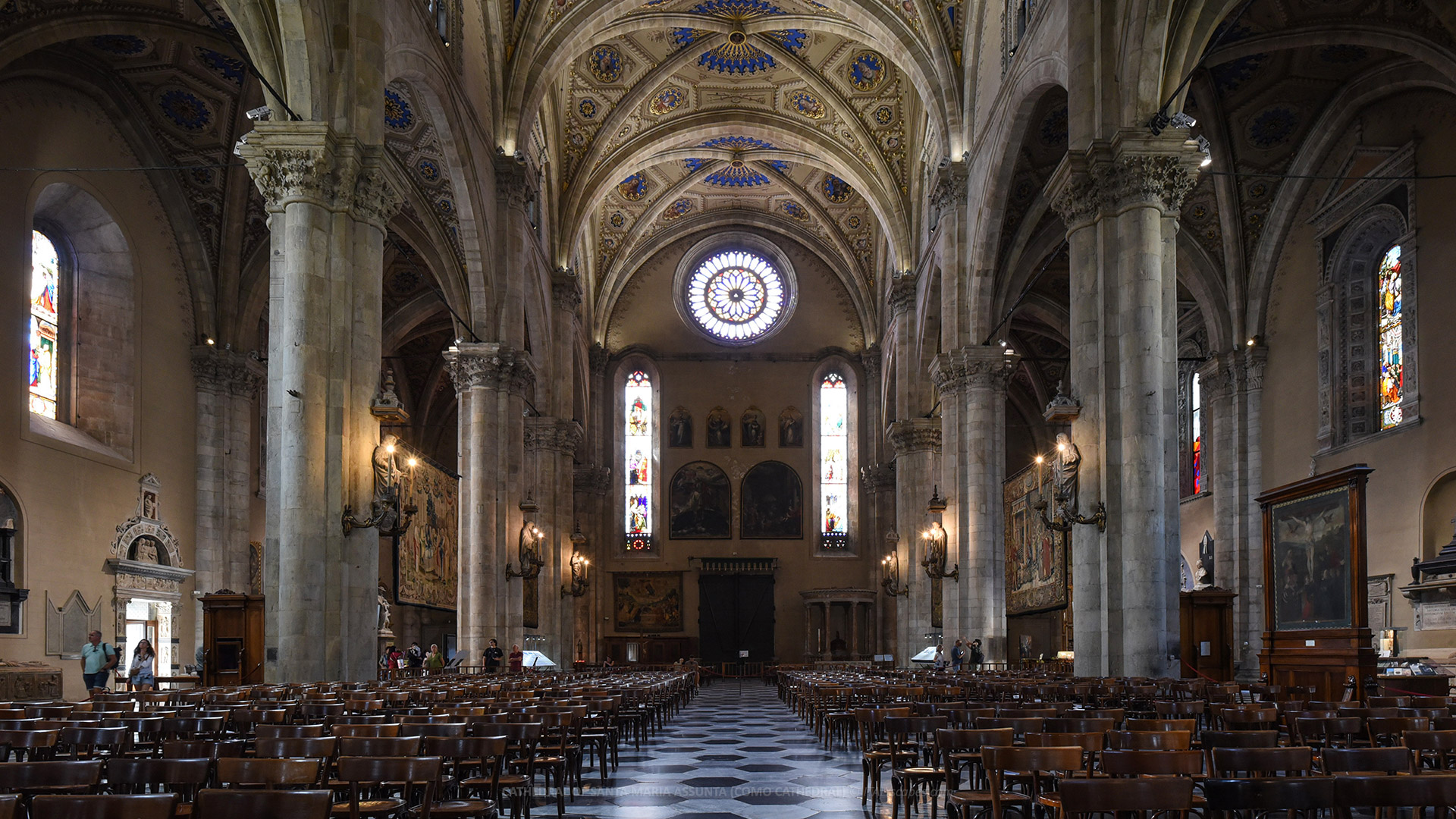
The Gothic nave of the Cathedral of Santa Maria Assunta, with its decorated vaults.
How to Get to the Cathedral of Santa Maria Assunta (Como Cathedral)
Como Cathedral is located in Piazza del Duomo, within the pedestrianized historic centre of Como. Its central position makes it easy to reach from both railway stations, the lakefront, and nearby bus stops. Visitors can also combine their visit with the adjoining Broletto and other historic attractions.
Getting to the Como Cathedral on foot
From Como Lago railway station, the cathedral can be reached in approximately 5-7 minutes. Leave the station towards the lakefront, continue along the streets leading into the historic centre, and follow the signs towards Piazza del Duomo. The monument’s impressive dome and façade are visible from several nearby locations.
Visitors arriving at Como San Giovanni railway station should allow approximately 15 minutes for the walk. Leave the station towards the historic centre and continue along the central streets towards Piazza Cavour or Via Caio Plinio, following the pedestrian directions to Piazza del Duomo.
The cathedral is also easily accessible from the lakefront ferry terminal, making it a convenient destination for visitors arriving by boat. From the central landing stages, walk southeast through Piazza Cavour and Via Caio Plinio, continuing towards the square surrounding the cathedral.
Getting to the Como Cathedral by bus
Como’s urban bus services are operated primarily by ASF Autolinee, providing connections between the railway stations, residential districts, and surrounding municipalities. Several routes stop around the perimeter of the historic centre, although buses do not normally enter Piazza del Duomo because of pedestrian restrictions.
One of the nearest bus stops is Como – Verdi, situated approximately three minutes on foot from the cathedral. Other useful stops include Como – Piazza del Popolo and those along Lungolario Trento, depending on the passenger’s route and point of departure.
Getting to the Como Cathedral by taxi
Licensed taxis are available at designated ranks throughout Como, including the area outside Como San Giovanni railway station. A journey towards the cathedral generally takes approximately 5-10 minutes, depending on traffic conditions and the selected route through the central urban districts.
Passengers should specify Piazza del Duomo as their destination and request the closest authorized drop-off point. Since the cathedral stands within a pedestrian area subject to traffic restrictions, taxis cannot normally approach the principal entrance directly.
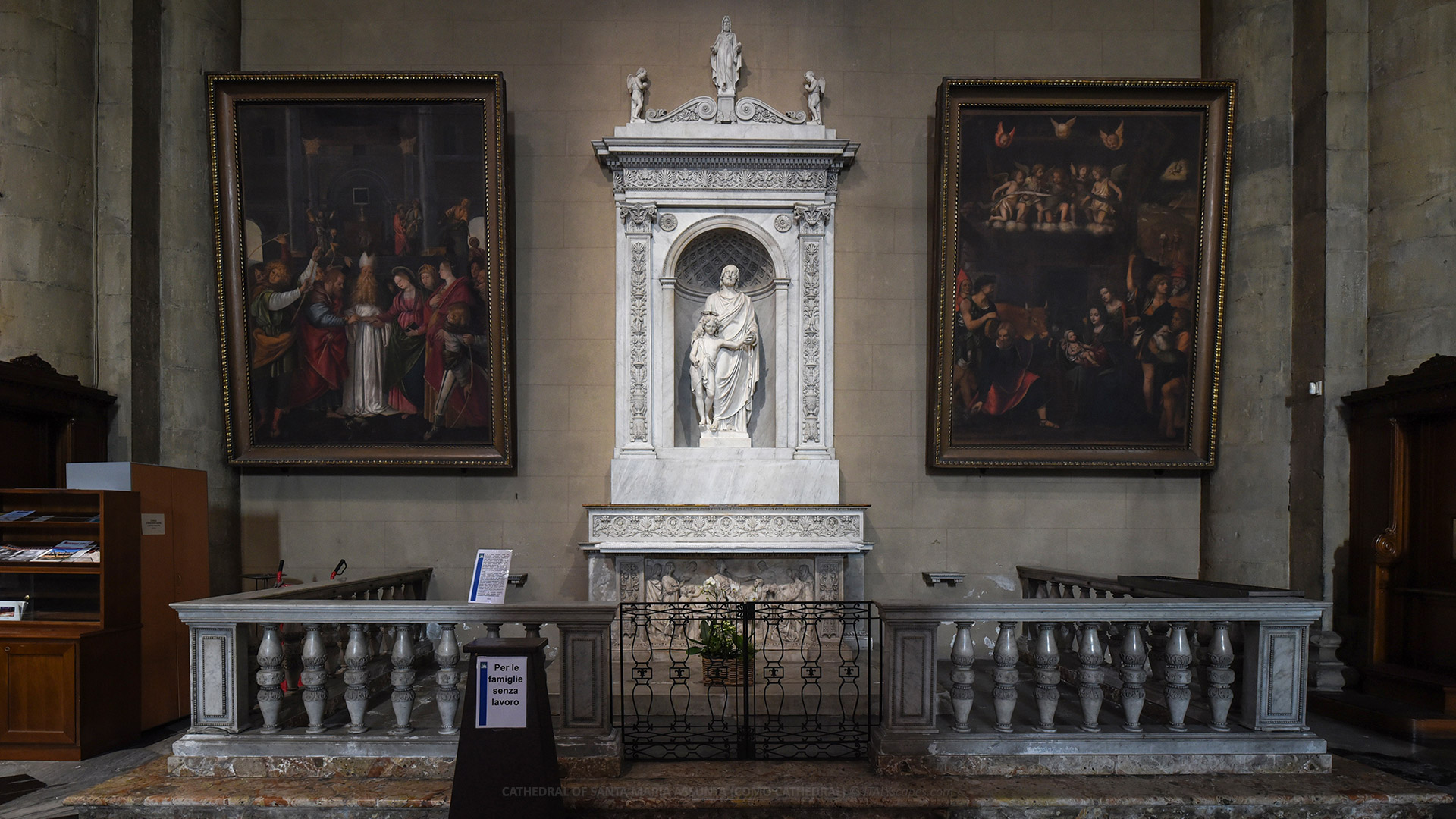
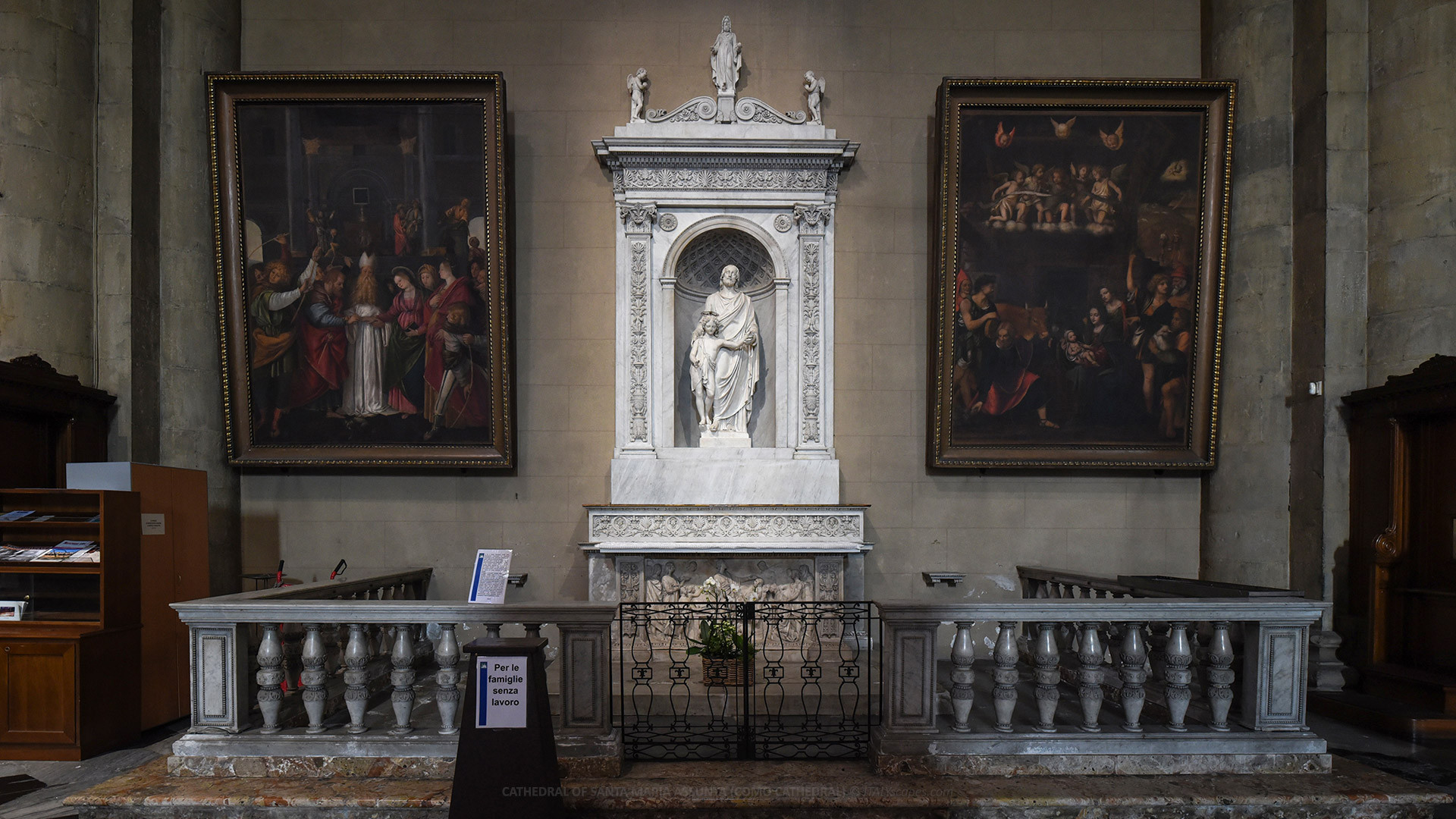
Altar of Saint Joseph, with marble sculptures and religious paintings.
Frequently Asked Questions about the Cathedral of Santa Maria Assunta (Como Cathedral)
Where is Como Cathedral located?
Como Cathedral is located in Piazza del Duomo, within the historic centre of Como, Lombardy, northern Italy, approximately five minutes on foot from the central lakefront.
When was the Cathedral of Santa Maria Assunta built?
Construction began in 1396 and continued through several architectural phases. The monumental dome was completed in 1744, approximately three and a half centuries after the original foundation.
What architectural style is Como Cathedral?
The Cathedral of Santa Maria Assunta combines Late Gothic, Renaissance, and Baroque architecture, reflecting its unusually long construction period and the contributions of numerous architects and craftsmen.
Who designed Como Cathedral?
Its original architect is not definitively identified. Important contributors included Lorenzo degli Spazzi, Pietro da Breggia, Tommaso Rodari, Cristoforo Solari, and Filippo Juvarra.
What are the most famous artworks inside Como Cathedral?
Important artworks include Renaissance paintings by Bernardino Luini and Gaudenzio Ferrari, historic tapestries, elaborate sculpted altars, and religious decorations created between the medieval and modern periods.
What is the Porta della Rana?
The Porta della Rana, or Door of the Frog, is an elaborately sculpted northern entrance featuring a small stone frog hidden among its decorative elements.
Is Como Cathedral free to visit?
A free tourist route provides access to designated areas of the naves. A paid ticket is required for additional spaces, including the transept, sacristies, and upper galleries.
-
Photos
-
Video
Table of Contents
-
Map
-
Reviews