
Table of Contents
A Dessert Born in Calabria
Among the most famous desserts in southern Italy, Tartufo di Pizzo occupies a special place in Calabrian gastronomy. Originating in Pizzo, the dessert became one of the strongest culinary symbols of the region and one of the best-known Italian ice cream specialties worldwide.
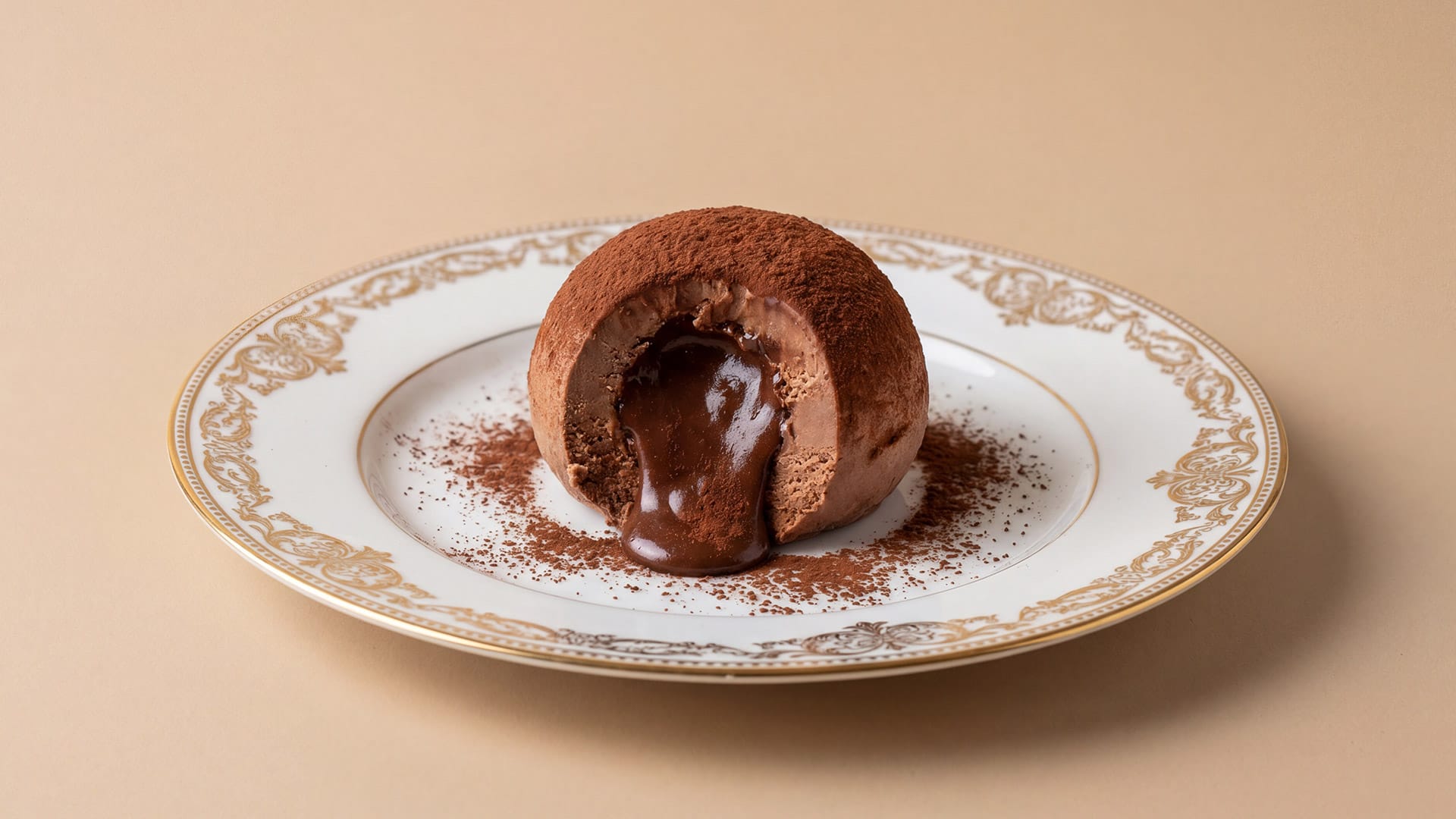
Tartufo di Pizzo is a handcrafted ice cream dessert traditionally made with hazelnut and chocolate gelato. At its center is a core of melted dark chocolate, while the exterior is covered with bitter cocoa powder and sugar.
The dessert takes its name from its resemblance to a truffle, known in Italian as tartufo. Its rounded shape and cocoa coating recall the appearance of the famous underground fungus, although the dessert itself contains no truffle ingredients.
Today, Tartufo di Pizzo is closely associated with the identity of Pizzo, a seaside town overlooking the Tyrrhenian Sea in the province of Vibo Valentia.
The Origins of Tartufo di Pizzo
The origins of Tartufo di Pizzo date back to the 1940s and 1950s. The story begins when master pastry chef Dante Veronelli took over the Gran Bar Excelsior in the historic center of Pizzo in 1940. The establishment was later renamed Gelateria Dante.
To expand the business, Veronelli collaborated with a young pastry chef from Messina named Giuseppe De Maria, locally known as “Don Pippo”. De Maria would later become the central figure in the history of Tartufo di Pizzo.
According to the most widely accepted version of the story, the dessert was created accidentally around 1952 during preparations for a wedding celebration or important banquet. Don Pippo reportedly ran out of molds needed to prepare traditional portions of ice cream.
To solve the problem, he shaped portions of hazelnut and chocolate ice cream directly in the palm of his hand. He added melted dark chocolate in the center, wrapped the mixture in food paper, and cooled it until compact. The result became the modern Tartufo di Pizzo.
The improvised dessert immediately achieved success among guests. Over time, it evolved into the culinary symbol of Pizzo itself.
The Role of Giuseppe De Maria
Giuseppe De Maria remains the most important figure associated with the creation of Tartufo di Pizzo. Originally from Sicily, he brought pastry-making experience from the Messina area to Calabria.
After Dante Veronelli’s death, De Maria became the sole owner of Gelateria Dante. Under his leadership, the dessert spread rapidly across Pizzo and later throughout Calabria.
His preparation method became legendary because it relied entirely on artisanal production. Traditional Tartufo di Pizzo was modeled by hand rather than produced industrially.
This manual preparation technique became one of the dessert’s defining characteristics. Even today, authentic versions are still associated with handcrafted production methods.
The influence of De Maria extended beyond a single recipe. He helped establish Pizzo as one of the most important gelato destinations in southern Italy.
Ingredients and Traditional Preparation
Traditional Tartufo di Pizzo consists mainly of hazelnut and chocolate ice cream. At the center lies molten dark chocolate, which becomes visible when the dessert is cut open.
The outer layer is covered with bitter cocoa powder and sugar. The combination creates strong contrasts between temperature, texture, sweetness, and bitterness.
One of the most distinctive elements of the original preparation is the hand-shaped structure. The gelato is pressed and molded manually to create the characteristic spherical or semi-spherical form.
Some historical variations also included ingredients such as caramel, gianduia cream, almonds, or liqueur.
The artisanal nature of the dessert remains essential to its identity. Unlike mass-produced ice cream products, authentic Tartufo di Pizzo emphasizes manual craftsmanship and fresh preparation.
The dessert is traditionally served frozen but soft enough for the chocolate center to remain partially liquid.
The Connection Between Tartufo and Pizzo
Over time, Tartufo di Pizzo became inseparable from the image of Pizzo itself. The town is now internationally associated with the dessert.
Pizzo, located on a rocky cliff above the Tyrrhenian Sea, already possessed a strong maritime identity connected to fishing and coastal trade. However, Tartufo gradually transformed the town into one of Calabria’s most recognizable gastronomic destinations.
Today, Piazza della Repubblica, the town’s central square, is filled with historic gelaterias and cafés serving tartufo to both locals and tourists.
Many visitors arrive in Pizzo specifically to taste the dessert in its place of origin. This gastronomic tourism became an important component of the local economy.
The dessert also helped strengthen Calabria’s broader culinary reputation. Alongside products such as Tropea onions and ’nduja, Tartufo di Pizzo became one of the region’s most famous specialties.
From Local Specialty to International Fame
Although born in a small Calabrian town, Tartufo di Pizzo eventually achieved international recognition. Italian restaurants around the world began offering versions of tartufo-inspired desserts.
However, many local producers insist that authentic Tartufo di Pizzo differs substantially from industrial adaptations found outside Calabria.
Traditional producers emphasize the importance of artisanal preparation, fresh ingredients, and local expertise. In many cases, commercial imitations use industrial techniques that differ significantly from the original hand-shaped dessert.
The global popularity of tartufo-style desserts increased interest in Pizzo itself. Culinary tourism, food journalism, and international travel articles contributed to the town’s growing visibility.
Today, Pizzo is often described as one of the symbolic towns of artisanal gelato culture in southern Italy.
Artisanal Production and Local Gelaterias
The artisanal production of Tartufo di Pizzo remains central to local identity. Historic gelaterias continue to compete through quality, tradition, and preparation techniques.
Several businesses connected to the dessert trace their origins directly to the first generation of pastry chefs who worked with Don Pippo or learned from his methods.
Traditional preparation requires careful balancing of texture and temperature. The ice cream must remain compact enough to hold its shape while preserving the soft chocolate center.
Hand preparation also means that each tartufo can appear slightly different. This irregularity is often considered evidence of authentic artisanal production.
The dessert became so important locally that multiple gelaterias in Pizzo developed their own interpretations and family traditions connected to the recipe.
Despite modernization and tourism growth, artisanal gelato culture remains one of the defining characteristics of the town center.
Tartufo di Pizzo and Official Recognition
Tartufo di Pizzo eventually received official recognition as a traditional Italian food product. It entered the list of traditional regional agri-food products recognized by the Italian Ministry of Agricultural Policies.
This recognition helped reinforce the connection between the dessert and its place of origin. The name “Tartufo di Pizzo” itself emphasizes the importance of geographic authenticity.
The relationship between Italian gastronomy and territorial identity plays a major role in the preservation of traditional recipes. In the case of Tartufo di Pizzo, the dessert is viewed not only as food, but also as part of Calabria’s cultural heritage.
The recognition also increased the product’s visibility within international tourism and culinary media.
Tourism and the Culture of Gelato
Tourism transformed Tartufo di Pizzo into one of Calabria’s most important gastronomic attractions. During summer months, thousands of visitors stop in Pizzo to taste the dessert in the town where it originated.
Gelaterias in the historic center often serve tartufo outdoors in the main square overlooking the sea. This experience became part of the town’s cultural identity and tourist image.
Variations of the Dessert
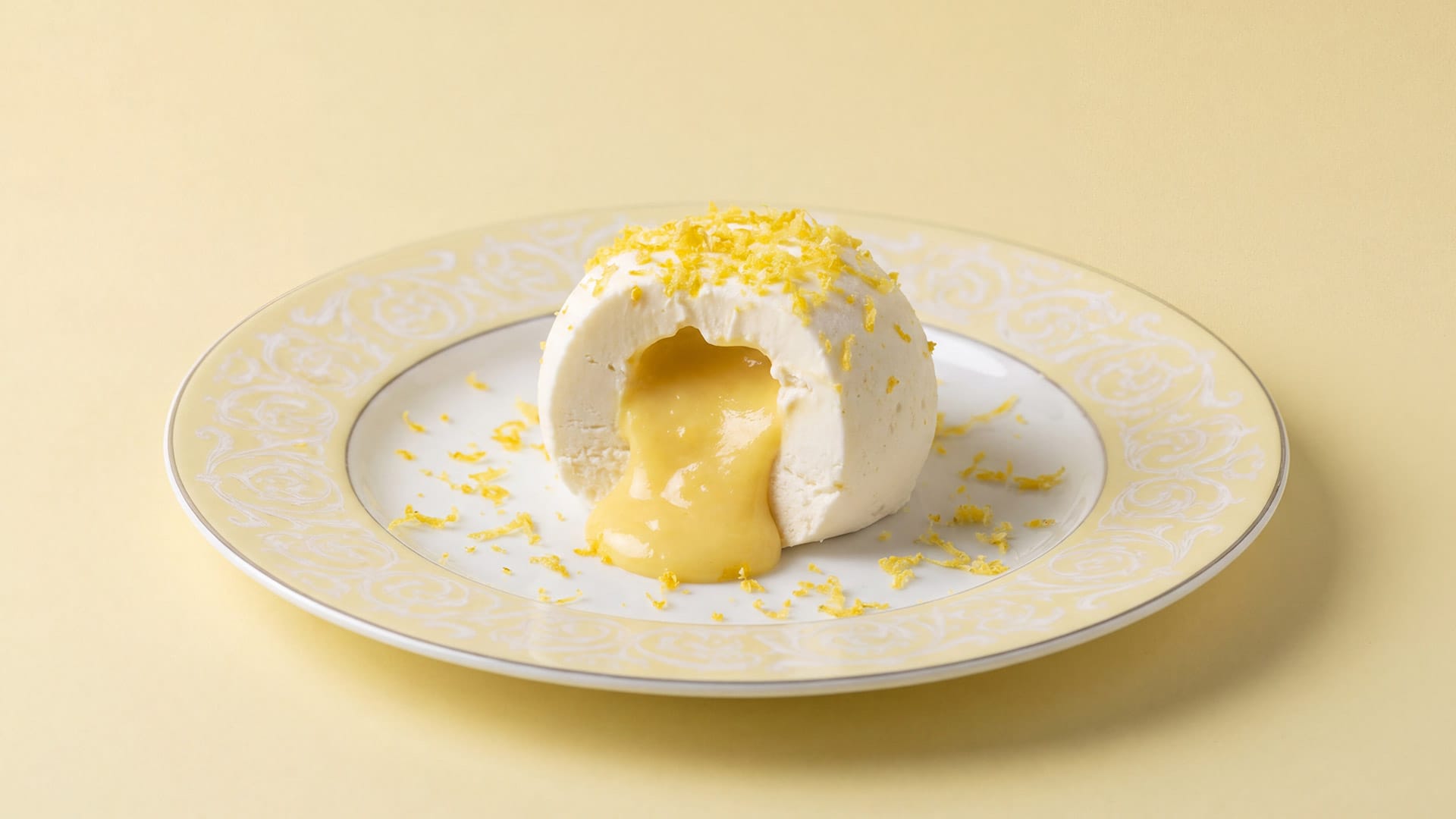
Although the classic version remains the most famous, several variations of Tartufo di Pizzo developed over time.
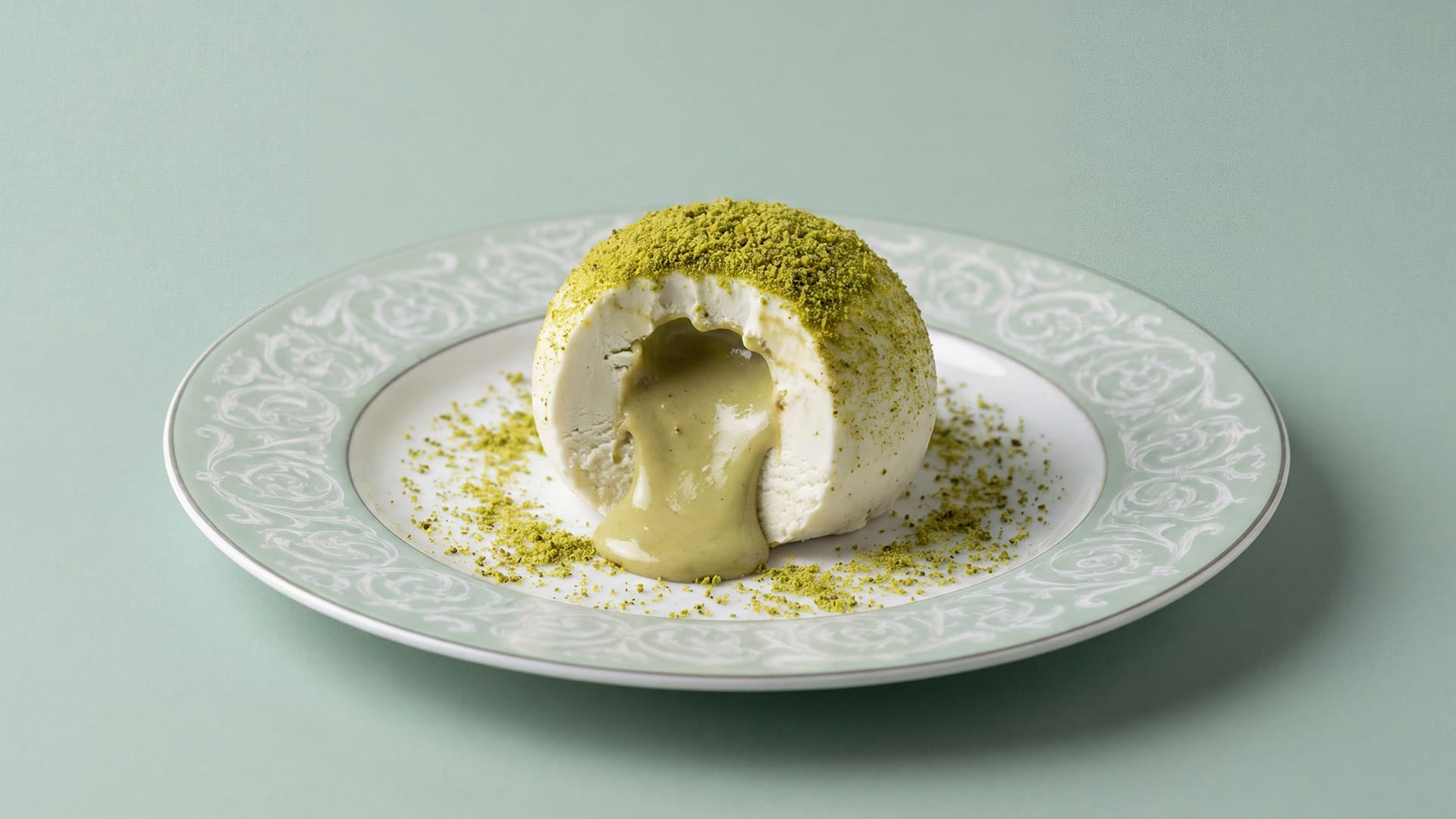
Some producers use additional ingredients such as cherries, fruit syrups, pistachio cream, cinnamon, or nuts. Others experiment with different combinations of gelato flavors.
Despite these innovations, the traditional combination of hazelnut, chocolate, molten dark chocolate filling, and cocoa powder remains the reference standard for authentic tartufo.
Local producers often distinguish clearly between artisanal tartufo and industrial frozen desserts inspired by the original recipe.
For many residents of Pizzo, preserving the original preparation method remains extremely important for protecting local culinary heritage.
Images generated with Nano Banana Pro / Google AI Studio


