
Table of Contents
For centuries, the small coastal town of Scilla has been deeply connected to the sea. Located on the Strait of Messina, the town developed one of the most recognizable fishing traditions in southern Italy: the traditional swordfish hunt.
Until a few decades ago, fishing represented one of the main economic activities of the local population. Among all maritime practices, swordfish fishing occupied a central role in the organization of daily life, local culture, and social relationships.
The waters surrounding Scilla became famous for seasonal swordfish migration. Every year, the fish crossed the Strait of Messina following routes that had been observed by local fishermen for generations. The community gradually developed specialized techniques based on direct observation and experience.
Fishing was not limited to the economic sphere. It also shaped the social and political organization of the town. Maritime work influenced relationships between families, neighborhood structures, and the rhythm of everyday life.
The Geography of the Strait of Messina
The geographical position of Scilla played a decisive role in the development of swordfish fishing traditions. The Strait of Messina forms a narrow passage between Calabria and Sicily, creating strong currents and continuous water movement.
These conditions favored the migration of swordfish close to the surface. Local fishermen learned to identify marine patterns linked to currents, winds, light, and seasonal changes. This environmental knowledge became essential for survival and successful fishing.
The sea in this area could also become extremely dangerous. Sudden currents, unpredictable winds, and whirlpool formation made navigation difficult even for experienced sailors. These conditions contributed to the ancient legends associated with the Strait, including the myth of Scylla and Charybdis.
The Ancient “Luntre” Boats
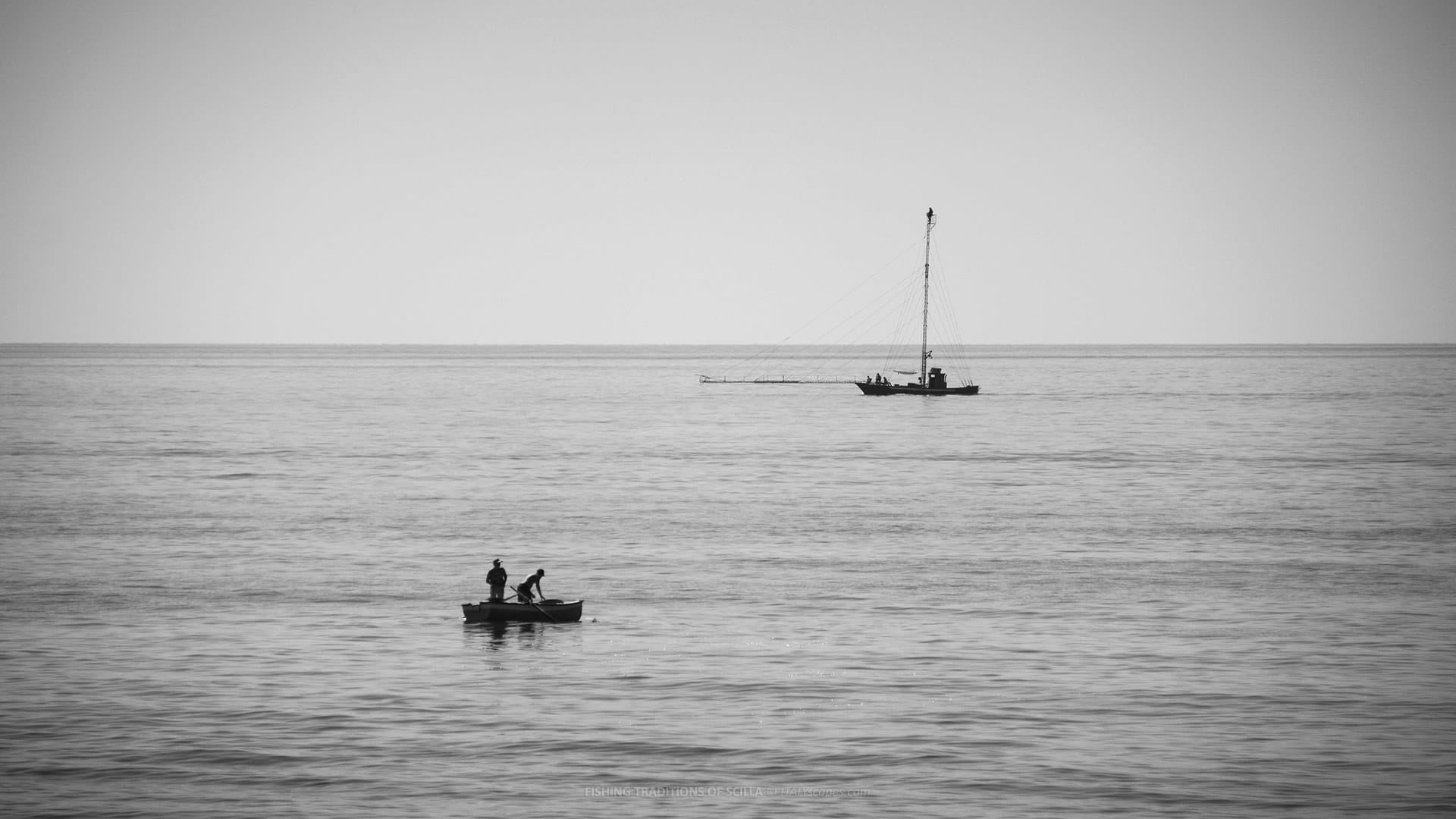
Until the 1950s, traditional swordfish fishing in Scilla was conducted using a special rowing boat called the luntre or luntru. This narrow wooden vessel represented the oldest form of organized swordfish hunting in the area.
The luntre moved silently through the water using only oars. Silence was extremely important because swordfish react quickly to vibrations and noise. Fishermen therefore approached the prey carefully and patiently.
Several crew members worked together aboard the boat. Each fisherman had a specific role during the hunt. Coordination and discipline were essential because success depended on precise timing and teamwork.
One fisherman stood at the front of the boat holding a long harpoon. Another controlled the rowing rhythm, while a lookout continuously scanned the surface searching for the fish. Hours could pass before a swordfish appeared near the boat.
The hunt demanded exceptional concentration and physical resistance. Fishermen often spent entire days at sea exposed to sunlight, currents, and changing weather conditions.
The Arrival of the “Feluca”
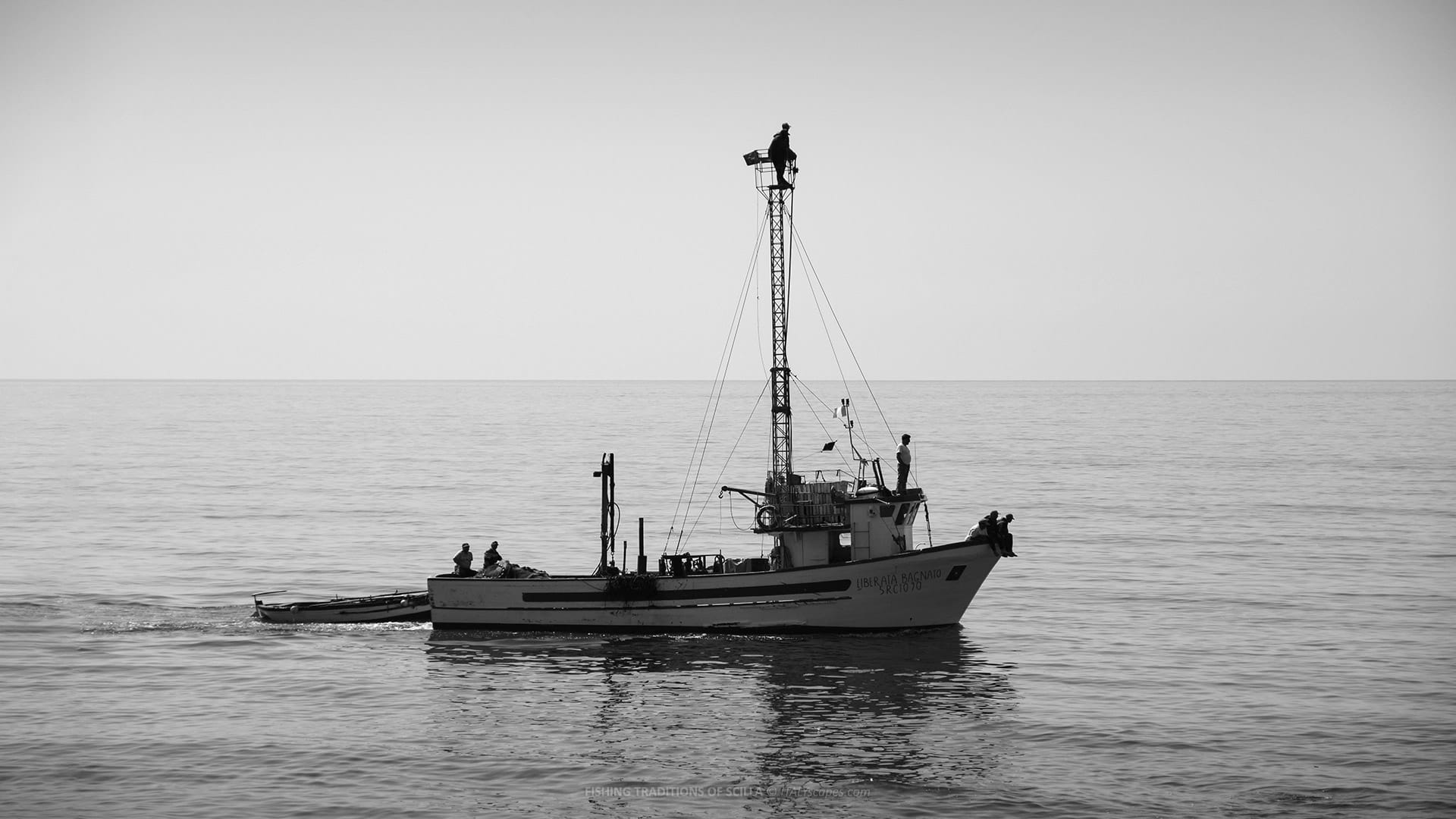
During the second half of the twentieth century, the traditional rowing boats were progressively replaced by motorized vessels known as feluche. These boats became one of the most recognizable symbols of the Strait of Messina.
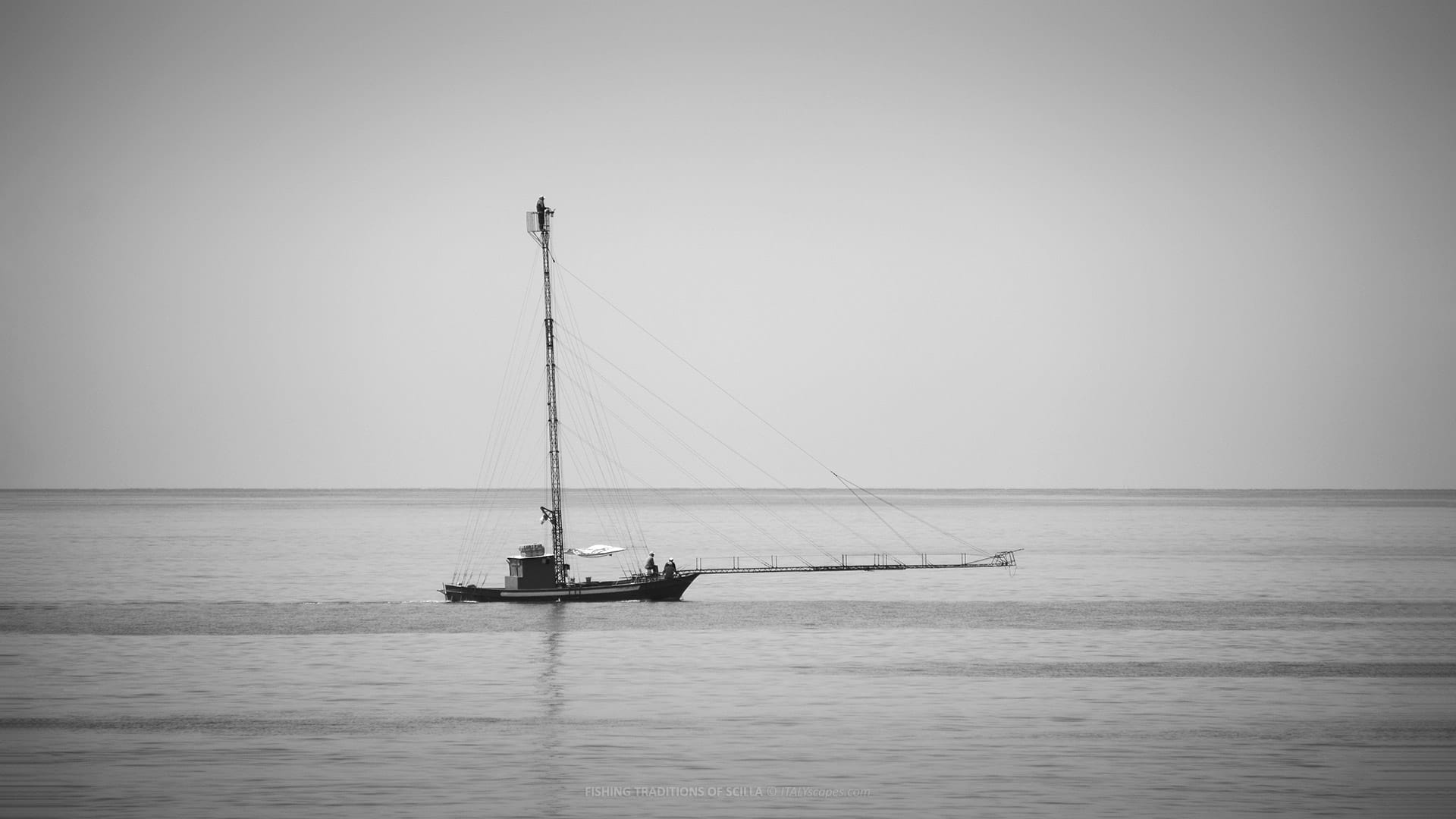
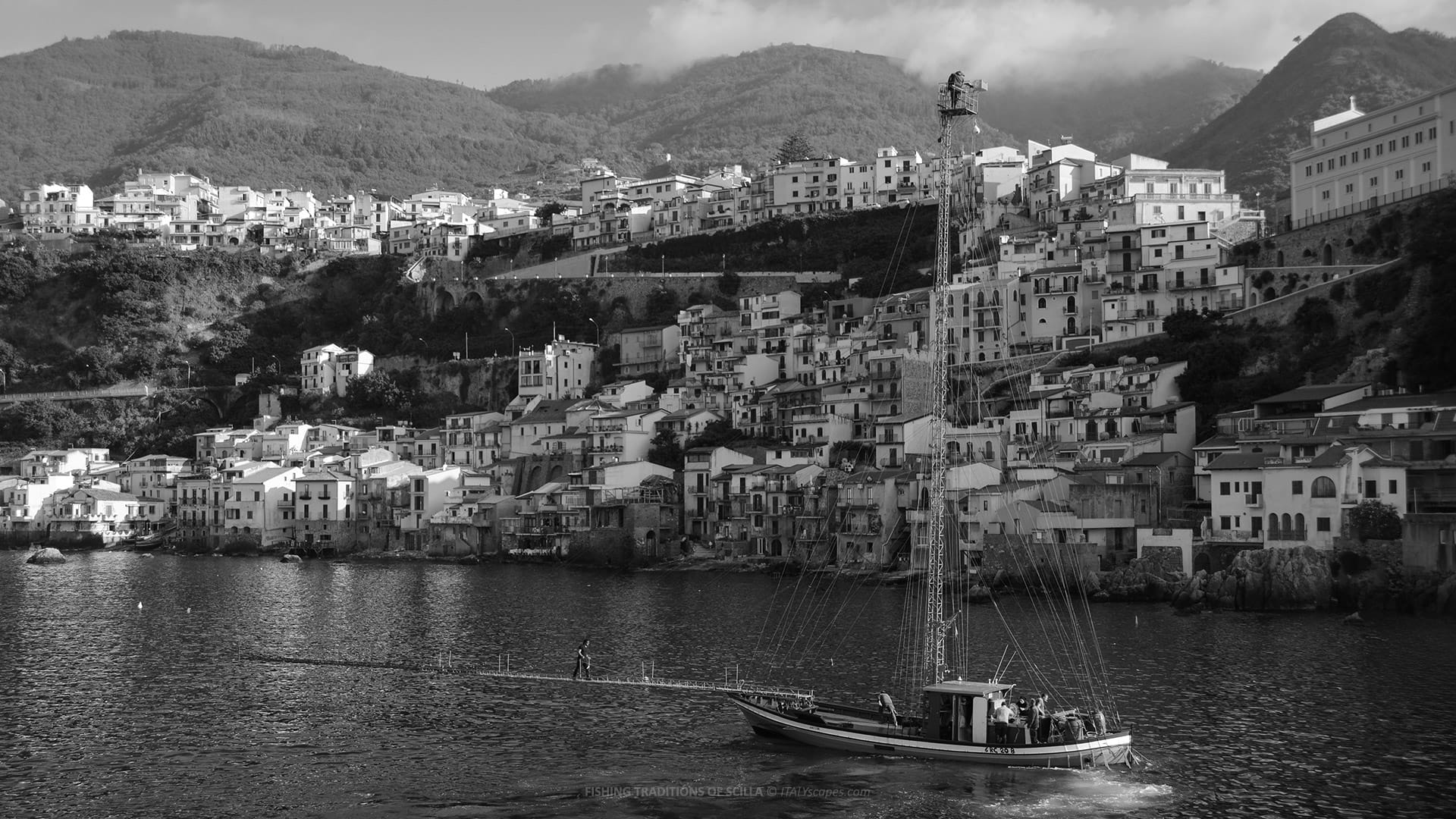
The felucca featured a long platform extending from the bow of the vessel. At the center stood a tall mast called the ntinna, used as an observation point for locating swordfish.
A fisherman climbed onto the ntinna to monitor the sea from above. From that elevated position, he could identify swordfish swimming close to the surface. Visibility from the mast significantly improved hunting efficiency.
Despite the introduction of engines, the fishing method still depended mainly on human observation and manual skill. Technology supported the hunt, but traditional knowledge remained fundamental.
The appearance of the felucca boats made them unique within Mediterranean fishing culture. Their unusual structure continues to attract attention today among tourists, photographers, and maritime historians.
The Swordfish Hunt
Once the lookout identified a swordfish, communication between crew members became extremely important. The observer on the ntinna guided the helmsman using short commands and gestures.
The boat approached slowly to avoid frightening the fish. At the correct moment, the harpooner advanced along the narrow platform toward the target. Balancing on the passerella required remarkable physical control and experience.
The harpoon strike represented the most difficult phase of the hunt. Swordfish are powerful and fast animals capable of escaping rapidly into deeper waters. Accuracy was therefore essential.
Traditional swordfish fishing targeted individual fish rather than large groups. This characteristic distinguished the practice from industrial fishing methods based on nets and mass capture.
Rules, Ethics, and Respect for the Sea
Swordfish fishing in Scilla followed strict unwritten rules developed over centuries. The organization of maritime space respected precise traditions intended to avoid conflicts and excessive exploitation of marine resources.
Fishing crews recognized specific hunting areas and accepted collective regulations governing access to the sea. This system helped maintain balance within the local fishing community.
Many fishermen considered themselves guardians rather than owners of the sea. Respect for marine life and environmental cycles represented an important ethical component of traditional fishing culture.
Local fishermen possessed deep knowledge of weather patterns, water transparency, currents, and fish behavior. Their work depended entirely on understanding the natural environment.
This strong environmental awareness explains why fishermen were often described as “guardians of the sea”. Their survival depended on maintaining long-term balance between human activity and marine ecosystems.
Fishing and Social Organization
Fishing shaped nearly every aspect of social life in Scilla. Families organized their lives around the fishing season, and maritime knowledge was transmitted from fathers to sons over generations.
Children often began learning fishing traditions at a very young age. They observed navigation techniques, fish behavior, boat maintenance, and weather interpretation long before participating directly in the hunt.
The fishing district of Chianalea became the symbolic center of this maritime culture. Houses stood directly beside the sea, and boats were anchored close to family homes.
Daily life revolved around departures, returns, repairs, and fish sales. The success or failure of fishing seasons affected the entire local economy.
Swordfish fishing also generated employment beyond the fishing crews themselves. Boat builders, harbor workers, rope makers, and fish merchants all depended partially on maritime activity.
Nearby towns such as Bagnara Calabra also developed strong economic connections to swordfish fishing traditions along the Strait of Messina.
Swordfish and Local Gastronomy
Swordfish became one of the most important ingredients in the culinary traditions of Calabria. In Scilla and nearby coastal towns, the fish acquired symbolic as well as economic value.
Local cuisine developed numerous traditional recipes based on pesce spada. Swordfish was grilled, baked, preserved, or combined with Mediterranean ingredients such as olive oil, tomatoes, capers, and herbs.
Restaurants in Scilla continue to serve swordfish dishes today, maintaining a direct connection between modern tourism and ancient fishing culture.
The fish also became associated with local identity. For many residents, swordfish represents not only a traditional food product but also a symbol of the town’s maritime history.
The Decline of Traditional Fishing
During the second half of the twentieth century, traditional swordfish fishing began to decline gradually. Economic modernization, industrial fishing systems, and social transformation altered the structure of maritime communities across Calabria.
Tourism progressively replaced fishing as one of the main economic sectors in Scilla. Visitors were attracted by the beaches, restaurants, natural landscapes, and the historic district of Chianalea.
As tourism expanded, many younger residents pursued different professions rather than continuing family fishing traditions. The number of fishermen practicing traditional harpoon hunting decreased significantly.
Modern fishing technologies also transformed maritime activity. Industrial systems reduced the central role of traditional observation-based hunting methods.
Despite these changes, some fishermen continue to preserve elements of the ancient swordfish hunt. During fishing season, felucca boats can still be seen crossing the waters of the Strait of Messina.
Guardians of the Sea
The forgotten fishing traditions of Scilla are not completely lost. They survive through oral history, local gastronomy, surviving fishing boats, and the experiences of the last traditional fishermen.
For centuries, swordfish hunting defined the relationship between the town and the sea. It created a culture based on observation, cooperation, environmental knowledge, and strict collective rules.
The fishermen of Scilla were more than simple workers. They were interpreters of the marine environment and guardians of one of the oldest fishing traditions in the Mediterranean.
Even today, the image of a felucca moving across the Strait of Messina continues to symbolize the deep historical connection between Scilla and the sea.
Sources:


