
Table of Contents
Religious feasts in Italy in 2026 remain among the most authentic and emotionally powerful expressions of Italian culture.
Unlike many modern celebrations that exist mainly for entertainment or tourism, Italian religious feasts are deeply rooted in history, collective memory, and lived faith.
They are moments when entire communities pause their ordinary routines to reconnect with centuries-old traditions, honoring saints, sacred images, or divine interventions believed to have shaped their destiny.
At the heart of these celebrations lie the feste patronali, annual events dedicated to a town’s patron saint or protector. These feasts often originated during periods of hardship – plagues, wars, shipwrecks, natural disasters-when communities sought divine help.
Over time, gratitude turned into ritual, and ritual became tradition. What makes religious feasts in Italy unique is their ability to blend the sacred and the communal: solemn liturgical ceremonies coexist with processions through streets, fireworks, music, and moments of shared emotion.
From the quiet glow of candles to the dramatic intensity of large-scale processions, these events reveal regional identities shaped by geography, history, and faith. They are not only meaningful for believers but also profoundly moving for visitors, offering rare access to Italy’s spiritual soul.
The following celebrations represent some of the most heartfelt religious feasts in Italy in 2026, each telling a unique story of faith, protection, and belonging.
12. Festa della Stella Maris 2026 – August 2, 2026, Camogli
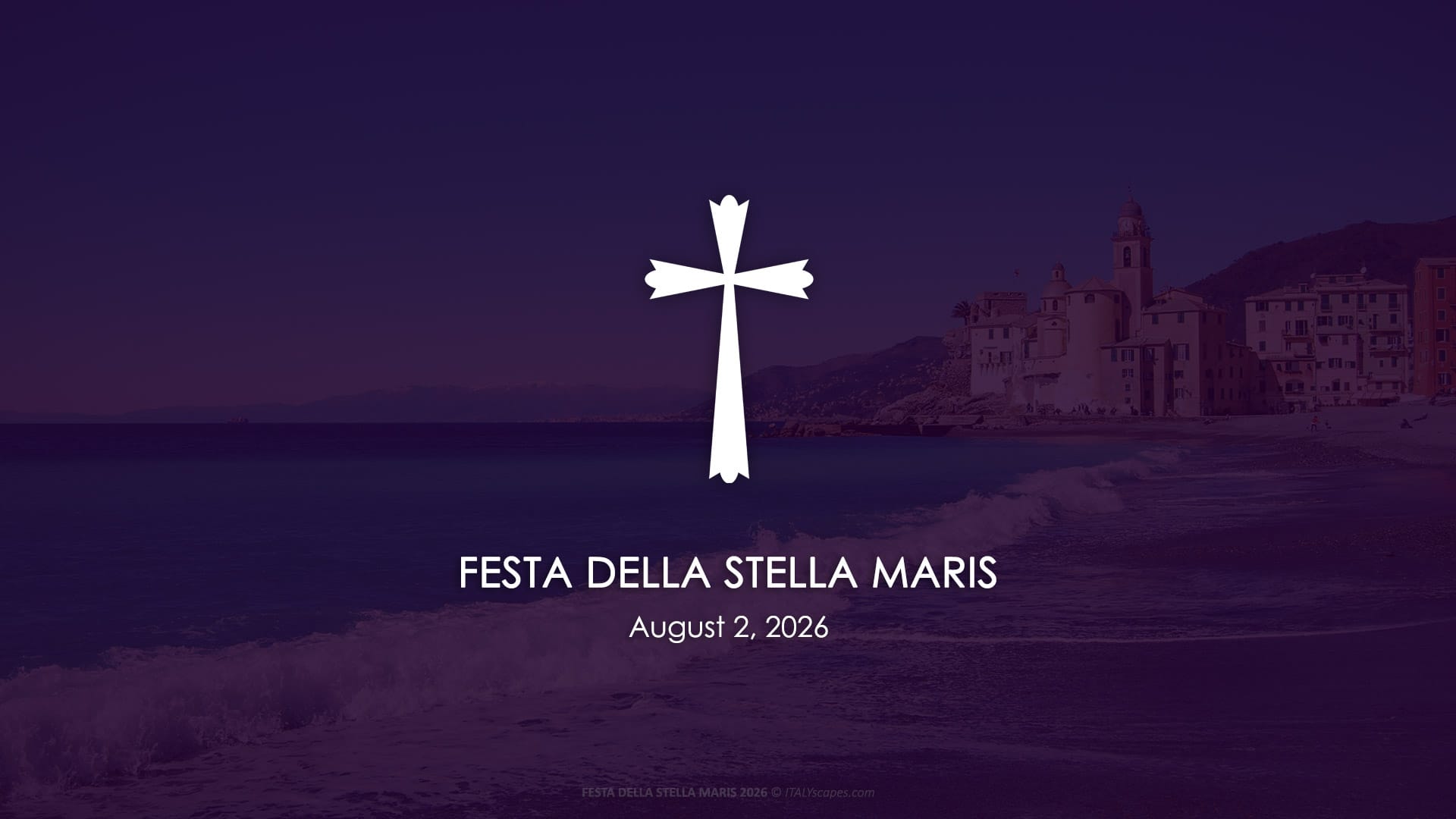
Festa della Stella Maris 2026 will take place on Sunday, August 2, 2026, in Camogli, a historic fishing town on the Ligurian coast, renowned for its maritime heritage and colorful waterfront.
The feast is closely tied to the sea, which has shaped Camogli’s identity for centuries, providing livelihood, connection, and constant risk to its inhabitants.
The celebration is dedicated to Stella Maris, the “Star of the Sea”, an ancient Marian title that identifies the Virgin Mary as a guiding light and protector of sailors.
For generations of seafarers, Stella Maris symbolized hope and safe passage, especially in an era when navigation depended on stars and faith. In Camogli, where nearly every family once had members at sea, devotion to Stella Maris became deeply personal and collective at the same time.
During the celebration, the sea itself becomes sacred space. As night approaches, boats decorated with candles and lights form a slow, solemn procession across the harbor. Reflections shimmer on the water, creating an almost otherworldly atmosphere.
Prayers and hymns are offered for those who sailed in the past, those currently at sea, and those who never returned. The shoreline fills with silent observers, united by memory and reverence.
What makes the Festa della Stella Maris particularly compelling is its emotional simplicity. There is no excess, only light, water, and shared remembrance. For visitors, participating in this feast offers a deeply moving insight into maritime faith and the intimate bond between humans and the sea.
11. Luminara di Santa Croce 2026 – September 13, 2026, Lucca
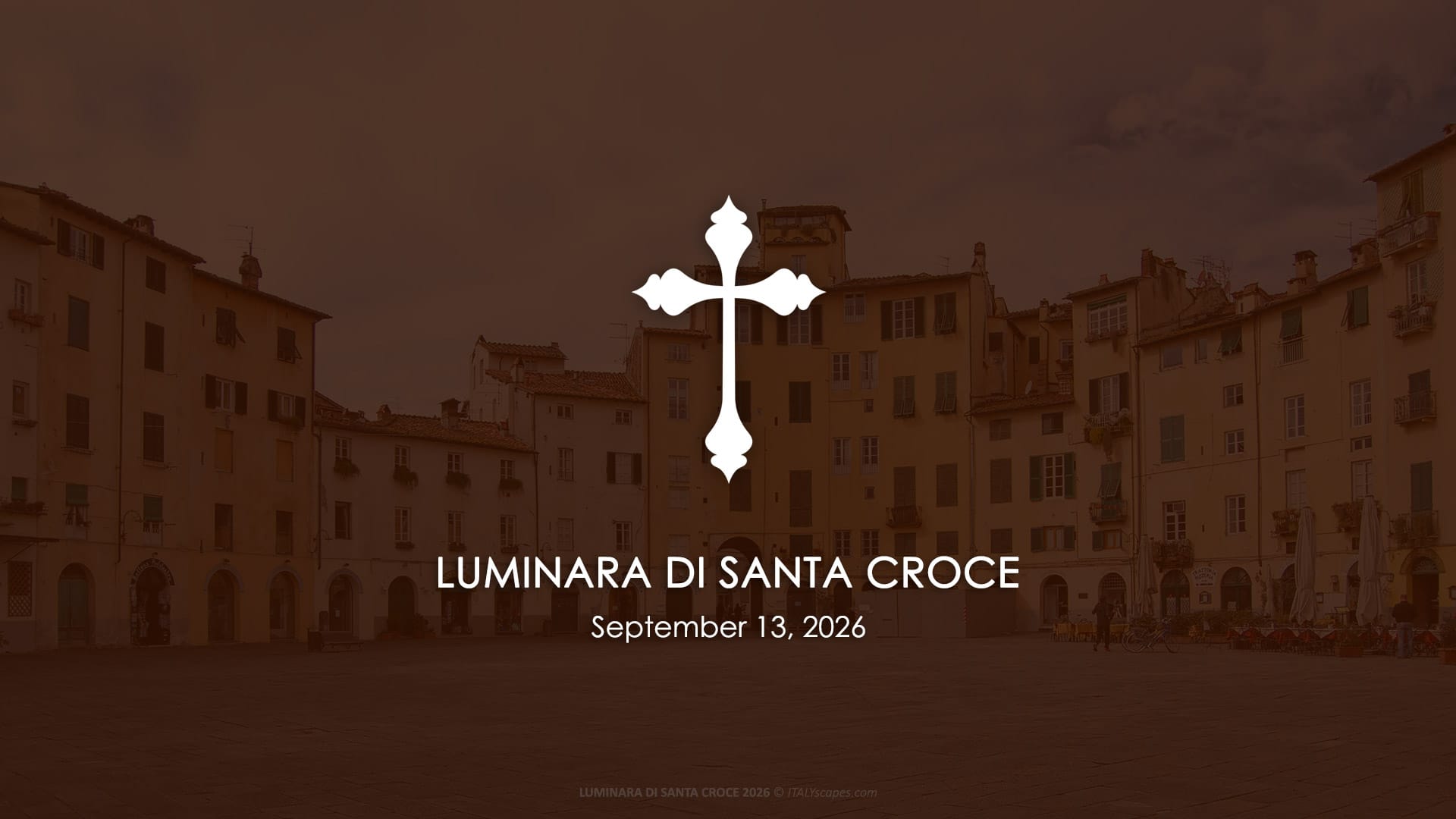
Luminara di Santa Croce 2026 will be held on Sunday, September 13, 2026, in the historic walled city of Lucca, on the eve of the Feast of the Exaltation of the Holy Cross. This event is among the most solemn and visually evocative religious feasts in Italy in 2026.
The celebration is centered on the Volto Santo, a revered wooden crucifix housed in Lucca Cathedral and believed to be a miraculous image of Christ.
Since the Middle Ages, devotion to the Volto Santo has played a crucial role in Lucca’s religious and civic life, attracting pilgrims from across Europe and reinforcing the city’s identity as a place of spiritual significance.
On the evening of the Luminara, the historic center of Lucca is transformed. Electric lighting is turned off, and thousands of candles are placed on windowsills, balconies, churches, and palaces.
The city is illuminated solely by flickering candlelight, casting warm reflections on medieval walls and narrow streets. A solemn procession moves slowly through the city, accompanied by clergy, confraternities, and local authorities in traditional attire.
What makes the Luminara di Santa Croce especially meaningful is its atmosphere of collective introspection. Silence, prayer, and light dominate the evening, inviting participants to reflect on faith, history, and continuity.
Attending this feast allows visitors to experience Lucca not as a tourist destination, but as a living spiritual community.
10. Festa del Santissimo Salvatore 2026 – August 2-6, 2026, Cefalù
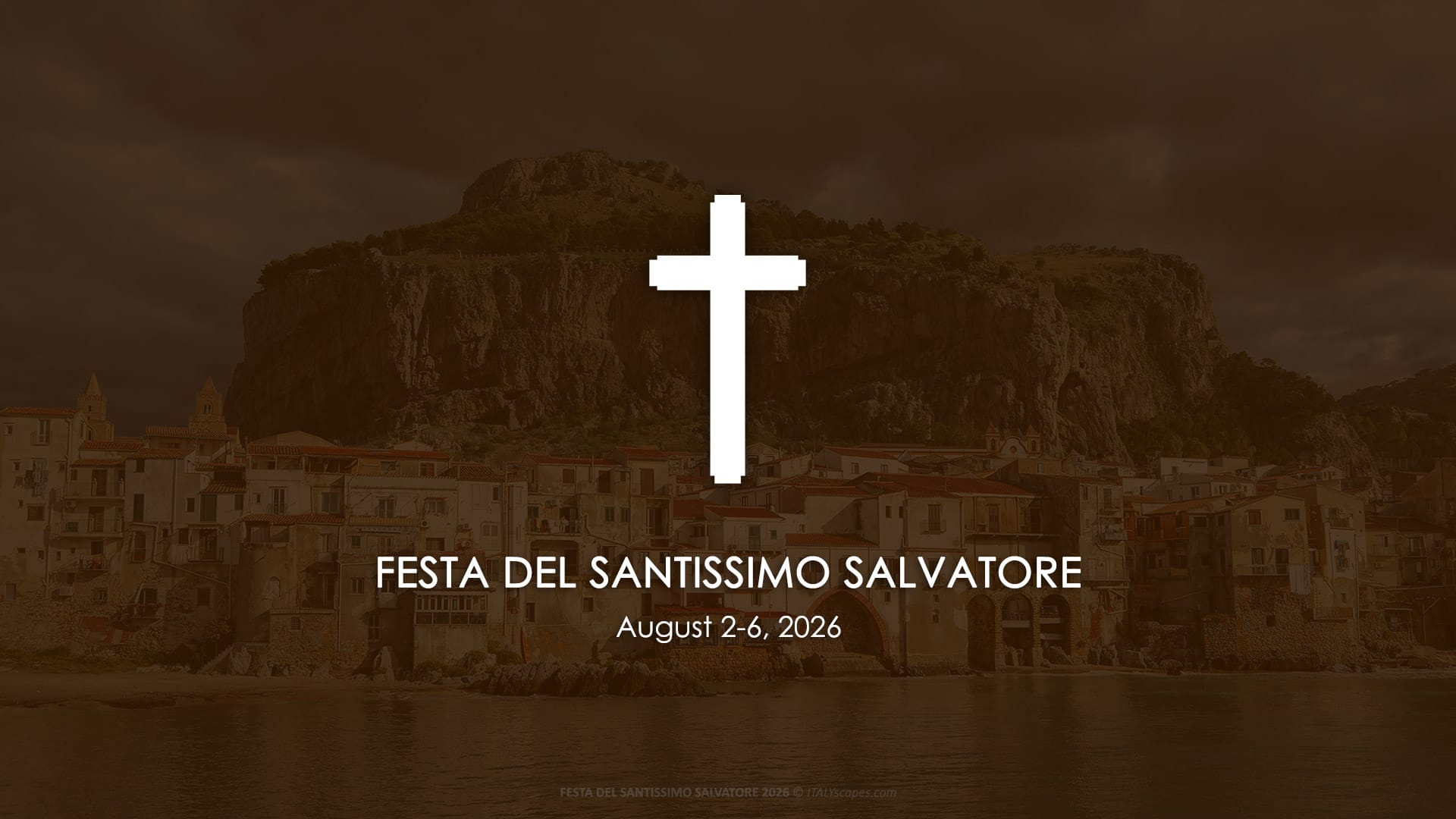
Festa del Santissimo Salvatore 2026 will take place from Sunday, August 2, to Thursday, August 6, 2026, in Cefalù, a coastal town in northern Sicily dominated by its majestic Norman Cathedral and dramatic natural setting.
This multi-day celebration is one of the most important religious feasts in the town’s calendar.
Officially known as Festa del Santissimo Salvatore della Trasfigurazione, the feast honors the Most Holy Savior of the Transfiguration, commemorating the biblical episode in which Christ revealed his divine nature.
Over centuries, this devotion became deeply rooted in Cefalù’s spiritual identity, blending Christian theology with local traditions.
Throughout the celebration, religious ceremonies unfold alongside popular festivities. Processions carry sacred images through streets adorned with lights and flowers, while bells, prayers, and music fill the air.
The sea, ever-present in Cefalù, serves as both backdrop and symbol, reflecting the town’s historical dependence on faith and nature for survival.
For visitors, Festa del Santissimo Salvatore offers a complete immersion into Sicilian religious culture. It is a celebration that balances solemn devotion with communal joy, revealing how faith continues to shape social life in southern Italy.
9. Luminara di San Ranieri 2026 – June 16, 2026, Pisa

Luminara di San Ranieri 2026 will take place on Tuesday, June 16, 2026, in Pisa, as part of the traditional Giugno Pisano festivities.
Dedicated to Saint Ranieri, the patron saint of the city, this extraordinary candlelight celebration is one of the most iconic and visually evocative religious feasts in Italy in 2026, drawing tens of thousands of residents and visitors each year.
Saint Ranieri Scacceri was a medieval pilgrim born in Pisa in the 12th century, remembered for his dramatic conversion from a worldly youth to a life of humility, penance, and devotion.
After years of pilgrimage in the Holy Land, he returned to Pisa, where he lived in poverty and prayer until his death. His reputation for holiness spread quickly, and he was soon venerated as the city’s protector.
His feast day, celebrated on June 17, is preceded by the Luminara, which takes place on the evening of June 16 and serves as a symbolic tribute to both the saint and Pisa’s historical identity.
On the night of the Luminara, Pisa undergoes a striking transformation. Modern street lighting along the Arno River is turned off and replaced by more than seventy thousand candles, carefully arranged on the façades of palaces, churches, bridges, towers, and along the riverbanks.
Wooden frames hold the candles in precise patterns, outlining architectural details and restoring the city’s appearance to something closer to its pre-industrial past. As darkness falls, the warm glow of candlelight slowly takes over, creating an atmosphere that feels suspended in time.
The reflections of the flames shimmer on the surface of the Arno, doubling the effect and turning the river into a luminous ribbon flowing through the heart of the city. Residents and visitors gather quietly along the embankments, walking slowly, observing, and absorbing the scene in near silence.
Unlike louder or more theatrical celebrations, the Luminara di San Ranieri encourages contemplation and shared stillness.
Participating in this event allows visitors to experience Pisa beyond its famous monuments, revealing a city deeply connected to its spiritual heritage, collective memory, and sense of continuity, making it one of the most refined and emotionally resonant religious feasts in Italy in 2026.
8. Explosion of the Cart 2026 – April 5, 2026, Florence

The Explosion of the Cart 2026 will take place on Sunday, April 5, 2026, in Piazza del Duomo in Florence, coinciding with Easter Sunday.
Known in Italian as Scoppio del Carro, this ancient ritual is one of the most distinctive and enduring religious celebrations in Italy and remains among the most symbolically rich religious feasts in Italy in 2026.
Deeply connected to Easter liturgy, the event reflects Florence’s medieval history and its long-standing relationship with faith, civic identity, and ritual continuity.
The origins of the Explosion of the Cart date back to the time of the First Crusade, when, according to tradition, a sacred flame was brought to Florence from the Church of the Holy Sepulchre in Jerusalem.
This flame was believed to possess purifying and protective powers and was used to light the Easter fire, symbolizing the resurrection of Christ and the renewal of life.
Over the centuries, the ritual evolved into a public ceremony centered around a large, elaborately decorated wooden cart, known as the brindellone, which is still used today.
On Easter morning, the cart is positioned in front of Florence Cathedral. During the solemn Easter Mass inside the Duomo, a mechanical dove called the colombina, symbolizing the Holy Spirit, is released from the high altar.
The dove travels along a wire toward the cart, igniting the fireworks stored inside it. If the fireworks explode correctly and the dove completes its journey without interruption, the ritual is considered a good omen, traditionally believed to ensure prosperity, peace, and a successful year for the city.
What makes witnessing the Explosion of the Cart particularly compelling is its precise choreography and deep symbolism. The ritual combines Christian theology, medieval tradition, and popular belief in a single moment of shared expectation.
For residents and visitors alike, attending Scoppio del Carro offers a rare opportunity to experience Florence not only as a cradle of Renaissance art, but as a city that continues to preserve and actively live its oldest religious traditions.
7. Festa della Madonna Bianca 2026 – August 17, 2026, Portovenere
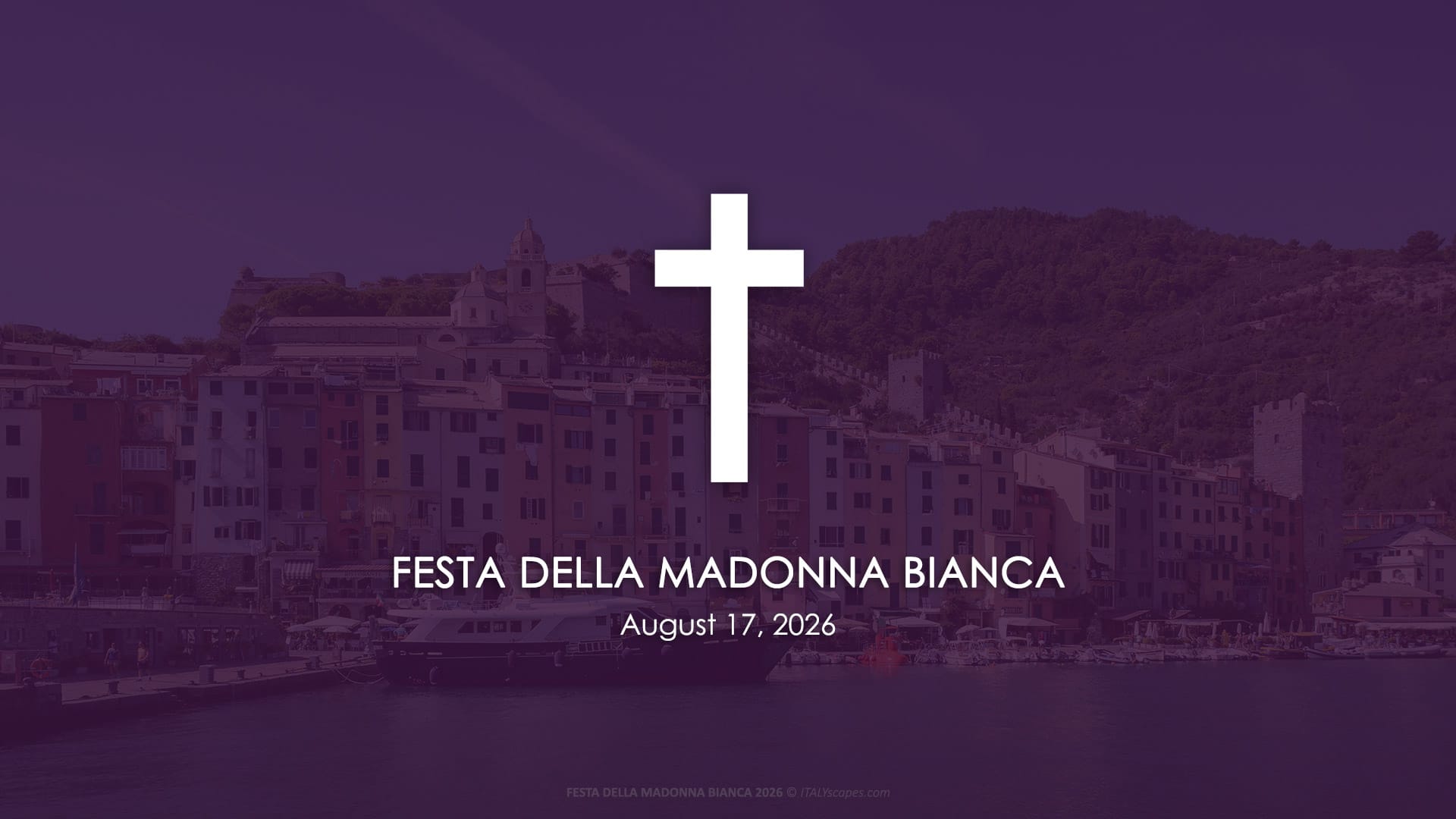
Festa della Madonna Bianca 2026 will take place on Monday, August 17, 2026, in Portovenere, a spectacular coastal town perched on rocky cliffs at the edge of the Ligurian Sea.
Known for its dramatic landscape, medieval architecture, and deep maritime roots, Portovenere provides a striking setting for one of the most evocative and visually powerful religious feasts in Italy in 2026.
The feast honors the Madonna Bianca, the White Madonna, who is revered as the patron saint and protector of Portovenere.
According to tradition, the roots of the feast date back to the year 1399, when Portovenere was struck by a devastating plague while also suffering under foreign, specifically French, occupation.
In a climate of fear, illness, and uncertainty, a villager named Luciardo turned to prayer as a final source of hope for himself and his community.
He prayed intensely before a faded parchment image depicting the Virgin Mary, asking for deliverance from the epidemic that was decimating the population.
During the night between August 16 and August 17, 1399, the miracle occurred. The previously discoloured and almost lifeless image suddenly regained vivid colours and extraordinary brightness, appearing renewed and radiant.
Following this extraordinary event, the image was venerated as the Madonna Bianca, the White Madonna, and placed in the Church of San Lorenzo, today known as the Santuario della Madonna Bianca.
As evening falls on August 17, the celebration transforms Portovenere in a way that feels almost otherworldly. Thousands of torches, candles, and small flames are lit along narrow alleys, stone stairways, ancient churches, and cliffside paths.
The result is a breathtaking visual spectacle in which natural elements and human devotion blend seamlessly.
Participating in the Festa della Madonna Bianca offers visitors an experience that is both spiritual and deeply sensory. This feast stands out not for its noise or grandeur, but for its quiet intensity and beauty, making it one of the most unforgettable religious feasts in Italy in 2026.
6. Festa di San Gennaro 2026 – September 19, 2026, Naples
Festa di San Gennaro 2026 will take place on Saturday, September 19, 2026, in Naples, a city whose identity, history, and emotional life are inseparable from its patron saint.
Among all religious feasts in Italy in 2026, none carries the same intensity, tension, and emotional charge as this celebration. For Neapolitans, San Gennaro is not a distant religious figure but a living presence, a protector whose favor is constantly sought and anxiously awaited.
San Gennaro, known in English as Saint Januarius, was a bishop and martyr who lived in the 3rd century and was executed during Roman persecutions of Christians.
Over time, his cult grew enormously, especially after his relics were associated with miraculous protection from volcanic eruptions, earthquakes, famine, and epidemics. His most famous miracle is the liquefaction of his blood, preserved in two sealed vials inside the Cathedral of Naples.
On September 19, the city gathers inside and outside the Duomo with a mixture of devotion and nervous anticipation. During a solemn religious ceremony, the archbishop displays the vials to the faithful. If the blood liquefies, it is interpreted as a sign of protection and blessing for Naples.
What makes attending the Festa di San Gennaro so compelling is the raw, unfiltered emotion of the crowd. Tears, prayers, shouts, applause, and silence alternate in rapid succession.
Even visitors unfamiliar with Catholic rituals are deeply affected by the intensity of collective belief. This feast offers a unique insight into Naples’ soul, where faith, superstition, history, and survival merge into a single, unforgettable experience.
5. Festa di San Nicola 2026 – May 7-9, 2026, Bari
Festa di San Nicola 2026 will take place from Thursday, May 7, to Saturday, May 9, 2026, in Bari, the capital of Puglia and one of southern Italy’s most important religious centers.
This feast honors Saint Nicholas, a figure venerated not only in Catholicism but also in Orthodox Christianity, making it one of the most ecumenical religious feasts in Italy in 2026.
Saint Nicholas was a 4th-century bishop of Myra, in present-day Turkey, known for his generosity, miracles, and protection of the poor and sailors.
In 1087, his relics were brought to Bari by sailors, an event that forever changed the city’s destiny. Since then, Bari has been a major pilgrimage site, attracting faithful from across Europe and the Eastern Mediterranean.
During the three days of celebration, the city comes alive with religious processions, historical reenactments, music, fireworks, and public gatherings.
One of the most evocative moments is the maritime procession, when the statue of Saint Nicholas is carried on a boat along the coast, recalling the arrival of his relics by sea. Thousands of people line the shore, watching and praying as the sea becomes part of the sacred narrative.
Participating in Festa di San Nicola offers a powerful sense of unity across cultures and traditions. The presence of Orthodox clergy alongside Catholic authorities highlights the saint’s universal appeal.
For visitors, this feast provides not only a religious experience but also a profound lesson in shared heritage and spiritual dialogue.
4. Festa della Bruna 2026 – July 2, 2026, Matera
Festa della Bruna 2026 will take place on Thursday, July 2, 2026, in Matera, one of the oldest continuously inhabited cities in the world and a UNESCO World Heritage Site.
Officially dedicated to the Madonna della Bruna, this feast is among the most dramatic and emotionally charged religious celebrations in southern Italy.
The origins of the feast date back to 1389 and are closely linked to local legends surrounding a mysterious apparition of the Virgin Mary. Over centuries, the celebration evolved into a complex ritual that reflects Matera’s deep-rooted traditions and strong communal identity.
The day unfolds through a series of processions, religious ceremonies, and symbolic acts. The climax of the celebration is the destruction of a large papier-mâché chariot carrying the image of the Madonna.
As night falls, the chariot is torn apart by the crowd in an intense, almost ritualistic frenzy. Pieces are taken home as talismans of blessing and protection.
This act, which may seem violent to outsiders, represents renewal, sharing, and the rejection of material possession. The destruction symbolizes the idea that blessings must be distributed among the people rather than preserved intact.
Attending Festa della Bruna is an overwhelming experience. The combination of ancient rituals, raw emotion, and Matera’s extraordinary landscape creates a celebration that feels primal and timeless.
It is one of the most powerful examples of how religious feasts in Italy in 2026 remain deeply connected to collective identity.
3. Festa di Santa Rosalia 2026 – July 10-15, 2026, Palermo

Festa di Santa Rosalia 2026 will take place from Friday, July 10, to Wednesday, July 15, 2026, in Palermo, the vibrant and complex capital of Sicily, a city where history, faith, and popular culture coexist in constant dialogue.
This deeply rooted celebration is one of the most important religious and cultural events in the region and is officially recognized as part of Italy’s intangible cultural heritage, reflecting its lasting significance within the collective memory of Palermo.
The feast is dedicated to Saint Rosalia, affectionately known by locals as “La Santuzza”, the beloved patron saint of the city.
Her cult emerged dramatically in 1624, during one of the darkest moments in Palermo’s history, when a devastating plague spread rapidly through the population.
According to tradition, Saint Rosalia appeared in visions to a local man, revealing the location of her remains on Mount Pellegrino.
When her relics were carried in solemn procession through the streets, the plague is said to have miraculously ceased, transforming Rosalia into a powerful symbol of protection, salvation, and hope.
The celebration unfolds over several days and reaches its peak with a spectacular procession centered around an enormous, elaborately decorated chariot known as the carro trionfale.
Carrying the image of the saint, the chariot moves slowly through Palermo’s main streets, accompanied by music, prayers, chants, and moments of theatrical performance.
Fireworks light up the night sky, while crowds gather in an atmosphere that blends devotion with collective joy and release.
What makes the Festa di Santa Rosalia particularly compelling is its unmistakably joyful and inclusive character. Although rooted in tragedy and suffering, the feast celebrates survival, renewal, and gratitude.
For visitors, participating in this event offers an extraordinary immersion into Palermo’s soul, where spirituality, art, and popular expression merge seamlessly.
It reveals a city capable of transforming historical pain into a vibrant celebration of life, faith, and communal resilience, making it one of the most emotionally resonant religious feasts in Italy in 2026.
2. Festa di Sant’Agata 2026 – February 3-5, 2026, Catania
Festa di Sant’Agata 2026 will take place from Tuesday, February 3, to Thursday, February 5, 2026, in the vibrant Sicilian city of Catania, dramatically set at the foot of Mount Etna.
This extraordinary celebration is not only one of the most important religious feasts in Italy in 2026, but also one of the largest and most emotionally intense Catholic gatherings in the world, drawing hundreds of thousands of participants each year.
The feast is dedicated to Saint Agatha, a young Christian martyr who lived in the 3rd century during the Roman persecutions under Emperor Decius.
According to tradition, Agatha endured horrific torture after refusing to renounce her faith and submit to the governor’s demands. Her courage, purity, and suffering turned her into a powerful symbol of resistance and devotion, deeply intertwined with Catania’s identity.
Over the centuries, the people of Catania came to believe that Saint Agatha protects the city from volcanic eruptions, earthquakes, and other natural disasters, reinforcing an intense and personal bond between the saint and the community.
During the three days of celebration, Catania is transformed into a living theater of devotion. Tens of thousands of faithful, dressed in traditional white garments known as the sacco, participate in massive processions that wind through the city’s streets both day and night.
The central moments involve the transport of the saint’s reliquary and elaborate candle-filled structures, which are pulled by devotees using thick ropes.
The physical effort required is immense, and the exhaustion endured by participants is understood as an act of faith, penance, and communal solidarity.
The atmosphere throughout Festa di Sant’Agata is intense, emotional, and often overwhelming. Prayers, chants, tears, and moments of silence alternate with bursts of collective energy and fervor.
For visitors, the celebration offers an unforgettable encounter with the raw power of tradition, endurance, and shared spiritual identity, making it one of the most compelling religious feasts in Italy in 2026.
1. Festa del Redentore 2026 – July 18-19, 2026, Venice

Festa del Redentore 2026 will take place on Saturday, July 18, and Sunday, July 19, 2026, in the extraordinary city of Venice, unfolding across the lagoon, historic neighborhoods, and sacred spaces that define the city’s unique identity.
This deeply meaningful celebration commemorates Venice’s deliverance from one of the most devastating plague outbreaks of the 16th century, an event that marked the city’s history and reshaped its relationship with faith, survival, and collective gratitude.
Even today, centuries later, Festa del Redentore remains one of the most heartfelt and widely attended religious feasts in Italy in 2026.
The origins of the feast date back to 1577, when the Venetian Republic vowed to build a church dedicated to Christ the Redeemer as an act of thanksgiving if the city were spared from the epidemic.
The Church of the Redeemer, designed by the renowned architect Andrea Palladio, was constructed on the island of Giudecca and became both a spiritual and architectural symbol of salvation. Since then, the annual pilgrimage to the church has remained at the heart of the celebration.
Every year, a temporary floating bridge made of boats is assembled across the lagoon, allowing residents and visitors to walk on water, symbolically retracing the city’s collective journey from despair to hope.
Festa del Redentore unfolds over two days, seamlessly blending religious devotion with communal celebration.
On Saturday evening, the Venetian lagoon becomes the stage for one of the most spectacular fireworks displays in Italy.
Bursts of light illuminate the sky and reflect on the water, historic palaces, and domes, creating a breathtaking visual experience shared by thousands of spectators gathered on boats, bridges, and along the canals.
On Sunday, the atmosphere shifts toward reflection and prayer. Religious services and processions emphasize the spiritual meaning of the feast, drawing attention back to gratitude, remembrance, and faith.
Festa del Redentore offers a uniquely Venetian experience, where water, architecture, devotion, and collective memory merge into a celebration that is both intimate and grand, making it a powerful expression of resilience within the broader landscape of religious feasts in Italy in 2026.
Sources:


