Table of Contents
Venice Carnival photography has become much more than a hobby for us. It is a tradition that combines our passion for travel, history and photography in one extraordinary event. Every edition offers a different atmosphere, different faces and different light, ensuring that every return to Venice feels as rewarding as the first.
Over the past decade, we have attended almost every edition of the Venice Carnival, returning season after season to photograph its extraordinary atmosphere.
The only interruptions came in 2021 and 2022, when the COVID-19 pandemic brought one of the world’s most iconic celebrations to an unprecedented pause. When the carnival finally returned, so did we, rediscovering a city that somehow felt both unchanged and completely new.
The photographs accompanying this guide were captured during our recent visits to the Carnival of Venice. Every recommendation comes from places where we have spent hours observing, waiting, experimenting and photographing. Some locations rewarded us immediately. Others revealed their true potential only after several visits and countless attempts.
This is not simply a list of famous viewpoints. It is the route we continue to follow ourselves every time we return to Venice. It reflects years of experience, thousands of photographs and an endless fascination with a celebration that never looks exactly the same twice.
If this is your first visit, we hope our experience helps you discover the city beyond the obvious postcard views. If you have already photographed the carnival before, perhaps you will recognize some of the same emotions that continue bringing us back year after year.
Why the Venice Carnival Is a Photographer’s Dream
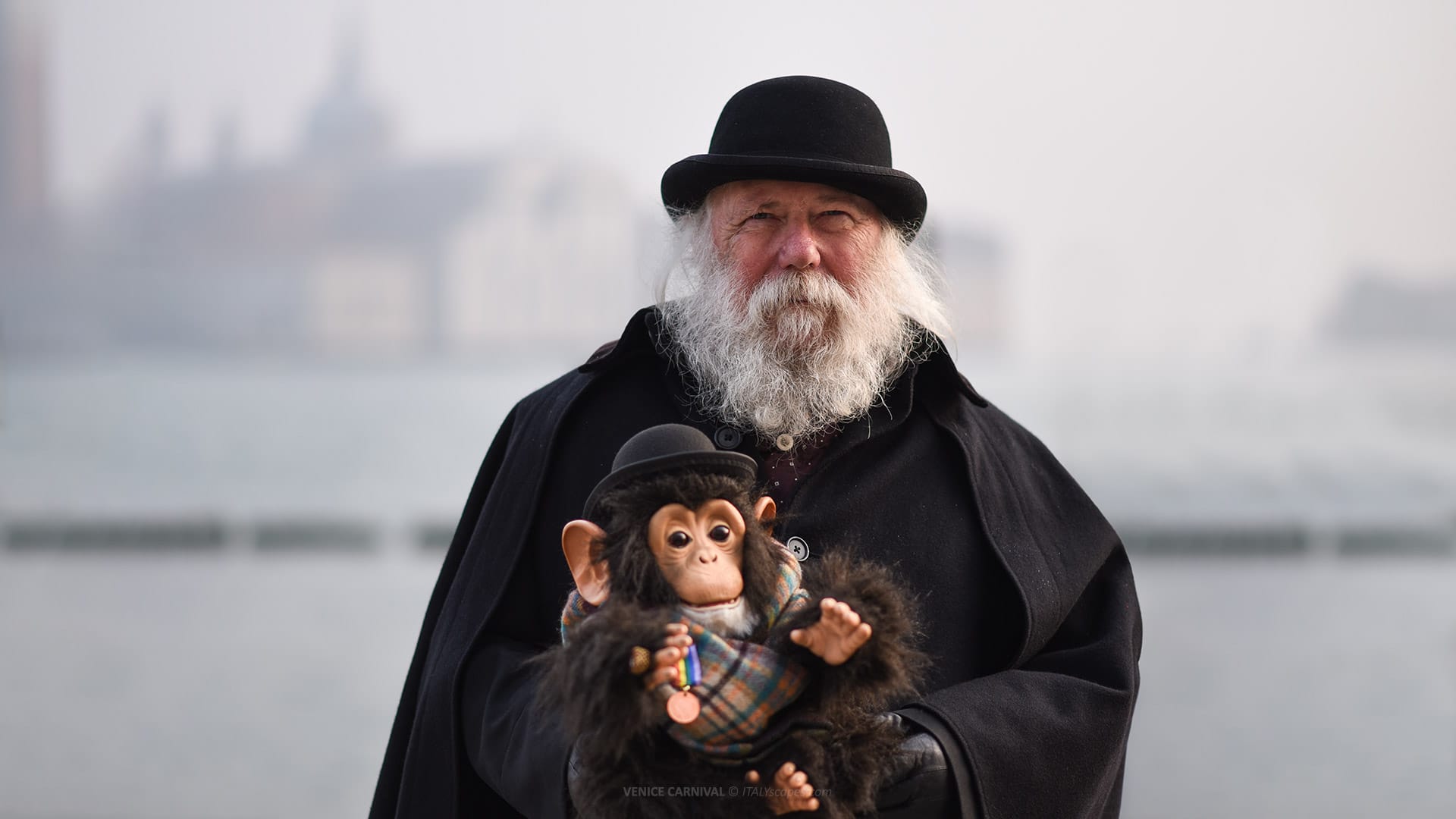
Few cultural events offer photographers such an extraordinary combination of subjects. Elegant costumes, Renaissance and Gothic architecture, canals, reflections, dramatic light and genuine human emotion all exist within walking distance of one another. Every corner has the potential to become a memorable photograph.
Unlike studio photography, the Venice Carnival constantly changes. The same square can feel completely different within the space of an hour. Morning mist may soften every detail, midday sunlight can create bold architectural contrasts, while sunset wraps the city in warm colours before blue hour transforms Venice into something almost dreamlike.
One of the reasons we continue returning every year is that no two carnivals are ever identical. New costumes appear alongside historical recreations. Different photographers gather in different locations. Weather conditions reshape every familiar composition. Even after countless visits, we still discover perspectives we had never noticed before.
The city itself plays an equally important role. Venice is not simply the background for the carnival – it is one of its main characters. Ancient palaces, narrow calli, elegant bridges and quiet canals all contribute to images that could not exist anywhere else in the world.
Perhaps what fascinates us most is the contrast between movement and stillness. Thousands of visitors fill the streets, yet with a little patience it is always possible to find moments of remarkable silence. Some of our favourite photographs were taken not during the busiest events, but in the brief pauses between them.
The Venice Carnival also rewards photographers who slow down. Rather than rushing from one attraction to another, we learned to observe how people interact with the city, how the light moves across historic façades and how costumes transform ordinary urban spaces into theatrical scenes.
Piazza San Marco at Sunrise
If there is one place we never skip, it is Piazza San Marco shortly after sunrise. We have visited the square countless times during carnival, and every single year it offers something different. Early morning remains, in our experience, the most magical time to photograph Venice’s most famous public space.
Many visitors associate Piazza San Marco with large crowds, and understandably so. By late morning, the square becomes one of the busiest places in the city. At sunrise, however, it feels almost intimate. The silence is broken only by footsteps, distant church bells and the occasional conversation between photographers preparing their equipment.
The soft light transforms the white stone façades surrounding the square. Long shadows add depth without overwhelming the costumes, while the absence of harsh sunlight allows colours and textures to appear beautifully balanced. We have often found ourselves photographing the same corner repeatedly simply because the changing light kept creating new possibilities.
Another advantage of arriving early is that many costumed participants also choose this time for portraits. Before the crowds become overwhelming, they can move freely across the square, allowing photographers to compose cleaner, more elegant images.
We also recommend taking time to photograph details rather than only wide scenes. Embroidered fabrics, handmade masks, lace gloves and decorative accessories often reveal extraordinary craftsmanship that deserves its own visual story.
Even after years of returning, we still spend much longer here than originally planned. Every sunrise feels slightly different, and every edition of the carnival brings new costumes that interact with the architecture in unexpected ways.
The Piazzetta and the Waterfront
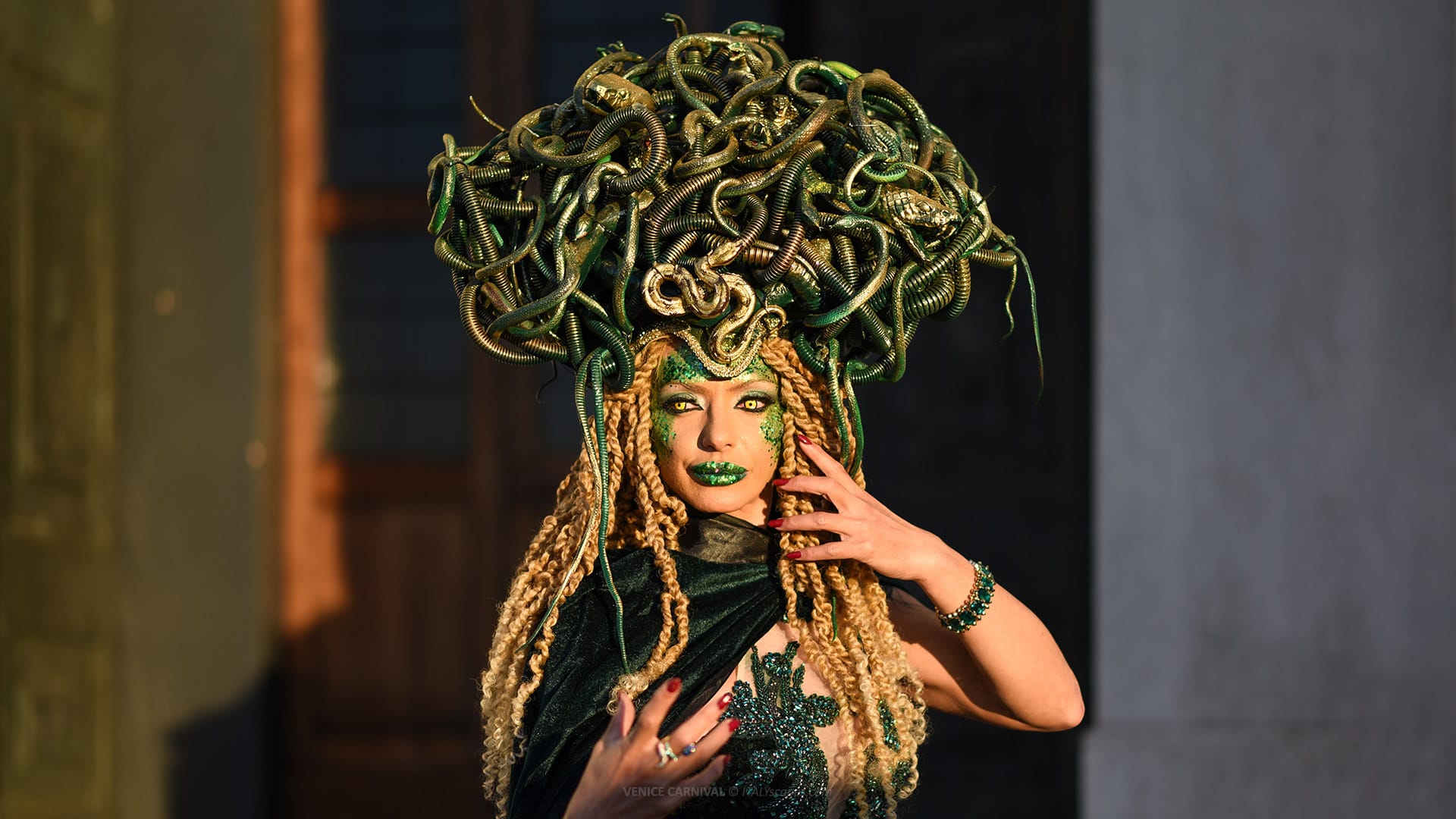
Just a few steps from Piazza San Marco, the Piazzetta opens dramatically toward the lagoon. We almost always continue here after photographing the main square because the atmosphere changes completely. Open space replaces enclosed architecture, creating opportunities for wider compositions that include both costumes and water.
Morning light arriving across the lagoon often produces beautiful side lighting on the participants standing near the waterfront. The background feels lighter, cleaner and less visually crowded than many other locations around the city.
One lesson we learned after several editions is not to rush through this area. Many photographers simply walk toward the next location, yet some of our strongest images were made by staying here and waiting. Costumed participants frequently stop to admire the view or pose naturally for other photographers, creating authentic moments rather than staged portraits.
The columns of San Marco and San Todaro frame the entrance to the Piazzetta beautifully, while the distant silhouette of San Giorgio Maggiore provides additional depth to wide-angle compositions.
Because the waterfront remains relatively open, changing weather conditions become an important part of the image. Soft fog, dramatic clouds or perfectly clear winter skies each produce entirely different moods, encouraging us to experiment rather than repeating identical photographs.
We also enjoy using longer focal lengths here to compress the perspective between the lagoon, passing gondolas and masked participants. The result often feels more cinematic than documentary.
Beneath the Arcades of the Doge’s Palace
One location continues surprising us year after year: the elegant arcades surrounding the Doge’s Palace. At first glance, they appear simply to provide shelter from occasional rain. In reality, they create one of the most versatile portrait locations anywhere in Venice.
The repeating Gothic arches naturally frame subjects while filtering the available light. Soft shadows replace the stronger contrast found in open squares, allowing facial details, masks and costume textures to remain beautifully visible.
Whenever the weather becomes unpredictable, we almost instinctively return here. Rain rarely stops photography during the Venice Carnival; instead, it often improves it. Reflections appear on the stone pavement, umbrellas become visual elements and the covered walkways continue providing excellent shooting conditions.
We also appreciate the rhythm created by the endless succession of arches. Depending on the focal length, they can isolate a single participant or lead the viewer’s eye deep into the composition, creating a strong sense of perspective.
Riva degli Schiavoni
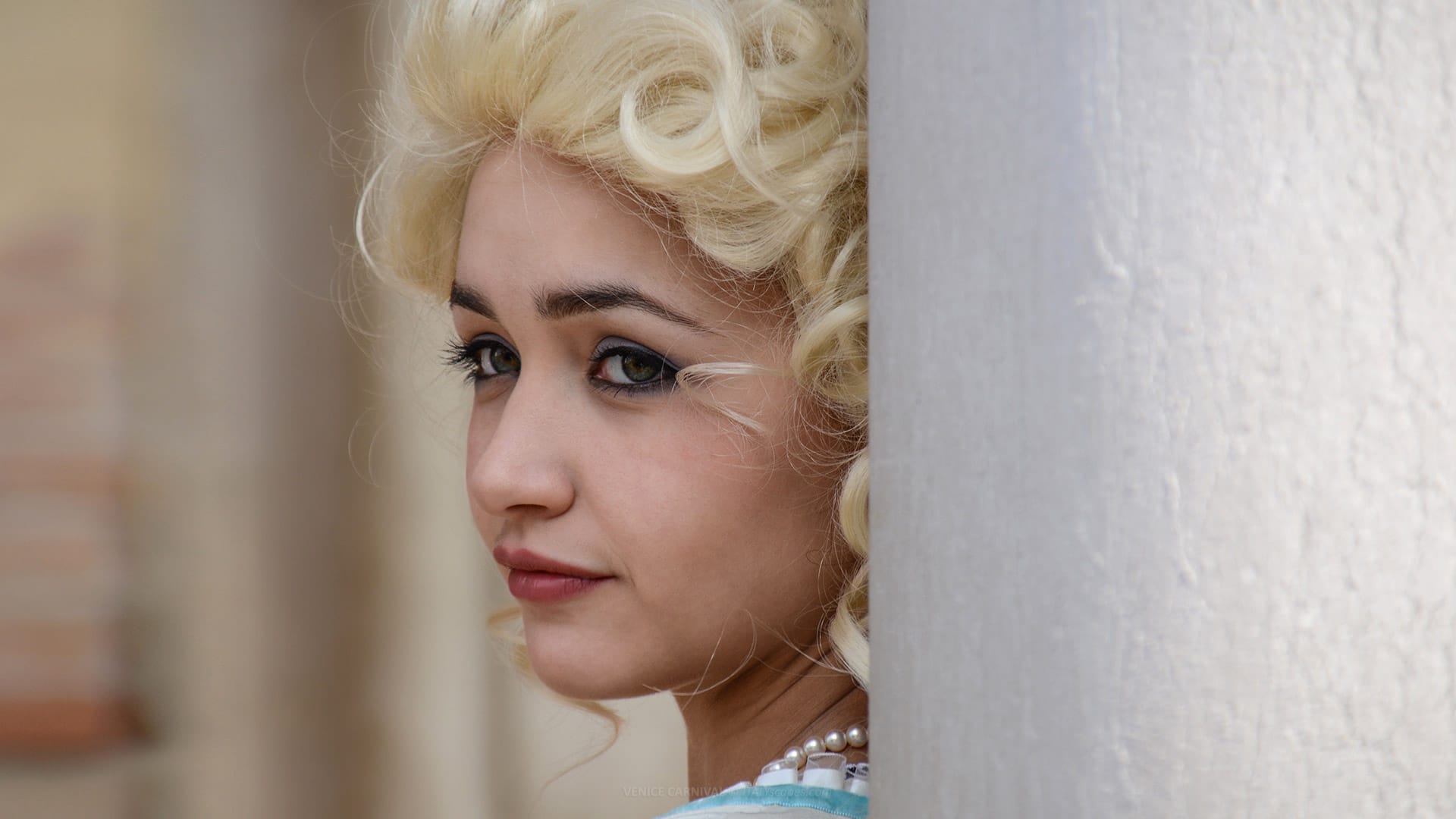
Every time we photograph the Venice Carnival, we end up returning to Riva degli Schiavoni several times throughout the day. The light changes constantly, the lagoon is never the same twice, and the long waterfront offers an incredible variety of compositions. Flexibility is what makes this location so rewarding.
Early in the morning, the promenade feels remarkably peaceful. The rising sun illuminates the façades behind the photographers while creating a gentle glow across the lagoon. We often begin with wider compositions before gradually moving closer as more costumed participants arrive.
As the morning progresses, the atmosphere becomes livelier. Gondolas pass quietly in the background, vaporetto traffic increases and more visitors gather along the waterfront. Rather than seeing this as a disadvantage, we learned to incorporate these elements into our photographs. They tell the story of a living Venice instead of an empty postcard.
One technique we frequently use here is allowing generous space around the subject. The lagoon, San Giorgio Maggiore and the distant skyline create natural breathing room within the frame, making even simple portraits feel elegant and unmistakably Venetian.
When clouds begin moving across the sky, the location becomes even more interesting. Soft, changing light constantly reshapes colours and reflections, encouraging us to revisit exactly the same composition several times within a single hour.
During some editions, we remained here far longer than originally planned simply because every few minutes another extraordinary costume appeared against the open water. The constantly changing background ensured that no two portraits ever looked alike.
Campo San Zaccaria
One of the places we gradually came to appreciate is Campo San Zaccaria. It rarely appears at the top of photography guides, yet we have created some of our favourite portraits here. Calmness defines the atmosphere of this elegant square.
Located only a short walk from Piazza San Marco, it somehow feels noticeably quieter. Costumed participants often stop here for a short break after leaving the busiest areas, creating more spontaneous photographic opportunities.
The surrounding historic buildings provide clean architectural backgrounds without overwhelming the subject. Unlike larger public spaces, there are fewer distractions competing for attention inside the frame.
We especially enjoy photographing here during the late morning, when sunlight begins reaching different parts of the square while still remaining relatively soft. The resulting contrast adds depth without creating harsh shadows across elaborate masks.
Because Campo San Zaccaria receives fewer photographers than Piazza San Marco, conversations with participants often become more relaxed. Several of our most memorable portraits began simply by complimenting a costume before asking whether we could take a photograph.
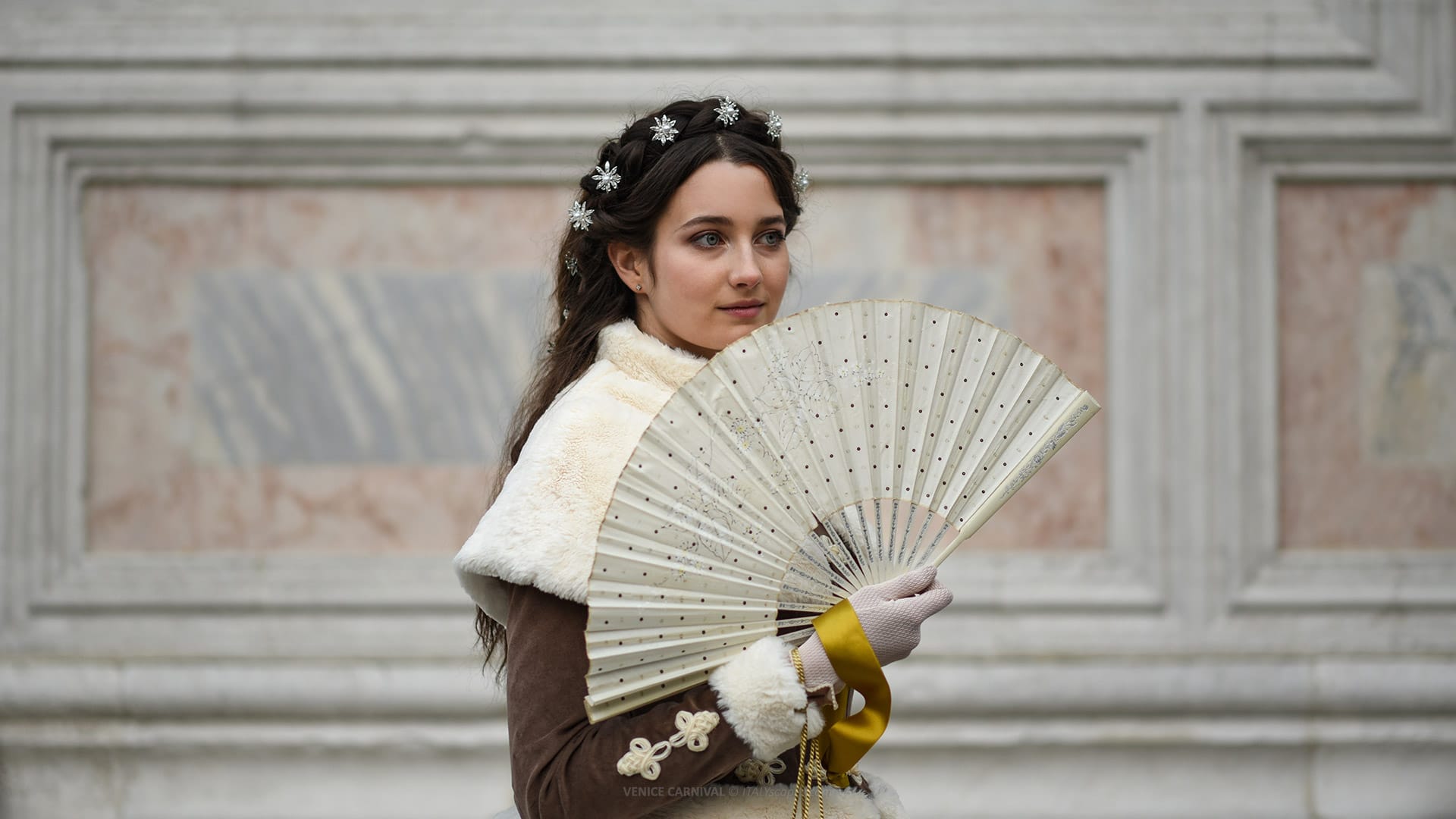
San Giorgio Maggiore – Our Favourite Photography Location
If we had to choose only one place to photograph the Venice Carnival, it would undoubtedly be San Giorgio Maggiore. Every year, sooner or later, we cross the lagoon because we know something special awaits us there. Perspective completely transforms the experience.
Many visitors cross simply to admire the famous view back toward Venice. While that panorama alone is worth the short vaporetto journey, what truly makes the island extraordinary is what happens during carnival.
The Afternoon Gathering
After attending so many editions, we noticed a fascinating tradition. Throughout the afternoon, photographers and costumed participants naturally begin gathering on the waterfront facing Piazza San Marco. There is no official schedule, yet year after year the same meeting seems to happen almost instinctively.
For photographers, it feels like an open-air studio without walls. The skyline of Venice replaces an artificial backdrop, while the lagoon reflects changing light throughout the afternoon. Every costume immediately gains context because the city itself becomes part of the composition.
Some participants arrive specifically to pose here. Others simply enjoy the atmosphere, chatting with photographers, admiring each other’s costumes or waiting patiently for the perfect light. The result is a remarkably relaxed environment where creativity replaces urgency.
Unlike the crowded streets of central Venice, there is enough space to move freely around each subject. We can experiment with different focal lengths, angles and compositions without constantly worrying about people walking into the frame.
Several of the photographs featured throughout this guide were captured during these afternoons. Looking back through our archive, it is remarkable how many of our personal favourites came from this exact location.
The Most Beautiful Skyline in Venice
From San Giorgio Maggiore, Venice unfolds almost like a theatre set. The Doge’s Palace, St. Mark’s Campanile, the domes of the basilica and the elegant waterfront align into one of Italy’s most recognizable skylines. Scale becomes an essential element of every composition.
We often alternate between portrait orientation and wide landscapes because both work equally well. Close portraits highlight costume details, while wider images celebrate the relationship between the participant and the historic city behind them.
The generous distance across the lagoon also creates a pleasing separation between foreground and background. Unlike photographing directly inside Piazza San Marco, here the architecture complements the subject without dominating the image.
Whenever friends ask us for our favourite carnival location, this is always the first recommendation we give. It consistently rewards patience, regardless of weather or lighting conditions.
Sunset and Blue Hour
If there is one moment we never want to miss, it is sunset from San Giorgio Maggiore. As daylight softens, the skyline begins glowing with warm golden tones before gradually transitioning into shades of blue. Light becomes almost cinematic.
The transformation happens surprisingly quickly. We usually arrive well before sunset, allowing ourselves enough time to explore compositions before the colours begin changing.
Blue hour is equally extraordinary. Artificial lights gradually illuminate Venice while the sky retains deep cobalt tones, producing beautiful contrast between warm architecture and cool evening colours.
Long after many visitors return toward the city, we often remain on the island simply watching the atmosphere evolve. Photography almost becomes secondary. Some evenings are memorable not because of the images we captured, but because of the quiet experience of witnessing Venice slowly disappear into night.
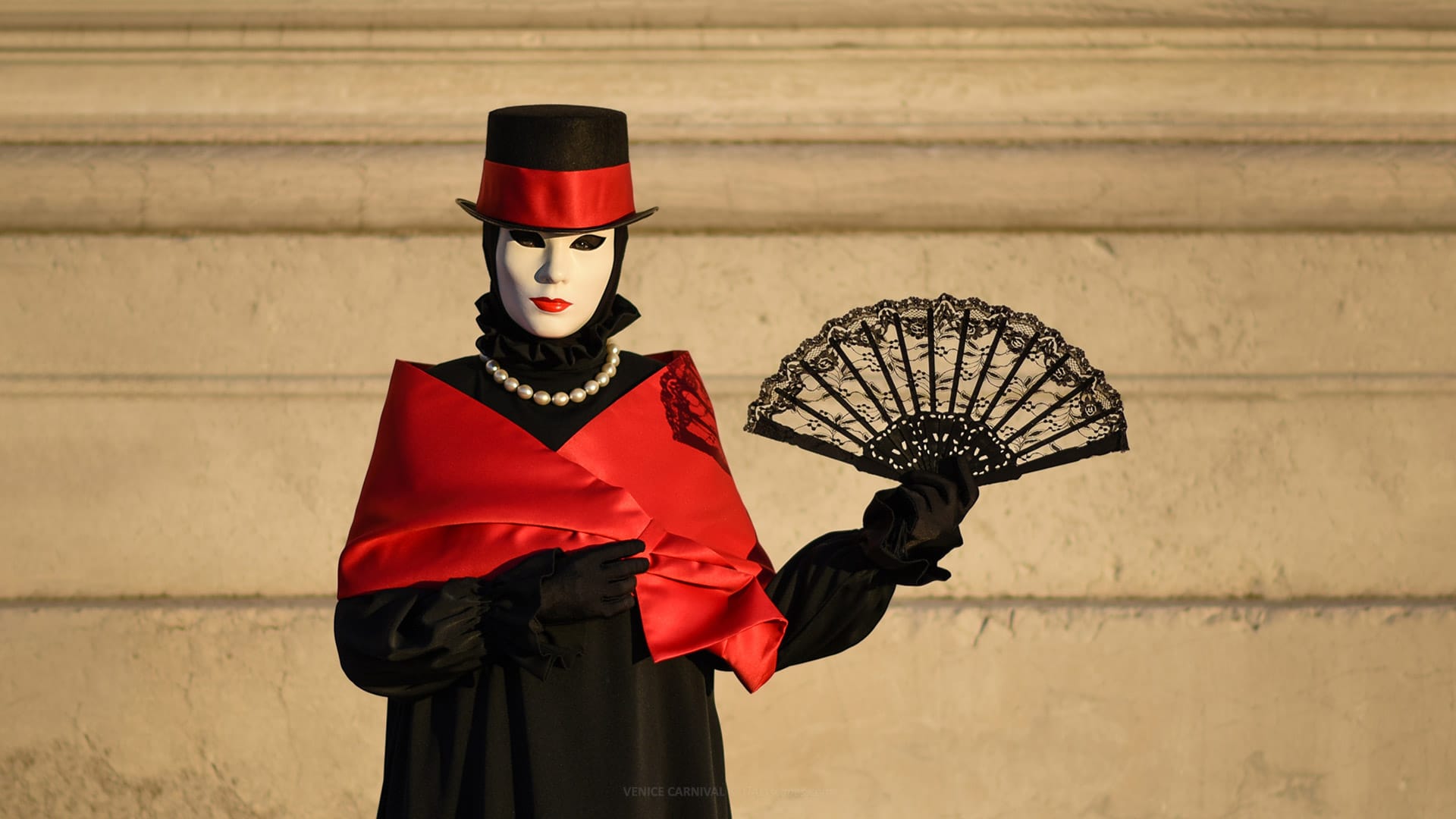
Santa Maria della Salute
Another location we revisit frequently is the area surrounding Santa Maria della Salute. The magnificent Baroque church dominates the entrance to the Grand Canal and provides one of the city’s most elegant architectural settings. Elegance defines every composition here.
The broad stone spaces around the basilica allow photographers to work comfortably without feeling constrained by narrow streets. Costumed participants naturally stand out against the pale stone and monumental architecture.
Morning light often highlights the church beautifully, while afternoon conditions create softer side lighting across the square. We have photographed here under bright sunshine, heavy clouds and light fog, discovering that each weather condition produces its own distinctive atmosphere.
Rather than photographing only the church itself, we recommend exploring the surrounding area. Smaller viewpoints frequently reveal unexpected compositions combining the basilica, canals and passing gondolas.
We also appreciate how the neighbourhood feels slightly removed from the busiest carnival routes. The pace slows down, encouraging more thoughtful photography instead of constantly reacting to crowds.
Hidden Streets and Quiet Canals
Some of our most meaningful carnival photographs were not taken in famous squares at all. They were captured while wandering through narrow calli, crossing small bridges and following canals where very few visitors stopped. Curiosity has often rewarded us more than careful planning.
One of the greatest lessons Venice has taught us is that beautiful photographs rarely come from rushing between landmarks. Whenever we had a free hour without a specific destination, we simply started walking. Again and again, those unplanned detours led us to places we would never have found otherwise.
Away from the busiest carnival routes, the atmosphere changes completely. The sounds of the city become softer, footsteps echo through narrow streets, and the pace slows down. Costumed participants occasionally leave the crowds for a few quiet moments, creating portrait opportunities that feel intimate rather than theatrical.
These quieter locations also allow architecture to play a different role. Instead of monumental façades dominating the composition, modest brick walls, worn wooden doors, weathered shutters and small canals become subtle elements that enhance rather than distract from the subject.
Some of our favourite images feature almost no recognizable landmarks at all. They could only have been taken in Venice, yet what makes them memorable is not an iconic monument but the atmosphere created by soft winter light and centuries-old streets.
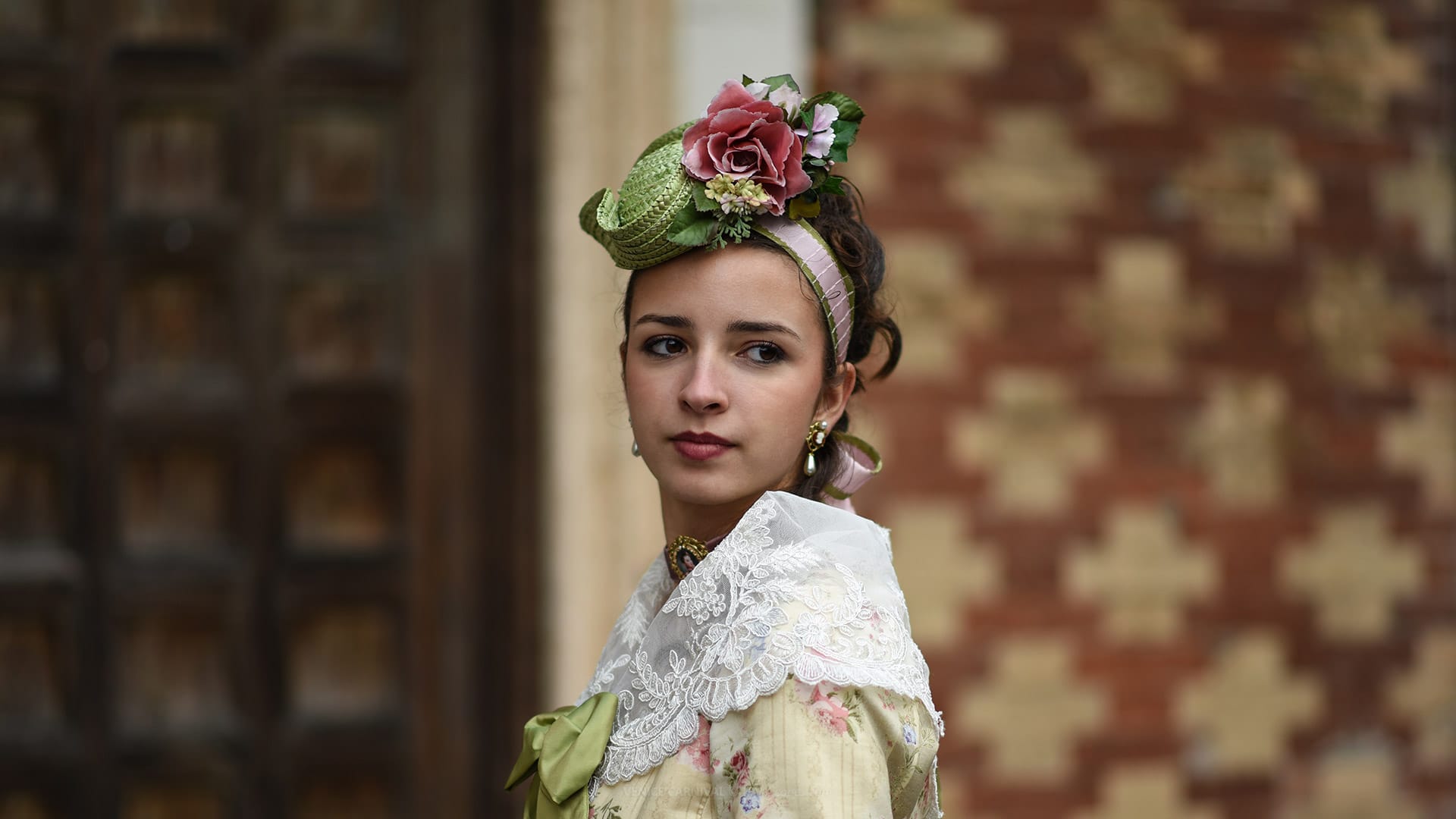
The Best Moments of the Day
One question we are asked almost every year is simple: when is the best time to photograph the Venice Carnival? After many editions, our answer is equally simple – every moment offers something different.
Sunrise
Sunrise remains our favourite time of day. Venice wakes slowly, the streets are still quiet and the light is beautifully soft. Costumes appear almost luminous against the historic architecture, while photographers can work without constantly navigating through large crowds.
Morning also gives us time to experiment. We can revisit the same composition several times, adjust camera settings carefully and interact more naturally with participants before the city reaches its busiest hours.
Even after years of returning, those first hours after sunrise still feel magical. They remind us why we are willing to wake long before dawn every carnival morning.
Midday
Many photographers avoid midday because the light becomes stronger, yet we have learned not to dismiss it completely. Instead of photographing in open squares, we move into narrower streets, beneath arcades or alongside canals where buildings naturally soften the sunlight.
Midday is also when the carnival reaches its highest energy. Music fills the streets, more participants appear in elaborate costumes and the city feels wonderfully alive. Movement replaces the calm atmosphere of the morning, opening opportunities for candid street photography.
Rather than fighting the crowds, we often embrace them. Wide-angle scenes showing photographers, performers and visitors together tell an authentic story about the Venice Carnival itself.
Golden Hour
As afternoon slowly becomes evening, Venice begins changing once again. Warm sunlight reflects from canals, façades glow softly and costumes seem almost painted by the light. This is the moment we usually begin moving toward San Giorgio Maggiore or the waterfront.
Golden hour produces some of the most elegant portraits of the entire day. Colours become richer without appearing exaggerated, while shadows add depth and dimension to every composition.
Every year we promise ourselves to leave before sunset, and every year we fail. The light simply becomes too beautiful to stop photographing.
Blue Hour and Night
Once the sun disappears completely, many visitors head back to their hotels. We almost never do. Blue hour is one of our favourite moments because Venice becomes quieter again while its historic buildings begin glowing under artificial lighting.
Reflections multiply across the canals, lanterns illuminate narrow streets and the city acquires an atmosphere that feels both mysterious and timeless. Night photography requires a little more patience, but the rewards are extraordinary.
Some of our most emotional carnival photographs were captured after sunset, when the costumes seemed to emerge from darkness beneath centuries-old stone arches.
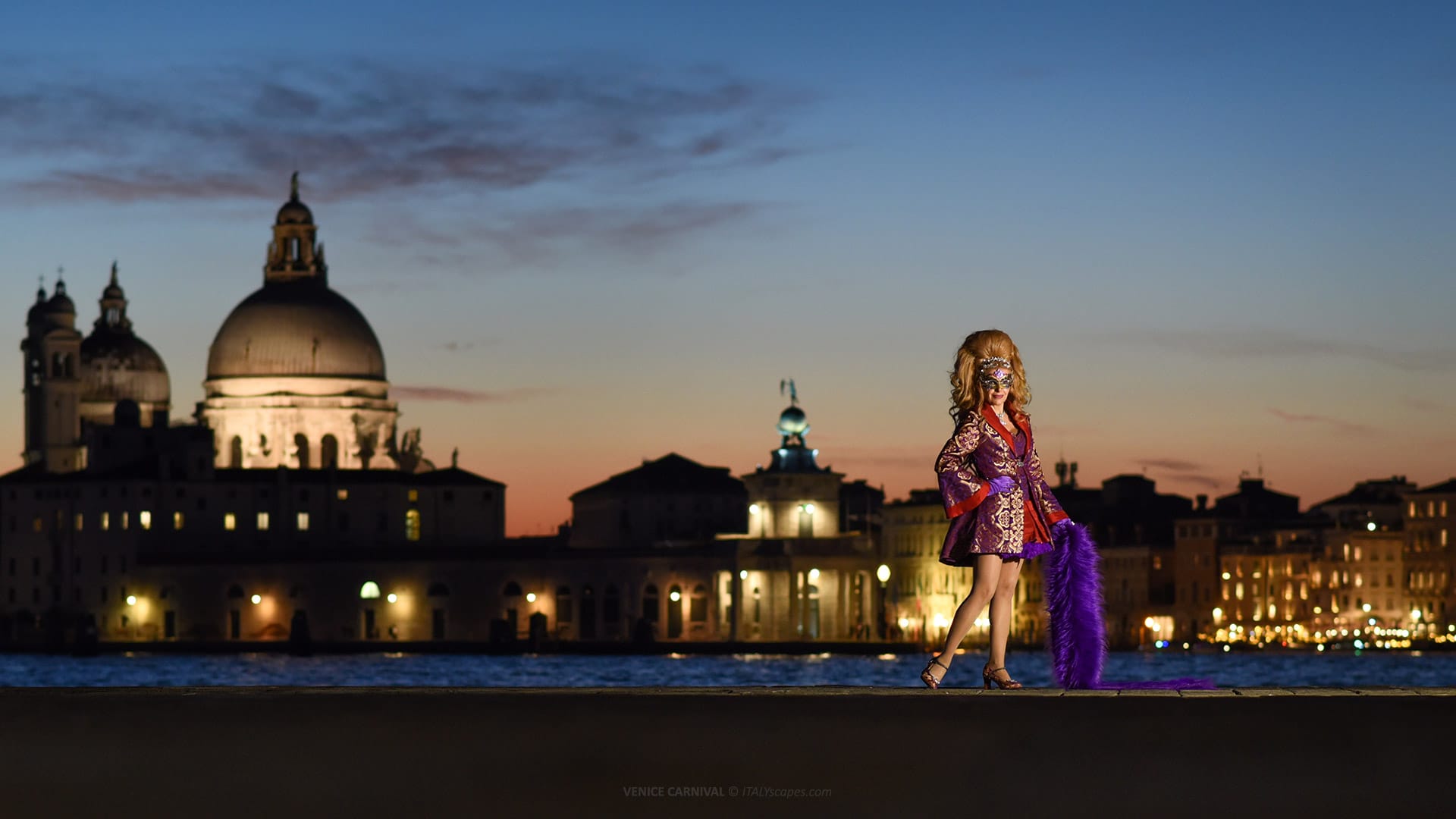
Beyond Portraits – Looking for Stories
When we first started photographing the Venice Carnival, we focused almost entirely on portraits. Beautiful costumes naturally attract every photographer’s attention. Over time, however, we realised that the carnival offers much more than individual portraits. Today, we also search for stories.
Sometimes that story is a participant quietly adjusting a mask before entering Piazza San Marco. Sometimes it is two photographers comparing images on the back of their cameras. Sometimes it is a child staring in amazement at a beautifully dressed Venetian noble from another century.
These moments may never become the most technically perfect photographs in our collection, yet they often become the most meaningful. They remind us that the carnival is not simply a visual spectacle but a living cultural tradition shared by thousands of people.
We also enjoy photographing details that many visitors overlook. A gloved hand resting on an antique fan. Reflections inside a Venetian mask. The texture of embroidered velvet illuminated by soft morning light. Tiny fragments often tell surprisingly powerful stories.
Whenever we review our photographs after returning home, we notice that these quieter images frequently become our favourites. They capture not only how the carnival looks, but how it feels.
The Official Carnival Events
While spontaneous photography fills much of our day, we always try to include several official events in our schedule. They provide opportunities to photograph costumes, performances and ceremonies that cannot be recreated elsewhere. Tradition remains at the heart of these celebrations.
Official parades, costume presentations and public performances naturally attract large crowds, so arriving early becomes essential. We usually reach important locations well in advance, allowing enough time to choose viewpoints before spectators fill the available space.
Rather than spending the entire event behind the camera, we also take moments simply to watch. Observing the atmosphere without photographing every second helps us anticipate interesting moments more naturally.
Over the years, we discovered that the best images often happen immediately before or after official performances rather than during them. Participants relax, interact with one another and reveal genuine emotions that staged moments cannot always provide.
The Equipment We Actually Use
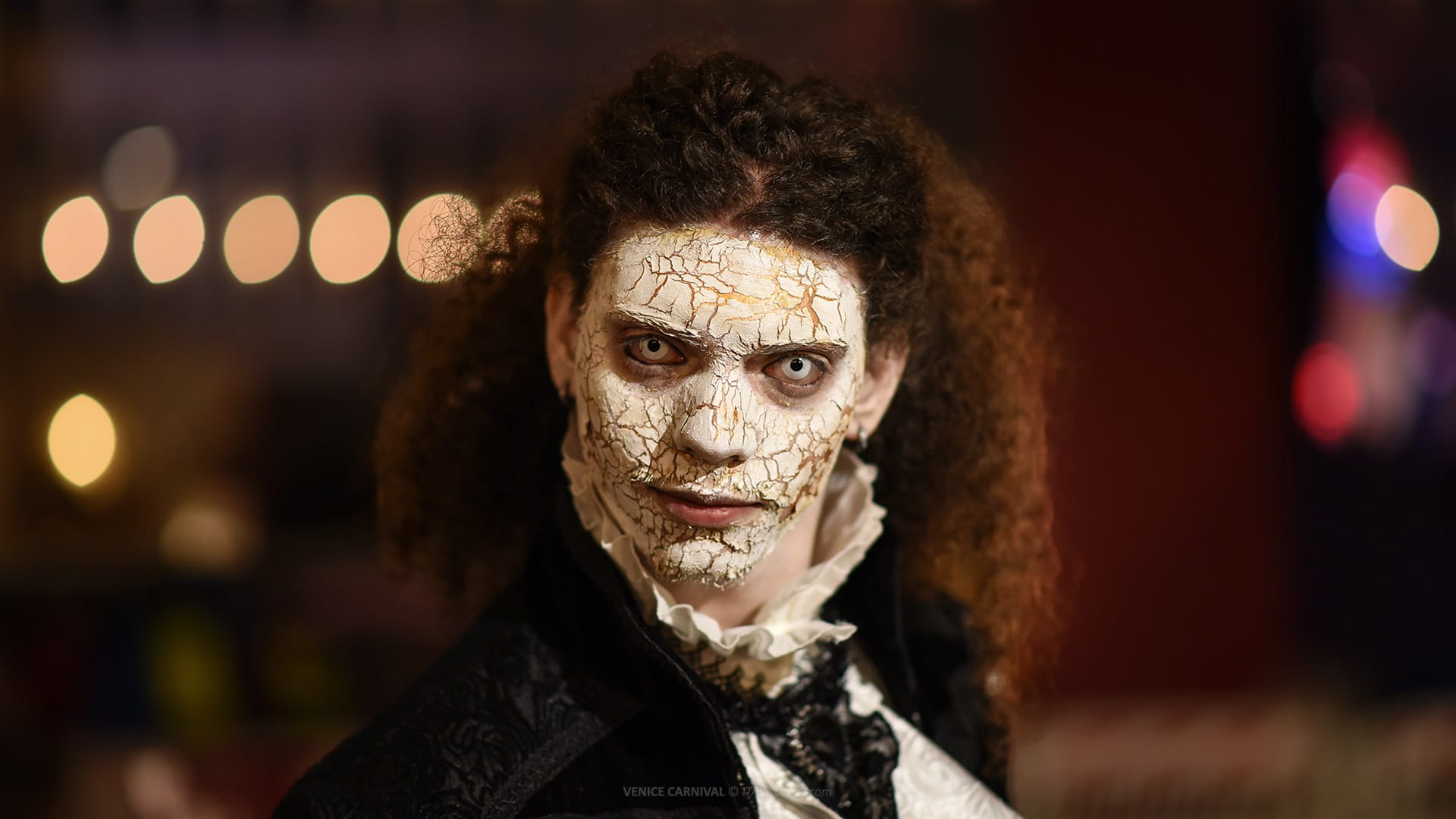
One of the questions we hear most often is what camera and lenses we use during the Venice Carnival. The answer usually surprises people. Great photographs are far more dependent on light, timing and patience than on owning the latest equipment.
Our main camera is still a Nikon D750. It has accompanied us through almost every recent edition of the Venice Carnival and continues to deliver beautiful image quality despite its age. Although we also own a modern Sony mirrorless camera, the D750 remains the body we instinctively reach for whenever carnival season arrives.
For portraits, our favourite lens is the Nikon AF-S 85mm f/1.8G. Its focal length allows us to isolate costumed participants while preserving a comfortable working distance, and the beautiful background separation helps direct attention exactly where we want it.
When we want something slightly more versatile, we switch to the AF-S NIKKOR 50mm f/1.4G. It feels incredibly natural for documentary-style photography, allowing us to include more of Venice without losing the intimacy that makes carnival portraits so engaging.
Our wide-angle work is almost always handled by the Tamron 17-35mm DSLR lens. It is the lens we use for Piazza San Marco at sunrise, dramatic canal views, architectural compositions and the spectacular skyline seen from San Giorgio Maggiore. Whenever we want to show both the costume and the city that surrounds it, this lens is usually mounted on our camera.
Over the years, we have learned that carrying a simple, familiar kit is far more valuable than bringing every lens we own. We know exactly how each lens behaves, how it renders light and where it performs best. That familiarity allows us to concentrate entirely on composition and on the fleeting moments unfolding in front of us instead of thinking about our equipment.
If there is one lesson our equipment has taught us over the years, it is that memorable photographs rarely come from the latest camera. They come from returning to the same places, understanding the light, waiting for the decisive moment and seeing Venice with the same curiosity every single time.
Practical Tips from Our Experience
After photographing the Venice Carnival across multiple editions, we have developed a few habits that consistently improve both our experience and our photographs. None of them involve complicated techniques. They simply come from spending time in the city and learning to adapt to its rhythm. Preparation always makes a difference.
The first piece of advice we would give anyone is to arrive earlier than you think necessary. Venice rewards early risers. Whether we were heading to Piazza San Marco, Riva degli Schiavoni or a quiet canal hidden deep within Castello, the city always felt more intimate during the first hours of daylight.
Comfortable footwear is another essential. During every carnival, we walk many kilometres without even noticing. It is not unusual for us to leave the hotel before sunrise and return well after blue hour, crossing dozens of bridges and exploring neighbourhoods that rarely appear on tourist itineraries.
We also learned not to plan every minute of the day. Some of our favourite photographs were completely unexpected. A costumed participant turning into a narrow alley, an elegant reflection in a quiet canal or a brief conversation that led to an unforgettable portrait – all of these moments happened because we allowed ourselves time to wander.
Weather should never discourage photographers from going out. Some of our strongest images were created on cloudy days or during light rain. Soft skies often produce more balanced light than bright sunshine, while wet pavements add beautiful reflections that enhance the atmosphere rather than diminish it.
Perhaps the most important lesson Venice has taught us is patience. There were mornings when we waited twenty minutes for a single composition to come together. Looking back through our archive, those images almost always became some of our favourites.
Our One-Day Venice Carnival Photography Itinerary
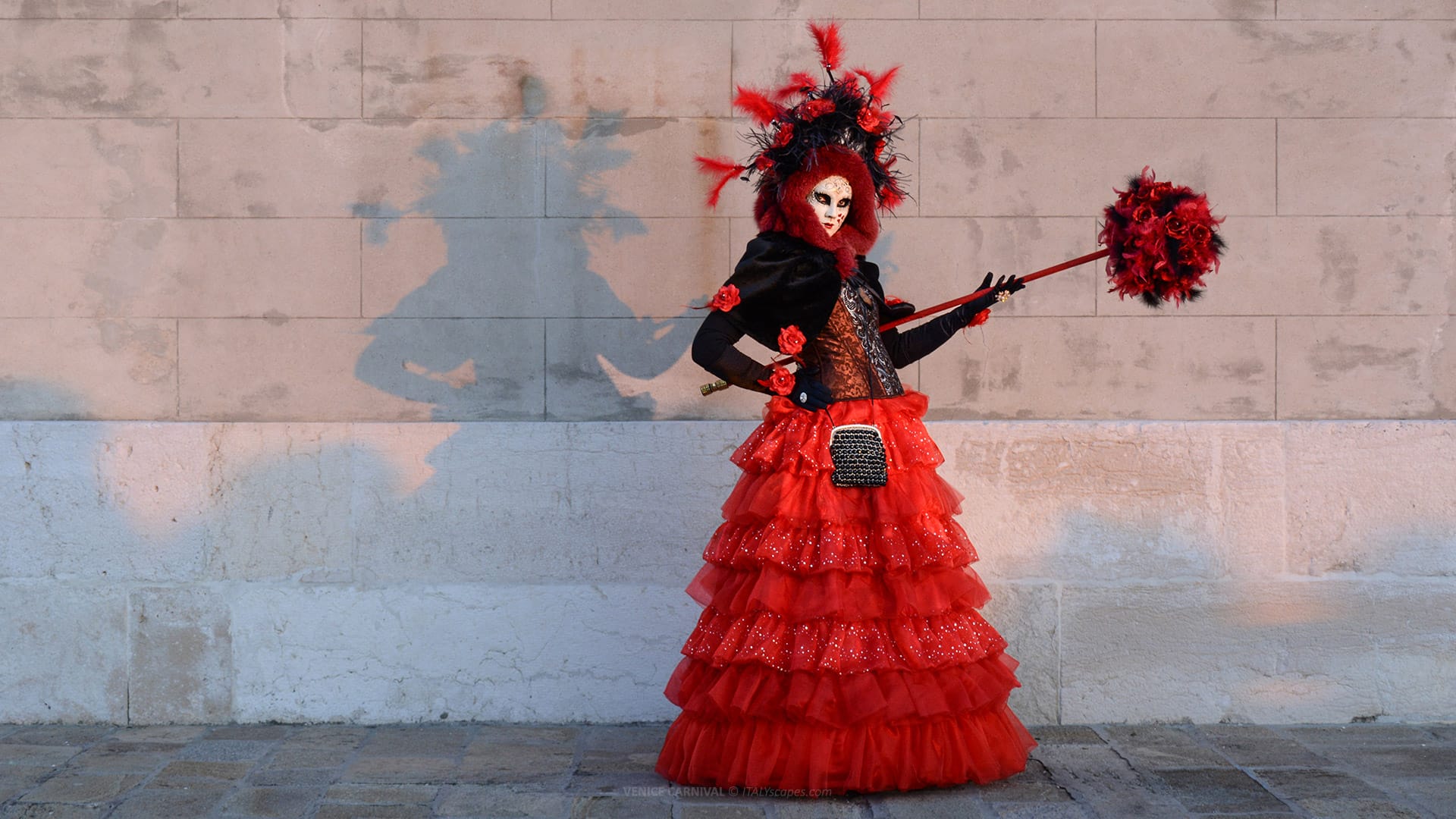
Whenever friends ask us how to spend a single day photographing the Venice Carnival, we usually recommend the route that we ourselves continue following almost every year. Experience has shown us that it offers the greatest variety of subjects while making the most of changing light throughout the day.
We begin before sunrise in Piazza San Marco. Arriving while the city is still waking up allows us to enjoy soft light, quieter surroundings and the opportunity to photograph costumed participants before the largest crowds arrive.
From there, we move naturally toward the Piazzetta and Riva degli Schiavoni, where the open views across the lagoon create a completely different atmosphere. We usually spend longer here than originally planned because every edition brings new costumes and changing light.
Late morning often takes us toward Campo San Zaccaria and nearby streets. Instead of following the busiest routes, we deliberately explore quieter corners where spontaneous portraits and atmospheric architectural details frequently appear.
Around midday, we simply walk without a fixed destination. Some of our favourite discoveries happened during these relaxed hours. Venice has a remarkable ability to reward curiosity, and every neighbourhood seems capable of revealing another unexpected composition.
During the afternoon, we almost always board the vaporetto to San Giorgio Maggiore. If there is one location that defines our own photographic experience of the Venice Carnival, it is undoubtedly this island. We spend hours photographing participants against one of the world’s most beautiful skylines while enjoying an atmosphere that feels surprisingly calm despite the popularity of the event.
As sunset approaches, we remain on the waterfront, watching the colours gradually change across the lagoon. Even after so many visits, this moment never loses its emotional impact.
When darkness falls, we return to Venice itself. Rather than ending the day immediately, we continue exploring illuminated canals, quiet bridges and historic streets. Blue hour and the first hours of the evening often provide the perfect conclusion to an unforgettable day behind the camera.
Why We Keep Coming Back
People sometimes ask us why we continue returning to the Venice Carnival after so many visits. The answer is surprisingly difficult to express because it goes beyond photography alone. Emotion is what ultimately brings us back.
Every edition feels familiar, yet completely different. The city remains the same, but the light changes. The costumes evolve. New faces appear beside returning participants. Even places we know by heart somehow reveal another perspective we had never noticed before.
Photography has taught us to slow down in Venice. Instead of rushing through a checklist of landmarks, we now pay attention to small details: the sound of footsteps echoing beneath ancient arcades, morning mist drifting across the lagoon, sunlight reflecting from centuries-old windows or a masked participant quietly adjusting a costume before stepping into the crowd.
Those moments rarely appear in travel brochures, yet they are the memories that stay with us long after we return home. They remind us that the Venice Carnival is not only a spectacle – it is also a collection of fleeting moments that disappear almost as quickly as they appear.
Perhaps that is why no photograph can ever truly capture the carnival in its entirety. Every image preserves only one fraction of a much larger story. That realization continues inspiring us to return, camera in hand, year after year.
Looking Ahead to Venice Carnival 2027
For us, photographing the Venice Carnival has never been about collecting beautiful images alone. It has become a tradition, a creative journey and, in many ways, our favourite way of experiencing Venice itself. Every return deepens our appreciation for the city, its history and the extraordinary people who bring the carnival to life through their dedication, artistry and imagination.
With the exception of the 2021 and 2022 editions, when the COVID-19 pandemic temporarily interrupted the celebrations, we have been fortunate to witness the carnival evolve over the years. Each visit has enriched our archive, but more importantly, it has enriched our understanding of what makes this event so unique.
The photographs accompanying this guide are more than illustrations. They are memories from early mornings in Piazza San Marco, long afternoons on San Giorgio Maggiore, quiet walks through hidden calli and countless conversations with passionate participants whose creativity continues inspiring us every winter.
As we pack our cameras at the end of every carnival, we never feel that the journey is truly over. Instead, we leave Venice already thinking about the next return, the next sunrise over Piazza San Marco and the next unforgettable encounter with the extraordinary people who bring this celebration to life.
If you have always dreamed of experiencing the magic of the Carnival of Venice, we hope this guide inspires you to join us at the Venice Carnival 2027, taking place from January 23 to February 9, 2027.
Perhaps our paths will cross somewhere between a quiet canal at dawn and the waterfront of San Giorgio Maggiore at sunset. Until then, keep your camera close, your curiosity alive, and never stop chasing the light that makes Venice unlike anywhere else in the world.
Frequently Asked Questions about Venice Carnival Photography
When is the best time to photograph the Venice Carnival?
Early morning offers the best conditions for Venice Carnival photography. Softer light, quieter streets and fewer visitors make it easier to capture elegant portraits, iconic landmarks and atmospheric canals before the city becomes crowded.
Where can I find the best costumed participants?
Many photographers gather around Piazza San Marco, the Doge’s Palace, Riva degli Schiavoni and San Giorgio Maggiore. Costumed participants often choose these locations because they provide beautiful historical backdrops for portraits.
Is San Giorgio Maggiore worth visiting for photography?
Yes. San Giorgio Maggiore is one of the most popular photography locations during the Venice Carnival. It offers spectacular skyline views, afternoon portrait opportunities, dramatic sunsets and excellent blue hour compositions.
What camera equipment should I bring?
A wide-angle lens is ideal for architecture, while a short telephoto or portrait lens works well for photographing costumes. A lightweight tripod can also be useful for sunrise, sunset and night photography.
Can I photograph people wearing carnival costumes?
Yes, but always remain respectful. Most participants enjoy being photographed, especially if approached politely. Asking for permission before taking close-up portraits is considered good etiquette.
Which weather conditions create the most dramatic photos?
Light fog, soft clouds and golden-hour sunlight often produce the most atmospheric images. Venice’s reflections and historic architecture become even more striking when combined with changing seasonal light.
Are drones allowed during the Venice Carnival?
Flying drones over Venice is heavily regulated and generally restricted in the historic centre. Visitors should always check current Italian aviation regulations before planning any aerial photography.
Is one day enough for Venice Carnival photography?
One day is enough to capture many highlights, especially with careful planning. However, spending two or three days provides more opportunities to photograph different costumes, lighting conditions and locations.