
Table of Contents
Padua is one of the most practical day-trip cities in northern Italy because its historic centre is compact, mostly flat, and rich in major monuments. This Padua itinerary links Giotto’s Scrovegni Chapel, medieval market squares, Palazzo della Ragione, Caffè Pedrocchi, Palazzo Bo, the Basilica of Saint Anthony, and Prato della Valle.
This route is designed for travellers arriving at Padova railway station in the morning and leaving in the evening. It avoids unnecessary backtracking, includes realistic breaks for coffee, lunch, gelato, and rest, and keeps the total walking distance around 6.5 to 7.5 kilometres, depending on optional detours.
Padua is not a city to rush from monument to monument. Its identity comes from University of Padua, founded in 1222, the 14th-century fresco cycles listed by UNESCO in 2021, the still-active food markets, and the devotional centre around Saint Anthony, who died near Padua in 1231.
Why This One-Day Padua Itinerary Works
This Padua itinerary works because the first major sight, the Scrovegni Chapel, stands about 700 to 900 metres from the railway station. The walk normally takes 10 to 12 minutes, and the route then continues naturally south through the historic centre, without forcing you to return north during the day.
The morning begins with the Scrovegni Chapel because access is timed and strict. Visits are organised in short slots, and the chapel must be booked in advance. Seeing Giotto early also gives the whole day a clear artistic frame, because Padua’s UNESCO identity is built around 14th-century fresco painting.
After the chapel, the route moves toward Caffè Pedrocchi, Palazzo Bo, and the market squares around Palazzo della Ragione. This central area is ideal for late-morning coffee, orientation, and lunch because the distances are short, the streets are lively, and the covered food market still functions below the medieval hall.
The afternoon continues toward the Cathedral Baptistery, then southeast to the Basilica of Saint Anthony, the Oratory of San Giorgio, the Botanical Garden, and Prato della Valle. This order works geographically because each stop sits farther south, ending in Padua’s largest public space before returning to the station.
This Padua itinerary is realistic because it does not enter everything. Palazzo Bo, the Clock Tower, the Botanical Garden, the Baptistery, and the Oratory of San Giorgio all require separate timing. The route gives priority to the Scrovegni Chapel, Palazzo della Ragione, the Basilica of Saint Anthony, and Prato della Valle.
8:30 am – Start at Padova Railway Station
Begin at the city’s main railway station. If you arrive from Venice, the journey to Padua is usually short enough for a proper day trip, especially by direct train. From the station, walk south toward the Giardini dell’Arena and the Eremitani area, where the Scrovegni Chapel is located.
The first walk is simple and mostly flat. Allow 10 to 12 minutes from the station exit to the chapel complex, or slightly more if you stop for orientation. This stretch also helps you understand Padua’s scale: the station is outside the deepest historic core, but still close enough for a walking itinerary.
Do not plan breakfast far from the station if you have a fixed chapel ticket. A quick espresso near the station or on the way is safer. The Scrovegni Chapel visit does not allow casual delays, so arrive early and use the extra minutes for the surrounding Roman arena park.
9:00 am – Scrovegni Chapel and the Eremitani Area
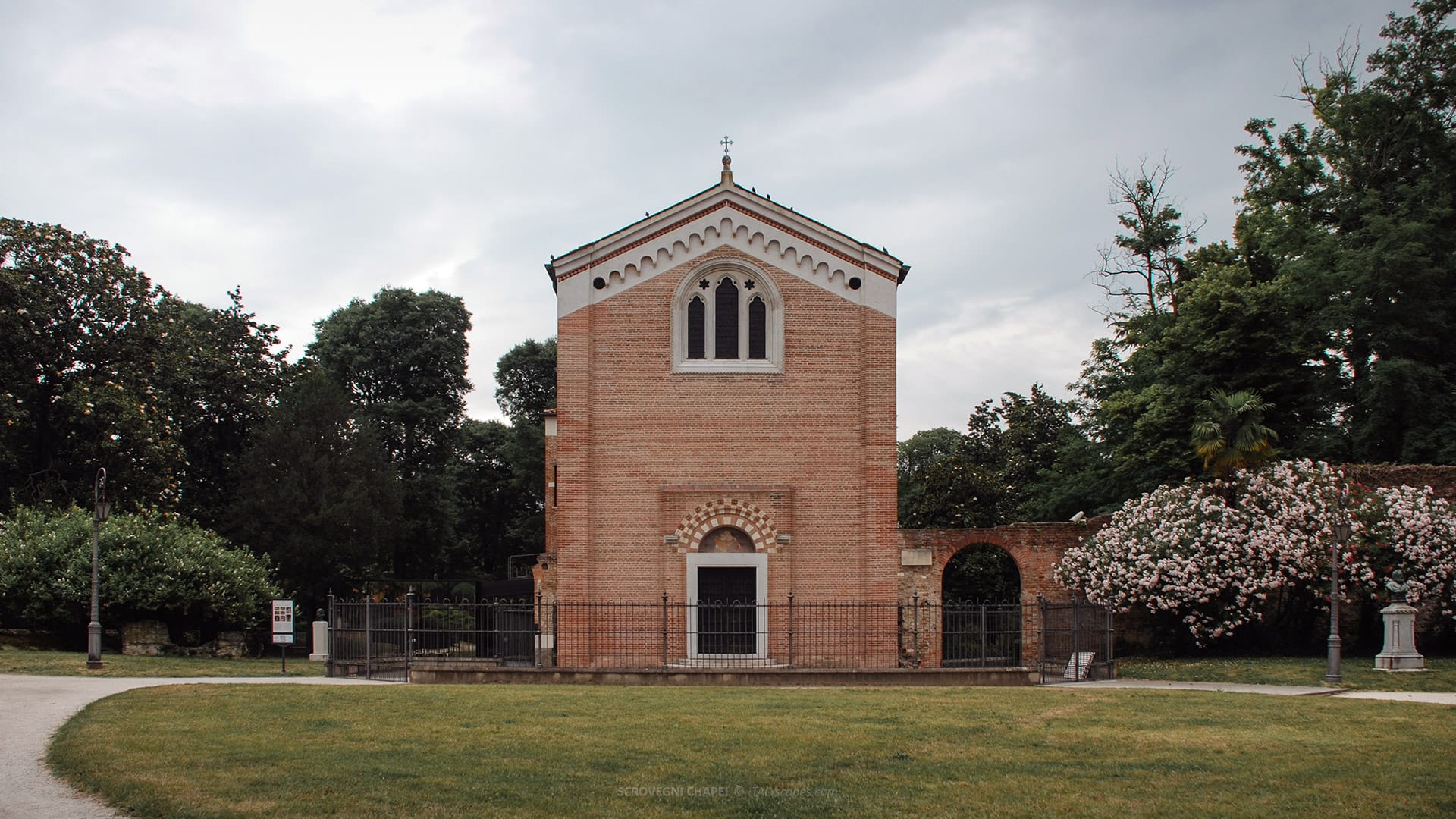
The Scrovegni Chapel is the most important timed stop in this Padua itinerary. Enrico Scrovegni commissioned the chapel in the early 14th century, and Giotto completed its fresco cycle around 1305. The interior shows episodes from the lives of the Virgin Mary and Christ, ending with the monumental Last Judgment.
The chapel stands on the site of a Roman arena, which explains its older name, the Arena Chapel. The building itself is small, but the fresco cycle is one of the decisive works in the development of European painting. Because of conservation rules, visits are short and carefully controlled.
Arrive before your slot. Visitors normally pass through a controlled waiting area before entering, and late arrival can mean losing access. For a one-day visit, book the chapel before building the rest of the route. A good morning slot around 9:00 or 9:15 am keeps the day balanced.
After the chapel, spend 20 to 30 minutes around the Eremitani area if your ticket includes access to the Civic Museums. The nearby Church of the Eremitani preserves important medieval and Renaissance material, although part of its artistic heritage was seriously damaged during World War II.
For a compact Padua itinerary, do not turn the museum complex into a two-hour visit. The aim is to understand the northern cultural entrance to Padua, see Giotto, and then continue south. If you love painting, return another day for a deeper visit to the museums and the frescoed churches.
Scrovegni Chapel
10:15 am – Walk Toward Caffè Pedrocchi
From the Eremitani area, walk toward Via Cavour and the central university district. The distance to Caffè Pedrocchi is about 700 metres, usually 8 to 10 minutes on foot. The route passes from the museum zone into the denser commercial and academic heart of Padua.
This is the right moment for a real coffee break. Padua’s centre has many cafés, but Caffè Pedrocchi is the historic stop that best fits the route. It is close to Palazzo Bo, Palazzo Moroni, the markets, and the main pedestrian streets, so the pause does not waste distance.
The break should last 20 to 30 minutes, not an hour. Order coffee, water, or a small pastry, sit down if possible, and reset after the chapel. This Padua itinerary includes the break deliberately because the morning starts with a concentrated artistic visit that requires attention and controlled timing.
10:30 am – Caffè Pedrocchi and Palazzo Bo
Caffè Pedrocchi opened in the 19th century and was designed by Giuseppe Jappelli. It became one of Padua’s most famous meeting places, associated with students, intellectual life, and civic history. The building measures about 3,550 square metres, making it one of the largest historic cafés in Europe.
The café is often connected with the idea of the “café without doors”, because it was historically open day and night for long periods. Today, it is still a practical stop, not only a monument. For a Padua itinerary, it works best as a coffee pause before exploring the university and market area.
A few steps away stands Palazzo Bo, the historic seat of the University of Padua. The university was founded in 1222, and Palazzo Bo became central to its identity. The building includes the famous Anatomical Theatre, inaugurated in 1595, considered the first permanent anatomical theatre of its kind.
Do not enter Palazzo Bo unless you have booked a tour and are ready to adjust the day. Guided visits can be excellent, but they take time. For a first Padua itinerary, admire the courtyard area if accessible, note the university’s presence, and continue toward the market squares.
11:15 am – Palazzo della Ragione and the Market Squares
From Caffè Pedrocchi or Palazzo Bo, walk about 250 to 300 metres to Palazzo della Ragione. The walk takes only 3 to 5 minutes. This short distance is one reason Padua is ideal for a one-day walking route: major civic, academic, commercial, and religious spaces are tightly connected.
Palazzo della Ragione was begun in 1172 and completed in 1219. It separates Piazza delle Erbe from Piazza della Frutta, two of Padua’s historic market squares. The ground floor still belongs to the city’s food culture, while the upper hall preserves one of Europe’s great medieval interiors.
The upper hall, known as Il Salone, is approximately 80 to 82 metres long, 27 metres wide, and about 24 to 40 metres high, depending on whether the measurement refers to the internal hall or the full roof structure. Its vast roof is famously unsupported by internal columns.
Inside, the walls are covered with an extensive cycle of astrological, civic, and allegorical frescoes. The wooden horse, built in 1466, recalls Donatello’s equestrian monument to Gattamelata near the Basilica of Saint Anthony. The hall also preserves the Pietra del Vituperio, linked to medieval civic justice.
Allow 45 to 60 minutes for Palazzo della Ragione if you enter. If you only see the exterior and the markets, allow 25 to 30 minutes.

the facade of Palazzo della Ragione overlooking Piazza della Frutta
12:15 pm – Lunch Around Sotto il Salone
The best lunch stop is around Sotto il Salone, Piazza delle Erbe, Piazza dei Frutti, or the nearby streets. This area keeps the route efficient and avoids moving south before eating. It also lets you experience Padua’s market life instead of choosing a random restaurant far from the itinerary.
Plan 60 to 75 minutes for lunch. A quick sandwich can work, but a proper seated meal is better if you have already walked from the station, visited the Scrovegni Chapel, crossed the centre, and entered Palazzo della Ragione. This is the main energy break of the day.
Keep lunch moderate. A heavy meal before the Basilica of Saint Anthony, the Botanical Garden, and Prato della Valle can make the afternoon feel long. Water matters, especially from late spring to early autumn, because several afternoon spaces are exposed, and Padua’s arcaded streets do not cover every section.
This Padua itinerary places lunch before the Cathedral and the Basilica because restaurant options are dense around the market squares. The southern monumental zone has cafés and restaurants too, but the market district is more central, practical, and historically connected with Padua’s everyday urban life.
1:30 pm – Piazza dei Signori and the Clock Tower
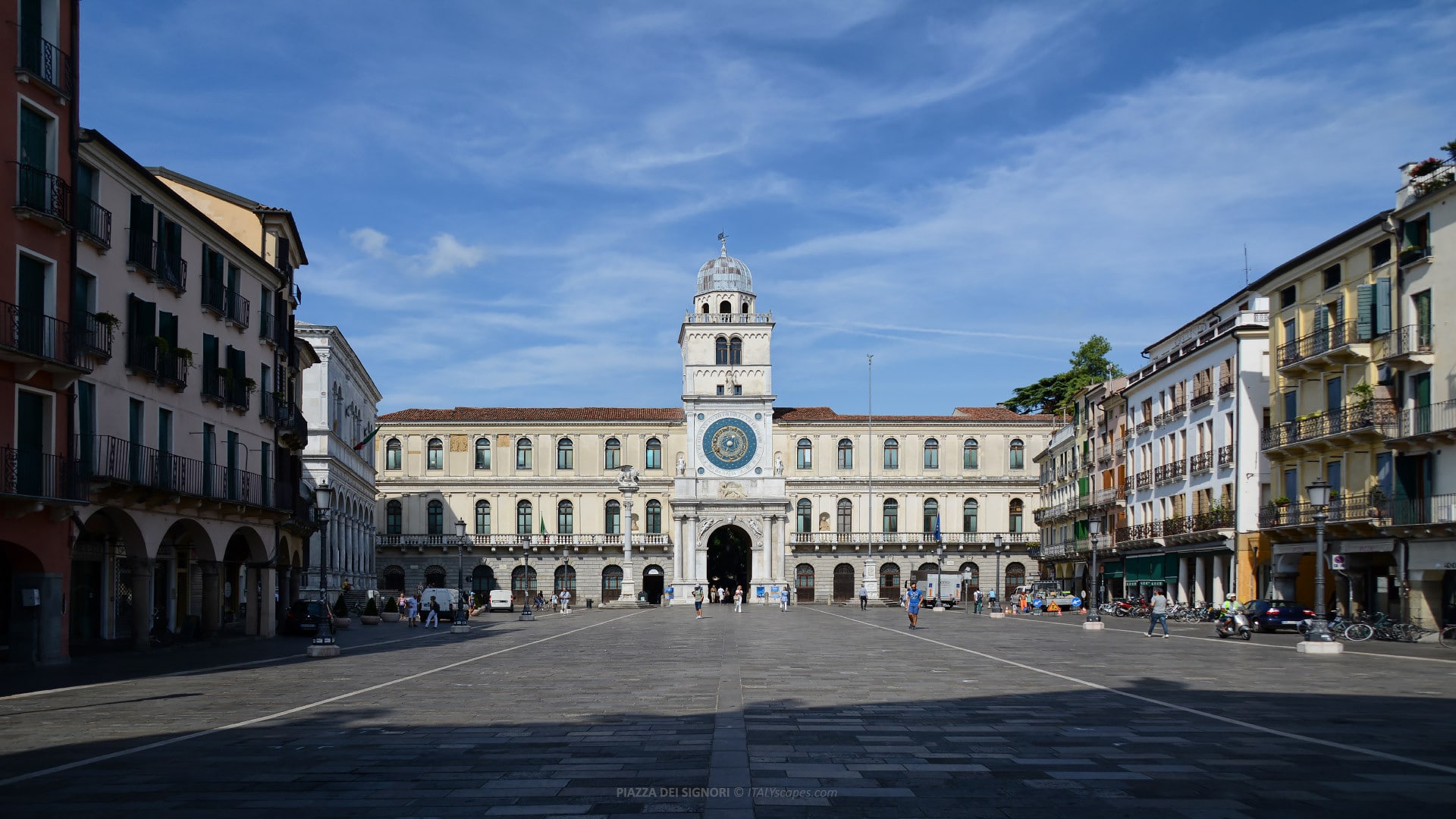
After lunch, walk about 200 metres west or northwest from Palazzo della Ragione to Piazza dei Signori. The walk takes 3 minutes. This square has a different rhythm from Piazza delle Erbe and Piazza dei Frutti: less market-focused, more ceremonial, with long façades and the Clock Tower as its visual anchor.
The Clock Tower stands between Palazzo del Capitanio and Palazzo dei Camerlenghi. Its astronomical clock was built in 1344 by Jacopo Dondi, and the tower rises about 30 metres. The clock face shows hours, stars, zodiac signs, and a geocentric view of the universe.
For most travellers, the square and exterior view are enough. Visits to the tower are limited and require reservation, so they do not fit easily into a flexible one-day route. Spend 15 to 20 minutes here, take photographs, and notice how the medieval, Venetian, and civic layers overlap.
This is also a good place for a short standing pause before the Cathedral area. The Padua itinerary is now leaving the market core and moving toward the city’s religious spaces. The transition is short, but it changes the mood from food stalls and cafés to baptistery frescoes and devotional architecture.
Piazza dei Signori and the Clock Tower
2:00 pm – Padua Cathedral and the Cathedral Baptistery
From Piazza dei Signori, walk about 300 metres to Piazza Duomo. The route takes around 4 minutes. The Padua Cathedral itself has a relatively restrained exterior compared with Padua’s other monuments, but the nearby Cathedral Baptistery is one of the city’s most important frescoed interiors.
The Baptistery is part of the UNESCO-listed fresco heritage of Padua. Its interior was frescoed by Giusto de’ Menabuoi in the 14th century, with a powerful visual programme centred on Christ, the Virgin, Saint John the Baptist, and the celestial order surrounding the dome.
Opening schedules can vary because of liturgical needs, and visits are usually organised in timed entries. For this Padua itinerary, enter the Baptistery only if the timing fits naturally after lunch. Allow around 30 to 45 minutes for the Baptistery, or keep the stop exterior-only if the schedule is tight.
If you skip the Baptistery, do not treat the stop as a failure. The day already includes Giotto and Palazzo della Ragione, two major frescoed sites. The Baptistery is an excellent addition, but the afternoon still needs time for the Basilica of Saint Anthony and the southern part of the city.
2:50 pm – Walk to the Basilica of Saint Anthony
From Piazza Duomo to the Basilica of Saint Anthony, the walk is about 900 metres to 1 kilometre, usually 11 to 14 minutes. The route can follow central streets toward Via del Santo, gradually moving from the civic heart of Padua to its major pilgrimage destination.
This is one of the longer walking sections of the Padua itinerary, but it is still easy and flat. Do not hurry. The streets around Via del Santo include historic buildings, university traces, shops, and arcades. Padua is known for its long portico network, which extends for roughly 25 kilometres across the city.
Arrive at the basilica with enough energy to look properly. The building is large, visually complex, and spiritually active. It is not only an architectural monument but also a major place of Catholic devotion, so dress and behave accordingly inside, especially during services.
3:10 pm – Basilica of Saint Anthony and Donatello’s Gattamelata
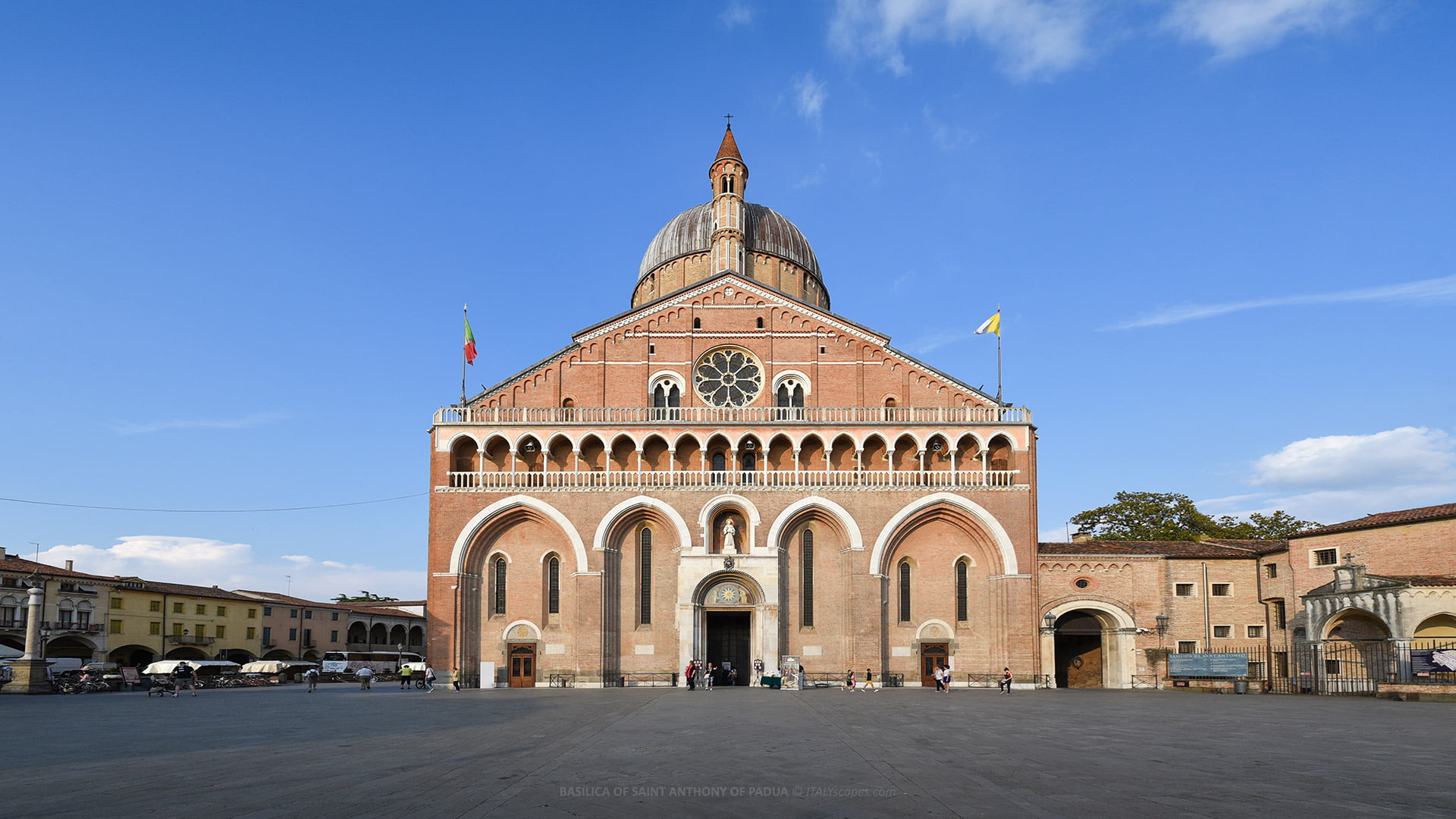
The Basilica of Saint Anthony of Padua, known locally as Il Santo, is one of the city’s most important religious monuments. Construction began after Saint Anthony’s death in 1231, and the basilica developed through Romanesque, Gothic, Byzantine, and later additions, creating its distinctive domes and towers.
The basilica is about 115 metres long inside, around 55 metres wide at the transept, and reaches an interior height of about 38.5 metres. The façade is about 37 metres wide and around 28 metres high, while the slender bell towers rise to approximately 68 metres.
Inside, focus on the Tomb of Saint Anthony, the Chapel of the Relics, the high altar area, and the artistic works connected with Donatello. You do not need to see every chapel in detail. A meaningful visit takes 45 to 60 minutes, especially if the basilica is crowded.
Outside, look at Donatello’s Equestrian Monument to Gattamelata, created in the 15th century for the condottiere Erasmo da Narni. The statue stands in Piazza del Santo and is one of the most important Renaissance equestrian monuments in Italy. It also connects visually with the wooden horse in Palazzo della Ragione.
This Padua itinerary gives the basilica enough time because it is not a minor stop. Many visitors come to Padua mainly for Giotto and Saint Anthony. Seeing both in one day creates the strongest first-time version of the city: fresco innovation in the morning, pilgrimage architecture in the afternoon.
Basilica of Saint Anthony of Padua
4:15 pm – Oratory of San Giorgio or a Rest Stop
Next to the Basilica of Saint Anthony stands the Oratory of San Giorgio, another important site in Padua’s UNESCO fresco network. Its frescoes were painted in the late 14th century, with work associated with Altichiero da Zevio and Jacopo d’Avanzi, key names in Padua’s Trecento painting.
Enter the oratory only if you still have attention for another frescoed interior. After Scrovegni, Palazzo della Ragione, the Baptistery, and the basilica, visual fatigue is real. The oratory is small but important, and it works best for travellers who specifically want the strongest fresco-focused Padua itinerary.
If you are tired, take a 20-minute rest instead. Sit near Piazza del Santo, have water or coffee, and continue south slowly. A one-day route should leave enough energy for Prato della Valle, because that square gives the itinerary a spacious ending after several interiors.
This decision point keeps the day realistic. Choosing rest instead of another paid interior is not wasted time. Padua’s historic centre is dense, and a good itinerary should protect attention as much as it protects walking time.
4:45 pm – Botanical Garden or Directly to Prato della Valle
From the Basilica of Saint Anthony to the Botanical Garden of Padua, the distance is about 300 metres, normally 4 minutes on foot. From the basilica to Prato della Valle, it is about 600 metres, usually 7 to 8 minutes. These short distances make the southern section easy to adapt.
The Botanical Garden of Padua was established in 1545 and has been a UNESCO World Heritage Site since 1997. It is considered the oldest surviving university botanical garden still in its original location. The historic garden preserves the connection between medicine, botany, teaching, and the University of Padua.
A full visit can take more than one hour, especially if you include the Biodiversity Garden. For this Padua itinerary, the Botanical Garden is optional. Enter only if it is open, you enjoy gardens, and you are willing to reduce time at Prato della Valle or skip another interior.
If you skip the garden, continue directly to Prato della Valle. This is the better choice in winter, on working Mondays when the garden may be closed, or when you want a slower final hour. The garden is historically important, but a one-day visit cannot treat every UNESCO site equally.
5:15 pm – Prato della Valle and a Gelato Break
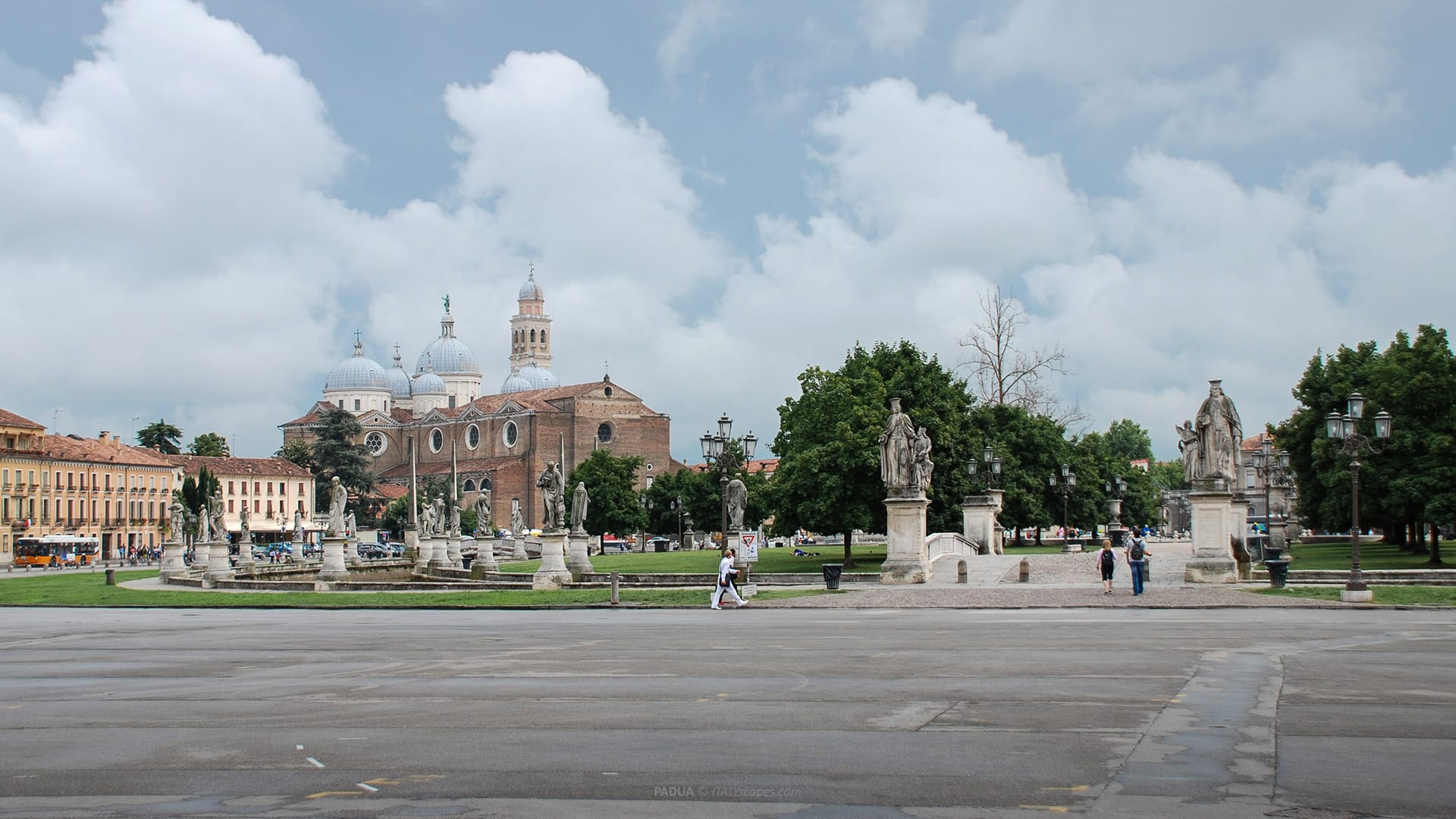
Prato della Valle is Padua’s largest square and one of the largest public squares in Europe. It covers about 90,000 square metres and has an elliptical form, with the green Isola Memmia at the centre, surrounded by a canal and a double ring of statues.
This is the best late-afternoon rest point in the Padua itinerary. After the chapel, markets, Palazzo della Ragione, Cathedral area, and Basilica of Saint Anthony, you need open space. Walk one circuit slowly, sit on a bench, or stop nearby for gelato, coffee, or water.
The square was redesigned in the late 18th century under Andrea Memmo, whose name is preserved in Isola Memmia. Today, the statues, bridges, canal, and surrounding architecture make Prato della Valle more than a photo stop.
Spend 35 to 45 minutes here. Look toward the Basilica of Santa Giustina, which borders the southeastern side of the square. If you still have energy, you can admire its exterior, but entering properly would require more time and would make the end of the day too heavy.
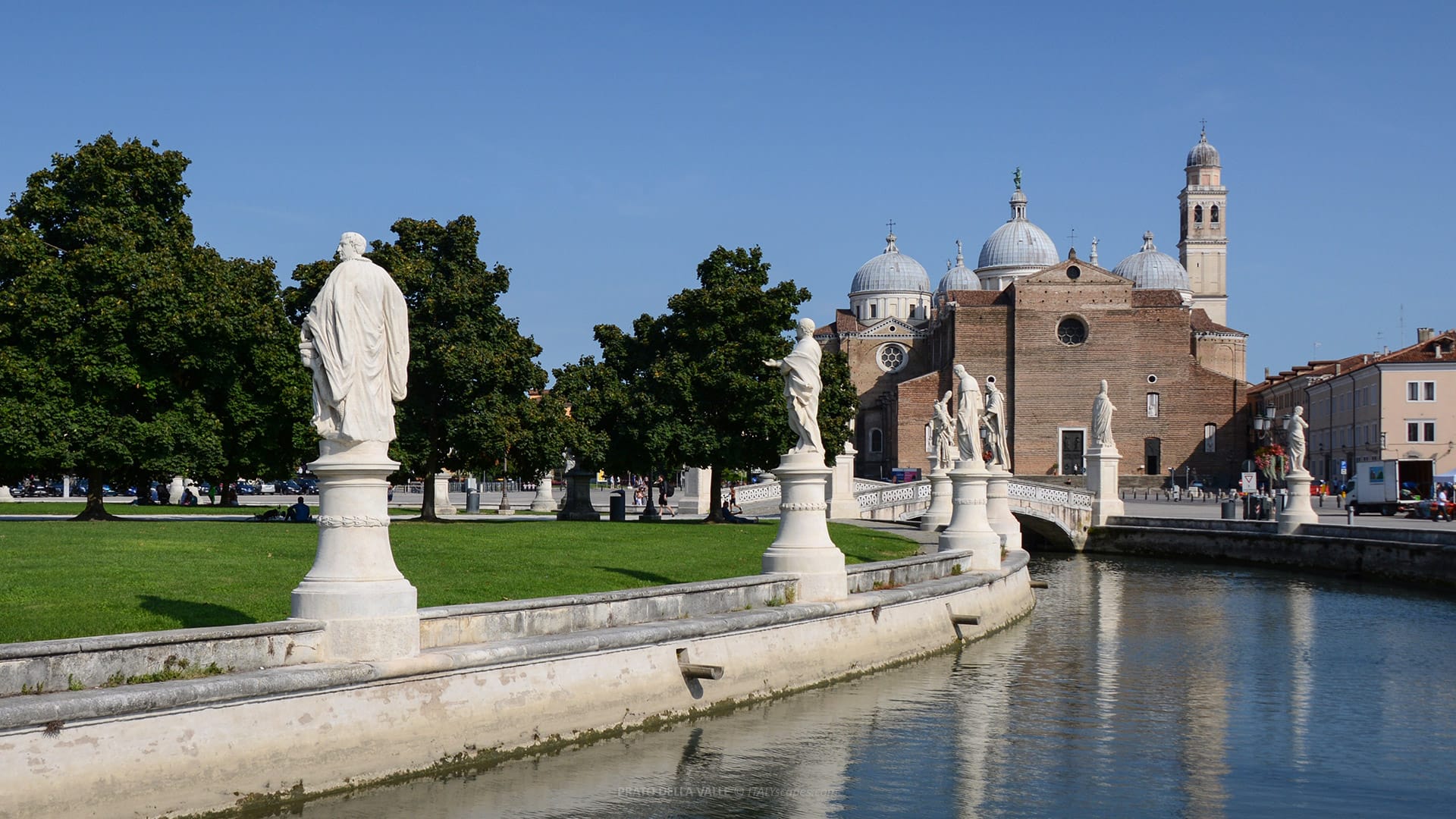
Prato della Valle
6:15 pm – Return Toward the Centre or the Station
From Prato della Valle back to the market squares, the walk is about 1.2 kilometres, usually 15 to 18 minutes. From Prato della Valle to Padova station, the direct walk is about 2.3 to 2.6 kilometres, usually 30 to 35 minutes, depending on the exact route.
If you are tired, use the tram or local public transport from the Prato della Valle area toward the station. This is the one moment when transport can make sense. The historic centre is walkable, but after a full Padua itinerary, saving the final 30 minutes of walking may be wise.
For dinner, choose between two practical options. Eat near Prato della Valle or the Basilica area if you want a quieter ending, or return toward the market squares if you prefer a more central evening atmosphere. A relaxed dinner should take 75 to 90 minutes, especially before a train.
If you have an evening train, leave a buffer. From the central market area to Padova station, allow 20 to 25 minutes on foot, or less by tram. Padua is compact, but evening crowds, restaurant timing, and tired legs can make short distances feel longer.
Best Route Summary for First-Time Visitors
The simplest route is: Padova station → Scrovegni Chapel → Eremitani area → Caffè Pedrocchi → Palazzo Bo → Palazzo della Ragione → Piazza delle Erbe → Piazza dei Signori → Cathedral Baptistery → Basilica of Saint Anthony → Botanical Garden or Prato della Valle → Padova station.
This Padua itinerary works because it moves in one broad direction: north to south. You start near the station, enter the frescoed city through Giotto, cross the university and market centre, reach the great religious monuments, and finish in Padua’s largest public square.
The route is best done on foot, with possible tram use only at the end. The historic centre is dense enough that taxis are usually unnecessary between stops. Walking also lets you notice Padua’s porticoes, market streets, university buildings, and small churches that would be missed from a vehicle.
For a faster version, skip the Baptistery and Botanical Garden. For a more art-focused version, include the Baptistery and Oratory of San Giorgio, but reduce market time. For a more relaxed version, enter only the Scrovegni Chapel and the Basilica, then enjoy streets, cafés, squares, and Prato della Valle.
What to Skip With Only One Day
Do not try to visit every UNESCO fresco site in one day. Padua’s 2021 UNESCO listing includes eight building complexes, and several require timed entries, careful looking, or extra walking. Adding all of them would turn this Padua itinerary into a checklist rather than a meaningful visit.
Do not enter Palazzo Bo without checking tour timing. The historic university is important, and the Anatomical Theatre is exceptional, but tours can consume the time needed for Palazzo della Ragione, lunch, or the basilica. Treat it as an optional substitution, not an automatic addition.
Do not spend too long inside the Civic Museums unless you are building a museum day. The Scrovegni Chapel area includes major collections, but Padua has too much to see in one day. A first itinerary should give you a clear urban reading, not exhaust you before noon.
Do not add distant sights such as the Specola or Santuario dell’Arcella unless you already know Padua well. They are relevant to the city’s history, but they break the compact walking logic. A first Padua itinerary should stay inside the central axis between the station and Prato della Valle.
Food and Rest Strategy
The best food structure is simple: quick breakfast or espresso before the Scrovegni Chapel, a proper coffee at Caffè Pedrocchi, lunch around 12:15 or 12:30 pm near Sotto il Salone, a water or gelato pause near Prato della Valle, and dinner after the main route.
Do not underestimate standing fatigue. The day is not only 7 kilometres of walking. It includes museum waiting time, fresco viewing, church interiors, stone paving, crowded squares, and repeated short stops. Comfortable shoes matter more than elegant clothes, especially if you return to the station on foot.
Carry water in warm months. Padua has arcades and shaded streets, but Prato della Valle, Piazza del Santo, and several market areas can feel exposed. Summer visitors should slow the route, shorten interiors, and protect the late-afternoon break instead of adding more monuments.
Lunch should be central and efficient. The market area around Palazzo della Ragione is the strongest choice because it sits in the middle of the route. A slow meal far from the centre can cost both time and energy, especially if you still want the Basilica and Prato della Valle.
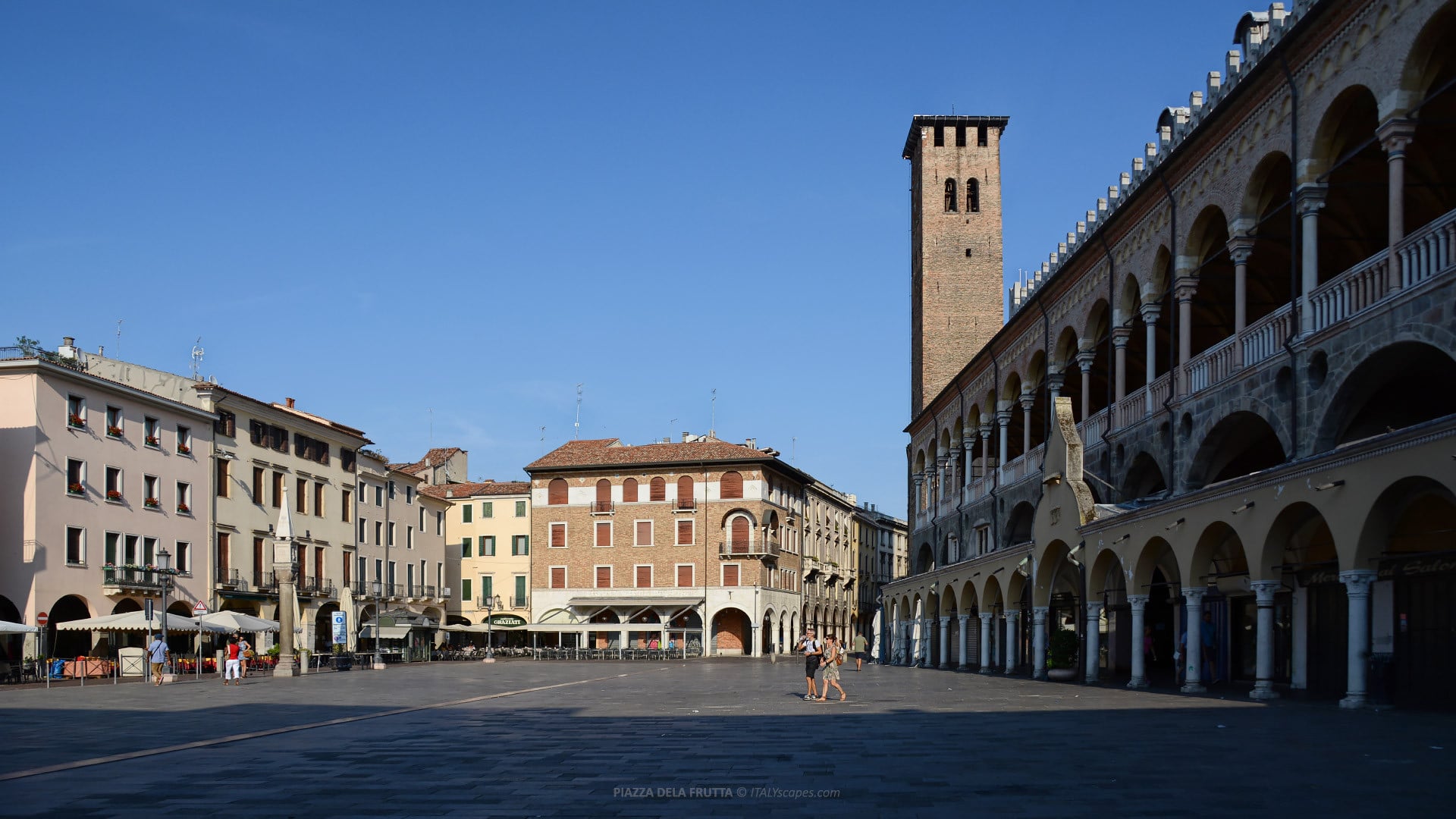
Piazza della Frutta
Best Time to Follow This Padua Itinerary
Spring and autumn are the most comfortable seasons for this route. The walking distances are easy, the light is good, and Prato della Valle is pleasant for a late-afternoon pause. Summer works too, but the lunch break, water stops, and shaded streets become more important.
Winter is possible because many key sights are indoors, including the Scrovegni Chapel, Palazzo della Ragione, the Baptistery, and the Basilica of Saint Anthony. However, daylight is shorter, and the Botanical Garden may have reduced hours. In winter, start early and make Prato della Valle a pre-dusk stop.
Weekdays can be better for museums and central streets, but check individual closures. The Scrovegni Chapel requires advance booking, the Baptistery may be affected by liturgical celebrations, the Botanical Garden usually has seasonal timetables, and Palazzo Bo visits depend on guided tour availability.
This Padua itinerary is especially good for travellers based in Venice, Vicenza, Verona, Bologna, or Milan. Padua has excellent rail connections, and the main historic route begins directly from the railway station. The city rewards one full day much more than a rushed half-day stop.
Frequently Asked Questions about a Padua Itinerary
Is one day enough to visit Padua?
One day is enough for the Scrovegni Chapel, Palazzo della Ragione, central squares, Basilica of Saint Anthony, and Prato della Valle, but not for every museum.
What should I book first in Padua?
Book the Scrovegni Chapel first. The visit is timed, advance reservation is required, and the rest of the Padua itinerary should be planned around that slot.
How much walking does this Padua itinerary include?
This Padua itinerary covers about 6.5 to 7.5 kilometres, depending on optional visits, detours, restaurant location, and whether you walk back to the station.
Can I visit Padua from Venice in one day?
Yes. Padua is one of the easiest day trips from Venice by train, and the historic centre can be visited mostly on foot from Padova.
Should I enter Palazzo Bo in one day?
Enter Palazzo Bo only if you book a tour and are ready to skip or shorten another stop. Otherwise, see the exterior and university area.
Is the Basilica of Saint Anthony free to visit?
The basilica generally has free entrance during opening hours, but museums, special areas, guided visits, or nearby frescoed sites may require tickets.
Is Prato della Valle worth visiting?
Yes. Prato della Valle is one of Padua’s symbols, covers about 90,000 square metres, and gives the itinerary a spacious, relaxing final section.
Should I visit the Botanical Garden in one day?
Visit the Botanical Garden if it is open and you like historic scientific sites. Otherwise, prioritise the Scrovegni Chapel, Palazzo della Ragione, and the basilica.
Where should I have lunch in Padua?
The best lunch area is around Sotto il Salone, Piazza delle Erbe, and Piazza dei Frutti, because it sits naturally between the morning and afternoon route.
What should I skip in Padua with limited time?
Skip distant sights, long museum visits, and too many frescoed interiors. A realistic Padua itinerary needs pauses, not only monuments.
Sources:


