
Table of Contents
Venice is impossible to understand without its bridges. Built across canals instead of streets, they turn the lagoon city into a walkable maze of stone, brick, wood, iron, steel and glass. Venice bridges are not decorative extras, but essential urban links between islands, districts, churches, markets, and palaces.
The historic center of Venice is traditionally described as a city of 121 islands connected by 435 bridges. These bridges cross canals of different sizes, from the Grand Canal to narrow rii hidden behind houses. Their number explains why walking through Venice feels like moving across a floating puzzle.
Most Venice bridges are pedestrian bridges. Some are public, some are private, and many were rebuilt several times because of traffic, age, engineering limits or urban change. In a city without cars in its historic core, bridges replace crossroads, road junctions and neighborhood gates.
The oldest bridges were often wooden and simple. In earlier centuries, many Venetian bridges had no parapets, a feature visible today only in rare cases. Later, for safety and urban order, stone steps, side walls, balustrades and stronger arches became common across the city.
Rialto Bridge (Ponte di Rialto)
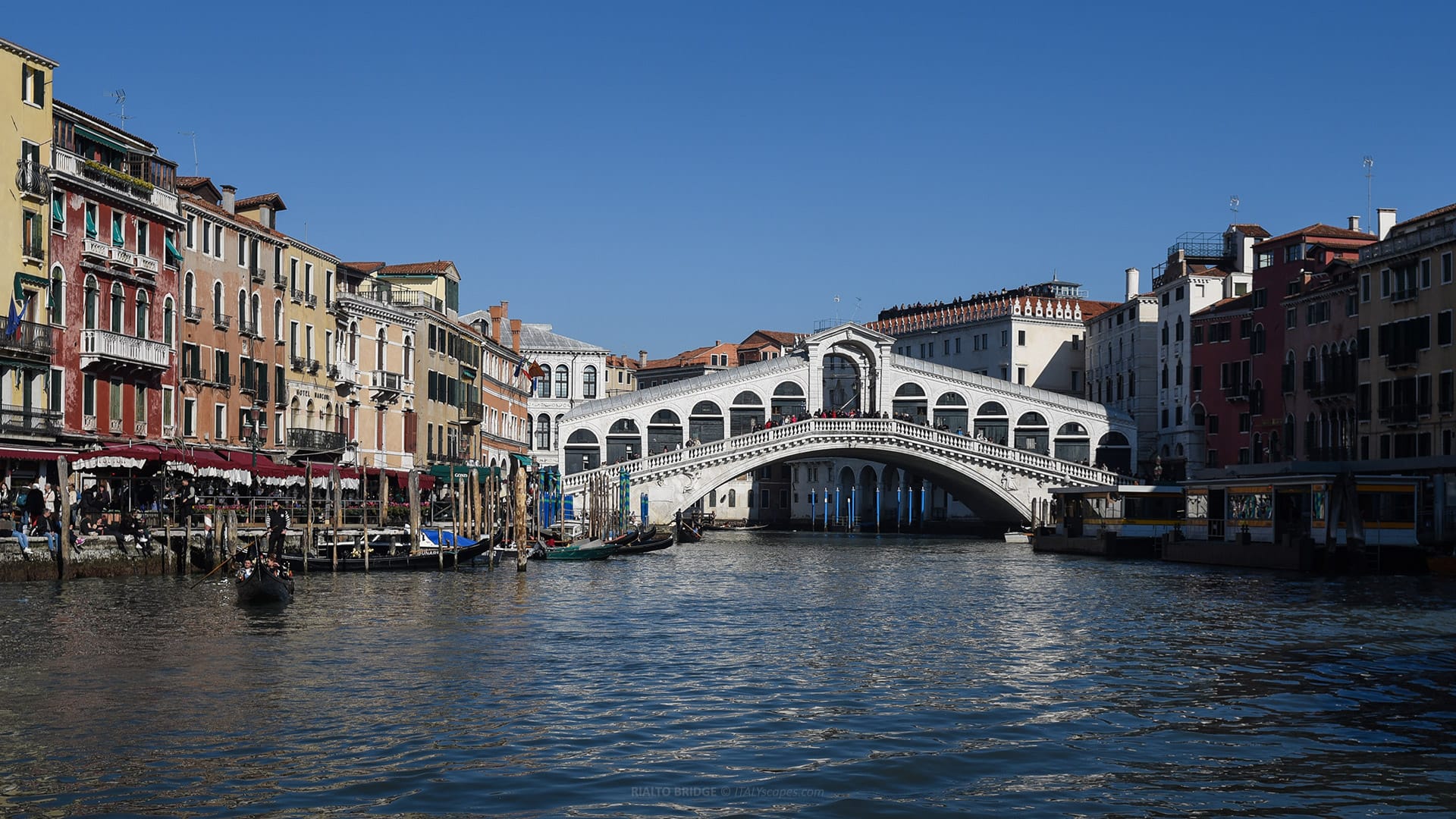
The Rialto Bridge is the most famous of all Venice bridges and the oldest bridge crossing the Grand Canal. It connects the districts of San Marco and San Polo, near the commercial heart of historic Venice. For centuries, Rialto was not only a crossing, but the city’s main economic center.
The first bridge in this area was not the stone monument seen today. Earlier crossings included floating and wooden structures, built to serve the Rialto market and the growing movement between both sides of the Grand Canal. The position was crucial because Rialto became Venice’s financial and trading core.
The present Rialto Bridge was built between 1588 and 1591, replacing earlier wooden versions. It was designed by Antonio da Ponte, whose name became permanently connected with one of the most recognizable structures in Venice. The bridge is a single stone arch, bold for its time.
Rialto’s engineering was considered risky by some contemporaries, because the bridge had to cross the Grand Canal with a strong central span. Yet the structure survived centuries of traffic, tides and admiration. Its durability helped transform it from an audacious project into an architectural symbol.
One of the most distinctive features of the Rialto Bridge is its commercial design. The bridge is not only a passage, but also a small elevated street. Rows of shops line its ramps, continuing the market character of the Rialto area directly over the Grand Canal.
The bridge has three pedestrian routes: two outer walkways with views over the canal and a central route between shops. This combination of movement, commerce and scenery makes Rialto one of the busiest places in Venice.
Accademia Bridge (Ponte dell’Accademia)
The Accademia Bridge is one of the four Venice bridges crossing the Grand Canal and one of the best viewpoints in Venice. It connects the San Marco side with Dorsoduro, near the Gallerie dell’Accademia. Its location makes it a key route for art lovers and photographers.
The first bridge on this site was opened in the 19th century and was originally connected with the Carità area. That earlier structure was built in iron. Later, concerns about its condition led to replacement plans and to the creation of the present bridge.
The current Accademia Bridge was designed by Eugenio Miozzi and built in 1932-1933. It was intended as a temporary wooden bridge, yet it became one of Venice’s most recognizable crossings. Its arched wooden profile gives it a warmer look than stone or steel bridges.
Technically, the bridge is a single arch with a span of about 48 meters. Its combination of wood and structural support distinguishes it from the stone grandeur of Rialto or Scalzi. It also demonstrates Venice’s 20th-century approach to practical infrastructure in a fragile historic setting.
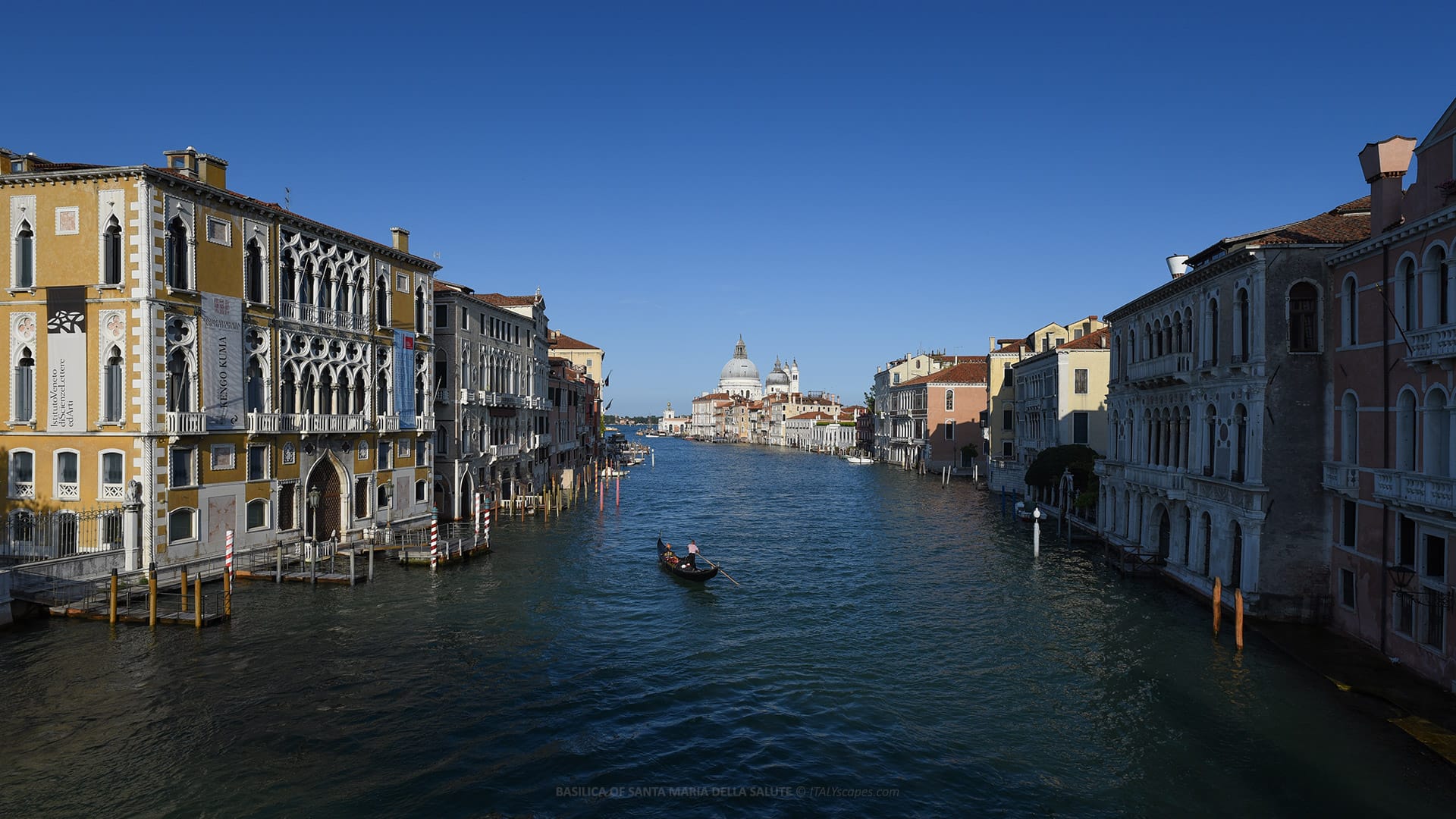
The bridge is especially famous for its view toward the Basilica di Santa Maria della Salute and the lower stretch of the Grand Canal. From here, the waterway opens into a wide, elegant perspective of palaces, boats and domes, making the bridge a natural observation point.
Bridge of Sighs (Ponte dei Sospiri) and Ponte della Paglia
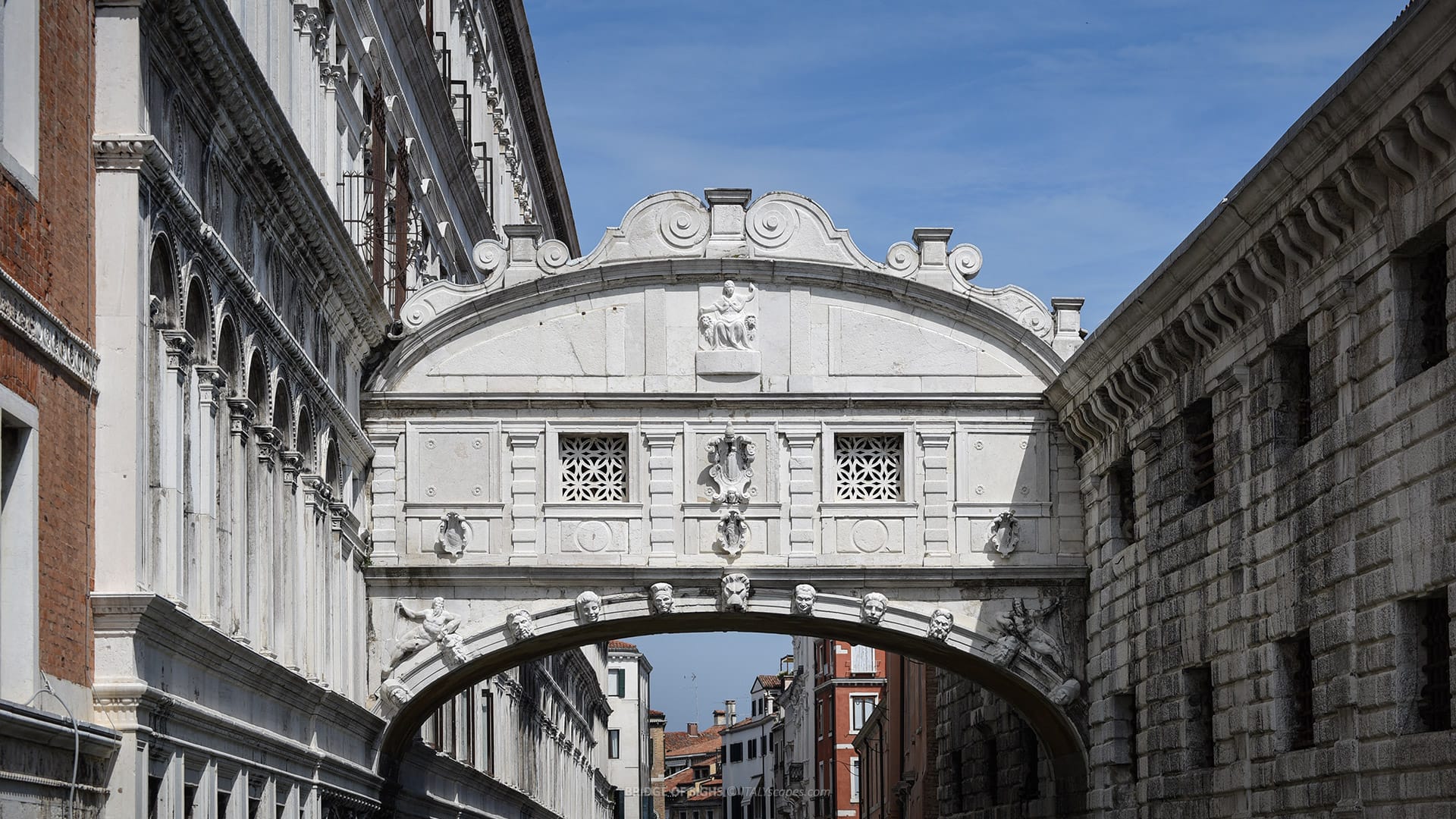
The Bridge of Sighs is one of the most photographed Venice bridges, but it is not a normal public crossing. It is an enclosed passage over Rio di Palazzo, linking the Doge’s Palace with the New Prisons. Its function was judicial, not romantic.
The bridge was built in the early 17th century and is usually associated with Antonio Contin, related to the family of Antonio da Ponte. It is made of pale stone and has small barred windows. Its enclosed shape reflects the controlled movement of prisoners.
The name “Bridge of Sighs” is connected to the idea that condemned prisoners sighed when seeing Venice for the last time from its windows. The story became famous through later romantic interpretation. Historically, the bridge served the practical purpose of moving prisoners securely between institutions.
Unlike Rialto, the Bridge of Sighs is not crossed casually from the street. Visitors usually see it from outside, especially from the nearby Ponte della Paglia. Access to the interior is linked to visits through the Doge’s Palace route and prison areas.
Ponte della Paglia is essential to the fame of the Bridge of Sighs because it provides the classic viewpoint. Standing on this bridge, visitors look toward the enclosed white passage between the palace and the prison. Many famous photographs of Venice are taken from here.
Ponte della Paglia itself has an important history. Its original version is traditionally dated to 1360, making it one of the oldest bridge sites in Venice. The current structure dates from the 19th century, but the place remains strongly connected with medieval and later Venice.
The name means “Bridge of Straw” and is usually explained by the unloading of straw from boats nearby. This practical origin is typical of Venetian place names. Many Venice bridges preserve the memory of trades, deliveries and everyday activities that shaped the city’s waterfront.
Ponte degli Scalzi
Ponte degli Scalzi crosses the Grand Canal close to Venezia Santa Lucia railway station. For many visitors arriving by train, it is one of the first Venice bridges they encounter. It links the railway station area with the opposite side of the canal and nearby pedestrian routes.
The bridge takes its name from the nearby church of the Scalzi. The present structure was designed by Eugenio Miozzi and built between 1932 and 1934. It replaced an earlier iron bridge from the 19th century, adapting the crossing to a more traditional Venetian appearance.
Ponte degli Scalzi is made of Istrian stone, a material strongly associated with Venetian architecture. Its single arch crosses the Grand Canal with a span of about 40 meters. The design is elegant and restrained, avoiding excessive decoration while fitting the historic canal environment.
Because of its position, Ponte degli Scalzi is highly practical. It handles constant pedestrian movement from the station toward hotels, vaporetto stops, Cannaregio, Santa Croce and San Polo. It is less theatrical than Rialto, but more connected to modern arrival in Venice.
Ponte della Costituzione
Ponte della Costituzione is the newest bridge over the Grand Canal and one of the most debated modern works in Venice. Designed by Santiago Calatrava, it connects the Santa Lucia railway station area with Piazzale Roma, the main bus and car arrival zone.
The bridge opened in 2008 and became the fourth bridge over the Grand Canal. Before its official naming, it was often called the fourth bridge over the Canal Grande. Many people still refer to it informally as the Calatrava Bridge.
Its materials make it visually different from older Venice bridges. The structure uses steel, glass and stone elements, creating a contemporary contrast with the surrounding historic fabric. Its arched profile is modern, lighter in appearance than Rialto or Scalzi, and clearly linked to late 20th-century design.
Ponte della Costituzione has also been controversial because of accessibility, surface materials and integration into Venice’s historic environment. These debates are part of its identity. Unlike older Venice bridges, admired after centuries of use, this bridge shows how difficult new architecture can be in Venice.
View from the Accademia Bridge
Ponte della Libertà
Ponte della Libertà is completely different from the pedestrian bridges inside Venice. It is the long road and rail connection between the historic city and the mainland. At about 3,850 meters, it is the longest bridge linked to Venice and the mainland access route.
The railway connection to Venice dates back to the 19th century, while the road bridge was built in the 20th century. The modern road bridge was designed in the context of connecting Venice more directly with Mestre and mainland traffic, changing access to the lagoon city.
Ponte della Libertà leads vehicles toward Piazzale Roma and the Tronchetto parking area. It is therefore the only practical road route into the historic city’s edge. Beyond that point, Venice returns to boats and walking, preserving its car-free internal character.
Its importance is functional rather than picturesque. Most visitors experience it from trains, buses, taxis or cars, often before they begin walking through Venice. Still, it is one of the most significant Venice bridges because it defines the relationship between the island city and the mainland.
Ponte delle Guglie
Ponte delle Guglie crosses the Cannaregio Canal and is one of the most recognizable bridges outside the Grand Canal group. Its name means “Bridge of Spires”, referring to the decorative pinnacles that distinguish it from other Venice bridges. It stands near important routes from the station.
An earlier bridge on this site existed in the medieval period, while the stone bridge was rebuilt and restored across later centuries. The bridge’s present appearance is strongly associated with the 1823 restoration, when the spires were added and gave the bridge its famous name.
The bridge is important because the Cannaregio Canal is one of the city’s major internal waterways. It also lies near routes leading toward the Venetian Ghetto and Strada Nova. For travelers arriving from Santa Lucia or Piazzale Roma, it often becomes part of the first walk into Venice.
Ponte delle Guglie is unusual because it combines practical movement with architectural decoration. The spires, carved details and canal setting make it stand out, even though it is less globally famous than Rialto or the Bridge of Sighs.

View from the Ponte degli Scalzi
Ponte dei Tre Archi
Ponte dei Tre Archi is one of the most unusual Venice bridges because it has three arches instead of the single-arch form common in the city. It crosses the Cannaregio Canal and remains a rare surviving example of this type in Venice.
The bridge is associated with the late 17th century and the architect Andrea Tirali. Its central arch is larger, with smaller lateral arches on each side. This rhythm gives the bridge a distinctive profile, especially when seen from the canal or the nearby fondamenta.
Ponte dei Tre Archi is less crowded than Rialto or Accademia, but architecturally fascinating. It belongs to a quieter part of Cannaregio, near San Giobbe and lagoon-facing routes. For visitors searching for secret Venice bridges, it offers history without the pressure of mass tourism.
Ponte Chiodo
Ponte Chiodo is famous because it has no parapets. Located in Cannaregio on the Rio di San Felice, it preserves a feature once common in early Venice bridges. Today, its lack of side railings makes it one of the city’s most curious surviving examples.
The bridge takes its name from the Chiodo family, connected with the property it served. It is a private bridge, not a normal public crossing. Its importance lies less in size and more in what it reveals about the older appearance of Venetian bridges.
Before parapets became standard, many bridges in Venice were simpler and more exposed. Ponte Chiodo helps visitors imagine that earlier urban landscape. It is a small structure, but historically valuable because it preserves a rare physical memory of the city’s bridge evolution.
Ponte delle Tette
Ponte delle Tette is famous for its unusual name and connection with the Carampane area. The name literally refers to women’s breasts and is linked to the history of prostitution in Venice. It is one of the clearest examples of a bridge name preserving social history.
The bridge is located in the San Polo area, near streets historically associated with the Carampane. In early modern Venice, this district was connected with regulated prostitution. The name survives as a reminder that Venetian place names often record uncomfortable, practical or intimate aspects of urban life.
Why Venice Bridges Matter
Venice bridges are not simply crossings over water. They are the city’s infrastructure, memory system and visual framework. Without them, the historic center would remain a scattered group of islands. With them, Venice becomes a continuous walking city built across canals.
The most famous bridges reveal different layers of Venetian history. Rialto represents commerce and engineering. The Bridge of Sighs represents justice and imprisonment. Accademia frames art and views. Scalzi marks railway arrival. Costituzione shows modern debate. Libertà connects the lagoon city to the mainland.
For travelers, the best way to discover Venice bridges is to combine icons with detours. Rialto and the Bridge of Sighs are essential, but Cannaregio, San Polo and Dorsoduro reveal quieter crossings. The city becomes more interesting when famous views are balanced with secret corners.
View from the Rialto Bridge
Frequently Asked Questions about Venice Bridges
How many bridges are there in Venice?
Venice has 435 bridges connecting 121 islands across its historic center. These bridges make the city walkable, linking neighborhoods, churches, markets, railway areas, and canals.
What is the most famous bridge in Venice?
The most famous bridge in Venice is the Rialto Bridge, the oldest bridge over the Grand Canal. It is known for its elegant stone arch, shops, history, and central location.
How many bridges cross the Grand Canal?
Only four bridges cross the Grand Canal: Rialto Bridge, Accademia Bridge, Ponte degli Scalzi, and Ponte della Costituzione, each linking important areas of the historic city.
Why is the Bridge of Sighs famous?
The Bridge of Sighs is famous because it connected the Doge’s Palace with the New Prisons. Its name comes from the legend of prisoners seeing Venice one last time and sighing before being led to their cells.
What is the newest bridge in Venice?
The newest bridge over the Grand Canal is Ponte della Costituzione, opened in 2008. Designed by Santiago Calatrava, it connects Santa Lucia railway station with Piazzale Roma.


