-
About
Table of Contents
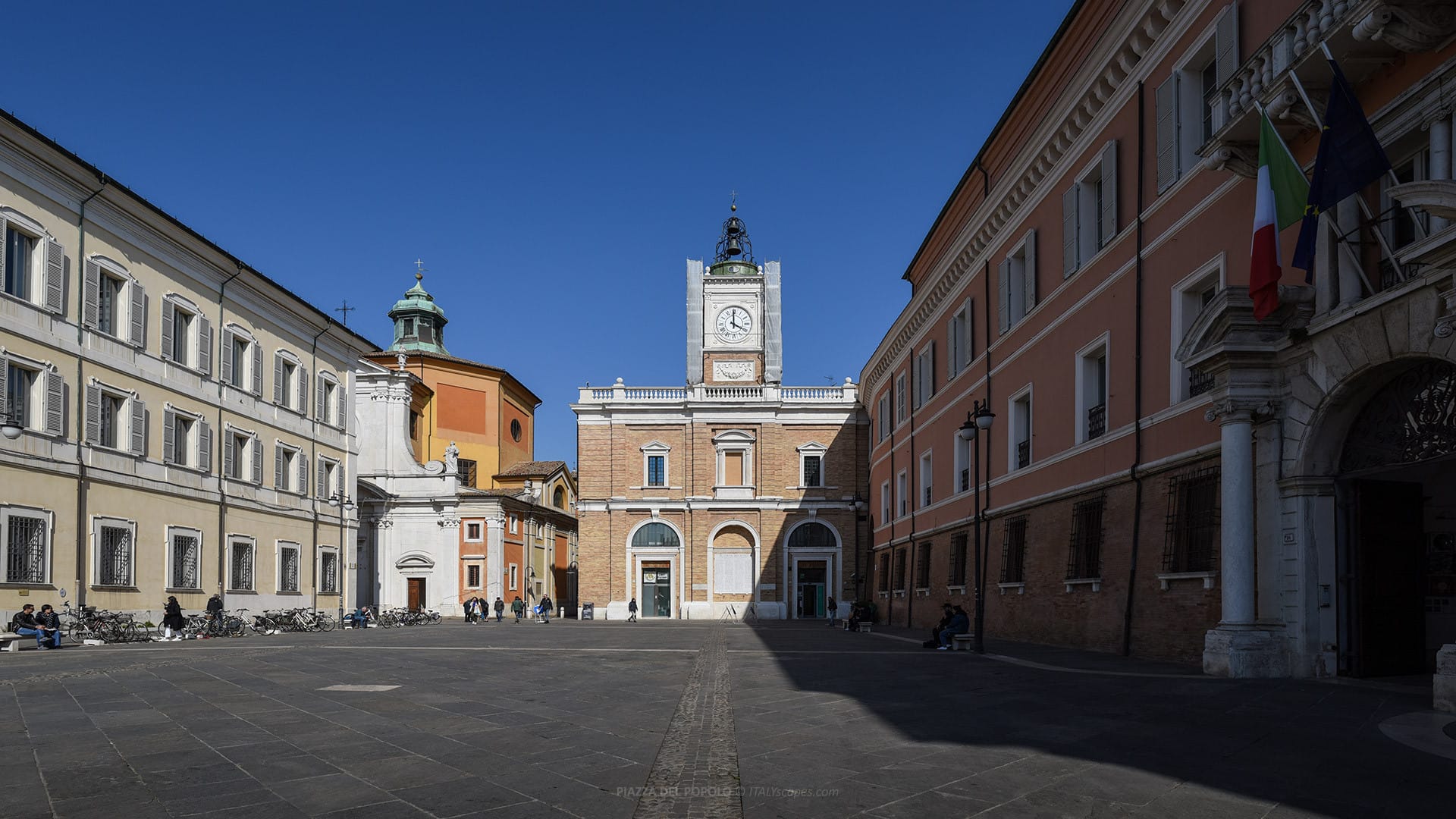
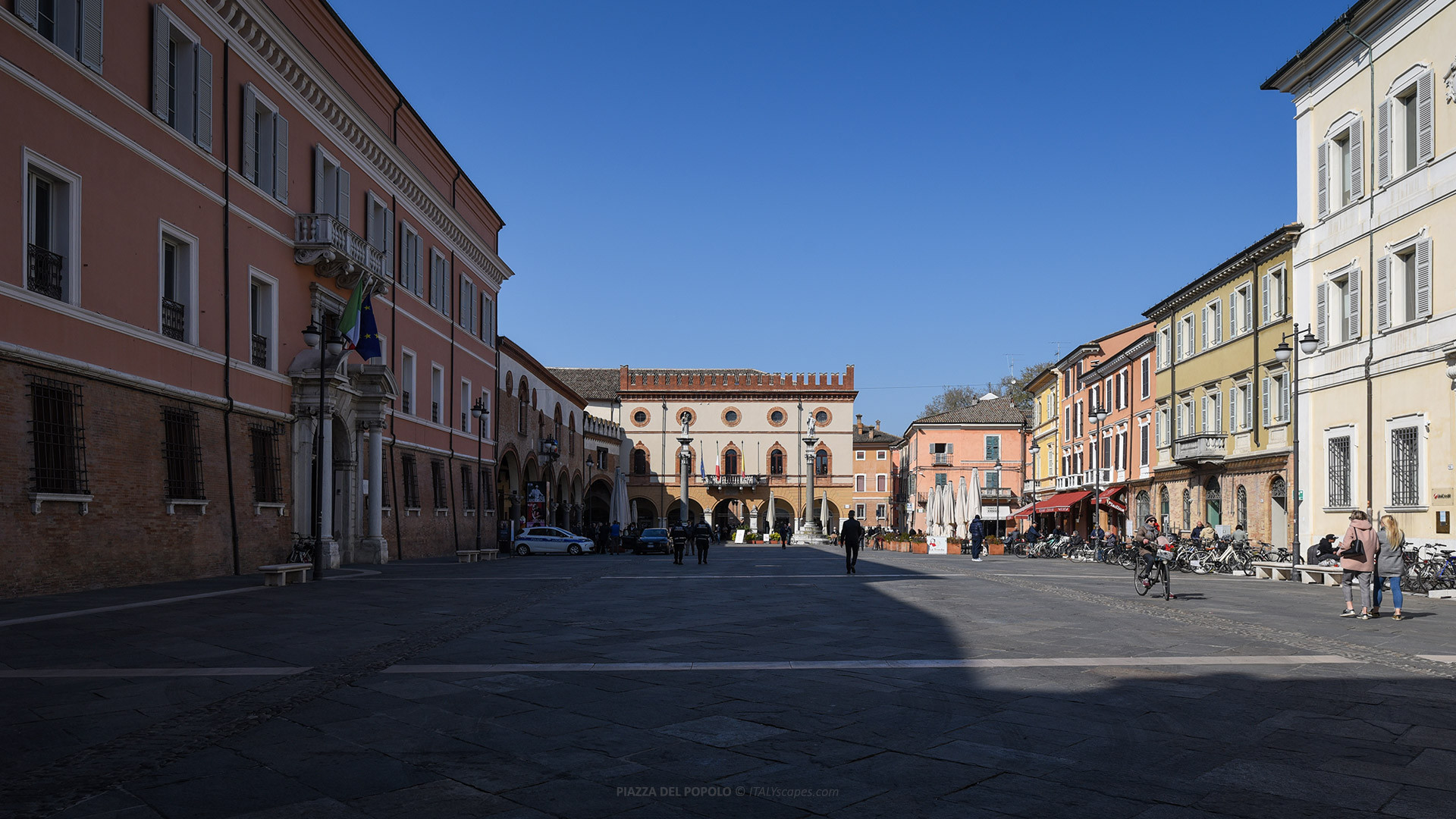
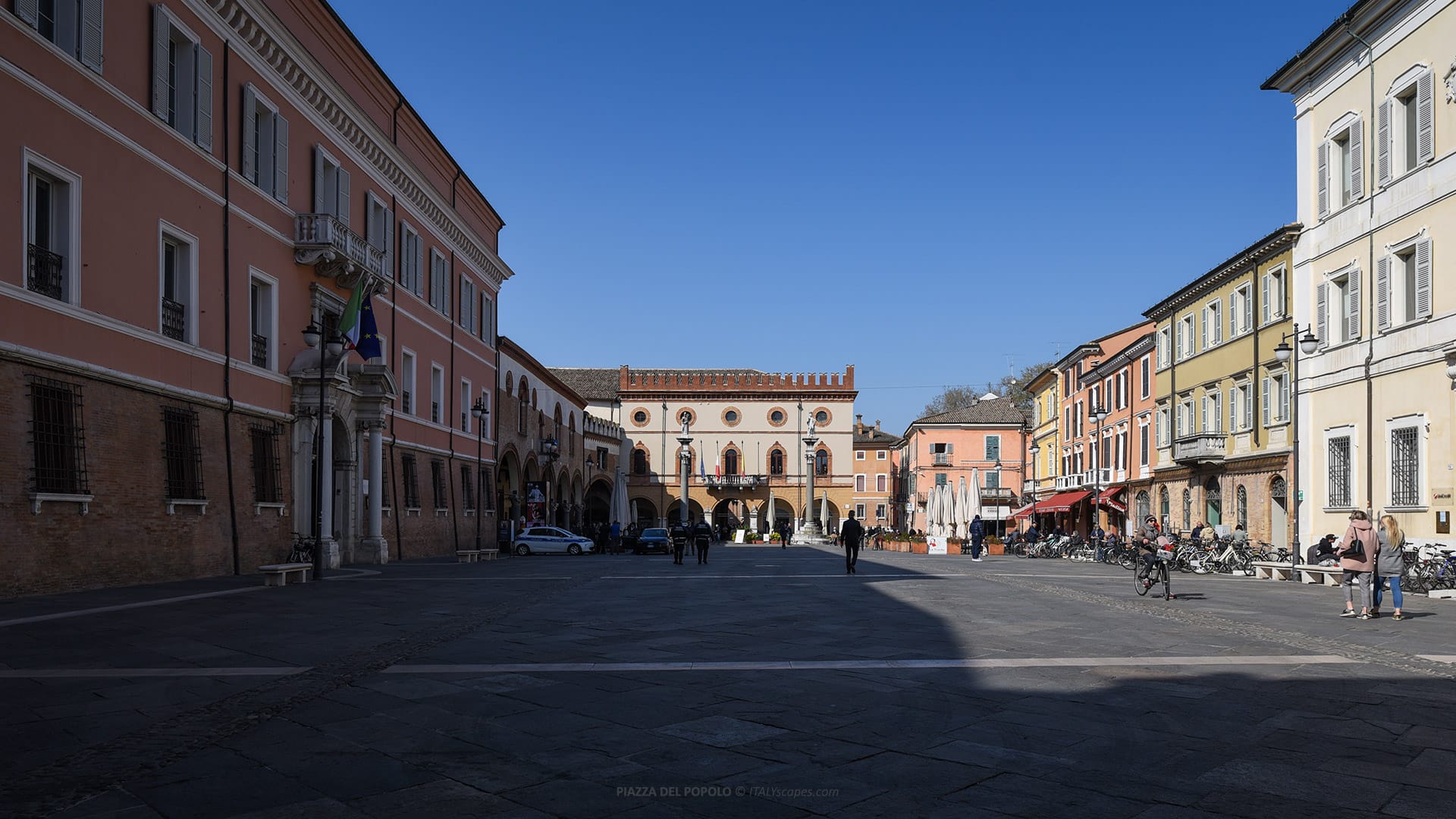
Piazza del Popolo is the main public square in the historic center of Ravenna, serving as the city’s civic and social focal point for over seven centuries.
Its name, which literally means “People’s Square”, reflects the evolution of Ravenna from medieval commune to modern city.
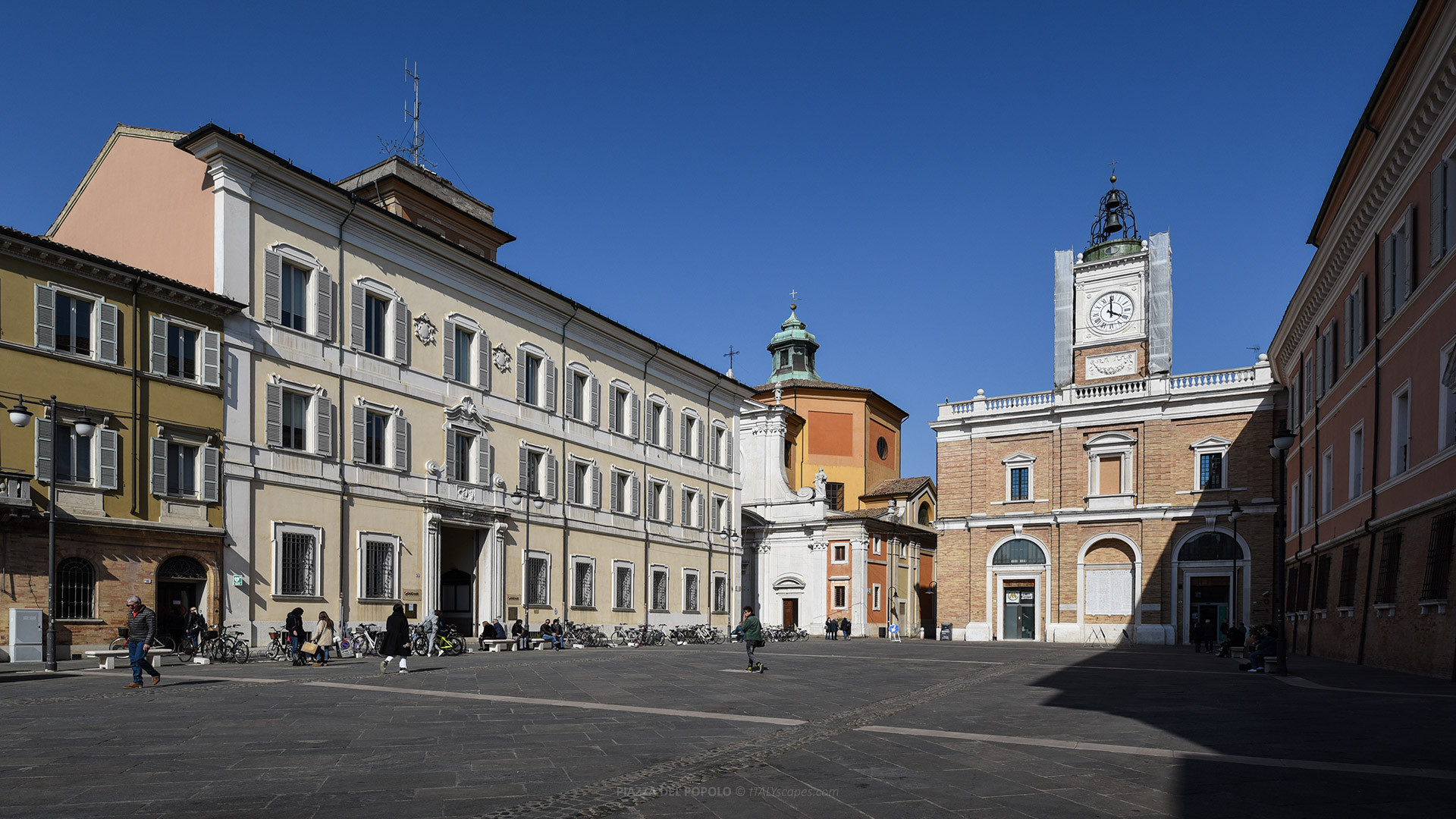
Bordered by significant public buildings, historic palaces, and architectural landmarks, Piazza del Popolo is both a living space for locals and a must-visit destination for travelers exploring the artistic, political, and urban history of Ravenna.
Situated at the crossroads of the city’s most important streets, the square has always been a place of public assembly, political power, and urban life.
Today it continues to be a vibrant gathering spot, framed by cafés and places for social interaction, while preserving architectural elements that testify to successive periods of civic rule – from the Da Polenta lordship and the Venetian era to the Papal Legation of Romagna and Italy’s unification.
Short History of Piazza del Popolo
The origins of Piazza del Popolo trace back to the late 13th century, when the noble Da Polenta family established itself as the dominant power in Ravenna.
Around this period, the stretch of land in front of the residence of Bernardino da Polenta was opened up and widened into a proper public square. This broad space became the piazza del Comune – literally the Square of the Municipality – functioning as the political center of the city.
During the Venetian domination of Ravenna (from 1441), the square underwent significant transformation.
The occupying Venetian authorities expanded and redeveloped the area – a process that included paving the surface and erecting prominent architectural markers that echo Venice’s civic identity.
In 1483, two granite columns were placed in the square, crowned with statues symbolizing civic and religious identity: originally a Lion of Saint Mark and a figure of Saint Apollinare, later exchanged for other local patron symbols after the end of Venetian rule.
After the Venetians’ defeat in 1509 by Pope Julius II’s forces, the square’s political role became tied to the Papal Legation of Romagna.
The Venetian lion was removed, and successive symbols and statues were introduced to align the square with Papal authority and the identity of the city’s patrons.
Across the 16th and 17th centuries, several key buildings surrounding the square were rebuilt, expanded, or repurposed.
The palace that housed the Rector of Romagna became Palazzo Apostolico (home of the cardinal legate), and older structures were replaced or significantly altered.
In 1681, the earlier Da Polenta palace was demolished and replaced by the present Palazzo Comunale, known locally as Palazzo Merlato.
In the 19th century, following the proclamation of the Kingdom of Italy, the square assumed its modern name, Piazza del Popolo, commemorating national unification and civic identity.
In 1969, it became one of the earliest historic squares in Ravenna to be fully pedestrianized, closing it to vehicular traffic and enhancing its role as a public gathering place for local life and tourism.
Architecture of Piazza del Popolo
The architectural ensemble of Piazza del Popolo is a living record of Ravenna’s civic heritage, blending elements from the medieval period, Venetian influence, and later renovations that reflect the square’s longstanding role as a center of public life.
Urban Form and PavementThe piazza’s layout is an open, rectangular space paved with stone, characteristic of medieval urban planning that prioritized communal gathering areas in front of seats of power.
Its pedestrianized nature reinforces the square’s function as a social hub, enabling unobstructed views of surrounding buildings and structures.
Columns of Piazza del PopoloOne of the most striking architectural features in the square is the pair of granite columns erected by the Venetians in 1483.
These columns were installed to mark the then-riverbank of the Padenna, a waterway that once flowed through the city but was later buried and incorporated into the urban fabric.
Originally topped by the Lion of Saint Mark – a symbol of Venetian authority – and a statue of Saint Apollinare, these columns have been altered over time.
After the return to Papal rule in 1509, the Venetian insignia was removed, and local patron saints replaced it, reinforcing Ravenna’s religious identity.
At the base of these columns are sculpted bas-reliefs representing the twelve zodiac signs, and intriguing references to Ophiuchus – a rarely depicted constellation.
Palazzo Comunale (Palazzo Merlato)Dominating one side of Piazza del Popolo is the Palazzo Comunale, commonly referred to by locals as Palazzo Merlato. This building replaced the medieval Da Polenta palace in 1681 and has served as the city’s municipal seat through various regimes and civic administrations.
The building’s façade features classical elements and a series of crenellations on its roofline that emphasize its civic lineage.
Palazzo Apostolico and Other Civic BuildingsThe historical Palazzo Apostolico, which once housed the cardinal legate’s offices, stands along another side of the square. Rebuilt and expanded in the mid-16th century, this structure reflects the influence of Papal authority in Ravenna’s political sphere.
Additional significant buildings around the square include the former headquarters of the Banca Nazionale del Lavoro (designed by architect Camillo Morigia) and the Palazzo dei Rasponi del Sale, now a modern bank headquarters.
How to Get to Piazza del Popolo
Piazza del Popolo is located in the historic center of Ravenna, making it easily reachable from the city’s main transport hub, Ravenna train station (Ravenna FS).
The distance from Ravenna FS to Piazza del Popolo is short – approximately 600 meters (roughly 0.4 miles) – and can be comfortably covered on foot in about 6-8 minutes.
- On Foot: Walking is the most recommended method for most travelers because it allows you to enjoy Ravenna’s historic urban environment. From the station, head south and continue through Via di Roma or other central thoroughfares toward the core of Ravenna’s historic center.
- By Bus: Public buses in Ravenna serve routes that stop near the city center, including bus routes that service stops close to Piazza del Popolo. The closest bus stop is on Via Angelo Mariani (Teatro Alighieri), approximately 140 meters from the square, and is served by Bus Lines 1, 2, 3, 4, 5, 8, 18, 70, 80, and 145.
- Taxi or Ride Service: Taxis are available outside Ravenna train station and provide a direct and convenient option for visitors who prefer not to walk or use public transport. The ride typically takes only a few minutes, depending on traffic, and drops you close to Piazza del Popolo or other central points of interest in Ravenna.
Sources: -
Photos
-
Map
-
Reviews