Table of Contents
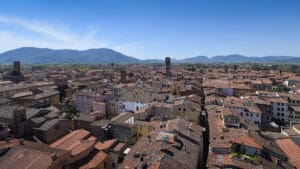
When we visited Treviso, we understood quickly why this small Veneto city works so well as a hidden gem near Venice. It has canals, medieval streets, painted houses, churches, palaces, city walls, and a calm local rhythm. It feels close to Venice, but it is clearly not Venice.
We chose Treviso for a day trip because it is less than 40 kilometres from Venice and easy to reach by train. The journey from Venezia Santa Lucia to Treviso Centrale takes about 37 minutes, which makes the city practical for travellers who want culture, architecture, and canals without spending hours in transit.
Treviso is the capital of its province and has about 86,000 inhabitants. It covers 55.58 square kilometres and lies at around 15 metres above sea level. The old town is shaped by the Sile River, the Botteniga, the Cagnan canals, and several small waterways that cross the historic centre.
Why We Chose Treviso for One Day
A Peaceful Escape from Venice
When we planned our visit, we did not want another place that tried to imitate Venice. Treviso attracted us because it offered a different version of Veneto: an inland city with water, arcades, brick buildings, frescoes, markets, and fortified walls. It felt like a proper destination, not a secondary stop.
The city is often associated with its airport, but that image is too limited. Treviso has Roman origins, medieval palaces, Venetian defences, Renaissance art, important churches, and a compact historic centre. For us, it was exactly the kind of place that works best when discovered slowly, on foot.
A Compact Historic Centre
One of the best things about Treviso is the scale. We could walk from the station to the centre, then move easily between squares, canals, churches, museums, and city gates. The most important attractions are close enough to create a full itinerary without rushing constantly between distant places.
The old town developed around historic elevations traditionally linked with Piazza Duomo, Piazza dei Signori, and Piazza Sant’Andrea. These areas still define the structure of the centre. Walking through them, we could see how Roman, medieval, Venetian, and modern Treviso overlap in the same compact urban space.
Piazza dei Signori – Where Our Walk Really Began
The Civic Heart of Treviso
Our first real stop was Piazza dei Signori, the main civic square of Treviso. It is the natural place to begin because it concentrates the city’s public history in one space. Around the square, arcades, cafés, civic buildings, and medieval architecture create a clear sense of arrival.
The square has long been the social and political centre of Treviso. It is not monumental in the same way as Venice’s Piazza San Marco, but that is precisely its charm. It feels elegant, lived-in, and proportioned for daily life, with locals crossing it and visitors stopping to photograph the palaces.
Palazzo dei Trecento
The building that immediately caught our attention was Palazzo dei Trecento, also known as the Palazzo della Ragione. It was built between 1185 and 1268 and hosted the assemblies of the city’s municipal institutions. Its name refers to the three hundred members who took part in the councils.
The palace has a ground-floor loggia and a large upper hall with triple lancet windows. Inside, frescoes by Veneto artists from the 14th to the 16th centuries survive. The building was damaged during the 1944 bombing of Treviso, and visible marks of that event still remain on the outer walls.
Palazzo del Podestà and the Civic Tower
Near Palazzo dei Trecento stands the Palazzo del Podestà, built in the late 15th century and later modified. Today, it houses the Prefecture. Together with the surrounding buildings, it gives Piazza dei Signori the feeling of a civic centre that has remained important for centuries.
Behind the palace rises the Civic Tower, the tallest tower in Treviso, about 48 metres high. Its square profile, clock, and battlements make it one of the most visible landmarks in the centre. From several streets around the square, the tower helps visitors orient themselves through the old town.
Walking Along Calmaggiore
The Main Historic Street
From Piazza dei Signori, we continued along Calmaggiore, the main street of Treviso’s historic centre. It connects the civic square with the Cathedral area, linking the public and religious centres of the city. Its route follows the line of the ancient Roman cardo maximus.
Calmaggiore is narrow, arcaded, and full of shops, but it is not only a commercial street. It preserves a strong historical identity. Along the way, we saw a small archaeological area with remains of the ancient Roman road, a reminder that modern Treviso grew over the older settlement of Tarvisium.
From Roman Treviso to Medieval Treviso
This short walk made the city’s layered history easy to understand. Treviso developed from ancient Tarvisium, a settlement of pre-Roman origin that later became important in the Roman period. Its position near the Sile and along important routes, including the Via Postumia, supported its growth.
The medieval structure of the old town still feels clear today. Streets are narrow, buildings are close together, and many houses preserve painted façades, arcades, and historic details. Treviso does not overwhelm with one gigantic monument; instead, it builds its charm through many small, accurate, and authentic elements.
The Canals of Treviso
Buranelli
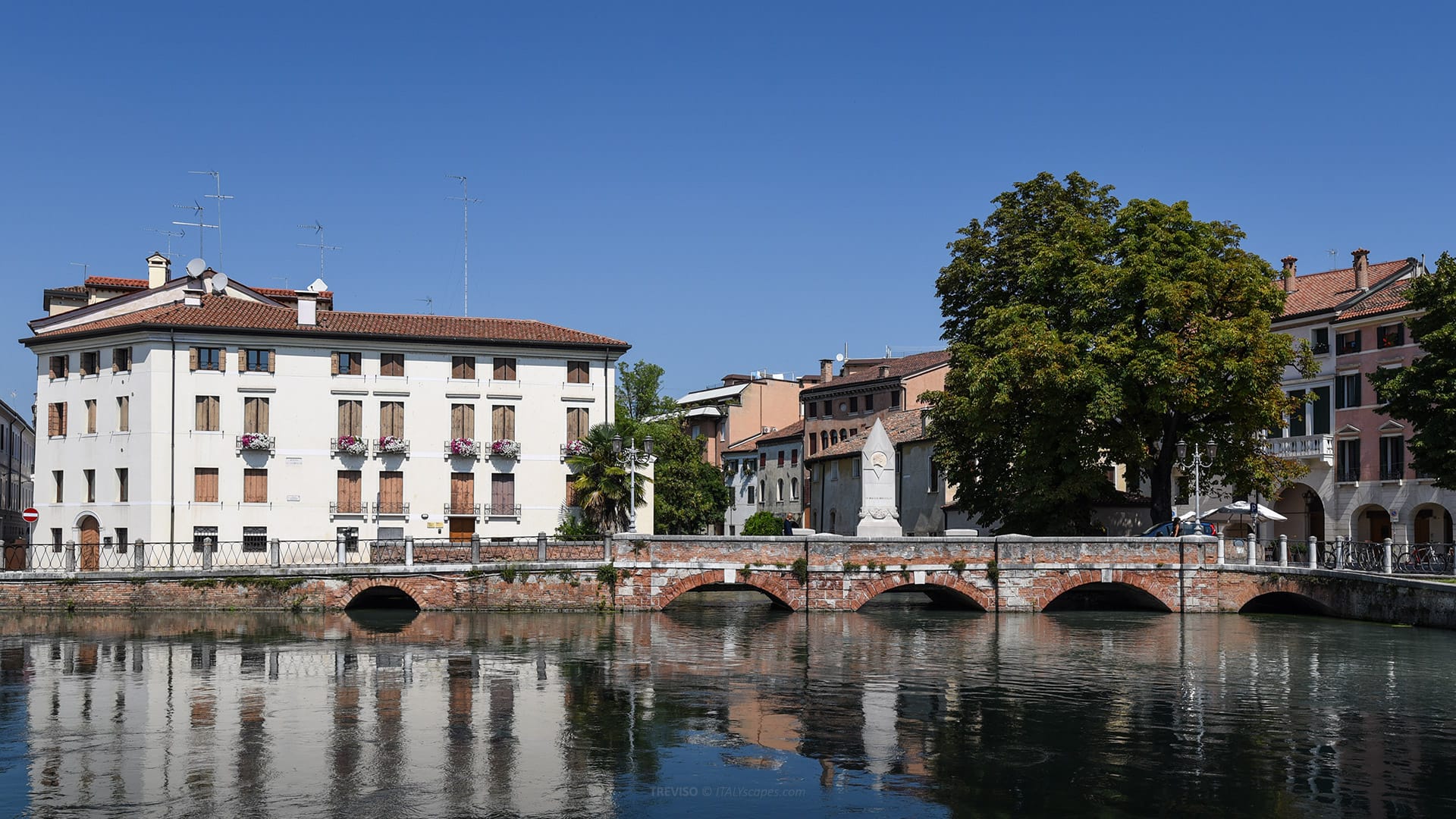
After the civic centre, we moved toward the canal area of Buranelli, one of the most atmospheric corners of Treviso. This is where the city’s hidden-gem identity becomes obvious. Narrow canals, small bridges, old houses, water reflections, and overhanging vegetation create a quiet scene completely different from crowded Venice.
Buranelli lies around one of the branches of the Botteniga and the Cagnan canal system. The Botteniga enters the city and divides into several channels, including the Cagnan Grande, Buranelli, and Roggia. These waterways cross the centre, sometimes visible, sometimes hidden below buildings.
A Canal City, but Not Venice
What we liked most was that Treviso’s canals do not feel like a copy of Venice. They belong to an inland city, connected with mills, markets, houses, and everyday movement. The water is part of the urban structure, not a theatrical backdrop created for visitors.
The comparison with Venice is useful only up to a point. Treviso has water, bridges, and reflections, but the atmosphere is calmer and more local. We did not find the spectacular lagoon drama of Venice, but we found something else: a compact, elegant city where water quietly accompanies daily life.
Isola della Pescheria
The Fish Market Island
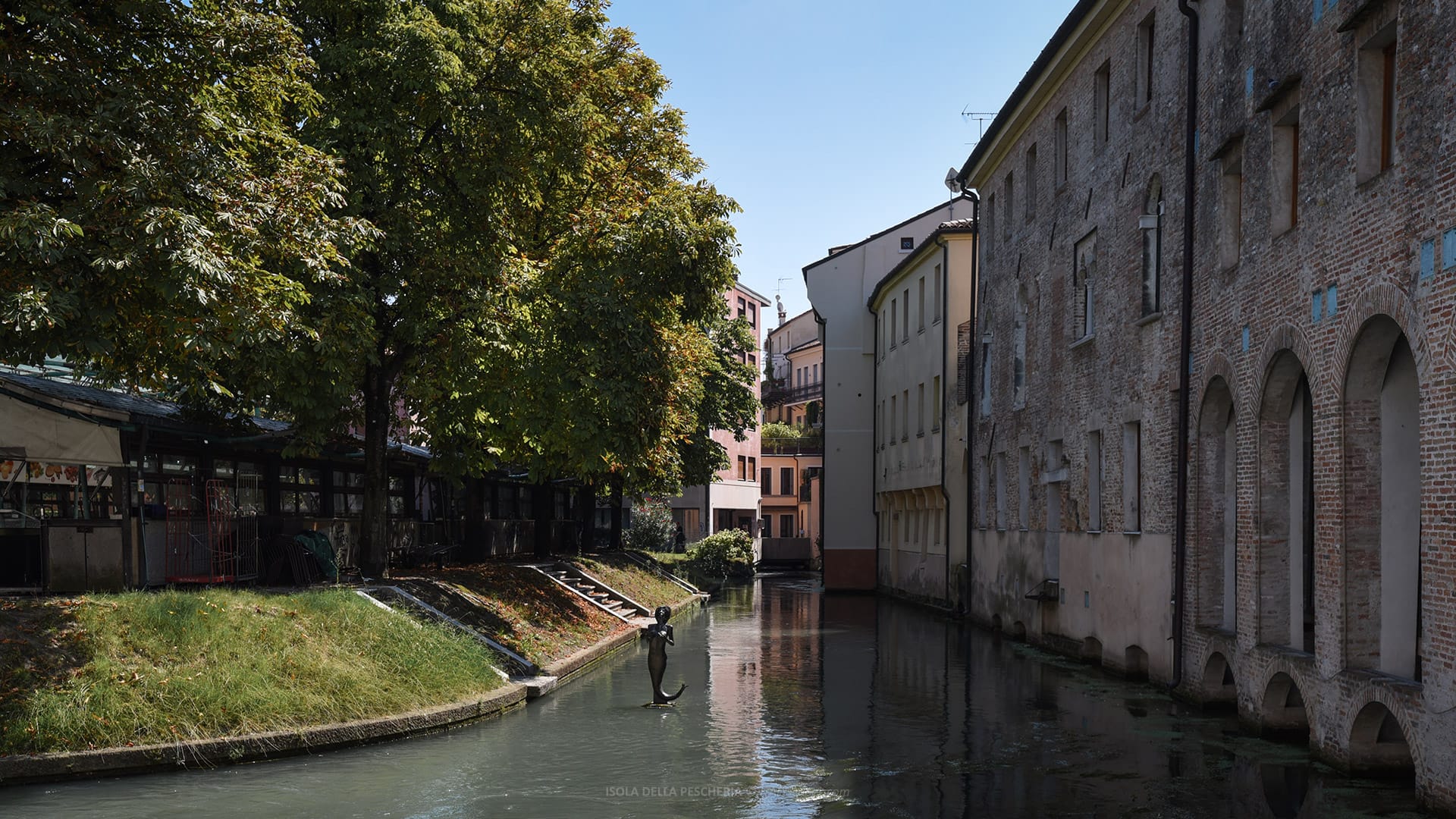
From Buranelli, we continued to Isola della Pescheria, one of the most characteristic places in Treviso. The island stands on the Cagnan Canal and was formed by three connected artificial islets. Its covered fish market gives the area a practical commercial function, not only a picturesque appearance.
In the morning, the Pescheria is linked with the sale of fresh fish. Later in the day, the surrounding area becomes a pleasant place for a pause, especially near the water. It combines the market, the canal, old buildings, and local movement in a very compact space.
Why We Remembered This Place
Isola della Pescheria stayed in our memory because it shows Treviso as a living city. It is not only a collection of monuments. It has markets, small bridges, shops, people buying food, and buildings that still relate directly to the canals.
This was one of the clearest moments when Treviso felt like the right escape from Venice. The scene was beautiful, but not staged. The canal did not exist only for photographs. It had an urban role, connected with trade, food, and the practical history of the city.
The Cathedral Area
Cathedral of San Pietro Apostolo
We then walked toward the Cathedral of San Pietro Apostolo, also called the Duomo of Treviso. It is the main religious building in the city and the seat of the Diocese of Treviso. Its origins go back to the early Christian period, traditionally the 6th century.
The present cathedral is mostly Neoclassical. It was built around 1770, following a project by Giordano Riccati, with work connected to Andrea Memmo and Giannantonio Selva. The façade dates from the 19th century, while older elements survive in the crypt and the surrounding episcopal area.
Inside, the Cathedral preserves important artworks. The Malchiostro Chapel contains Titian’s Annunciation, dated 1520 after restoration research revealed the artist’s signature and date. The crypt houses the relics of San Liberale, the patron saint of Treviso, whose feast day is celebrated on 27 April.
The Baptistery and the Older Layers
Near the Cathedral stands the Church of San Giovanni Battista, used as the Cathedral baptistery. The same area includes the Episcopal Palace, the residence of the bishop and the seat of the diocesan curia. Together, these buildings form the main religious complex in Treviso.
The Cathedral area is also important for the older history of the city. Near the Canoniche, tradition places part of Roman Tarvisium. A 4th-century mosaic pavement is visible in Via Canoniche, showing that the Christian and Roman layers of Treviso meet in this part of the old town.

The façade of Treviso Cathedral overlooking Piazza del Duomo
San Nicolò and San Francesco
Tempio di San Nicolò
Another major church we considered essential was the Tempio di San Nicolò, the largest church in Treviso, larger even than the Cathedral. It was built at the beginning of the 14th century by the Dominicans, helped by the legacy of 70,000 florins left by Pope Benedict XI.
The adjoining convent, now connected with the diocesan seminary, preserves important frescoes by Tomaso da Modena. The portraits of Dominican scholars are famous for early depictions associated with eyeglasses and a magnifying lens, which makes the complex significant not only for art, but also for cultural history.
Church of San Francesco
The Church of San Francesco is another important medieval stop in Treviso. Franciscans connected with Saint Francis reached the city in 1216, and construction of the church and convent began in 1231. The complex was completed in 1270, giving Treviso one of its major mendicant churches.
The church was later affected by the Napoleonic suppressions of 1806, then used for military purposes. It was restored and reopened for worship in 1928. Inside are the tombs of Pietro Alighieri, son of Dante, and Francesca Petrarca, daughter of Petrarch.
Museo Santa Caterina
The Most Important Museum Stop
For a cultural visit, Museo Santa Caterina is the museum we would include first. It occupies a former monastic complex and brings together archaeology, medieval and Renaissance art, modern collections, and frescoes. The building itself has a long history connected with religion, military use, damage, rediscovery, and restoration.
The complex was taken over in 1346 by the Servants of Mary, who began building a monastery and church dedicated to Saint Catherine of Alexandria. The monastery was suppressed in 1772, lost its religious functions in 1806, and was later used as a barracks and military depot.
The Saint Ursula Frescoes
One of the great treasures of the museum is the Cycle of Saint Ursula by Tomaso da Modena. The fresco cycle originally came from the demolished church of Santa Margherita degli Eremitani and was saved by Luigi Bailo in the 1880s. It covers about 120 square metres.
The museum also has a Picture Gallery and an Archaeological Section. The archaeological materials document more than 100,000 years of human activity in the Treviso area, from prehistory to the Roman period. For a one-day visit, this museum gives the city a much deeper historical frame.
Fontana delle Tette
The City’s Most Unusual Fountain
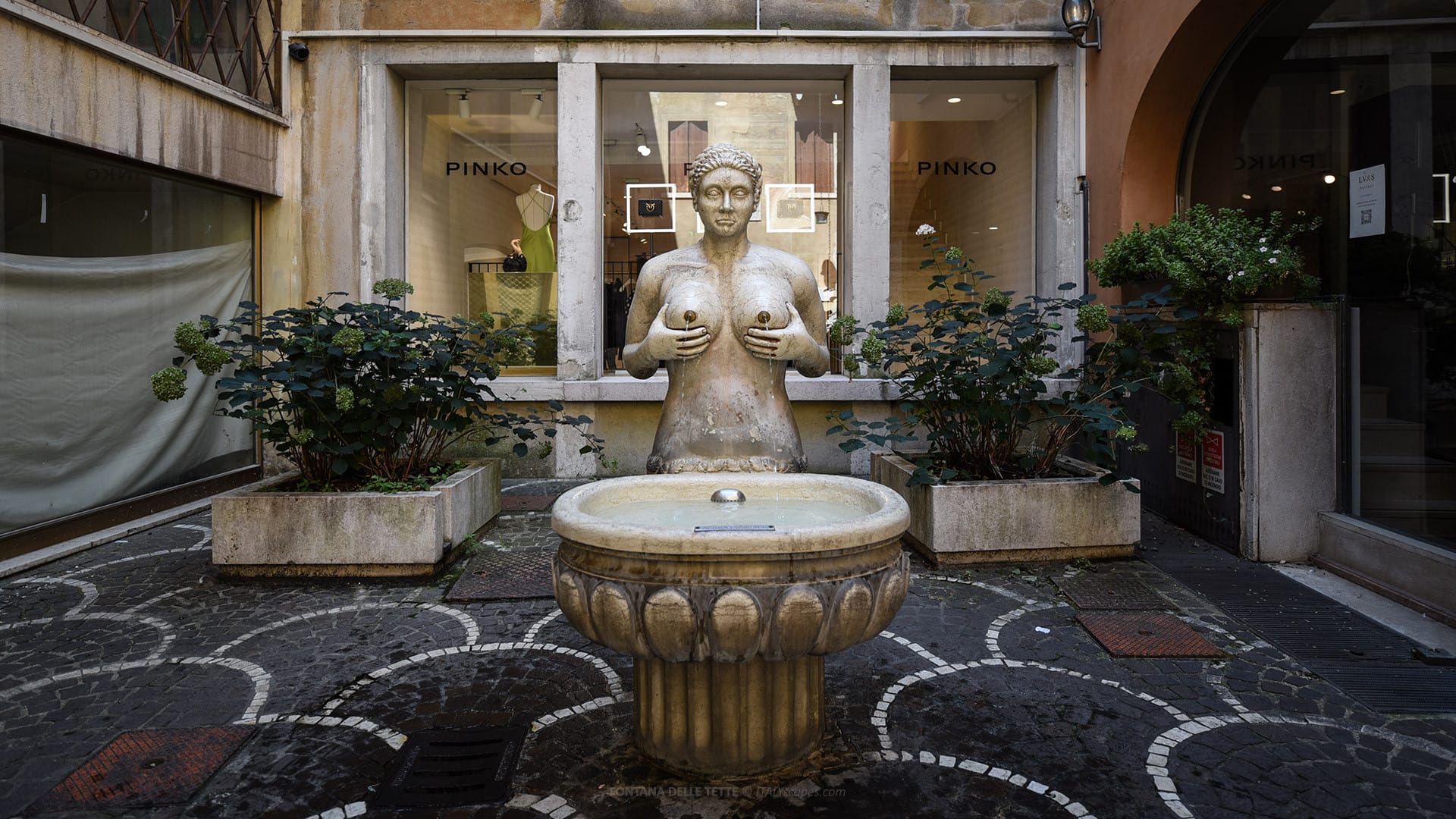
One of the most curious places we wanted to see was the Fontana delle Tette, a 16th-century fountain shaped as a female figure. According to local tradition, during Venetian rule, wine flowed from the fountain when a new podestà took office: white wine from one breast and red wine from the other.
The original fountain no longer stands in its first position. It is preserved under the loggia of Palazzo dei Trecento, while a copy stands in the courtyard of Palazzo Zignoli, near the old location.
Why It Belongs in the Itinerary
The fountain is not one of those attractions that take much time, but it belongs in any Treviso itinerary because it tells something essential about the city’s local character. Treviso has serious art and architecture, but it also has legends, civic rituals, and unusual urban details.
For us, Fontana delle Tette worked as a small bridge between official history and popular memory. It is close to Calmaggiore and Piazza dei Signori, so it fits naturally into the route. It also adds a memorable, specific image to a day otherwise built around streets, canals, and churches.
The Renaissance Walls
Venetian Defences
Before leaving the centre, we wanted to understand Treviso as a fortified city. The historic centre is partly enclosed by Renaissance walls built in 1509, when the Republic of Venice reinforced its mainland defences during the War of the League of Cambrai.
The project was entrusted to Giovanni Giocondo, known as Fra’ Giocondo. The 16th-century defensive system reorganized the older medieval walls and reduced the access points to three main gates: Porta San Tomaso, Porta Santi Quaranta, and Porta Altinia.
Porta San Tomaso
The most monumental gate is Porta San Tomaso, built in 1518 under the podestà Paolo Nani. The gate is decorated with Istrian stone and follows the model of classical triumphal arches. It is one of the clearest signs of Treviso’s period under Venetian rule.
Although the name refers to a nearby church dedicated to Saint Thomas of Canterbury, the statue above the gate represents Saint Paul, a reference to Paolo Nani. This kind of detail makes Treviso interesting: even a city gate contains political, religious, and symbolic meanings.
Along the Sile River
A Quieter Side of Treviso
The Sile River runs near the southern edge of the historic centre and receives waters from the Botteniga branches. After the dense streets, squares, and canals of the old town, the river area gives Treviso a quieter, more open dimension.
This part of the city helped us understand that Treviso is not only a canal town. It is also a river city, connected with a wider natural and agricultural landscape. The Sile has shaped movement, trade, settlement, and the broader geography of the province.
Restera and Slow Treviso
The Restera is the best-known riverside route along the Sile area, used for walking and cycling. For a one-day itinerary, even a short section is enough to change the rhythm of the visit. It offers a slower view of Treviso, away from the busiest central streets.
We would not replace the historic centre with a long riverside walk, especially on a first visit. However, adding the Sile at the end of the day makes sense. It completes the image of Treviso as a city built around water, but in a quieter and more local way than Venice.
Food and Local Identity
Radicchio, Prosecco, and Tiramisu
Treviso is strongly connected with radicchio, Prosecco, and tiramisu. The province is famous for radicchio, while the wider Treviso area leads toward the Prosecco hills of Conegliano and Valdobbiadene. These references make food and wine part of the city’s identity.
Tiramisu is also strongly associated with Treviso, even though its exact origin has been discussed through different traditions. For visitors, the important point is simple: Treviso is one of the best places in Veneto to connect the dessert with a real local setting.
Where We Would Pause
A good day in Treviso should not be only a checklist of monuments. Piazza dei Signori is ideal for coffee, while the Pescheria and canal area work well later in the day. Around Calmaggiore and the historic centre, cafés, wine bars, and small restaurants are easy to find.
This food dimension supports the idea of Treviso as a hidden gem. The city offers history and architecture, but also a more relaxed everyday rhythm. After Venice, where movement can feel intense, Treviso gives space for a slower lunch, an aperitif, and short pauses by the canals.
Why Treviso Is the Perfect Hidden Gem Escape from Venice
Treviso is close enough to Venice to work as an easy day trip, but different enough to feel like a separate discovery. It has canals without lagoon crowds, medieval palaces without theatrical excess, churches with important art, and streets that still feel connected to local life.
The essential attractions fit naturally into one day: Piazza dei Signori, Palazzo dei Trecento, Calmaggiore, Fontana delle Tette, Buranelli, Isola della Pescheria, the Cathedral, San Nicolò, San Francesco, Museo Santa Caterina, and the Renaissance walls.
For us, Treviso was not a place to visit only because of the airport. It was a real Veneto city with Roman origins, medieval institutions, Venetian fortifications, important churches, canals, markets, and food traditions. We spent only one day in Treviso, but it was enough. No more, no less.
Frequently Asked Questions about Treviso
Is Treviso worth visiting from Venice?
Yes, Treviso is worth visiting from Venice because it offers canals, medieval streets, historic churches, frescoes, city walls, markets, and local food culture in a quieter setting.
How far is Treviso from Venice?
Treviso is less than 40 kilometres from Venice. By train, the journey from Venezia Santa Lucia to Treviso Centrale usually takes about 37 minutes.
Can you visit Treviso in one day?
Yes, one day is enough to see the main attractions in Treviso, including Piazza dei Signori, Buranelli, Isola della Pescheria, the Cathedral, San Nicolò, and the city walls.
What is Treviso famous for?
Treviso is famous for its canals, medieval centre, painted houses, radicchio, Prosecco connections, tiramisu traditions, Renaissance walls, and important artworks by Titian and Tomaso da Modena.
What are the best things to see in Treviso?
The best things to see in Treviso include Piazza dei Signori, Palazzo dei Trecento, Calmaggiore, Fontana delle Tette, Buranelli, Isola della Pescheria, Treviso Cathedral, San Nicolò, and Museo Santa Caterina.
Is Treviso similar to Venice?
Treviso has canals and bridges, but it is not like Venice. It is an inland city with a calmer atmosphere, smaller waterways, medieval streets, markets, and fortified walls.
What food should you try in Treviso?
In Treviso, you should try local dishes with radicchio, Veneto cicchetti, Prosecco from the wider area, and tiramisu, a dessert strongly associated with the city.
Sources: