-
About
Table of Contents
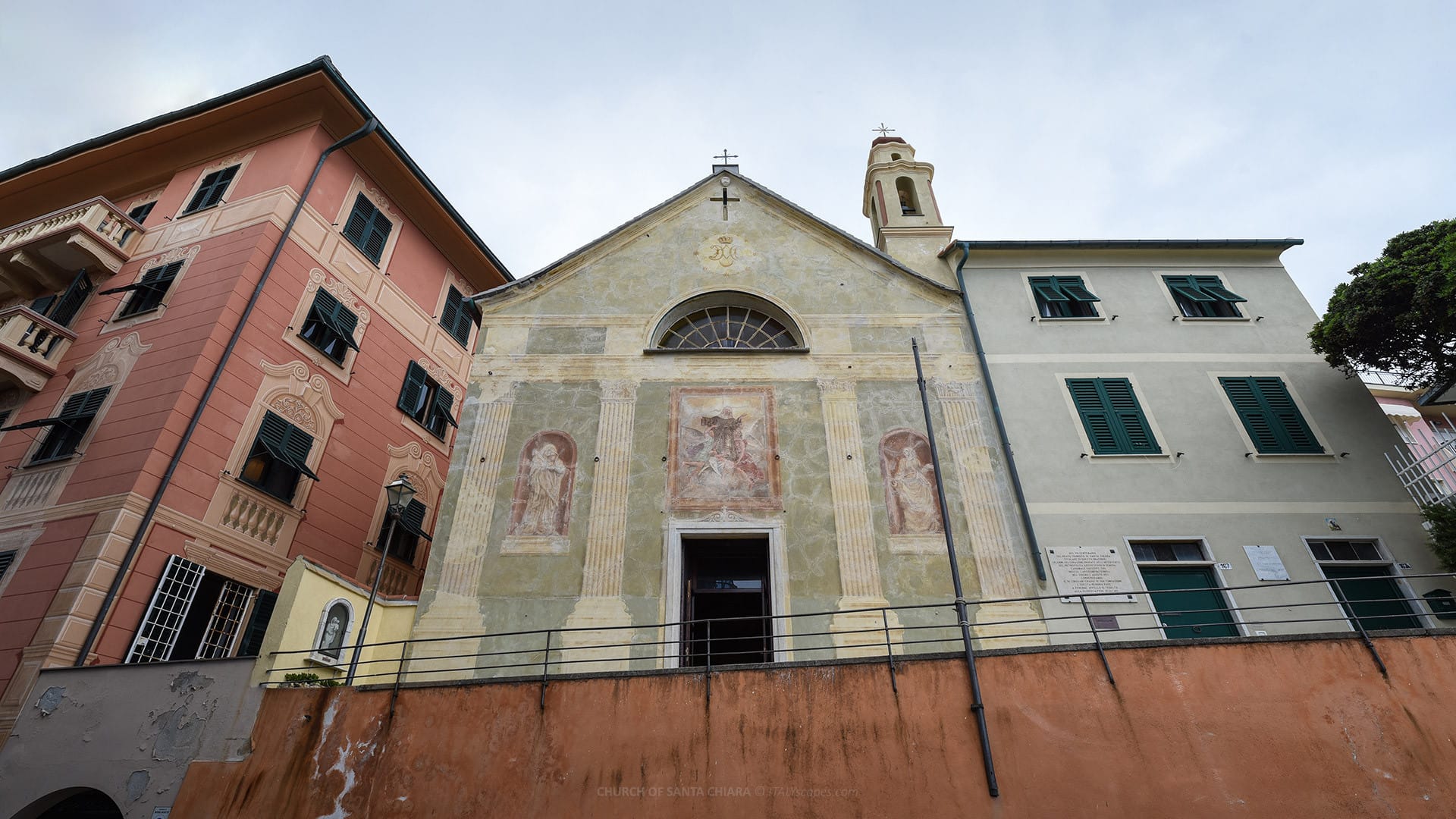
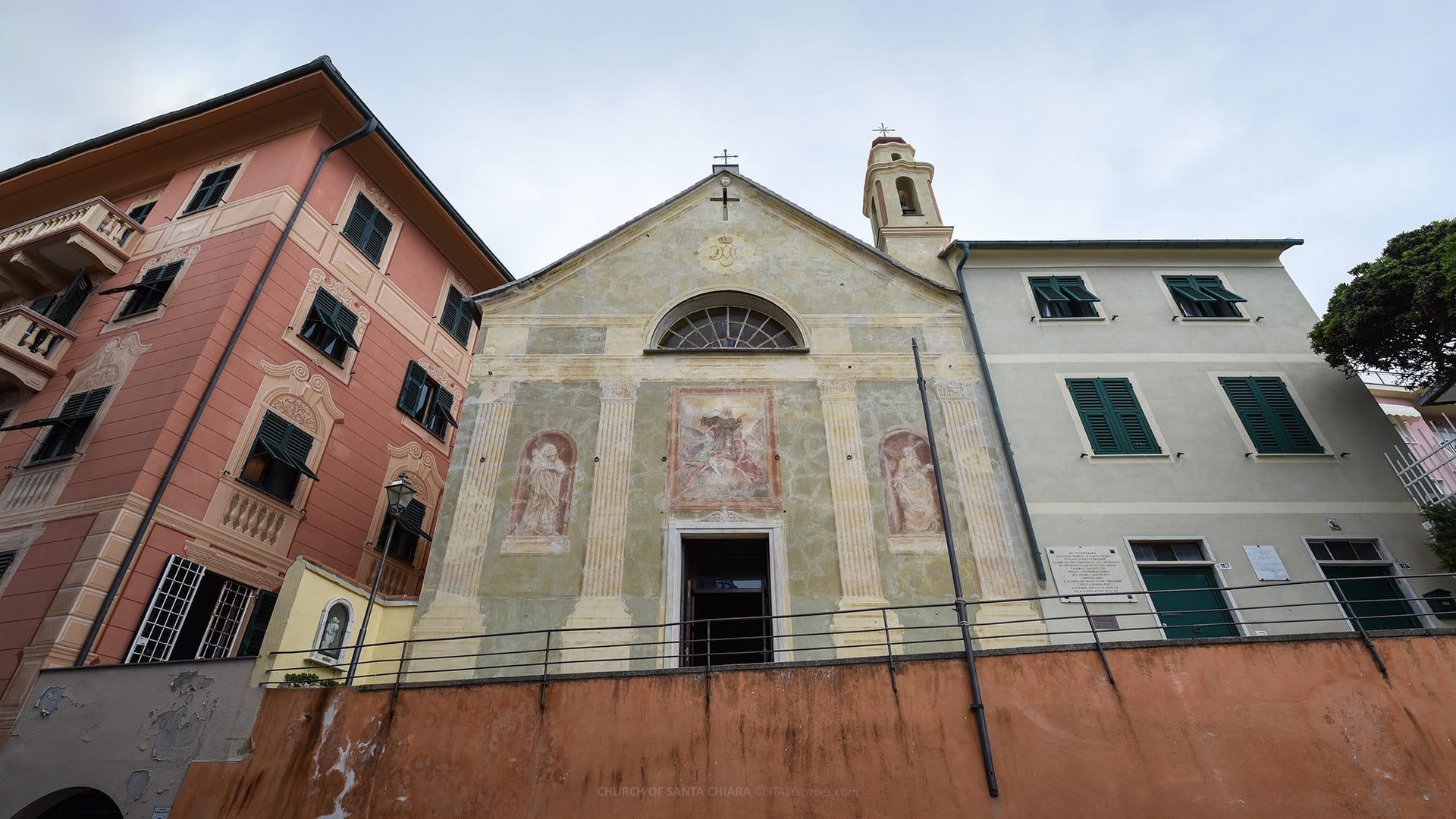
The Church of Santa Chiara (Chiesa di Santa Chiara) is an important religious and historical building located in Via Giuseppe Mazzini in Bogliasco.
Dedicated to Saint Clare of Assisi, the church represents a centuries-old center of devotion closely connected to Franciscan spirituality and to the confraternal traditions that have shaped religious life in Bogliasco since the late Middle Ages.
Although modest in size, the Church of Santa Chiara preserves a remarkable artistic and spiritual heritage. Its history is deeply intertwined with that of the local confraternity dedicated to Saint Clare, whose activities are documented over several centuries.
The church also houses significant artworks, including sculptures, paintings, and liturgical furnishings dating from the 17th and 18th centuries, making it a valuable testimony to the religious art of Liguria.
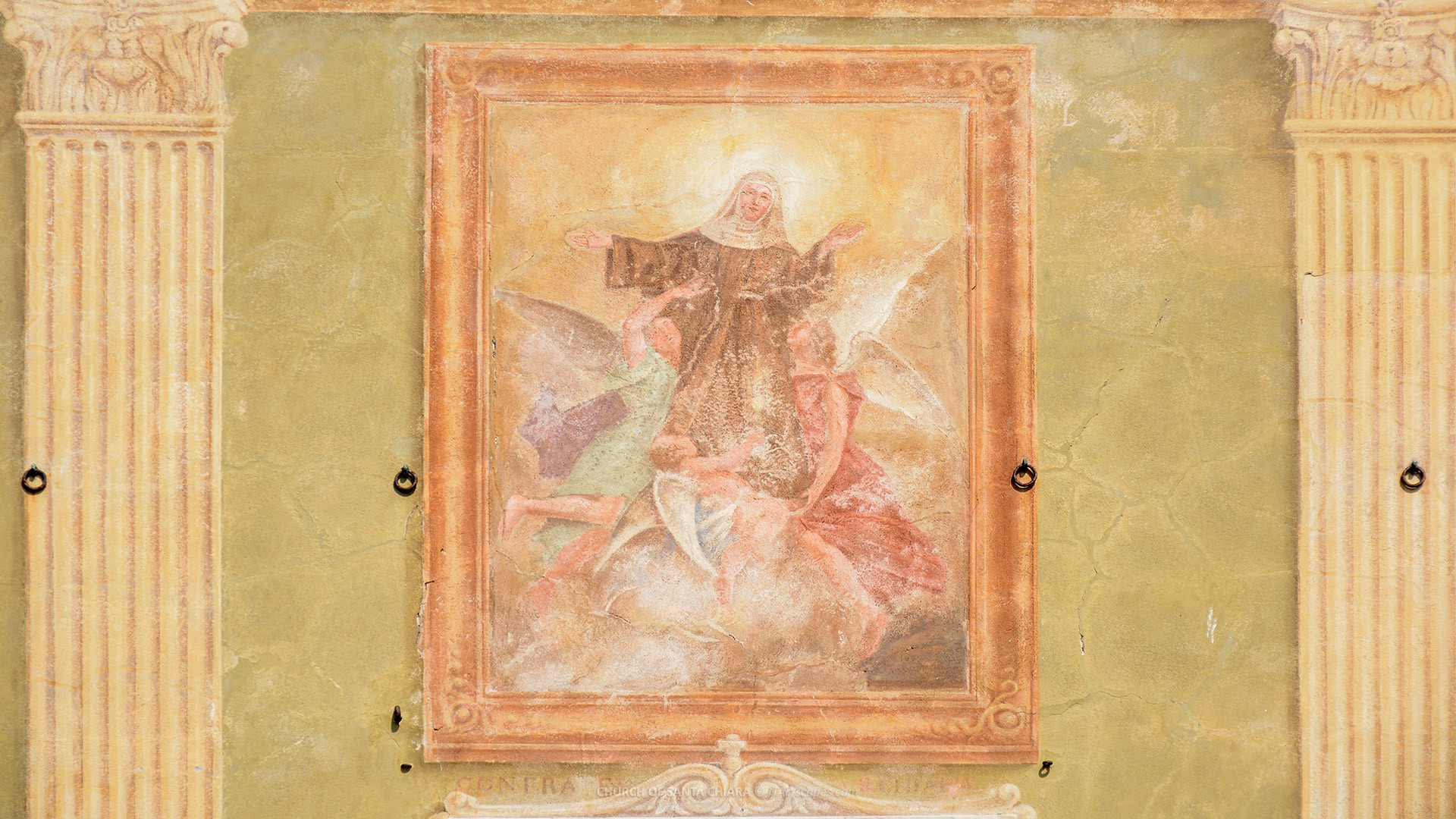
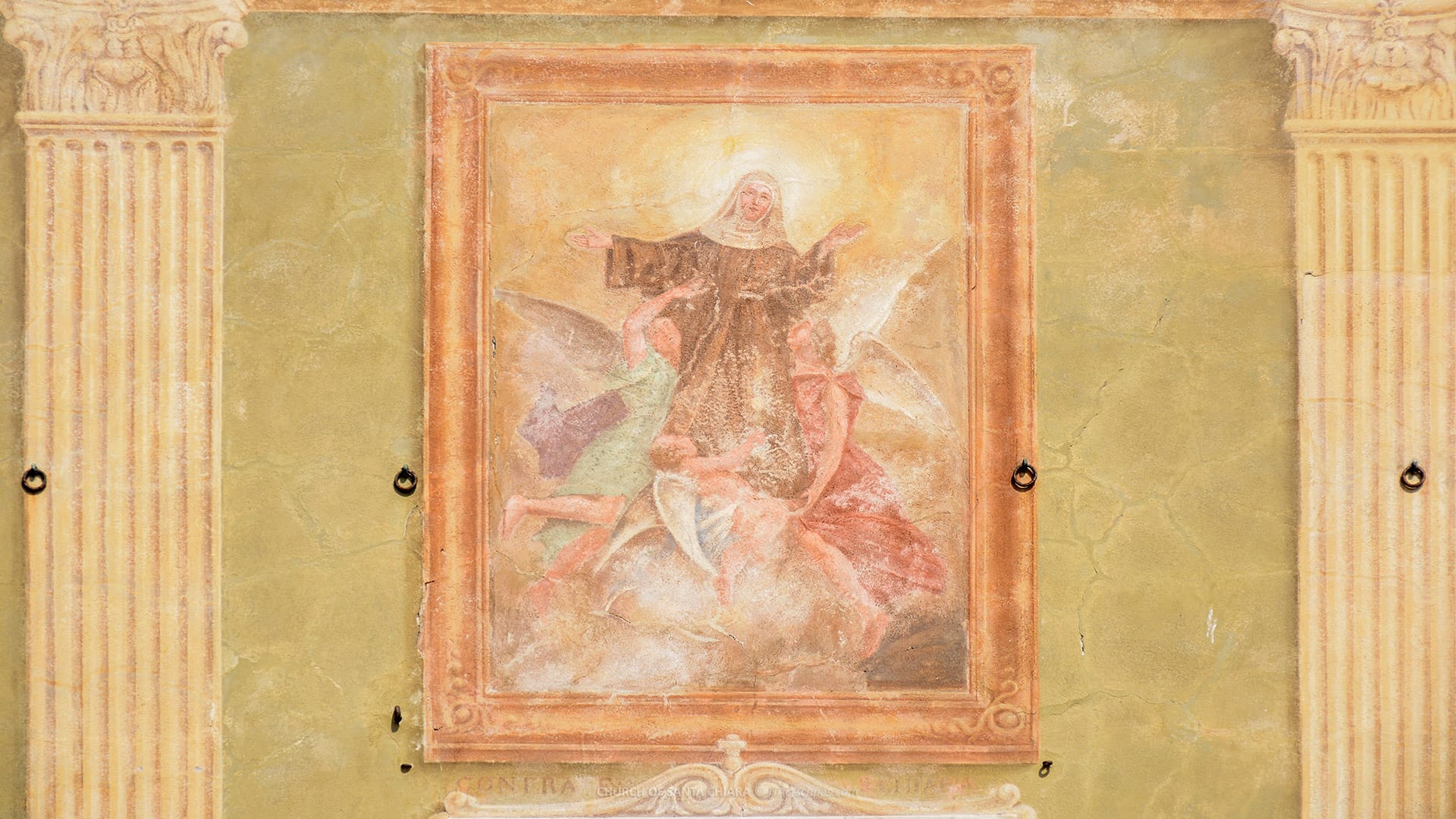
Saint Clare of Assisi was one of the earliest and most devoted followers of Saint Francis of Assisi. Inspired by Francis’s ideals of poverty, humility, and devotion, she founded the Order of Poor Clares, originally known as the Order of Poor Ladies.
This religious order, rooted in the Franciscan tradition, was dedicated to a life of strict poverty, prayer, and contemplation. The dedication of the Bogliasco church to Saint Clare reflects the diffusion of Franciscan spirituality in Liguria and the strong popular devotion to the saint.
Short History of the Church of Santa Chiara
The origins of the Church of Santa Chiara are closely linked to the foundation of the local confraternity devoted to the saint.
The confraternity of Santa Chiara was established in 1403, during a period in which lay religious associations played a crucial role in the spiritual, charitable, and social life of Ligurian communities.
The existence and activities of the confraternity of Santa Chiara in Bogliasco are documented in numerous historical records dating back to the 16th century.
These documents attest to the continuity of worship, the management of the church building, and the care of its furnishings and artworks.
A particularly important document dates to 1582, when the church was visited by Francesco Bossi, during his pastoral inspection of the area. The visit report provides valuable information about the condition of the church and its liturgical furnishings at that time.
During the inspection, the overall state of the building and its interior was verified, highlighting the need for substantial interventions. As a result, in the first half of the 17th century, the church underwent a complete reconstruction and enlargement.
This rebuilding phase transformed the original structure into a more spacious and architecturally coherent church, better suited to the needs of the confraternity and the local faithful.
The reconstruction reflects the broader architectural trends of the period, which favored clearer spatial organization, improved visibility of the altar, and richer decorative elements, in accordance with post-Tridentine liturgical principles.
Over the following centuries, the Church of Santa Chiara continued to serve its religious function without major structural alterations, preserving its historical identity while undergoing periodic maintenance and restoration works to safeguard its artistic heritage.
Powered by GetYourGuideArt and Architecture of the Church of Santa Chiara
Despite its relatively small dimensions, the Church of Santa Chiara houses several artworks of notable artistic and devotional value, dating mainly from the 17th and 18th centuries.
These works reflect the influence of the Genoese Baroque tradition as well as the devotional priorities of the confraternity that managed the church.
One of the most important pieces preserved inside the church is the wooden crucifix dated 1712, carved by Giovanni Battista Maragliano.
Giovanni Battista was the son of Anton Maria Maragliano, one of the most celebrated sculptors of sacred wooden statuary in Liguria. While working within the artistic legacy of his father, Giovanni Battista developed a personal style characterized by expressive realism and refined craftsmanship.
The sculpture underwent a restoration in 1988, which helped preserve its structural integrity and original polychromy, ensuring its continued devotional and artistic appreciation.
Another significant artwork is the large altarpiece depicting Saint Roch with Saint Pantaleone and Saint Firmina, dated 1759.
The painting is attributed to an unknown artist, a common circumstance for works commissioned by confraternities, where the focus was often placed on devotional function rather than artistic attribution.
Equally noteworthy is the painting depicting Saint Clare with Saints Francis, John the Baptist, Simon, and Sebastian, dated 1602 and likewise attributed to an unknown painter.
The presence of Saint Francis emphasizes the Franciscan roots of her vocation, while the inclusion of other saints reflects widespread devotional practices of the early 17th century.
The high altar of the Church of Santa Chiara is another element of artistic significance. It was carved in marble at the beginning of the 18th century by the sculptor G.B. Stella.
The altar’s elegant lines and balanced decorative elements are typical of Ligurian sacred architecture of the period, combining sobriety with refined craftsmanship.
The church also preserves an 18th-century organ, built by Lorenzo Roccatagliata. The instrument was restored between 1994 and 1995, restoring its sound quality and ensuring its continued use during liturgical celebrations.
How to Get to the Church of Santa Chiara
The Church of Santa Chiara is conveniently located within the urban fabric of Bogliasco, along Via Giuseppe Mazzini, one of the town’s central streets. The church lies approximately 550 meters from the Bogliasco railway station, which corresponds to about 10 minutes on foot.
Bogliasco is served by the Genoa-La Spezia railway line, making it easily accessible from Genoa and other coastal towns in eastern Liguria.
From the station, visitors can reach the church by walking through the town center, passing residential areas and small local shops, before arriving at Via Giuseppe Mazzini.
Sources:Powered by GetYourGuide -
Photos
-
Map
-
Reviews