-
About
Table of Contents
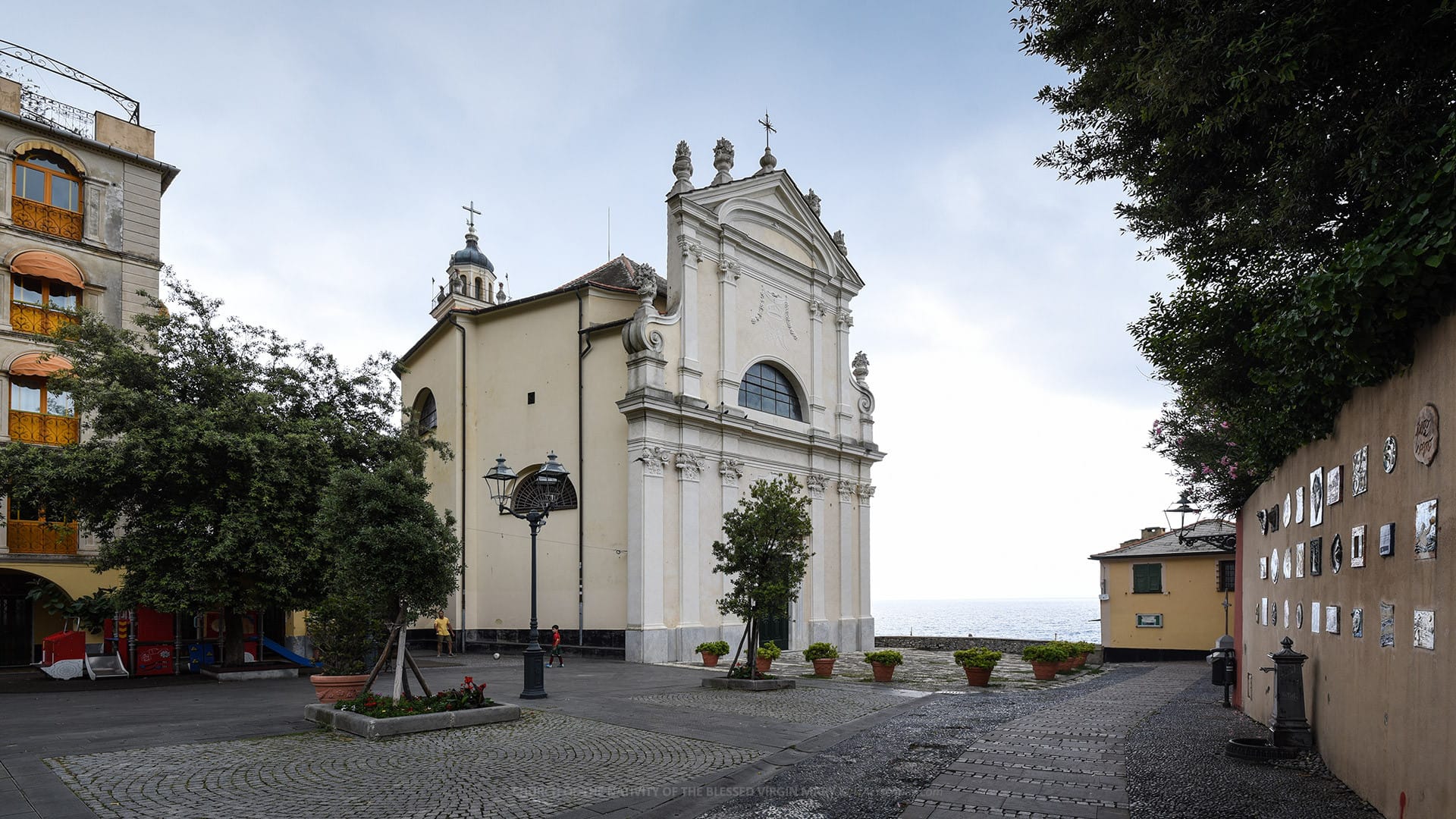
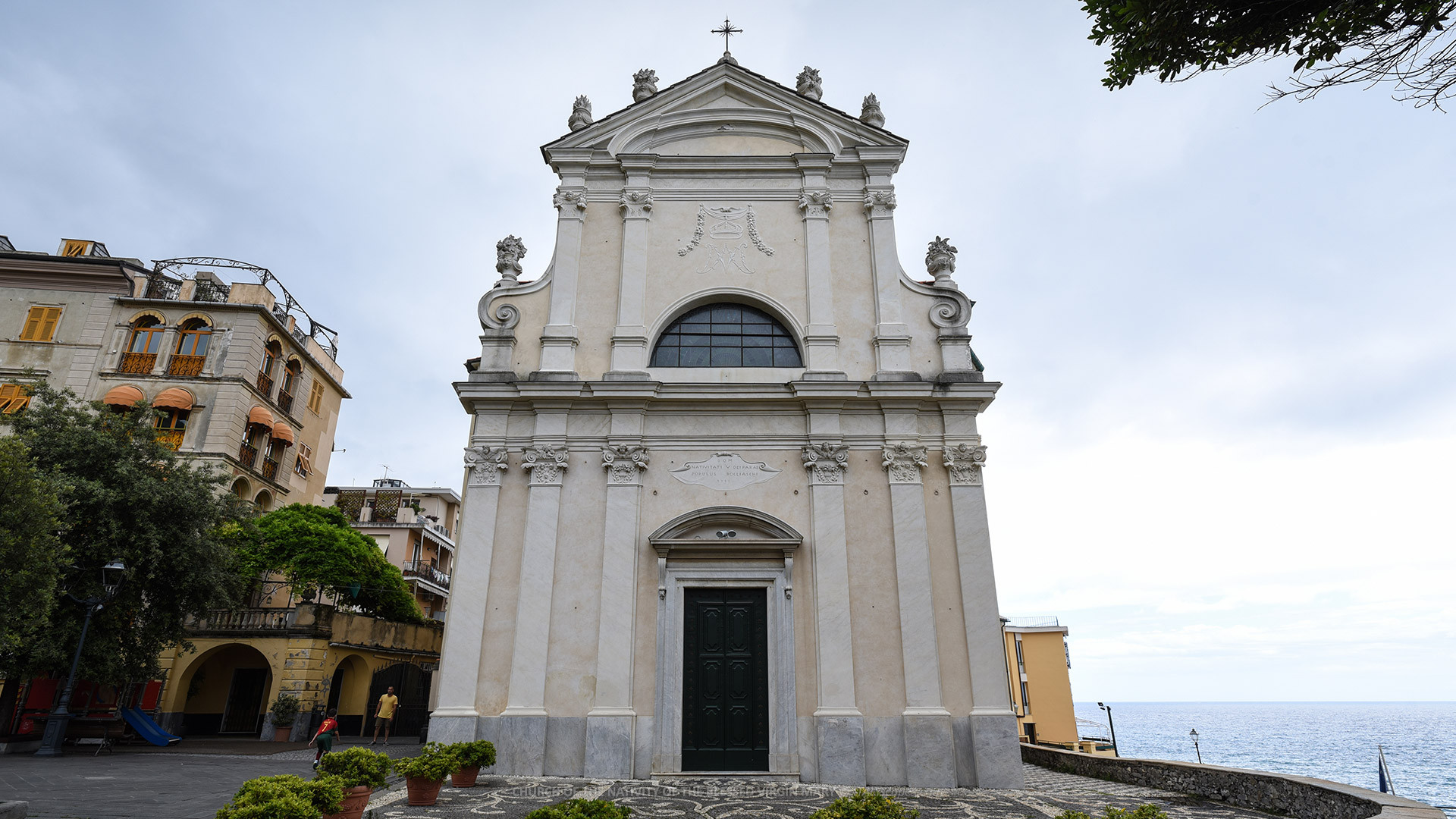
The Church of the Nativity of the Blessed Virgin Mary (Italian: Chiesa della Natività di Maria Santissima) is one of the most significant religious and historical landmarks in Bogliasco, a seaside town located along the eastern Riviera of Liguria, not far from Genoa.
The church stands in Via Ammiraglio Giovanni Bettolo, in the lower part of the town (Bogliasco Basso), and represents the spiritual, artistic, and architectural heart of the local community.
Dedicated to the Nativity of the Blessed Virgin Mary, the church reflects centuries of devotion, transformation, and artistic enrichment.
Its current Baroque structure is the result of a long historical process that began in the Middle Ages and culminated in the monumental church visible today.
Through documented restorations, commissions by renowned artists, and liturgical updates, the Church of the Nativity of the Blessed Virgin Mary has remained a living testimony to the religious and cultural history of Bogliasco.
Short History of the Church of the Nativity of the Blessed Virgin Mary
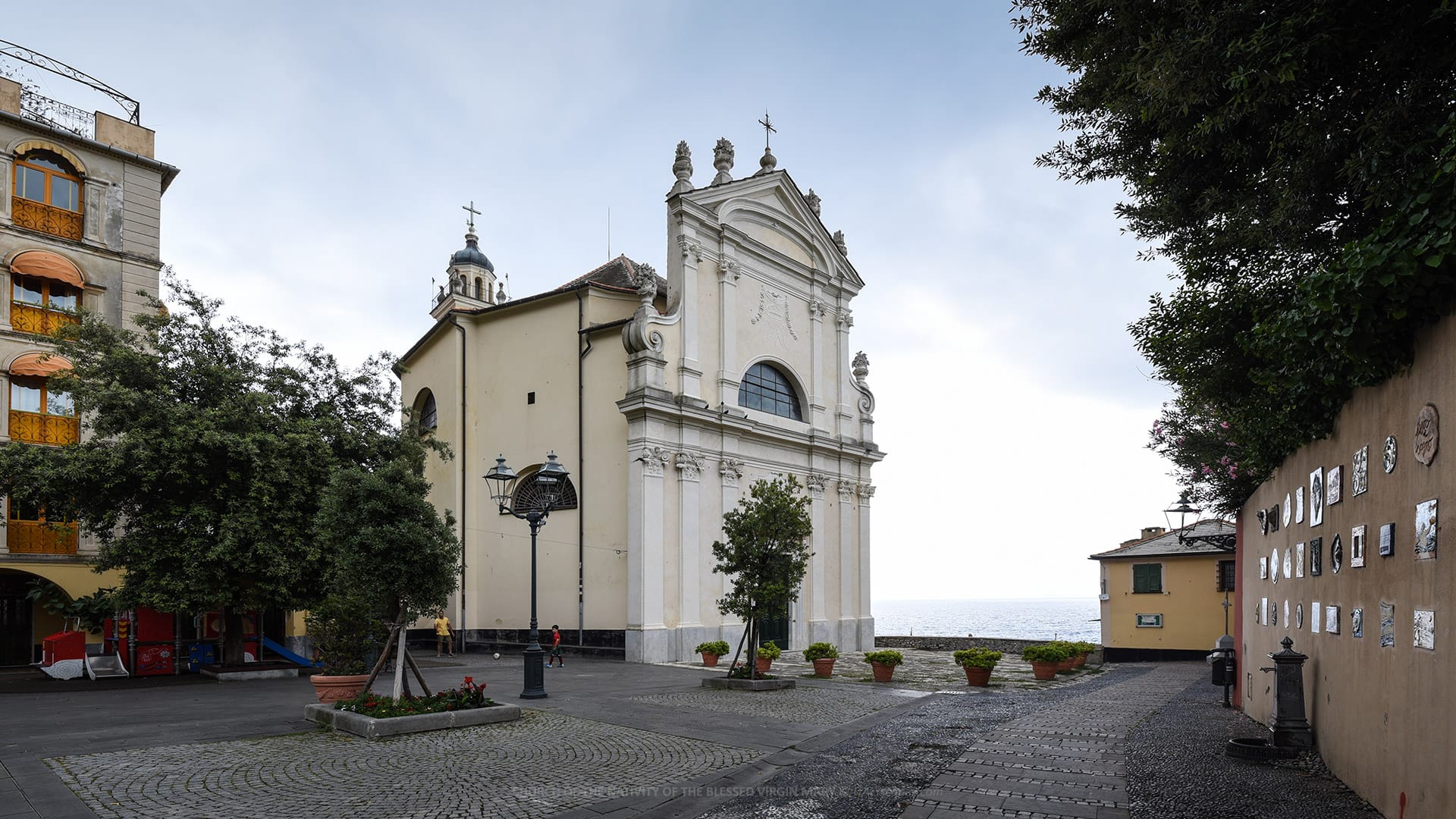
The origins of the Church of the Nativity of the Blessed Virgin Mary date back to the 12th century, when a church dedicated to the Virgin Mary already existed in the upper part of the town, known as Bogliasco Alto.
This early religious building served the spiritual needs of a small coastal community whose economy was based on fishing, agriculture, and maritime activities.
The first documented mention of the church appears in a historical record dated December 3, 1182, confirming its existence and importance during the medieval period.
In 1576, the church was officially elevated to the status of parish, marking a crucial step in its institutional development. This change reflected the demographic growth of Bogliasco and the increasing role of the church within the ecclesiastical structure of the region.
During the 17th century, the medieval church underwent several restoration and maintenance interventions.
These works were necessary to preserve the structure and adapt it to the liturgical and aesthetic sensibilities of the time, which increasingly favored more elaborate decorations and architectural solutions inspired by the Counter-Reformation.
However, as the population gradually shifted toward the coastal area, the location of the old church in Bogliasco Alto became less practical.
For this reason, in the first half of the 18th century, local authorities and ecclesiastical leaders decided to construct a new church in Bogliasco Basso, closer to the sea and more accessible to the growing community.
The project was entrusted to the architect Giovanni Antonio Ricca, whose design reflected the Baroque architectural language then prevalent in Liguria. Construction works began in 1731, and the building progressed steadily thanks to the support of the local population and religious institutions.
By 1736, all the side altars had been completed, demonstrating the advanced state of the interior decoration even before the entire structure was finished. Just one year later, in 1737, the church building was fully completed from an architectural standpoint.
Despite its completion, the church was officially consecrated much later, on October 12, 1794, by Giovanni Lercari, Archbishop of Genoa.
Throughout the 19th century, the church underwent additional restoration and embellishment works.
Among the most significant interventions was the frescoing of the vault in 1884 by the painter Virginio Grana, who enriched the interior with decorative and iconographic elements in line with late nineteenth-century artistic trends.
Another important modification involved the wooden choir, which was replaced in 1742 by the work of Andrea Bocciardo. This intervention contributed to improving both the liturgical functionality and the aesthetic harmony of the church interior.
Powered by GetYourGuideArt of the Church of the Nativity of the Blessed Virgin Mary
The Church of the Nativity of the Blessed Virgin Mary is not only a place of worship but also a valuable repository of sacred art, reflecting the artistic vitality of Liguria between the 17th and 19th centuries.
Among the most important works is the wooden crucifix attributed to Anton Maria Maragliano, one of the most renowned sculptors of sacred art in Liguria.
Maragliano’s crucifixes are celebrated for their dramatic expressiveness, anatomical precision, and emotional intensity, characteristics that are fully evident in the example preserved in Bogliasco.
Another notable artwork is a painting attributed to Giovanni Andrea De Ferrari, an important figure of the Genoese Baroque school. His works are distinguished by their refined use of color, dynamic compositions, and strong spiritual themes.
The main altar, constructed between 1782 and 1783, is the work of the sculptor Bernardo Mantero. Mantero was also responsible for creating the floor of the presbytery, ensuring stylistic continuity between the altar and the surrounding liturgical space.
In more recent times, the presbytery was enriched with a new altar carved in 2001 by architect Matteo Ferrari. The altar was consecrated on September 15, 2001, by Dionigi Tettamanzi, reinforcing the continuity between tradition and contemporary liturgical needs.
The church also preserves works by several other notable painters, including Anton Maria Piola, Gio Agostino Ratti, Carlo Giuseppe Ratti, Francesco Pascucci, Melchiorre Jeli, and Raimondo Sirotti.
Together, these artworks create a coherent artistic itinerary that reflects the evolution of sacred art in Liguria, from the Baroque period through the late eighteenth century and into the modern era.
How to Get to the Church of the Nativity of the Blessed Virgin Mary
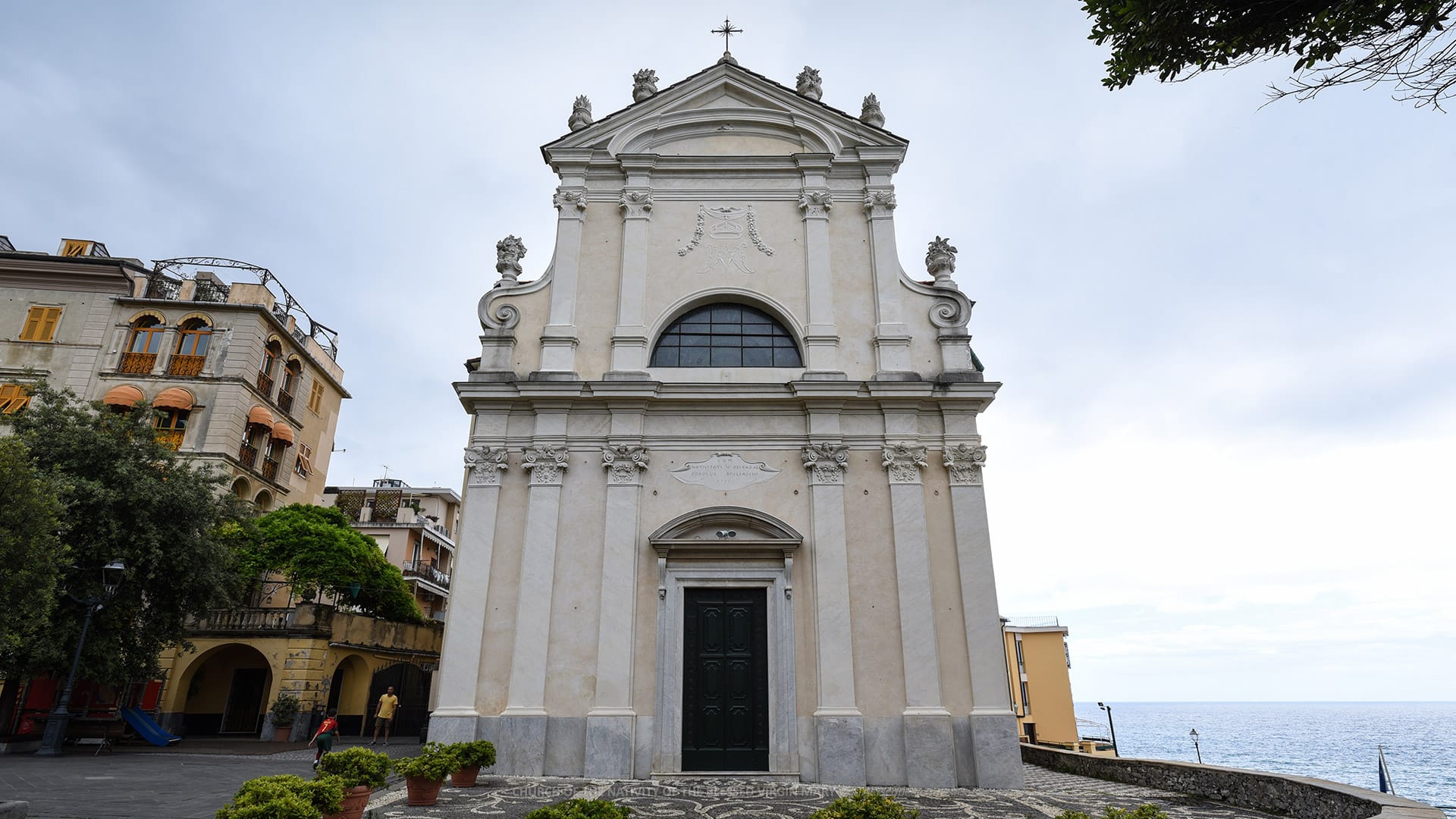
The Church of the Nativity of the Blessed Virgin Mary is easily accessible thanks to its central location in Bogliasco. The church is situated approximately 110 meters from the Bogliasco railway station, making it conveniently reachable on foot within just a few minutes.
Bogliasco lies along the Genoa-La Spezia railway line, which connects the town with Genoa and other destinations along the Ligurian coast.
From the station, visitors can walk through the town center toward Via Ammiraglio Giovanni Bettolo, where the church stands prominently within the urban fabric.
Sources:Powered by GetYourGuide -
Photos
-
Map
-
Reviews