


-
About
Table of Contents
Buy tickets & tours:VivaTicketHidden just behind the ornate façades of the Doge’s Palace, a short stroll from the crowds of Piazza San Marco, the Bridge of Sighs (Ponte dei Sospiri) feels like a secret suspended over water.
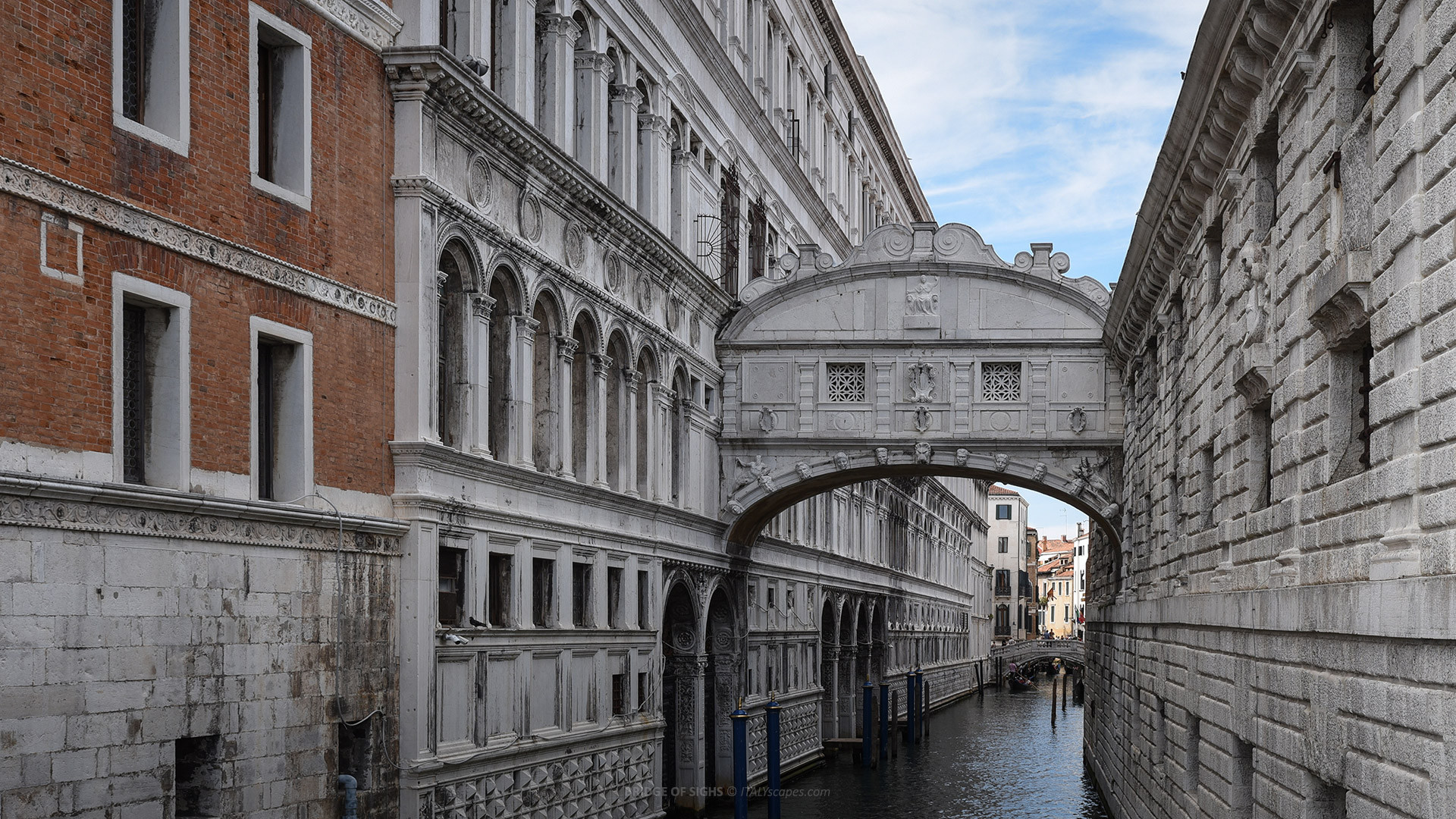
Many visitors arrive in the square without realizing that, only a few steps away, the pale, enclosed arch of the Ponte dei Sospiri quietly connects the Doge’s Palace with the former prisons across the narrow Rio di Palazzo canal.
From the outside, the bridge looks like a delicate marble jewel-box balanced between two massive buildings. Inside, however, are narrow stone passageways that once carried prisoners from the palace’s interrogation chambers directly to their cells.
This contrast between beauty and severity has made the Bridge of Sighs one of Venice’s most intriguing landmarks: at once a symbol of harsh justice and a modern icon of romance.
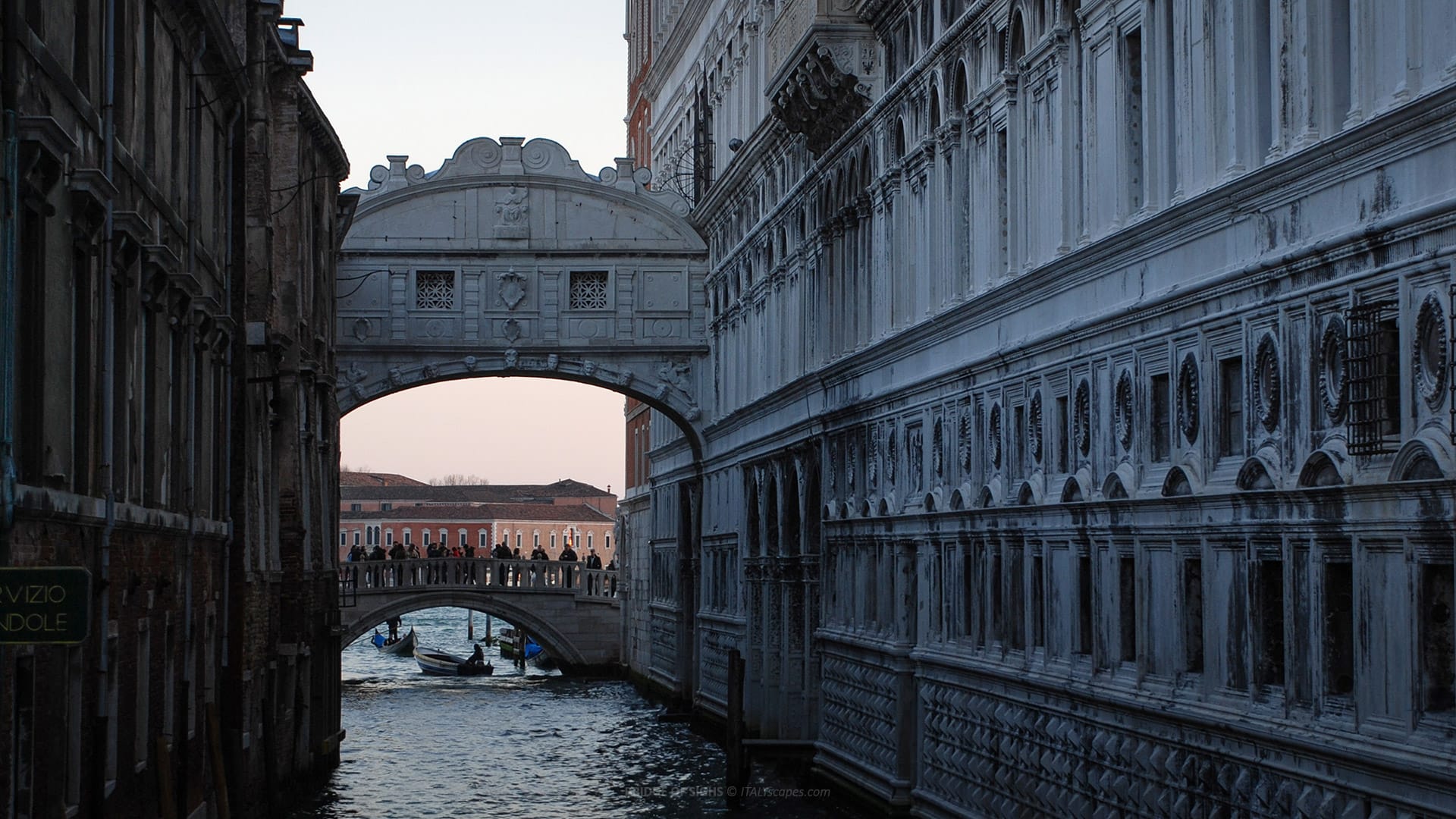
Today, visitors can admire the Ponte dei Sospiri from the small bridges on either side of the canal or glide beneath it in a gondola.
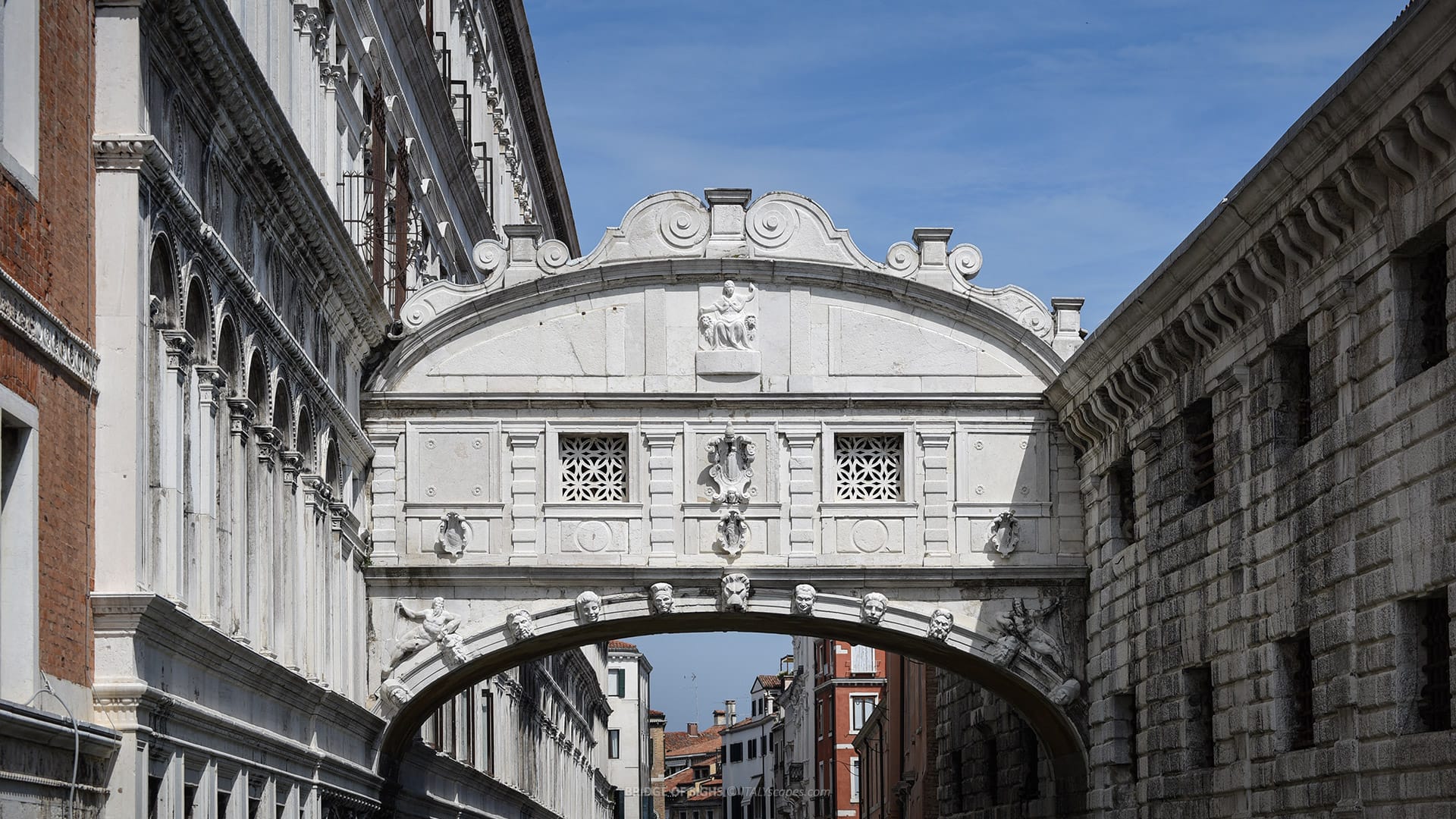
Short History of the Bridge of Sighs (Ponte dei Sospiri)
In the late 1500s, the city constructed a new complex of jail buildings, Prigioni Nuove, across the narrow Rio di Palazzo from the Doge’s Palace. To move prisoners securely between the palace’s interrogation rooms and the new cells, the Republic needed an enclosed passage over the canal.
The Bridge of Sighs was built at the beginning of the 17th century, when Venice was reorganizing the connection between its courts and prisons.
Construction and purpose
In 1600, work began on the bridge under architect Antonio Contin, nephew of Antonio da Ponte, the engineer who designed the Rialto Bridge. The structure was completed around 1603.
Contin’s design created a fully enclosed corridor linking the Doge’s Palace directly to the New Prison. Inside were two parallel narrow passageways, allowing different categories of prisoners to be kept separate as they were escorted to and from questioning.
When you walk through the Doge’s Palace today on a guided tour, you still follow this historical route: from richly decorated halls into narrow stone corridors, across the covered bridge and into the stark prison cells on the opposite bank.
Why “Bridge of Sighs”?
The Italian name “Ponte dei Sospiri” literally means “Bridge of Sighs”. According to later tradition, the name refers to the sighs of prisoners catching their last glimpse of Venice – and of the world outside – through the small grilled windows, as they were led away to their cells.
However, the poetic English name “Bridge of Sighs” and the romantic imagery attached to it became popular largely in the 19th century, especially after the writer Lord Byron referenced the bridge in his works and travel writings.
In reality, many prisoners who crossed the bridge were not heading to execution, but to long confinement, harsh questioning, or torture. The bridge therefore became a symbol of the Venetian Republic’s severe and secretive justice, not only a romantic landmark admired by visitors today.
Casanova and the prisons of Venice
No history of the Bridge of Sighs is complete without mentioning Giacomo Casanova, Venice’s most famous prisoner. In 1755, Casanova was arrested for offenses against religion and morals and locked in the notorious Piombi – attic cells inside the Doge’s Palace.
Casanova never languished in the New Prison across the canal, and therefore probably did not cross the bridge as a prisoner. Instead, he staged an extraordinary escape in 1756, breaking through the roof, traversing attics and stairways and eventually walking out of the palace’s main door.
He later recounted the story in his memoir History of My Escape from the Prisons of the Republic of Venice, Called the Leads.
From prisoners’ sighs to lovers’ sighs
Despite its grim background, the Bridge of Sighs has become a symbol of romance. A widely repeated modern legend says that if two lovers kiss in a gondola beneath the bridge at sunset, while the bells of nearby churches ring, their love will last forever.
This tale was popularized in the 20th century, and a similar legend appears in the 1979 film A Little Romance, where a couple must kiss beneath the Bridge of Sighs at the right moment to seal their love.
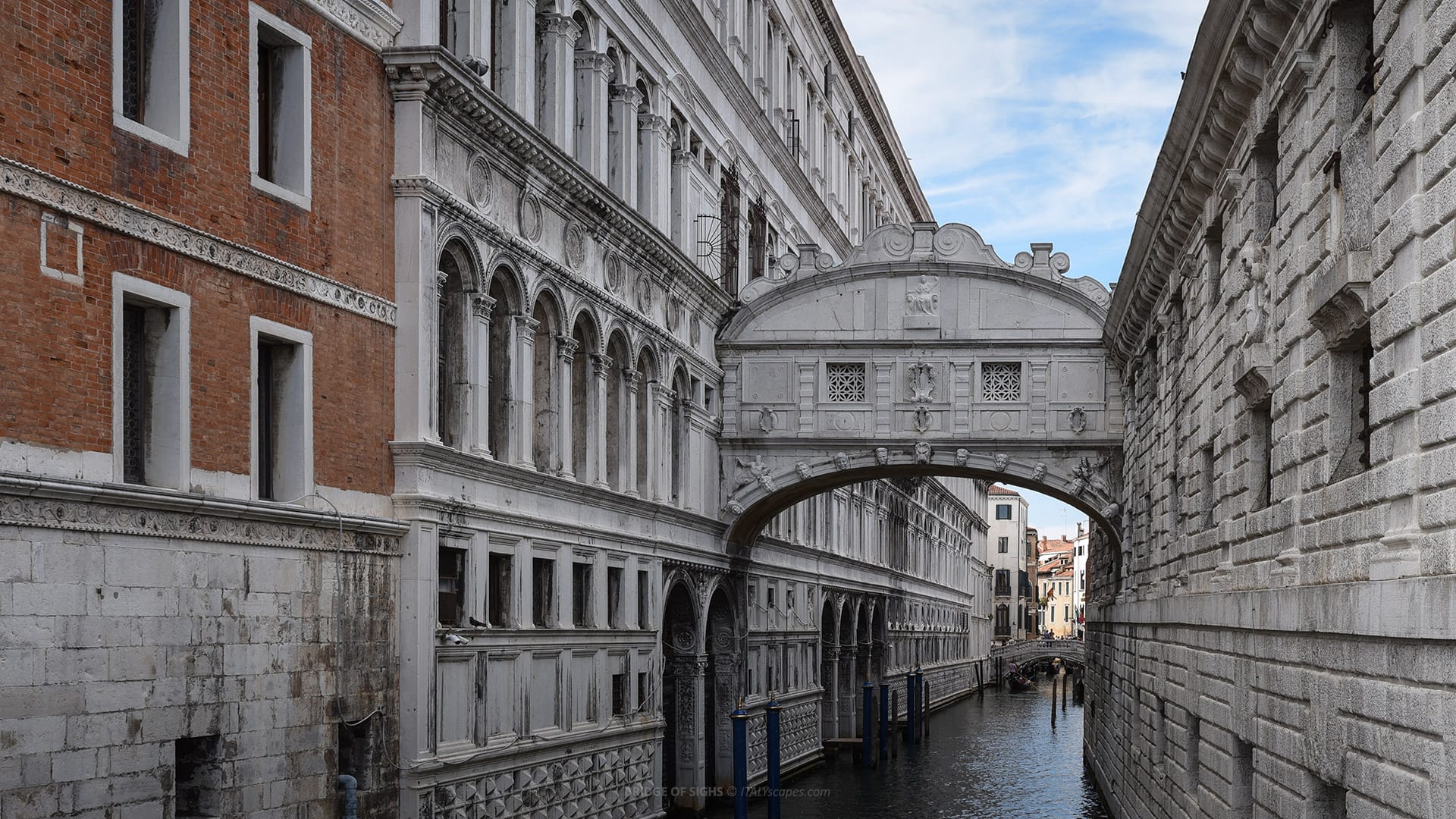
Architecture of the Bridge of Sighs (Ponte dei Sospiri)
At first glance, the Bridge of Sighs seems more like a piece of sculpture than a functional corridor. Yet its design cleverly combines structure, security and Baroque ornament.
Materials and structure
The bridge is a small single-span arch crossing Rio di Palazzo and measuring only about 11 meters (36 ft) in length. It is built entirely from white Istrian stone, a dense limestone widely used in Venice for façades and bridges because of its durability in saltwater environments.
The passage inside is fully enclosed, with thick stone walls and a stone roof. Two separate internal corridors run parallel to each other, allowing different flows of prisoners or guards to move without contact.
Baroque style and decorative details
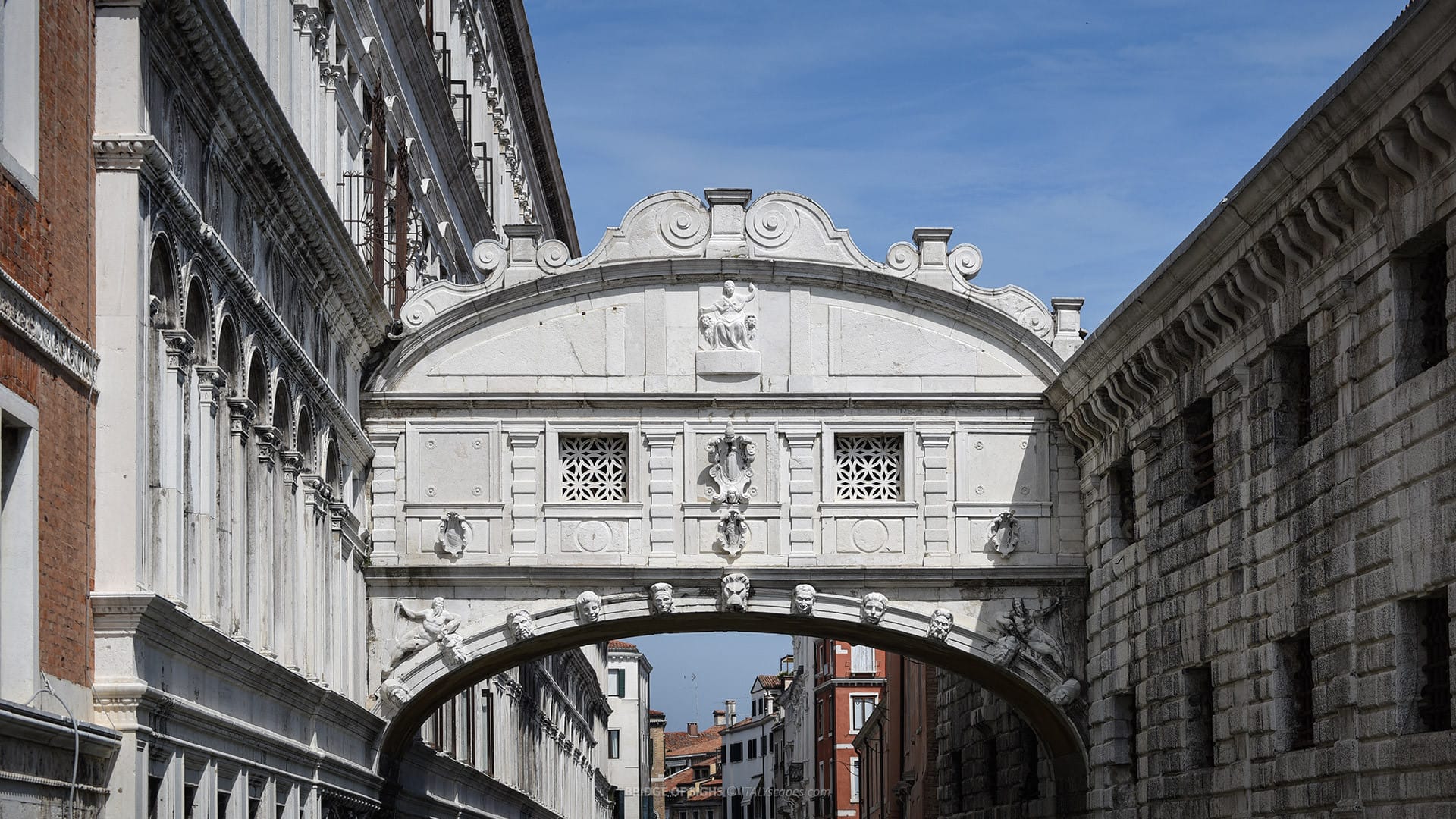
Architecturally, the bridge is considered one of Venice’s finest Baroque bridge designs. Its white stone exterior includes a central cartouche with the coat of arms of Doge Marino Grimani, who ordered the construction of the enclosed passage between the palace and prisons.
The bridge is also decorated with sculpted reliefs and elegant scrolls that soften the outline of its arch. Instead of open arcades, it has small square windows with intricate stone latticework, preserving the secrecy and controlled atmosphere of the passage inside.
The sculptural program includes allegorical figures such as Justice, emphasizing the bridge’s role as part of the city’s judicial system.
From the canal, the contrast is striking: the elegant, decorative façade of the bridge itself lies between two very different walls – the refined Renaissance architecture of the Doge’s Palace and the heavier, fortress-like exterior of the New Prison, with its small barred windows.
The view from inside
Inside, the bridge is intentionally plain and severe. Its narrow corridors, low stone ceilings, and small windows create a strong feeling of confinement. Unlike the decorated exterior, the interior was designed for controlled movement, security, and isolation, reflecting the prison function of the passage.
Through the latticework, prisoners could see only a fragment of the lagoon, the distant island of San Giorgio Maggiore or the Riva degli Schiavoni, depending on which side they looked out.
How to Get to the Bridge of Sighs (Ponte dei Sospiri)
Reaching the Bridge of Sighs is straightforward whether you prefer a scenic walk from Venezia Santa Lucia railway station or a smoother ride by vaporetto (public waterbus).
Because the bridge sits directly behind the Doge’s Palace on the edge of Piazza San Marco, navigation is essentially the same as getting to St Mark’s Square.
Getting to the Bridge of Sighs on foot from Venezia Santa Lucia
Walking from Santa Lucia station to the Bridge of Sighs is one of the best ways to get your first feel of Venice. Depending on your pace and how often you stop, the walk takes around 30-40 minutes.
A simple approximate route is: exit Santa Lucia station, follow Strada Nova toward Rialto, reach Rialto and Campo San Bortolomio, walk the Mercerie to Piazza San Marco and then find the Doge’s Palace and the Bridge of Sighs.
This walk gives you a good cross-section of Venice: residential streets, busy markets, the Rialto area and finally the monumental space of Piazza San Marco before you encounter the pale arch of Ponte dei Sospiri.
Getting to Ponte dei Sospiri by vaporetto
If you prefer to travel by water or are carrying luggage, the vaporetto is the easiest way to reach the Bridge of Sighs from the station.
Right in front of Venezia Santa Lucia you’ll find several ACTV waterbus stops labeled Ferrovia. From here, two main options will take you towards St Mark’s and the Doge’s Palace.
From Ferrovia (any pier serving Line 1 or Line 2), board a vaporetto going along the Grand Canal with final destination San Marco / Lido.
- Line 1 is the slower, fully scenic line, stopping at Ferrovia, Rialto, Accademia, and San Marco among others.
- Line 2 offers a faster, limited-stop service to San Marco – Giardinetti or San Marco – San Zaccaria.
Frequently Asked Questions about the Bridge of Sighs (Ponte dei Sospiri)
Why is Ponte dei Sospiri so famous?
The Bridge of Sighs is famous because of its romantic name, dramatic appearance, and darker historical meaning. Although many visitors associate it with love, the bridge originally connected the interrogation rooms of the Doge’s Palace with the prisons.
Why is it called the “Bridge of Sighs”?
The name “Bridge of Sighs” comes from the idea that prisoners sighed as they crossed it and saw Venice for the last time before entering prison.
When was the Bridge of Sighs built?
The Bridge of Sighs was built at the beginning of the 17th century, around 1600-1603, during the expansion of Venice’s prison complex. It was designed by Antonio Contin, a member of a family of architects.
Can you walk across the Bridge of Sighs?
Yes, but only by visiting the Doge’s Palace, because the Bridge of Sighs is not a public pedestrian bridge. It is part of the palace museum route, where visitors can cross the enclosed passageway.
Where is the best place to see Ponte dei Sospiri?
The best place to see Ponte dei Sospiri is from Ponte della Paglia, the nearby bridge facing the lagoon side of the Doge’s Palace.
Sources:Buy tickets & tours:VivaTicket -
Photos
-
Map
-
Reviews

1 Review on “Bridge of Sighs (Ponte dei Sospiri)”
Leave a Review
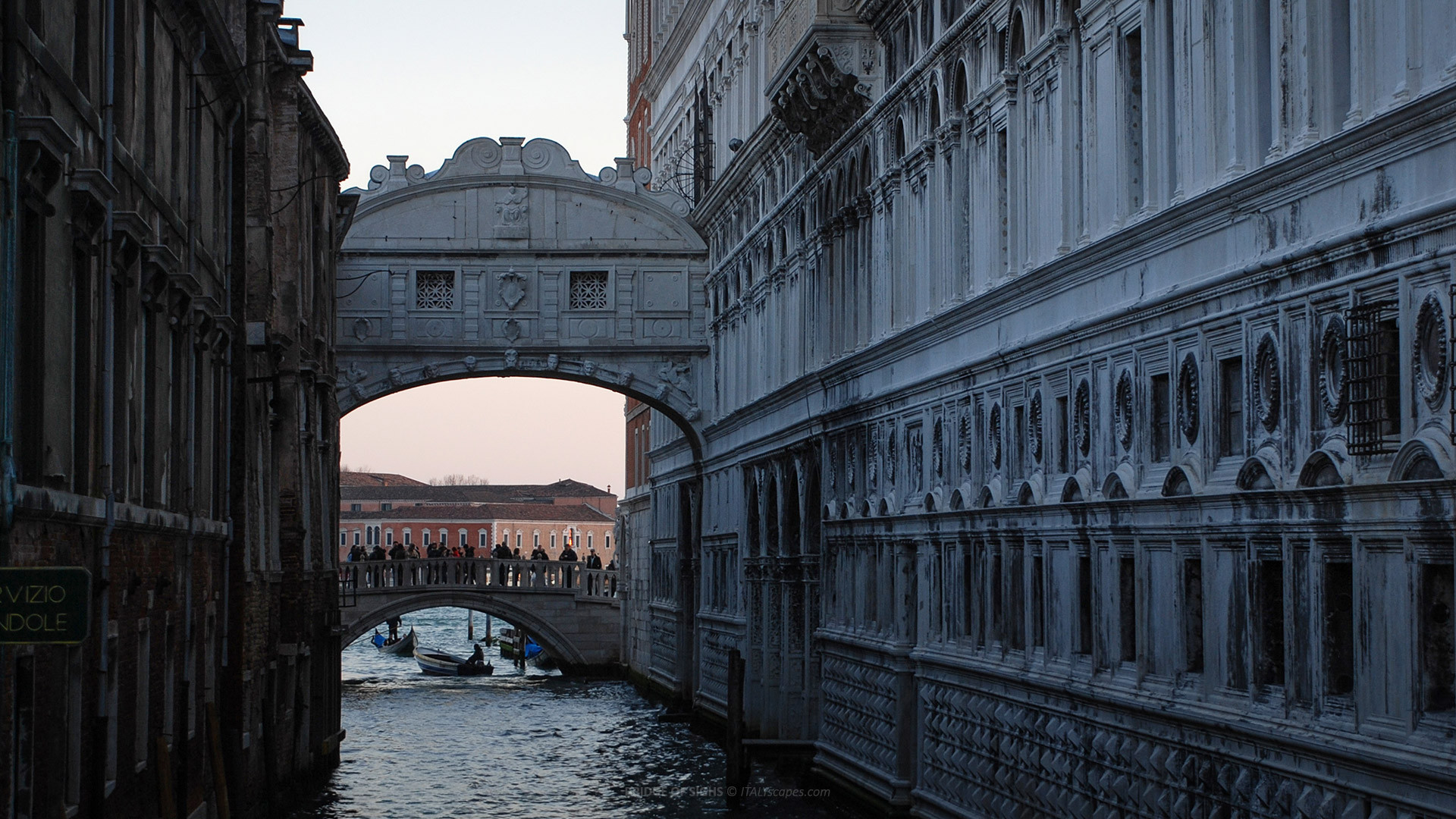
It’s beautiful, but the crowd that gathers on the Ponte della Paglia, in the middle of the day, is annoying. The best time to admire it is at night, when there’s no one around.