-
About
Table of Contents
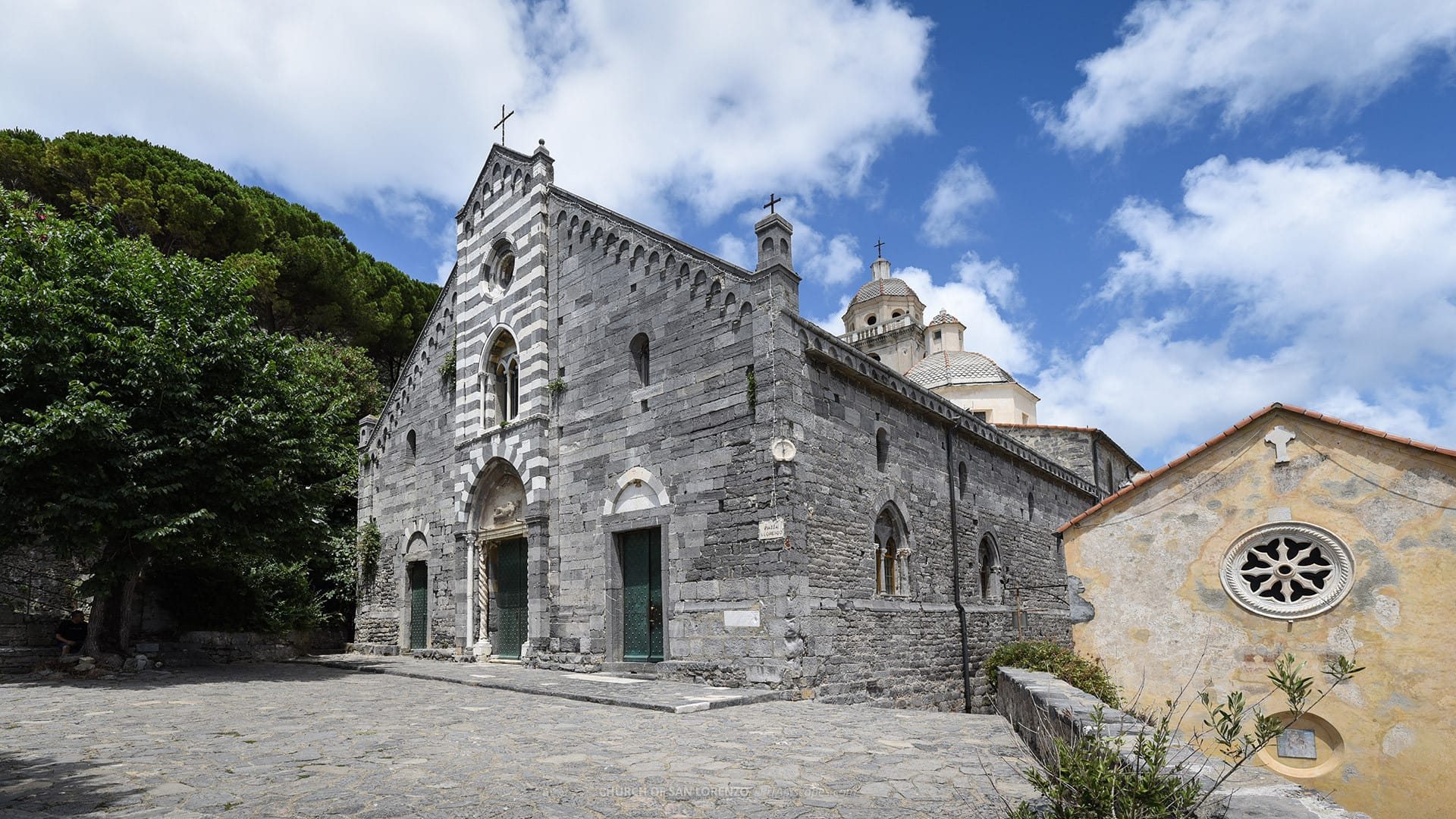
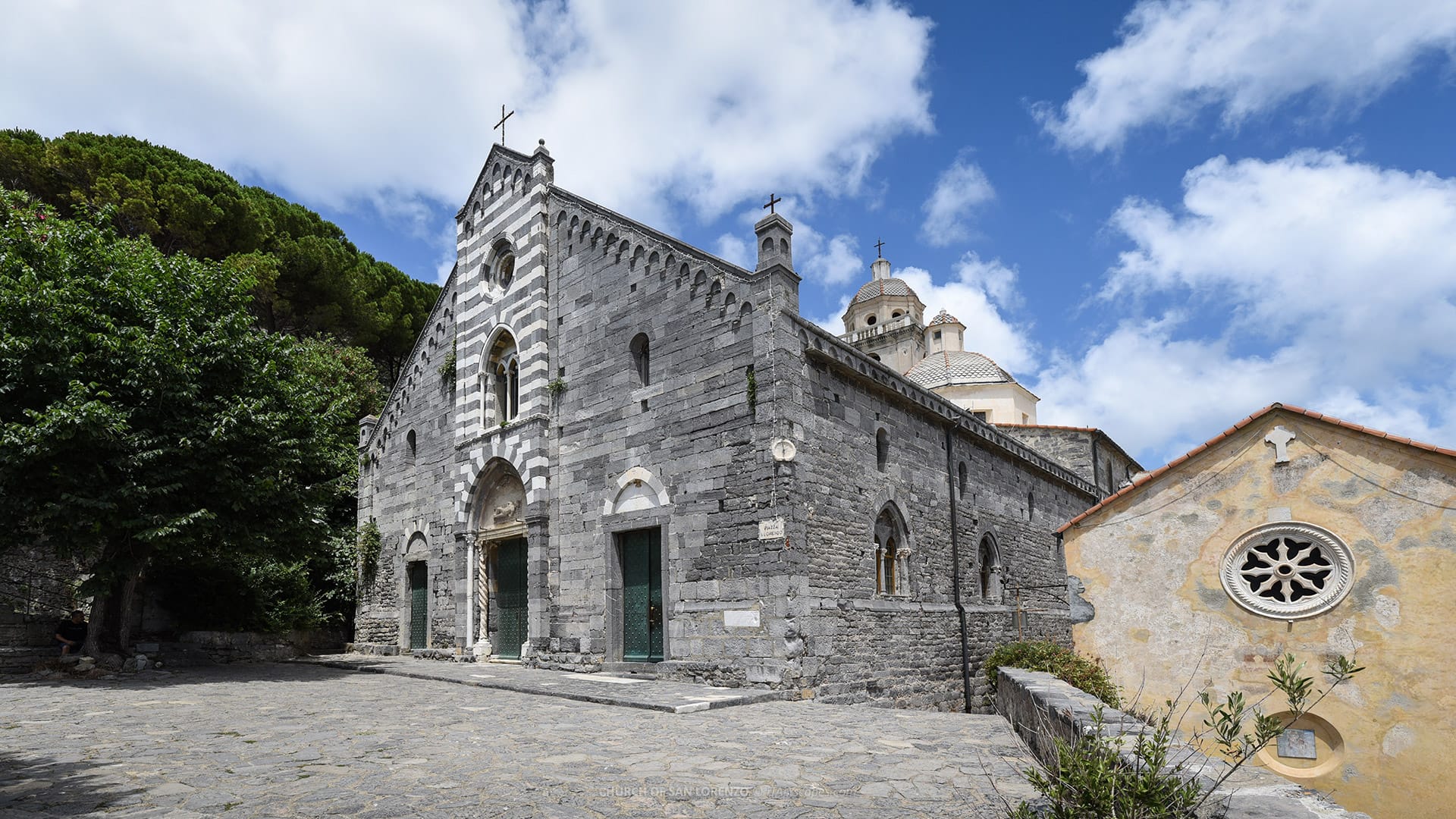
The Church of San Lorenzo is one of the most important religious landmarks of Portovenere, standing in a commanding position on a hill that overlooks the historic village and the Ligurian Sea.
Located close to the Castello Doria, the church dominates the urban skyline and serves as a visual and spiritual focal point for the town.
Today, the building is also known as the Sanctuary of the White Madonna (Santuario della Madonna Bianca). The White Madonna is the patron saint of Portovenere and represents the deepest expression of local religious devotion.
Its elevated position reinforces its symbolic role. From the church terrace and surrounding paths, the view extends over the harbor, the islands, and the coastline, linking sacred space with the maritime environment that has shaped Portovenere’s history.
Short History of the Church of San Lorenzo
According to historical tradition, the origins of the Church of San Lorenzo date back to the late 11th century. Construction of the first building in Romanesque style is believed to have begun around 1098, during a period of intense architectural and religious development in Liguria.
The site itself appears to have been sacred even before the medieval church was built. Ancient sources suggest that, in Roman times, the hill may have hosted a pagan temple dedicated to Jupiter.
The church was officially consecrated in 1130 by Pope Innocent II, confirming its importance within the ecclesiastical structure of the region. At this stage, the building likely followed a sober Romanesque design, consistent with other churches of the Ligurian coast.
At the end of the 14th century, the Church of San Lorenzo gained further prominence when it inherited the parochial title from the Church of San Pietro. This transfer elevated San Lorenzo to the role of principal parish church in Portovenere, increasing its liturgical and administrative responsibilities.
The following centuries were marked by episodes of destruction and reconstruction. In 1340, a fire severely damaged the building, compromising parts of its structure and interior. This event necessitated early restoration efforts to preserve the church’s functionality.
In 1494, the church suffered additional damage during an incursion by Aragonese forces. The attack partially destroyed the structure, making extensive rebuilding unavoidable.
As a result, the Church of San Lorenzo underwent major restoration and transformation works between 1494 and 1582. These interventions significantly altered the church’s architectural appearance while preserving its religious role.
Among the most important changes was the replacement of the original black Portoro marble columns with white marble columns. This decision dramatically lightened the interior and aligned the church with Renaissance aesthetic preferences.
The presbytery’s nave tower was demolished and replaced with an octagonal dome, introducing a new vertical emphasis. The bell tower was reconstructed next to the apse, and the original apse itself was replaced by a square choir, redefining the eastern end of the church.
These restorations gave the Church of San Lorenzo its current architectural character, blending Romanesque foundations with later Renaissance modifications.
Architecture of the Church of San Lorenzo
Architecturally, the Church of San Lorenzo reflects its long and complex history. While its origins lie in Romanesque design, successive interventions introduced elements that transformed its spatial organization and decorative language.
The exterior presents a solid and restrained appearance, consistent with Ligurian ecclesiastical architecture. The building’s massing, enhanced by its hilltop position, conveys stability and permanence, while the surrounding fortifications reinforce its defensive character.
Inside, the church offers a more luminous and harmonious atmosphere than its medieval predecessor. The white marble columns introduced during the Renaissance restorations play a key role in shaping the interior space, creating a sense of openness and balance.
The octagonal dome above the presbytery marks a significant departure from the original Romanesque structure. This architectural feature introduces light into the sanctuary area and emphasizes the vertical axis of the church.
The square choir, replacing the earlier apse, reflects Renaissance preferences for geometric clarity and spatial order.
Art of the Church of San Lorenzo
The most revered artistic and devotional object preserved within the church is the image of the White Madonna. This painting, executed on parchment, is housed in a dedicated chapel and represents the spiritual heart of the sanctuary.
The Madonna is depicted seated on a throne, holding the Infant Jesus, who in turn holds a scroll of paper. The image is characterized by the luminous complexion of the Virgin, which gave rise to the name “White Madonna”.
Two saints are also represented in the painting. One has been identified as Saint Christopher, while the identity of the second saint remains uncertain. Their presence adds symbolic depth to the composition.
The history of the painting is documented in a manuscript dating from 1672, which recounts its miraculous associations and devotional significance. Over time, the image became central to the religious life of Portovenere.
Recent restoration studies have revealed important details about the artwork. Careful analysis indicates that the painting dates back to the 14th century and was originally executed without color.
Only later was the image enhanced with tempera colors, likely to increase its visual impact and devotional appeal.
The cult of the White Madonna remains deeply rooted in local tradition. Each year, religious celebrations and processions reinforce the bond between the sanctuary and the community.
Beyond the Madonna image, the church contains additional liturgical furnishings and artworks that reflect centuries of continuous worship. Although modest in number, these elements contribute to the church’s solemn and contemplative atmosphere.
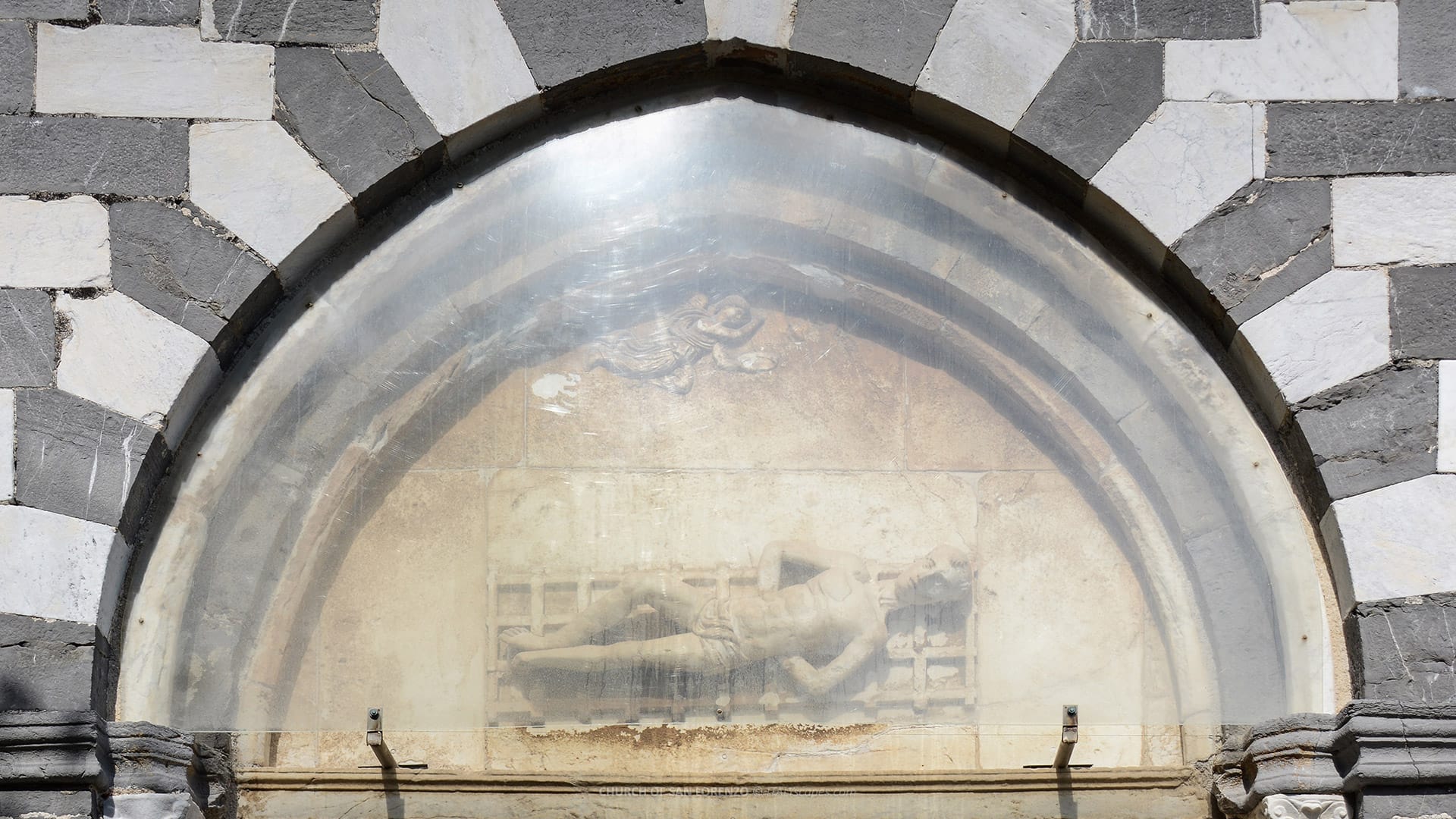
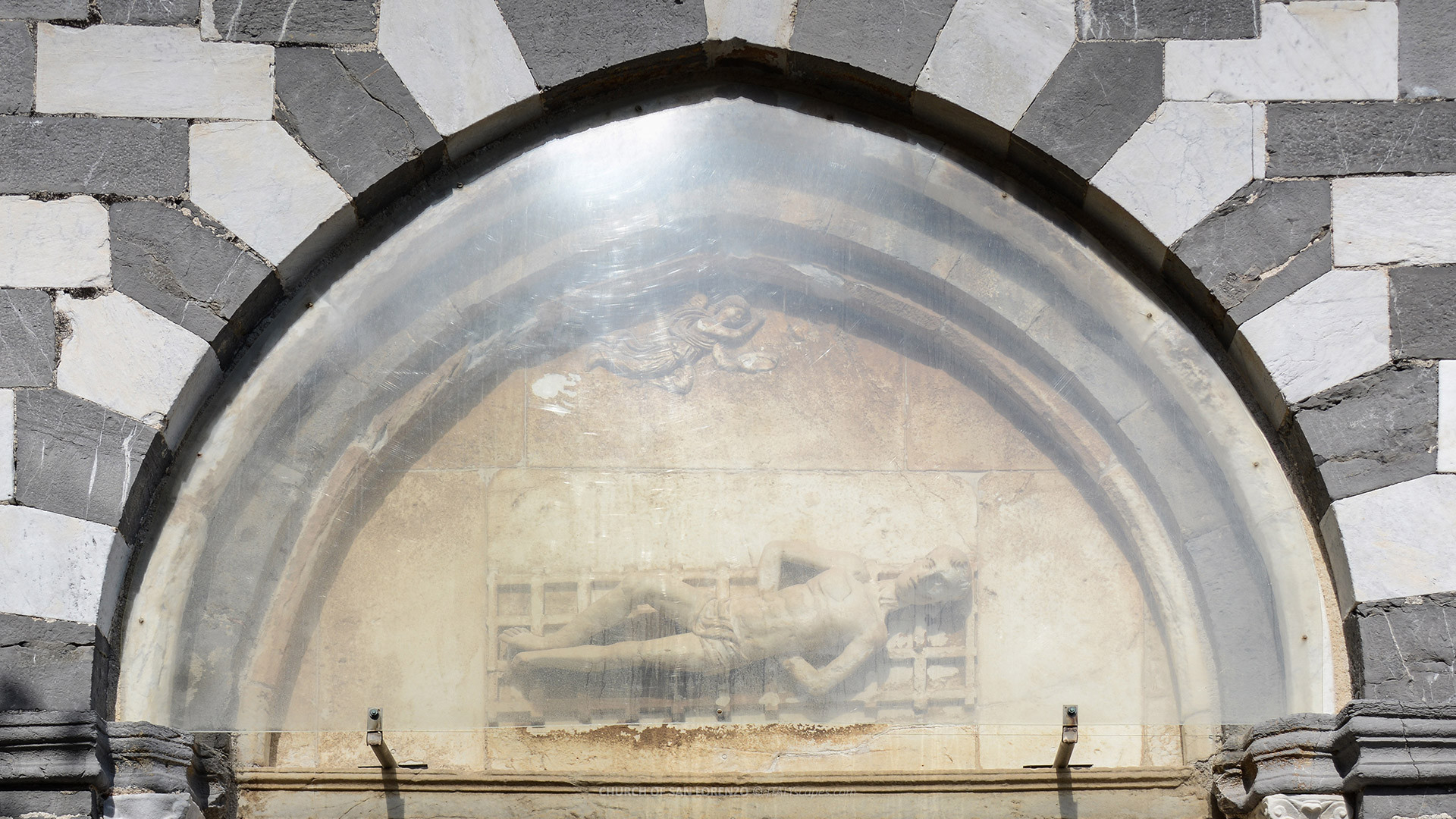
Lunette of the portal depicting the martyrdom of Saint Lawrence
How to Get to the Church of San Lorenzo
The Church of San Lorenzo is located approximately 180 meters from Piazza Bastreri, the main square of Portovenere and the principal arrival point for visitors entering the historic center.
From Piazza Bastreri, the church can be reached on foot in just a few minutes. The route involves a short but noticeable climb, reflecting the church’s elevated position above the town.
The path leading to the sanctuary is clearly signposted and passes through narrow streets that preserve the medieval character of Portovenere. Along the way, visitors can enjoy views over the harbor and surrounding buildings.
Despite its hilltop location, the Church of San Lorenzo is easily accessible for most visitors and is commonly included in walking itineraries through the historic center.
Sources: -
Photos
-
Map
-
Reviews