-
About
Table of Contents
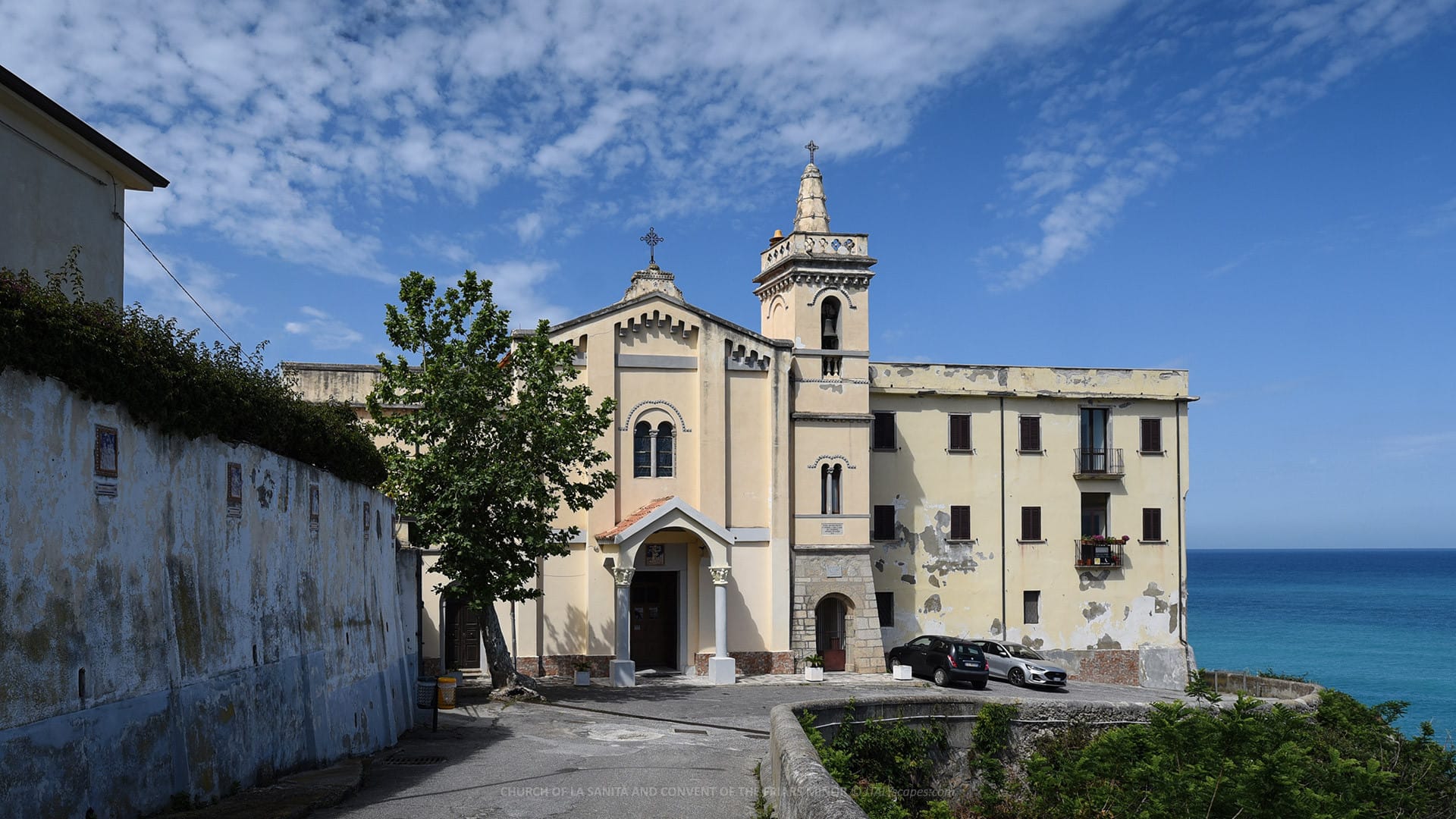
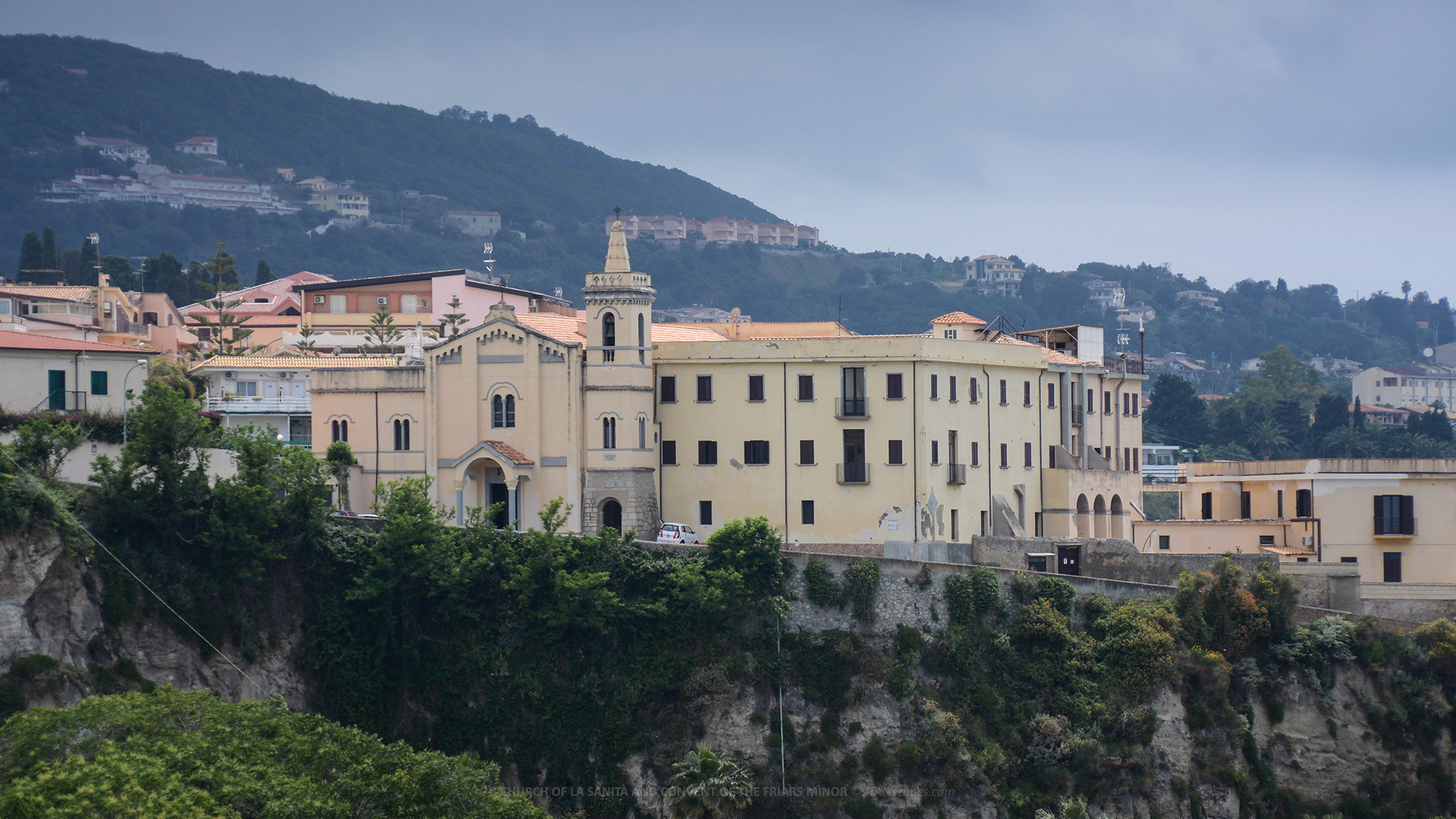
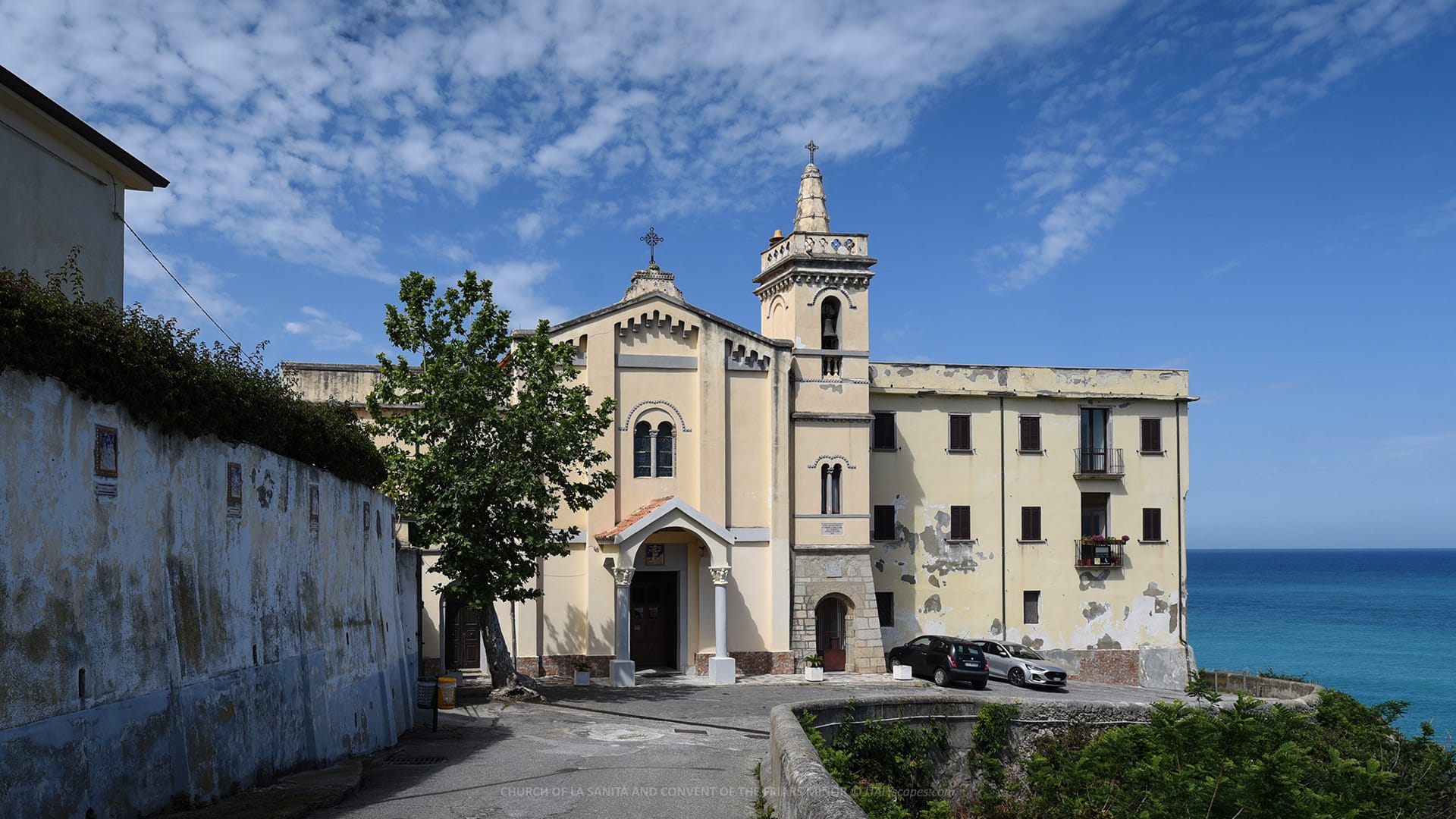
The Church of La Sanità and Convent of the Friars Minor is one of the historic religious complexes of Tropea. Located in the old urban area of the town, the complex is connected with Franciscan spirituality, local devotion, monastic architecture, and the dramatic coastal landscape of Tropea.
The church is also known in Italian as Chiesa e Convento dei Frati Minori “La Sanità”. It is sometimes associated with the name Chiesa della Sanità or with the Capuchin tradition, because the complex was originally founded by the Capuchin Fathers before later becoming connected with the Friars Minor.
The religious complex stands in the area of Via Ospedale, close to the historic center of Tropea. The complex includes both a church and a convent. The convent has a cloister and today still hosts the Friars Minor, preserving the religious function of the place.
Short History of the Church of La Sanità and Convent of the Friars Minor
The history of the Church of La Sanità and Convent of the Friars Minor belongs to the broader Franciscan presence in Calabria. Tropea had strong religious traditions, and the arrival of Franciscan and Capuchin communities contributed to the spiritual and urban development of the town over several centuries.
The complex was founded by the Capuchin Fathers, a branch of the Franciscan family known for poverty, preaching, and simple conventual life. Construction of the complex began in 1598, placing its origins at the end of the 16th century, during a period of strong religious activity in southern Italy.
Another historical reference connects the foundation of Santa Maria della Sanità with the year 1595, which confirms that the complex belongs to the final years of the 1500s. The church was associated with the devotion to Madonna della Sanità, represented in the important altarpiece preserved in the building.
A significant later intervention took place in 1885, when the bell tower was reconstructed by De Nardo. The convent later came to host the Friars Minor, continuing the Franciscan character of the place.
Architecture of the Church of La Sanità and Convent of the Friars Minor
The architecture of the Church of La Sanità reflects a monastic plan already used in Calabria. The building has a single nave, a practical and direct layout often associated with convent churches.
The side chapels are separated from the main nave by three arches on pillars. This architectural arrangement gives rhythm to the interior while maintaining the simplicity of the single-nave plan.
The convent forms an essential part of the complex. It includes a cloister, an architectural feature typical of monastic life.
Powered by GetYourGuideArt of the Church of La Sanità and Convent of the Friars Minor
The church’s most valuable artistic element is the carved wooden high altar. The wooden altar has also been described as a valuable work from the beginning of the 18th century.
The high altar is associated with an important altarpiece showing the Madonna della Sanità. This painting dates to the 16th century and is attributed to Giovanni Angelo D’Amato.
In addition to the high altar and altarpiece, the church preserves paintings in the nave and sacristy.
How to Get to Church of La Sanità and Convent of the Friars Minor
The church is located in Tropea’s historic area, in the zone of Via Ospedale and close to the streets of the old town.
Getting to the the Church of La Sanità on foot
From Tropea railway station, the walking distance is about 1.1 kilometers. The route usually takes around 20 minutes on foot, depending on pace, stops, and summer crowds.
Getting to the the Church of La Sanità by car
Visitors can approach the historic center of Tropea by car, but parking can be limited, especially during the high season. The old town is not ideal for unnecessary driving, so it is usually better to park in an available public parking area and continue on foot.
Frequently Asked Questions about the Church of La Sanità and Convent of the Friars Minor
Where is the Church of La Sanità located?
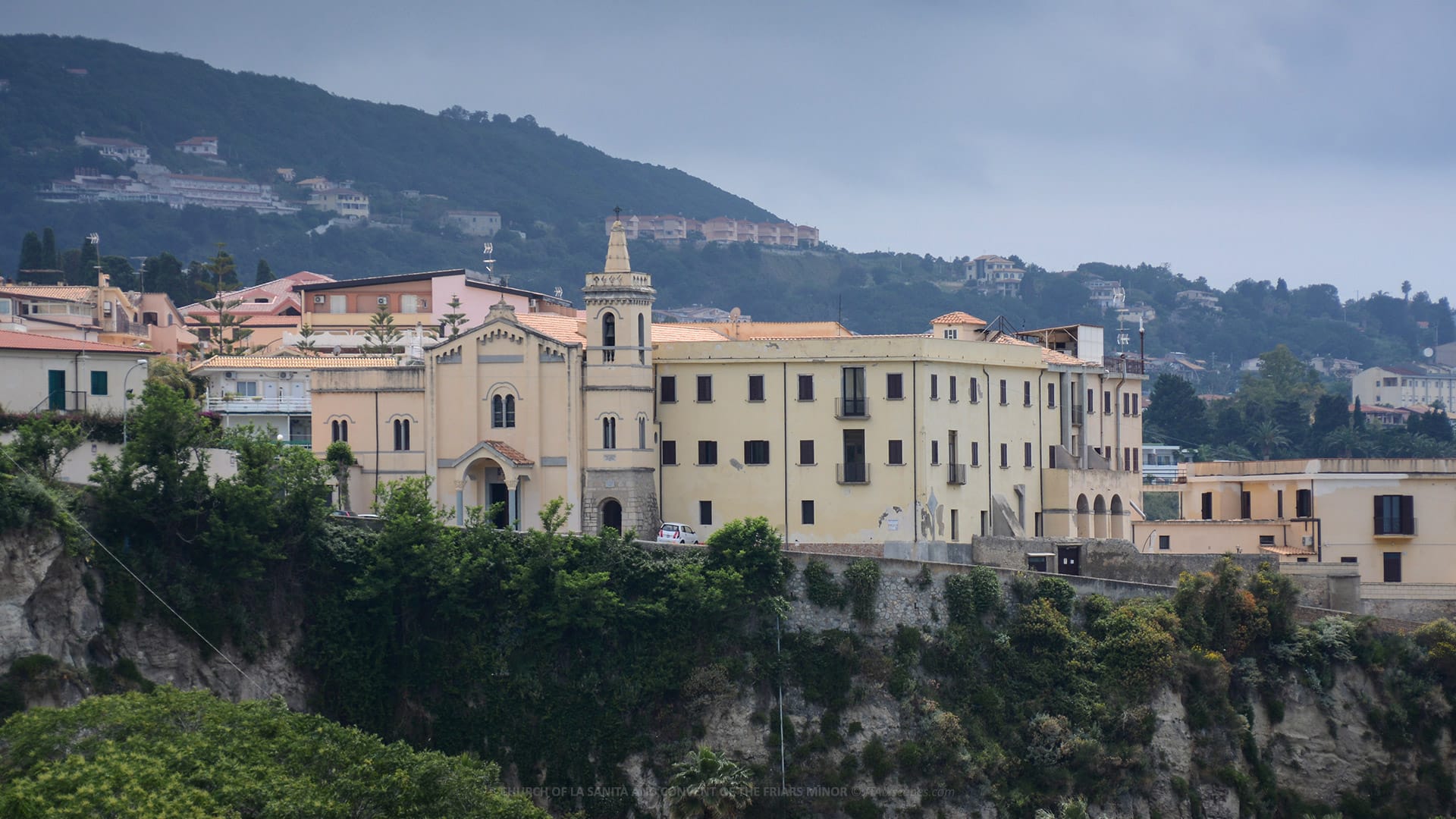
The Church of La Sanità is located in Tropea, inside the historic Franciscan complex also known as the Convent of the Friars Minor.
When was the church built?
The present church and convent date back to the late 16th century, with the Franciscan foundation traditionally connected to the period around 1598.
What can you see inside the church?
Inside, visitors can see the main altar, devotional chapels, religious artworks, and the painting of Madonna della Sanità, attributed to Giovanni Angelo D’Amato.
Why is the convent important?
The convent is important because it preserves the long Franciscan presence in Tropea and reflects the religious, artistic, and social history of the town.
Is the church connected to the Capuchins?
Yes, the complex is often called Chiesa della Sanità dei Cappuccini, although it is also associated with the wider Franciscan tradition in Tropea.
Sources:Powered by GetYourGuide -
Photos
-
Map
-
Reviews