Table of Contents
Beneath the medieval streets of Siena, hidden from the sunlight and the thousands of visitors exploring its historic centre, lies a mysterious underground world. A labyrinth of narrow passages stretches for approximately 25 kilometres beneath the Tuscan city, preserving centuries of history, forgotten beliefs, and extraordinary stories about the creatures of Siena.
These underground tunnels, known as the Bottini di Siena, were constructed primarily to provide water for a city whose geographical position made access to natural water sources particularly difficult. Yet the men who excavated these passages allegedly discovered something far stranger than underground springs and geological formations.
According to local folklore, the darkness beneath Siena was inhabited by two mysterious kinds of creatures: the omiccioli, little beings resembling elves or goblins, and the fuggisoli, frightening apparitions associated with sudden flashes of light. Their appearances supposedly terrified the workers responsible for constructing and maintaining the ancient aqueducts.
The stories belong to a period when religion, superstition, and everyday experience were deeply intertwined. Although there is no evidence that these supernatural beings ever existed, the legends survived in Siena’s cultural memory, becoming part of the remarkable history of an underground network that continues to fascinate visitors today.
The Hidden Waterways of a Thirsty City
Siena occupies a series of hills in central Tuscany, a geographical position that provided important defensive advantages during the Middle Ages. However, unlike many prosperous medieval cities, Siena had no major river flowing through its centre. Its inhabitants consequently faced a persistent problem: securing enough fresh water for a growing urban population.
The surrounding geological formations offered a possible solution. Water infiltrating the area’s porous sandstone and sandy deposits could be intercepted through artificial passages. By excavating beneath the hills, medieval engineers developed a system capable of collecting underground moisture and directing it towards the city’s public fountains through gravity-fed channels.
Water was essential not only for drinking and cooking but also for Siena’s economic activities. Wool processing, leatherworking, agriculture, and milling required reliable supplies. The authorities therefore invested substantial resources in developing an extensive water distribution system, transforming a geographical disadvantage into one of medieval Tuscany’s most impressive engineering achievements.
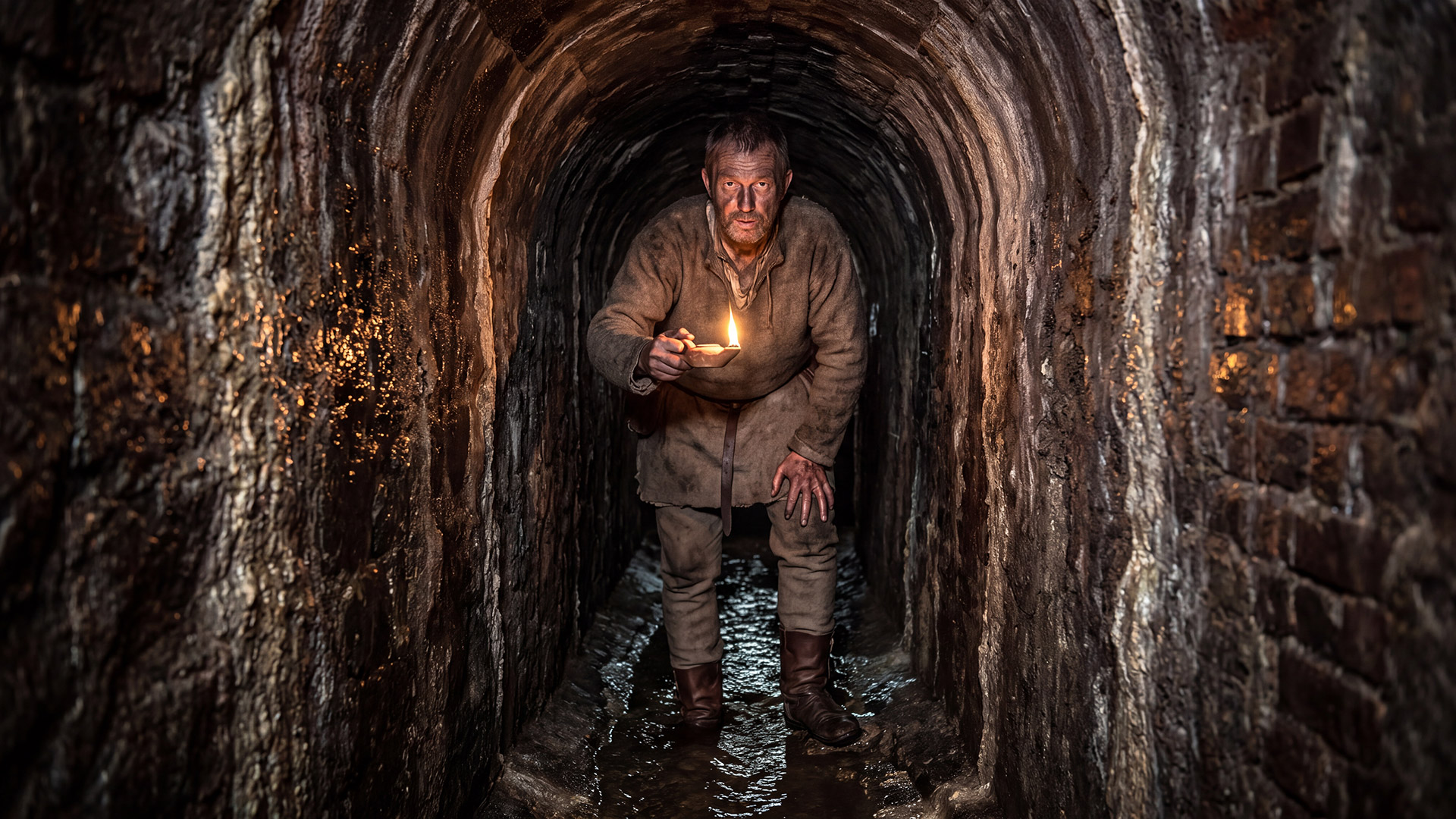
A medieval Guerchi exploring the underground tunnels of Bottini di Siena.
The Construction of the Bottini
The construction of the Bottini took place mainly between the 12th and 15th centuries, although some earlier underground structures may have been incorporated into the system. One passage associated with Fontanella, near Castelvecchio, is considered possibly Etruscan in origin, suggesting that water-management techniques existed here long before the medieval expansion.
The name Bottini probably derives from the medieval Latin term buctinus, recorded in 1226, referring to the barrel-shaped vaults of the galleries. Most passages are approximately 1.80 metres high and slightly less than one metre wide, creating confined corridors through which workers could move while excavating or maintaining the aqueduct.
Along the floor runs a narrow channel called the gorello, which collects and transports water through the network. Its carefully calculated gradient, approximately one metre per kilometre, allows water to flow without mechanical pumping. Mineral deposits have accumulated along some passages, producing limestone incrustations and formations resembling small stalactites and stalagmites.
The underground network consists of two principal systems and numerous secondary branches. The Bottino Maestro di Fontebranda, the older and deeper system, extends approximately 7.5 kilometres, while the Bottino Maestro di Fonte Gaia forms a shallower network of approximately 15.7 kilometres, directing water towards the city’s central districts.
The Guerchi – Men Who Worked Beneath Siena
Building the Bottini required an enormous collective effort. Medieval construction sites employed specialized excavators, ordinary labourers, transport workers, and people responsible for removing excavated material. Women also participated in the construction economy, probably performing certain surface activities. The workers responsible for excavating the passages became known in local tradition as the guerchi or guerci.
Their work was physically demanding. The narrow galleries restricted movement, while excavation proceeded with relatively simple tools. Skilled workers used instruments such as the archipendolo, a triangular device incorporating a plumb line, to establish the correct inclination of the water channels and prevent errors that might compromise the system.
Working conditions also presented serious dangers. Labourers spent long periods underground, often relying on artificial illumination while handling excavation tools and construction materials. The use of torches created additional problems in poorly ventilated passages, and historical accounts of the building campaigns indicate that some workers lost their lives during construction.
Medieval records also describe wages supplemented with provisions, including bread, water, and wine. Local tradition associated the nickname guerchi with the effects of prolonged work away from daylight. Against this background of difficult labour, restricted visibility, and constant danger, stories began circulating about mysterious inhabitants of the subterranean passages.
The Omiccioli – Little Dancers in the Darkness
Among the mysterious inhabitants of Siena’s underground world, the omiccioli were perhaps the most unusual. According to local tradition, these creatures resembled small human beings or elves. Their name evokes the idea of little men, although the surviving accounts provide few precise details about their physical appearance or supposed origins.
Unlike the terrifying monsters associated with many European legends, the omiccioli were generally described as benevolent beings. They supposedly danced through the tunnels, bringing cheerfulness rather than destruction. Their behaviour distinguished them from more threatening supernatural creatures, suggesting that the underground world was not entirely hostile to the humans who entered it.
These strange little figures were said to inhabit the same narrow passages where the guerchi performed their daily work. The legends describe encounters between workers and mysterious beings, but do not preserve a reliable sequence of individual incidents. The dancing creatures remain characters of local folklore rather than documented historical witnesses.
An intriguing variation describes the omiccioli as small figures dressed like miners, wandering through the galleries beneath Siena. This detail gives them an unusually human appearance, connecting the imaginary inhabitants of the tunnels directly with the occupation of the men who allegedly encountered them during their work.
The Fuggisoli – Terrifying Flashes Beneath the City
If the omiccioli represented the friendlier side of the underground legends, the fuggisoli embodied a more frightening presence. The surviving stories describe them primarily through their sudden appearances, often resembling flashes of light that emerged unexpectedly from the darkness before disappearing just as quickly.
Their most distinctive characteristic was not a particular face, body, or animal shape, but the abruptness of their manifestation. In the confined galleries, an unexpected flash could be particularly alarming. The accounts emphasize the startling nature of these encounters rather than offering a detailed physical description of the supposed creatures.
According to local tradition, the guerchi sometimes abandoned their work and fled after encountering these mysterious apparitions. The stories associate the fuggisoli with fear and confusion, suggesting that their unpredictable appearances made them considerably more disturbing than the little dancing figures allegedly inhabiting the same underground environment.
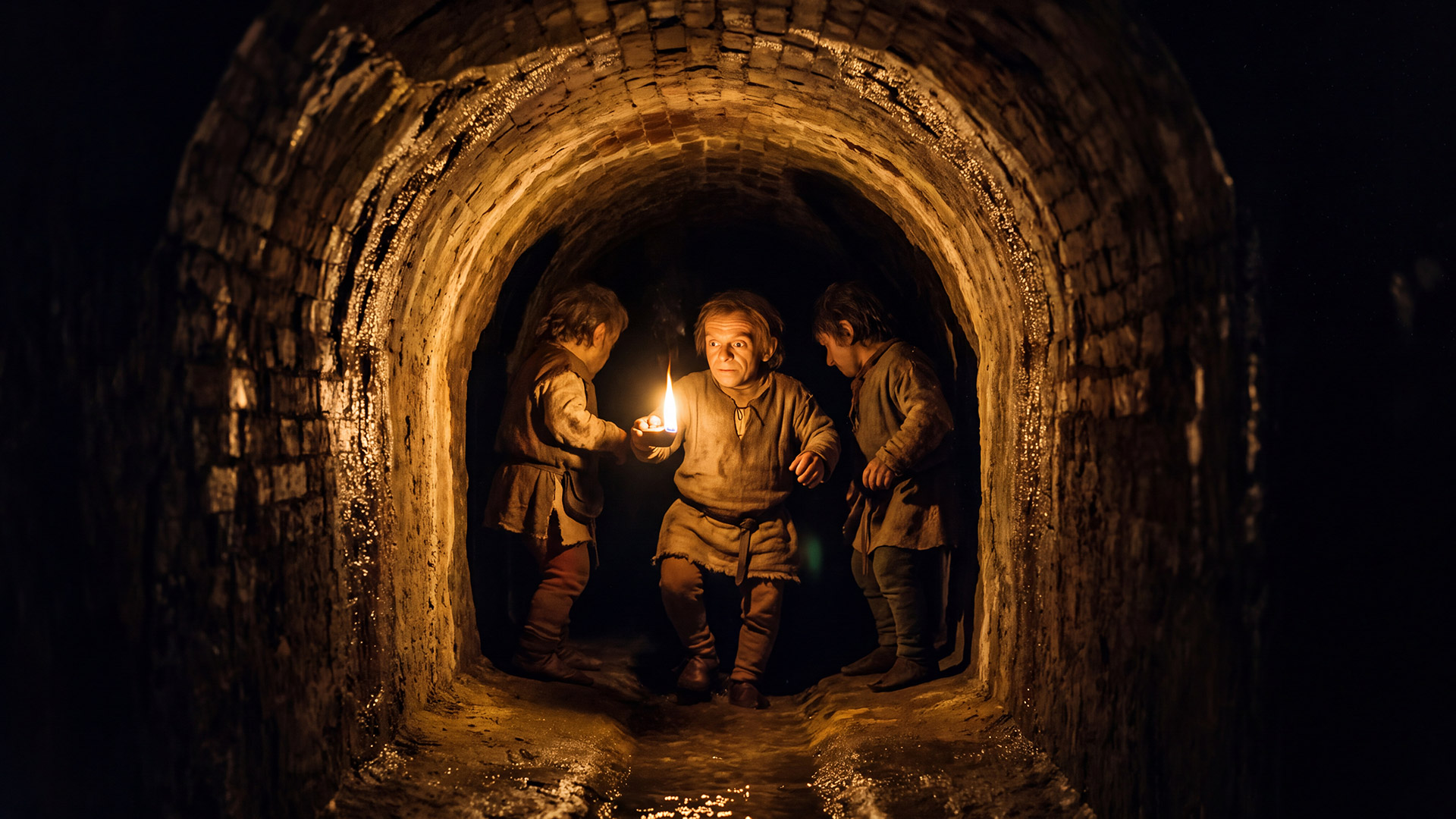
Legendary Omiccioli creatures in the underground tunnels beneath Siena.
Mischievous Spirits and Poisonous Creatures
Some versions of the legend describe the fuggisoli as malicious and mischievous beings, capable of producing blinding flashes before vanishing. Their frightening behaviour stands in sharp contrast to the cheerful omiccioli, establishing two different categories of supernatural inhabitants within Siena’s underground folklore.
Another account mentions a mysterious creature called the fuggisole, described as a small animal believed capable of poisoning people. Although its name resembles fuggisoli, this description differs from the better-known accounts of luminous apparitions. The various traditions should therefore not be treated as one completely consistent story.
These variations reveal how the legends developed through different descriptions of the underground world. The fuggisoli have no universally established appearance, and the surviving accounts do not identify a specific period when they supposedly disappeared. Their enduring reputation depends instead on the mysterious flashes of light associated with their name.
The Diana – Siena’s Legendary Underground River
The omiccioli and fuggisoli were not the only mysteries associated with Siena’s subterranean world. Medieval inhabitants also believed that a substantial river flowed somewhere beneath the city. This supposedly hidden watercourse became known as the Diana, inspiring centuries of speculation, expensive excavation projects, and increasingly elaborate expectations.
According to tradition, the sound of flowing water could sometimes be heard around Porta Ovile, in the northeastern part of Siena, and Pian dei Mantellini, towards the southwest. These reports encouraged the belief that an underground river crossed the city, potentially providing a solution to its persistent water shortages.
In 1176, according to historical tradition, friars from the Carmelite convent discovered a significant underground water source while excavating a well. The discovery strengthened belief in the Diana’s existence. In 1295, Siena’s General Council authorized further investigations, continuing the costly search for a river that nobody had conclusively identified.
The legendary river became famous enough to appear in Dante Alighieri‘s Divine Comedy. In Purgatorio, the character Sapia refers to the Sienese search for the Diana while criticizing her fellow citizens’ misplaced ambitions. Despite extensive investigations and considerable expenditure, no such underground river was ever discovered.
Crosses and Sacred Images – Faith Beneath Siena
The Bottini preserve physical evidence of the beliefs and anxieties associated with underground labour. In several passages, workers left crosses carved into the rock, sometimes using the same tools employed for excavation. These religious symbols transformed sections of the galleries into places where faith accompanied demanding manual work.
Other passages contain small terracotta images of the Virgin Mary, placed in niches or incorporated into the tunnel walls. Such devotional objects were intended to provide spiritual protection. Their presence illustrates the importance of religious practice among the people who constructed and maintained Siena’s underground water system.
The relationship between these images and the supernatural legends is particularly intriguing. Although the carvings cannot establish that workers encountered mysterious beings, they demonstrate that the underground environment inspired genuine concern. For medieval labourers facing potentially fatal accidents, divine protection offered reassurance against dangers that were not always visible or predictable.
The Underground Tunnels During War and Conflict
The Bottini were more than an extraordinary engineering achievement or the setting for mysterious legends. Their concealed passages also presented strategic opportunities during military conflicts. A network capable of passing beneath parts of Siena’s defensive system could potentially provide access to locations that were difficult to approach from above.
During the Siege of Siena in 1554, forces associated with Emperor Charles V attempted to exploit the underground aqueducts to penetrate the city. The operation reportedly came close to succeeding, illustrating how an infrastructure originally designed for civilian needs could become a potential weakness in medieval fortifications.
Centuries later, the tunnels again attracted military interest. In June 1944, during the German occupation of Siena, partisans considered using the network as part of a plan to liberate the city. The operation was ultimately abandoned, leaving another episode in the remarkable history of these concealed passages.
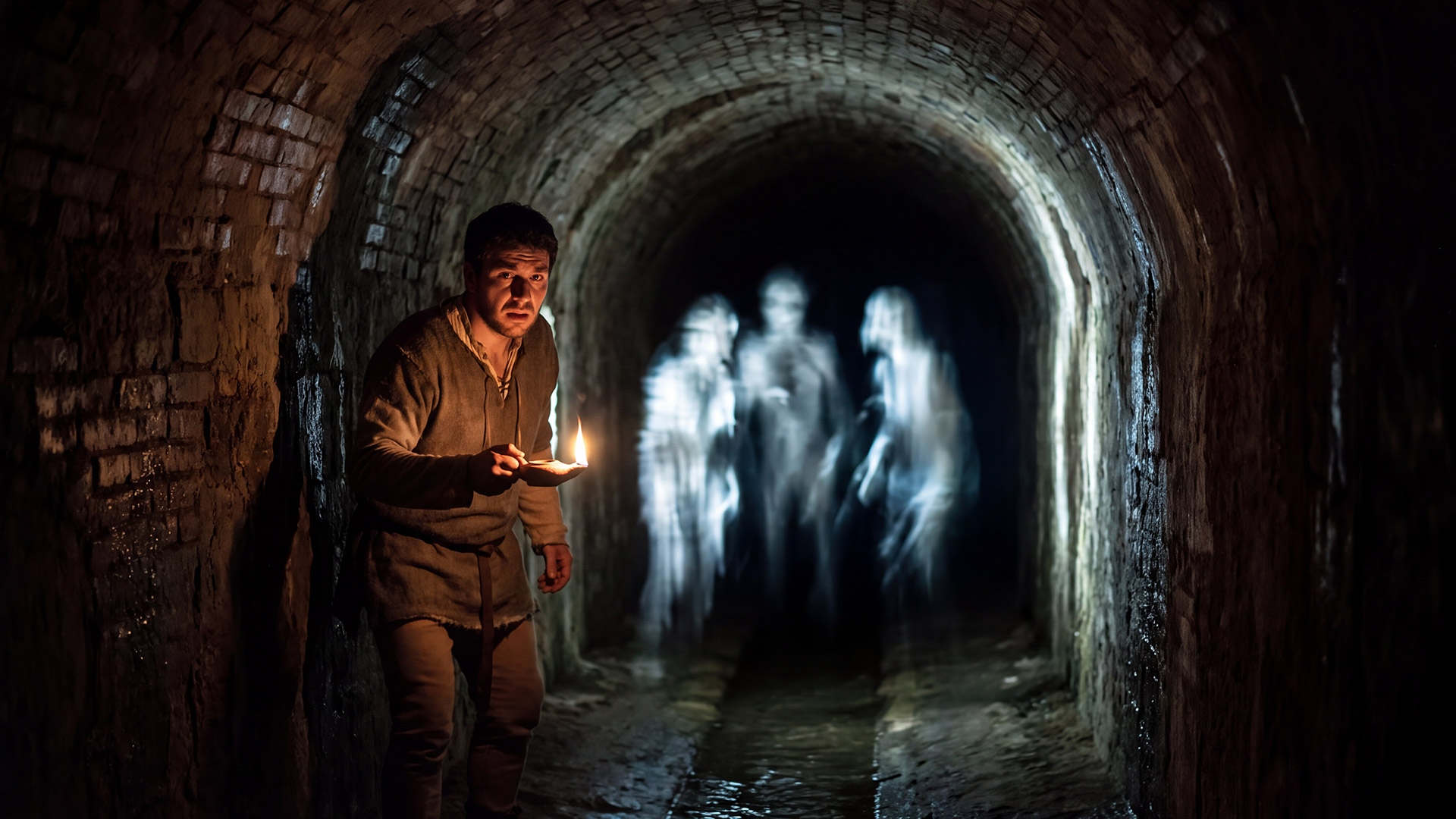
Mysterious Fuggisoli apparitions inside the underground tunnels of Siena.
What Really Caused the Mysterious Apparitions?
The stories of the omiccioli and fuggisoli raise an obvious question: what did the workers actually experience? The historical evidence confirms that these legends became associated with the underground tunnels, but it does not demonstrate the existence of supernatural beings. The identity of the alleged apparitions remains a matter of folklore, rather than established historical fact.
One possible explanation involves the unusual visual conditions inside the galleries. Limited illumination, irregular stone surfaces, and constantly changing shadows could have affected the workers’ perception of their surroundings. Reflections from moisture or mineral deposits might also offer natural explanations for certain reported flashes, although these interpretations remain hypothetical.
Another explanation concerns the workers’ physical condition. Their demanding labour, prolonged exposure to darkness, and the psychological effects of dangerous working conditions could have influenced their experiences. The consumption of wine, documented as part of their provisions, has also been suggested as a possible contributing factor, without proving that intoxication caused any particular vision.
Nevertheless, reducing every story to a single explanation would oversimplify Siena’s underground folklore. The omiccioli, fuggisoli, and other mysterious traditions developed within a specific historical environment. Their significance lies in the relationship between human experience and the supernatural, revealing how unfamiliar places could inspire elaborate stories that survived long after their supposed witnesses disappeared.
The Bottini di Siena Today
The importance of the medieval aqueduct system gradually changed during the early 20th century. A modern water supply brought water from springs near Vivo d’Orcia, on Monte Amiata, to Siena’s domestic distribution network. The ancient Bottini consequently lost their central role in supplying households, although parts of the system continued operating.
Today, the network remains an important element of Siena’s historical infrastructure. Water still flows through sections of the medieval passages, supplying historic fountains and supporting other limited uses. The municipality and local organizations, including Associazione La Diana, participate in activities intended to document, monitor, preserve, and promote this extraordinary underground heritage.
Certain sections of the Bottini can be explored through organized visits, although access is restricted and tours are not available throughout the year. Advance booking is required, and visitors must follow the applicable safety regulations. These restrictions reflect the narrow dimensions, environmental conditions, and continuing water-management functions of the ancient passages.
The underground tunnels of Siena preserve something that its visible monuments cannot fully reveal: the relationship between an ambitious medieval city and the people who struggled to sustain it. The creatures of Siena survive only in legend, but the passages that inspired their stories remain real, hidden beneath streets where everyday life continues above centuries of history.
Images generated with Nano Banana Pro / Google AI Studio