Table of Contents
The Monza Circuit, officially Autodromo Nazionale Monza, is one of the oldest permanent racing circuits in the world and one of the defining venues of Formula 1. Opened in 1922 inside Monza Park, it became famous for extreme speed, long straights, slipstream battles, historic banking, and the Italian Grand Prix.
Known internationally as the Temple of Speed, the Monza Circuit has always placed unusually high demands on cars and drivers. Modern Formula 1 machines still spend much of a lap at full throttle, but the circuit of the early and mid-20th century combined comparable ambitions for speed with primitive barriers, limited run-off areas, exposed spectators, and fragile racing cars.
That combination produced some of motorsport’s greatest races, but also some of its darkest days. Emilio Materassi, Alberto Ascari, Wolfgang von Trips, Jochen Rindt, Ronnie Peterson, and other competitors became permanently connected with Monza through fatal accidents, while spectators, marshals, and motorcycle racers also lost their lives at the circuit.
Monza’s history is therefore also a history of motorsport safety evolving through tragedy. The circuit repeatedly changed its layout, removed dangerous sections, introduced chicanes, expanded run-off areas, improved barriers and medical facilities, and adapted to increasingly strict international standards without abandoning the high-speed character that made it famous.
The History of Monza Circuit
Building the Temple of Speed
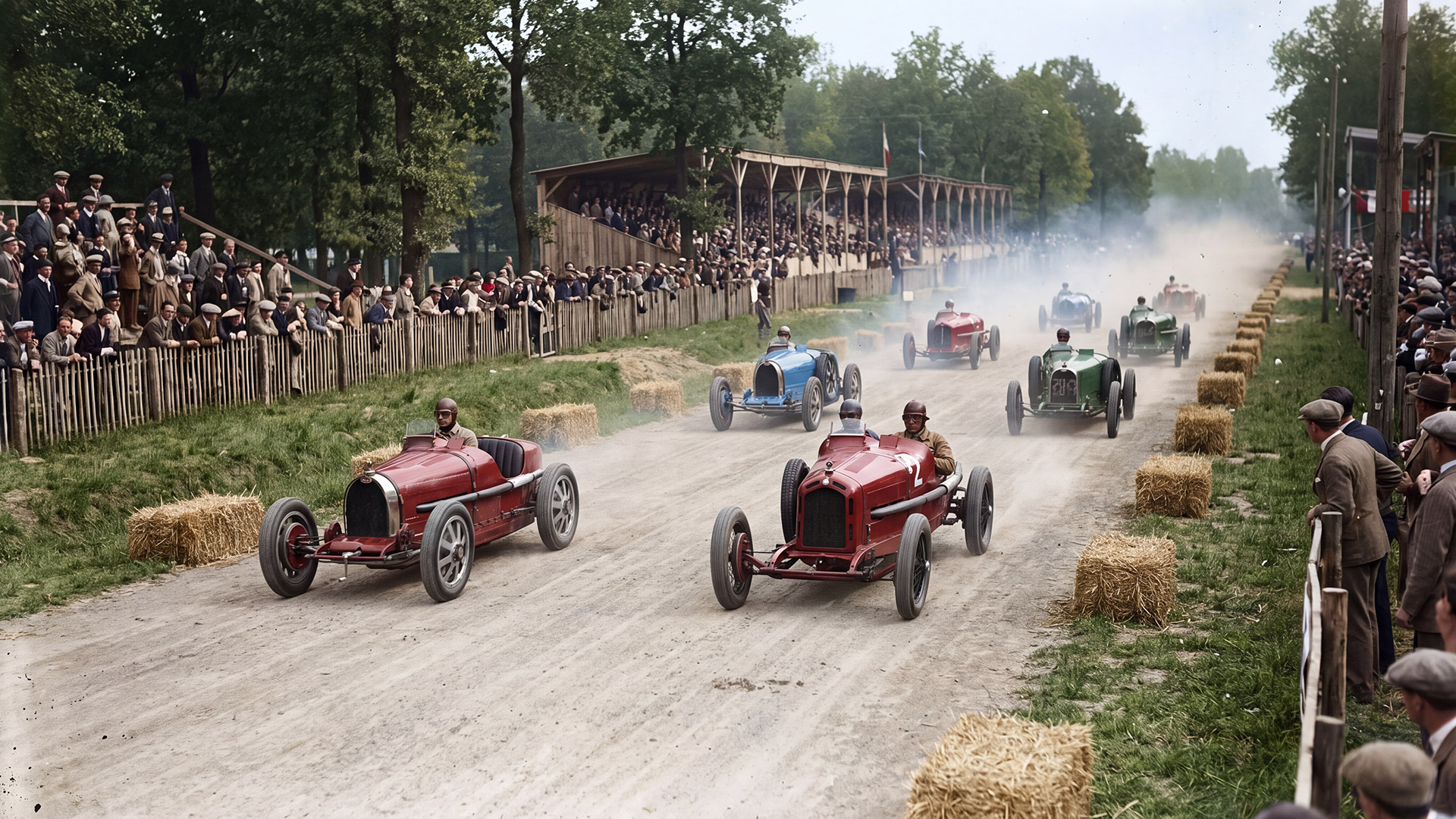
The Automobile Club of Milan decided to build the circuit in January 1922, partly to celebrate the organization’s 25th anniversary. Italy’s automobile manufacturers also needed a permanent facility where competition, endurance testing, technological development, and high-speed experiments could take place away from ordinary public roads.
Architect Alfredo Rosselli prepared the original design. After environmental concerns forced changes to the first proposal, construction began in May 1922. Around 3,500 workers helped complete the facility in only 110 days, an extraordinary achievement considering the size of the project and the construction technology available at the time.
The original circuit measured approximately 10 kilometres and combined two distinct sections. A 5.5-kilometre road course incorporated conventional corners, while a 4.5-kilometre high-speed loop used elevated bends connected by long straights. The two courses crossed at different levels near the Serraglio, avoiding a direct intersection between competing cars.
Monza Circuit was built in Monza inside the enormous Monza Park, the former royal estate extending behind the Villa Reale di Monza. The location gave the circuit exceptional space and natural surroundings, but construction also had to respect a historic landscape containing woodland, avenues, agricultural areas, villas, and structures connected with the former royal domain.
The circuit officially opened on September 3, 1922. One week later it hosted the Italian Grand Prix, immediately establishing Monza Circuit as Italy’s principal racing venue. The design emphasized speed from the beginning, with the original banked curves theoretically permitting velocities approaching 190 kilometres per hour, exceptional figures for the early 1920s.
The First Warnings
Cars became faster almost immediately. The original philosophy assumed that drivers would exploit the enormous track with relatively few artificial restrictions, while spectator protection remained rudimentary by modern standards. Barriers, fences, ditches, earth banks, and grandstands stood much closer to racing cars than would ever be permitted today.
The first years already demonstrated the consequences. Monza experienced several serious incidents before the end of the 1920s, but the 1928 Italian Grand Prix became the first catastrophe severe enough to force major reconsideration of how the circuit was used and how spectators were protected.
Alternative layouts followed. Vincenzo Florio developed the so-called Florio Circuit, using existing portions of the facility while avoiding some of the most dangerous high-speed sections. Organizers experimented repeatedly with layouts, links, chicanes, and different combinations rather than treating the original ten-kilometre course as untouchable.
The complete circuit nevertheless returned during the early 1930s. After another disastrous day in 1933, organizers again reduced speeds and experimented with artificial chicanes. By 1938, more extensive reconstruction had begun, including demolition of the original banked curves and creation of a redesigned road course measuring approximately 6.3 kilometres.
War, Reconstruction and the Return of Grand Prix Racing
Motor racing stopped during the Second World War, and the circuit was used for purposes completely unrelated to sport. Sections housed administrative archives and displaced activities, while military vehicles eventually occupied large areas. Allied armoured vehicles crossing the main straight in 1945 damaged the racing surface shortly before the war ended.
The Automobile Club of Milan approved a comprehensive restoration in 1948. In approximately two months, the Monza Circuit returned to competitive use. Grand Prix cars raced there again that autumn, demonstrating how important the circuit had already become to Italian motorsport despite the damage and interruptions of the previous decade.
When the Formula 1 World Championship was established in 1950, the Monza Circuit became one of its core venues. The Italian Grand Prix has been held there in every championship season except 1980, when the race moved temporarily to Imola while major modernization work was being undertaken at Monza.
The association between Formula 1, Ferrari, and the tifosi rapidly made the circuit internationally famous. Monza’s long straights encouraged low-drag cars and close slipstream racing, while the Italian crowd created an atmosphere rarely matched elsewhere. Unfortunately, the pursuit of maximum velocity continued to expose weaknesses in circuit design and car construction.
The Great Banking Returns
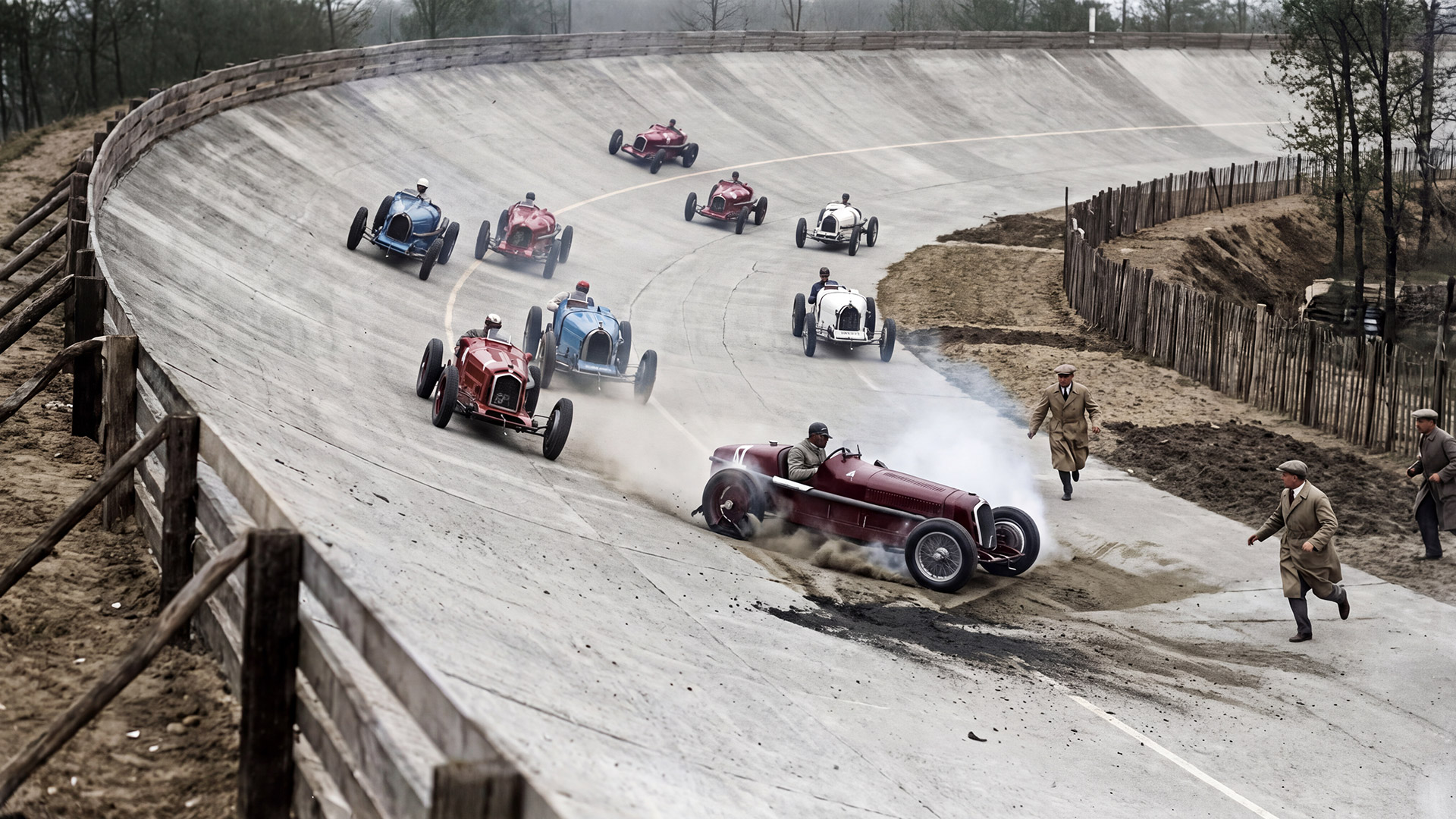
In 1955, the Monza Circuit underwent another enormous redevelopment. A new high-speed oval recreated the philosophy of the original circuit using reinforced-concrete banking rather than the earlier earth-supported curves. Combined with the road course, it again produced a ten-kilometre configuration designed for exceptionally high average speeds.
The new oval measured approximately 4.25 kilometres. Its two great banked curves reached gradients approaching 80 percent near their upper edges and were theoretically designed for speeds around 285 kilometres per hour. Their concrete surface and brutal transitions imposed severe mechanical loads on cars and drivers.
The road course was also modified. Its central section was shortened and a new sweeping final corner was created with a gradually increasing radius. This became the Curva Parabolica, one of Monza’s most famous corners and later the scene of incidents that would permanently influence Formula 1 history.
The combined road-and-banking layout was used for the Italian Grand Prix in 1955, 1956, 1960, and 1961. It also hosted record attempts and the extraordinary 500 Miglia di Monza events, where Indianapolis-style machinery exploited the banking at sustained speeds that pushed cars, tyres, suspensions, and drivers toward their mechanical limits.
By the early 1960s, however, increasingly light rear-engined Grand Prix cars were poorly suited to the violent loading produced by the banking. After the 1961 Italian Grand Prix, Formula 1 never again used the banked sections as part of the championship race, although other categories continued to use them for several years.
The Last Years of the Unrestricted High-Speed Track
Formula 1 returned to the road course alone, but the Monza Circuit remained exceptionally fast. Aerodynamic development, wider tyres, more powerful engines, and lighter cars progressively increased cornering speeds. The circuit became famous for huge groups of cars travelling together in the slipstream, often separated by only fractions of a second.
The 1971 Italian Grand Prix represented the ultimate expression of that era. Peter Gethin won after five cars crossed the finishing line within roughly six-tenths of a second. His average speed exceeded 242 kilometres per hour, an extraordinary figure for a race run before Monza’s modern system of speed-reducing chicanes.
That race also demonstrated why change was unavoidable. Cars were approaching major bends at increasingly extreme speeds while barriers and run-off areas remained inadequate. Formula 1 had reached a point where simply improving cars without fundamentally changing circuits was no longer acceptable to drivers or governing bodies.
The Greatest Tragedies at Monza Circuit
Emilio Materassi and the 1928 Italian Grand Prix
On September 9, 1928, Emilio Materassi was competing in the Italian Grand Prix when his Talbot left the circuit on the main straight while he was attempting to overtake another car at very high speed. The precise sequence that caused him to lose control has never been established with complete certainty.
The car crossed the protective area and entered a section occupied by spectators. Materassi was killed together with at least 22 spectators, while many others were injured. Some historical accounts give higher casualty figures, but the confirmed death toll alone made it one of the most serious accidents in pre-war Grand Prix racing.
The disaster exposed the vulnerability of spectators standing close to racing surfaces protected by barriers incapable of containing a heavy racing car travelling at approximately 200 kilometres per hour. Monza responded by changing how the circuit was used and experimenting with alternative configurations intended to reduce exposure to the fastest sections.
The Italian Grand Prix disappeared from Monza temporarily, while other races used different parts of the facility. The accident was an early demonstration of a lesson motorsport would repeatedly learn: increasing vehicle performance required simultaneous improvements in spectator separation, barriers, run-off areas, and circuit geometry.
The Black Day of Monza in 1933
September 10, 1933 became known as the Black Day of Monza. The Italian Grand Prix had taken place earlier, but an additional Monza Grand Prix was scheduled that afternoon. The event used heats followed by a final, with cars racing on sections incorporating the high-speed banking.
During an earlier heat, drivers reported oil on the South Curve. Officials attempted to clean the surface and applied sand, but conditions remained dangerous. In the second heat, Giuseppe Campari and Baconin Borzacchini entered the banking while fighting near the front of the field and both lost control.
Campari’s Alfa Romeo left the banking and crashed violently, killing him. Borzacchini’s Maserati also overturned, leaving him critically injured; he later died in hospital. Other cars became involved, although their drivers survived. The deaths were particularly shocking because Campari and Borzacchini were among the best-known racers of their generation.
Racing nevertheless continued. During the final, Polish driver Stanisław Czaykowski suffered another accident close to the same part of the South Curve. His Bugatti crashed and caught fire, killing him and completing a day in which three leading international drivers died at essentially the same section of the circuit.
The consequences were substantial. Organizers again adopted alternative layouts and artificial chicanes, while the full original circuit became increasingly difficult to justify. Monza’s reputation for speed had developed faster than the technologies available to control the consequences when cars left the racing surface.
Alberto Ascari – A Fatal Test in 1955
Alberto Ascari’s death did not occur during a Formula 1 Grand Prix, but it became one of Monza’s most famous tragedies. Ascari was Formula 1 World Champion in 1952 and 1953, and remains one of Italy’s most successful racing drivers, closely associated with Ferrari despite joining Lancia before his death.
On May 26, 1955, Ascari visited the Monza Circuit while Eugenio Castellotti was testing a Ferrari sports car. Only four days earlier, Ascari had survived a remarkable accident at Monaco when his Lancia entered the harbour. At Monza, he unexpectedly decided to drive several laps despite not originally being scheduled to test.
Driving a Ferrari 750 Monza sports car, Ascari lost control during his third lap at the fast Curva del Vialone. The car overturned and he suffered fatal injuries. Investigations never produced a universally accepted explanation for why a driver renowned for precision suddenly lost control at that particular point.
The corner was subsequently associated permanently with his name. Later modifications replaced the old Vialone with the Variante Ascari, a sequence that remains one of the best-known sections of the current circuit. It serves as a direct geographical link between modern Formula 1 and one of Italy’s greatest champions.
Wolfgang von Trips and the Spectator Disaster of 1961
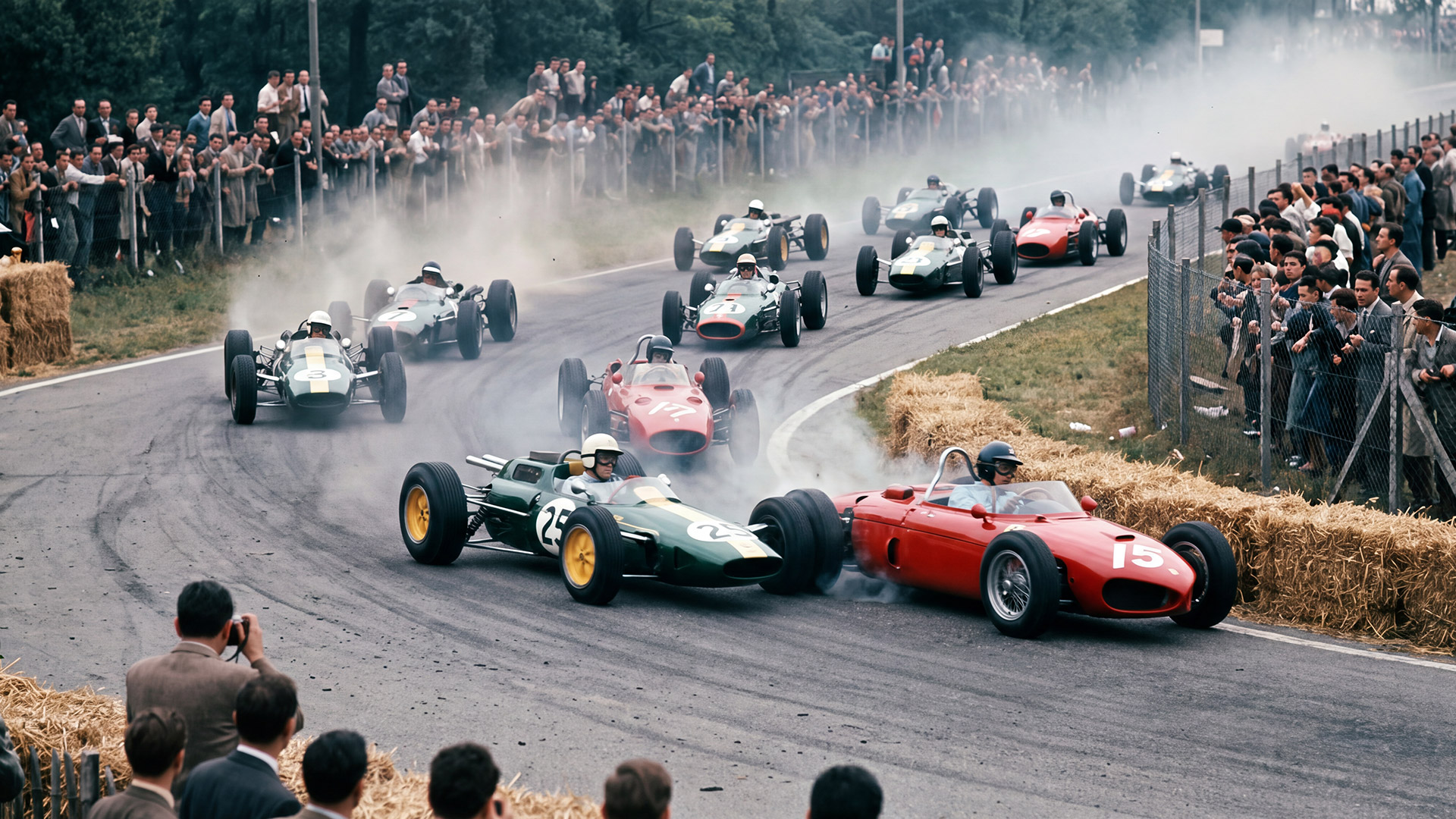
The 1961 Italian Grand Prix remains one of the darkest events in Formula 1 history. Ferrari driver Wolfgang von Trips arrived at the Monza Circuit leading the World Championship and fighting teammate Phil Hill for the title. The race used the full ten-kilometre configuration combining the road circuit with the high-speed banking.
On the second lap, von Trips and Jim Clark made contact while approaching Parabolica at very high speed. The Ferrari left the track, became airborne and struck the spectator area. Von Trips was thrown from the car and killed, while the accident caused catastrophic casualties among people standing behind relatively limited protection.
Fifteen spectators also died, making the crash the deadliest accident involving spectators in Formula 1 World Championship history. Numerous others were injured. The scale of the disaster demonstrated how little margin existed between the racing surface and crowds when a high-speed single-seater became uncontrollable.
The race continued and Phil Hill became World Champion, but sporting results were overshadowed completely by the disaster. Monza’s ten-kilometre configuration was never again used by Formula 1. The banked oval remained part of the physical complex, but Grand Prix cars thereafter stayed on the road course.
The tragedy also illustrated a broader weakness of early Formula 1. Drivers increasingly travelled above 250 kilometres per hour, while catch fencing, guardrails, spectator positioning, and run-off areas had not advanced at a comparable rate. Protecting the crowd became as important as protecting competitors themselves.
Jochen Rindt – Championship Leader Killed in 1970
Nine years after von Trips, another championship leader died near the same end of the circuit. Jochen Rindt arrived at the 1970 Italian Grand Prix with a commanding advantage in the championship after a remarkable season for Lotus, including victories at Monaco, Zandvoort, Clermont-Ferrand, Silverstone, and Hockenheim.
Monza’s long straights encouraged teams to remove aerodynamic drag. Lotus experimented with the Lotus 72 without its normal wings, producing extremely high straight-line speeds but reducing aerodynamic stability. During Saturday qualifying on September 5, Rindt approached Parabolica when the car suddenly deviated under braking.
The Lotus struck the guardrail at approximately 240-270 kilometres per hour, depending on contemporary estimates. A front brake-shaft failure was identified by the official investigation as an important factor, although aspects of the accident have remained debated, including the behaviour of the car and the barrier installation.
Rindt also did not habitually use the lower crotch straps of his safety harness. During the impact he moved forward inside the cockpit and suffered catastrophic injuries. The interaction between car failure, guardrail geometry, and restraint practice made the accident a particularly stark example of how several safety weaknesses could combine.
Remarkably, Rindt’s championship lead survived the remaining races. He became, and remains, the only posthumous Formula 1 World Champion. His death occurred during a period when leading drivers increasingly challenged circuit owners and governing bodies over barriers, medical response, fire protection, and fundamentally unsafe track design.
The Motorcycle Disaster of 1973
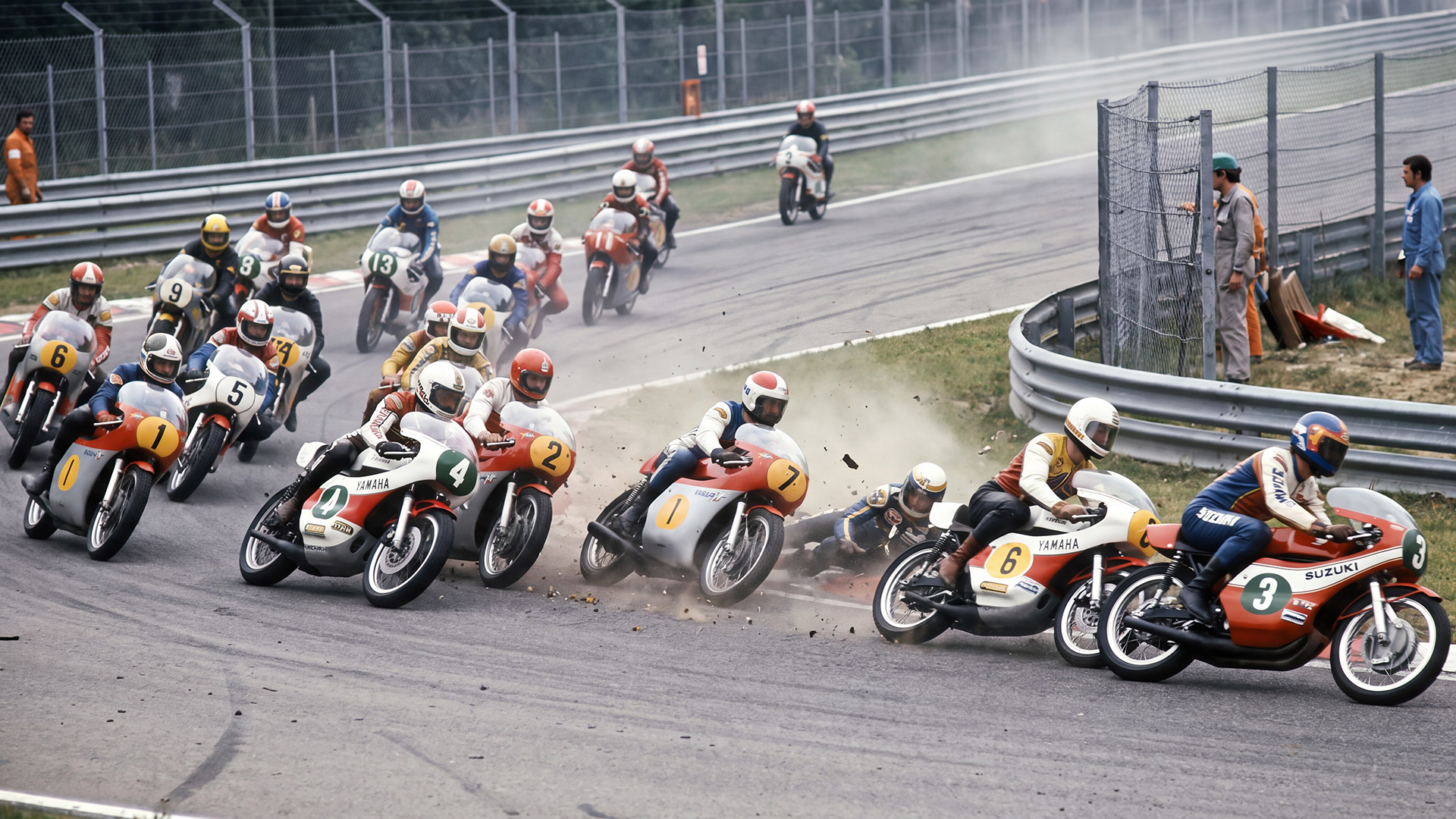
Monza’s danger was not restricted to Formula 1. During the 1973 Grand Prix of Nations motorcycle meeting, a multi-bike accident shortly after the start of the 250cc race killed Italian rider Renzo Pasolini and Finnish World Champion Jarno Saarinen, two of the leading motorcycle racers of their generation.
The precise initiating cause became the subject of long debate, but the consequences were undeniable. Several riders crashed together at extremely high speed, demonstrating that motorcycle racing faced the same problem as Formula 1: dramatically improved tyres and performance had made old circuit geometry and protection systems increasingly inadequate.
Only around forty days later, another race at the Monza Circuit produced further fatalities when Renzo Colombini, Carlo Chionio, and Renato Galtrucco suffered fatal accidents in the same general section. Major international motorcycle racing was consequently removed from Monza for several years while circuit safety continued to evolve.
Ronnie Peterson and the 1978 Italian Grand Prix
Ronnie Peterson entered the 1978 Italian Grand Prix as one of the fastest drivers in Formula 1 and teammate to eventual champion Mario Andretti at Lotus. A chaotic start produced a multi-car collision near the approach to the first chicane, where the field was compressed immediately after accelerating from the grid.
Peterson’s Lotus made contact with other cars and struck the barrier before bursting into flames. James Hunt and Clay Regazzoni were among those who helped pull him from the wreckage. Peterson was conscious, but both legs had suffered multiple severe fractures, while other drivers also received significant injuries.
At hospital, surgeons operated extensively on Peterson’s damaged legs. Initial expectations suggested that he would survive, but during the following hours his condition deteriorated dramatically. A fat embolism developed as fat from damaged bone marrow entered his bloodstream, contributing to organ failure and his death the next morning.
Peterson’s death was particularly disturbing because the crash itself had appeared survivable. The episode demonstrated that motorsport safety involved more than stronger cars and barriers; trauma medicine, extraction procedures, surgical management, and post-accident care were also essential parts of keeping injured drivers alive.
Paolo Gislimberti and the 2000 Italian Grand Prix
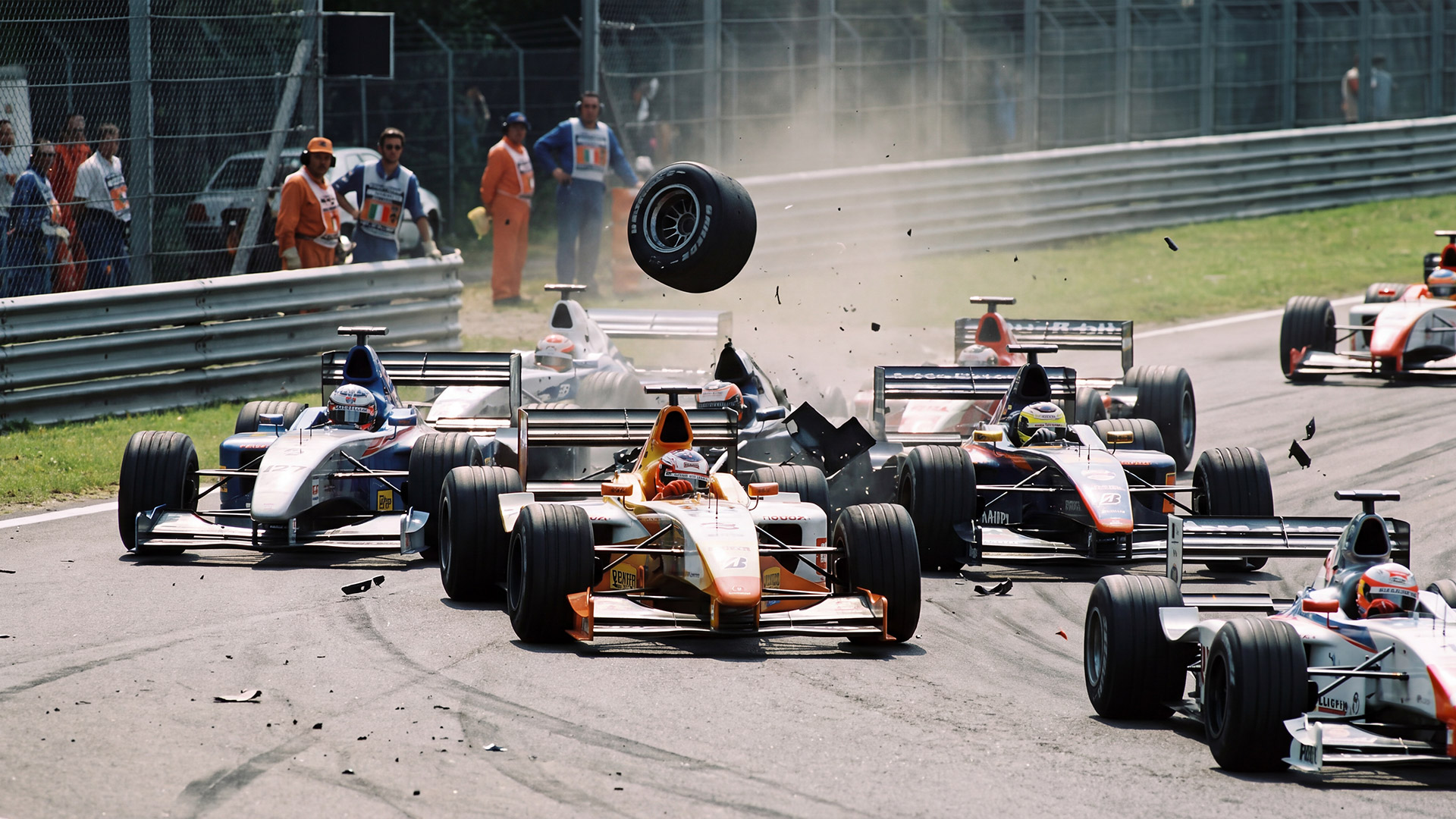
The modern era produced another fatal reminder that safety could never be considered complete. During the first lap of the 2000 Italian Grand Prix, a collision at Variante della Roggia involved several cars, including those of Rubens Barrichello, Heinz-Harald Frentzen, Jarno Trulli, David Coulthard, and Pedro de la Rosa.
Cars struck each other at high speed and debris spread across the circuit. A detached wheel from Frentzen’s Jordan crossed the barrier area and struck volunteer fire marshal Paolo Gislimberti, who was positioned beside the circuit as part of the emergency response team.
Gislimberti suffered fatal head injuries. His death was especially significant because Formula 1 had already introduced wheel tethers in 1999 specifically to reduce the risk of wheels separating during violent crashes. The Monza accident demonstrated that the first generation of tethering systems still required substantial improvement.
After the accident, Formula 1 strengthened requirements relating to wheel retention and vehicle crash resistance. Wheel-tether technology continued to evolve over subsequent years, eventually moving toward multiple independent tethers designed to keep heavy wheel assemblies attached even after major suspension failures.
How Formula 1 Safety Improved at Monza
Chicanes Replace the Flat-Out Philosophy
The most fundamental change came after the extraordinary high-speed races of the late 1960s and early 1970s. In consultation with the Grand Prix Drivers’ Association, the Monza Circuit introduced two chicanes in 1972 to reduce speeds before Curva Grande and the former Vialone, already associated with Ascari’s fatal accident.
The intervention fundamentally changed how Formula 1 cars attacked the Monza Circuit. Instead of travelling almost continuously in top gear from one sweeping corner to another, drivers had to brake heavily for artificial slow sections. Average lap speeds dropped sharply, giving barriers and run-off areas substantially more time and distance to manage accidents.
The first solutions were imperfect. Temporary or relatively basic chicanes themselves generated collisions, demonstrating that reducing speed required careful attention to entry geometry, kerbs, visibility, and the way large groups of cars approached the same braking zone. The Monza Circuit therefore continued refining the concept rather than treating the 1972 layout as permanent.
In 1976, more substantial variants were introduced. The main straight gained a redesigned speed-reducing complex, while Variante della Roggia created another major braking point before the Lesmo section. Ascari had also evolved into a defined left-right-left sequence rather than the original high-speed curve.
These modifications reduced peak approach speeds at crucial corners and changed racing strategy permanently. Monza remained extremely fast, but it was no longer the virtually uninterrupted slipstream circuit that had produced the 1971 five-car finish and the dangerously compressed packs of earlier seasons.
Barriers, Run-Off Areas and Emergency Access
During the late 1970s and 1980s, safety work extended beyond layout changes. Run-off areas were enlarged around Curva Grande and Parabolica, while sand traps and tyre barriers were introduced or expanded to absorb energy after cars left the racing surface.
Guardrails were repositioned around the Lesmo corners, and kerbs at the variants were redesigned with lower profiles. A dedicated service road was created to improve access for emergency vehicles around the Serraglio, addressing the critical question of how quickly rescue crews could reach an accident.
Further work during the 1980s included stronger anti-invasion measures, new braking-area protection, and extensive reinforcement of guardrails. By the end of the decade, around three kilometres of guardrail had been tripled, while tyre barriers increasingly replaced simpler protection in high-risk braking zones.
The medical infrastructure improved as well. A larger medical centre developed at the circuit, including treatment and resuscitation rooms, while communications, closed-circuit television, timing systems, and track surveillance allowed race control to detect incidents and coordinate intervention much more effectively than had been possible during the fatal decades.
The Post-1994 Safety Revolution
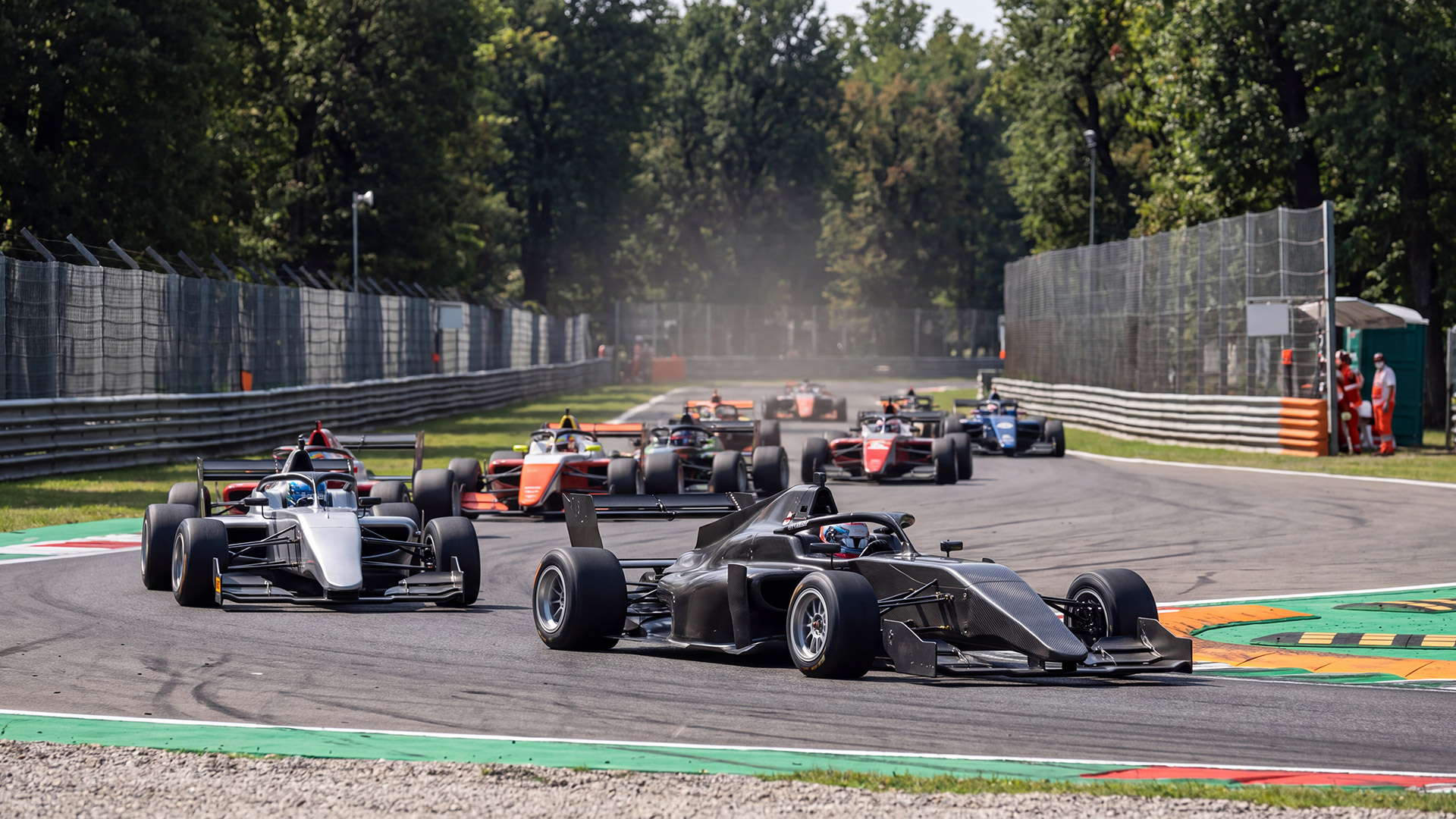
The deaths of Roland Ratzenberger and Ayrton Senna at Imola in 1994 produced a sweeping international review of Formula 1 safety. Monza was among the circuits modified to meet stricter FIA standards during 1994 and 1995, with several corners altered specifically to create more usable run-off space.
The second Lesmo was tightened considerably, while sections around Curva Grande and the Lesmo complex were moved inward. Variante della Roggia was repositioned so that greater lateral safety margins could be created, and run-off at the first chicane was enlarged substantially.
A new and more accessible medical centre was built, together with a rescue heliport. The circuit surface was improved, new kerbs appeared at Ascari and Roggia, and the pit-lane wall was raised. These works represented a modern philosophy in which accident consequences were analysed before cars ever reached the circuit.
Car safety evolved simultaneously. Stronger survival cells, improved crash tests, better helmets, head protection, removable seats, wheel tethers, and eventually the HANS device and Halo transformed the chances of surviving impacts that would almost certainly have been fatal during the eras of Ascari, von Trips, or Rindt.
The 2000 Redesign and Modern Monza Circuit
In 2000, the first chicane was redesigned again. The previous sequence was replaced by a much tighter right-left combination, producing one of the hardest braking zones in Formula 1. Cars arriving from the main straight must lose enormous speed before negotiating the narrow entry to the current Variante del Rettifilo.
The circuit consequently developed an unusual identity: exceptionally long full-throttle sections interrupted by severe braking zones. This arrangement preserves the defining characteristic of the Monza Circuit – very high maximum speed – while preventing cars from entering every major corner at the velocities that characterized the early 1970s.
The 2000 marshal fatality also accelerated attention to detached wheels. Formula 1’s first wheel-tether rules had arrived only the previous season. After Gislimberti’s death, tether strength was increased, while later regulations introduced additional independent restraints and progressively stricter energy-absorption requirements.
Modern Formula 1 safety also depends on technologies that are not visible from the grandstands. Accident-data recorders, FIA-standard barriers, survival-cell testing, sophisticated medical teams, high-speed communications, fire crews, controlled spectator zones, mandatory personal protection, and standardized emergency procedures now operate together rather than relying on one form of protection.
The 2024 Modernization
The Monza Circuit underwent another major modernization before the 2024 Italian Grand Prix, involving an investment of approximately €21 million. The entire racing surface was renewed, kerbs were reconstructed, drainage systems were redesigned, and several underpasses were rebuilt as part of a broader programme upgrading both racing and spectator infrastructure.
The underpass works separated pedestrian and vehicle movements more effectively, while improved drainage addressed increasingly severe weather conditions. The new surface and kerbs changed some driving characteristics, particularly through Ascari, without fundamentally altering Monza’s basic low-downforce, high-speed identity.
By 2026, the circuit remained 5.793 kilometres long and continued to rank among the fastest venues on the Formula 1 calendar. The Italian Grand Prix is contractually secured at the Monza Circuit through 2031, ensuring that modern Grand Prix racing will continue inside the historic park where the circuit was first created more than a century ago.
Monza today demonstrates how far motorsport has moved from the fatalistic culture of earlier decades. Speed has not disappeared; modern Formula 1 cars still reach extraordinary velocities there. What has changed is the expectation that risk must be systematically identified, engineered, tested, and reduced rather than simply accepted as an unavoidable price of racing.
The names Materassi, Ascari, von Trips, Rindt, Peterson, Gislimberti, and many others remain inseparable from the history of the circuit. Their accidents belong to very different eras, yet together they trace the difficult path by which the Temple of Speed became far safer without ceasing to be Monza.
Images generated with Nano Banana Pro / Google AI Studio