-
About
Table of Contents
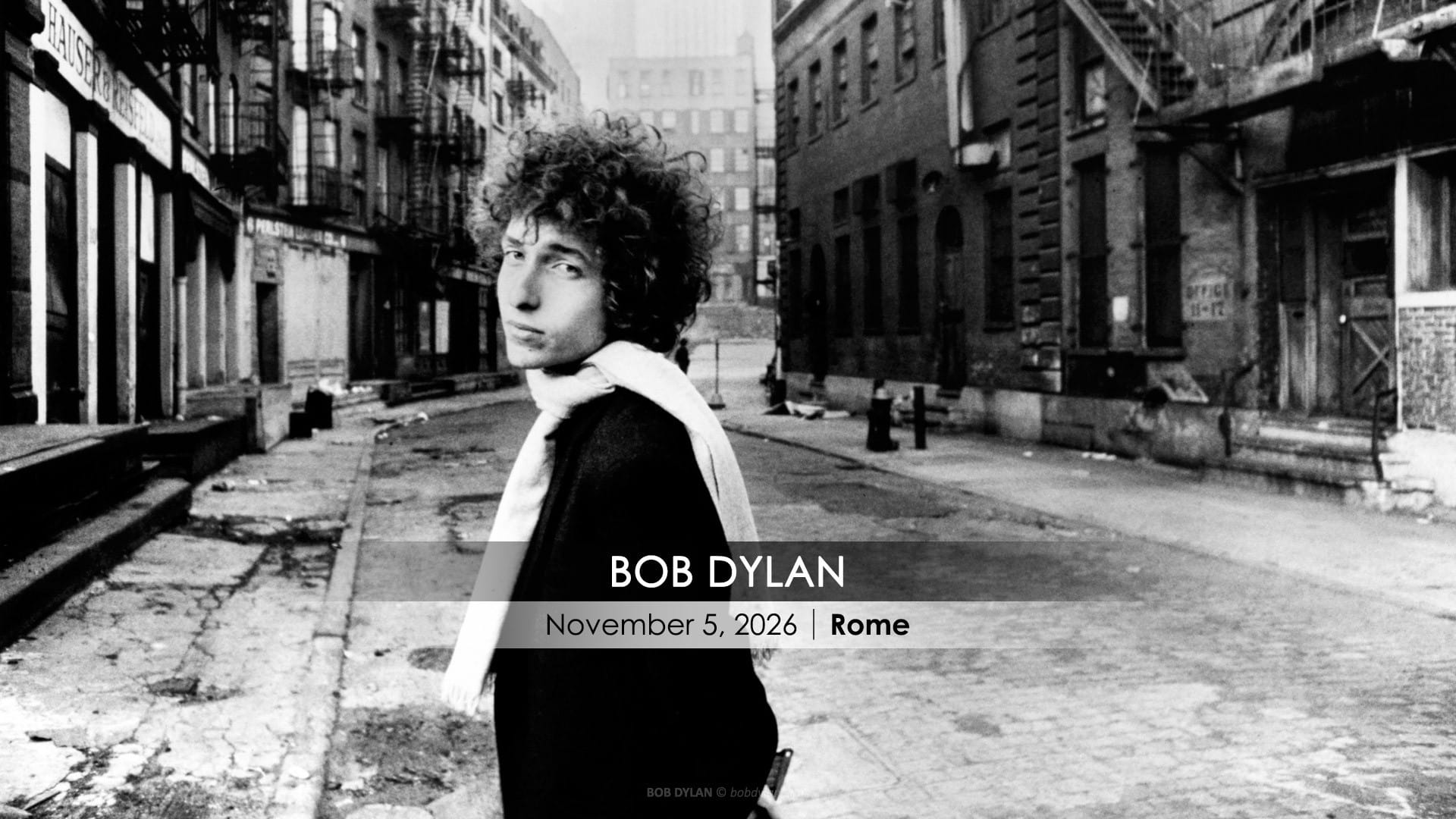
Buy tickets:TicketOneBob Dylan will perform in Rome on Thursday, November 5, 2026, at Palazzo dello Sport, one of the Italian capital’s principal indoor concert arenas. The performance is scheduled to begin at 9:00 pm and forms part of the musician’s extensive autumn 2026 European concert schedule.
The Rome show follows the opening Italian performance in Milan on November 2 and precedes the Bologna concert on November 7. The announced dates do not carry a separate official tour title. They continue Dylan’s long-established practice of presenting his catalogue through constantly evolving live arrangements rather than reproducing studio recordings exactly.
About Bob Dylan
Bob Dylan was born Robert Allen Zimmerman on May 24, 1941, in Duluth, Minnesota. He spent most of his childhood in Hibbing, a mining town in the northern part of the state, where he discovered country, blues, rhythm and blues, and early rock-and-roll recordings through American radio stations.
As a teenager, Dylan performed in several local groups and initially admired performers such as Little Richard and Elvis Presley. After enrolling at the University of Minnesota in 1959, his attention increasingly shifted toward American folk music, particularly traditional ballads and the politically engaged repertoire associated with Woody Guthrie.
Dylan left university and travelled to New York City in January 1961. He visited the hospitalized Woody Guthrie, performed in Greenwich Village clubs, and became part of the city’s expanding folk community. Producer John Hammond saw him perform and signed him to Columbia Records during the same year.
His first album, Bob Dylan, appeared in 1962 and consisted largely of traditional material. The following release, The Freewheelin’ Bob Dylan, established him as an important songwriter through compositions including Blowin’ in the Wind, Masters of War, and A Hard Rain’s a-Gonna Fall.
Several early songs were adopted by participants in the civil rights and anti-war movements, but Dylan avoided remaining within a single political or musical category. His writing became increasingly personal, symbolic, surreal, and influenced by literature, while his music began moving beyond the traditional acoustic arrangements of the folk revival.
The release of Bringing It All Back Home in 1965 introduced electric instruments alongside acoustic performances. Dylan developed this direction through Highway 61 Revisited and Blonde on Blonde, creating a distinctive combination of rock instrumentation, blues structures, and complex lyrics that influenced several generations of songwriters.
After a motorcycle accident in 1966, Dylan temporarily withdrew from regular public performance. His subsequent recordings explored country, gospel, traditional folk, blues, rock, and pre-rock American standards. The diversity of these periods demonstrates a career defined by continuous stylistic transformation rather than dependence on one commercially successful formula.
Dylan returned to sustained touring and began the concert schedule commonly called the Never Ending Tour in 1988. His performances frequently change the melodies, tempos, phrasing, and instrumentation of familiar songs. This approach gives each concert a separate identity and prevents his live catalogue from becoming a fixed recreation of earlier recordings.
Bob Dylan Discography
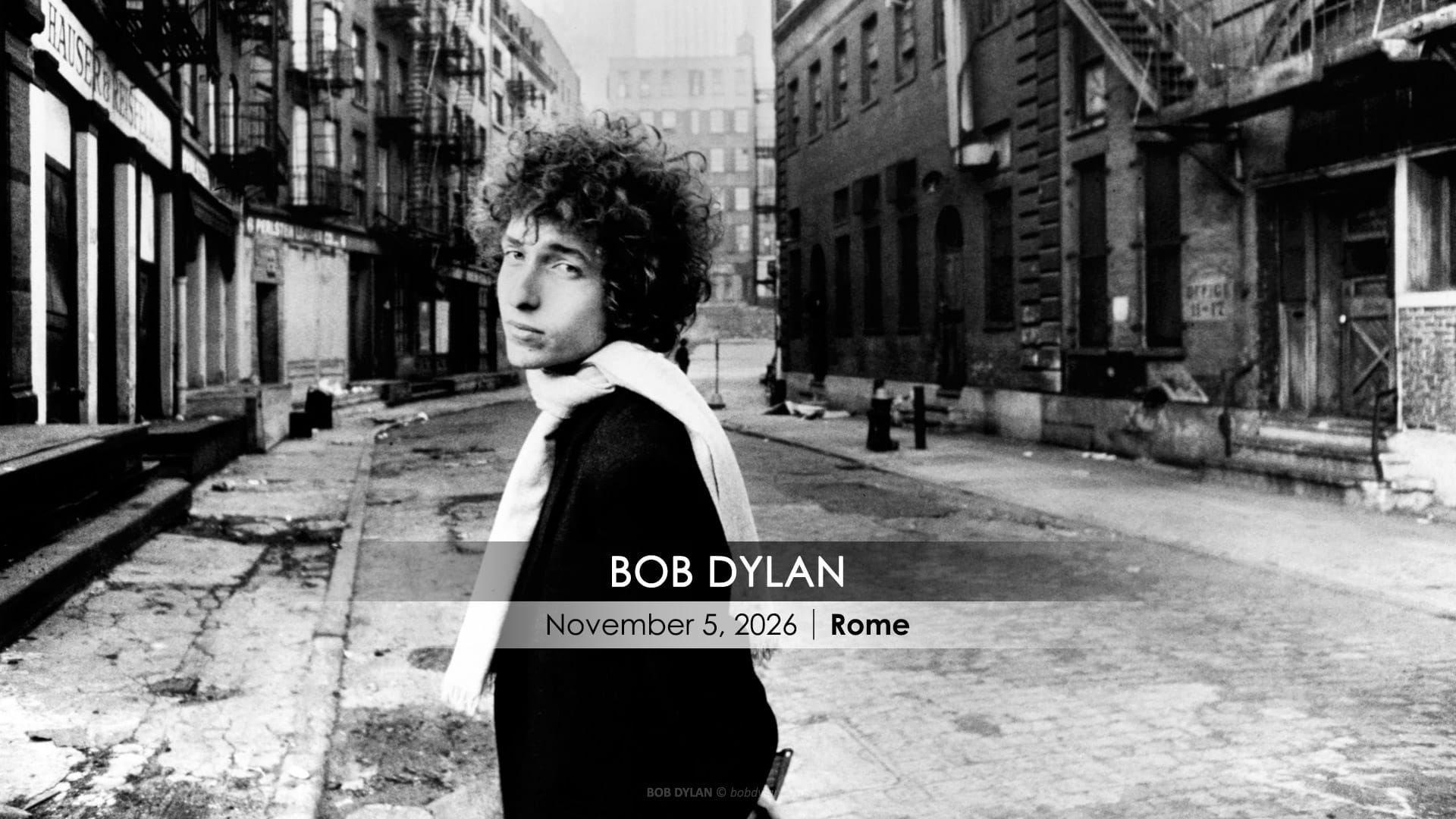
The Bob Dylan discography contains 40 studio albums, supplemented by live albums, compilations, soundtrack recordings, singles, and an extensive series of archival releases. Most of his principal catalogue was released by Columbia Records, although Planet Waves and Before the Flood originally appeared through Asylum Records.
His earliest studio period includes Bob Dylan, The Freewheelin’ Bob Dylan, The Times They Are a-Changin’, and Another Side of Bob Dylan. These records document his development from an interpreter of traditional folk songs into an original composer writing about social conflict, relationships, identity, and personal freedom.
The three albums released between 1965 and 1966 transformed his artistic position. Bringing It All Back Home divided its material between electric and acoustic performances, while Highway 61 Revisited included Like a Rolling Stone. The double album Blonde on Blonde expanded his fusion of folk, blues, and rock music.
Bob Dylan adopted a more restrained musical language on John Wesley Harding before exploring country music on Nashville Skyline. During the 1970s, he released New Morning, the soundtrack Pat Garrett & Billy the Kid, Planet Waves, Blood on the Tracks, and Desire, covering markedly different production and songwriting approaches.
Blood on the Tracks became one of his most acclaimed releases, containing Tangled Up in Blue, Simple Twist of Fate, and Shelter from the Storm. The narrative-focused Desire followed in 1976, featuring Hurricane, Isis, and Sara alongside the prominent violin work of Scarlet Rivera.
The albums Slow Train Coming, Saved, and Shot of Love belong to Dylan’s Christian period. Later releases such as Infidels, Empire Burlesque, and Oh Mercy reflected different production styles during the 1980s, while Dylan also recorded two albums with the Traveling Wilburys supergroup.
His 1997 album Time Out of Mind initiated a major critical revival. Dylan followed it with Love and Theft, Modern Times, Together Through Life, and Tempest. These recordings drew extensively from blues, country, folk, swing, and early American popular music while introducing new original compositions.
Bob Dylan subsequently recorded three albums based largely on traditional American standards: Shadows in the Night, Fallen Angels, and Triplicate. In 2020, he released Rough and Rowdy Ways, which included I Contain Multitudes, Key West (Philosopher Pirate), and the 17-minute composition Murder Most Foul.
His archival catalogue is represented by The Bootleg Series, which publishes unreleased recordings, alternate takes, demos, live performances, and material documenting specific creative periods. These collections have provided extensive evidence of Dylan’s recording methods and compositional development beyond the versions originally selected for his studio albums.
Bob Dylan Awards and Sales
Bob Dylan has sold an estimated 125 million records worldwide, making him one of the most commercially successful recording artists in popular-music history. His influence also extends through thousands of cover versions recorded by folk, rock, country, pop, blues, and soul performers in numerous languages.
He has received ten competitive Grammy Awards, in addition to the Grammy Lifetime Achievement Award presented in 1991. Time Out of Mind won Album of the Year, while several individual recordings received recognition in folk, rock, and traditional folk categories during different phases of his career.
Dylan won an Academy Award and a Golden Globe Award for Things Have Changed, written for the film Wonder Boys. He was inducted into the Rock and Roll Hall of Fame in 1988 and has also entered the Songwriters Hall of Fame and Nashville Songwriters Hall of Fame.
His broader honours include Kennedy Center Honors, a special Pulitzer Prize citation, the Presidential Medal of Freedom, and the 2016 Nobel Prize in Literature. The Nobel committee recognized his creation of new poetic expressions within the American song tradition, making him the first songwriter to receive the literature prize.
Venue – Palazzo dello Sport
Palazzo dello Sport is a multipurpose sports and entertainment arena situated in the EUR district of southern Rome. Located at Piazzale Pier Luigi Nervi 1, the building hosts major concerts, sporting competitions, conferences, and large-scale productions requiring an indoor venue with permanent seating and adaptable floor configurations.
Marcello Piacentini and Pier Luigi Nervi designed the arena in 1956 for the Games of the XVII Olympiad, held in Rome in 1960. During the Olympics, the building hosted basketball and boxing competitions, forming an important part of the sporting infrastructure constructed or completed for the international event.
The architects created a circular reinforced-concrete structure dominated by a 95-meter-wide dome. The stepped auditorium sits beneath the large roof, while a continuous glazed exterior gives the building its recognizable cylindrical appearance. Its position also creates a monumental visual conclusion to the perspective along Via Cristoforo Colombo.
The venue underwent extensive renovation before reopening as a modern multipurpose arena in 2003, when Carlos Santana performed the inaugural concert. The project updated the building for contemporary entertainment requirements while preserving its principal architectural identity, circular form, concrete structure, and distinctive roof.
How to Get to Palazzo dello Sport
The most direct public-transport route uses Metro Line B to EUR Palasport. From the station, visitors can walk approximately 400 meters along the surrounding streets toward the arena. This is considerably closer than EUR Fermi, which is another possible Line B station but requires a longer walk.
Passengers arriving at Roma Termini can take Metro Line B toward Laurentina and exit at EUR Palasport. The journey does not require changing metro lines. Visitors should confirm the final train times for the return journey because weekday operating hours and temporary evening arrangements can change.
The Nervi/Palazzo Sport and Palazzo Sport bus stops serve the immediate arena area. Routes operating around Piazzale dello Sport include lines 070, 071, 705, 709, 714, and 791, although individual stops and schedules vary according to direction, service pattern, roadworks, and temporary traffic restrictions.
Bus 714 provides a connection between the arena area and Roma Termini, offering an alternative to the metro. Because road traffic can become heavy before large concerts, the Metro Line B route is generally more predictable for visitors travelling from central Rome or transferring from national rail services.
Drivers approaching from the Grande Raccordo Anulare can use Exit 26 and continue through Via Pontina and Via Cristoforo Colombo toward EUR. Parking is available in the surrounding district, including areas near Piazzale Nervi, but spaces may fill rapidly during major concerts.
Frequently Asked Questions about the Bob Dylan Concert in Rome
When is the Bob Dylan concert in Rome?
The concert takes place on Thursday, November 5, 2026. It follows the Milan performance on November 2 and precedes Dylan’s Bologna concert on November 7.
Where will Bob Dylan perform in Rome?
Bob Dylan will perform at Palazzo dello Sport, a historic indoor arena located in Rome’s modern EUR district at Piazzale Pier Luigi Nervi 1.
Are photography and recordings allowed?
No. The event regulations state that photography, audio recording, and video recording are prohibited. Visitors should follow all instructions communicated by the organizer and venue staff.
Which metro station is closest to Palazzo dello Sport?
The nearest station is EUR Palasport on Metro Line B, approximately 400 meters from the arena. EUR Fermi is also nearby but requires a longer walk.
How can visitors reach the arena from Roma Termini?
Take Metro Line B toward Laurentina from Roma Termini and exit at EUR Palasport. The route is direct and does not require a metro change.
Is parking available near Palazzo dello Sport?
Parking areas are available throughout the surrounding EUR district, including spaces near Piazzale Nervi. Visitors arriving by car should travel early because availability may become limited.
Buy tickets:TicketOne -
Photos
-
Video
Table of Contents
-
Map
-
Reviews
5 November 2026 9:00 pm
5 November 2026 11:45 pm