
Table of Contents
Calabria is one of Italy’s most distinctive food regions, shaped by mountains, two seas, long agricultural traditions, and a cuisine built on intense, recognizable flavors. Its most iconic products are not decorative symbols, but ingredients deeply connected to specific places and everyday regional identity.
The region’s food culture is strongly linked to preservation, seasonality, and rural necessity. Spicy cured pork, sweet onions, citrus peel, licorice root, and artisan gelato all reflect practical knowledge developed over generations.
Calabrian cuisine is direct, concentrated, and strongly territorial, with many products inseparable from their place of origin.
Five names stand out immediately: Tropea red onion, ‘nduja, bergamot, Calabrian licorice, and Tartufo di Pizzo. Each product represents a different side of Calabria: agriculture, pork processing, citrus cultivation, botanical tradition, and pastry craftsmanship. Together, they form a compact culinary map of the region.
These foods are also powerful travel markers. Tropea is linked to its red onion, Spilinga to ‘nduja, the Reggio Calabria area to bergamot, the Ionian side to licorice, and Pizzo to tartufo gelato. To understand Calabria through food means understanding how geography becomes flavor.
Tropea Red Onion
The Cipolla Rossa di Tropea IGP is one of the most famous agricultural products of southern Italy. Despite the name, its production area is not limited to Tropea alone. It extends along parts of the Tyrrhenian coast, in the provinces of Vibo Valentia, Cosenza, and Catanzaro.
Its protected status confirms the link between the onion and its production territory. The product was registered at European level as a protected geographical indication in 2008. This recognition protects the name and defines the official production area, varieties, cultivation rules, and commercial characteristics of the onion.
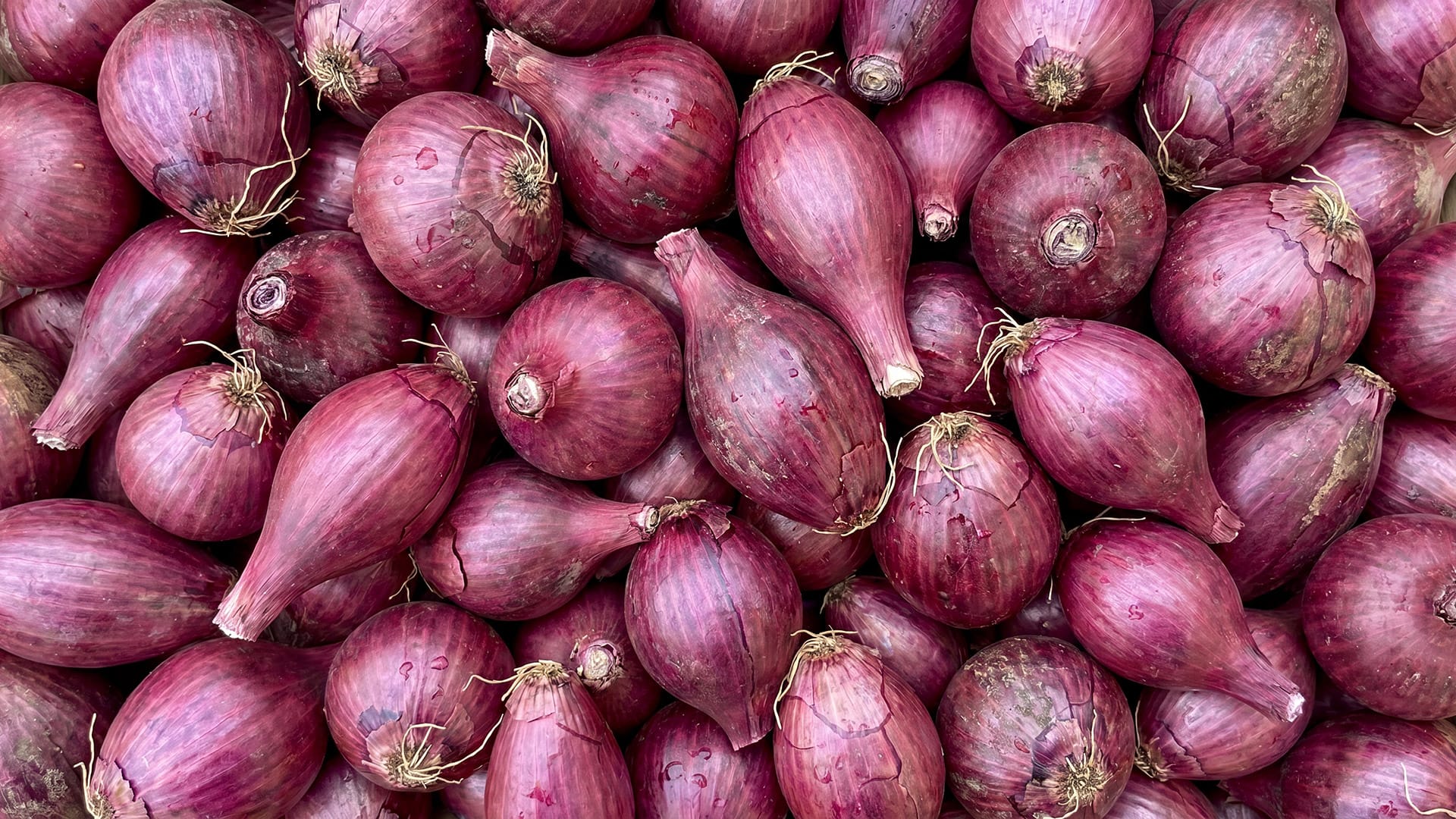
The Tropea red onion is recognizable by its red-purple outer layer, white internal flesh, and naturally sweet flavor. It is usually described as less pungent than many common onions. Its sweetness and digestibility are among the reasons why it became popular beyond the local area and widely used in Italian cooking.
The growing area contributes directly to the onion’s characteristics. The combination of coastal climate, mild winters, sun exposure, and suitable soils favors the development of a delicate bulb. The result is an onion that can be eaten raw more easily than sharper varieties, especially in salads and simple summer dishes.
Culinary Uses of Tropea Red Onion
The Tropea red onion is used both raw and cooked. Raw slices are often added to tomato salads, tuna dishes, sandwiches, focaccia, and seafood preparations. Its sweetness balances salty, acidic, or fatty ingredients, which makes it especially useful in Mediterranean dishes based on few elements.
Cooked Tropea onion becomes even sweeter. It is used for onion jam, caramelized onions, sauces, omelets, vegetable dishes, and meat accompaniments. Onion preserves are commonly paired with aged cheeses, grilled meats, cured meats, and rustic bread, where sweetness and acidity create contrast.
The onion is also important visually. Its bright color gives dishes a distinctive Calabrian identity, especially when served with tomatoes, olives, tuna, swordfish, or local cheeses. In travel writing and gastronomy, the Tropea onion often works as a symbol of the area: simple, colorful, and immediately recognizable.
‘Nduja
‘Nduja is Calabria’s most famous spicy cured pork product and one of the region’s strongest culinary symbols. It is a soft, spreadable salume, traditionally associated with the town of Spilinga, in the province of Vibo Valentia. Its defining ingredients are pork, fat, salt, and Calabrian chili pepper.
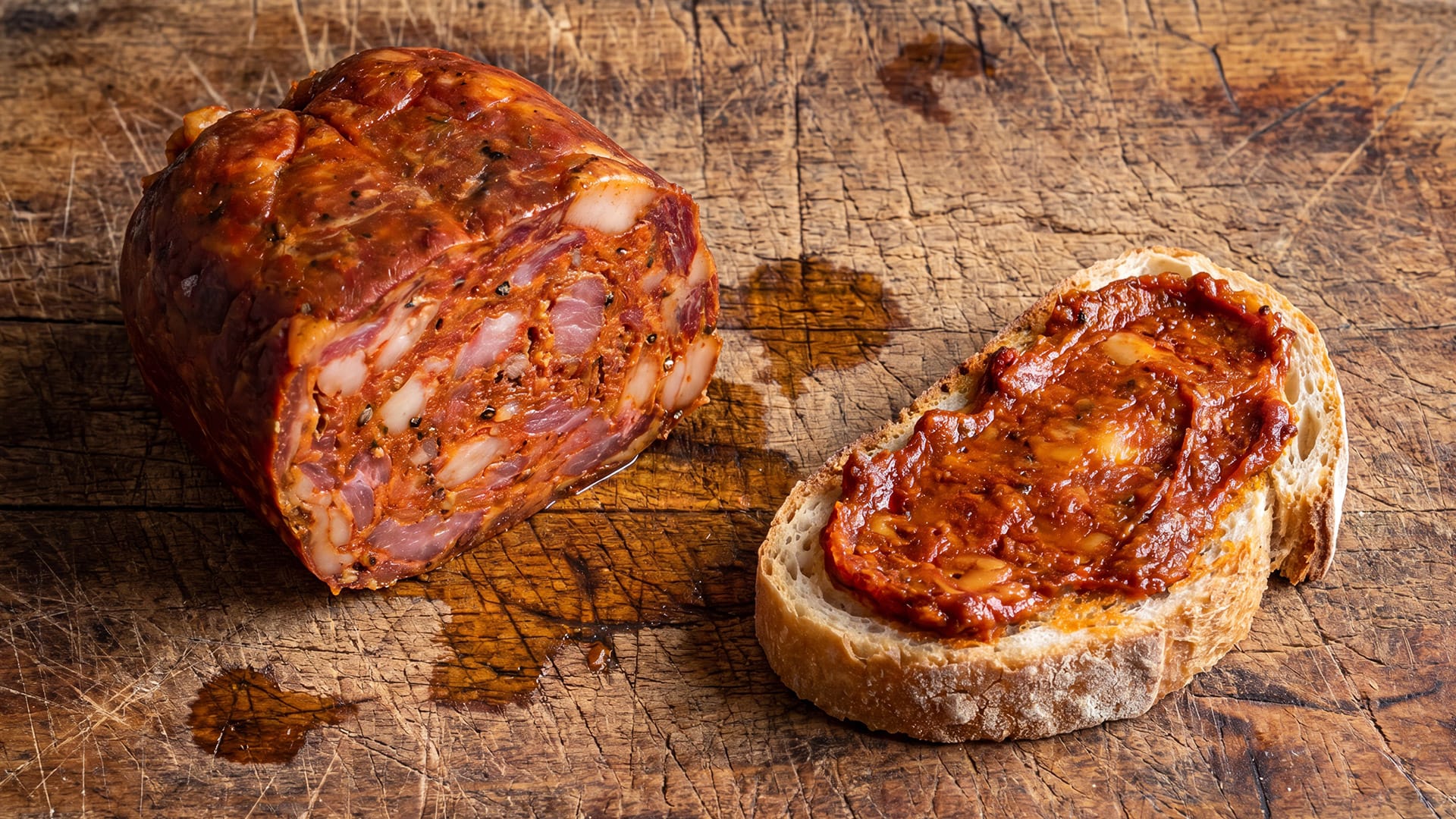
Unlike firm salami, ‘nduja has a paste-like texture. This comes from its high fat content and fine grinding. The mixture is seasoned with a large quantity of chili pepper, stuffed into natural casings, smoked, and matured. The result is spicy, rich, smoky, and easily spreadable.
The origins of ‘nduja are debated. Its name is often connected to the French word andouille, although other historical influences have also been suggested. What is clear is that ‘nduja developed as a rural product linked to pork preservation and the economical use of available meat and fat.
Traditionally, Calabrian pig processing aimed to waste very little. Products such as ‘nduja transformed less prestigious cuts and fat into durable, flavorful food. Chili pepper did more than provide heat: it contributed color, aroma, and preservation. This made ‘nduja practical before refrigeration became common.
Why ‘Nduja Is So Important
The intense red color of ‘nduja comes from Calabrian peperoncino, one of the region’s essential ingredients. The chili gives the salume its heat, but also its aroma and identity. Good ‘nduja should not taste only hot; it should also be savory, smoky, fatty, and deeply pork-based.
The spreadable consistency makes ‘nduja unusually versatile. It can be eaten on toasted bread, melted into tomato sauce, stirred into pasta, added to pizza, mixed into beans, or used to season vegetables. A small amount is enough to transform a dish because it brings fat, salt, heat, and umami.
In recent years, ‘nduja has become internationally fashionable, especially in restaurants and pizzerias. Its spread outside the local area did not erase its local character. On the contrary, the product’s success strengthened Calabria’s image as the Italian region of chili, pork, strong flavors, and rustic intensity.
Bergamot
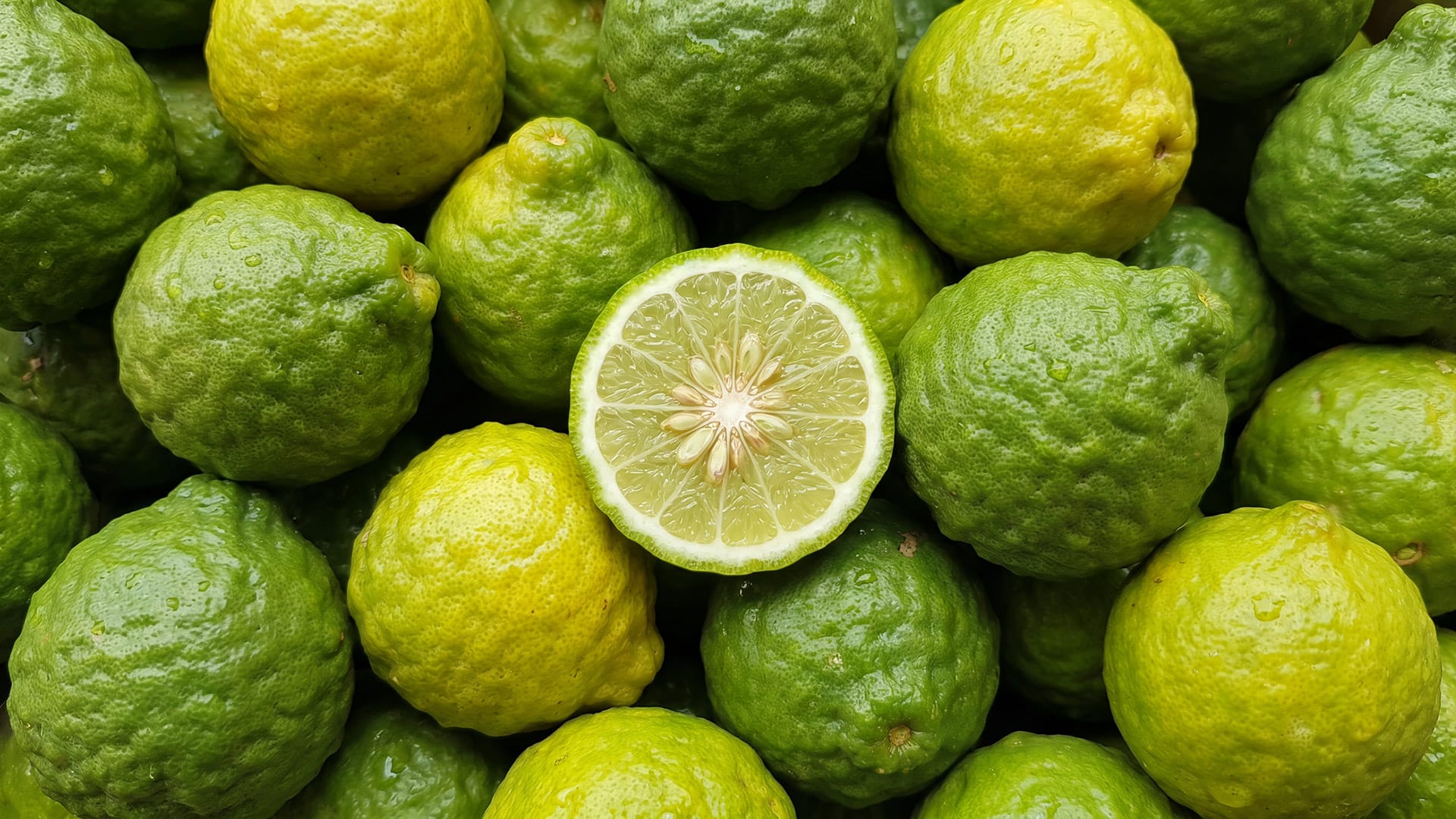
Bergamot is one of Calabria’s most unusual and valuable citrus fruits. It is especially linked to the province of Reggio Calabria, where the coastal climate creates ideal conditions for cultivation. The fruit looks like a small citrus between lemon and bitter orange, but its aroma is completely distinctive.
The most famous protected product is Bergamotto di Reggio Calabria – Olio essenziale DOP, the essential oil extracted from the peel. This oil is internationally important in perfumery, cosmetics, and flavoring. The protected designation confirms the strong geographical link between bergamot and the Reggio Calabria area.
Bergamot is not usually eaten like an orange because its flavor is bitter and acidic. Its value lies mainly in the peel and essential oil, although juice, pulp, and processed products are also used. The area produces bergamot for perfumes, liqueurs, sweets, jams, candied peel, tea flavoring, and modern gastronomy.
The fruit is strongly associated with the Ionian side of the Reggio Calabria province. This narrow coastal area has the right combination of sun, wind, soil, and mild temperatures. For this reason, bergamot is not just a citrus fruit, but a specialized territorial product.
Bergamot in Food and Culture
In food, bergamot adds an intense floral, bitter, and citrus aroma. It can be used in marmalades, creams, cakes, biscuits, gelato, liqueurs, syrups, and savory sauces. Because the flavor is powerful, it is usually used carefully. Too much bergamot can dominate a preparation.
Bergamot is also linked to the flavor of Earl Grey tea, where bergamot oil provides the characteristic fragrance. This connection helped make the aroma known worldwide, even among people who have never visited Calabria. However, the Calabrian fruit remains central to the high-quality production of bergamot oil.
The fruit has also gained attention for its nutritional and functional properties. Bergamot juice contains vitamin C and other compounds studied for potential health-related uses. In culinary writing, however, it is safer and more accurate to describe it primarily as an aromatic citrus product, not as a medical solution.
For travelers, bergamot offers a different image of the area. It is not rustic like ‘nduja or familiar like onion. It is elegant, fragrant, and almost perfumed. It shows that Calabrian food culture is not only about heat and intensity, but also about aroma, refinement, and rare agricultural specialization.
Licorice
Liquirizia di Calabria DOP is one of the region’s most historic botanical products. It is made from the root of Glycyrrhiza glabra, a plant that grows well in parts of southern Italy. The area is especially associated with high-quality licorice because of its climate, soils, and long processing tradition.
Calabrian licorice has a strong, persistent flavor, usually described as sweet, bitter, aromatic, and slightly astringent. It is used in pure licorice pieces, candies, powders, liqueurs, herbal products, pastries, gelato, and savory experiments. Its intensity makes it very different from artificial licorice-flavored sweets.
The product’s protected designation confirms its regional identity. Licorice is especially linked to areas of Calabria where the plant has historically grown and been processed. The roots are harvested, cleaned, extracted, concentrated, and transformed into solid or liquid products through specialized methods.
Calabria’s licorice tradition is also connected to old apothecary and herbal uses. Licorice root was historically valued for digestive and soothing properties, although modern food writing should avoid exaggerating health claims. Its cultural importance comes from both flavor and the long history of root processing.
How Calabrian Licorice Is Used
Pure licorice is usually dark, glossy, and very concentrated. It is consumed in small quantities because the flavor is intense. Unlike mild commercial candies, real licorice root extract has a serious bitterness and aromatic depth. This makes it appealing to people who enjoy strong, traditional flavors.
In desserts, licorice pairs well with chocolate, citrus, coffee, cream, and gelato. It can be used as powder, extract, or liqueur. The contrast between licorice and bergamot is especially Calabrian, combining two regional botanical products with powerful aromatic profiles and a slightly bitter edge.
Licorice liqueur is another important use. It is usually served cold, often after meals. Its flavor is sweet, dark, and herbal, with a dense texture. Here, it belongs to the broader tradition of digestivi, homemade infusions, and regional liqueurs prepared from local plants and roots.
For visitors, Calabrian licorice is an excellent edible souvenir because it is compact, durable, and strongly regional. It also tells a less obvious story about Calabria. Beyond beaches and spicy food, the region has a deep botanical culture connected to wild plants, roots, extraction, and traditional craftsmanship.
Tartufo di Pizzo
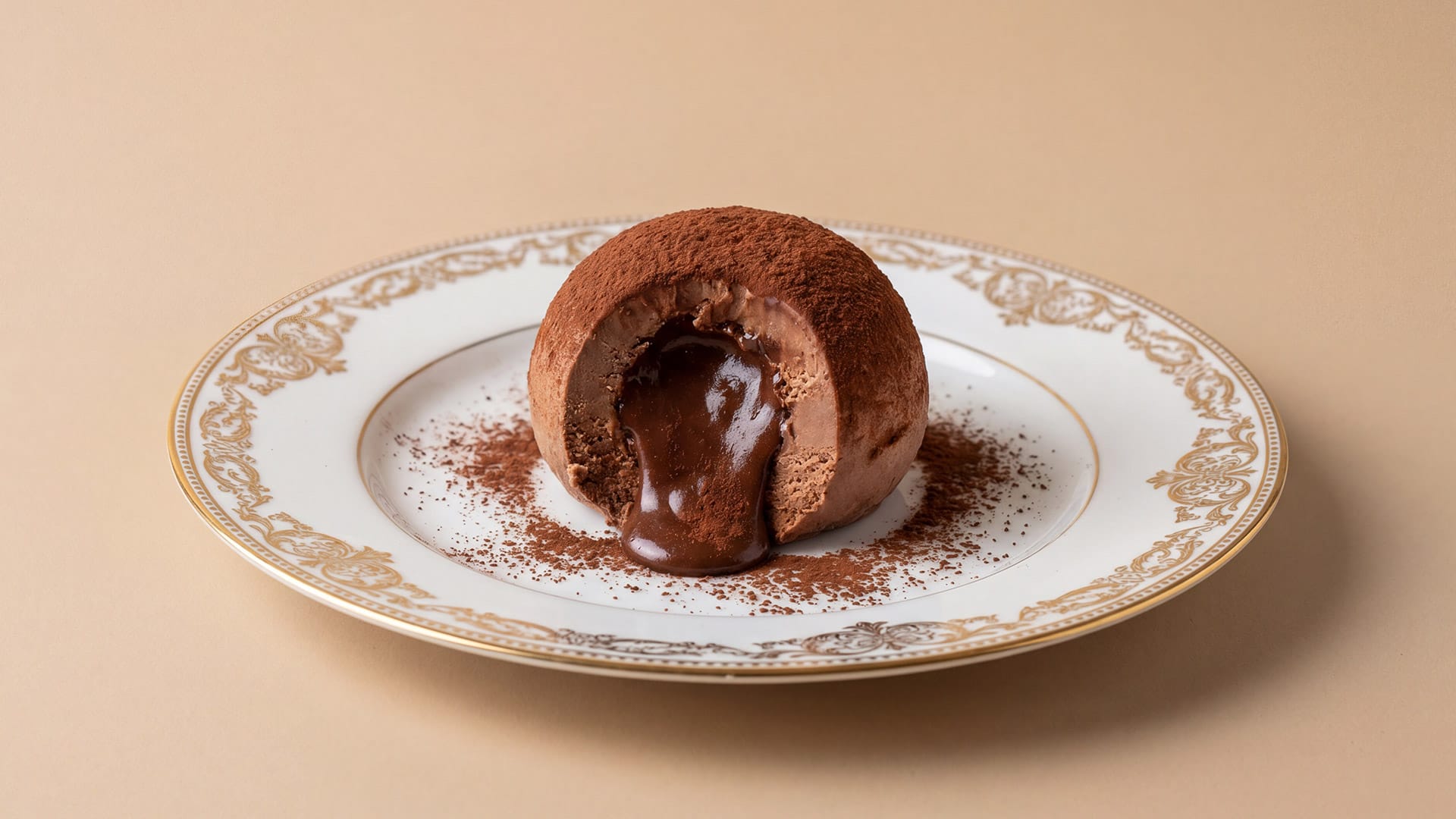
Tartufo di Pizzo is Calabria’s most famous dessert and one of Italy’s best-known gelato specialties. It comes from Pizzo, a coastal town in the province of Vibo Valentia. The dessert is shaped like a small truffle and traditionally combines two flavors of gelato with a soft chocolate center.
The classic version usually contains hazelnut gelato and chocolate gelato, with melted chocolate or chocolate sauce in the middle. The outside is covered with bitter cocoa powder, giving it the dark appearance that inspired the name “tartufo”, meaning truffle. It is not related to real truffles.
The history of Tartufo di Pizzo is connected to local pastry and gelato shops in the historic center of Pizzo. The dessert is often described as the result of practical improvisation during a busy event, when gelato was shaped by hand and filled with chocolate instead of being served conventionally.
Its success came from simplicity and texture. The outer gelato is cold and creamy, the cocoa gives bitterness, and the chocolate center becomes soft when served at the right temperature. This contrast made tartufo memorable, easy to recognize, and suitable for both cafés and restaurants.
Why Pizzo Became the Town of Tartufo
Pizzo’s identity is now strongly connected to tartufo. In the historic center, cafés and gelaterias serve different versions of the dessert, but the classic chocolate-hazelnut form remains the reference point. For many tourists, eating tartufo in Pizzo is as important as visiting the town’s castle or seafront.
The dessert also works well as a travel experience because it is local, accessible, and easy to understand. Unlike some regional foods that require explanation, tartufo immediately appeals through shape, temperature, chocolate, and creaminess. It is a product with strong local identity and broad international appeal.
Over time, many variations appeared, including pistachio, coffee, white chocolate, fruit, and liqueur-flavored versions. These can be enjoyable, but the classic version remains the most important for understanding the original identity of Tartufo di Pizzo. Its fame depends on tradition, not endless reinvention.
A Culinary Map of Calabria
These five foods show how varied Calabria’s identity really is. Tropea red onion represents coastal agriculture and sweetness. ‘Nduja represents pork, chili, smoke, and rural preservation. Bergamot represents citrus aroma and the Reggio Calabria coast. Licorice represents botanical tradition. Tartufo represents artisan dessert culture.
They also show that Calabria’s strongest foods are not generic Italian products. Each one belongs to a precise place. Tropea, Spilinga, Reggio Calabria, the licorice-growing areas, and Pizzo are not background names. They are essential to the story, because territory defines the product.
For travelers, these products are more than things to taste. They are practical routes through Calabria. A food itinerary can move from Tropea to Spilinga, from Pizzo to Reggio Calabria, and toward the areas known for licorice. Each stop adds a different flavor to the same regional story.
Images generated with Nano Banana Pro / Google AI Studio


