
Table of Contents
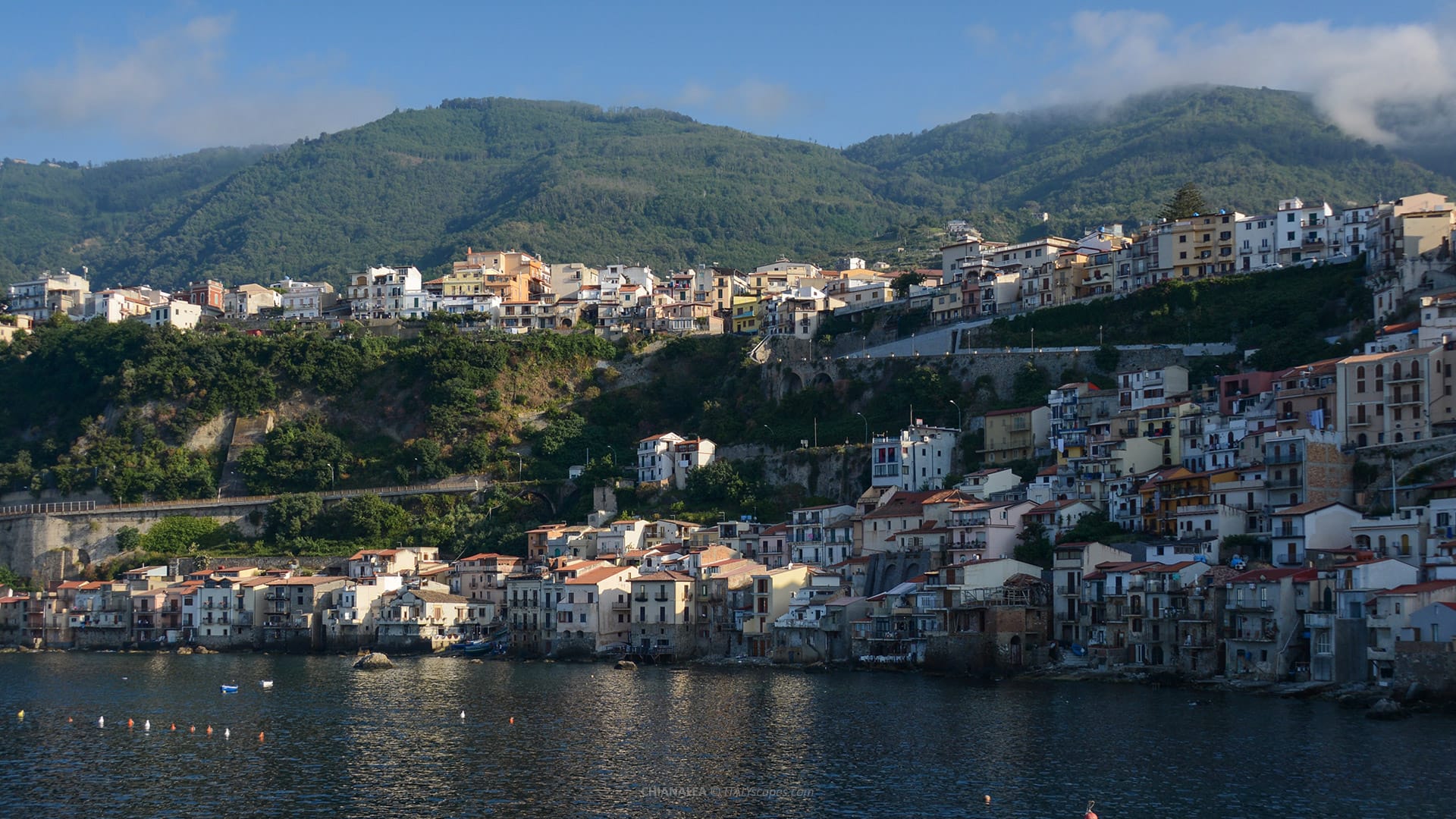
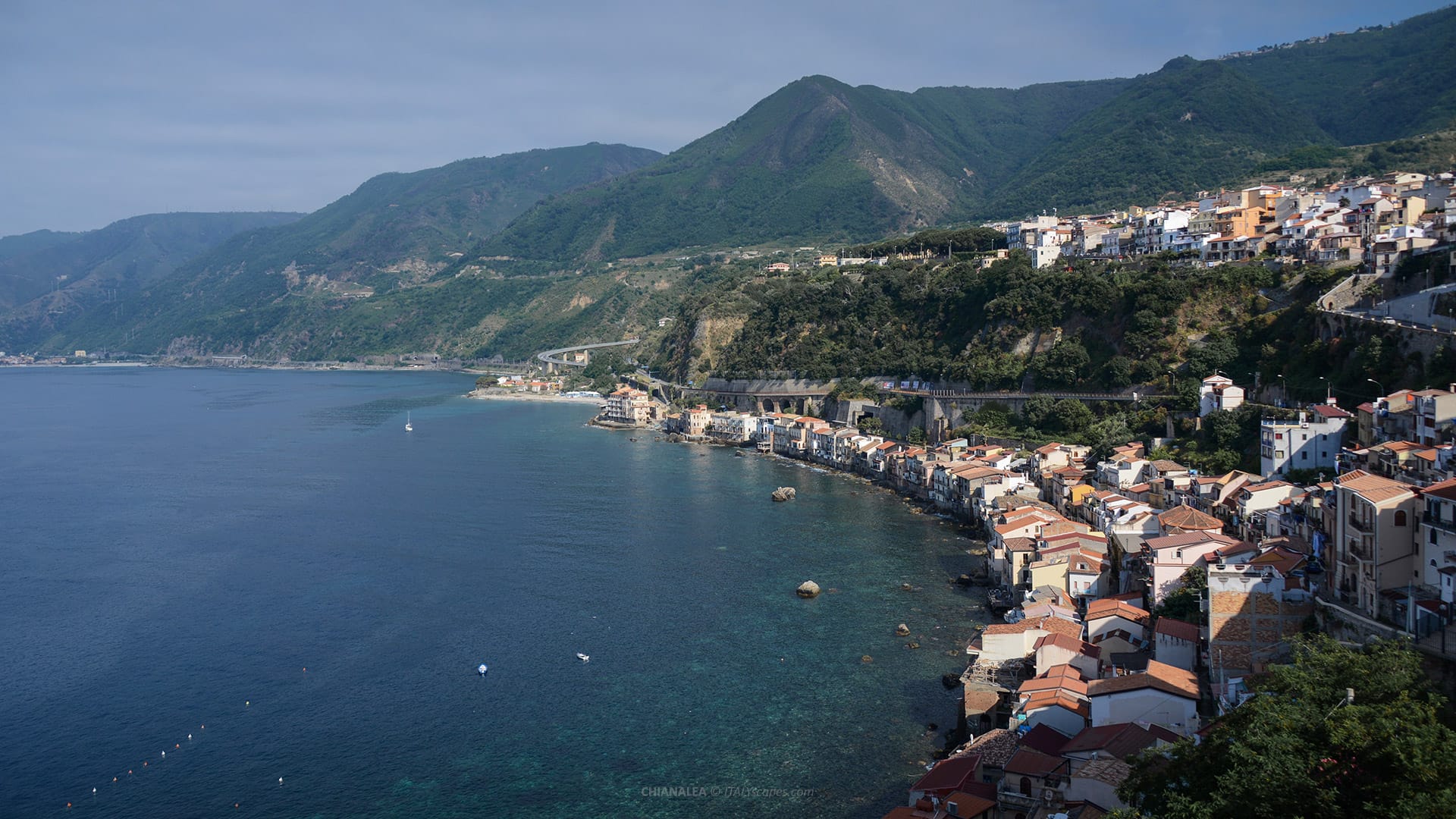
Located on the western coast of southern Calabria, Chianalea is one of the most distinctive historic fishing districts in Italy. This small seaside quarter belongs to the municipality of Scilla, in the Metropolitan City of Reggio Calabria, and stretches along the Tyrrhenian coast overlooking the Strait of Messina.
During our visit in May 2026, what immediately stood out was how closely the neighborhood remains connected to the sea.
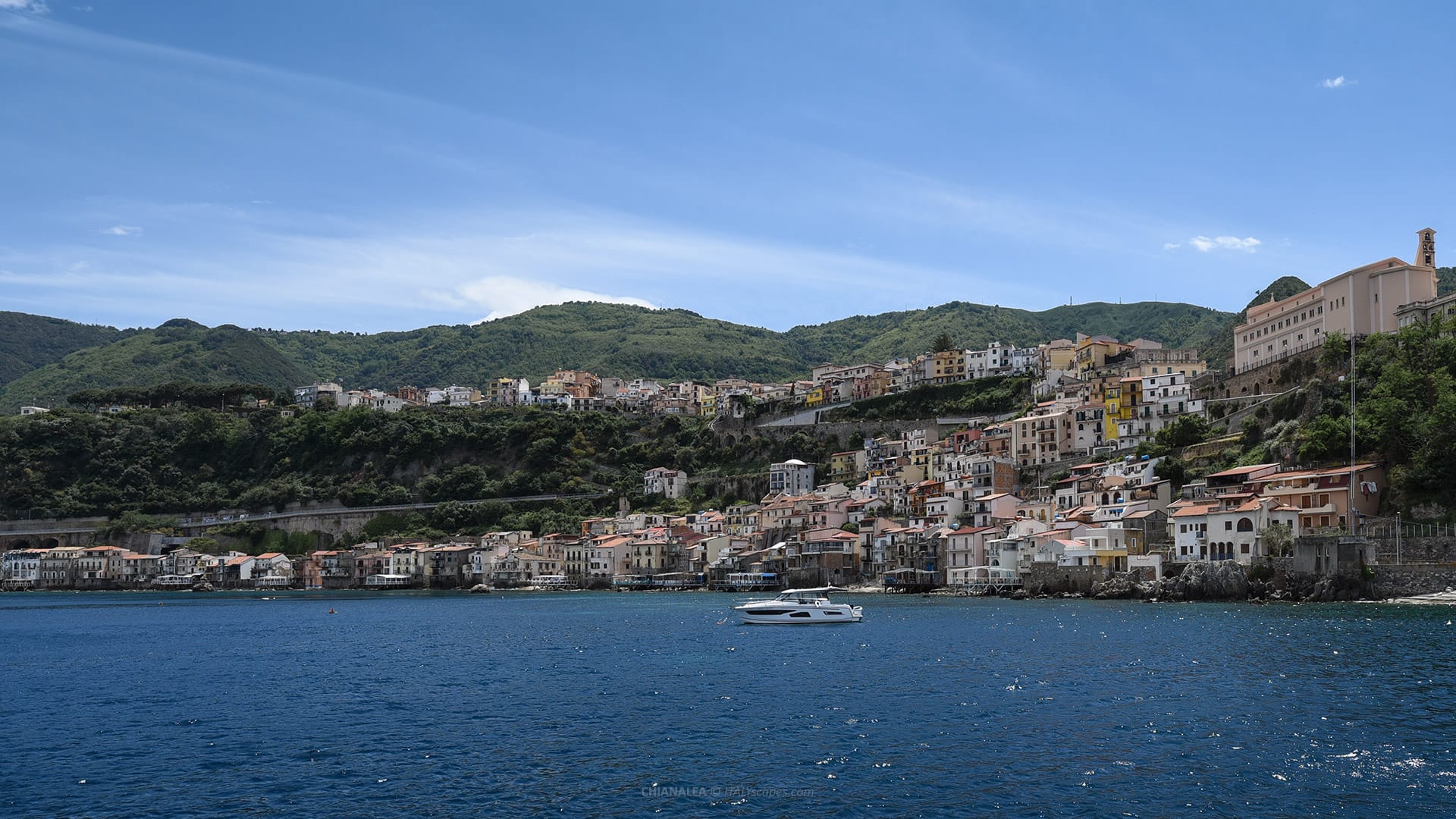
Chianalea occupies a narrow strip of land between the rocky shoreline and the slopes beneath Castello Ruffo. Unlike many Italian coastal villages that expanded inland during the twentieth century, Chianalea preserved its original maritime layout, with houses built directly beside the water. In several places, waves reach the stone foundations of the buildings.
The district lies approximately 25 kilometers north of Reggio Calabria, around 110 kilometers southwest of Catanzaro, and roughly 70 kilometers south of Tropea. Its strategic position along the Strait of Messina has shaped local history for centuries, connecting Calabria with Sicily and placing Chianalea along one of the Mediterranean’s most important maritime corridors.
Although Chianalea covers only a small area and represents just one district of Scilla, it has achieved international recognition thanks to its unique urban landscape. The neighborhood is frequently described as the “Piccola Venezia del Sud” and sometimes as the “Piccola Venezia della Calabria”, references inspired by the close relationship between the houses and the sea.
Today, Chianalea remains primarily a residential and fishing district rather than a large tourist resort. This distinction is important because it explains why the neighborhood retains an authentic atmosphere that differs significantly from many heavily developed Mediterranean destinations. Fishing boats, stone alleys, and historic houses still define daily life.
Scilla – Calabria’s Historic Gateway to the Strait of Messina
To understand Chianalea properly, it is essential to understand Scilla itself. The municipality occupies a strategic location at the northern entrance to the Strait of Messina, where the Tyrrhenian Sea meets the narrow channel separating Calabria from Sicily.
Scilla is positioned along the celebrated Costa Viola, a section of coastline known for its rocky cliffs, deep waters, and spectacular sunsets. The name derives from the characteristic violet shades that appear across the sea surface during particular light conditions, especially at sunset.
The municipality consists of several districts, including Marina Grande, San Giorgio, Jeracari and Chianalea. Together they form one of the most recognizable historic settlements in southern Italy, combining maritime traditions, mythology, architecture, and fishing culture.
Scilla Between Myth and History
The name Scilla is closely associated with the ancient Greek myth of Scylla, the legendary sea monster described in classical literature. Ancient sailors navigating the Strait of Messina faced dangerous currents, whirlpools, and rocky coastlines, conditions that contributed to the creation of enduring maritime legends.
Over the centuries, Scilla evolved from a strategic coastal settlement into an important fishing community. Various civilizations, including Greeks, Romans, Byzantines, Normans, and later rulers of southern Italy, left their mark on the area, contributing to its cultural and architectural heritage.
The Relationship Between Chianalea and Scilla
Contrary to what many visitors initially believe, Chianalea is not an independent village. It is a historic district of Scilla and forms an integral part of the municipality. The neighborhood developed as the maritime and fishing section of the town.
Historically, Chianalea served as the area where fishermen lived and worked. Its location offered direct access to the sea, allowing boats to be launched quickly and facilitating daily fishing activities. This practical function strongly influenced the district’s urban development.
A Different Identity Within the Same Town
Although administratively part of Scilla, Chianalea possesses a distinct identity. The neighborhood differs from Marina Grande, which developed around a larger beach, and from the higher parts of Scilla located farther from the shoreline.
The architecture, narrow alleys, and direct relationship with the sea create a separate atmosphere. Visitors walking from the beach area into Chianalea immediately notice a transition from an open coastal environment to a compact historic fishing quarter dominated by stone buildings and maritime traditions.
The History of Chianalea Through the Centuries
The origins of Chianalea are closely linked to the historical development of Scilla. The district emerged as a fishing settlement positioned beneath the protection of the fortress that would later become Castello Ruffo.
Its location offered both practical and defensive advantages. The sea provided food and economic opportunities, while the elevated fortress above the settlement helped protect inhabitants against attacks and maritime threats that frequently affected Mediterranean coastal communities.
Medieval and Early Modern Development
During the Middle Ages, fishing became increasingly important for the local economy. Houses were constructed close to the water because fishermen needed immediate access to their boats and equipment. Over time, this produced the characteristic urban structure visible today.
Many buildings were developed using local stone and adapted to the narrow coastal terrain. Rather than expanding inland, the settlement evolved linearly along the shoreline, creating the distinctive appearance that continues to define Chianalea in the twenty-first century.
Preservation of a Maritime Identity
One of the most remarkable aspects of Chianalea’s history is the preservation of its original function. While many historic fishing communities across Europe transformed into large tourist centers, Chianalea maintained a strong connection with traditional maritime activities.
This continuity explains why visitors still encounter working fishing boats, fishermen repairing equipment, and houses directly connected to the sea. The district remains a living community rather than an open-air museum.
Swordfish Fishing in Chianalea and the Strait of Messina
Among all local traditions, swordfish fishing represents the most important cultural and economic activity historically associated with Chianalea. The Strait of Messina has long been one of the Mediterranean’s principal migration routes for swordfish.
Generations of local fishermen developed specialized techniques adapted to the behavior of these large fish. The knowledge required for swordfish fishing was traditionally passed from one generation to another, becoming an essential element of local identity.
The Traditional Feluca
One of the most distinctive features of swordfish fishing in Scilla is the use of the feluca, a specialized fishing boat designed specifically for spotting and pursuing swordfish in the waters of the Strait of Messina.
The vessel is recognizable by its tall observation mast and extended platform. From the mast, a spotter searches for swordfish near the water’s surface while the crew maneuvers the boat into position. This method remains one of the most iconic fishing traditions in Calabria.
Swordfish and Local Culture
Swordfish is not merely a commercial resource. It forms part of local cultural heritage and culinary tradition. Throughout the years, the activity influenced social life, local knowledge, and the collective identity of communities living around Scilla and Chianalea.
Even today, visitors can observe elements of this tradition in the harbor areas, local restaurants, and cultural narratives that continue to celebrate the historical relationship between residents and the sea.
Top Attractions in Chianalea
The most important attraction in Chianalea is arguably the district itself. Walking along the waterfront reveals historic houses, fishing boats, stone facades, and uninterrupted views of the Strait of Messina.
Unlike conventional tourist attractions, the appeal lies in the overall urban landscape. Every alley, staircase, and viewpoint contributes to a setting that has remained closely connected to its maritime origins.
Castello Ruffo
Towering above Chianalea stands Castello Ruffo, one of Calabria’s most important historic fortifications. Built on a rocky promontory, the fortress dominates both the district and the surrounding coastline.
Its position allowed control of maritime traffic through the Strait of Messina. For centuries, the castle played strategic, defensive, and administrative roles while simultaneously providing protection to the communities developing below.
Church of Santa Maria di Porto Salvo
The Church of Santa Maria di Porto Salvo stands in the heart of Chianalea and represents one of the district’s most important religious landmarks.
Built around 1700 by the local confraternity dedicated to the Virgin Mary, the church was dedicated to the protector of sailors and fishermen. Severely damaged during the earthquakes of 1783 and 1908, it was rebuilt through local efforts.
Fontana Storica della Sirena
Fontana Storica della Sirena is one of the most recognizable landmarks in Chianalea. Located along Via Zagari, close to the small harbor and only a short walk from the waterfront, the fountain was built in the twentieth century and has become a popular meeting point for both residents and visitors.
Its most distinctive feature is the statue of a mermaid, a reference to the strong connection between Scilla and the ancient myths associated with the Strait of Messina.
Visiting Chianalea Today
What impressed us most during our visit in May 2026 was the authenticity of the district. Despite growing recognition among travelers, Chianalea remains fundamentally a historic fishing neighborhood rather than a destination dominated by large-scale tourism.
The experience centers on walking, observing, and understanding the relationship between people, architecture, and the sea. This authenticity distinguishes Chianalea from many better-known Mediterranean coastal destinations.
For travelers interested in authentic Calabria, local traditions, and historic coastal communities, Chianalea represents one of the most remarkable destinations along the entire Costa Viola. Its stone houses, swordfish heritage, views of Sicily, and enduring connection to the Strait of Messina continue to make it one of the most distinctive places in southern Italy.


