


-
Profile
Table of Contents
ACTV, the historic public transport operator of Venice, is one of the most important mobility companies in the Venetian Lagoon. The acronym originally stood for Azienda del Consorzio Trasporti Veneziano, the company created to manage public transport in Venice, Mestre, the lagoon islands and parts of the metropolitan area.
Today, ACTV operates within the wider AVM Group, the mobility system controlled by the Municipality of Venice. Its services are essential for both residents and visitors, because transport in Venice depends on a combination of waterbuses, ferries, buses, trams and interchanges between land and lagoon routes.
In Venice, public transport is not only a practical service, but a structural part of the city. The historic center has no ordinary road traffic, so the vaporetto network replaces buses and metro lines, connecting railway stations, parking terminals, islands, hospitals, residential areas and major tourist zones.
The main junction between land and water transport is Piazzale Roma, located at the western edge of the historic center. This square stands at the end of Ponte della Libertà, the road bridge linking Mestre to Venice across the lagoon.
Piazzale Roma is one of the few places in Venice where road vehicles can arrive. From there, passengers can continue by vaporetto, ferry, People Mover, taxi boat or on foot. Nearby, Venezia Santa Lucia railway station also connects directly with ACTV waterbus stops along the Grand Canal.
ACTV Waterbus Routes
ACTV waterbus routes form the backbone of transport in Venice, especially in the historic center and across the Venetian Lagoon. These routes are usually known as vaporetto lines, although the modern fleet includes different types of motor vessels, ferries and waterbuses suited to canals, lagoon routes and island connections.
Central Lines on the Grand Canal
The most famous ACTV routes are the central lines running along the Grand Canal, Venice’s main waterway.
Line 1 is the classic slow vaporetto route through the Grand Canal. It stops at many important points on both sides of the canal, including Piazzale Roma, Ferrovia, Rialto, Accademia and San Marco. For first-time visitors, it is one of the best public transport routes for seeing Venice from the water.
Line 2 is faster than Line 1 because it has fewer stops along the Grand Canal. It is widely used by commuters and visitors moving between Piazzale Roma, Ferrovia, Rialto, San Marco and Giudecca. Depending on the timetable and season, it may also serve important outer sections of the central lagoon network.
These central lines are extremely useful because they connect the main arrival points with the core of Venice. They also reduce walking distances for visitors carrying luggage, especially between Piazzale Roma, Santa Lucia railway station, Rialto, Accademia, San Marco and the Giudecca area.
Circular (Giracittà Lines)
The circular ACTV lines, often grouped as Giracittà services, move around the perimeter of the historic city instead of following only the Grand Canal. These routes are useful when passengers need to avoid the busiest central corridor or reach districts such as Cannaregio, Castello, Dorsoduro, Giudecca and Santa Marta.
Lines 4.1 and 4.2 operate as circular routes in opposite directions. They connect Murano with Fondamente Nove, the northern side of Venice, the eastern part of the city, San Zaccaria, Giudecca, Santa Marta, Piazzale Roma and Ferrovia, depending on direction and current timetable.
Lines 5.1 and 5.2 are also circular routes, but they are faster and especially useful for longer journeys around the outer edge of Venice. They connect areas such as Lido, Fondamente Nove, Ospedale, San Zaccaria, Zattere, Santa Marta, Piazzale Roma and Ferrovia.
Line 6 usually provides an important connection between Piazzale Roma, the Zattere area, Giardini, Sant’Elena and Lido. It is particularly useful for reaching the eastern side of Venice, the Biennale area and Lido without crossing the entire Grand Canal route.
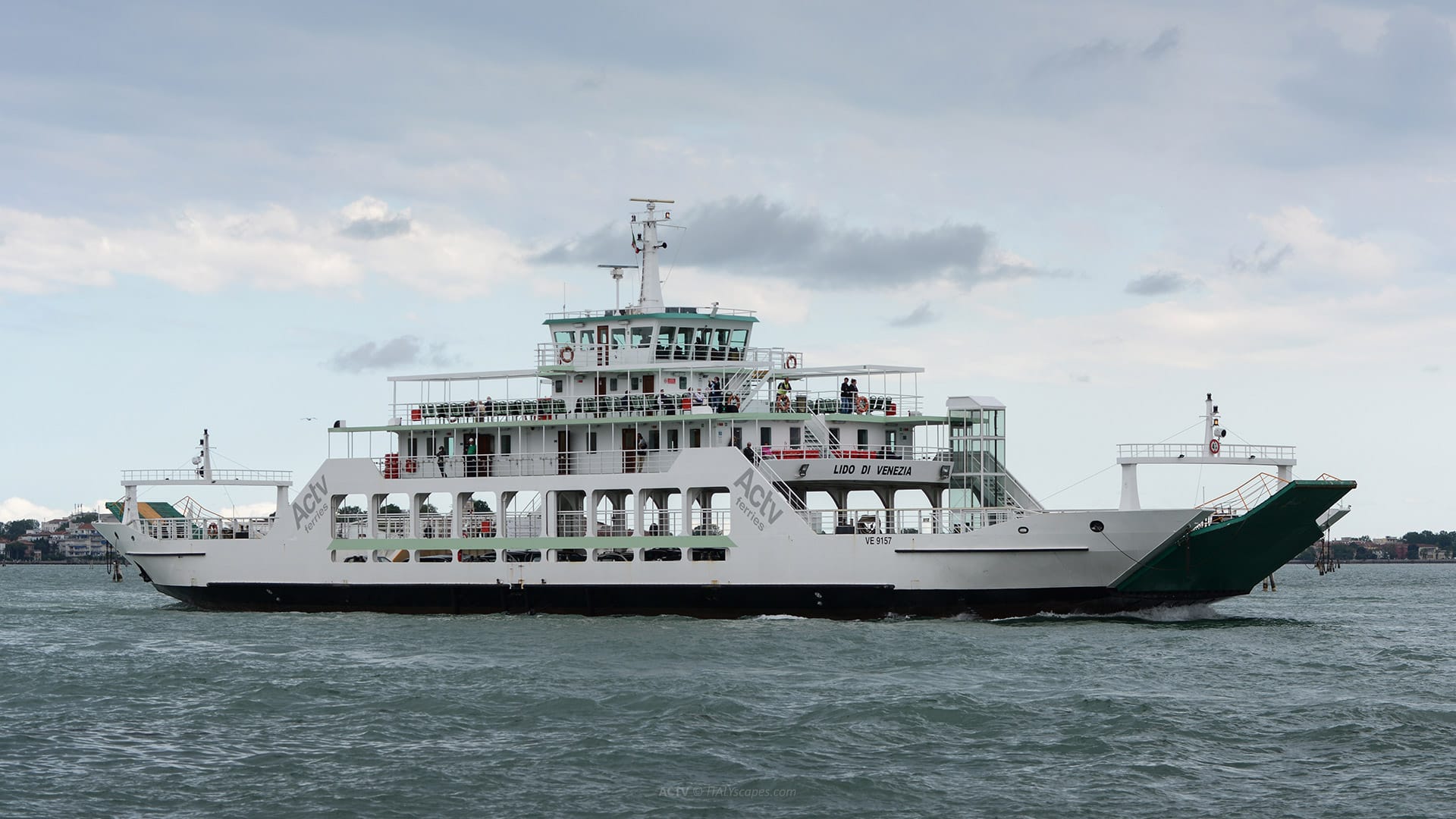
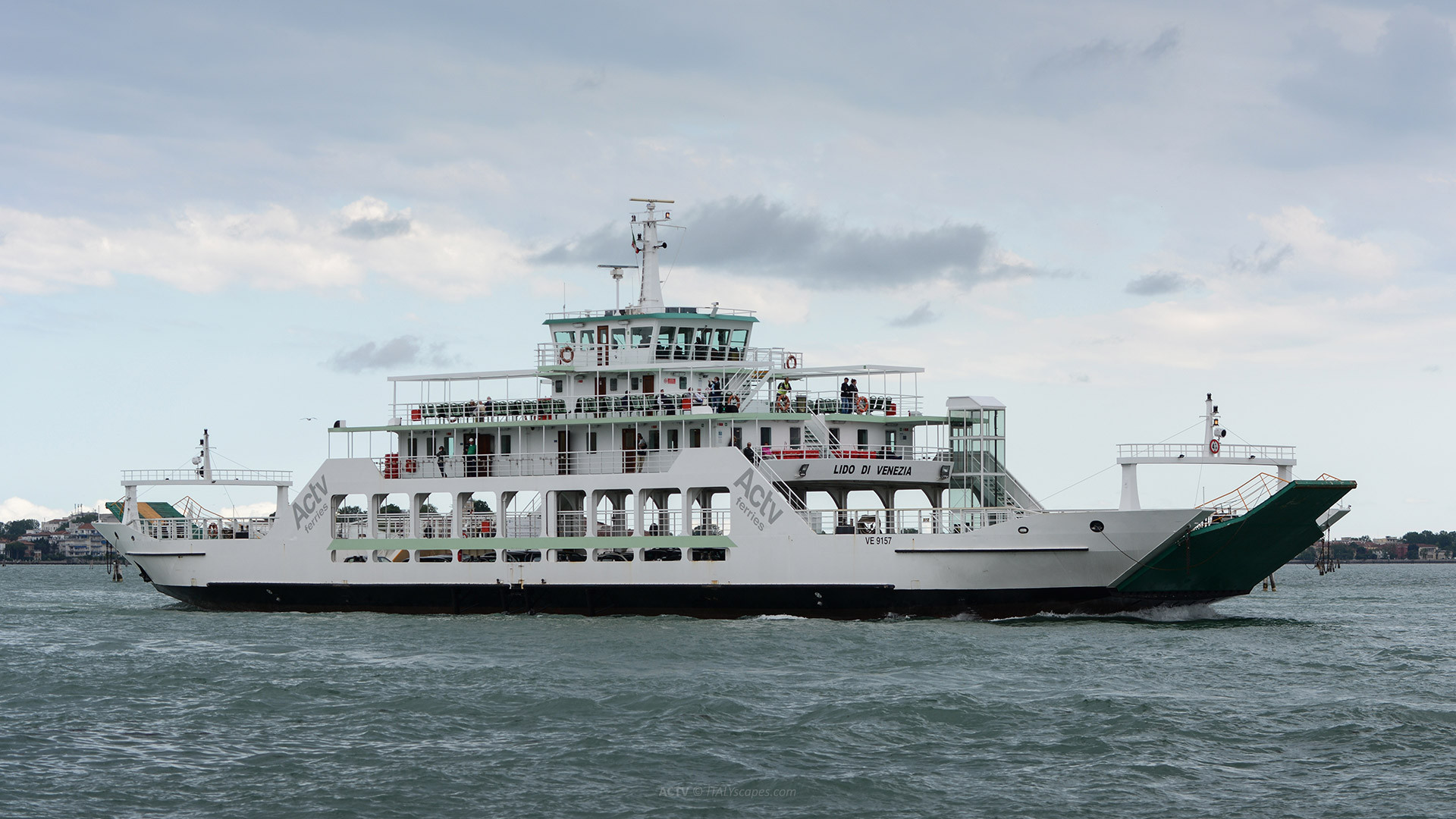
ACTV ferryboat
Lagoon Lines to the Islands
ACTV lagoon routes connect the historic center with the islands of the Venetian Lagoon. These services are essential for residents of Murano, Burano, Torcello, Sant’Erasmo, Vignole, Lido and Pellestrina, but they are also heavily used by tourists exploring Venice beyond San Marco and Rialto.
Line 12 is one of the most important northern lagoon routes. It connects Fondamente Nove with Murano, Mazzorbo, Torcello, Burano, Treporti and, on some services, Punta Sabbioni. This line is especially important for visitors planning a day trip to Murano, Burano and Torcello.
Line 13 serves smaller lagoon islands such as Vignole and Sant’Erasmo, with connections from Fondamente Nove and Murano Faro. Sant’Erasmo is one of the largest islands in the lagoon and has a more rural character than the heavily visited islands of Murano and Burano.
Line 14 connects the San Marco-San Zaccaria area with Lido, Punta Sabbioni and Burano, depending on the route and timetable. It is useful for passengers traveling between the southern part of Venice, the beaches of Lido and the mainland lagoon terminal of Punta Sabbioni.
Line 15 provides a direct connection between San Marco-San Zaccaria and Punta Sabbioni. This route is useful for visitors staying on the Cavallino-Treporti coast or arriving from the mainland side of the northern lagoon and heading directly toward central Venice.
Ferry, Integrated and Special Water Routes
ACTV also operates ferry-boat services, including routes that allow the transport of vehicles where this is permitted. Line 17 is the main ferry-boat connection between Tronchetto and Lido San Nicolò, with some services linked to Punta Sabbioni according to the timetable.
Line 11 is an integrated route combining bus, ferry and water transport between Lido, Pellestrina and Chioggia. The journey between Chioggia and Lido Santa Maria Elisabetta takes about 70 minutes, linking the southern lagoon with Venice’s wider transport system.
Line 20 connects San Zaccaria with the islands of San Servolo and San Lazzaro degli Armeni, and may also include Lido connections according to the service pattern. These smaller islands have cultural and institutional importance, but they are not served by the busiest vaporetto lines.
Some ACTV routes are seasonal, limited, outsourced to third-party operators or subject to changes during events, weather conditions, fog or high tide. Because of this, passengers should always check the official timetable before traveling, especially for lagoon islands and less frequent services.
Night Waterbus Services
ACTV night services cover the hours when regular daytime routes are reduced. The main night waterbus service is generally known as Line N, connecting key points such as Lido, San Marco, the Grand Canal corridor, Ferrovia and Piazzale Roma, depending on the timetable.
Night transport is important because Venice continues to function after midnight, especially for workers, residents, late-arriving train passengers and visitors returning from restaurants or events. ACTV developed night services to coordinate waterbuses with buses in Mestre, Marghera, Lido, Pellestrina and Chioggia.
There are also night connections for the northern lagoon and Murano, although frequencies are lower than during the day. For travel after midnight, passengers should check both the route and the direction carefully, because night lines often follow different stopping patterns from daytime services.
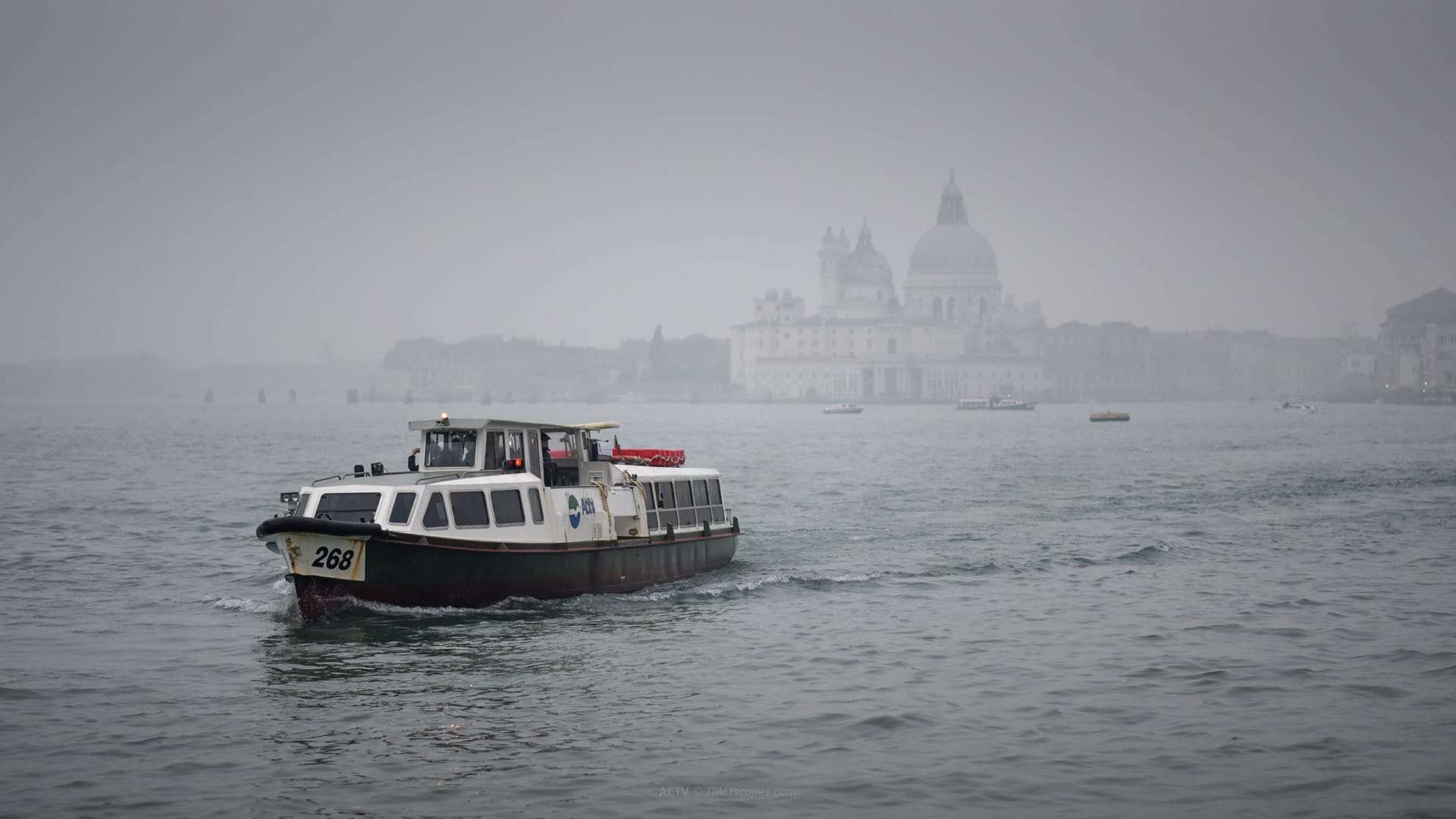
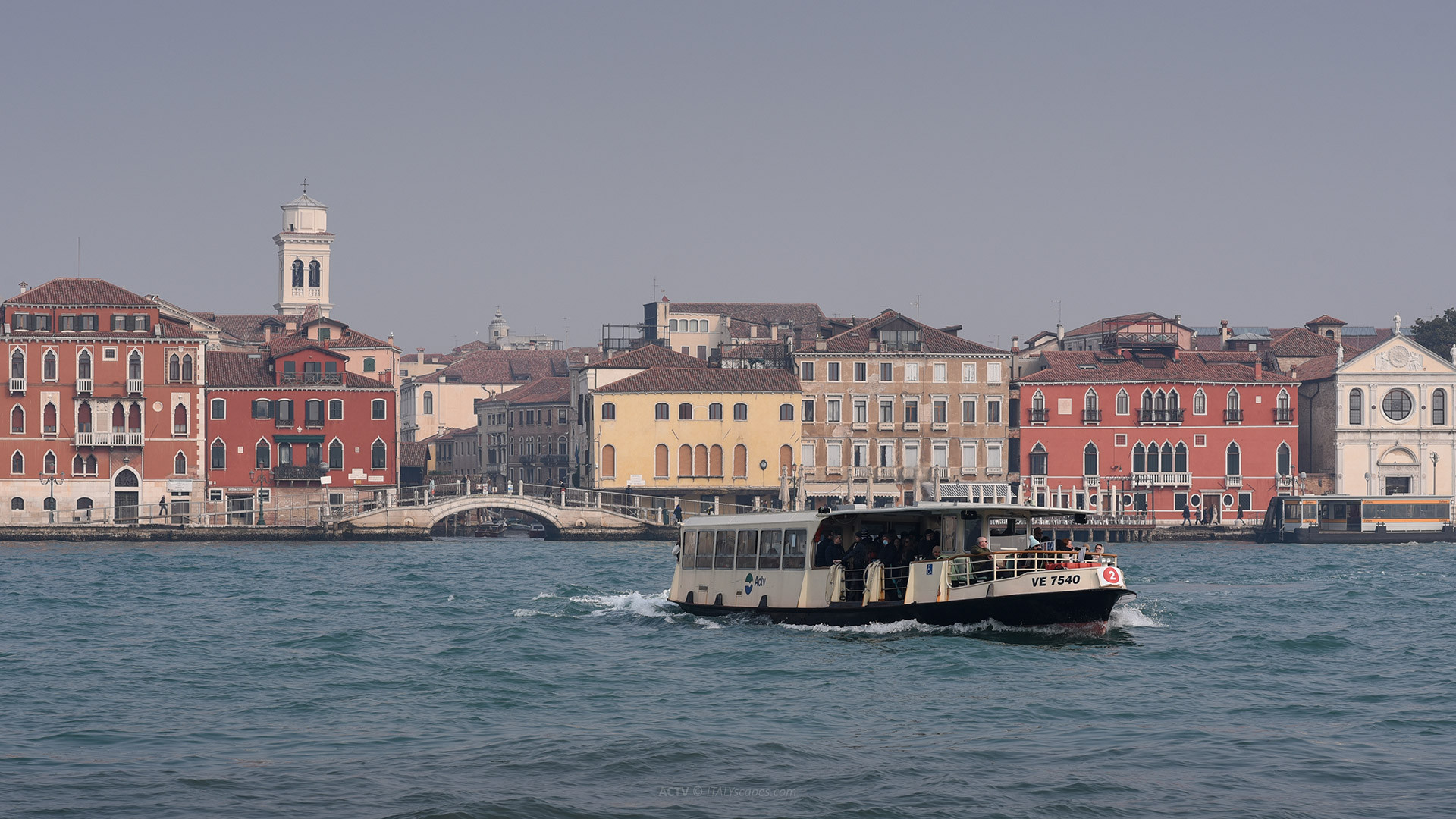
ACTV vaporetto
ACTV Bus Routes
ACTV does not operate only on water. It also manages an extensive land transport network in Mestre, Marghera, Favaro Veneto, Chirignago-Zelarino, Carpenedo, Lido, Pellestrina and other areas within the metropolitan transport system of Venice.
The mainland bus network is essential for commuters traveling between residential districts, railway stations, schools, hospitals, commercial areas and the historic center. Many routes terminate or pass through Piazzale Roma, where passengers can transfer to waterbuses serving the Grand Canal, San Marco, Giudecca and the lagoon islands.
Important urban bus routes connect Venice with Mestre, Marghera, Spinea and Marco Polo Airport. For example, ACTV operates bus services linking Venice with the airport area, although airport journeys have specific fares and are not included in ordinary urban bus tickets.
Tram Services in Mestre and Marghera
The ACTV/AVM transport network also includes tram routes. The tram system improves connections between Venice, Mestre, Favaro Veneto and Marghera, offering a high-capacity alternative to buses on some urban corridors. It is especially useful for residents and visitors staying on the mainland.
Main tram services include routes between Favaro Veneto and Venice and between Mestre Centro and Marghera. These lines connect with bus stops, Mestre railway station connections and the wider urban mobility network, making mainland accommodation more practical for visitors who do not stay inside Venice.
For tourists, Mestre can be a convenient base because accommodation is usually cheaper than in the historic center. ACTV buses and trams make it possible to reach Piazzale Roma, then continue by foot or vaporetto into Venice.
Buses on Lido and Pellestrina
ACTV buses also operate on Lido and Pellestrina, two long barrier islands separating the Venetian Lagoon from the Adriatic Sea. Unlike the historic center, these islands have roads, so buses connect ferry terminals, residential areas, beaches and local settlements.
On Lido, buses connect Santa Maria Elisabetta, the main interchange with waterbus routes, to areas such as San Nicolò, the beach zones, Malamocco and Alberoni. This is important for visitors attending the Venice Film Festival or traveling to the public beaches.
On Pellestrina, road services are integrated with ferry and water connections. This makes it possible to travel from Lido toward Pellestrina and Chioggia using a combination of bus, ferry-boat and lagoon transport. The route is slower than central vaporetto travel, but it gives access to a very different side of Venice.
ACTV Timetables
ACTV timetables vary by line, season, day of the week, direction and service category. The main waterbus lines usually start early in the morning and operate until late evening, while night services cover the remaining hours with reduced frequency and different route patterns.
For most visitors, the busiest and most useful services are the Grand Canal lines, the circular routes, the Murano-Burano-Torcello routes and the connections to Lido. These should always be checked before departure, because routes may change during major events, fog, high tide or maintenance works.
ACTV officially recommends checking timetables close to the day of travel for long-term planning. This is important because Venice is affected by special events such as the Carnival, the Biennale, the Venice Film Festival, the Regata Storica, Vogalonga and local transport restrictions.
Passengers should validate tickets at the beginning of each journey and at every change of vehicle. Validation points are located at waterbus stops, People Mover stations and on buses or trams. For mobile tickets, activation rules may differ, so the ticket must be activated before boarding where required.
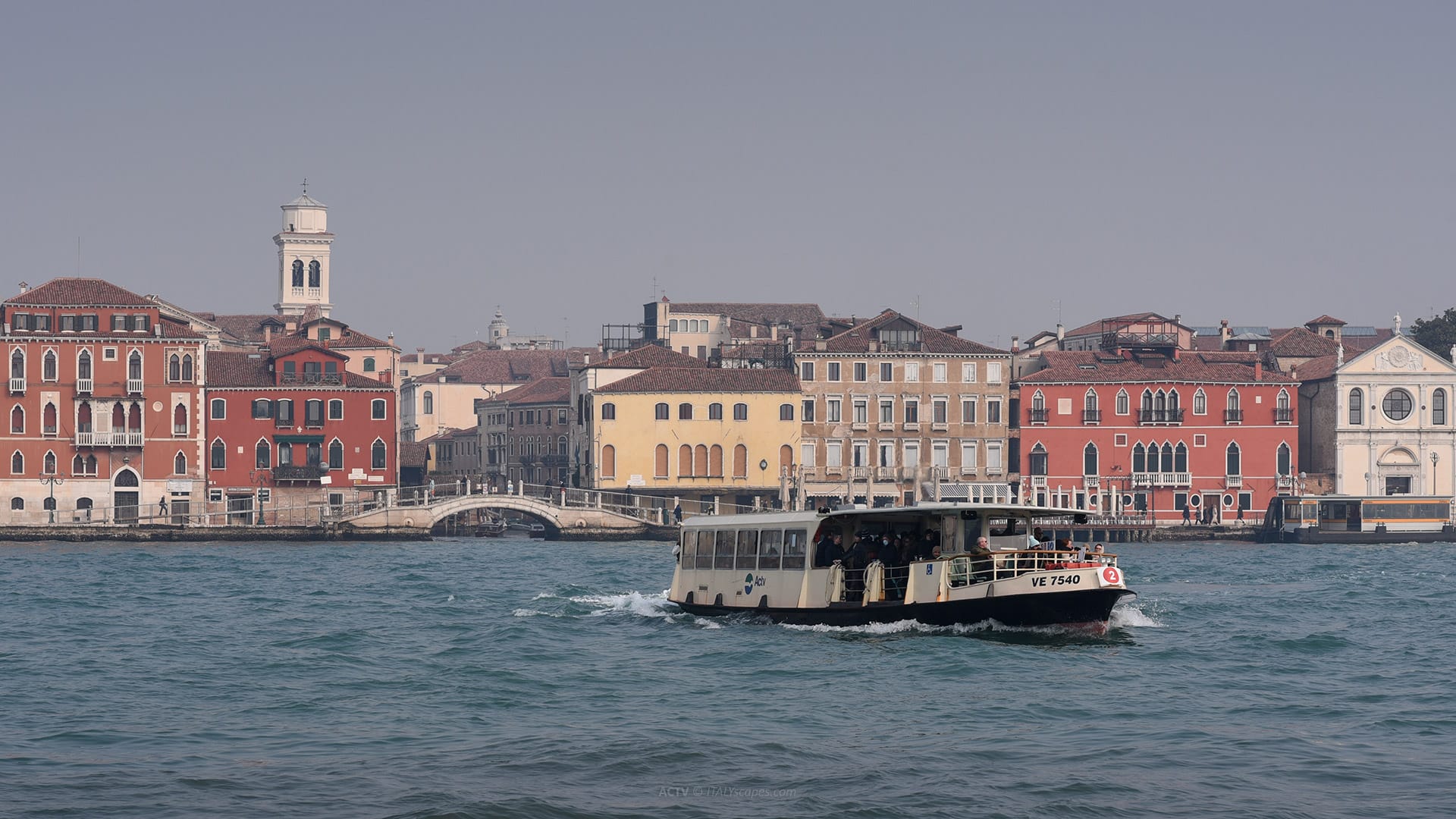
ACTV vaporetto
ACTV Fares
ACTV fares are divided between ordinary urban tickets, waterbus-inclusive tickets, bus and tram tickets, airport tickets and multi-day tourist passes. The most important fare for visitors is the 75-minute “rete unica” ticket, because it includes navigation, buses, trams and the People Mover within the urban network.
A 75-minute ordinary urban “rete unica” ticket costs €9.50. It is valid from the first validation on the urban network of the Municipality of Venice, including ACTV navigation services, mainland buses, Lido and Pellestrina buses, trams and the People Mover. Airport journeys are excluded.
A 75-minute ordinary bus/tram ticket costs €1.50. It is valid on mainland buses, Lido and Pellestrina buses, trams and the People Mover within the administrative boundaries of the Municipality of Venice. It does not include ACTV waterbus travel and does not cover airport journeys.
For visitors who plan several vaporetto trips, time tickets are usually better than single tickets. The Venezia Daily Pass costs €25.00 and is valid for 24 hours from first validation on the urban transport network, with the standard exclusions for airport journeys and some special lines.
Multi-day ACTV tickets cost €35.00 for 2 days, €45.00 for 3 days and €65.00 for 7 days. They allow unlimited travel within their validity period on the urban ACTV network, including navigation services, mainland buses, Lido and Pellestrina buses, trams and People Mover.
Airport travel has separate pricing. A 75-minute Aerobus ticket costs €10.00, while the return Aerobus ticket costs €18.00.
The ACTV fare system is practical, but visitors should choose tickets carefully. A person taking only one bus from Mestre may need only a €1.50 ticket, while anyone using vaporetti in Venice should consider either the €9.50 single ticket or a 24-hour, 48-hour, 72-hour or 7-day pass.
Frequently Asked Questions about ACTV
What is ACTV in Venice?
ACTV is the main public transport operator in Venice. It manages waterbus, ferry, bus and tram services across the historic center, mainland districts, lagoon islands, Lido and Pellestrina.
How much does an ACTV vaporetto ticket cost?
A standard 75-minute ACTV ticket including navigation costs €9.50. It is valid on urban waterbuses, buses, trams and the People Mover, but airport services are excluded.
How much does an ACTV bus or tram ticket cost?
A standard 75-minute bus or tram ticket costs €1.50. It is valid on mainland buses, trams, Lido and Pellestrina buses, and the People Mover, but not on waterbuses.
Are ACTV day passes worth it in Venice?
Yes, if you plan several vaporetto rides. A 24-hour ACTV pass costs €25, while multi-day passes are useful for visiting Murano, Burano, Lido, Giudecca or multiple districts.
Which ACTV line goes along the Grand Canal?
ACTV Line 1 is the classic Grand Canal route, with many stops between Piazzale Roma, Ferrovia, Rialto, Accademia and San Marco. Line 2 is faster, with fewer stops.
Which ACTV line goes to Murano, Burano and Torcello?
ACTV Line 12 connects Fondamente Nove with Murano, Mazzorbo, Torcello, Burano, Treporti and, on some services, Punta Sabbioni. It is the main northern lagoon route.
Does ACTV operate at night in Venice?
Yes. ACTV operates night waterbus services, especially Line N, which connects key points such as Lido, San Marco, the Grand Canal, Ferrovia and Piazzale Roma after regular daytime services.
Sources: -
Photos
-
Map
-
Reviews

2 Reviews on “Actv”
Leave a Review
BEWARE OF TGE WATERBUS INSPECTORS PREYING ON TOURISTS!!!
May 2024 • Couples
SHAME ON YOU VENICE BEWARE OF The WATERBUS INSPECTORS PREYING ON TOURISTS!!!
We bought two tickets in the machine, nowhere was displayed or did the conductor tell us we had to validate it, after a couple stops THREE inspectors boarded the waterbus and asked for our ticket which my wife gave them, he told us it was only for one person and wasn’t validated!? I showed my credit card receipt charge for the amount of two tickets and date purchased but he didn’t care fined us 50 euro and charged another ticket instead of explaining the system and giving us a break after showed him I paid
They saw our suitcases and went straight for us without checking any of the other passengers!! SHAME ON YOUR UNETHICAL PREYING ON TOURISTS WHO HELP PAY FOR YOUR JOB
And I’m not the only one with this experience from what I can read in previous reviews
The prices for the water buses are sky high. A bus jurney only costs EUR 1.50 but a ‘Vaporetto’ trip costs EUR 9.50, however short. A seven day ticket is EUR 65, so good if you travel at least twice a day.
The mobile app is terrible. It is hard enough to find out how to buy a ticket. It redirects you other sites and tries to get you to buy a Venezia Unica card, which is only any use if you book everything 30 days in advance. I finally succeeded once in purchasing a 7-day transport-only ticket, but the QR code would not scan and an employee had to print it a ticket for me.
The second time I bought one, it did not appear on my phone at all. I complained — which is an unnecessarily long process — and they finally sorted it out, but it took them three days.
I then applied for a refund for those three days — another unnecessarily long process — but did not get an answer. I will contnue complaining but it is a lot of hassle that you do not need when on holidday. Unfortunately there is no alternative transport available except private taxis, which are even dearer.