


Buy tickets:TicketOne Simply Red will perform in Bari on Wednesday, Jul Read more [...]
-
About
Table of Contents
Buy tickets:TicketOneThe Locus Festival 2027 will mark another summer edition of one of Southern Italy’s most distinctive contemporary music events. Founded in 2005 in Locorotondo, the festival has developed from a local initiative into an internationally recognised cultural event that attracts artists and audiences from Italy and abroad.
Locus is known for an eclectic musical identity that crosses jazz, soul, funk, rock, electronic music, hip-hop, and experimental sounds. Instead of being tied to a single genre, its programme brings together artists from different musical backgrounds, often combining established international names with contemporary performers and innovative projects.
Another defining characteristic is the festival’s relationship with Apulia and its landscape. Concerts have been organised in historic towns, rural estates, archaeological settings, theatres, public squares, exhibition grounds, and other locations whose architecture and atmosphere become part of the festival experience.
Over the years, Locus has expanded well beyond its original base in the Valle d’Itria. Bari has become one of its most important locations for large-scale concerts, while Locorotondo continues to represent the historical and cultural heart of the event.
When Will the Locus Festival 2027 Take Place?
The programme for Locus Festival 2027 has only recently begun to take shape. Historically, however, Locus is not organised as a compact festival taking place over two or three consecutive days, but as a sequence of separate concerts and cultural events spread throughout the summer.
This structure has become one of the festival’s most recognisable features. Performances can take place weeks apart and in different Apulian destinations, allowing the programme to accommodate very different venues, audience capacities, and musical formats without concentrating every artist in one location.
Previous editions have often extended from early or mid-summer until the end of August or even the beginning of September. The 2026 edition, for example, ran from June 18 to September 2 and included concerts and cultural events in several municipalities across Apulia.
For visitors, this means that attending Locus does not necessarily require planning an entire festival weekend. Individual concerts can be incorporated into a larger holiday in Apulia, with travellers choosing particular performances according to their itinerary, preferred artists, and the destination hosting each event.
The distributed format also allows Locus to use locations that would not normally function as permanent music festival grounds. Historic centres, exhibition venues, rural areas, and cultural spaces can each host independent events while remaining part of the same festival identity.
Where Will the Locus Festival 2027 Take Place?
Bari and the Valle d’Itria have played major roles in the evolution of Locus Festival. Bari has become particularly important for large concerts requiring extensive production infrastructure and substantial audience capacity, while the festival’s historical roots remain firmly connected with Locorotondo.
Locorotondo is where Locus began in 2005 and remains closely associated with the festival’s identity. Its historic centre, public spaces, and nearby rural venues have hosted performances and cultural events throughout the history of the festival.
The festival has also developed a broader geographical presence across Apulia. Recent editions have reached destinations such as Ostuni, Alberobello, Fasano, and Minervino Murge, demonstrating how Locus has evolved into a regional cultural programme rather than an event confined to one municipality.
This model allows the festival to connect different musical experiences with distinct environments. A major international concert in Bari can coexist within the same edition with a more intimate event in the Valle d’Itria, creating significant differences in atmosphere, scale, and audience experience.
Each concert therefore needs to be considered as an individual event within the larger Locus programme. Venue, access arrangements, ticketing, transport options, and capacity can vary considerably depending on the specific location chosen for each performance.
About Bari and Locorotondo
Bari is the capital of Apulia and one of the most important urban centres in Southern Italy. Located on the Adriatic coast, it combines a large port, an international airport, major railway connections, commercial districts, cultural institutions, and a historic centre whose development spans many centuries.
From the perspective of festival visitors, Bari offers the widest range of accommodation and transport options among the locations traditionally associated with Locus. Hotels, apartments, restaurants, public transport, and long-distance connections make it particularly convenient for large concerts and visitors arriving from other parts of Italy or from abroad.
The city combines very different urban environments. Medieval Bari Vecchia forms the historic core near the waterfront, while the Murat district is characterised by a more regular 19th-century street plan, commercial avenues, theatres, restaurants, and many of the services used by visitors staying in central Bari.
Locorotondo, by contrast, is a much smaller hill town in the Valle d’Itria. Situated approximately 410 metres above sea level, it is known for its circular historic centre, whitewashed architecture, narrow streets, panoramic views, and traditional cummerse, houses distinguished by their steep stone roofs.
These two places represent two complementary sides of the festival. Bari provides the infrastructure required for large international productions, while Locorotondo embodies the smaller-scale atmosphere and strong relationship with landscape, architecture, and local identity that have defined Locus since its earliest editions.
What Is the Venue of the Locus Festival 2027?
One of the principal venues associated with the Locus Festival 2027 in Bari is the Fiera del Levante, located on Lungomare Starita near the Adriatic waterfront. The complex is one of the most important exhibition centres in Southern Italy and hosts trade fairs, conferences, cultural events, and large-scale entertainment productions.
The Fiera del Levante extends across approximately 280,000 square metres and includes exhibition halls, open areas, service facilities, and spaces suitable for major public events. Its size allows concert organisers to create configurations capable of accommodating substantially larger audiences than those possible in historic town centres.
Its location northwest of central Bari makes it relatively easy to reach while keeping large concert crowds away from the narrow streets of the historic centre. The site is also close to the port and waterfront, in an area characterised by large public and institutional spaces.
Visitors arriving in Bari by train generally use Bari Centrale, the city’s principal railway station. It is served by national and regional trains and functions as an important interchange for urban and suburban transport. From there, the Fiera del Levante can be reached by local bus or taxi.
Bari’s AMTAB network provides connections between the central station area and the vicinity of the fairgrounds. Bus line 53 links the Piazza Moro area with Viale Vittorio Emanuele Orlando, while other urban lines serve nearby streets depending on the route and operating schedule.
Travelling by taxi from Bari Centrale normally requires approximately 10 to 20 minutes, depending on road traffic and the entrance being used. On major concert nights, visitors should expect heavier traffic and allow additional time both before and after the performance.
There is no metro station directly inside the Fiera del Levante complex. Travellers using Bari’s suburban rail network therefore need to combine the railway with walking, buses, or taxis for the final part of the journey.
Visitors arriving by car can approach the area through Bari’s main urban roads and ring road connections. Parking availability depends on the particular event, and temporary restrictions may be introduced when large audiences are expected.
For international visitors, Bari’s Karol Wojtyła Airport is connected with the city by rail and road. Airport trains reach Bari Centrale, from where passengers can continue toward their accommodation or the concert venue using local transport.
Because Locus uses different locations, the Fiera del Levante should not be considered the festival’s only permanent venue. It is instead one of several event spaces that can be incorporated into the wider summer programme according to the requirements of individual concerts.

The Locus Festival 2027 Line-Up
The line-up for Locus Festival 2027 has begun to take shape, with international artists being announced individually as the programme develops. As in previous editions, concerts are organised on separate dates and can take place in different locations across Apulia.
Simply Red – July 28, 2027, Fiera del Levante, 9:00 PM
Simply Red are a British band formed in Manchester and led by singer Mick Hucknall, known for a sound combining soul, pop, funk, and rhythm and blues. Since emerging during the 1980s, the group has achieved major international success and has sold tens of millions of records worldwide.
The 2027 Bari concert forms part of the Summer Funk Tour ’27, a European tour celebrating the group’s extensive catalogue. The show is scheduled for July 28, 2027, at the Fiera del Levante, with the performance beginning at 9:00 PM.
Buy tickets:TicketOneA Short History of the Locus Festival
The First Editions in Locorotondo
The history of Locus Festival began in 2005 in Locorotondo, in the Valle d’Itria. From its earliest editions, the event focused on contemporary music with strong connections to jazz, soul, black music, and emerging international trends rather than adopting a rigid single-genre format.
Locorotondo itself became an essential part of the festival’s visual identity. The whitewashed historic centre, small streets, public squares, and surrounding countryside offered a setting very different from a conventional arena or purpose-built festival ground.
This combination of music and place helped establish a format in which the surrounding architecture and landscape were treated as part of the experience. The festival gradually expanded its programme while maintaining a strong interest in cross-cultural musical influences and artists whose work moved between genres.
During its development, Locus incorporated increasing amounts of soul, funk, electronic music, indie rock, experimental projects, and contemporary songwriting. This broad approach helped the event attract audiences with different musical interests while retaining a recognisable curatorial identity.
International Artists and Musical Diversity
Locus has hosted a long list of internationally recognised musicians from different generations. Artists associated with previous editions include Herbie Hancock, David Byrne, Robert Plant, Ben Harper, Marcus Miller, and George Clinton, demonstrating the remarkable stylistic range of the festival.
One particularly notable guest was Gil Scott-Heron, the American poet, musician, and spoken-word artist whose work connected jazz, soul, poetry, and political commentary. His appearance in Locorotondo came during the final period of his career.
The festival has also developed an important relationship with contemporary jazz and crossover music. Robert Glasper has appeared in several editions, while other performers have included Kings of Convenience, Ms. Lauryn Hill, and numerous artists whose work combines jazz, soul, hip-hop, and electronic influences.
Rock and alternative music have increasingly become part of the programme. Previous editions have included artists such as Morrissey, Simple Minds, Toto, Sigur Rós, Mogwai, and alt-J, substantially widening the stylistic boundaries of the festival.
Electronic music represents another major component of the Locus identity. Bonobo, Floating Points, Caribou, and Nils Frahm have all appeared in previous editions, alongside DJs including Louie Vega, Jeff Mills, and Theo Parrish.
This variety means that two consecutive Locus events can provide completely different experiences. An audience attending an electronic set may be followed days later by visitors coming for soul, jazz, alternative rock, or singer-songwriter music, all under the same festival banner.
Expansion and Recent Editions
As Locus increased in popularity, the festival gradually expanded beyond its original base. The move into additional locations created opportunities for larger-scale productions and allowed concerts to take place in venues adapted to very different audience capacities.
Italian music has remained an important part of the event throughout this evolution. Previous guests include Franco Battiato, Mannarino, Vinicio Capossela, and Baustelle, alongside numerous artists representing different generations and styles within Italian popular music.
The expansion into Bari was particularly significant because it allowed Locus to host internationally recognised artists requiring larger production spaces. At the same time, events in smaller Apulian towns preserved the festival’s connection with local architecture and regional landscapes.
The 2025 edition included artists such as Nile Rodgers & CHIC, Brunori Sas, Benjamin Clementine, and Morrissey. Performances were distributed between several locations, illustrating how firmly the multi-destination model had become embedded in the festival structure.
In 2026, Locus reached its 22nd edition with a programme partly inspired by the centenary of Miles Davis’s birth. Among the artists appearing during the summer were John Legend, Johnny Marr, Thundercat, Skunk Anansie, Subsonica, and Vinicio Capossela.
The 2026 edition attracted approximately 60,000 attendees across its programme. Around half of the audience came from outside Apulia or from abroad, highlighting the festival’s increasing role as both a cultural event and a driver of music-related tourism.
The programme consisted of 22 musical evenings, 43 performances, and five film screenings distributed across eight locations in Apulia. These figures illustrate how far the festival has developed from its origins as a smaller event centred on Locorotondo.
Beyond the Locus Festival 2027
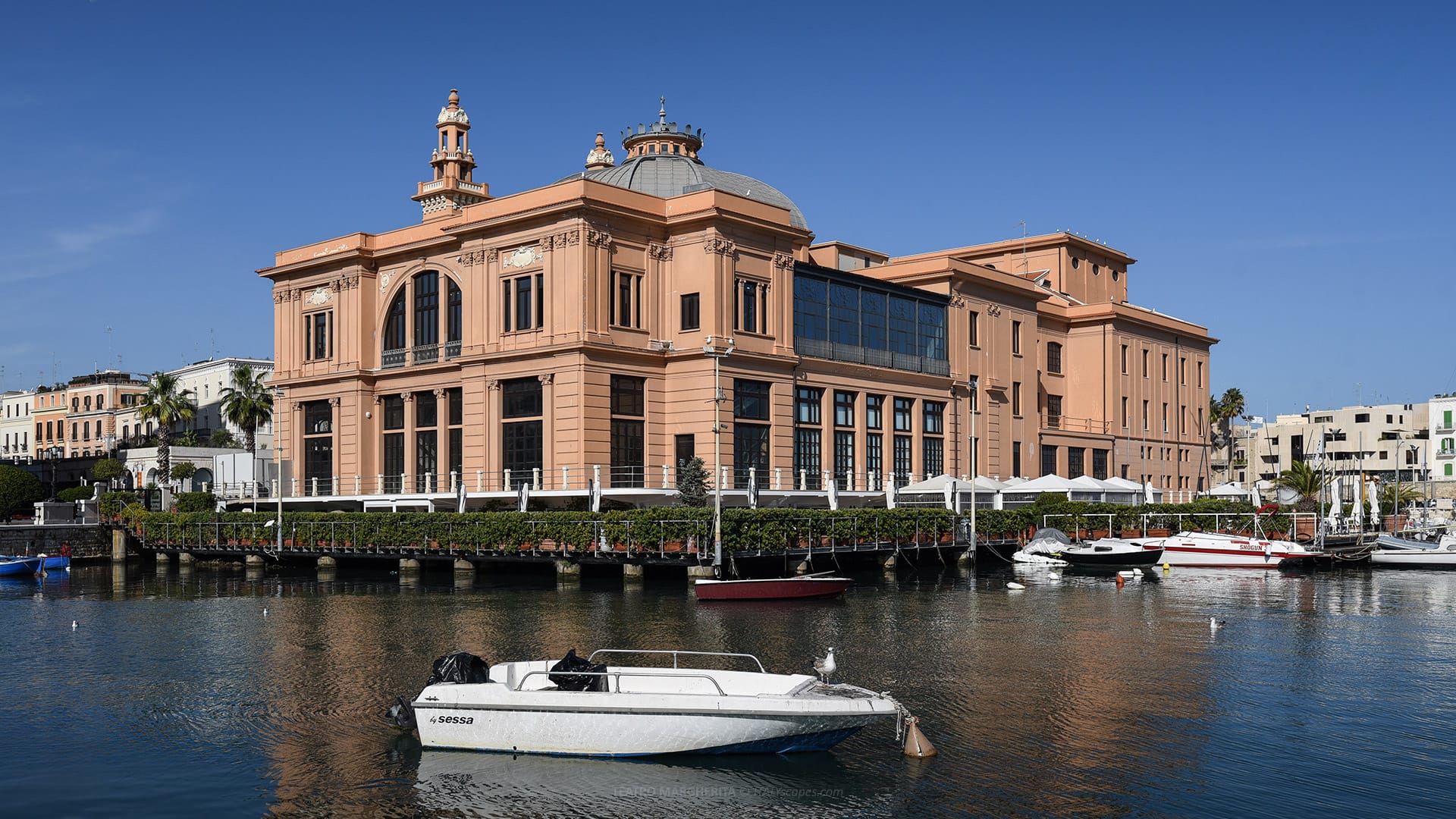
Attending Locus Festival 2027 in Bari can easily be combined with exploring the regional capital and its surrounding destinations. Bari offers medieval architecture, major religious landmarks, museums, theatres, a long waterfront, and one of the most distinctive food cultures in Apulia.
What to visit in Bari
Bari Vecchia occupies the historic peninsula between the old and new ports. Its narrow streets contain medieval churches, residential buildings, courtyards, small squares, and traditional workshops. Strada Arco Basso is particularly famous for local residents preparing handmade orecchiette outside their homes.
The Basilica di San Nicola is Bari’s most important religious monument and one of Europe’s major pilgrimage destinations associated with Saint Nicholas. Construction began in 1087 after the saint’s relics were brought from Myra, and the building became an important example of Apulian Romanesque architecture.
Nearby, the Cattedrale di San Sabino is another major medieval landmark. Its stone façade, large rose window, Romanesque forms, and imposing bell tower make it one of the defining monuments of Bari Vecchia. Archaeological remains beneath the church document earlier phases of the site.
The Castello Normanno-Svevo stands close to the edge of the old town. Originally constructed during the Norman period and later rebuilt under Emperor Frederick II, the fortress combines massive defensive walls, towers, internal courtyards, and architectural elements reflecting several centuries of military use.
In the modern centre, Teatro Petruzzelli is one of Italy’s best-known opera houses. Inaugurated in 1903, it was severely damaged by fire in 1991 and reopened after reconstruction in 2009. Its programme includes opera, classical concerts, ballet, and contemporary productions.
What to Eat
Focaccia barese is one of Bari’s most recognisable foods and is sold throughout the city in bakeries and specialised shops. The traditional dough often contains potato and olive oil, while the surface is typically covered with tomatoes, olives, and additional olive oil before baking.
Orecchiette con le cime di rapa is one of the defining pasta dishes of Apulia. The small ear-shaped pasta is combined with turnip greens, traditionally accompanied by ingredients such as garlic, olive oil, anchovies, and chilli.
Another classic preparation is tiella barese, also known as riso, patate e cozze. Rice, sliced potatoes, and mussels are arranged in layers and baked together, allowing the ingredients and cooking liquids to combine inside the dish.
Panzerotti are small folded pieces of dough filled most commonly with tomato and mozzarella before being fried. They are widely available as street food. Bari is also known for sgagliozze, fried rectangular pieces of polenta traditionally sold in the old town.
One of the city’s most distinctive pasta dishes is spaghetti all’assassina. The spaghetti is cooked directly in a tomato-based liquid using a technique that intentionally creates toasted and partially charred sections, producing a texture and flavour very different from conventionally boiled pasta.
Frequently Asked Questions about the Locus Festival 2027
When will the Locus Festival 2027 take place?
The festival traditionally consists of individual concerts distributed across the summer rather than one continuous weekend. The Locus Festival 2027 programme is being announced progressively.
Where does the Locus Festival 2027 take place?
Events can be organised in Bari, Locorotondo, and other destinations across Apulia, with each concert using a venue appropriate to its audience size and production requirements.
What kind of music can I hear at Locus Festival 2027?
The programme traditionally includes jazz, soul, funk, rock, electronic music, alternative music, hip-hop, and experimental projects, with both Italian and international artists.
How can I reach the Fiera del Levante from Bari Centrale?
Visitors can travel from Bari Centrale by urban bus or taxi. Journey times vary according to traffic and the specific entrance used for the event.
Where is Locorotondo?
Locorotondo is located in the Valle d’Itria in Apulia, between Bari and Brindisi. It is a hill town famous for its whitewashed historic centre and traditional architecture.
Can I combine the Locus Festival 2027 with a holiday in Apulia?
Yes. Because the concerts are spread across the summer, visitors can incorporate individual events into a longer regional itinerary including Bari, the Valle d’Itria, coastal towns, and other destinations.
Where should I stay for the Locus Festival 2027?
The best location depends on the concert being attended. Bari offers the largest accommodation selection, while events elsewhere in Apulia may make accommodation closer to the individual venue more convenient.
Buy tickets:TicketOne -
Photos
-
Video
Table of Contents
-
Map
-
Reviews
-
Related events