-
About
Table of Contents
Umbria Jazz Festival 2027 will take place in Perugia from July 9 to July 18, 2027, bringing ten consecutive days of jazz and related music to the capital of Umbria. The dates have been officially confirmed for the festival’s main summer edition.
The event combines major ticketed concerts with free performances in squares and gardens, specialist jazz programs in historic theaters, intimate indoor sessions, street parades, educational activities, and late-night music. This multi-venue structure allows performances to continue from daytime until late at night throughout central Perugia.
Although jazz remains the artistic foundation of the festival, Umbria Jazz has long included blues, soul, funk, R&B, Brazilian music, pop, and rock alongside more traditional and contemporary forms of jazz. Different venues are used for different musical identities rather than presenting every genre on the same stage.
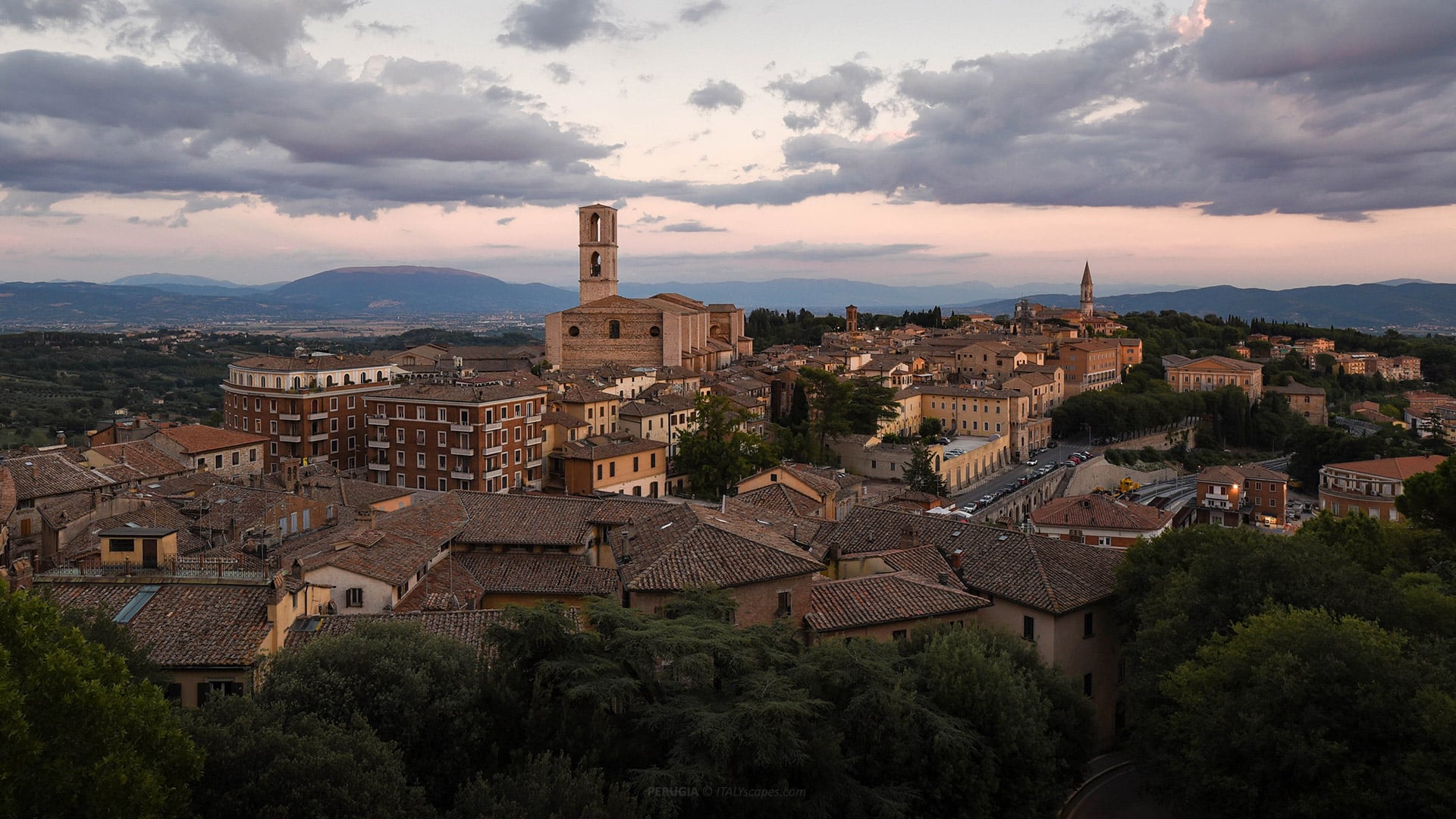
Perugia itself is an essential part of the experience. Concerts take place around its medieval and Renaissance streets, historic squares, gardens, theaters, museums, and outdoor venues, creating a festival closely integrated with the urban landscape of the Umbrian capital rather than isolated within a single purpose-built festival site.

When Will Umbria Jazz Festival 2027 Take Place?
Umbria Jazz Festival 2027 will run from Friday, July 9, through Sunday, July 18, 2027. The ten-day duration follows the established format of recent summer editions, which traditionally occupy two consecutive weekends and the weekdays between them.
During this period, the festival normally operates on several stages simultaneously. Recent editions have offered performances beginning around midday and continuing through evening headline concerts and late-night jazz sessions, while marching bands and street musicians add performances outside the formally scheduled program.
Where Will Umbria Jazz Festival 2027 Take Place?
Umbria Jazz Festival 2027 will once again be based in Perugia, using a network of spaces extending from the historic center to Arena Santa Giuliana immediately below the acropolis. The modern festival deliberately combines large outdoor venues with theaters, museum rooms, gardens, squares, restaurants, clubs, and streets.
This geographical concentration allows visitors to move between very different types of performances without leaving central Perugia. The current festival format revolves around several established locations, particularly Arena Santa Giuliana, Piazza IV Novembre, Teatro Morlacchi, Sala Podiani, and Giardini Carducci.
About Perugia
Perugia is the capital of Umbria, a landlocked region in central Italy situated between Tuscany, Marche, and Lazio. The historic city occupies a high hill overlooking the Tiber Valley, with the traditional reference elevation reaching approximately 493 meters above sea level at Porta Sole.
Its elevated position has always influenced both the appearance and development of the city. The historic center extends along several ridges descending from the acropolis, producing steep streets, stairways, terraces, underground passages, and viewpoints overlooking the valleys and hills surrounding Perugia.
Geographically, the city stands between Lake Trasimeno to the west and Mount Subasio to the east, with Assisi visible across the Umbrian Valley from several panoramic points. The Apennines rise farther east, while routes through the Tiber Valley provide important connections toward Rome and northern central Italy.
The municipal territory is much larger than the compact hilltop center, extending over approximately 450 square kilometers and ranging from low valley areas to considerably higher terrain. Modern residential and commercial districts developed around the historic core, particularly toward the railway and surrounding valleys.
The central acropolis remains the part most relevant to Umbria Jazz. Corso Vannucci forms its principal pedestrian axis, connecting Piazza IV Novembre with Piazza Italia and the Carducci Gardens, while numerous festival locations can be reached through the surrounding network of medieval streets.
Perugia is also a major university city. The University of Perugia traces its foundation to the early fourteenth century, while the University for Foreigners attracts students from many countries. This permanent student population contributes to the city’s cultural activity beyond the festival period.
What Are the Venues of Umbria Jazz Festival 2027?
Arena Santa Giuliana is the principal large-scale venue of the Umbria Jazz Festival 2027 and the stage associated with the festival’s biggest evening concerts. It lies below the historic center, close to the former monastery of Santa Giuliana and within walking distance of the central acropolis.
The stadium was constructed in 1937 to a design by architect Giuseppe Lilli. Originally created primarily for sporting use, it contains a grass field surrounded by an athletics track. During Umbria Jazz, it is converted into a large outdoor concert arena with staging, audience areas, and food facilities.
In festival configuration, Arena Santa Giuliana can accommodate approximately 6,000 seated spectators, with capacity exceeding twice that number when standing arrangements are used. Its scale allows Umbria Jazz to host major international acts whose audiences would be too large for the historic theaters of central Perugia.
Piazza IV Novembre represents the opposite side of the festival’s identity. Situated at the heart of the historic center, between Palazzo dei Priori and the Cathedral of San Lorenzo, it continues the original principle of presenting music free of charge in public urban spaces.
The square is dominated by the medieval Fontana Maggiore, and its festival stage generally hosts accessible forms of jazz and related genres. Free performances here attract both dedicated festival visitors and people passing through the city center, recreating the open-air character that distinguished the earliest Umbria Jazz editions.
Another important free venue is Giardini Carducci, beside Piazza Italia at the southern end of Corso Vannucci. The gardens occupy a panoramic position above the surrounding valleys and have traditionally hosted blues, swing, soul, R&B, and other music suited to the festival’s informal outdoor program.
For audiences interested primarily in jazz, Teatro Morlacchi is one of the key indoor venues. Perugia’s principal theater opened in 1781 and today has 785 seats. Umbria Jazz uses it for programs that emphasize acoustic ensembles, established jazz musicians, and projects requiring a traditional theatrical environment.
The festival has also used Teatro del Pavone, another historic performance space in the center, while Sala Podiani inside the Galleria Nazionale dell’Umbria provides a much more intimate setting. The latter is particularly associated with refined, small-scale projects, solo performances, duos, and exploratory contemporary jazz.
Other recent festival spaces have included the terrace of the Mercato Coperto, the Conservatory auditorium, clubs, restaurants, gardens, and dedicated late-night venues. This distribution is deliberate: Umbria Jazz functions as several complementary musical programs occurring simultaneously within the same city.
A Short History of Umbria Jazz Festival
Umbria Jazz was founded in 1973 under the auspices of the Region of Umbria. Carlo Pagnotta, who had already been involved in bringing important jazz musicians to Perugia, played the central role in creating the festival, working with figures from the Italian jazz promotion scene to develop its first program.
The original concept was radically different from a conventional ticketed festival. Concerts were free, performances took place in public spaces, and the event travelled through different Umbrian towns. Jazz was deliberately removed from specialist clubs and placed directly in historic squares and outdoor settings.
The Origins (1973-1982)
The first edition ran from August 23 to August 26, 1973, with events in Terni, Perugia, and Gubbio. Instead of concentrating the entire program in one location, the festival moved around the region, combining international jazz with the architecture and landscapes of Umbria.
The idea proved extraordinarily popular. During subsequent editions, concerts reached towns including Orvieto, Todi, Castiglione del Lago, and Città di Castello, while Perugia increasingly became one of the principal centers of the festival. Large audiences gathered in spaces that had never been designed for events of such scale.
Free admission was crucial to the early identity of Umbria Jazz, but its success also produced serious logistical problems. Crowd numbers grew rapidly, transforming what had begun as an experimental cultural initiative into a mass gathering requiring increasingly complex organization, security, transportation, and crowd management.
After the 1978 edition, the summer festival entered a three-year pause. The interruption allowed organizers to reconsider a model that had become difficult to manage while preserving the fundamental idea that jazz could occupy major civic spaces and reach audiences far beyond specialist listeners.
Umbria Jazz returned in 1982 with a substantially redesigned structure. The exclusively free and itinerant model was abandoned, theaters and clubs became part of the program, and some principal events became ticketed. Free concerts nevertheless remained in the historic center, preserving an important connection with the festival’s origins.

Growth and Transformation
Following its return, Perugia progressively became the permanent home of the principal summer festival. The combination of the medieval acropolis and jazz became one of the event’s defining characteristics, while different venue types made it possible to separate large popular concerts from specialist jazz programming.
Education also became an important component. The first Umbria Jazz Clinics were organized in 1982, and collaboration with Berklee College of Music began in 1985. The program has subsequently brought thousands of young musicians from different countries to Perugia for intensive theoretical and practical musical training.
The festival continued to evolve during the 1990s and early 2000s. In 2003, Arena Santa Giuliana became the principal large venue and the current concept of several complementary festivals within one event became increasingly clear: headline concerts, specialist jazz, and free outdoor performances.
This structure continues to define modern Umbria Jazz. The Arena presents major international events, theaters and intimate spaces concentrate on jazz-oriented programming, while free stages in squares and gardens preserve the popular character of the original 1970s festival.
The organization has also expanded beyond the July event. Umbria Jazz Winter has been held in Orvieto since the 1990s, while other initiatives, international projects, educational programs, competitions for emerging artists, activities for children, and the Umbria Jazz Orchestra have broadened the institution’s work.
Icons Who Have Performed Over the Years
The history of Umbria Jazz includes many of the most important musicians in modern jazz. Miles Davis became a particularly memorable figure during the 1980s, including his 1984 appearance in Terni and a celebrated 1989 concert in Perugia during the later phase of his career.
Other major jazz figures appearing across different editions include Herbie Hancock, Chick Corea, Sonny Rollins, Keith Jarrett, Ornette Coleman, Pat Metheny, Wayne Shorter, B.B. King, Diana Krall, George Benson, and Branford Marsalis, illustrating the festival’s long connection with several generations of American and international jazz.
The program has never been restricted exclusively to orthodox jazz. Artists such as James Brown, Prince, Santana, Eric Clapton, R.E.M., Sting, Elton John, Mark Knopfler, Alicia Keys, and Lady Gaga with Tony Bennett have performed at the festival, particularly during the era of large Arena Santa Giuliana concerts.
Brazilian music has also held an important place through artists such as Caetano Veloso and Gilberto Gil, while Italian musicians including Paolo Conte, Stefano Bollani, Enrico Rava, Paolo Fresu, and numerous younger performers have strengthened the relationship between the festival and the development of Italian jazz.
Beyond Umbria Jazz Festival 2027
A trip to Umbria Jazz can easily include substantial sightseeing because many festival stages are positioned directly beside major monuments. Visitors moving between performances encounter Etruscan gates, medieval palaces, churches, museums, Renaissance fortifications, panoramic gardens, and underground archaeological spaces without leaving the central festival area.
Perugia is also well placed for exploring the wider region. Several of Umbria’s principal historic towns and natural areas are suitable for day trips, making it possible to combine the ten-day festival with medieval cities, lakes, hill towns, churches, archaeological sites, and Umbrian countryside.
What to Visit in Perugia
Piazza IV Novembre is both a festival venue and the monumental center of Perugia. At its center stands Fontana Maggiore, completed in the thirteenth century and decorated with reliefs and statues by Nicola and Giovanni Pisano illustrating religious subjects, seasonal activities, mythology, history, and medieval knowledge.
The Palazzo dei Priori occupies one side of the square and developed in several stages between the late thirteenth and fifteenth centuries. It remains one of Italy’s most important medieval civic buildings and contains both municipal spaces and the Galleria Nazionale dell’Umbria.
Inside the palace, the Galleria Nazionale dell’Umbria holds one of central Italy’s major art collections. Its works document Umbrian and central Italian art from the Middle Ages onward and include paintings associated with artists such as Perugino, Pinturicchio, and Piero della Francesca.
Opposite Palazzo dei Priori stands the Cathedral of San Lorenzo, constructed above the ancient civic center. Archaeological routes beneath the cathedral reveal earlier layers of Perugia, connecting the modern square with structures belonging to the Etruscan and Roman city.
At the northern entrance to the ancient city is the Etruscan Arch, one of the most important surviving gateways of Perugia’s fortifications. Built from large stone blocks during the third century BC, it was later modified under Augustus and still bears the inscription Augusta Perusia.
At the opposite end of Corso Vannucci, visitors can descend into Rocca Paolina, the fortress constructed for Pope Paul III following the Salt War of 1540. Its surviving underground passages incorporate medieval streets and buildings that were absorbed into the sixteenth-century fortification.
Another important archaeological site is the Etruscan Well, a monumental hydraulic structure beneath Piazza Danti. Excavated to a depth of approximately 37 meters, it demonstrates the engineering capabilities of ancient Perugia and the importance of managing water within a hilltop settlement.
For a broader geographical perspective, Porta Sole reaches one of the highest points of the historic center. The viewpoint overlooks Perugia’s northern districts, the Umbrian landscape, and, in suitable conditions, areas toward Assisi and Mount Subasio.
Nearby Cities and Day Trips
Assisi is one of the easiest major excursions from Perugia. Built on the slopes of Mount Subasio, the town is internationally associated with Saint Francis and contains the Basilica of San Francesco, Santa Chiara, San Rufino, Rocca Maggiore, and numerous other medieval and Franciscan sites.
Southeast of Assisi, Spello occupies another slope of Mount Subasio. Its compact historic center preserves Roman gates, medieval streets, Renaissance art, and the Baglioni Chapel inside Santa Maria Maggiore, decorated by Pinturicchio at the beginning of the sixteenth century.
West of Perugia, Lake Trasimeno provides a completely different landscape. Visitors can explore lakeside towns such as Passignano sul Trasimeno and Castiglione del Lago, travel by boat to Isola Maggiore, or follow sections of the cycling route around the lake.
North of Perugia, Gubbio is one of Umbria’s best-preserved medieval towns. Its steep historic center rises toward Piazza Grande and Palazzo dei Consoli, while lower parts of the town contain the remains of a large Roman theater dating from antiquity.
Another option is Todi, positioned on a hill overlooking the Tiber Valley farther south. Its central Piazza del Popolo is surrounded by medieval civic and religious buildings, while the town provides broad views over the agricultural landscape of central Umbria.
These destinations can be combined with the festival according to the concert schedule. The relatively compact scale of Umbria makes short regional excursions practical, particularly on days when the visitor’s principal Umbria Jazz performance is scheduled for the evening.
What to Eat
The most characteristic Perugian street food is torta al testo, a round flatbread traditionally cooked on a heated stone or griddle called a testo. It can be eaten with grilled sausage and greens, cured meats, cheeses, vegetables, or other fillings and is widely available throughout Perugia.
Fresh pasta is another important part of Umbrian cooking. Stringozzi, strangozzi, or umbricelli are closely related names used in different areas for thick handmade pasta traditionally prepared without eggs and served with sauces based on tomatoes, truffles, meat, wild asparagus, or other regional ingredients.
Umbrian menus frequently feature cured meats and cheeses, including prosciutto, capocollo, salami, pecorino, and caciotta. These products are often served together as antipasti and can also accompany torta al testo, making them particularly suitable for quick meals between festival performances.
The region is strongly associated with extra virgin olive oil and black truffles. Simple bruschetta with garlic and Umbrian olive oil is a common preparation, while truffles appear with pasta, eggs, meat, and other dishes designed to preserve their distinctive aroma.
Perugia is internationally known for chocolate. The Perugina confectionery company was founded in the city in the early twentieth century, while the local relationship with chocolate now includes museums, workshops, specialist stores, and a broader confectionery tradition that extends beyond the famous industrial brand.
Local wines provide another connection with the surrounding countryside. The Colli Perugini DOC includes white, red, and sparkling wines produced in the area south of Perugia, providing natural accompaniments to local cured meats, grilled foods, pasta, cheeses, and other Umbrian dishes.
Frequently Asked Questions about Umbria Jazz Festival 2027
When will Umbria Jazz Festival 2027 take place?
The festival will run from July 9 to July 18, 2027, covering ten consecutive days and two weekends of concerts and cultural activities across Perugia.
Where is Umbria Jazz Festival 2027 held?
Umbria Jazz Festival 2027 takes place in Perugia, Umbria, using Arena Santa Giuliana and numerous venues, squares, theaters, gardens, museums, clubs, and streets throughout the historic center.
What is the main venue of Umbria Jazz Festival 2027?
Arena Santa Giuliana is the festival’s principal large-scale venue and hosts major evening concerts, with configurations allowing several thousand seated or standing spectators.
Are there free concerts at Umbria Jazz Festival 2027?
Yes. Free outdoor music remains an essential part of the festival, continuing a tradition established with the first edition in 1973 and maintained in central Perugia.
What kinds of music are played at Umbria Jazz Festival 2027?
Jazz remains the festival’s foundation, but programs have also included blues, soul, funk, R&B, Brazilian music, pop, and rock, depending on the venue and artist.
How long does Umbria Jazz Festival 2027 last?
The main summer edition generally lasts ten days, with performances taking place from daytime through evening and, at some venues, continuing into late-night jazz sessions.
What can visitors see in Perugia besides the Umbria Jazz Festival 2027?
Major attractions include Fontana Maggiore, Palazzo dei Priori, the National Gallery of Umbria, San Lorenzo Cathedral, the Etruscan Arch, Rocca Paolina, and the Etruscan Well.
Which places can be visited on a day trip from Perugia?
Popular nearby destinations include Assisi, Spello, Lake Trasimeno, Gubbio, and Todi, providing easy access to historic towns, medieval architecture, landscapes, and cultural sites across Umbria.
-
Photos
-
Map
-
Reviews
9 July 2027 12:00 am
18 July 2027 12:00 am