
Table of Contents
Few literary stories are connected to a real city as strongly as Romeo and Juliet are connected to Verona. Visitors arrive looking for a balcony, a tomb, a family feud, medieval streets, and traces of two young lovers whose names have become inseparable from the city’s identity.
The direct answer is clear: there is no historical proof that Romeo Montague and Juliet Capulet existed as real individuals. They are literary characters, shaped by Italian novellas and made world-famous by William Shakespeare in the late sixteenth century.
The more interesting answer is less simple. The story did not appear from nothing. It grew from Italian narrative traditions, real medieval family names, political conflict, Veronese memory, and later tourism. Verona did not merely host the legend; it gradually transformed it into a visible urban experience.
From a Veronese perspective, the myth matters because it connects literature with streets, buildings, museums, and local identity. Casa di Giulietta, Casa di Romeo, and Tomba di Giulietta are not historical proofs of the lovers’ existence. They are monuments created, restored, or reinterpreted around a powerful story.
The result is a rare case in European travel culture. Verona offers visitors both a medieval city with authentic history and a romantic itinerary built around fictional characters. The myth is not historically true in a strict biographical sense, but its roots are older, deeper, and more Italian than many visitors expect.
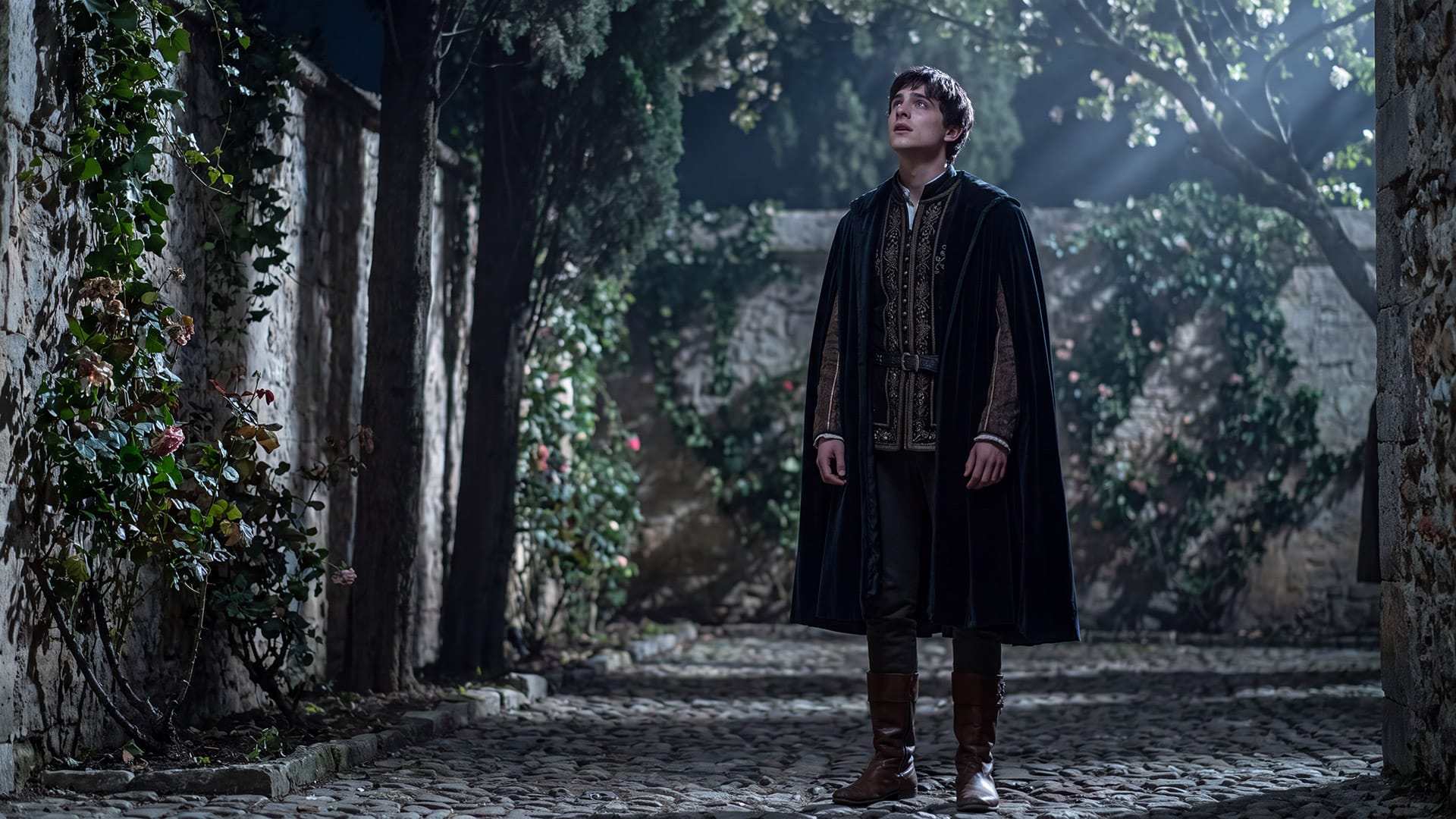
Romeo in Juliet’s garden
Romeo and Juliet in Verona – Why the City Owns the Myth
Verona as Literary Setting
Shakespeare set the tragedy in Verona, a northern Italian city in the Veneto region, on the Adige River. In the play, Verona is not just a decorative backdrop. It is a city of public violence, noble households, street fights, civic authority, and fragile order.
The opening conflict takes place in the streets, where servants of the Montague and Capulet households fight before the quarrel spreads. Prince Escalus, ruler of Verona in the play, threatens severe punishment if the families disturb civic peace again. The city immediately becomes a political space.
A Myth Older Than Shakespeare
Shakespeare did not invent the whole story. He dramatized a narrative that had circulated through Italian, French, and English versions before him. The modern form of the tale owes much to Luigi da Porto, a Vicentine writer who placed the story in Verona and named the lovers Romeo and Giulietta.
Da Porto’s version, published in the early sixteenth century, already contained several central elements: the rival families, the secret love, the killing connected to the feud, Romeo’s banishment, the sleeping potion, the failed message, and the double death. Shakespeare later intensified and transformed these materials for the stage.
The story was also reshaped by Matteo Bandello, translated into French by Pierre Boaistuau, and adapted into English by Arthur Brooke in his narrative poem The Tragical History of Romeus and Juliet from 1562. Brooke’s poem was Shakespeare’s main direct source.
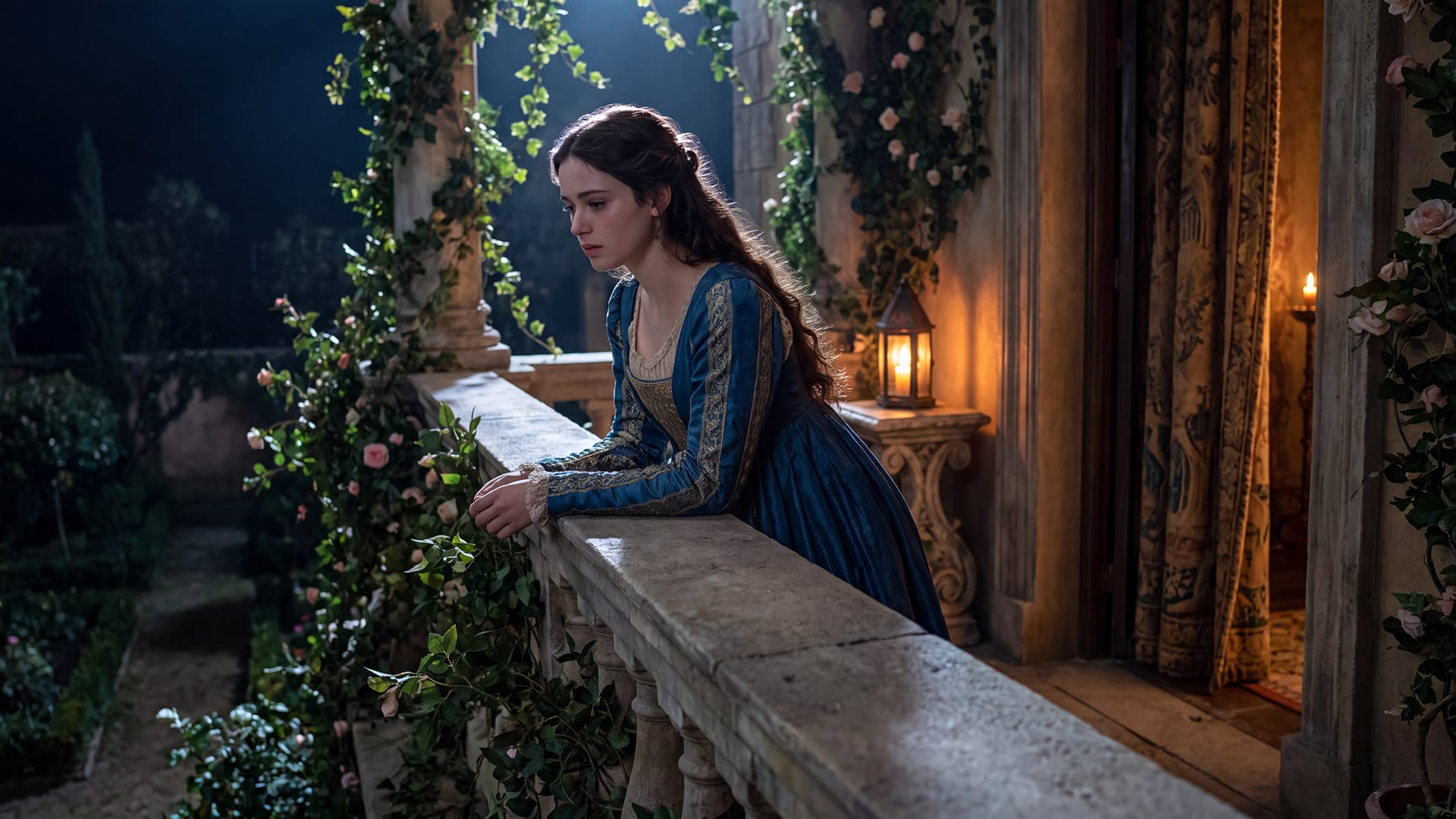
Juliet on the balcony
Short Summary of Shakespeare’s Play
The Feud and the First Meeting
Shakespeare’s tragedy begins with a public brawl between the servants of two noble Veronese families, the Montagues and the Capulets. Their feud is old, violent, and socially destructive. Prince Escalus intervenes and warns both houses that future disturbances will be punished with death.
Romeo Montague is initially in love with Rosaline, who does not return his feelings. His friends persuade him to attend a Capulet feast in disguise. At the party, Romeo sees Juliet Capulet, and the two fall in love before learning they belong to enemy families.
Juliet’s cousin Tybalt recognizes Romeo at the feast and wants to confront him. Lord Capulet prevents violence inside his house, partly because Romeo has a good reputation in Verona. This temporary restraint does not end the conflict; it only delays the fatal consequences.
The Secret Marriage
After the feast, Romeo enters the Capulet orchard and hears Juliet speak from above. The famous scene is usually associated with a balcony, although the play’s text does not name a balcony as an architectural object. The essential point is that Juliet appears above Romeo, separated by space and family danger.
Romeo and Juliet declare their love and decide to marry secretly. With the help of Friar Lawrence and Juliet’s Nurse, they arrange the wedding. Friar Lawrence agrees because he hopes the marriage might reconcile the two hostile families and restore peace in Verona.
The marriage happens quickly. Shakespeare compresses the action into an intense timeframe, making the lovers’ decisions feel urgent and dangerous. Their private union stands against the public hatred surrounding them, but it also leaves them dependent on secrecy, timing, and fragile human plans.
Tybalt, Mercutio, and Romeo’s Banishment
The tragedy accelerates when Tybalt challenges Romeo. Romeo refuses to fight because, after the secret marriage, Tybalt is now his kinsman by marriage. Mercutio, Romeo’s friend, interprets the refusal as dishonor and fights Tybalt himself.
Tybalt kills Mercutio. Romeo, overcome by anger and grief, kills Tybalt in revenge. This act changes everything. Romeo is no longer only a hidden husband; he becomes a condemned killer within Verona’s legal order and the enemy of Juliet’s family.
Prince Escalus does not sentence Romeo to death, but he banishes him from Verona. Romeo takes refuge in Mantua, another northern Italian city. The geographical movement matters because the failure of communication between Verona and Mantua later causes the catastrophe.
The Potion and the Tomb
Juliet’s parents arrange her marriage to Count Paris, unaware that she is already married to Romeo. In desperation, Juliet asks Friar Lawrence for help. He gives her a potion that will make her appear dead, allowing her to avoid the marriage and later escape with Romeo.
The plan depends on a message reaching Romeo in Mantua. The message fails. Romeo hears only that Juliet is dead. He returns to Verona, buys poison, enters the Capulet tomb, and kills himself beside Juliet, believing her death is real.
Juliet awakens, finds Romeo dead, and kills herself with his dagger. The deaths finally force the Montagues and Capulets to recognize the cost of their hatred. The play ends with grief, punishment, reconciliation, and the famous idea that Verona has paid for peace with its children.
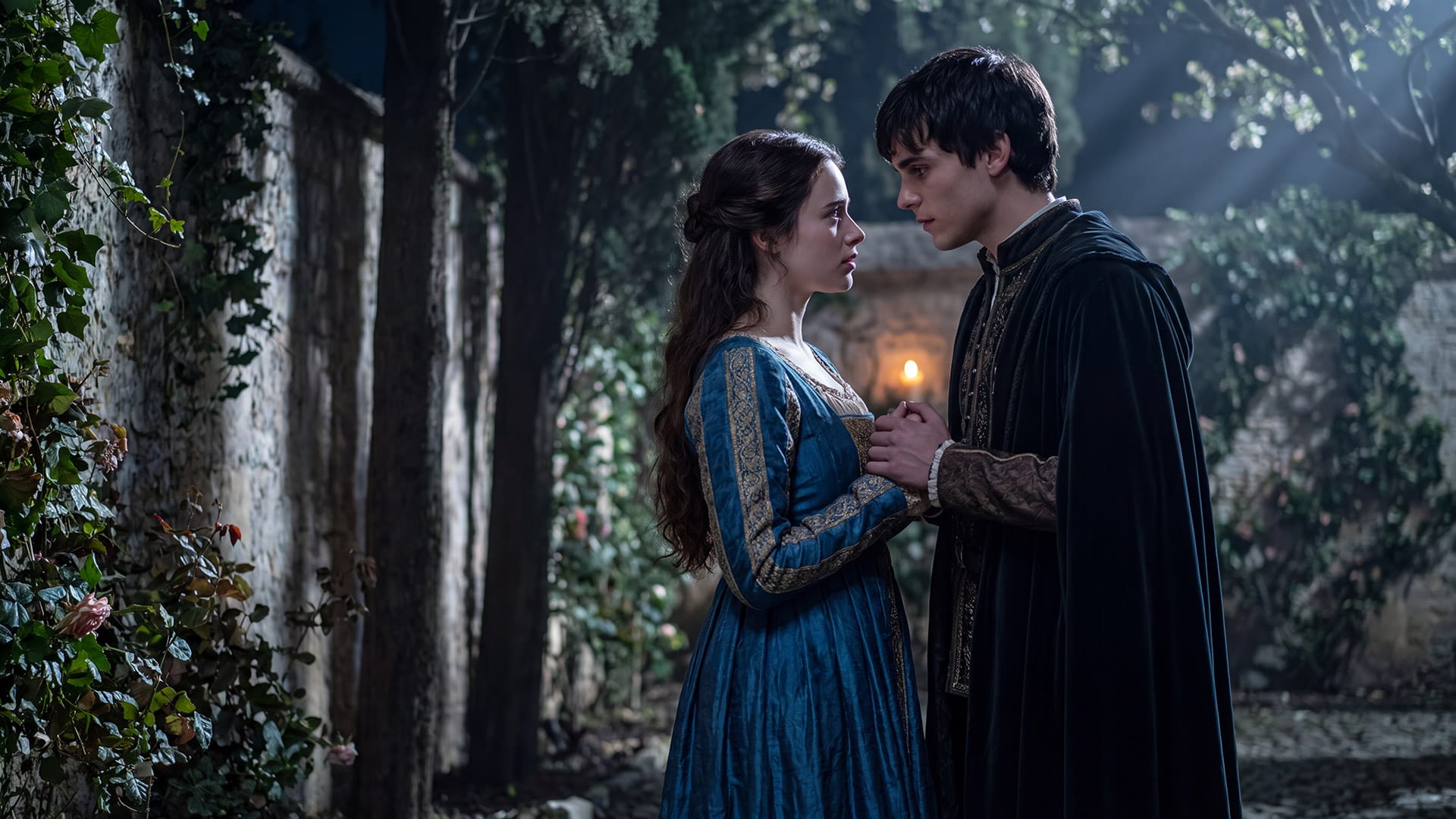
Romeo and Juliet
Myth vs. Reality – Did They Exist?
The Historical Answer
There is no reliable documentary evidence for a historical Romeo Montague and Juliet Capulet who lived, loved, married, and died as Shakespeare describes. The lovers belong to literature, not to verified civic records, parish records, court documents, or family archives.
This does not mean that every element is invented. The story attaches fictional lovers to real historical ingredients: medieval factional conflict, family names known in Italian tradition, Veronese noble culture, and the political turbulence of northern Italian city-states.
The Montecchi and the Cappelletti
One of the strongest links between myth and reality is the existence of family names similar to the Montagues and Capulets. In Italian tradition, the names appear as Montecchi and Cappelletti. These names were not Shakespeare’s pure invention.
Dante Alighieri mentions Montecchi e Cappelletti in Canto VI of Purgatorio, placing them among examples of political and family conflict in Italy. This does not prove Romeo and Juliet existed, but it proves the names carried historical and factional meaning before Shakespeare.
The Montecchi were associated with Verona and Ghibelline politics, while the Cappelletti are often connected with Cremona and the Guelph side. Luigi da Porto later treated the Cappelletti as Veronese in his story, helping move the legend firmly into Verona’s civic imagination.
Luigi da Porto’s Verona
Luigi da Porto was crucial because he gave the story much of its recognizable modern shape. He changed earlier material, moved the plot from Siena to Verona, and placed it in the time of Bartolomeo della Scala, a member of the ruling Scaliger family.
This was a powerful narrative choice. Verona under the Della Scala was an appropriate setting for a story of noble houses, public order, political tension, and tragic private passion. The city had enough historical weight to make the fiction sound plausible.
Da Porto also presented the story with the tone of recovered history. That literary strategy encouraged later readers to treat the tale as if it preserved a true event. The boundary between chronicle and fiction was often more fluid in Renaissance storytelling than in modern historical writing.
Earlier Versions of the Story
Before Da Porto, a similar tragic-love pattern appeared in Masuccio Salernitano‘s fifteenth-century tale of Mariotto and Ganozza, set in Siena. That version already contained secret love, separation, a sleeping-potion motif, and disastrous misunderstanding, but the names and Veronese setting were different.
Da Porto’s version was later reworked by Matteo Bandello in 1554. Bandello’s novella entered French literary culture through Pierre Boaistuau and then English literature through Arthur Brooke. By the time Shakespeare wrote his play, the story had already crossed languages and genres.

The fight between Tybalt and Mercutio
Curiosities and Coincidences Between Myth and Reality
The Story’s Timeline Became Shorter
One major difference between Shakespeare and earlier versions is time. Shakespeare compresses the action into a few days. Earlier versions usually allow the relationship to develop over a longer period. This compression increases urgency, risk, and theatrical tension.
The short timeline also changes how visitors imagine Verona. The play feels like a tragedy moving through a compact city at high speed: streets, feast, orchard, church cell, public fight, exile, tomb. Verona becomes a stage where every location is close to disaster.
This is not proof of historical reality. It is dramatic design. Shakespeare transformed a longer narrative into a rapid sequence of decisions, accidents, and missed messages, making the catastrophe feel inevitable despite being built from human error.
The Balcony Is More Famous Than the Text
The balcony is one of the most famous images associated with the lovers, yet Shakespeare’s text does not explicitly identify the structure as a balcony. The scene takes place in the Capulet orchard, with Juliet appearing above Romeo. Later visual culture turned that “above” into a balcony.
This detail is essential for understanding Verona’s tourism. Visitors go to Casa di Giulietta because the balcony has become the visual shorthand for the entire story. The monument represents centuries of interpretation, not a verified architectural stage from Shakespeare’s imagination.
The balcony at Juliet’s House is a modern installation connected to the restoration of the building in the twentieth century. It uses medieval stone elements, but its fame comes from literary association, museum design, photography, and the global power of the love story.
Verona and Mantua
The play’s geography is not limited to Verona. After Tybalt’s death, Romeo is banished to Mantua. This matters because the fatal message from Friar Lawrence does not reach him there. The distance between the two cities becomes a tragic obstacle.
Mantua is a real city with strong cultural and political importance in northern Italy. In the play, it functions as exile, separation, and misinformation. Romeo is alive but socially dead to Verona, cut off from Juliet and dependent on unreliable news.
For travelers, this creates a broader Shakespearean geography in northern Italy. Verona is the emotional center, but Mantua is part of the plot’s mechanism. The story belongs to the map of the Veneto and Lombardy area, not only to one courtyard.
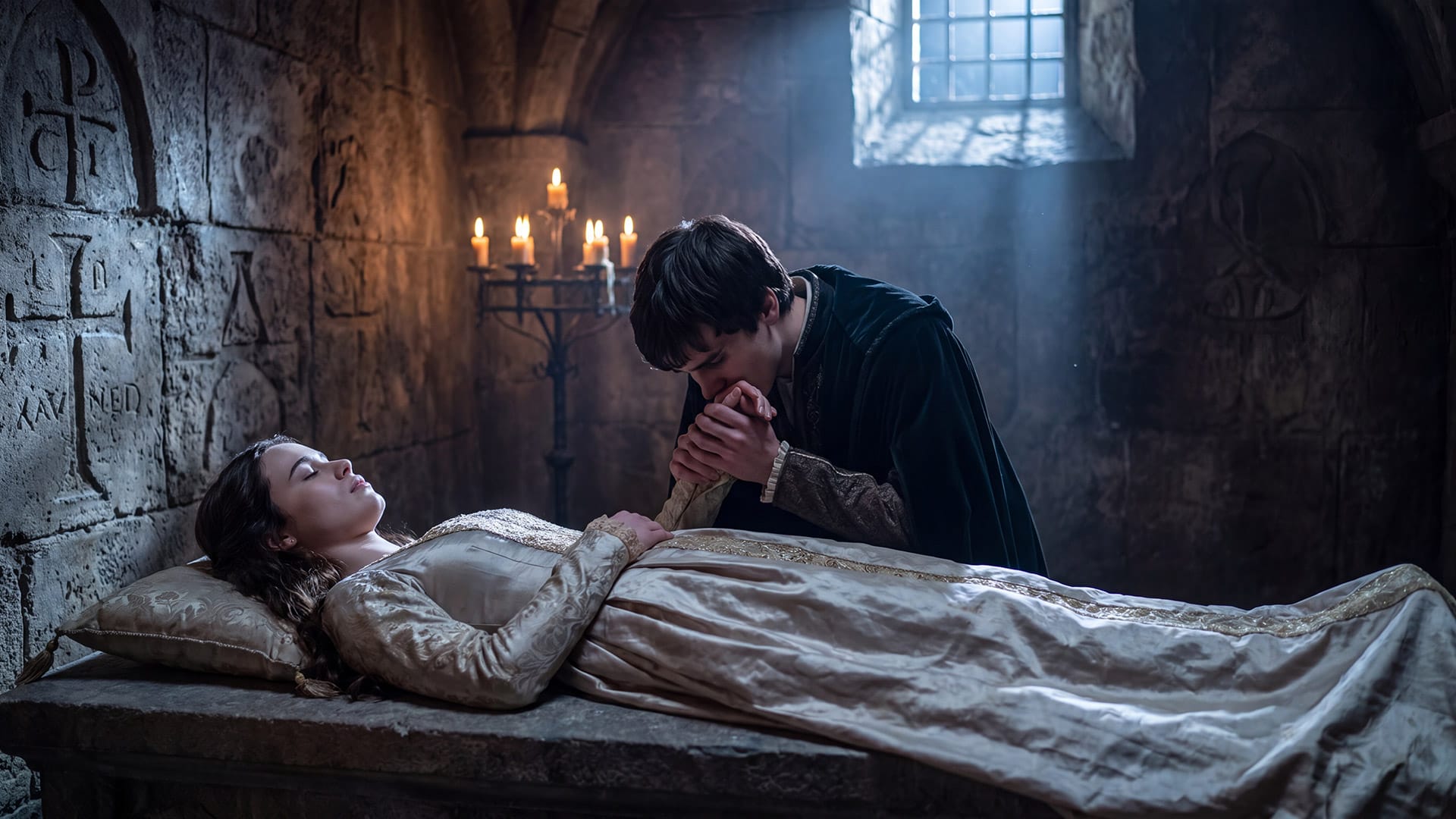
Romeo and Juliet and Verona’s Tourist Monuments
Casa di Giulietta – Juliet’s House
Casa di Giulietta, at Via Cappello 23, is the most visited Romeo and Juliet site in Verona. It is a medieval tower house documented from the fourteenth century and later associated with the Capulet family because of the name Dal Cappello.
The building was acquired by the Municipality of Verona in 1905. Its modern identity as Juliet’s House was strongly shaped by restoration work between 1939 and 1940, directed by Antonio Avena, who transformed the site into a more theatrical medieval setting.
The famous balcony was added during that restoration phase. It was assembled using medieval marble elements that had previously been kept as reusable stone material. This makes the balcony historically old in material, but not authentic as Juliet’s personal balcony.
Inside the house, the museum presents paintings, engravings, sculptures, furnishings, medieval-style decorations, and objects connected to the story’s reception. Among the displayed items is the bed used in Franco Zeffirelli’s 1968 film adaptation of Romeo and Juliet.
Juliet’s Courtyard and Statue
The courtyard of Casa di Giulietta is another central site. It contains the bronze statue of Juliet created by Nereo Costantini in 1972. The statue became part of the modern ritual surrounding the house, especially through visitor photographs and gestures for luck in love.
In recent years, visitor access has been managed more strictly because of crowding and preservation needs. The site remains one of Verona’s most recognizable attractions, but its meaning is best understood as a curated literary monument, not a surviving private residence of Shakespeare’s heroine.
Casa di Romeo – Romeo’s House
Casa di Romeo stands near the Arche Scaligere, in the historic center of Verona. It is a well-preserved medieval building with a Gothic façade. The structure is privately owned and cannot be visited inside, but it is visible from the street.
Historians identify the building with Cagnolo Nogarola, not with Romeo Montague. Its association with Romeo comes from tradition and from the belief that the Montecchi family lived in this area of Verona. The location therefore preserves atmosphere, not proof.
The house works differently from Casa di Giulietta. It is less theatrical, less accessible, and less museum-like. Its strength is architectural. The façade gives visitors a credible image of medieval Verona, even though the direct link to Romeo remains legendary.
Tomba di Giulietta – Juliet’s Tomb
Tomba di Giulietta is located at the former convent of San Francesco al Corso, now home to the Museo degli Affreschi G.B. Cavalcaselle. The convent complex has medieval origins and became connected to Juliet through Veronese literary tradition.
The so-called tomb is an empty stone sarcophagus. It was opened to the public as Juliet’s Tomb in 1935, again under the influence of Antonio Avena’s museum and tourism vision. The tomb’s role is legendary, not archaeological proof of Juliet’s burial.
The museum itself is important beyond the legend. It displays fresco cycles from Veronese buildings, works from the Middle Ages to the Renaissance, sculptures, paintings, and archaeological material. Visitors looking for Juliet also encounter a real cultural institution preserving Verona’s artistic heritage.
What Is Real, What Is Legendary, and What Is Tourist Invention?
Real Elements
The real elements include Verona, Mantua, medieval factional violence, the names Montecchi and Cappelletti, Dante’s reference to those names, the Della Scala historical context, and the existence of medieval buildings later associated with the story.
Casa di Giulietta is also a real medieval building, documented long before modern tourism. Casa di Romeo is a real medieval house with a Gothic façade. San Francesco al Corso is a real former convent, and the Museo degli Affreschi is a real museum.
These facts give the legend a strong local frame. Visitors are not walking through a film set built from nothing. They are moving through a historic city whose authentic architecture was later connected to a literary myth.
Legendary Elements
The legendary elements include Juliet living at Casa di Giulietta, Romeo living at Casa di Romeo, the tomb containing Juliet’s body, and the precise identification of Shakespeare’s scenes with today’s tourist stops. These associations are meaningful, but they are not proven history.
The story of the lovers is also legendary in the strict biographical sense. It may reflect patterns of conflict and social life, but no verified Romeo and Juliet can be identified in the records as the original pair behind the tragedy.
Modern Tourist Invention
The modern tourist layer includes the balcony as visitors see it today, the museum arrangement of Casa di Giulietta, the statue ritual, the love letters, and the organized routes connecting Shakespearean memory to Verona’s monuments. These elements developed over time.
This does not make them worthless. Tourism often transforms literary memory into physical experience. Verona’s Romeo and Juliet sites are historically mixed: part medieval architecture, part Renaissance story, part twentieth-century museum design, and part contemporary visitor ritual.
For travelers, understanding this mix makes the visit better. Casa di Giulietta is more interesting when seen not as fake history, but as a documented example of how a city curated, restored, and materialized a powerful literary myth.
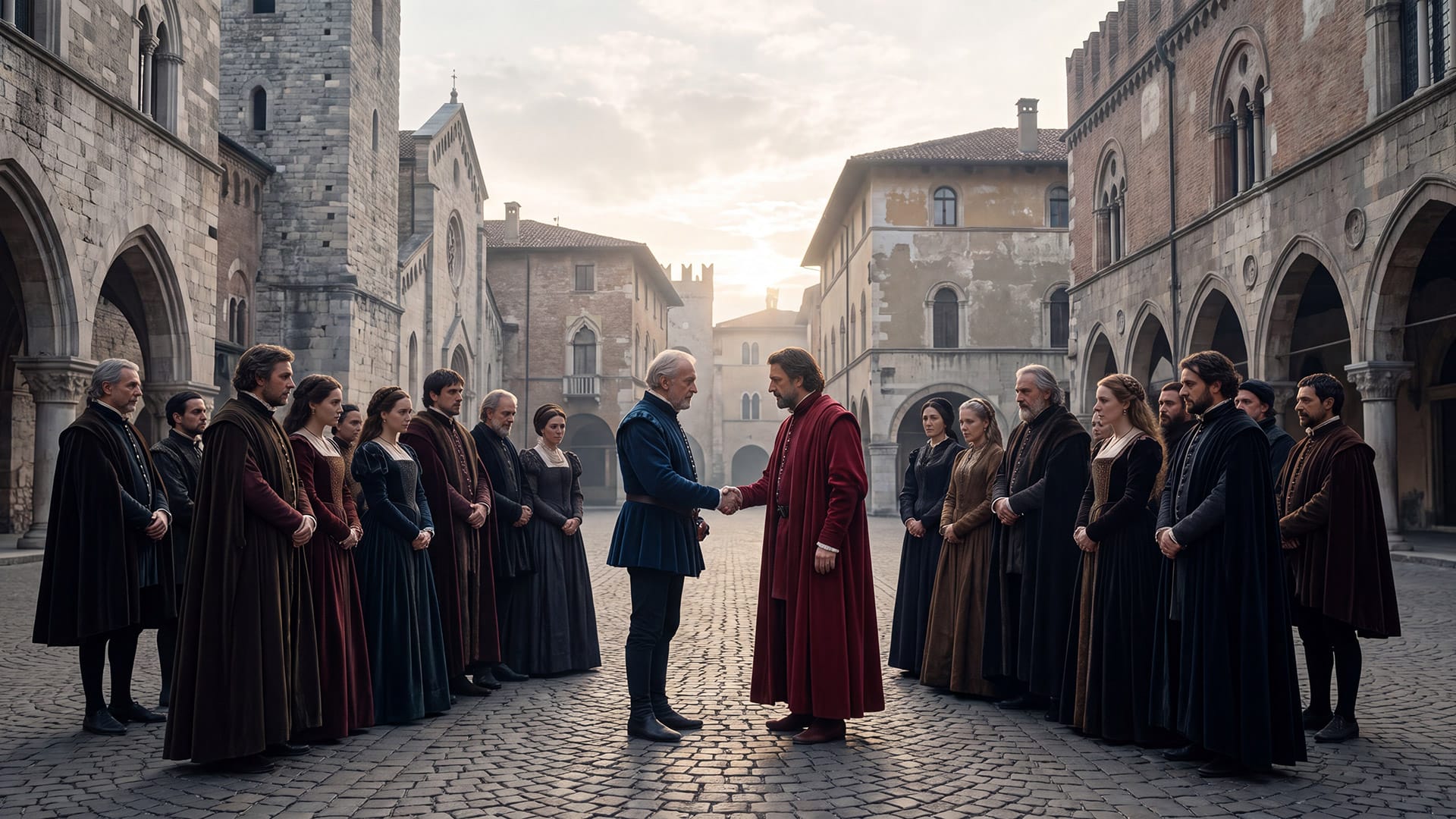
The Montague and Capulet families after Romeo and Juliet’s sacrifice
Myth, Reality, and Verona’s Greatest Literary Legacy
Romeo and Juliet did not exist as historically verified lovers. No document proves their marriage, deaths, tomb, balcony meeting, or family tragedy. Their story belongs to literature, beginning before Shakespeare and reaching its most famous form on the Elizabethan stage.
Yet the myth has real foundations. Verona’s monuments must be read through this double truth. Casa di Giulietta, Casa di Romeo, and Tomba di Giulietta are not proof of biography. They are places where medieval architecture, Renaissance fiction, civic memory, and modern tourism meet.
That is why the question “Did Romeo and Juliet really exist?” remains so powerful. The factual answer is no. The cultural answer is that they exist permanently in Verona’s identity, in its streets, in its museums, and in the imagination of millions of visitors.
Frequently Asked Questions about Romeo and Juliet
Did Romeo and Juliet really exist?
No historical document proves that Romeo and Juliet existed as real people. They are literary characters, but their story uses real Italian names, real cities, and medieval social conflicts.
Why is Romeo and Juliet associated with Verona?
Verona became the setting through Italian literary tradition before Shakespeare. Luigi da Porto placed the story in Verona, and Shakespeare later made the city famous worldwide through his tragedy.
Did Shakespeare invent Romeo and Juliet?
No. Shakespeare adapted an older story. Earlier versions appeared in Italian novellas and English poetry, especially Arthur Brooke’s 1562 poem, which became Shakespeare’s main direct source.
Is Juliet’s balcony real?
The balcony at Casa di Giulietta is not an original Shakespearean site. It was added during a twentieth-century restoration, using older stone elements, to create a visible symbol of the legend.
Can you visit Juliet’s House in Verona?
Yes. Casa di Giulietta is one of Verona’s most visited attractions. Visitors can enter the courtyard, see the famous balcony, and explore museum rooms connected to the story.
Is Romeo’s House open to visitors?
No. Casa di Romeo is privately owned and cannot be visited inside. Visitors can see the medieval Gothic façade from the street, near the Scaliger Tombs.
Where is Juliet’s Tomb?
Juliet’s Tomb is inside the former convent of San Francesco al Corso, now the Museo degli Affreschi G.B. Cavalcaselle. The sarcophagus is symbolic, not a verified burial place.
Images generated with Nano Banana Pro / Google AI Studio


