-
About
Table of Contents
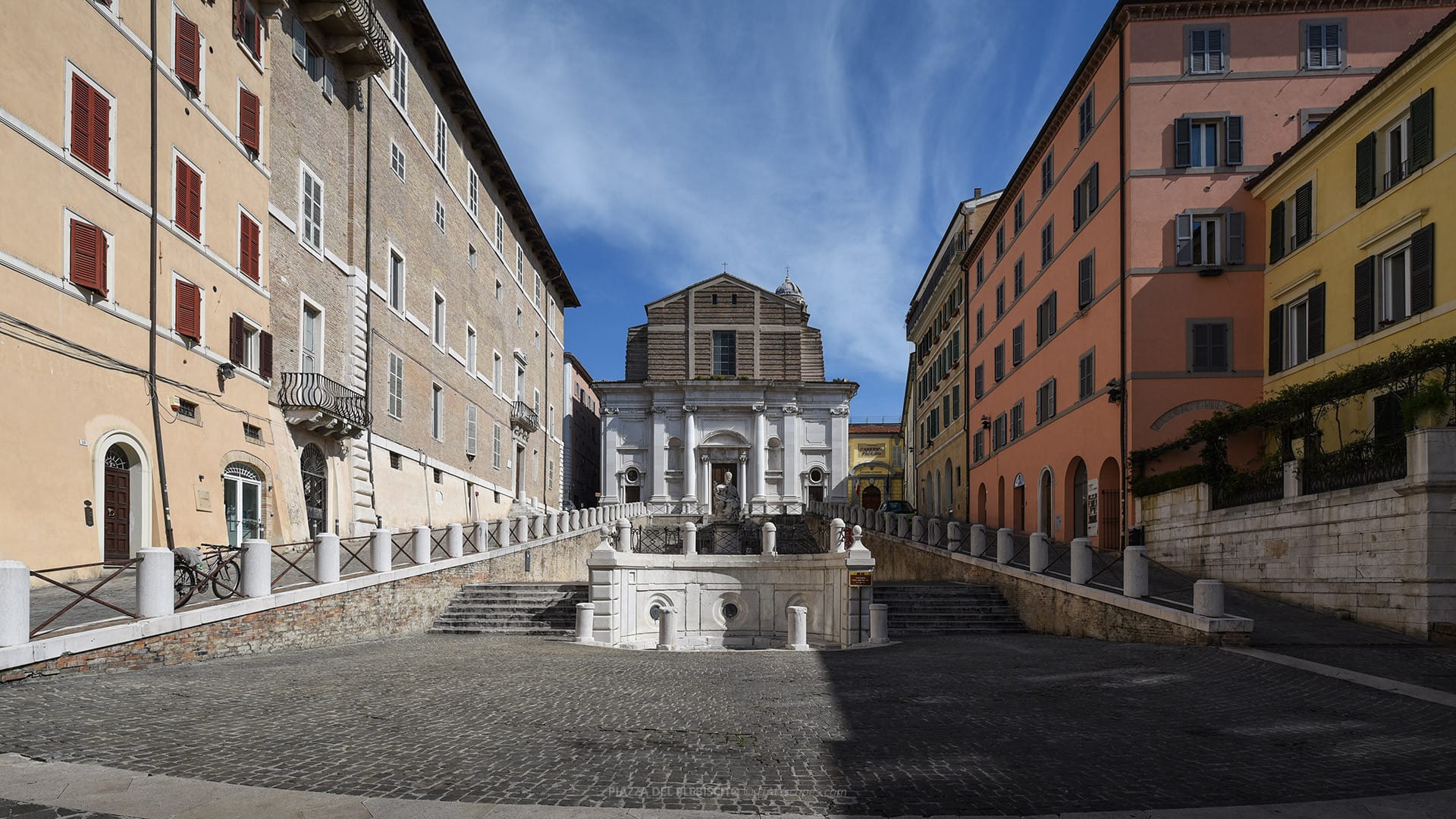
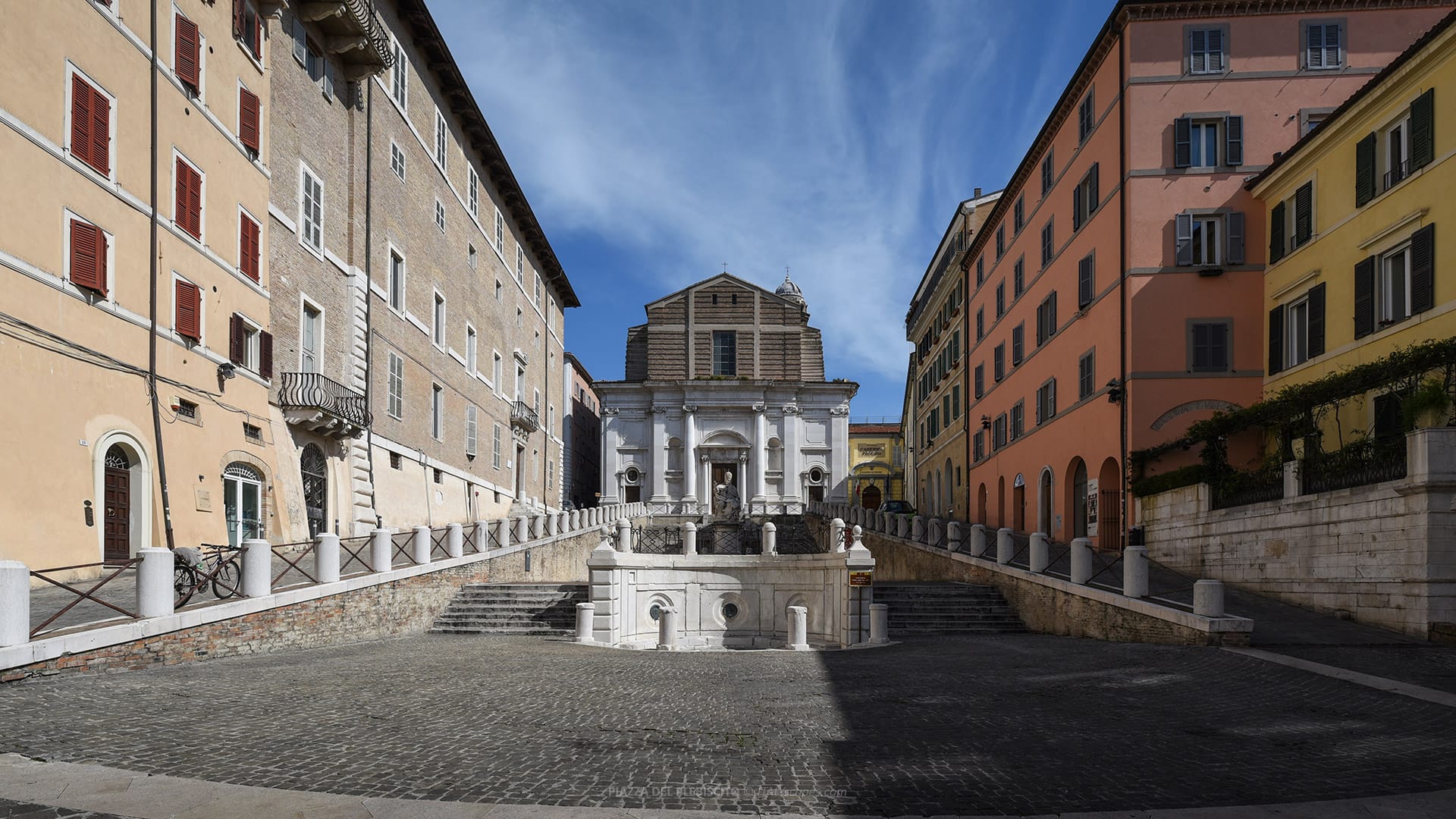
Piazza del Plebiscito is the most important historic square in the city of Ancona and represents the true civic and symbolic heart of the urban fabric.
Located in the upper part of the historic center, the square has played a central role in the political, religious, and social life of the city for over five centuries.
Often referred to by locals as Piazza del Papa, Piazza del Plebiscito is instantly recognizable for its elongated shape, slightly sloping layout, and the monumental presence of its buildings and artworks.
Unlike many Italian squares that developed organically around a single monument, this piazza reflects a deliberate urban vision aimed at creating a representative space for the city’s institutions. The result is a square that feels both monumental and lived-in, formal yet deeply human.
Today, Piazza del Plebiscito remains a lively gathering place where residents meet, students linger, and visitors pause to absorb the atmosphere of historic Ancona.
Cafés, cultural venues, and historic palaces frame the square, while religious and civic architecture give it a sense of continuity and authority.
Short History of Piazza del Plebiscito
The origins of Piazza del Plebiscito date back to the 15th century, when Ancona was a thriving maritime city with strong economic and political autonomy.
In its earliest phase, the square was known as Piazza Nuova, reflecting its role as a newly created urban space. Over time, as it grew in importance and scale, it became known as Piazza Grande, emphasizing its central position within the city.
Later, due to the dominant presence of the Dominican church at its upper end, the square took the name Piazza San Domenico, a name that remained in use for several centuries.
The political upheavals of the late 18th and early 19th centuries left their mark on Piazza del Plebiscito.
During the Napoleonic period, when French troops occupied the city, the square was renamed Piazza Napoleone. This change was symbolic of the broader transformation of civic institutions and public life imposed during French rule.
The current name, Piazza del Plebiscito, was adopted in the second half of the 19th century following the plebiscite that sanctioned the annexation of the Marche region to the Kingdom of Italy.
This moment marked a decisive shift in Ancona’s identity, moving from a city shaped by papal and local rule to one integrated into the Italian nation-state.
Throughout all these transformations, Piazza del Plebiscito remained the primary stage for public life in Ancona. Political speeches, religious processions, celebrations, and protests all took place here, embedding the square deeply in the collective memory of the city.
Architecture of Piazza del Plebiscito
The architectural identity of Piazza del Plebiscito is the result of centuries of construction, adaptation, and stylistic layering.
The square has a long rectangular form, slightly inclined along its main axis, and is organized on multiple levels connected by staircases and ramps. This configuration enhances its monumental character and creates a dynamic sequence of views as one moves through the space.
Dominating the upper end of the square is the Church of San Domenico, one of the most significant religious buildings in Ancona.
Designed in the 18th century by architect Carlo Marchionni, the church replaced an earlier medieval structure that no longer met the city’s needs.
Its broad staircase acts as a natural extension of the piazza, visually linking the sacred space with the civic realm below. The Baroque facade is sober yet imposing, reflecting a balance between decorative restraint and monumental presence.
The interior of the Church of San Domenico further reinforces its importance. It houses important works of art by major Italian painters, as well as sculptural elements that reflect the artistic culture of the period.
Beyond its artistic value, the church serves as a powerful architectural anchor, defining the vertical axis of Piazza del Plebiscito and closing the perspective of the square with authority and elegance.
Facing the square is Palazzo del Governo, one of the most historically significant civic buildings in Ancona.
Originally constructed in the 14th century, the palace has served as the seat of municipal and later state authority for centuries. Its architecture reflects successive phases of renovation and adaptation, mirroring changes in political organization and administrative needs.
The palace’s sober facade reinforces the institutional character of the square and underlines its traditional function as the center of civic power.
Adjacent to Palazzo del Governo stands the historic civic tower, which once played a key role in regulating public life. Equipped with a clock and later a carillon, the tower served both practical and symbolic purposes, marking time for the city and reinforcing the visibility of civic authority.
Together, the palace and tower form a cohesive architectural ensemble that balances the religious dominance of San Domenico on the opposite side of the square.
At the center of Piazza del Plebiscito stands the statue of Pope Clement XII, the most iconic monument in the square and the reason for its popular nickname, Piazza del Papa.
The marble statue depicts the pope in a solemn and authoritative pose, emphasizing his role as a benefactor of the city. Clement XII was instrumental in revitalizing Ancona’s economy by granting it free port status, a decision that had lasting effects on trade and maritime activity.
Fonte dei Decapitati, dating back to the 15th century, is one of the oldest fountains in Ancona. Its sculpted faces have given rise to a powerful local tradition, according to which they represent young citizens executed while defending the city’s autonomy.
The Fontana Emiciclica, built in the early 19th century, reflects a more classical and decorative approach. Its semicircular form and bronze ornaments were designed to enhance the monumental access to the Church of San Domenico and to provide a visual counterpoint to the older fountain.
Surrounding the square are several historic palaces that testify to the presence of noble families and cultural institutions over the centuries.
Palazzo Mengoni-Ferretti, now housing the municipal library, is particularly notable for its refined interiors and frescoed rooms.
Palazzo Nembrini-Gonzaga and Palazzo Schelini incorporate architectural elements from different periods, reflecting gradual adaptation rather than radical transformation.
Palazzo Bernabei, with its elegant 18th-century facade, completes the architectural frame of the square and contributes to its overall harmony.
How to Get to Piazza del Plebiscito
Piazza del Plebiscito is located approximately two kilometers from the Ancona railway station, making it easily accessible for visitors arriving by train.
One of the most pleasant ways to reach the square is on foot. The walk takes around twenty to twenty-five minutes and leads through parts of the historic center, offering an opportunity to experience the city’s urban landscape and everyday rhythm.
Public transportation provides a convenient alternative for those who prefer not to walk. Bus Line 11 connects the railway station with the historic center, and the closest stop to Piazza del Plebiscito is located on Via Pizzecolli, about 200 meters from the square.
From there, the piazza can be reached in just a few minutes on foot. This option is particularly practical during peak tourist seasons or in unfavorable weather conditions.
Sources: -
Photos
-
Map
-
Reviews