-
About
Table of Contents
Festa della Bruna 2026 will take place on Thursday, July 2, 2026, in the extraordinary city of Matera, one of Italy’s most ancient settlements and a UNESCO World Heritage Site.
Officially known as Festa della Madonna della Bruna, this annual religious celebration honors the Madonna della Bruna, the patron saint of Matera, and has been held continuously since 1389, making it one of the oldest and most enduring religious festivals in Southern Italy.
Every year, residents and thousands of visitors participate in rituals, processions, and emotional displays of devotion that transform Matera into a vibrant theatre of tradition, color, and symbolism.
The 2026 edition marks the 637th celebration of the feast, continuing more than six centuries of uninterrupted tradition.
What is the Date for Festa della Bruna 2026?
Every year, Festa della Bruna takes place on July 2, a date that has remained unchanged for centuries. It is on this day that Matera comes alive with a program of rituals and civic celebrations commemorating the Madonna della Bruna.
In 2026, July 2 falls on a Thursday, allowing locals and pilgrims to begin long weekend celebrations stretching into early July.
What is the Location of Festa della Bruna 2026?
Festa della Bruna 2026 will unfold entirely within the city of Matera, located in the Basilicata region of Southern Italy.
Matera sits atop a rugged plateau carved by the Gravina di Matera gorge and is internationally famous for its ancient districts known as the Sassi, a complex network of prehistoric cave dwellings that were inhabited for millennia.
Home to approximately 60,000 residents, Matera lies roughly 60 km south of Bari, 85 km east of Potenza (the regional capital), and 245 km east of Naples.
Although the festival is anchored in the heart of Matera, its impact resonates throughout the surrounding region, as the Madonna della Bruna has been venerated across Basilicata since the Middle Ages.
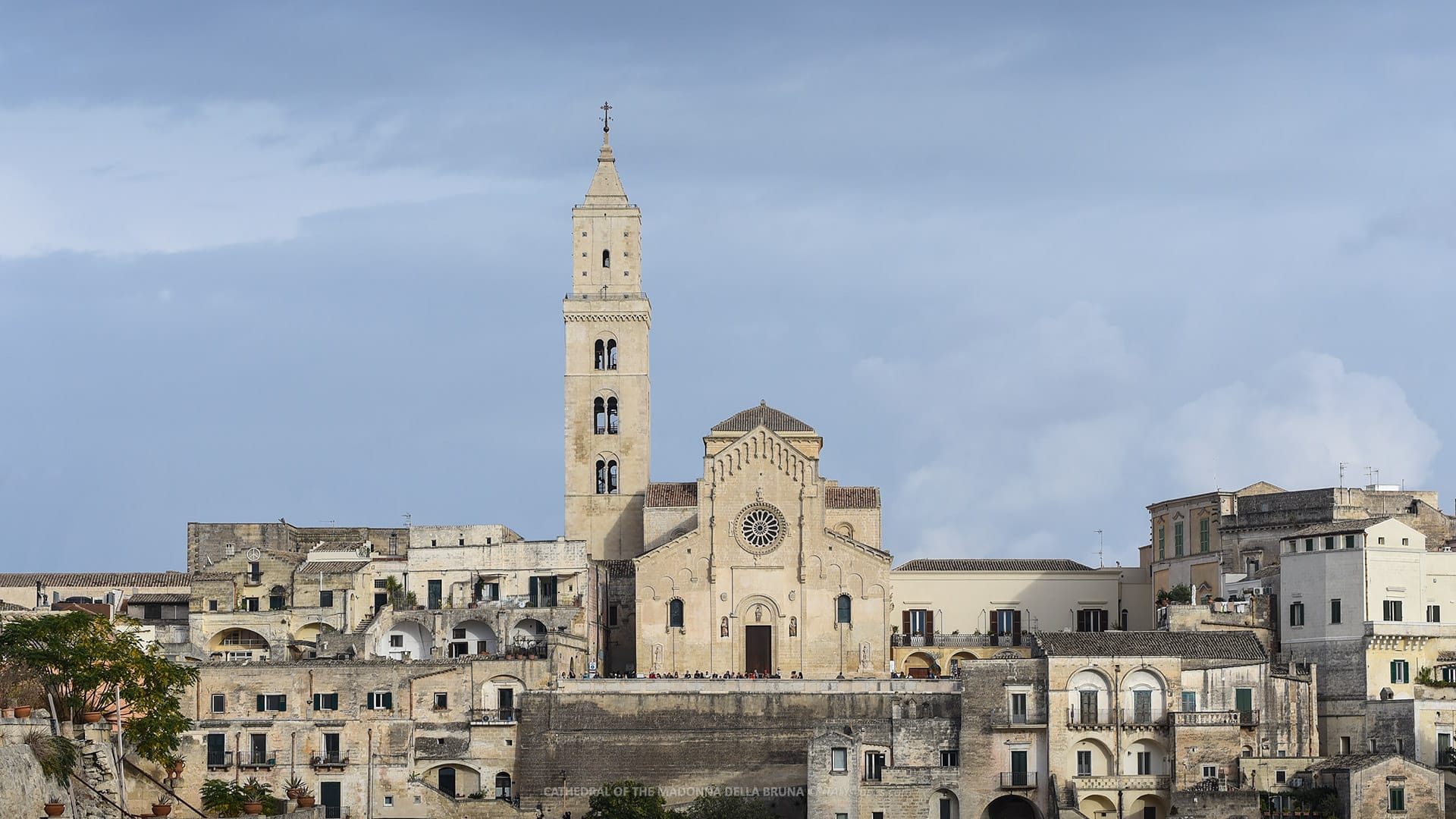
The feast centers around the Matera Cathedral – dedicated to the Madonna della Bruna and located at the highest point of the old city – and around Piazza Vittorio Veneto, where climactic events conclude.
Short History of Festa della Bruna
The origins of Festa della Bruna are ancient and layered, merging religious devotion, local legend, and symbolic acts that reflect Matera’s identity.
While the precise beginnings are lost to time, written records confirm that the celebration has taken place since 1389, making it one of the oldest Marian festivals in Italy.
A Legend Rooted in FaithAccording to tradition, a farmer traveling toward Matera encountered a mysterious young woman who asked for a ride into the city.
When the cart reached Piccianello, a district just outside Matera, she stepped down and asked the farmer to inform the bishop that she was the Mother of Christ.
The farmer obeyed, and when the bishop and townspeople hurried to welcome her, they found not the woman – but a statue of the Virgin in her place.
The statue was carried triumphantly into the city in a procession, establishing the tradition that endures to this day. The original statue is now preserved inside a reliquary in Matera’s Cathedral.
Evolution Across the CenturiesInitially, the feast took shape around the Procession of the Shepherds (Processione dei Pastori), held at dawn.
Shepherds and farmers, who were among the first to venerate the Madonna, wandered through the streets to announce the beginning of the festival. This rustic tradition emphasized Matera’s rural roots.
By the 17th century, the celebratory form evolved: a wooden triumphal chariot began transporting the statue of the Madonna.
Knights dressed in Roman-style garb accompanied the cart, merging Christian symbolism with secular pageantry – a hallmark of Baroque Southern Italy.
The most distinctive element of the festival, the destruction of the cart, emerged during this era. Records confirm the existence of a chariot used for the feast as early as 1690.
The destruction, representing the triumph of good over evil, became central to the ritual identity of the festa.
In the 18th century, the Bourbon monarchy attempted to impose restrictions, limiting the procession to morning hours only. However, this decree was later overturned, and by the 19th century, the festa extended once more from dawn until nightfall.
During the 20th century, the festival acquired its modern grandeur: spectacular illuminations, stunning papier-mâché decorations, elaborate costumes, and fireworks were added, enhancing both its religious and civic dimensions.

Festa della Madonna della Bruna Today
Today, Festa della Bruna is one of Italy’s most extraordinary and emotionally charged celebrations, renowned for the intensity of its rituals and the community’s unwavering devotion.
The Procession of the ShepherdsThe day begins before sunrise, with the Procession of the Shepherds at 5:00 am. Fireworks, bells, and the bleating of sheep pierce the dawn as shepherds lead a boisterous procession through Matera’s winding streets.
Though seemingly chaotic, this ritual preserves the memory of the spontaneous homage offered by rural folk centuries ago.
Mass and the Veneration of the MadonnaFollowing the procession, a solemn Mass is celebrated at the Matera Cathedral. The statue of the Madonna della Bruna – a beautifully crafted figure adorned with religious symbols – is displayed and venerated. This moment represents the spiritual core of the festival.
The Triumphal CartThe wooden triumphal cart (carro trionfale), made from papier-mâché, is the most awaited element of the celebration. Designed by local artisans, it takes months of work and is a richly decorated masterpiece featuring biblical and symbolic scenes.
In the afternoon, the statue is placed atop the cart, which is then paraded through Matera’s streets. Some devotees walk barefoot, while others follow chanting, praying, or weeping with emotion.
People throw flowers, wave banners, and fill balconies to watch the sacred procession pass through historic neighborhoods.
The route includes a notable stop at the Church of Santa Maria Addolorata in Piccianello, where the Madonna is said to have first appeared. This connection between myth and geography heightens the emotional impact of the journey.
The Rite of DestructionAs twilight deepens, tension rises. The cart reaches Piazza Vittorio Veneto, where the most dramatic ritual takes place: the Rite of Destruction (Rito della Distruzione).
The faithful, unable to contain their anticipation, surge forward and violently dismantle the cart.
What appears chaotic is actually spiritually symbolic: the destruction represents the fleeting nature of earthly works and the triumph of divine protection. Securing a fragment of the cart is considered a blessing – families keep pieces for generations as protective talismans.
Fireworks FinaleOnce the cart is destroyed, Festa della Bruna 2026 concludes with a firework display illuminating the Sassi and the Gravina gorge. The spectacle transforms Matera into a glowing amphitheater, uniting past and present in a burst of color and sound.
Calendar of Events for Festa della Bruna 2026
Festa della Bruna 2026 unfolds over a single intense day – Thursday, July 2, packed with rituals that span from dawn to midnight:
- 5:00 am – Holy Mass in Piazza San Francesco d’Assisi, followed by the Procession of the Shepherds;
- Morning – Procession of the Madonna’s statue from the Cathedral to Piccianello, accompanied by knights in medieval costumes;
- Afternoon – Return of the carro trionfale to the Cathedral; the statue is placed inside the church;
- Evening – The chariot is transported to Piazza Vittorio Veneto and destroyed by the crowd;
- Night – Fireworks light up the ancient city, marking the end of the festival.
Sources: -
Photos
-
Video
Table of Contents
-
Map
-
Reviews
2 July 2026