


-
About
Table of Contents
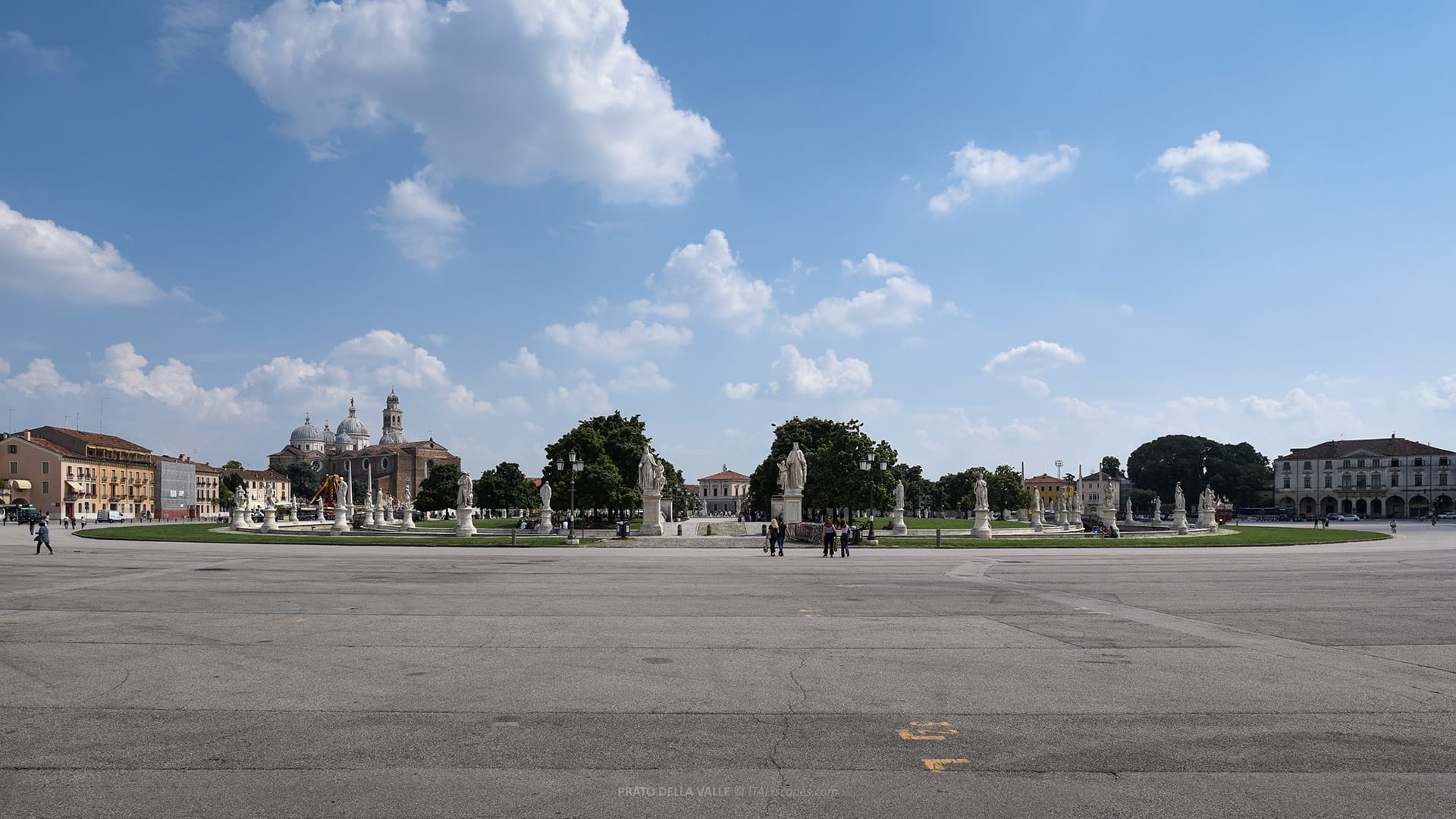
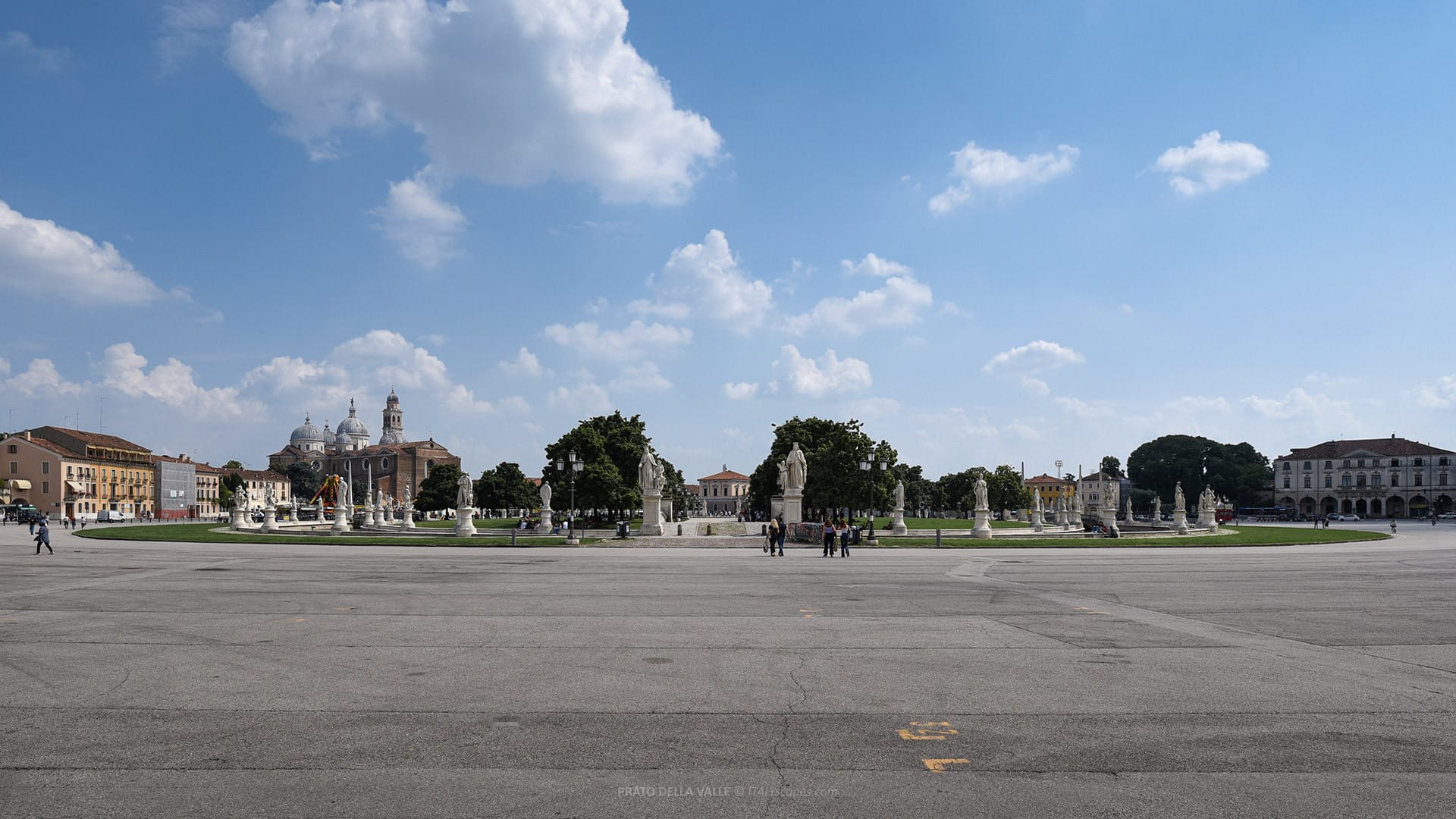
Prato della Valle is one of the largest and most distinctive squares in Europe, located in the southern part of Padua‘s historic center. Covering 88,620 square meters, it is not simply an open urban space, but a carefully planned monumental area shaped by Roman remains, medieval markets, religious history, and 18th-century urban reform.
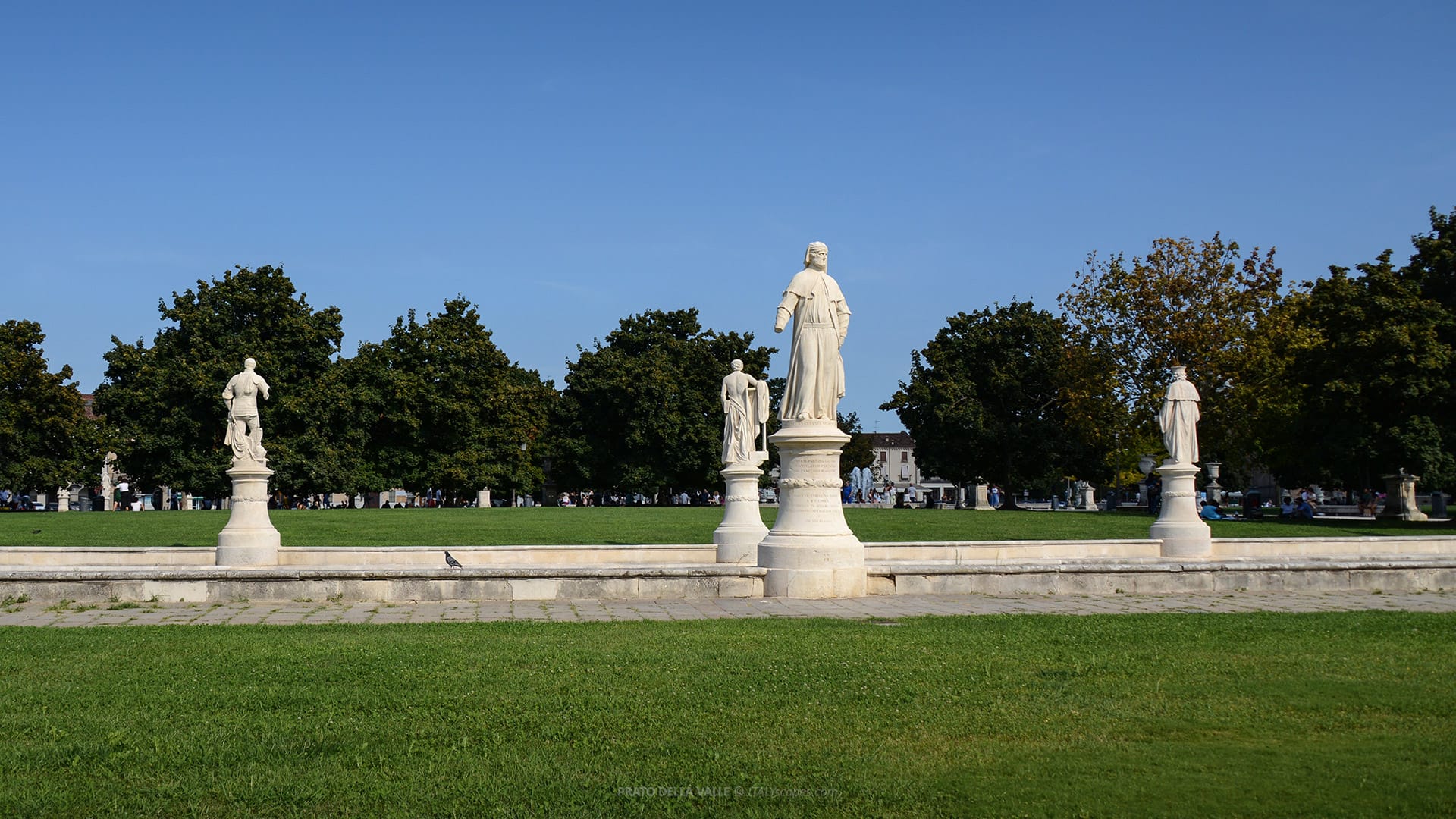
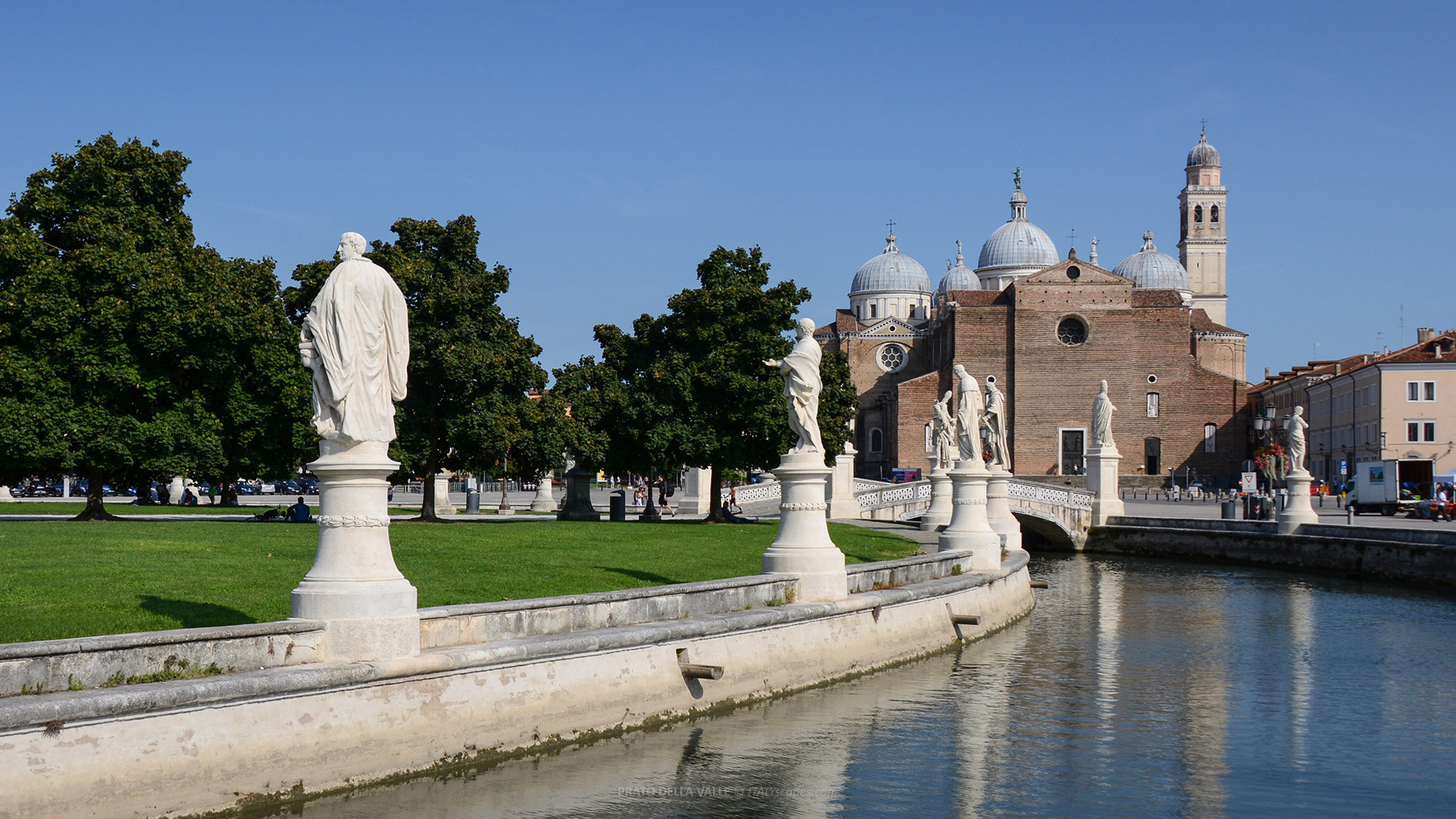
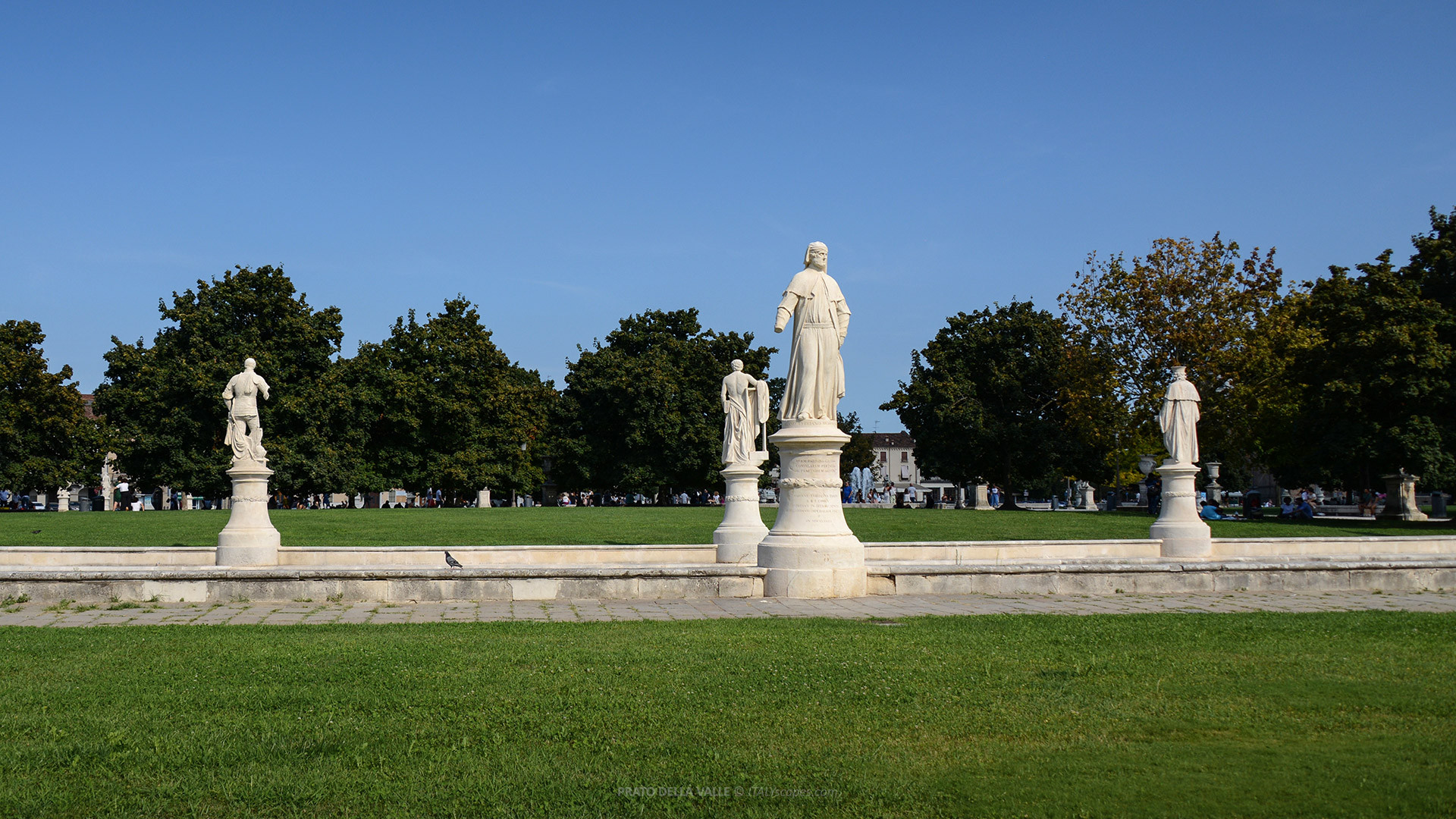
The square is famous for its elliptical central island, known as Isola Memmia, surrounded by a canal and connected to the outer area by four bridges. Around the canal stands one of Padua’s most recognizable sculptural ensembles: 78 statues of figures connected with the city, arranged in two rings.
The present layout dates mainly from the late 18th century, when Andrea Memmo promoted a radical redevelopment of the area. The project transformed a low, flood-prone, partly marshy space into a monumental square designed for markets, public events, walking, social life, and civic representation.
Short History of Prato della Valle
Roman Origins
In Roman times, the area was known as Campo Marzio, or Campo di Marte, because it was linked with military assemblies and public activities. It lay just outside the ancient urban center of Patavium, near important routes that connected Padua with Este and Adria.
The Roman area included important structures. Ancient sources and later studies associate the zone with the Zairo Theater, located on the eastern side, and possibly with a circus and a temple dedicated to Concordia. Some identifications remain debated, but the Roman importance of the place is clear.
In 304 AD, Saint Justina was buried in a cemetery area near the Prato. Christian devotion to her developed strongly in late antiquity. By the 4th and 6th centuries, religious buildings connected with her cult tied the future of the square to the Basilica of Santa Giustina.
The Middle Ages
After the Lombard and Hungarian invasions, Padua contracted toward its central core, and the Prato became a marginal zone. Flooding and hydrological instability made the area low, damp, and difficult to manage. The word “Valle” refers exactly to this depressed, marsh-prone character.
The Abbey of Santa Giustina played a decisive role in preserving the area from abandonment. By the 10th and 11th centuries, markets returned to the Prato, and the medieval term “Pratum” indicated a broad commercial space, not necessarily a meadow permanently covered with grass.
A key document from 1077 confirmed the monastery’s ownership of the area while reserving certain rights for the city. In 1117, a violent earthquake destroyed the earlier Basilica of Santa Giustina, which was rebuilt around 1123 in Romanesque forms by initiative of Abbot Benzone.
From the 12th century, the Prato hosted games, religious performances, fairs, and public gatherings. Since 1257, horse races were held there to commemorate Padua’s liberation from Ezzelino III da Romano. The area remained both a commercial field and a ceremonial public space.
In 1310, a larger intervention was carried out under Fra Giovanni Eremitano. In 1399, the Prato was the endpoint of the great procession of the “Bianchi”, which crossed Padua for nine days. These episodes show the square’s role in civic, religious, and collective life.
Between the late 14th and early 15th centuries, the city forge, known as the Maglio Carrarese, was built near the Prato. Its use of nearby canal waters, together with mills and hydraulic obstructions, contributed to later flooding and renewed marsh conditions.
Renaissance and Early Modern Changes
During the 15th century, important palaces appeared around the Prato. On the northern corner, an imposing arcaded residence was built for Cardinal Bessarion, later known as Palazzo Angeli. The area also attracted noble families, religious institutions, and buildings connected with Padua’s public life.
In 1434, the Florentine banker Palla Strozzi, exiled from Florence, settled in Padua and built a palace in the Prato area. This residence is important because it introduced Renaissance architectural language into Padua before that language became more common in the city.
In 1498, the demolition of the old Basilica of Santa Giustina began to make way for the present Renaissance church. The large basilica still dominates one side of the square and remains one of the most important architectural presences around Prato della Valle.
Between 1556 and 1557, Palazzo Zacco al Prà was built on a design by Andrea Moroni, who was also linked with the new Basilica of Santa Giustina. The palace helped define the western side of the square and remains one of its most elegant Renaissance buildings.
The area continued to suffer from flooding. Severe inundations in 1539 and 1580 brought new marsh conditions. Even in the 17th and 18th centuries, the Prato remained difficult to control, although it continued to serve markets, fairs, horse races, public events, and entertainment.
In 1608, the university college Da Mula was built along the eastern side of the Prato. Later destroyed by fire, this institution is connected with the history of the current Loggia Amulea, the Neo-Gothic building now overlooking the square.
Andrea Memmo and the 18th-Century Transformation
In 1767, ownership of the Prato passed from the Monastery of Santa Giustina to the city administration. This was the decisive legal change that allowed public authorities to deal directly with the old problems of flooding, poor drainage, and disorderly use.
The true creator of the modern Prato was Andrea Memmo, a Venetian official and diplomat who arrived in Padua as extraordinary superintendent in 1775. His aims combined commercial revival, public hygiene, urban beauty, and a more rational use of a vast public area.
Memmo worked with the architect Domenico Cerato, a professor at the University of Padua. The works began in the summer of 1775, in time to produce visible results for the autumn fair of Santa Giustina, one of the traditional events held in the area.
The project created an elliptical island, later called Isola Memmia in Memmo’s honor, surrounded by an artificial canal. The canal was fed by the Alicorno, a branch linked with Padua’s historic water system. The new plan gave the square a clear geometric order.
The island was intended for walking, public use, and commercial functions. Pavilions were originally planned or installed to encourage a permanent market, but the central space eventually became greener, with trees and lawns giving it the character of an urban garden.
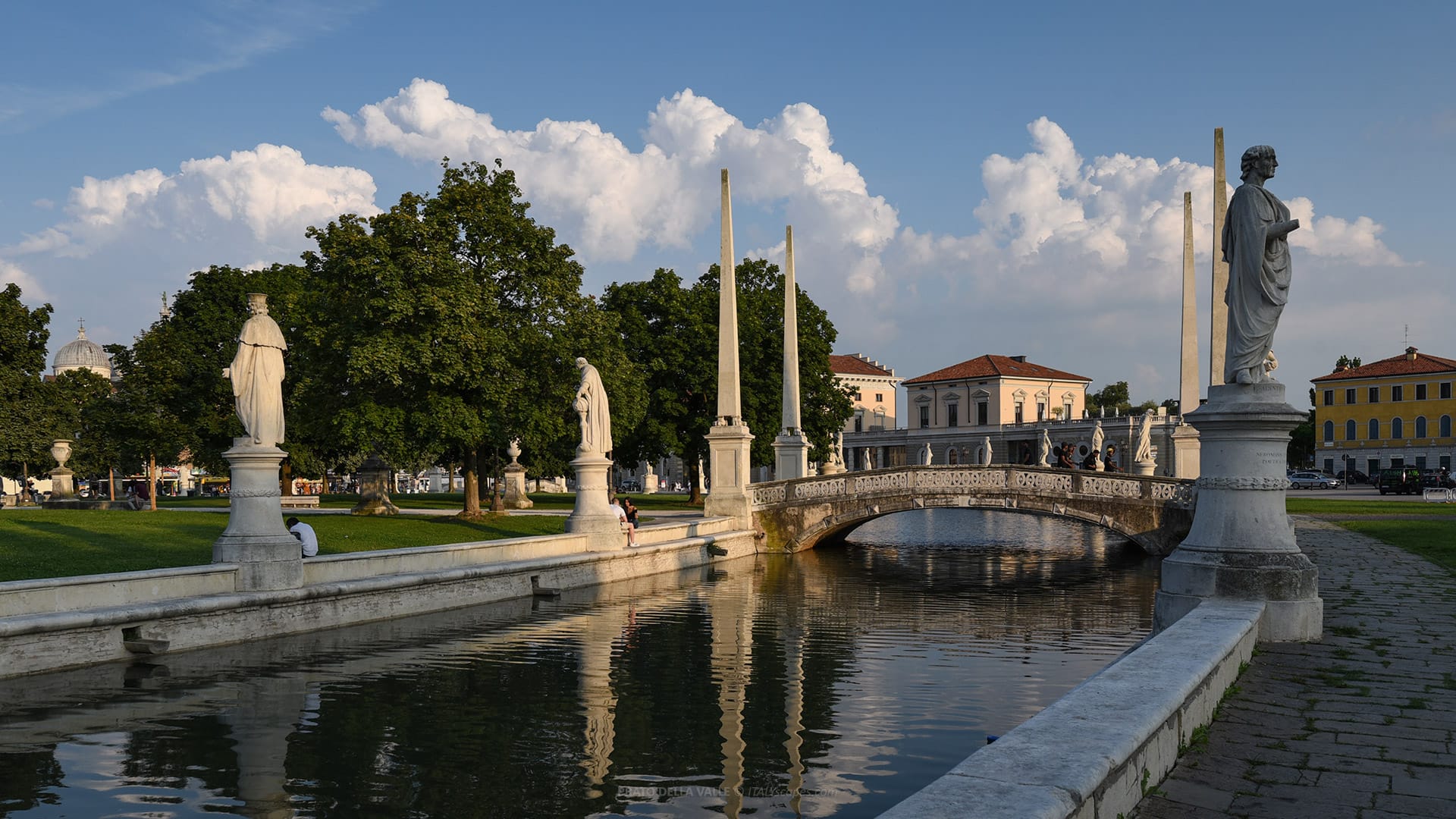
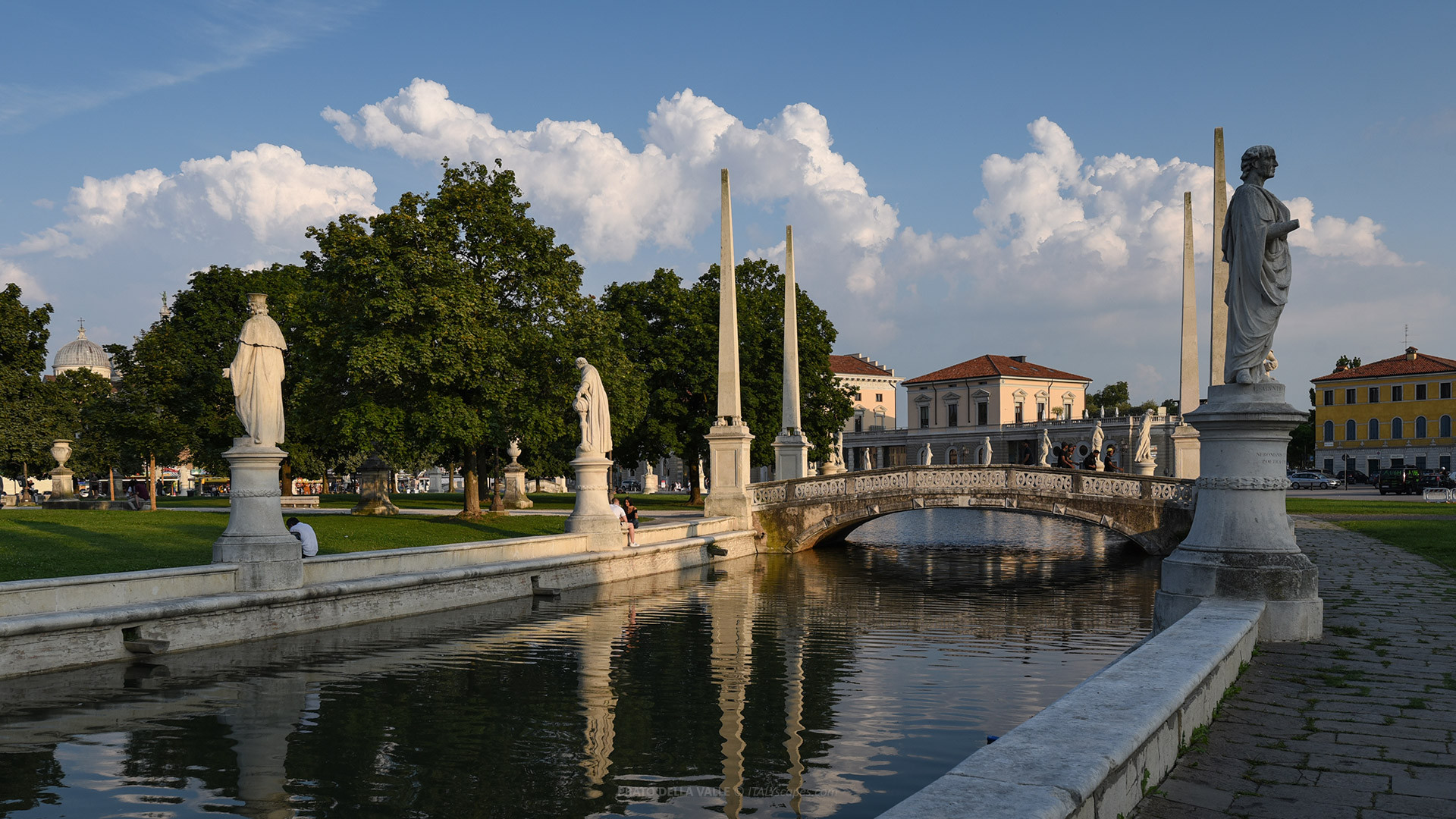
The canal was crossed by four bridges placed on the axes of the ellipse. Along its edges, the project included a double ring of statues dedicated to illustrious personalities connected with Padua. This sculptural ring became the most famous artistic feature of the square.
19th and 20th Century Developments
In the 19th century, trees were planted on the island, especially plane trees. Over time, their large crowns changed the perception of the square, partially hiding the statues and interrupting the visual clarity intended by Memmo’s 18th-century project.
In 1926, the fountain at the center of Isola Memmia was finally inaugurated. The fountain had been included in Memmo’s original concept but was not realized during his lifetime. Its construction completed one of the symbolic elements imagined for the central island.
Between 1921 and 1928, Via Luca Belludi was opened to create a direct connection between Prato della Valle and the Basilica of Saint Anthony. This strengthened the square’s position within the main visitor route through southern Padua’s historic center.
During the 20th century, the square was also used for military parades, large public gatherings, concerts, and civic celebrations. In 1982, Pope John Paul II celebrated Mass in Prato della Valle, confirming its role as a major public stage for Padua.
From the 1960s to the 1980s, traffic and parking damaged the perception of the square. The area outside Isola Memmia became increasingly dominated by cars. Restoration and redevelopment works from the early 1990s helped recover the pedestrian and social character of the Prato.
Architecture of Prato della Valle
The Shape of the Square
The architecture of Prato della Valle is based on a broad elliptical plan. The central island, Isola Memmia, covers about 20,000 square meters and is surrounded by a canal. The outer circumference of the monumental arrangement is approximately 572 meters.
The island is crossed by two perpendicular avenues, creating four main green sections. The design combines geometry, water, sculpture, bridges, grass, and trees. This makes Prato della Valle different from a conventional paved square and closer to an urban landscape project.
Four bridges connect the outer square to the island. They mark the axes of the ellipse and give visitors access to the central space. The bridge system also reinforces the ceremonial character of the layout, turning the approach to the island into a formal passage.
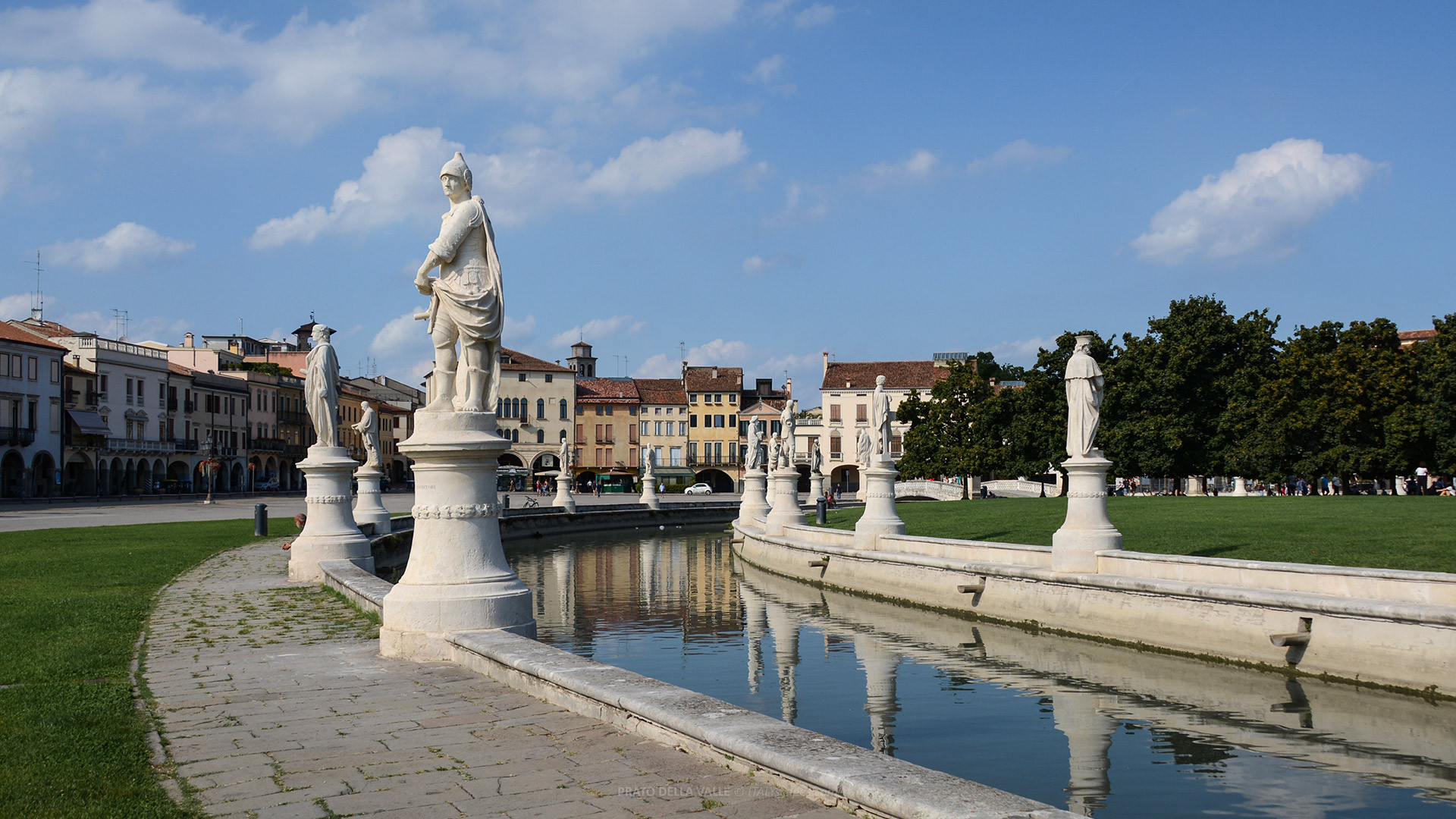
The canal is a crucial architectural element. It gives the square its elliptical rhythm, separates the island from the surrounding area, and reflects the statues and buildings. Fed by the Alicorno, it also recalls Padua’s long relationship with watercourses and hydraulic engineering.
At the center of the island stands the 1926 fountain, surrounded by stone benches. The island also includes 16 ornamental vases, tree-lined paths, lawns, and open spaces used for walking, resting, studying, and meeting, especially during the warmer months.
Basilica of Santa Giustina
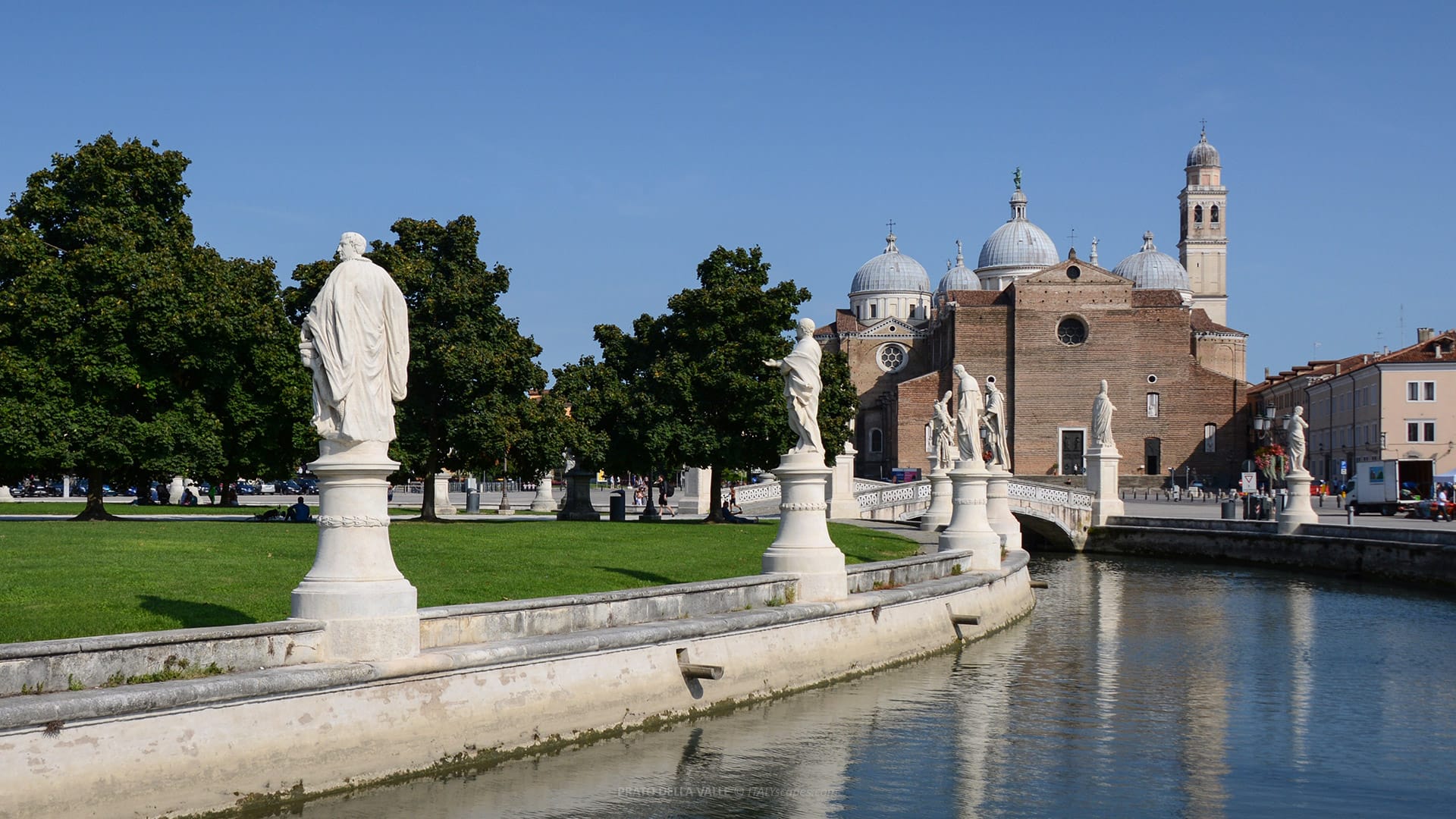
The Basilica of Santa Giustina is the most imposing religious building facing Prato della Valle. Its origins go back to late antiquity, but the present basilica belongs mainly to the 16th century. Its large mass and domes dominate the southeastern side of the square.
The basilica has a Latin-cross plan and measures about 122 meters in length. It preserves important relics, including those of Saint Luke the Evangelist, and is connected with the ancient cult of Saint Justina, Padua’s early Christian martyr.
Its unfinished façade, massive volumes, and sequence of domes create a powerful architectural backdrop. From the Prato, the basilica appears as both a religious monument and an urban boundary, anchoring the vast square with one of Padua’s most important sacred buildings.
Loggia Amulea
Loggia Amulea stands on the side of Prato della Valle as one of its most recognizable palaces. The present building is Neo-Gothic in style and is linked with the older Collegio Da Mula, founded in the early 17th century for young nobles studying in Padua.
After a fire in the 19th century, the building was rebuilt with a façade inspired by Venetian Gothic forms. Its elegant loggia, pointed arches, and decorative rhythm give the Prato a theatrical architectural edge, especially when seen across the water and statues.
For much of the 20th century, the Loggia Amulea housed Padua’s fire brigade. Today, it contains municipal offices, and some rooms are used for civil ceremonies. The building also shelters statues of Dante and Giotto under its arches.
Palazzo Zacco al Prà
Palazzo Zacco al Prà stands on the western side of the square. It was commissioned by Marco Zacco and designed by Andrea Moroni. Construction began in 1555 and was completed quickly, with the building occupied by its owners by 1557.
The palace has a strong scenic position, closing part of the western edge of the Prato. Its ground floor includes a broad portico with seven arches, while the noble floor is marked by large windows and balconies. The Zacco family coat of arms remains visible.
In 1839, the palace was sold to the Armenian Mekhitarist Congregation, which established the Collegio Moorat for Armenian students at the University of Padua. Later, it passed to public ownership and became connected with military and institutional use.
Palazzo Angeli
Palazzo Angeli stands near the northern entrance to Prato della Valle, close to Via Umberto I. The building is historically linked with Cardinal Bessarion and later with Andrea Memmo, who lived there while supervising the transformation of the square in the 1770s.
The palace has an arcaded ground floor and a sober historic façade. Its position is important because it marks one of the main access points to the Prato and connects the square with the route toward the historic center of Padua.
Since 1998, Palazzo Angeli has housed the Museum of Precinema, dedicated to optical devices, magic lanterns, visual entertainment, and the history of images before cinema. This museum adds a cultural function to one of the square’s most historically meaningful buildings.
Ex Foro Boario
On the southern side of the square stands the former Foro Boario, connected with the livestock market. The complex was developed in the early 20th century after the municipality acquired the area in 1913 and commissioned a new multifunctional structure.
The façade facing Prato della Valle is about 135 meters long. The complex included spaces for services connected with the cattle market and other public functions. Its monumental entrance, with a large round arch and classical references, frames the southern edge of the square.
After restoration, the former Foro Boario was reopened with new commercial and public uses. Although less ancient than the basilica or Renaissance palaces, it belongs to the modern economic history of Prato della Valle as a place of trade and urban transformation.
Art of Prato della Valle
The Statues Around the Canal
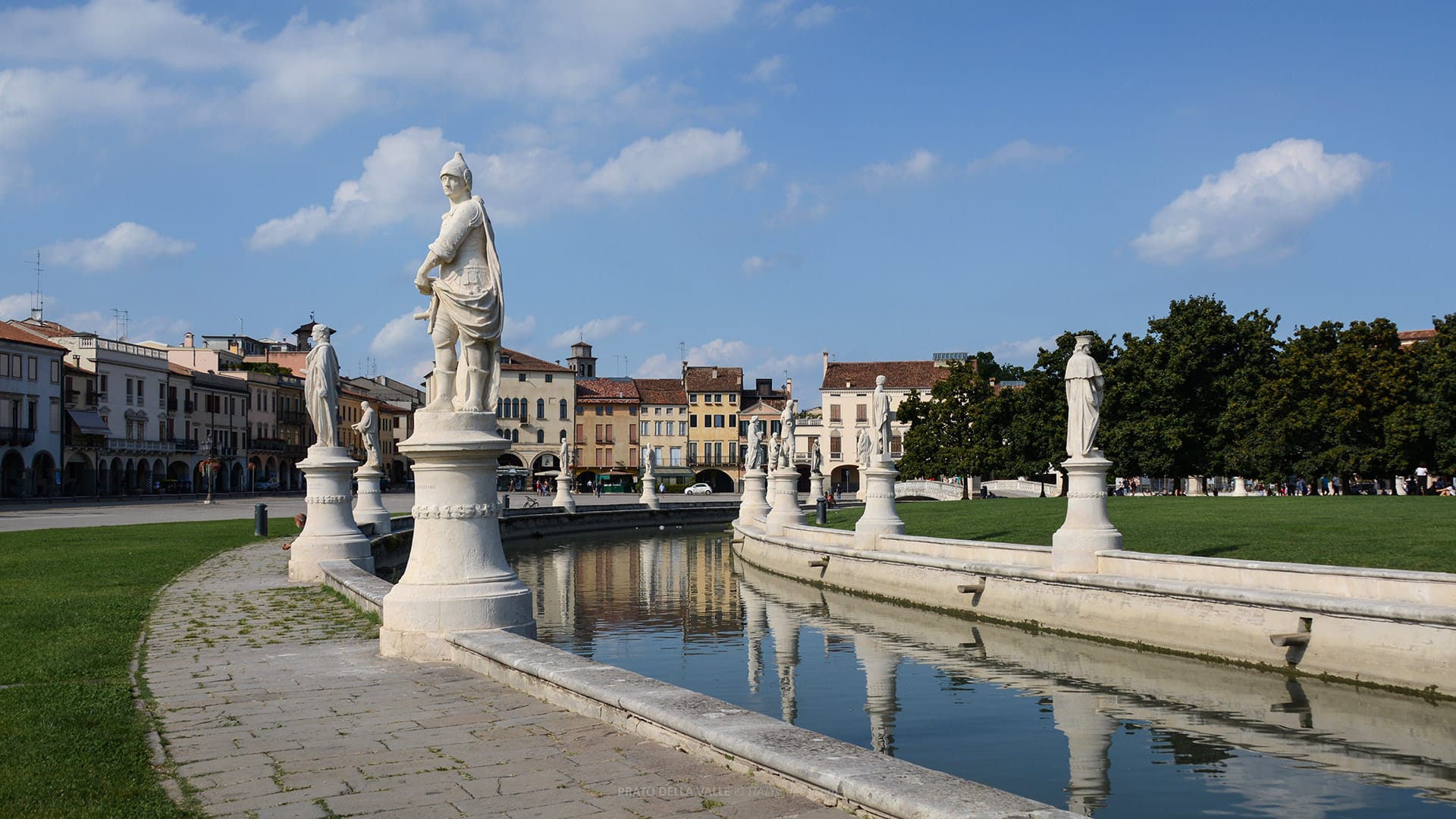
The most famous artistic feature of Prato della Valle is the double ring of statues around the canal. There are currently 78 statues, with 40 along the outer ring and 38 along the inner ring. The original plan provided for 88 statues.
The present arrangement is the result of later changes, especially the destruction of statues representing Venetian doges by Napoleonic troops in 1797. Some statues were repositioned, while obelisks took the place of sculptures on the eastern and western bridges.
The statues were not decorative additions without rules. A regulation issued on 10 February 1776 established clear conditions: no living person could be represented, saints were excluded, and each figure had to have a meaningful connection with Padua.
Most figures are professors, scholars, artists, rulers, military leaders, or important personalities connected with the University of Padua and the city’s cultural history. In this sense, the statues form a civic pantheon rather than a random sculptural collection.
The first statue created for the square represented Cicero, but it was removed because he lacked a direct connection with Padua. It was replaced by Antenor, the legendary founder of the city, whose statue was offered to Padua by Andrea Memmo himself.
Materials and Conservation
The statues and pedestals were made of Vicenza stone, a soft limestone from the Berici Hills. This material is easy to carve and suitable for sculpture, but it is vulnerable to weathering. Because of this, conservation has always been a major issue.
Several restoration campaigns have taken place since the late 19th century. A major conservation phase occurred in the early 1990s, when the square was also being recovered from traffic and parking pressure. The statues remain exposed to rain, temperature changes, and pollution.
One important conservation case concerns the statue of Giovanni Poleni, originally sculpted by Antonio Canova. In 1963, the original was replaced by a copy by Luigi Strazzabosco for preservation reasons, while Canova’s statue was moved to the Civic Museums.
People Represented
The statues represent a wide range of figures associated with Padua. Among them are Antenor, Titus Livius, Torquato Tasso, Ludovico Ariosto, Andrea Mantegna, Francesco Petrarch, Galileo Galilei, Giuseppe Tartini, Giovanni Poleni, and Andrea Memmo himself.
The sculptural program is strongly male, reflecting the cultural and political choices of its time. The only female presence is the bust of the poet Gaspara Stampa, placed at the foot of the statue dedicated to Andrea Briosco, also known as Riccio.
The statues were also part of the financial strategy for the transformation of the Prato. Citizens or groups paid for them, contributing not only to the cost of each sculpture but also to the wider redevelopment works of the square.
How to Get to Prato della Valle
Getting to Prato della Valle on foot
Prato della Valle is easy to reach on foot from the historic center of Padua. From Padua railway station, the walking distance is about 2.2 kilometers, which usually takes around 25 to 30 minutes, depending on pace and route.
The walk from the Basilica of Saint Anthony is much shorter. The distance is about 610 meters, or roughly 7 minutes on foot. This makes it simple to combine the Basilica, Via Belludi, the Botanical Garden, and Prato della Valle in one itinerary.
From the Scrovegni Chapel and Eremitani area, the walking distance is approximately 1.6 kilometers. Visitors can cross the historic center gradually, passing university streets, churches, porticoes, cafés, and smaller squares before reaching the monumental openness of the Prato.
Getting to Prato della Valle by bus or tram
Prato della Valle is well served by Padua’s public transport network. The tram is one of the simplest options, especially from the railway station. The tram connection between Stazione FS and Prato della Valle usually takes about 9 minutes.
The nearest tram stop is Prato, on the northern side of the square. Nearby bus stops include Prato Valle angolo Belludi, and Prato della Valle, located also on the square.
Several bus lines stop near the square, including routes such as U3, U11, U12, U13, and M, depending on the direction and current timetable.
Getting to Prato della Valle by taxi
A taxi is useful if you are arriving with luggage, traveling late, or coming directly from the station, hotel, or hospital area. From Padua railway station, the road distance is about 4.8 kilometers, and the ride can take around 6 minutes in light traffic.
Taxi duration and cost depend on traffic, time of day, luggage, and local tariffs. Because Prato della Valle is a major landmark, drivers will easily recognize the destination.
Frequently Asked Questions about Prato della Valle
Is Prato della Valle the largest square in Europe?
Prato della Valle is one of the largest squares in Europe, covering 88,620 square meters. It is safer to call it one of Europe’s largest monumental squares, not the absolute largest.
Where is Prato della Valle located?
Prato della Valle is in Padua, in the Veneto region of northern Italy. It lies south of the historic center, close to Santa Giustina, Saint Anthony’s Basilica, and the Botanical Garden.
What is Isola Memmia?
Isola Memmia is the elliptical central island of Prato della Valle. It covers about 20,000 square meters and is surrounded by a canal, four bridges, statues, trees, lawns, and a fountain.
Why is it called Prato della Valle?
The name means “meadow of the valley”. “Prato” referred to an open commercial area, while “Valle” described the low, flood-prone, marshy ground before its 18th-century transformation.
How many statues are in Prato della Valle?
There are currently 78 statues around the canal: 40 on the outer ring and 38 on the inner ring. The original 18th-century plan included 88 statues.
Who designed the modern Prato della Valle?
The modern transformation was promoted by Andrea Memmo in 1775. He worked with Domenico Cerato, an architect and professor at the University of Padua, to reorganize the area.
What buildings can be seen around Prato della Valle?
Important buildings include the Basilica of Santa Giustina, Loggia Amulea, Palazzo Zacco al Prà, Palazzo Angeli, and the former Foro Boario, each linked with different periods of Padua’s history.
How far is Prato della Valle from Padua train station?
Prato della Valle is about 2.2 kilometers from Padua railway station on foot. The walk usually takes 25 to 30 minutes, while the tram ride takes about 9 minutes.
Sources: -
Photos
-
Map
-
Reviews

1 Review on “Prato della Valle”
Leave a Review
Is there a bus from the Scrovengi Chapel area to Prato della Valle?
Thanks for your help.
Yes! You can take the SIR1 tram, which has a stop across the street from the Scrovegni Chapel, or one of the buses U03, U05, U11, U12, U16, a few meters away. All the buses will get you to Prato della Valle.