-
About
Table of Contents
Porto Vecchio (Old Port) is the historic harbor of Monopoli and one of the most distinctive maritime landmarks on the Adriatic coast of southern Italy. Moreover, Porto Vecchio is widely considered the most picturesque area of Monopoli.
It is located at the northern edge of the historic center, where the ancient city meets the sea, and has played a central role in the urban, economic, and defensive development of Monopoli for more than two millennia.
The port occupies a naturally sheltered inlet that opens eastward toward the Adriatic Sea. This natural configuration explains why the earliest settlement of Monopoli developed precisely around this harbor area.
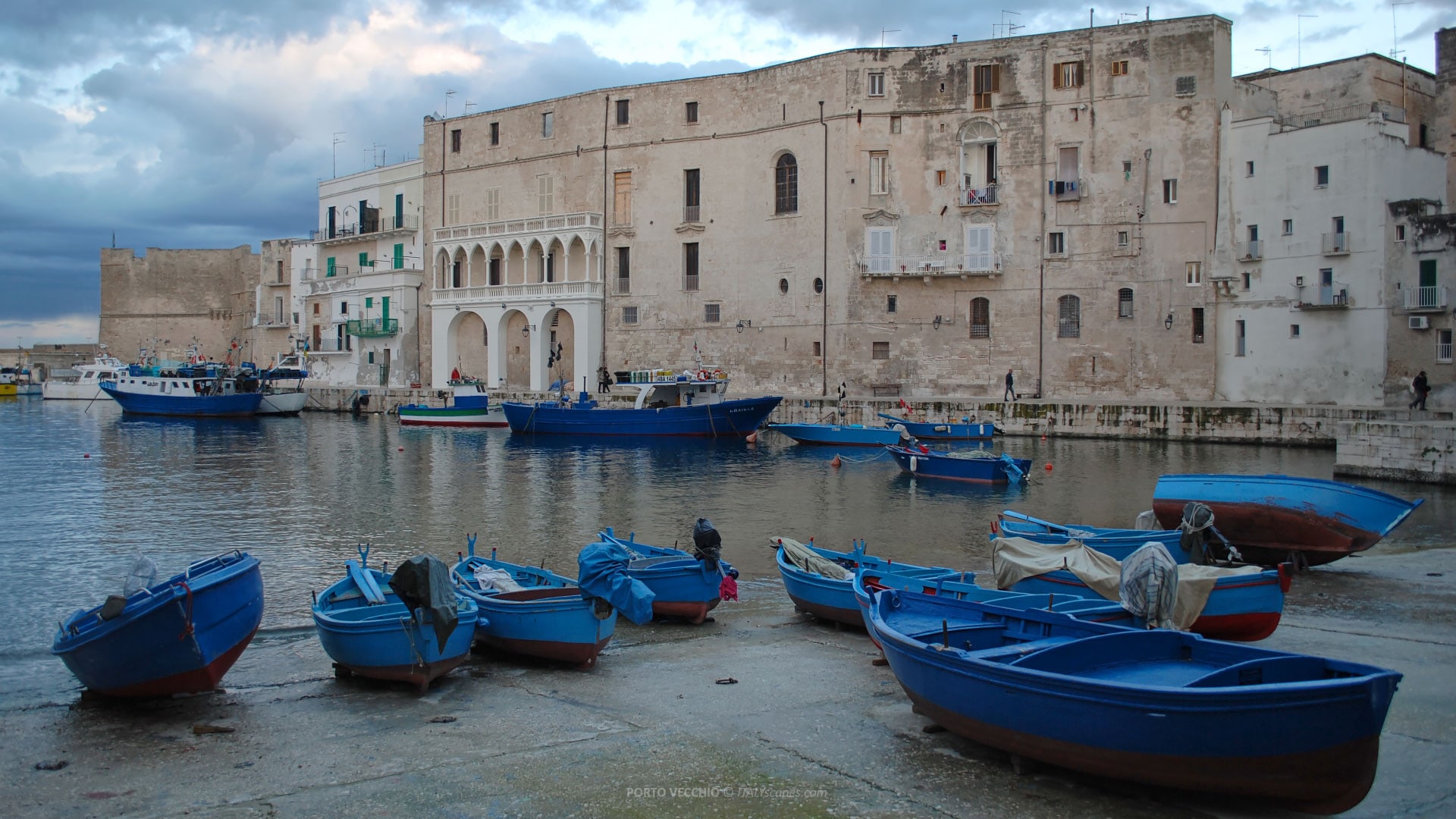
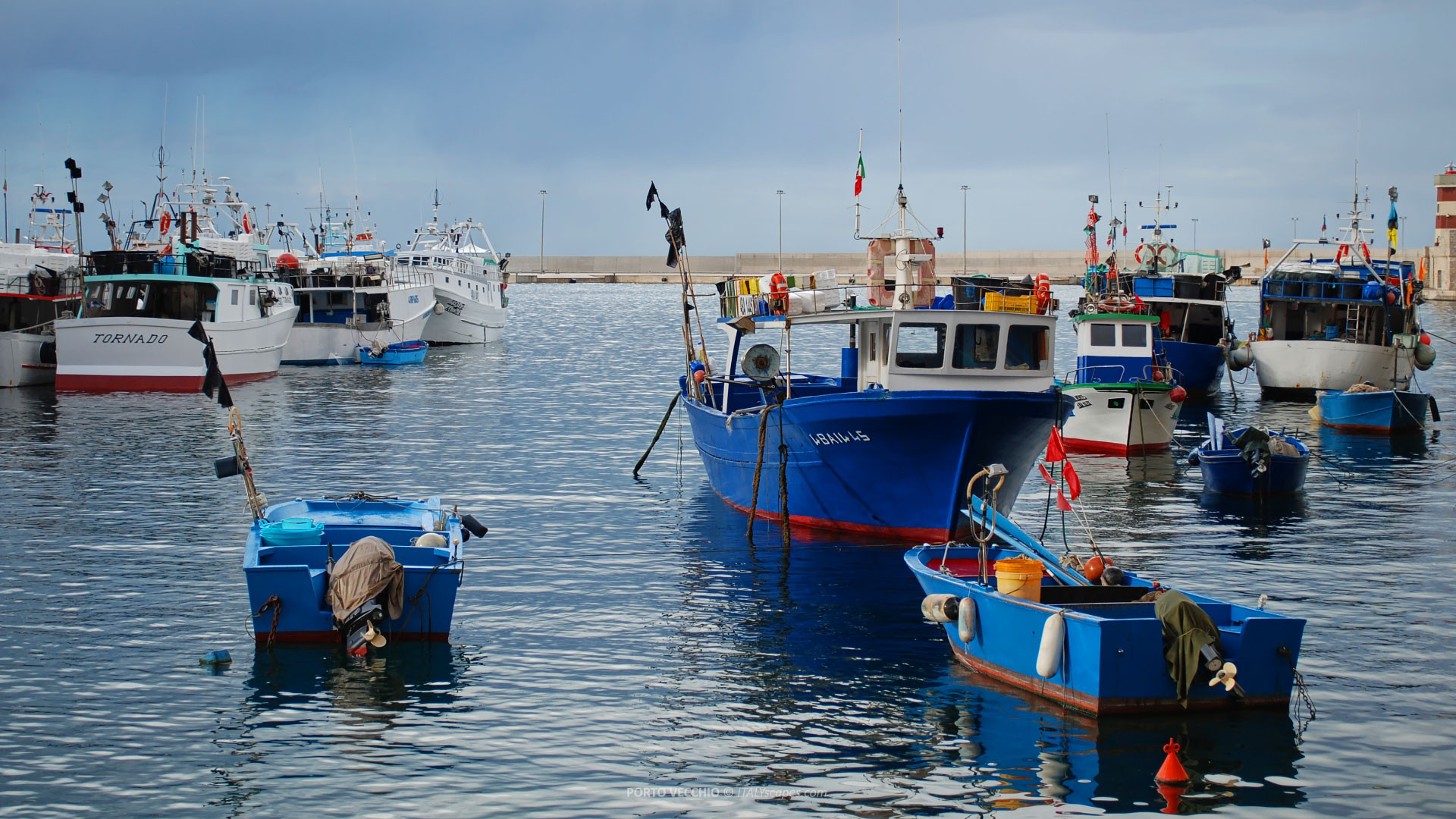
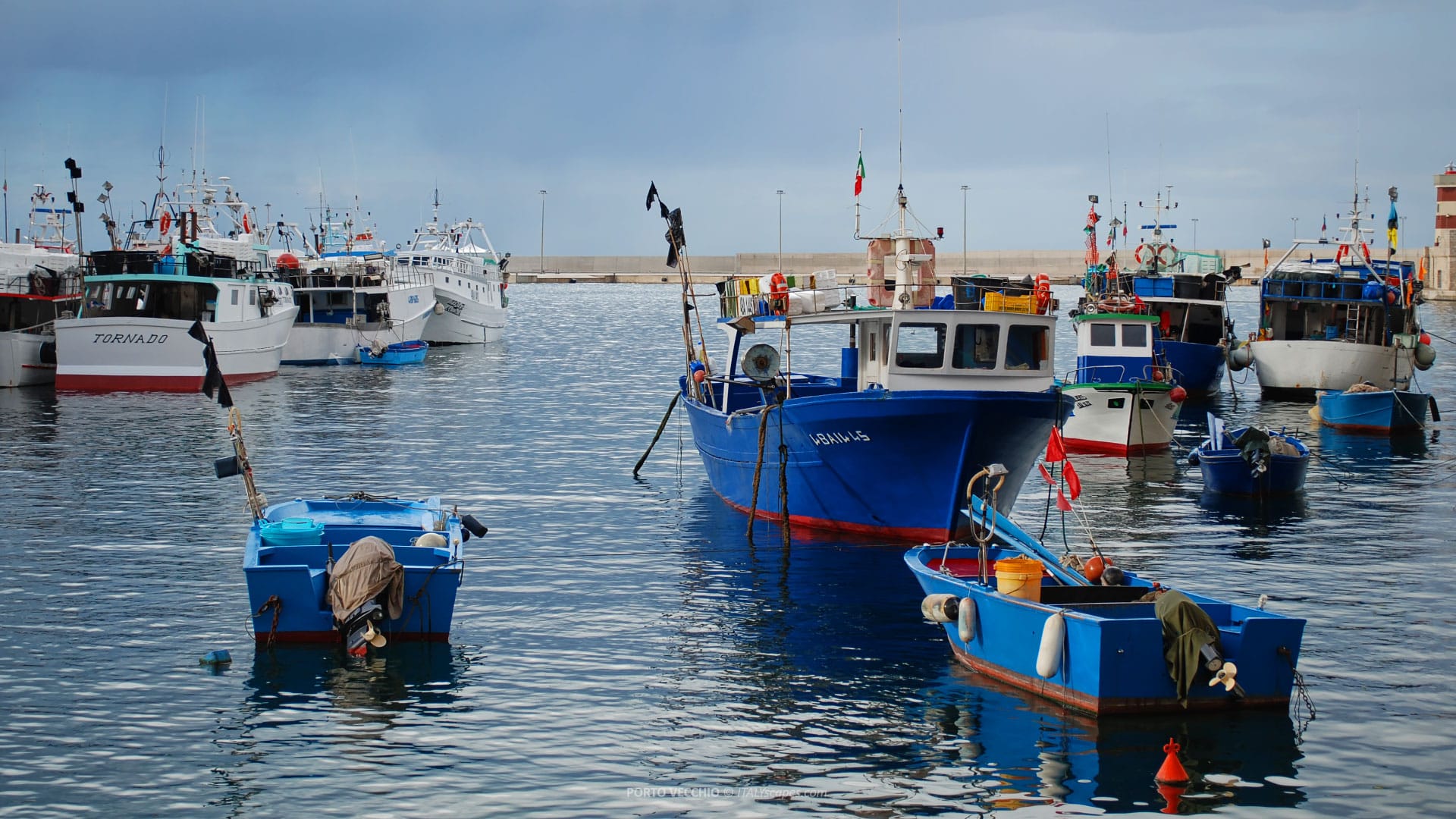
Today, Porto Vecchio remains an active port, though its function has shifted almost entirely toward traditional fishing and small-scale maritime activities. It is the authentic home of the city’s typical fishing boats, known as gozzi (or vozz in the local dialect).
These wooden boats are generally around five meters long and are still used daily by local fishermen. Painted in bright red, blue, green, and white, the gozzi are both functional working vessels and a strong visual symbol of Monopoli’s maritime identity.
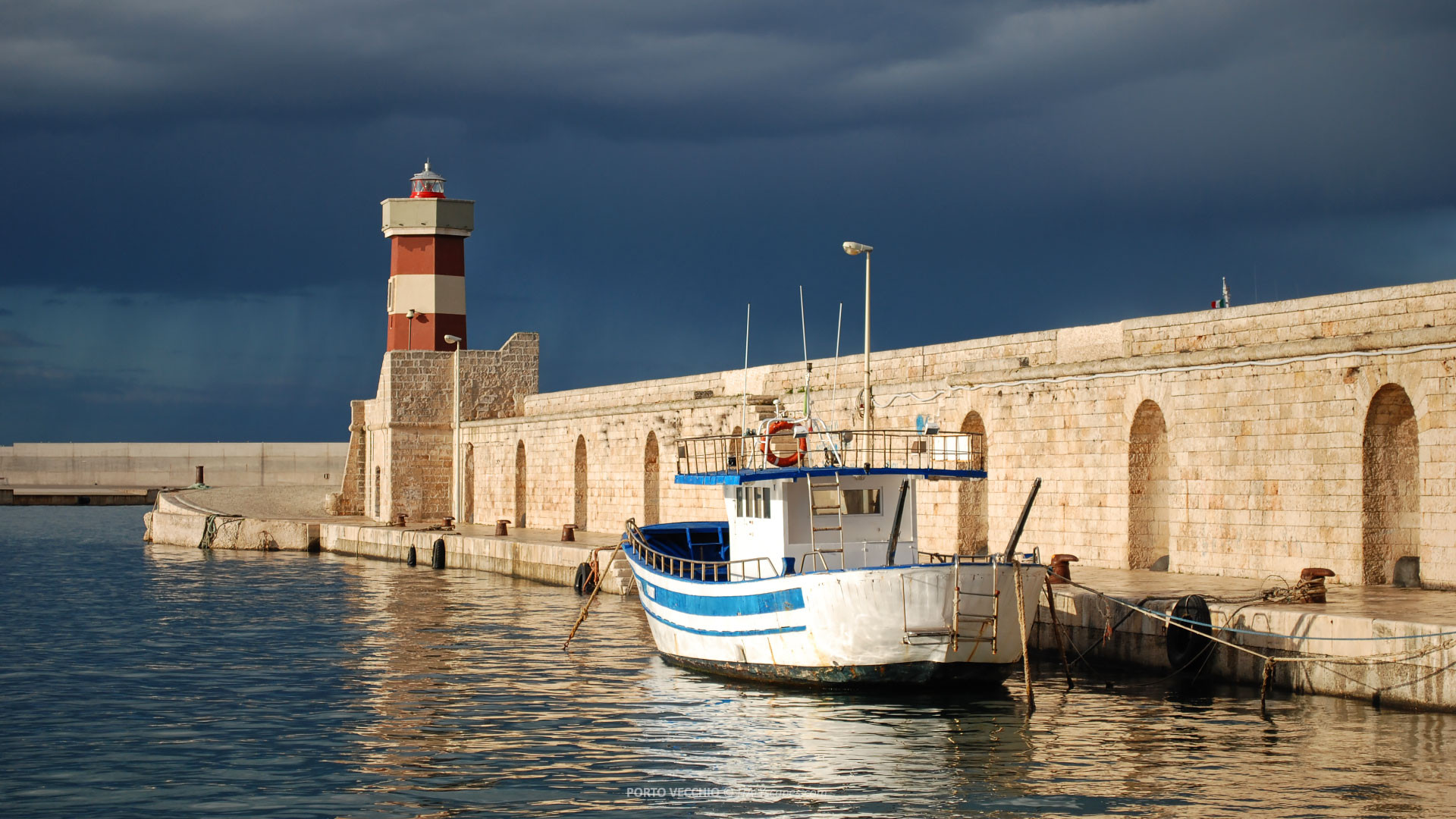
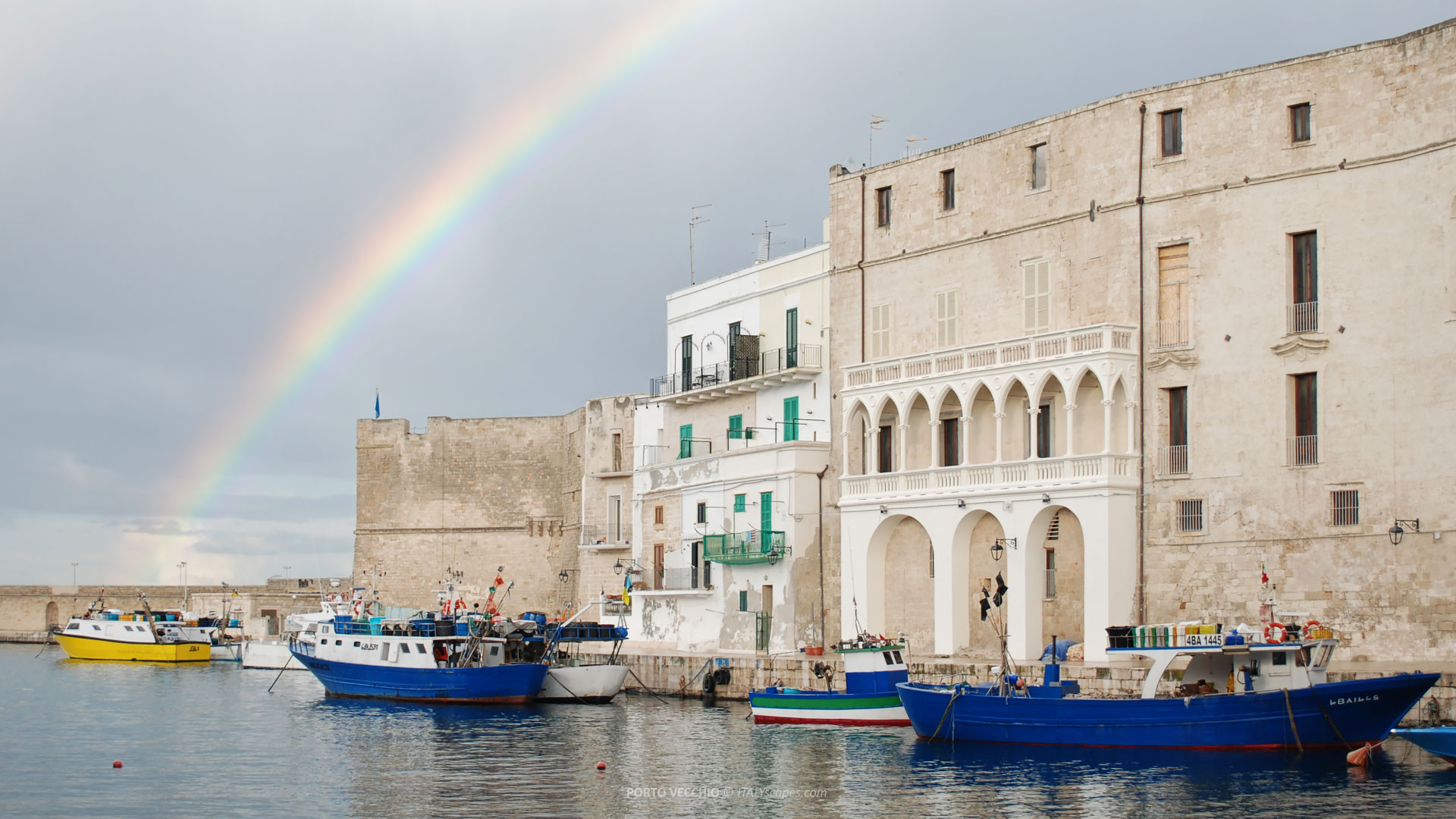
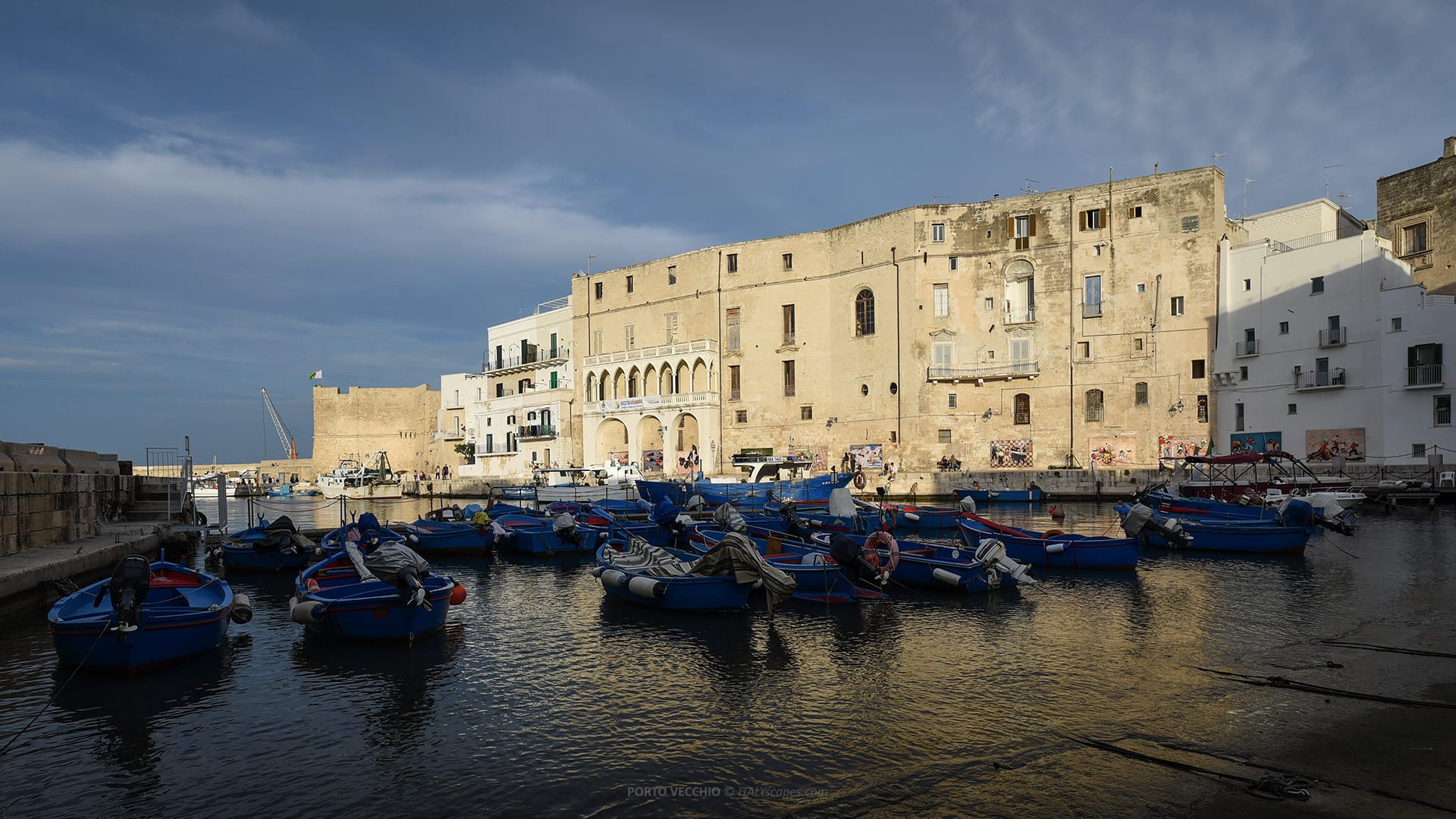
The red lighthouse marking the port entrance, the imposing Castle of Charles V overlooking the water, the elegant Palazzo Martinelli-Meo Evoli built along the ancient city walls, and the vivid contrast between stone architecture and colorful boats create a unique coastal landscape.
Short History of Porto Vecchio
The history of Porto Vecchio is deeply intertwined with the history of Monopoli itself. Archaeological and historical evidence suggests that the port has been continuously used since ancient times, making it one of the oldest functioning harbors in the region of Apulia.
Archaeological excavations conducted between 1985 and 2011 revealed the presence of a Messapian settlement dating back to the 6th century BC. This ancient city was equipped with defensive walls and fortifications positioned directly above the port area.
The Messapians, an Italic population inhabiting large parts of Apulia before Roman expansion, recognized the strategic importance of the natural harbor and integrated it into their defensive system.
The cove of Porto Vecchio offered natural shelter from the winds, particularly from the strong northern and northeastern currents that affect the Adriatic coast. The basin was deep enough to accommodate vessels of the time and allowed safe anchorage close to the shore.
These conditions made the harbor an ideal focal point for early settlement, trade, and maritime control. It is widely accepted that the urban development of Monopoli originated around this protected inlet.
During the Roman period, Monopoli became an important coastal center connected to inland routes and maritime trade networks. By the 1st century AD, the Roman city featured a large gate providing direct access from the urban area to the quay.
This gate allowed the movement of goods, people, and military units between the port and the city. Portions of this ancient defensive structure were later incorporated into subsequent fortifications.
Throughout the Middle Ages, Porto Vecchio continued to serve as Monopoli’s principal harbor. The city experienced successive periods of Byzantine, Norman, and Angevin rule, each leaving traces in the defensive organization of the port area.
Due to its exposed position along the Adriatic routes, Monopoli was frequently subject to raids and attacks, which reinforced the need for strong coastal defenses centered around the harbor.
In the 16th century, under Spanish domination, the existing fortifications were significantly strengthened.
The Castle of Charles V was built directly overlooking Porto Vecchio, incorporating earlier structures and transforming the port into a fortified military stronghold.
From this period onward, the port functioned not only as a commercial and fishing harbor but also as a key defensive point protecting the city from seaborne threats.
Description of Porto Vecchio
Porto Vecchio today preserves much of its historical layout while remaining an active and lived-in space. The harbor is relatively small in size but dense in architectural and historical elements, reflecting centuries of continuous use.
On the northeastern side of the port stands the Castle of Charles V, a massive fortress constructed in the first half of the 16th century during Spanish rule.
The castle was designed to defend the coastline from Ottoman incursions and pirate attacks, which were common in the Adriatic during that era. Its strategic position allowed control over both the port entrance and the surrounding sea routes.
The castle incorporates parts of earlier Roman and medieval defensive structures, including the remains of the ancient Roman gate that once connected the city to the quay.
Its architecture is characterized by thick stone walls, angular bastions, and a compact layout optimized for artillery defense.
After a period of abandonment and limited use, the fortress underwent extensive consolidation and restoration work in the 1990s. Today, it functions as a cultural venue hosting exhibitions, conferences, and temporary art installations, while remaining one of the most recognizable landmarks of Porto Vecchio.
The eastern side of the port is defined by Palazzo Martinelli-Meo Evoli, an aristocratic residence built along the ancient city walls.
The palace reflects the transformation of Monopoli from a fortified medieval town into a more refined urban center during the early modern period.
The quay of Porto Vecchio is lined with stone pavements and mooring points that are still used daily by fishermen. The traditional gozzi boats are typically anchored close to the shore, allowing easy unloading of nets and catches.
At the entrance of the harbor stands the red lighthouse, a small but visually prominent structure that marks the access channel. While modest in size, it serves as an essential navigational reference and contributes to the iconic image of Porto Vecchio.
How to Get to Porto Vecchio
Porto Vecchio is easily accessible from all parts of Monopoli due to its central location. The Old Port is situated approximately 1.2 kilometers from the Monopoli railway station, which lies south of the historic center along the Adriatic coastal line.
From the station, Porto Vecchio can be reached on foot in about 15 to 20 minutes by following the main streets leading toward the old town. The route passes through modern urban areas before entering the historic center, where narrower streets guide visitors directly to the harbor.
For those arriving by car, access to the immediate port area is limited due to traffic restrictions within the historic center. Parking is available in designated areas outside the old town, from which Porto Vecchio can be reached on foot within a short distance.
Sources: -
Photos
-
Map
-
Reviews