-
About
Table of Contents
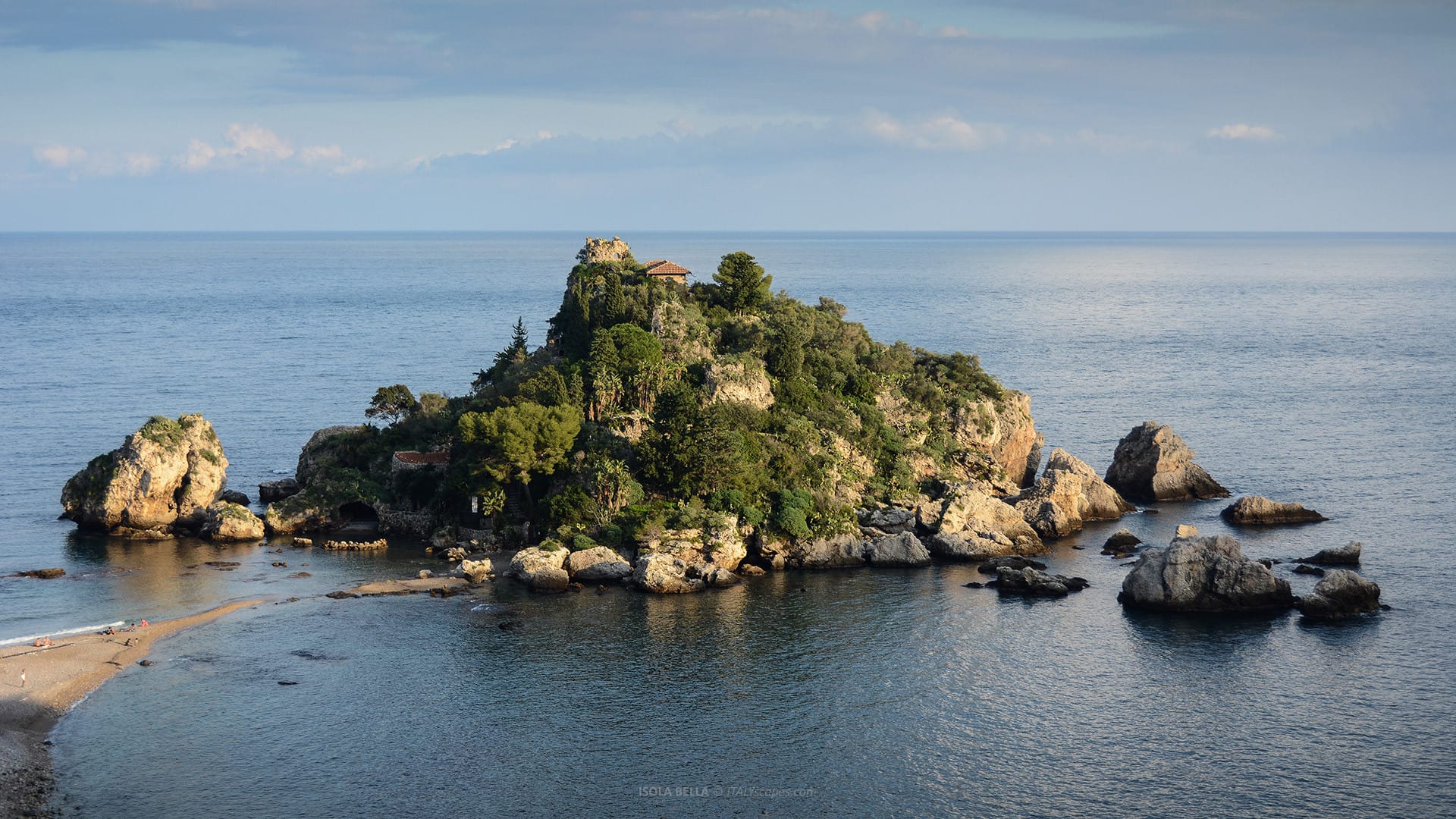
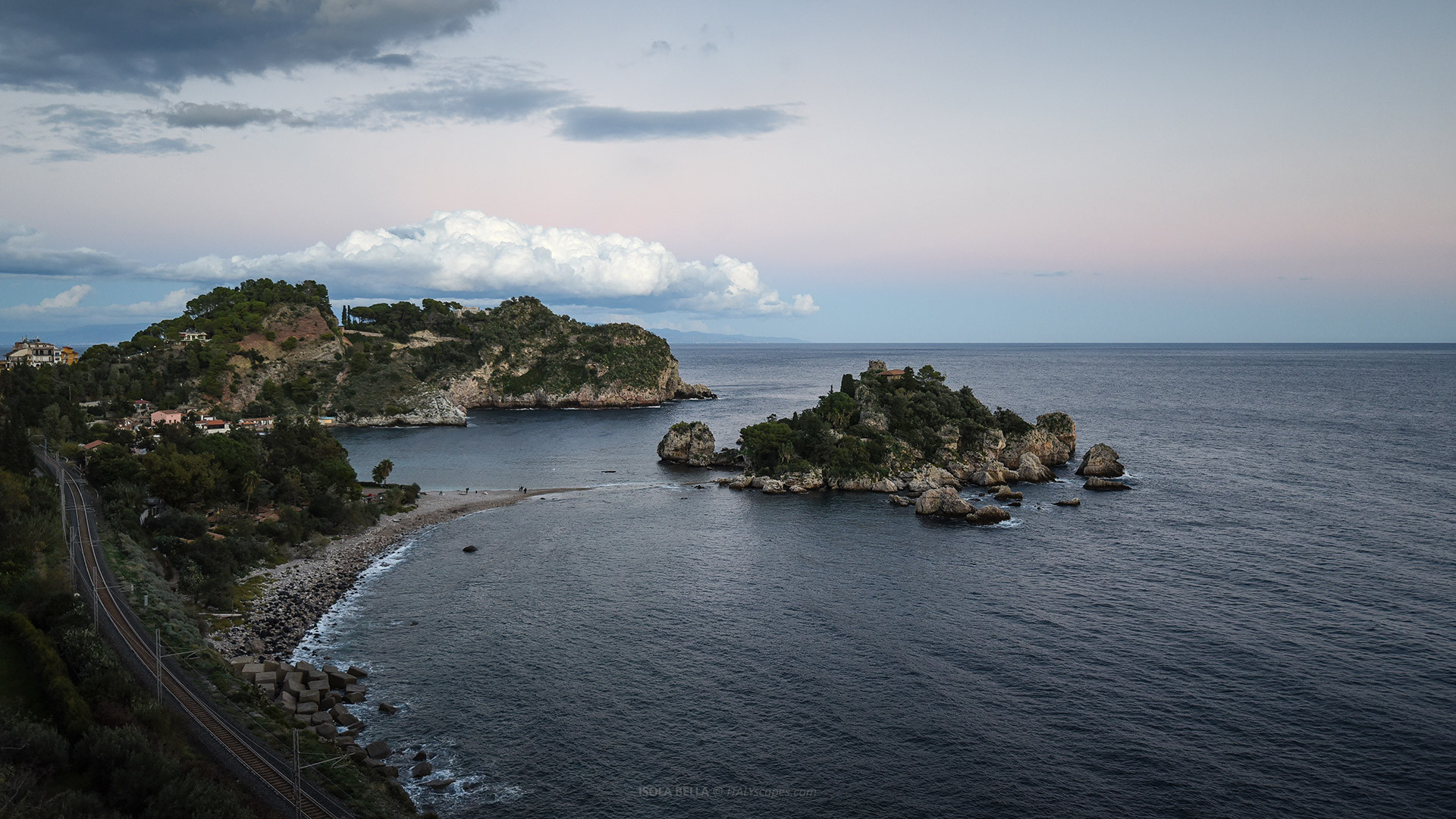
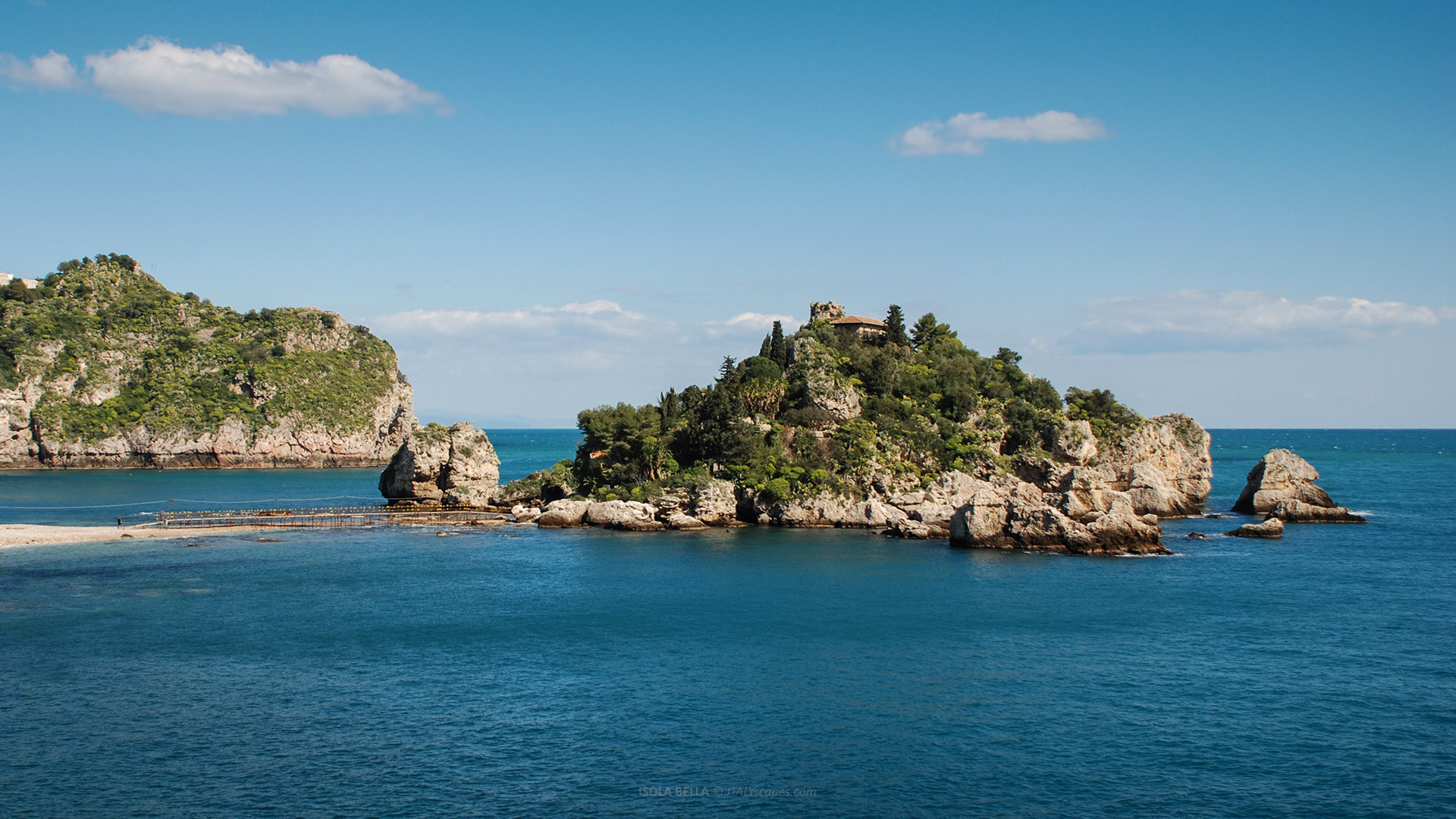
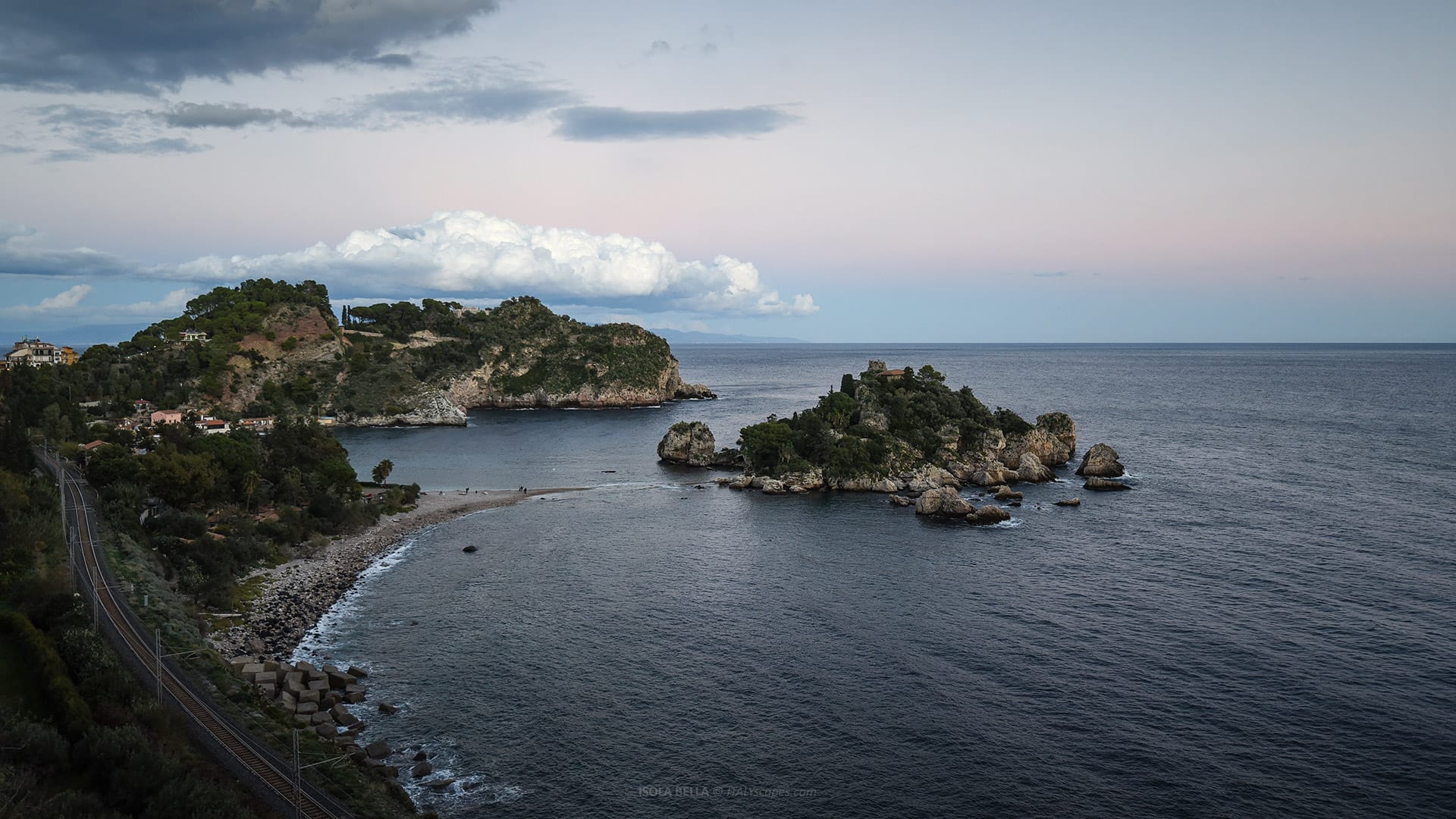
Isola Bella (known as Isula Bedda in the Sicilian dialect and translated as Beautiful Island in English) is a small island located in the Ionian Sea, just off the coast of Taormina, on the eastern side of Sicily.
The island lies immediately opposite the beach that bears the same name, forming one of the most iconic coastal landscapes in the region and one of the most photographed natural sites in Sicily.
One of the most distinctive features of Isola Bella is its physical connection to the mainland, which varies depending on sea conditions. During periods of low tide, a narrow strip of sand and pebbles emerges, linking the island to the beach and effectively transforming it into a peninsula.
When the tide rises, this strip becomes submerged, restoring Isola Bella’s appearance as a true island. This natural phenomenon contributes greatly to the site’s charm and uniqueness, as the landscape continuously changes throughout the day.
The island itself is relatively small, but its environmental, historical, and scenic value far exceeds its size.
Isola Bella is covered with Mediterranean vegetation, including shrubs and plant species typical of coastal Sicily, which thrive thanks to the island’s mild climate and calcareous rock formations.
Short History of Isola Bella
The documented history of Isola Bella begins in the early 19th century, during a period when Sicily was under Bourbon rule.
In 1806, the island was donated by Ferdinand I of Bourbon to Pancrazio Ciprioti, who was the Mayor of Taormina at the time. This donation marked the first known transfer of ownership of Isola Bella as a private property.
For much of the 19th century, the island remained largely untouched, valued primarily for its scenic position rather than for development. A significant change occurred in 1890, when Isola Bella was purchased by Florence Trevelyan, an English noblewoman and botanist who had settled in Taormina.
Florence Trevelyan was part of the international cultural circle that contributed to Taormina’s transformation into a destination for artists, intellectuals, and travelers from across Europe.
During her ownership, Florence Trevelyan built a small house on the island and introduced ornamental plants and botanical elements, reflecting her interest in landscape design and botany.
Her intervention respected the island’s natural character while subtly shaping its appearance. After her death, the island was inherited by Cesare Acrosso, a lawyer who was the adopted godson of Salvatore Cacciola, Florence Trevelyan’s husband.
A new phase in the history of Isola Bella began in 1954, when the island was purchased for 38,000 Italian lire by Leone and Emilio Bosurgi, two brothers from Messina.
The Bosurgi family owned Sanderson, a historic company specialized in citrus processing, which was particularly influential in Sicily’s agricultural economy during the 20th century.
Under the Bosurgi ownership, Isola Bella underwent its most substantial transformation. The brothers developed a small private village on the island, consisting of 12 autonomous residential units and a small swimming pool built nearby.
These structures were intended primarily to host friends and guests, rather than for commercial tourism. Despite these constructions, the island remained relatively exclusive and inaccessible to the general public.
The Bosurgi family’s ownership came to an end in 1982, when the bankruptcy of the Sanderson company forced the sale of the family’s assets. As a result, Isola Bella was put up for auction, beginning a period of uncertainty regarding its future.
A decisive intervention occurred on October 8, 1984, when, at the request of the Municipality of Taormina, the Regional Department of Cultural Heritage officially declared Isola Bella a natural monument.
This designation imposed a series of restrictions aimed at protecting the island’s landscape and preventing further alterations incompatible with its natural value.
After several unsuccessful auctions, Isola Bella was finally purchased in 1990 by the Department of Cultural Heritage of the Sicilian Region. This acquisition marked the definitive transition of the island from private ownership to public protection.
In 1998, the island was formally designated as a nature reserve, ensuring long-term conservation and regulated public access.
Powered by GetYourGuideThe Beach of Isola Bella
The beach in front of Isola Bella is widely considered one of the most attractive beaches in the Taormina area.
However, unlike sandy beaches, it is composed mainly of small pebbles, and the seabed is rocky, which can make access to the water less comfortable for some visitors, especially those with limited mobility.
Despite this, the transparency of the water and the richness of marine life make the area particularly popular for swimming and snorkeling.
Access to the beach itself is free, as it is part of the public coastline. However, entrance to the Isola Bella Nature Reserve, which includes the island and its protected areas, requires a ticket.
The standard entrance fee is 6 euros, which contributes to the conservation and management of this protected natural site.
Isola Bella Nature Reserve
The Isola Bella Nature Reserve (Riserva naturale orientata Isola Bella) is a protected natural area located within the municipality of Taormina, in the Metropolitan City of Messina. The reserve was officially established by Decree No. 619/44 of the Sicilian Region, issued on November 4, 1998.
The reserve was created to safeguard the geomorphological, botanical, and marine characteristics of Isola Bella and its surrounding waters.
The island is primarily composed of limestone rock, shaped over time by marine erosion, which has created small coves, cliffs, and underwater formations of considerable scientific interest.
From a botanical perspective, the reserve hosts a variety of Mediterranean plant species, including shrubs and vegetation adapted to salty winds and limited soil depth. These plant communities play a crucial role in stabilizing the island’s surface and preserving its ecological balance.
The marine area surrounding Isola Bella is equally significant. The rocky seabed supports diverse marine life and contributes to the exceptional clarity of the water.
Management of the Isola Bella Nature Reserve has changed over time. Initially, the reserve was entrusted to the World Wide Fund for Nature (WWF), reflecting its international environmental importance.
Management was later transferred to the Province of Messina, and more recently to CUTGANA (Centro Universitario per la Tutela e la Gestione degli Ambienti Naturali e degli Agroecosistemi), the environmental protection center of the University of Catania.
Today, CUTGANA oversees conservation efforts, visitor access, and educational initiatives, ensuring that the reserve fulfills both its protective and cultural functions. Visitors can access designated paths and areas of the island while respecting rules designed to minimize human impact.
How to Get to Isola Bella
Isola Bella is located approximately 2.2 kilometers from the historic center of Taormina and about 2.5 kilometers from the Taormina-Giardini railway station, making it easily accessible for both local visitors and tourists.
Access to the beach of Isola Bella is provided from the national road SS 114, which runs along the coast. From the road, a staircase leads down to the beach, allowing visitors to reach the shoreline on foot.
One of the most convenient ways to reach Isola Bella from the center of Taormina is by taking the Taormina-Mazzarò cable car. This cable car connects the historic town center with the coastal area in just a few minutes.
A one-way ticket costs 6.00 euros, making it a fast and practical option, especially during the summer months.
As an alternative, visitors can use bus line 25, which operates between Taormina and the coastal area near Isola Bella. The bus ticket costs 2.00 euros, offering a more economical option for reaching the site.
Sources:Powered by GetYourGuide -
Photos
-
Map
-
Reviews