-
About
Table of Contents
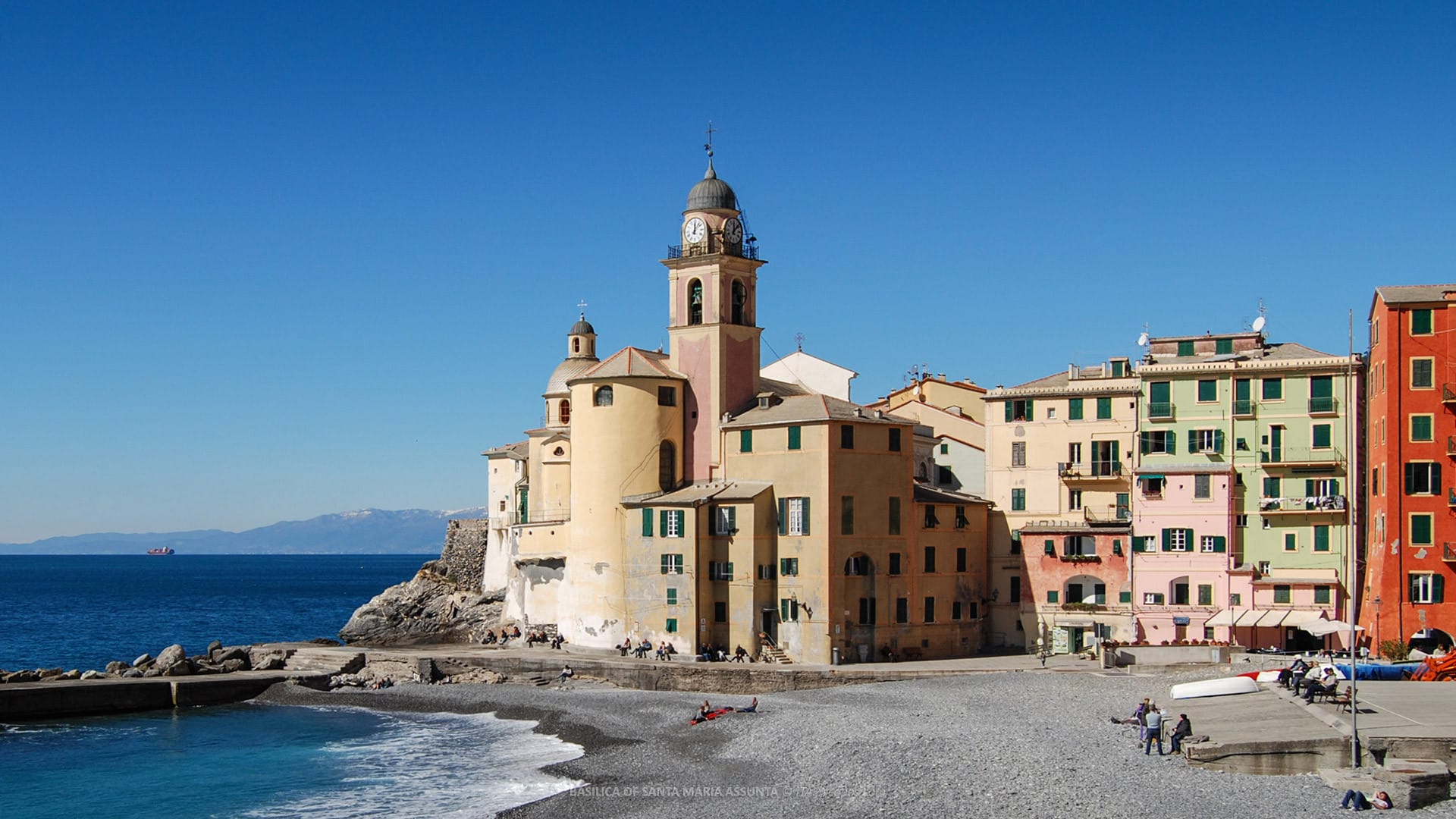
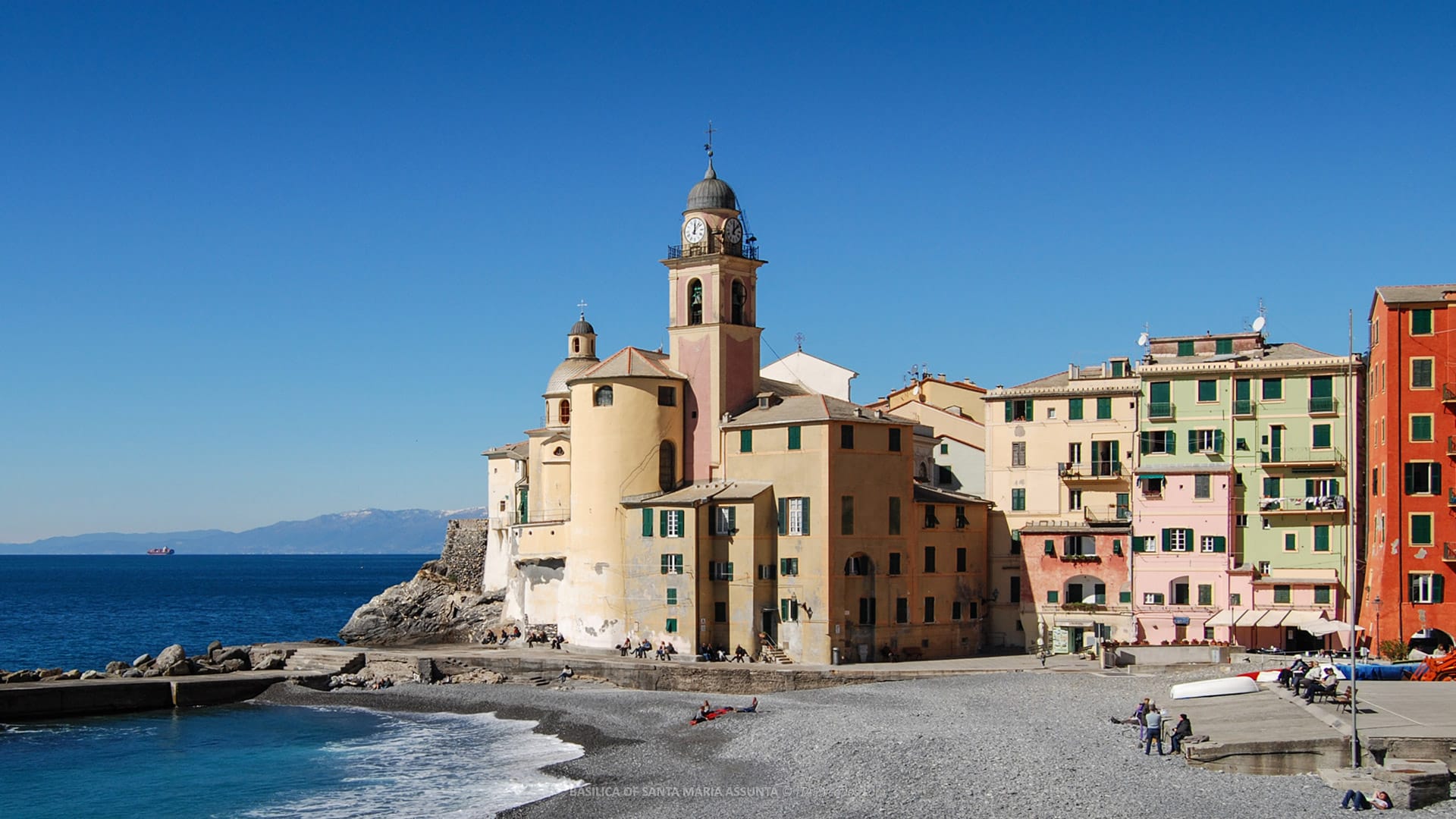
The Basilica of Santa Maria Assunta stands as one of the most recognizable landmarks of Camogli, rising directly above the marina and forming a visual dialogue with the sea, the beach, and the town’s tall, colorful façades.
Built on a rocky spur at the water’s edge, the basilica dominates the waterfront and has long served as Camogli’s spiritual, architectural, and symbolic heart.
Over the centuries, the building has undergone multiple phases of expansion, restoration, and artistic enrichment, reflecting the town’s historical fortunes and its deep connection to maritime life.
The basilica is particularly notable for its richly decorated Baroque interior, its numerous chapels dedicated to saints closely linked to local devotion, and its prominent role in the religious life of the Ligurian coast.
Short History of the Basilica of Santa Maria Assunta
According to historical sources, the Basilica of Santa Maria Assunta was originally built in the 12th century, at a time when Camogli was developing as an important maritime settlement.
As Camogli grew in population and prosperity, especially during the late Middle Ages and early modern period, the church underwent a series of expansions and architectural modifications to accommodate the evolving needs of the faithful.
Major interventions took place during the 16th century, when the building was enlarged and adapted to reflect new liturgical requirements and artistic tastes.
Further transformations occurred in the 19th century, a period of renewed interest in monumental religious architecture.
The basilica was solemnly consecrated in 1826 by the Archbishop of Genoa, Monsignor Luigi Lambruschini, an act that formally recognized its importance within the diocese.
A second consecration took place in 1847, presided over by Monsignor Placido Maria Tadini, following additional restoration works.
In 1970, three statues were placed in the niches of the façade facing the small square near Isola: those of Saint Prospero, Saint Fortunato, and the Madonna del Boschetto.
Architecture of the Basilica of Santa Maria Assunta
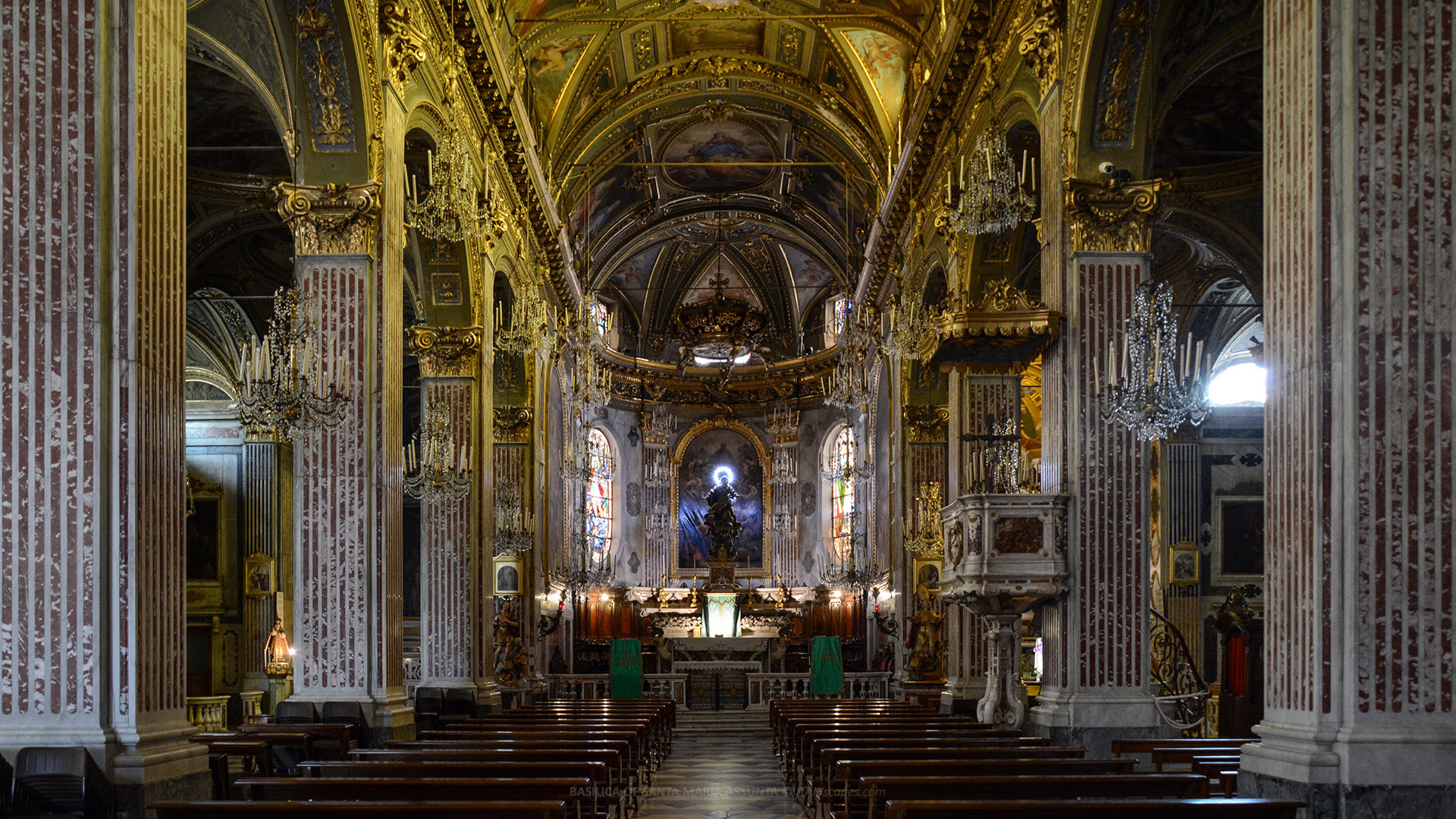
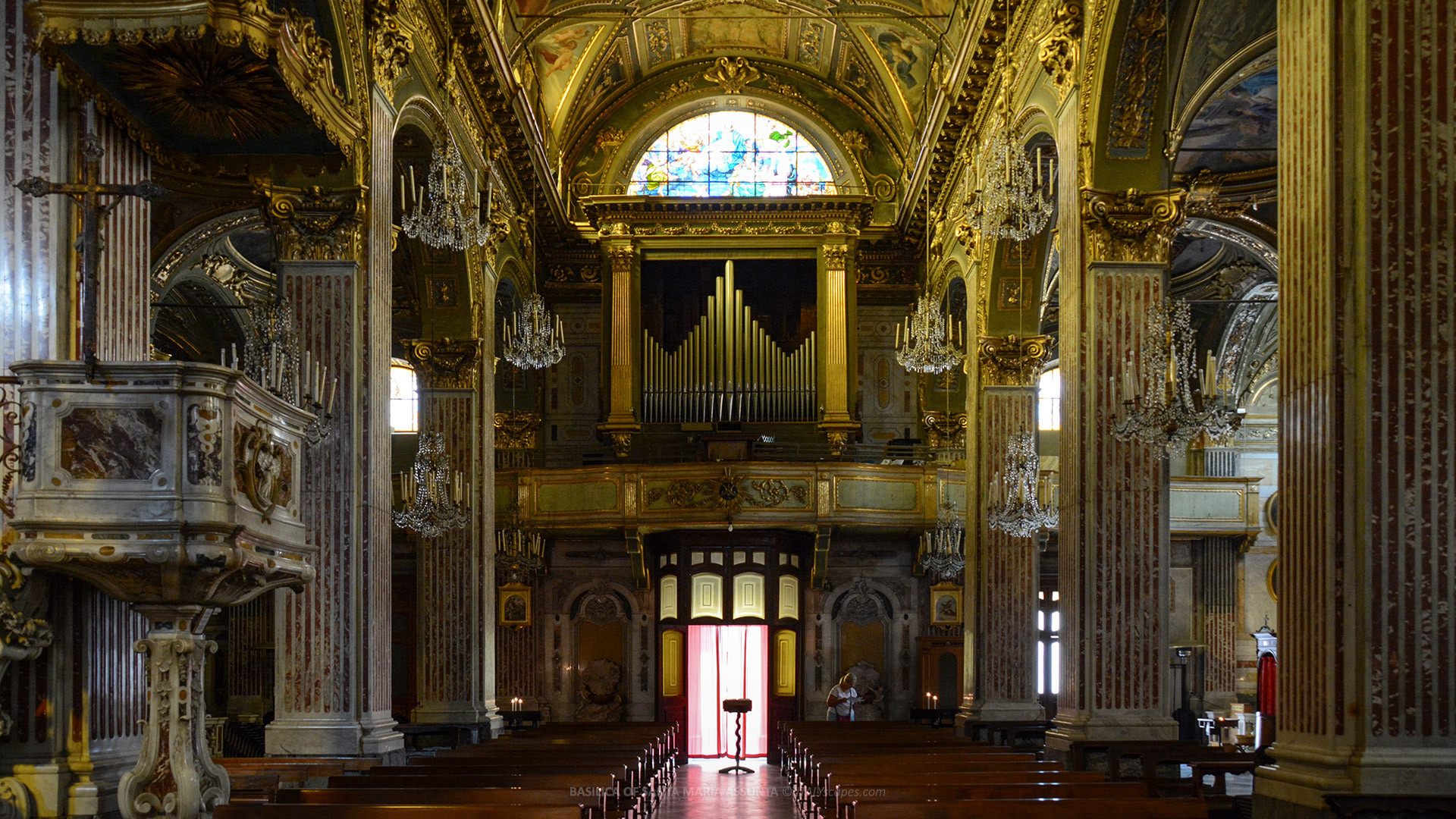
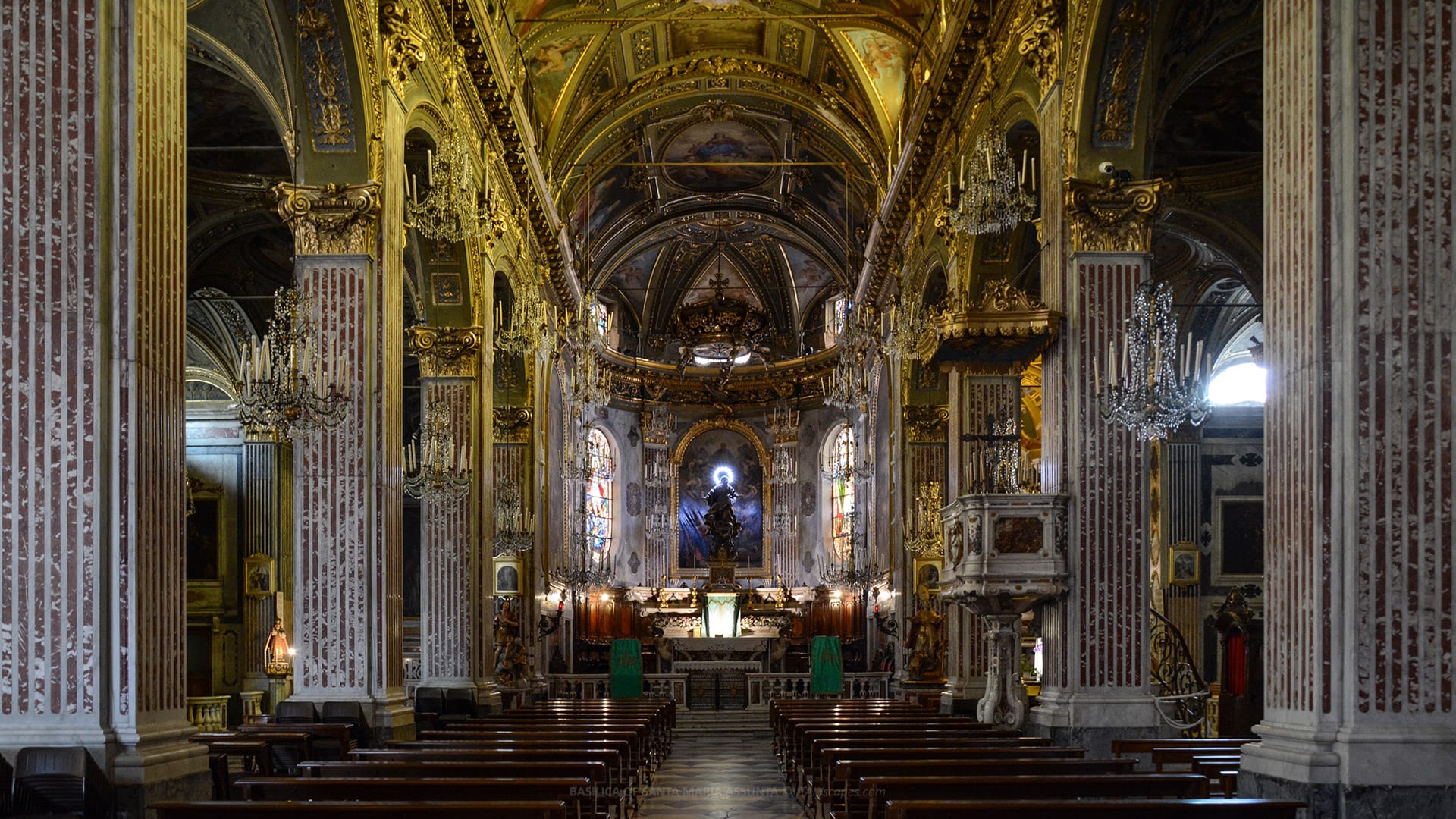
The church features a three-nave layout, a configuration that allows for a clear hierarchical organization of space while accommodating a large number of worshippers.
The central nave is broader and higher than the side aisles, emphasizing the longitudinal axis and directing attention toward the high altar.
The exterior is characterized by its compact mass and its harmonious integration into the surrounding urban fabric. Built directly above the rocky shoreline, the basilica appears almost anchored to the sea, an effect enhanced by the vertical development of its walls.
The façade facing the town square is relatively sober compared to the interior but gains visual interest from the niches housing the statues added in the 20th century.
The rear elevation, overlooking the harbor, is one of the most photographed views in Camogli, as it forms a striking contrast with the colorful houses rising behind it.
Art of the Basilica of Santa Maria Assunta
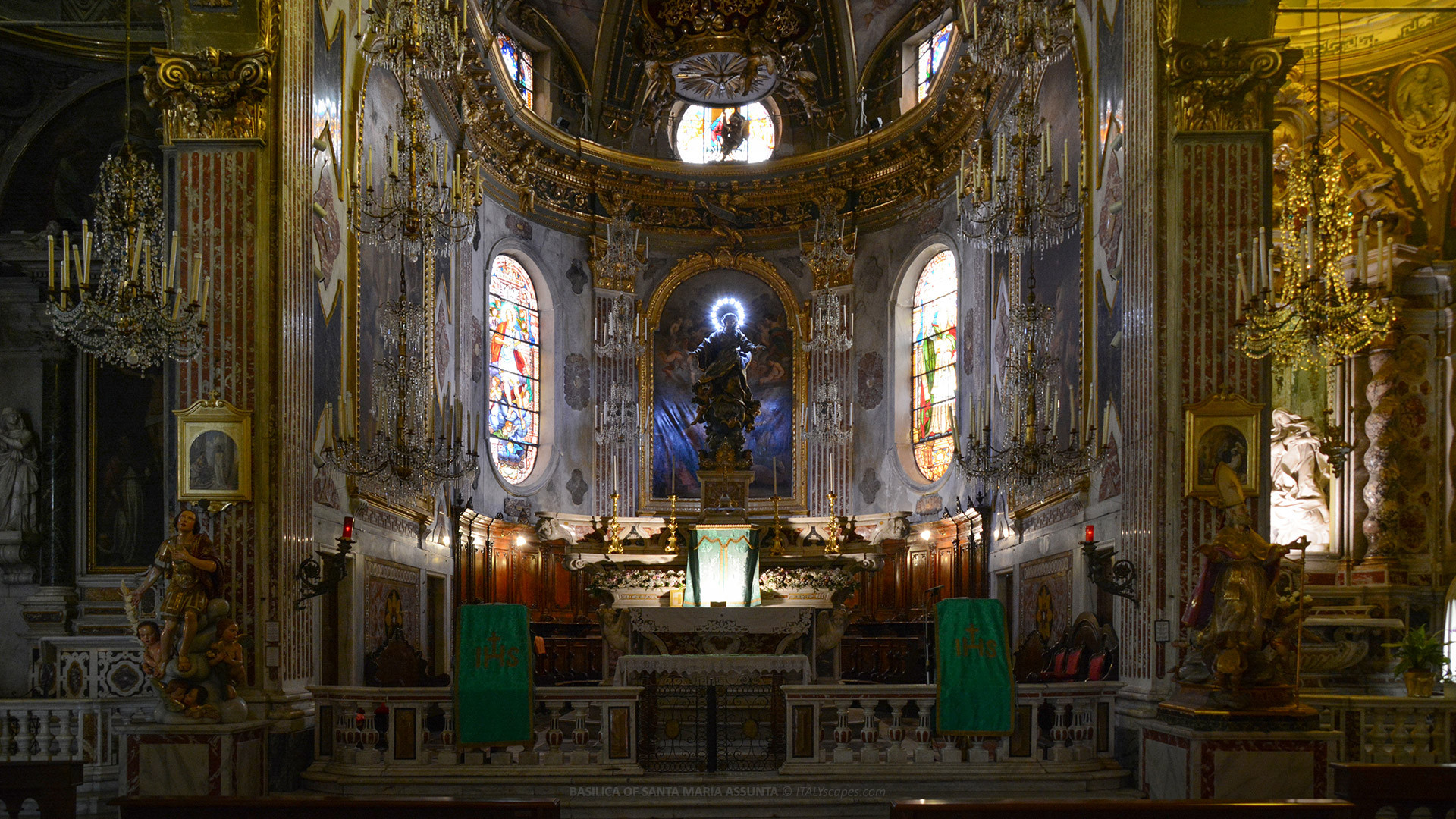
The interior of the Basilica of Santa Maria Assunta is a rich example of Ligurian-Baroque decoration, characterized by an extensive use of stucco, gilding, and polychrome marble.
The three naves are entirely covered with golden stuccoes and richly veined marbles, creating a luminous and theatrical environment typical of Baroque sacred spaces.
The vault frescoes, executed in the late 19th century, are among the most significant artistic features of the basilica. These works were painted by Nicolò Barabino and Francesco Semino, two prominent figures in Ligurian religious art.
The high altar is the work of the sculptor Andrea Casareggio and represents a focal point of both artistic and liturgical importance.
In the sacristy, the basilica preserves a notable painting by Luca Cambiaso, one of the leading artists of the Ligurian Renaissance.
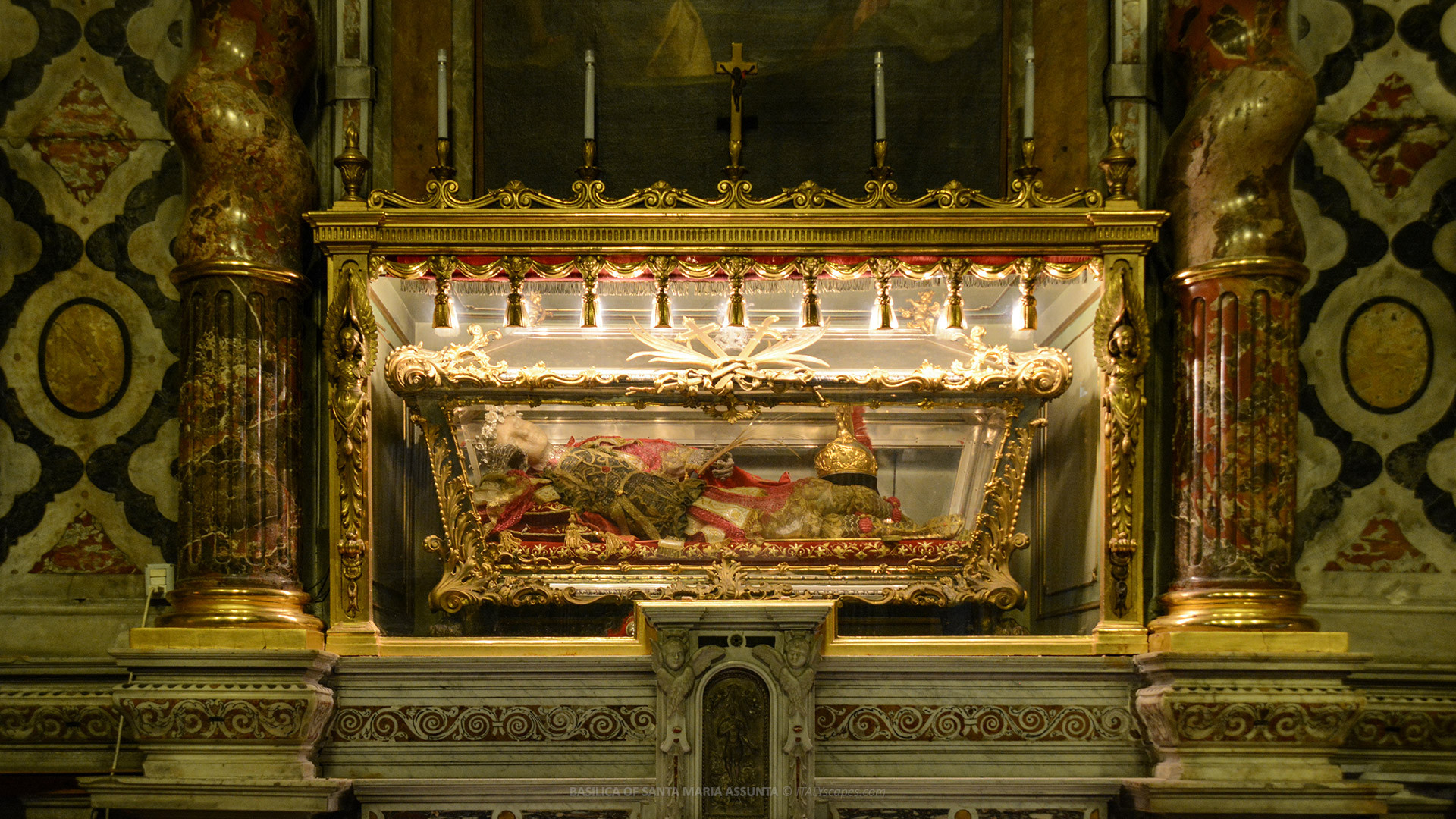
The basilica contains numerous chapels, each dedicated to a specific saint or devotion. Along the right aisle, the chapels are dedicated to the Madonna del Rosario, the Souls in Purgatory, Saint Prospero, the Sacred Heart of Jesus, and Saint Gaetano.
The left aisle houses chapels dedicated to the Crucifix, Saint John the Baptist, Saint Peter and Saint Fortunato, Saint Joseph, Saint Erasmus, the Madonna del Boschetto, and Saint Anthony of Padua.
How to Get to the Basilica of Santa Maria Assunta
The Basilica of Santa Maria Assunta is centrally located and easily accessible on foot. It lies approximately 550 meters from the Camogli railway station, a walk of about 8 minutes through the historic center toward the waterfront.
For visitors using public transport, the closest bus stop is Piazza del Mercato, located about 160 meters from the basilica and served by Bus Line 973. From the bus stop, the church can be reached in just a few minutes on foot, following the streets that lead directly to the marina.
Sources: -
Photos
-
Map
-
Reviews