-
About
Table of Contents
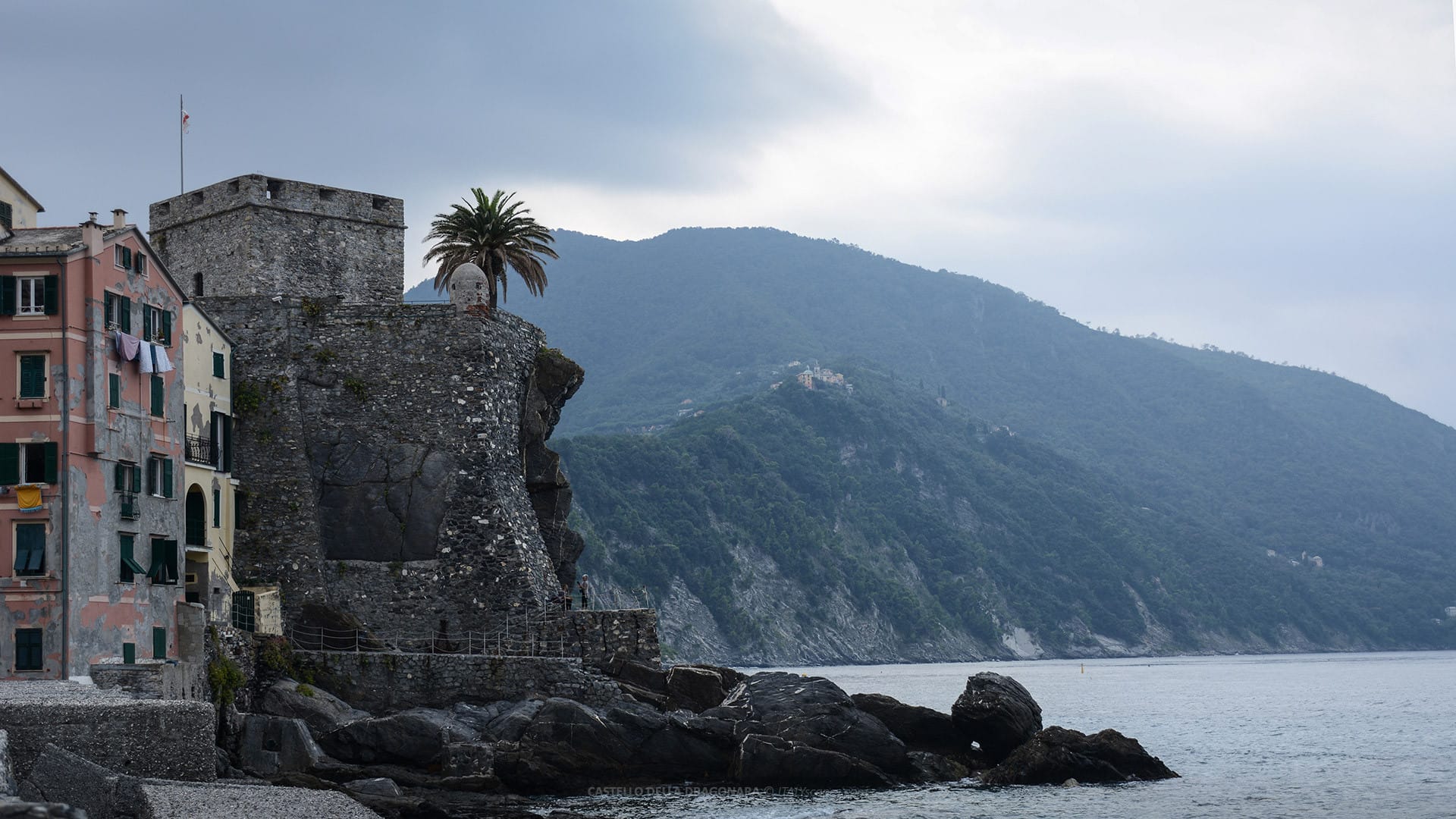
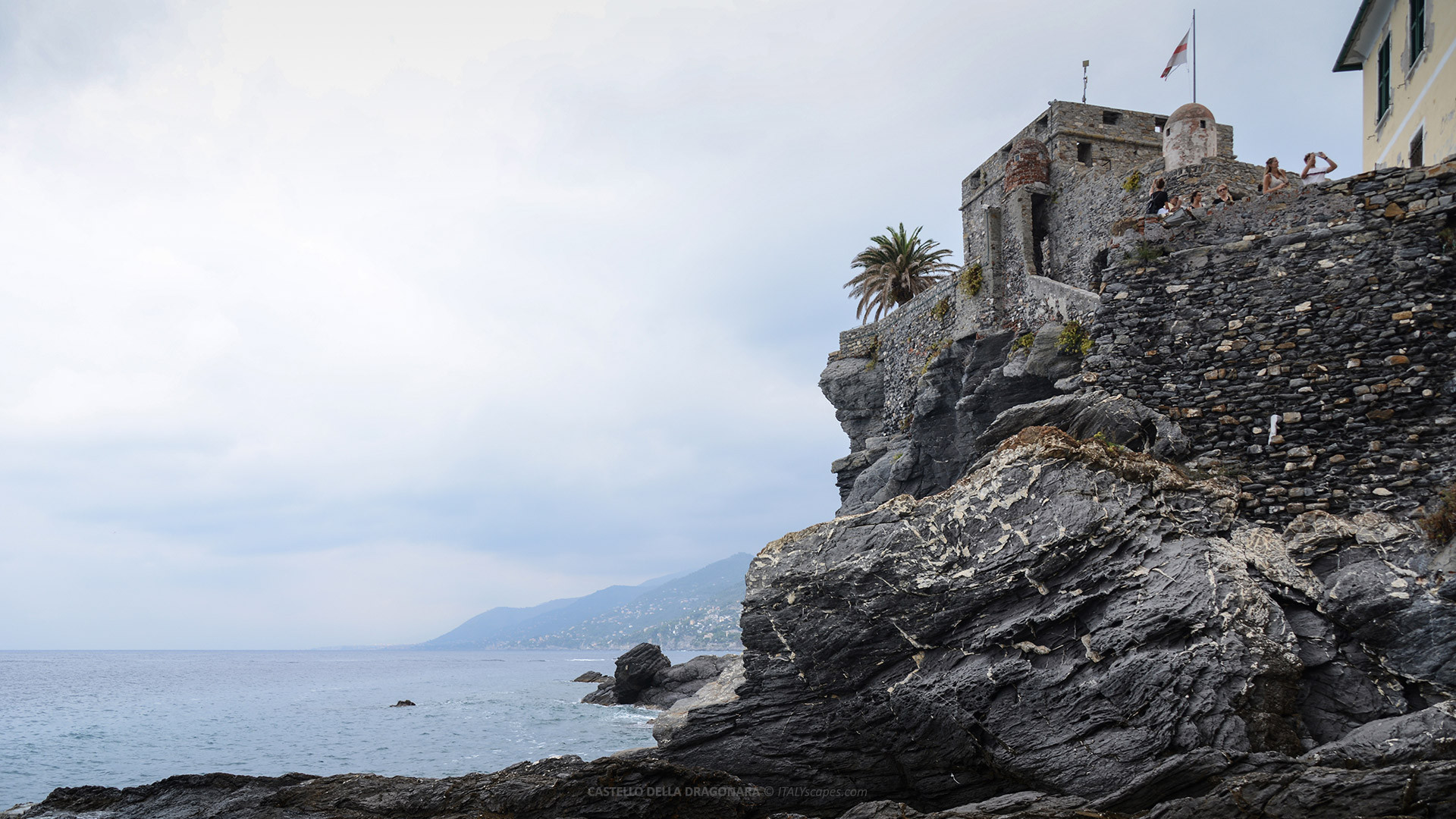
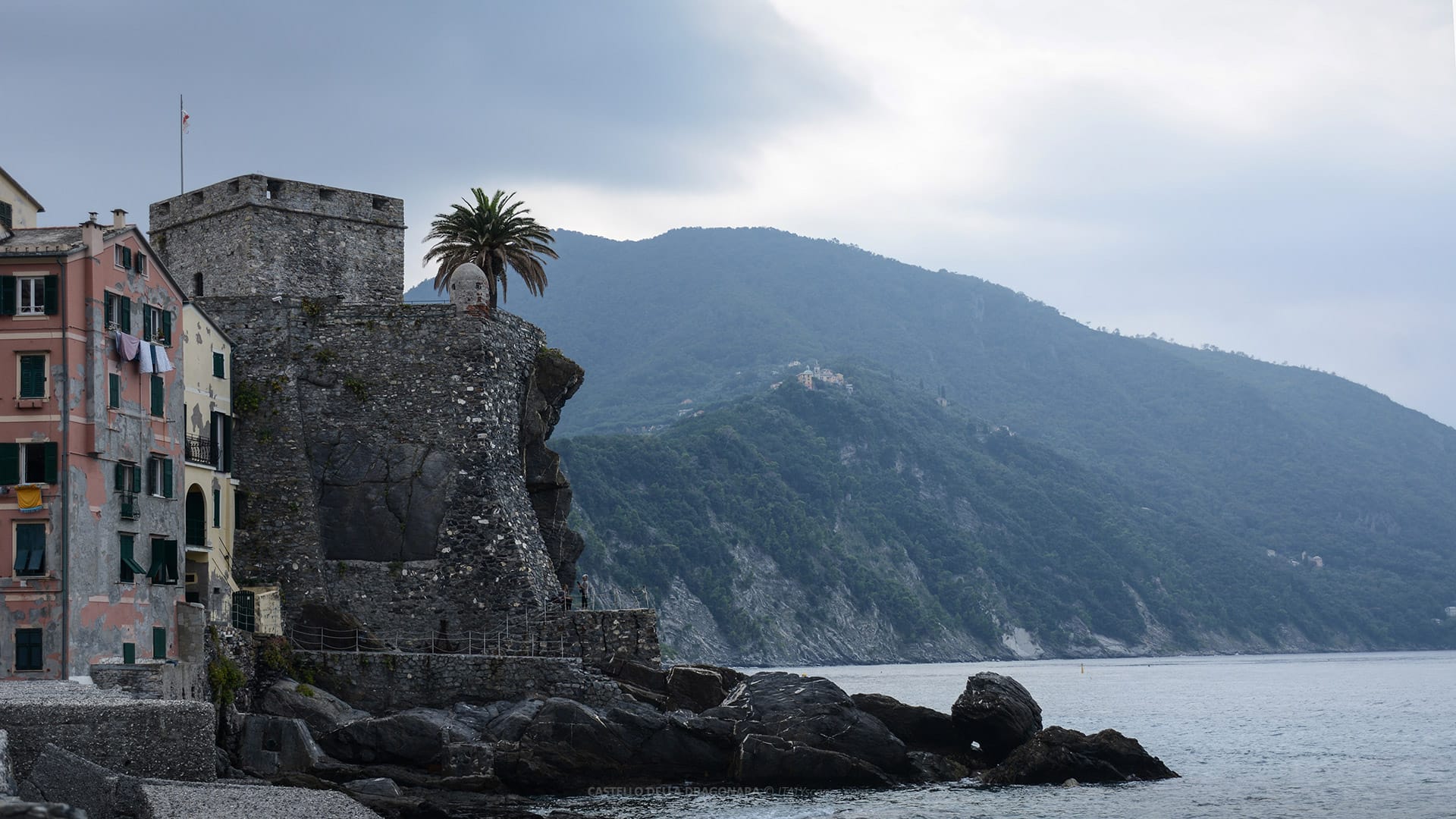
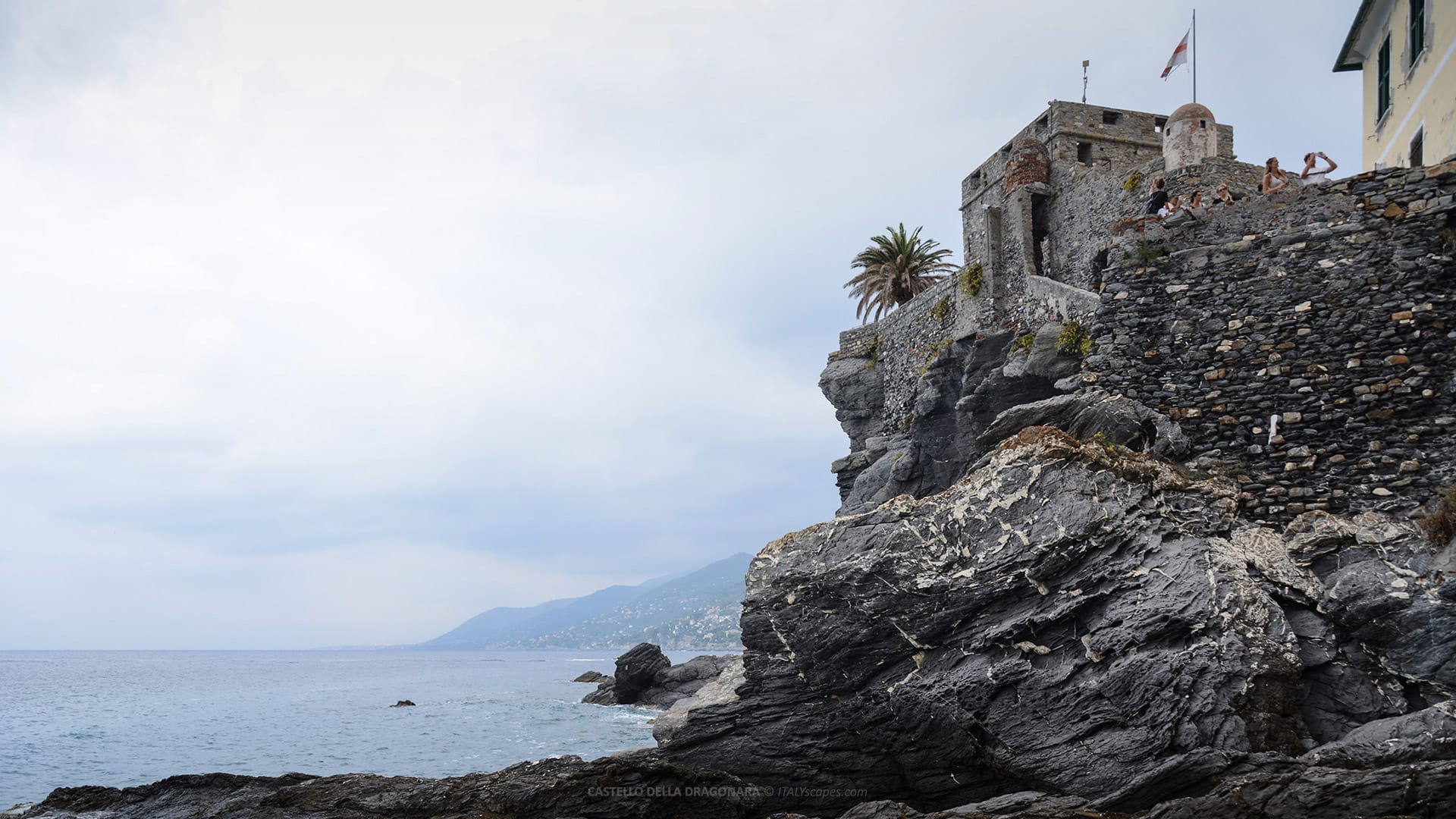
Castello della Dragonara, also known as Castel Dragone, is a historic coastal fortress located in Camogli, in Via Isola, just a short distance from the Basilica of Santa Maria Assunta.
Rising dramatically above the Ligurian Sea, the castle dominates the western edge of the town’s historic center and represents one of the most iconic symbols of Camogli’s maritime and defensive past.
The position of Castello della Dragonara is both strategic and scenic. Built on a rocky spur overlooking the harbor, the castle was designed to control access from the sea and protect the village from naval raids.
From its terraces and walls, the view opens across the Gulf of Paradise, offering a sweeping panorama that today enchants visitors but once served as a crucial lookout point for spotting enemy ships.
Architecturally, the castle reflects its medieval military origins. Its compact mass, thick stone walls, and elevated placement speak of a structure conceived for defense rather than comfort.
Over the centuries, Castello della Dragonara has undergone numerous transformations, each leaving traces that reflect the turbulent political and military history of Liguria. Despite these changes, it has retained a strong visual identity, remaining closely tied to the character and skyline of Camogli.
Today, Castello della Dragonara is no longer a fortress in the military sense, but it continues to play an important cultural role. It stands as a tangible link between the town’s past as a vulnerable fishing village and its present as a beloved destination on the Italian Riviera.
Short History of Castello della Dragonara
According to historical accounts, Castello della Dragonara was most likely built during the first half of the 13th century, a period marked by frequent maritime threats along the Ligurian coast.
At that time, Camogli was a small but active fishing and seafaring community, exposed to pirate incursions and rival powers seeking control over coastal trade routes. The construction of the castle represented a decisive step in strengthening the village’s defenses.
During the second half of the 14th century, the castle underwent significant reinforcement. As Camogli’s importance grew, so did the need to protect it more effectively.
In this period, the fortress was repeatedly strengthened to ensure the safety of the village, receiving arms and military support from the Republic of Genoa, which exercised political and military influence over much of the Ligurian coastline.
The 14th century was a particularly turbulent time for Castello della Dragonara. The fortress was attacked on multiple occasions, reflecting the broader struggles for power in northern Italy.
Among the most documented assaults were those carried out by Gian Galeazzo Visconti, Lord of Milan, whose ambitions extended toward Liguria and the Tyrrhenian coast.
Another notable attack occurred in 1366, led by Nicolò Fieschi, a member of the powerful Fieschi family, involved in regional conflicts against Genoese authority.
Between 1428 and 1430, Castello della Dragonara was considerably enlarged and further fortified. Special attention was given to the adjacent watchtower, which was reinforced to improve surveillance over the sea and surrounding territory.
In 1438, the castle once again found itself at the center of conflict when it was besieged by forces from the Duchy of Milan. During this siege, the castle’s walls were severely damaged, compromising its defensive capabilities.
The destruction was so extensive that, in the years immediately following, the inhabitants of Camogli took it upon themselves to rebuild new walls around the fortress, demonstrating the strong bond between the community and its main defensive structure.
A dramatic turning point came in 1448, following a conflict involving Camogli, Recco, and Genoa. As a consequence of these tensions, the Republic of Genoa demanded the immediate demolition of Castello della Dragonara, fearing that it could become a focal point for rebellion or independent power.
The castle was duly destroyed, marking one of the darkest chapters in its history. However, this was not the end of the fortress. Just six years later, the castle was rebuilt and officially assigned to the Doge of Genoa, restoring its symbolic and strategic importance.
By the 16th century, advances in military technology and changes in coastal defense strategies rendered Castello della Dragonara obsolete as a defensive structure.
Cannons and new forms of warfare reduced the effectiveness of medieval fortifications, and the castle was gradually abandoned as a military post.
During this period, it was repurposed and used as a prison, a function that further altered its internal spaces but ensured its continued presence in the life of the town.
Centuries of neglect followed, and by the modern era, Castello della Dragonara had lost much of its original function and prestige. It was not until the 1970s that a significant effort was made to recover and repurpose the building.
After careful restoration, the castle was converted into an aquarium, showcasing specimens of marine fauna typical of the Ligurian Sea. This new role highlighted Camogli’s enduring relationship with the sea, transforming a former instrument of defense into a place of education and discovery.
When the aquarium eventually closed, the fish were transferred to the Genoa Aquarium, ensuring their continued care while allowing Castello della Dragonara to evolve once more.
Today, the castle serves as a cultural and event space, hosting exhibitions, meetings, and ceremonies, while remaining one of the most photographed landmarks in Camogli.
How to Get to Castello della Dragonara
Castello della Dragonara is easily accessible on foot from the center of Camogli, making it a convenient stop for visitors exploring the town.
The castle is located approximately 600 meters from the Camogli train station, a pleasant walk of about ten minutes through the historic streets and along the seafront. The route itself is part of the experience, offering views of colorful houses, small squares, and glimpses of the sea.
Camogli is well connected by regional trains along the Ligurian coast, allowing travelers to reach the town easily from Genoa, the Cinque Terre area, and neighboring seaside destinations. Once you arrive at the station, clear signage and the compact layout of the town make navigation straightforward, even for first-time visitors.
For those traveling by bus, the closest bus stop is Piazza del Mercato, located about 250 meters from Castello della Dragonara. This stop is served by bus Line 973, which connects Santa Margherita Ligure and Recco, passing directly through Camogli.
From Piazza del Mercato, the castle can be reached in just a few minutes on foot, following the signs toward the historic center and the waterfront.
Sources: -
Photos
-
Map
-
Reviews