-
About
Table of Contents
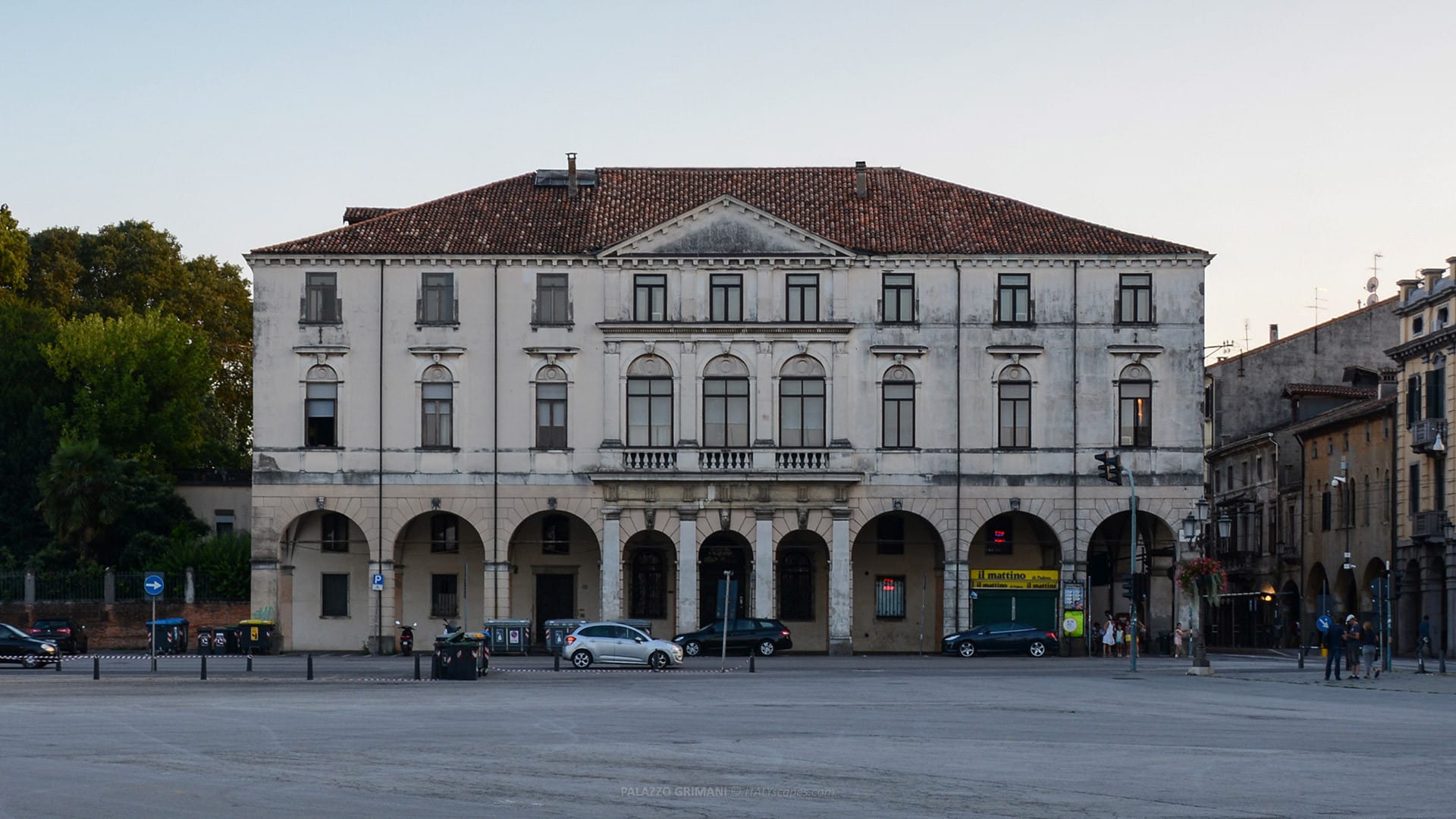
Palazzo Grimani is a historic palace in Padua, located on Prato della Valle, one of the city’s most important monumental spaces. The building stands near Basilica of Santa Giustina, Orto Botanico di Padova, and Basilica of Saint Anthony, in the southern part of the historic center.
The palace is also known as Palazzo Verson, formerly Grimani, a name connected with later ownership. The complex is historically important, but it is private property, so visitors normally see it only from the outside.
Palazzo Grimani was built over medieval structures and transformed by the Grimani dai Servi family from 1561. The earlier Gothic buildings were reorganized into a noble residence, then completed in a more monumental form between 1621 and 1630, during the seventeenth-century development of Prato della Valle.
The palace is linked with Giovanni Antonio Rusconi, Francesco Contin, and Mattia de Rossi. De Rossi, a Roman Baroque architect connected with Bernini’s circle, designed an ambitious enlargement in 1671, but the project was never completed. His plan remains central to the palace’s architectural history.
Short History of Palazzo Grimani
Medieval Origins and the Grimani Family
The site of Palazzo Grimani was already occupied in the late fourteenth century by several medieval buildings. These structures later became the base for a larger aristocratic residence. The palace was not built from nothing, but created through the progressive transformation of older urban fabric.
Between 1520 and 1561, the Grimani family acquired the entire block near Prato della Valle. The family belonged to the Venetian patrician world and was connected with the branch known as Grimani dai Servi.
The Sixteenth-Century Transformation and the Seventeenth-Century Completion
The major transformation began in 1561, when the Gothic buildings were rearranged and unified. This phase is attributed to Giovanni Antonio Rusconi, an architect and writer active in the Veneto. His work gave the residence a more coherent structure and a stronger relationship with Prato della Valle.
This sixteenth-century phase was important because it changed the function and image of the site. The palace became part of the architectural line defining Prato della Valle, beside important residences such as Palazzo Zacco al Prà.
Between 1621 and 1630, Palazzo Grimani was completed in a more monumental form by Francesco Contin. This intervention strengthened the palace’s presence and continued the process of turning the older Gothic structures into a residence suitable for noble representation in Padua.
The Unfinished Project of 1671
In 1671, Mattia de Rossi prepared a grand enlargement project for Antonio Grimani dei Servi. De Rossi planned to triple the extension of the building and create a monumental façade measuring 87 meters along Prato della Valle, reaching toward the monastery of Misericordia.
The project also included a 57-meter French-style gallery, facing theatrically toward the open space of Prato della Valle. Although the plan was never completed, it was significant for the spread of Baroque architectural ideas in the territories connected with Venice.
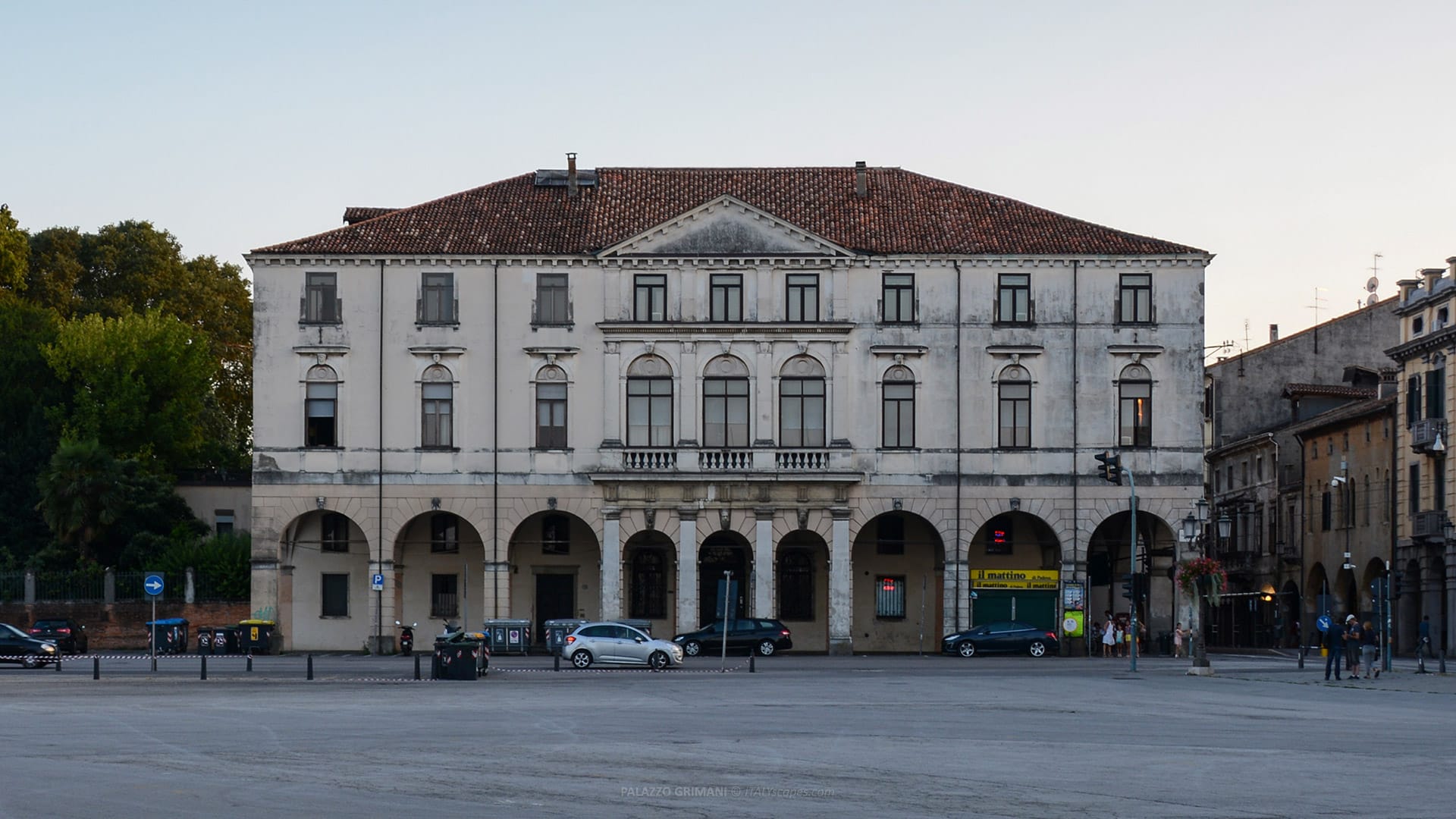
Palazzo Grimani overlooking Prato della Valle
Architecture of Palazzo Grimani
A Layered Architectural Structure
Palazzo Grimani is a layered building, shaped by several historical phases. Its architecture combines medieval remains, sixteenth-century reorganization, seventeenth-century monumental completion, and later façade changes. This explains why the palace should be read as a sequence of transformations rather than a single-period construction.
The first major architectural phase is associated with Giovanni Antonio Rusconi, who reorganized and unified the earlier Gothic buildings from 1561. His work gave order to the existing structures and adapted them to the needs of the Grimani family, without completely erasing the medieval origins.
The second major phase is connected with Francesco Contin, who completed the building between 1621 and 1630. Contin’s work gave the residence a more monumental character. This phase placed the palace more clearly within the noble architectural environment of Prato della Valle.
Mattia de Rossi’s project of 1671 was the most ambitious architectural proposal for Palazzo Grimani. The planned 87-meter façade would have greatly expanded the palace’s visual presence. The building would have become one of the most imposing noble residences facing Prato della Valle.
Interior Features and the Staircase
The palace is documented as having a solemn single-flight staircase covered by a barrel vault. The vault was divided into geometric compartments and originally decorated with frescoes. This staircase represents one of the most important recorded interior features of the building.
How to Get to Palazzo Grimani
Palazzo Grimani is located on Prato della Valle, in the southern part of Padua’s historic center. The palace is close to major landmarks, including Basilica of Santa Giustina, Orto Botanico di Padova, and Basilica of Saint Anthony, all reachable on foot.
Getting to Palazzo Grimani on foot
From Padova railway station, Palazzo Grimani can be reached on foot by crossing the historic center toward Prato della Valle. The route is approximately 2.2-2.7 kilometers, depending on the streets chosen, and usually takes around 26-35 minutes at a normal walking pace.
A practical walking route leads from the station toward Cappella degli Scrovegni, then continues through the central area near Caffè Pedrocchi, Palazzo Bo, and Via Roma. From there, visitors continue south until they reach Prato della Valle, where Palazzo Grimani stands.
Getting to Palazzo Grimani by tram
The easiest public transport option from Padova railway station is the SIR1 tram. Visitors can board at the Stazione FS stop and travel in the direction of Guizza, getting off at Prato della Valle. The tram journey usually takes about 8-9 minutes.
The SIR1 tram crosses the city from Pontevigodarzere to Guizza, passing through important central stops. For Palazzo Grimani, Prato della Valle is the most convenient stop. From there, the palace is only a short walk across the square.
Getting to Palazzo Grimani by bus
Urban buses also connect Padova railway station with Prato della Valle. Some direct bus services from the station area reach Prato della Valle in about 6-9 minutes, depending on the specific route, timetable, and traffic conditions.
Getting to Palazzo Grimani by taxi
A taxi from Padova railway station to Palazzo Grimani is the most comfortable option for visitors with luggage, reduced mobility, or limited time. The road distance is short, and the ride usually takes about 6-12 minutes, depending on traffic.
The taxi will normally drop visitors near Prato della Valle, because Palazzo Grimani faces this historic square. From the drop-off point, the palace can be reached on foot in a very short time. This option is convenient, but not necessary for visitors traveling light.
Frequently Asked Questions about Palazzo Grimani
Where is Palazzo Grimani located?
Palazzo Grimani is located in Padua, on Prato della Valle, close to Basilica of Santa Giustina, Orto Botanico di Padova, and Basilica of Saint Anthony.
Is Palazzo Grimani open to visitors?
No regular public interior visit is documented. The palace is private property, so visitors normally see only the exterior from Prato della Valle.
Who were the architects of Palazzo Grimani?
The palace is connected with Giovanni Antonio Rusconi, Francesco Contin, and Mattia de Rossi, whose ambitious enlargement project of 1671 was never completed.
How far is Palazzo Grimani from Padova railway station?
The palace is about 2.2-2.7 kilometers from the railway station. Walking usually takes 26-35 minutes, depending on the route.
What is the best public transport stop for Palazzo Grimani?
The best stop is Prato della Valle. From Padova railway station, the SIR1 tram reaches this stop in about 9 minutes.
Sources: -
Photos
-
Map
-
Reviews