-
About
Table of Contents
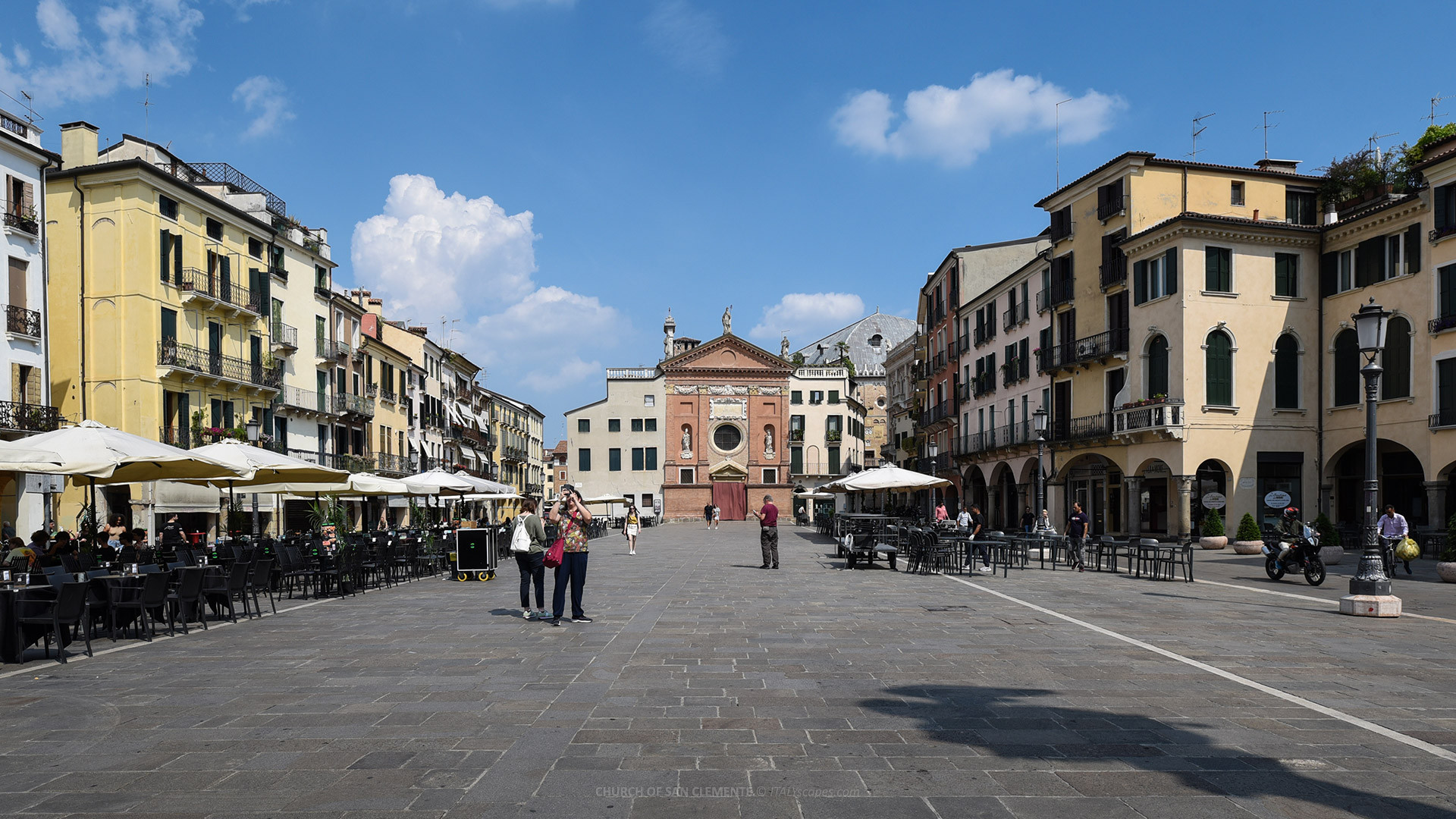
The Church of San Clemente is a medieval Catholic church in Piazza dei Signori, one of the central historic squares of Padua. It faces the Clock Tower and stands a short distance from Palazzo della Ragione, Piazza della Frutta, and Piazza delle Erbe, in the city’s old market district.
The church is dedicated to Pope Clement I, traditionally considered one of the earliest bishops of Rome. Although tradition gives the building a very ancient origin, its first secure documentary mention dates to 1190. Today, it is a rectory dependent on Padua Cathedral, not an independent parish.
The Church of San Clemente is not a large monument, but it is important because of its location, medieval origin, Mannerist façade, guild connections, and interior artworks. The building is enclosed by residential and commercial structures, so only the façade clearly defines its exterior presence in Piazza dei Signori.
The interior preserves works attributed or linked to important artists active in Padua and northern Italy. These include Jacopo Bellini, Pietro Damini, Luca Ferrari da Reggio, Giovan Battista Bissoni, Giulio Cirello, Francesco Zanella, and Giacomo Manzoni, covering several centuries of religious art.
Short History of the Church of San Clemente
Early Tradition and Medieval Evidence
According to an old tradition recorded by Paduan and Venetian historians, San Clemente was connected with the early formation of Venice. The story says that communities linked to Rivoalto and Dorsoduro donated the church to Padua after the symbolic year 421, as a sign of gratitude.
This tradition links the church with the first lagoon settlements and with the memory of San Giacomo di Rialto, traditionally associated with early Venice. The story is important as local memory, but the secure documentary history of the church begins later, with the written mention of 1190.
The dedication to Pope Clement I also gives the church an ancient Christian identity. Clement was remembered as an early Roman bishop, and his cult spread widely in medieval Europe.
Parish Status and Market Guilds
During the fourteenth century, the Church of San Clemente was raised to parish status. From 1386, the church was also connected with the commemoration of the victory of Francesco Novello da Carrara over Antonio della Scala at the Battle of Castagnaro.
The development of the Church of San Clemente was strongly supported by the fraglie, the professional guilds active around the nearby market squares. These groups financed private altars, restorations, and decorative works, leaving visible traces inside the church, especially in the altars connected with local trades.
The medieval building was heavily altered in the sixteenth century, during the reorganization of the square in front of it. Further modifications followed in the seventeenth and eighteenth centuries, which explains why the current church combines medieval remains with Mannerist and later decorative elements.
San Clemente also preserves the memory of the Paduan sculptor Tiziano Minio, who was buried inside the church.
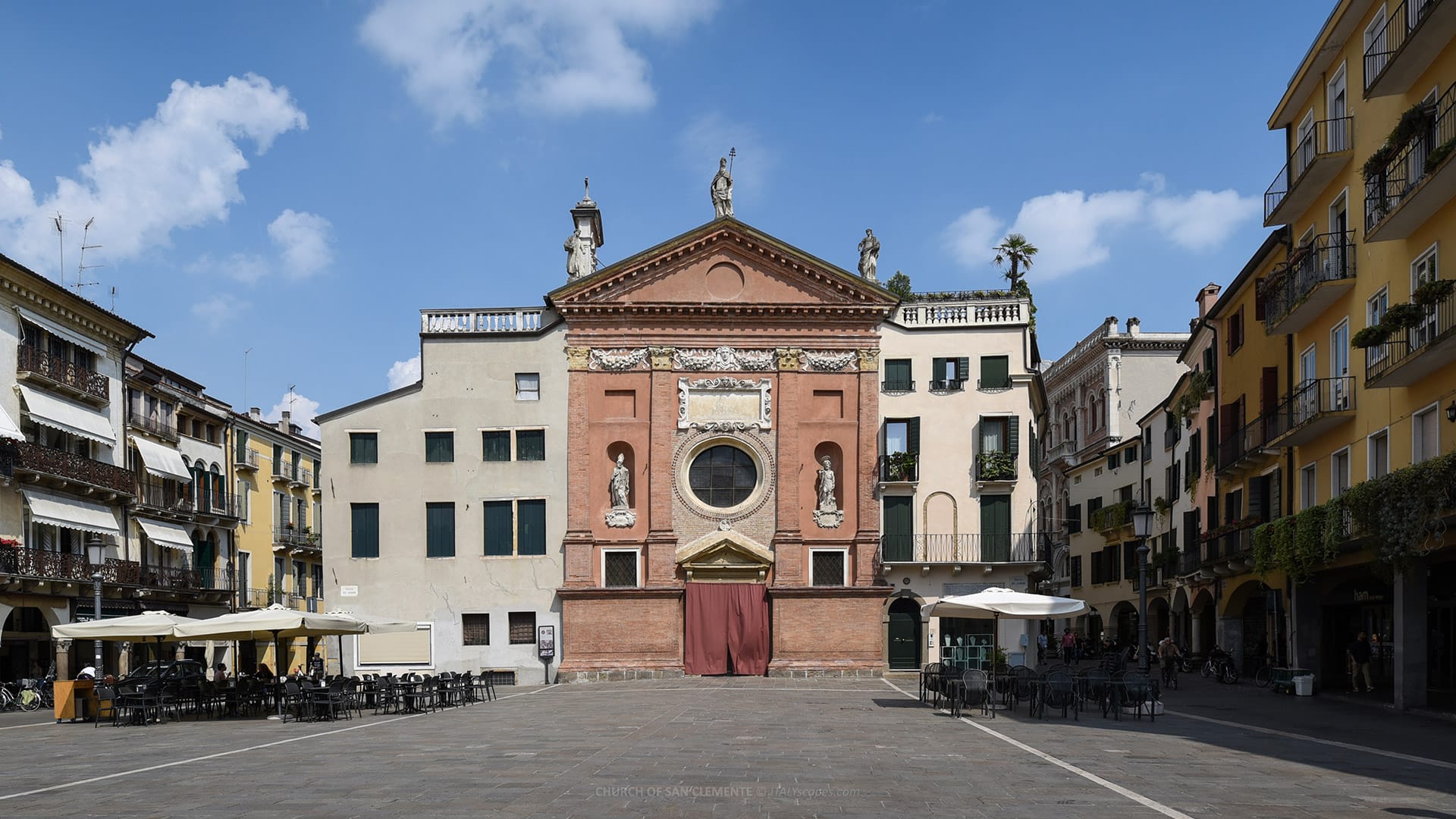
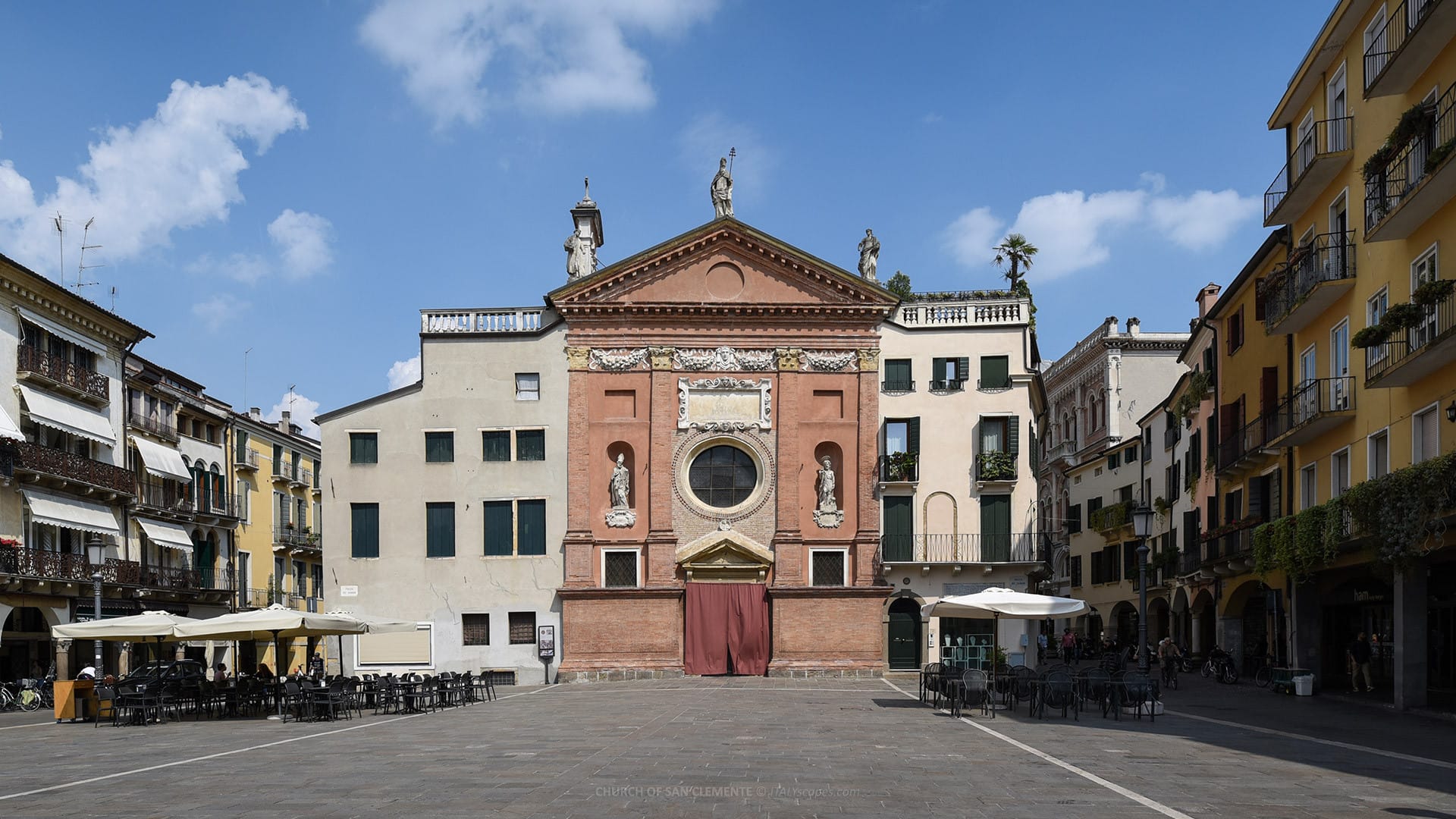
Façade of the Church of San Clemente
Architecture of the Church of San Clemente
Urban Position and Exterior Setting
The architecture of San Clemente is shaped by its urban setting. The church is surrounded on most sides by residential and commercial buildings, so the façade is the only exterior part fully visible from the square. This creates a compact and almost hidden architectural presence.
The façade looks directly toward the Torre dell’Orologio, one of the main landmarks of Piazza dei Signori. This position gives the church a strong visual relationship with the square, even though its physical size is modest compared with the surrounding civic architecture.
The Mannerist Façade
The present façade was radically changed around 1598, according to a Mannerist decorative taste. It is divided by large pilasters with Corinthian capitals, which support a triangular pediment. Rich stucco festoons decorate the space between the capitals and give the façade a ceremonial appearance.
The portal is topped by a tympanum and aligned with a large rose window above it. Around this rose window survives a rich terracotta decoration from the twelfth or thirteenth century, one of the clearest medieval elements still visible on the exterior of the church.
Below the rose window is a small fourteenth-century high-relief roundel representing Saint Clement. This detail is especially important because it preserves a medieval sculptural layer within a façade that was later transformed by Renaissance and Baroque interventions.
On the upper part of the façade stand three stone statues representing Saint Clement, Saint Justina, and Saint Daniel. Saint Justina and Saint Daniel are among Padua’s important religious figures, so their presence connects the church with the broader devotional identity of the city.
The side niches contain statues of Saint Alò and Saint John the Baptist, dated 1696. These figures are connected with guild insignia, showing how the church’s façade also reflected the identity of local professional groups active in the surrounding market area.
Interior Plan and Structural Elements
The interior has a single nave, a compact plan, and a keel-shaped vaulted ceiling. The nave ends in a small square apse, where the high altar is placed. The arrangement is simple, but it provides a clear liturgical focus toward the rear wall.
Three altars are placed against the back wall, with the central altar occupying the apse. A side door on the left leads toward an atrium, the sacristy, the rectory area, and the side exit onto Via San Clemente, confirming the church’s integration into surrounding buildings.
The original medieval spatial arrangement is no longer fully visible. Later restorations and alterations changed the structure, especially from the sixteenth century onward.
Bell-Gable and Pipe Organ
On the side of the church stands a Neo-Baroque bell-gable. It replaced an older small bell tower covered by a cupola, which was demolished in the second half of the nineteenth century.
The pipe organ is located on the eighteenth-century choir loft in the counter-façade, inside a Rococo case. It was built in the early twentieth century by Domenico Malvestio, probably reusing part of the sound material from an earlier instrument, possibly from the seventeenth century.
The organ has one keyboard with 54 notes and a straight pedalboard with 27 notes. It uses a mixed transmission system: mechanical for the manual and pedal, pneumatic for the stops.
Art of the Church of San Clemente
Renaissance and Early Modern Works
Near the entrance is a fresco of the Madonna and Child, attributed to Jacopo Bellini and dated around 1450. Jacopo Bellini was the father of Gentile Bellini and Giovanni Bellini, both central names in Venetian Renaissance painting.
On the right wall is a seventeenth-century canvas by Pietro Damini da Castelfranco. The painting shows Jesus giving the keys to Saint Peter, with Saint Peter kneeling before Christ and the apostles present. The lower right part includes the portrait of the donor.
The high altar, dated 1782, contains a valuable altarpiece by Luca Ferrari da Reggio. The painting represents Pope Saint Clement surrounded by angels. Ferrari worked in the seventeenth century and was active in Padua, where several of his works entered religious collections.
Guild Altars and Devotional Identity
The altar of Saint Anthony of Padua is one of the most significant elements in the church because it was financed by the fratelea casolinorum, the brotherhood of grocers. A bas-relief connected with this altar shows Saint John the Baptist among the tools used by the grocers.
The statue of Saint Anthony replaced an earlier painting by Pietro Malombra, which represented Saint Charles Borromeo and a holy nun. The older painting was later restored and moved, preserving the memory of a previous phase of the church’s devotional decoration.
A painting by Francesco Zanella shows the preaching of Saint John the Baptist. This work was once connected with the altar on the right side of the church and later moved. Zanella belonged to the Paduan artistic context between the seventeenth and eighteenth centuries.
Other Paintings and Later Decorations
The church also preserves a painting of the Miracle of Saint Alò by Giovan Battista Bissoni, a Paduan painter of the seventeenth century. Another canvas, by Giulio Cirello, represents the Miracle of Saint Clement, reinforcing the devotional focus on the church’s patron saint.
Above the relics of Saints Ptolemy and Fortunatus stands the tabernacle of the Madonna dei Lumini. This object once stood under the Salone of Palazzo della Ragione and was transferred to San Clemente in 1871, as recorded by an inscription.
The rose window contains a polychrome stained-glass work by the Veronese painter Pino Canarini, dated 1956. The ceiling is decorated with a tempera painting of the Triumph of Saint Clement, executed in 1896 by the Paduan painter Giacomo Manzoni.
The church also contains an eighteenth-century crucifix and several sculptural details connected with earlier devotional arrangements.
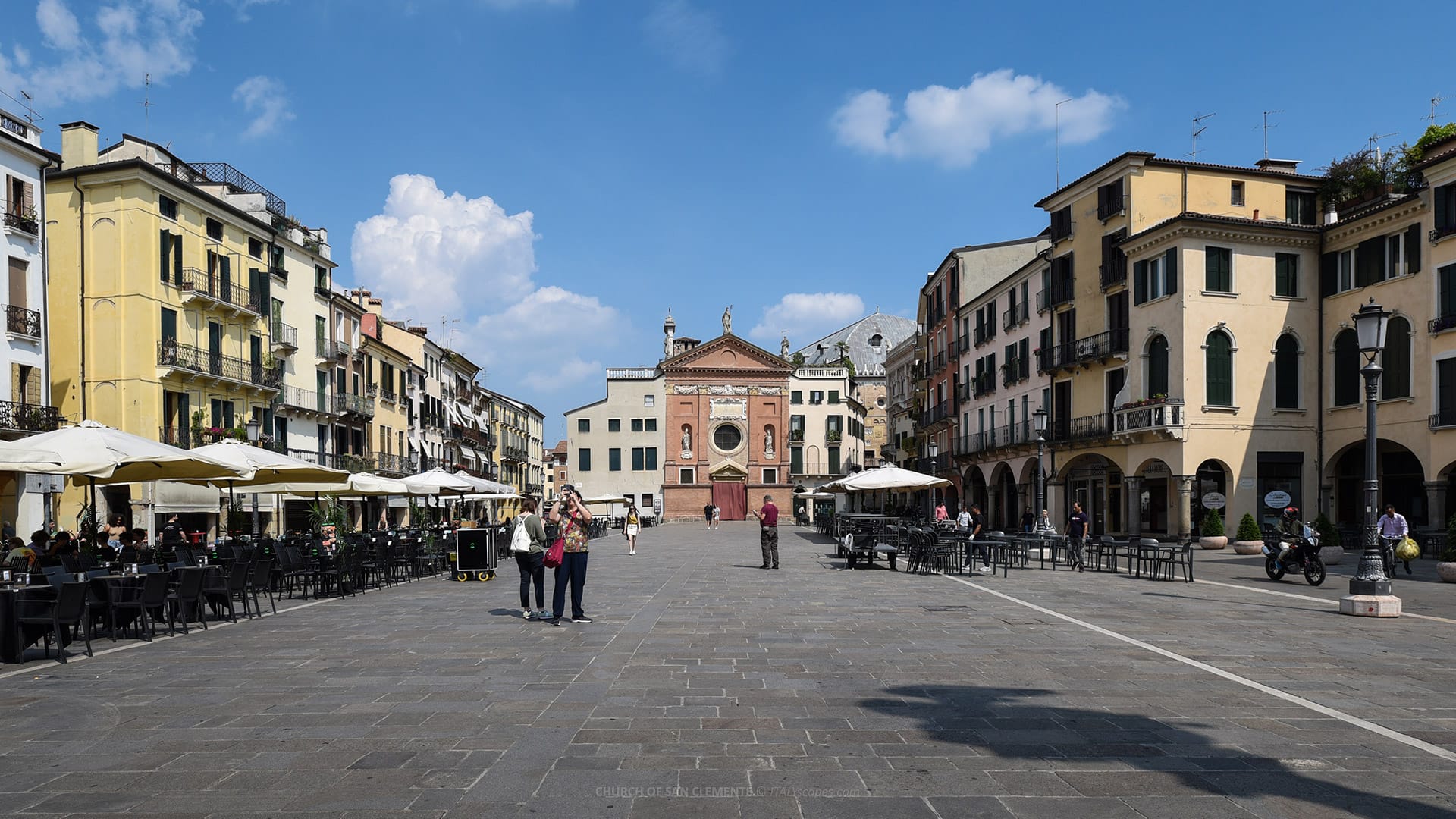
Church of San Clemente in Piazza dei Signori
How to Get to Church of San Clemente
San Clemente is located in Piazza dei Signori 1, in central Padua. The church is very close to the Clock Tower, about 90 meters from Palazzo della Ragione, and only a short walk from Piazza della Frutta and Piazza delle Erbe.
Getting to the Church of San Clemente on foot
From Padova railway station, the walking distance to Piazza dei Signori is about 1.5 kilometers. The walk usually takes around 18 minutes, depending on pace, crossings, and the exact route chosen through the city center.
The route is simple for most visitors. From the station area, continue toward the center, pass through the main urban axis, and follow the streets leading toward the historic market district. Once in Piazza dei Signori, the façade of San Clemente faces the square.
Getting to the Church of San Clemente by tram or by bus
From Stazione FS, visitors can take the tram toward the center and get off at Ponti Romani. The tram ride takes about 5 minutes, and trams usually run frequently. From Ponti Romani, the remaining walk to Piazza dei Signori is short.
The total journey by tram and walking is usually around 11 minutes. This option is useful for visitors who want to avoid the full walk from the station, especially in hot weather, rain, or when they have limited time in Padua.
Bus services also connect the railway station with the central area. One practical option reaches the Teatro Verdi area in only a few minutes, followed by a short walk to Piazza dei Signori. Exact routes and frequencies should be checked on the day of travel.
Getting to the Church of San Clemente by taxi
A taxi from Padova railway station to Piazza dei Signori covers about 2.9 kilometers and usually takes around 7 minutes, depending on traffic and access restrictions. The estimated fare is generally around €9-12, but the exact price may vary.
Taxi is the most convenient option for visitors with luggage, mobility difficulties, or limited time. However, since Piazza dei Signori is in the historic center, the taxi may stop at the nearest accessible point rather than directly in front of the church façade.
Frequently Asked Questions about the Church of San Clemente
Where is the Church of San Clemente located?
The Church of San Clemente is located in Piazza dei Signori 1, in the historic center of Padua, facing the square and close to the Clock Tower.
When was the Church of San Clemente first documented?
The first secure documentary mention of the Church of San Clemente dates to 1190. Older foundation traditions exist, but 1190 is the main reliable historical date.
What is the church dedicated to?
The church is dedicated to Pope Clement I, an early bishop of Rome. His figure appears in the dedication, façade decoration, and interior artistic program.
Which important artworks are inside the Church of San Clemente?
The Church of San Clemente preserves works linked to Jacopo Bellini, Pietro Damini, Luca Ferrari da Reggio, Giovan Battista Bissoni, Giulio Cirello, Francesco Zanella, and Giacomo Manzoni.
How far is the Church of San Clemente from Padova railway station?
The Church of San Clemente is about 1.5 kilometers from Padova railway station. The walk usually takes around 18 minutes, depending on route, pace, and pedestrian traffic.
Sources: -
Photos
-
Map
-
Reviews