-
About
Table of Contents
Buy tickets
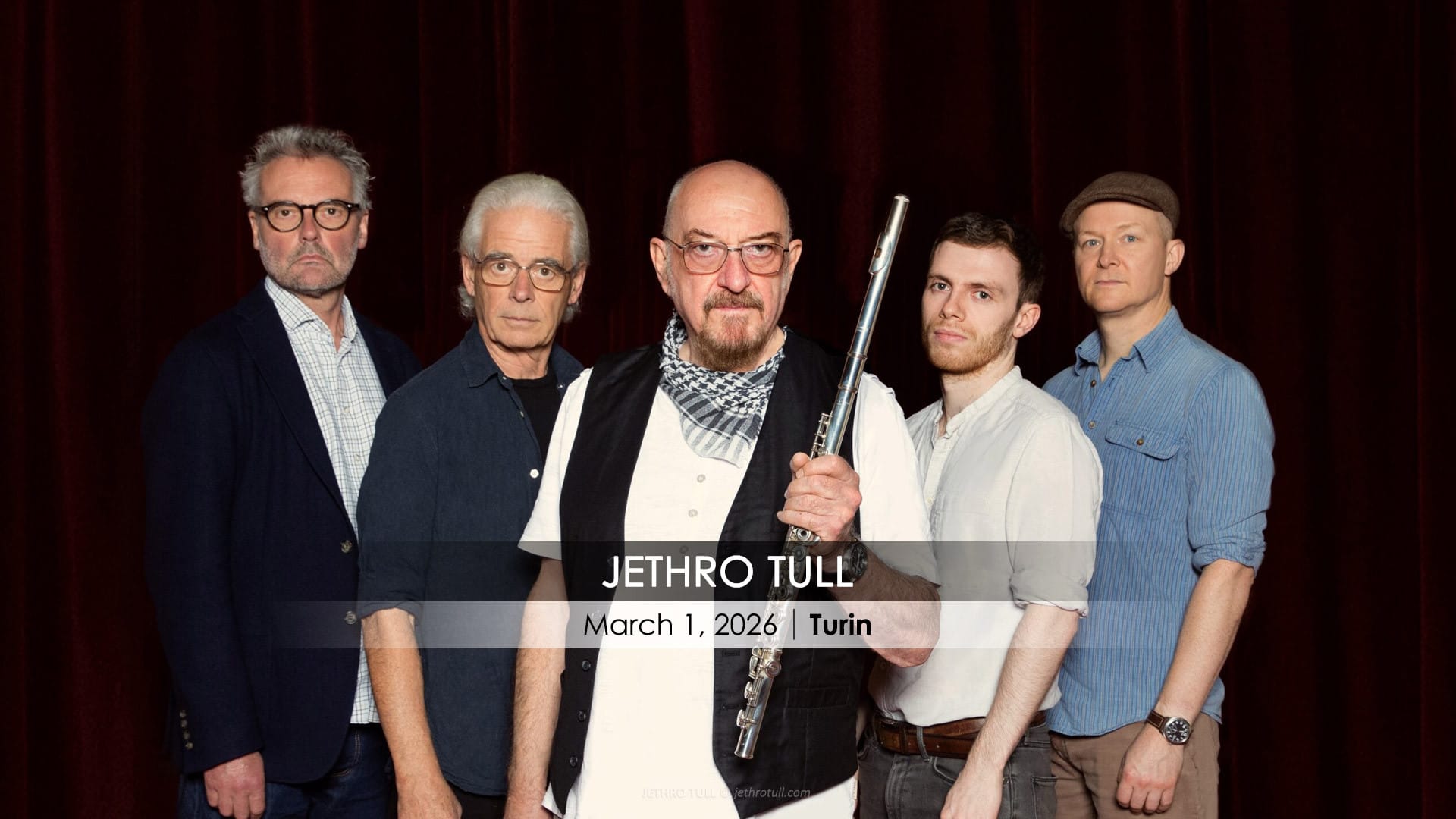
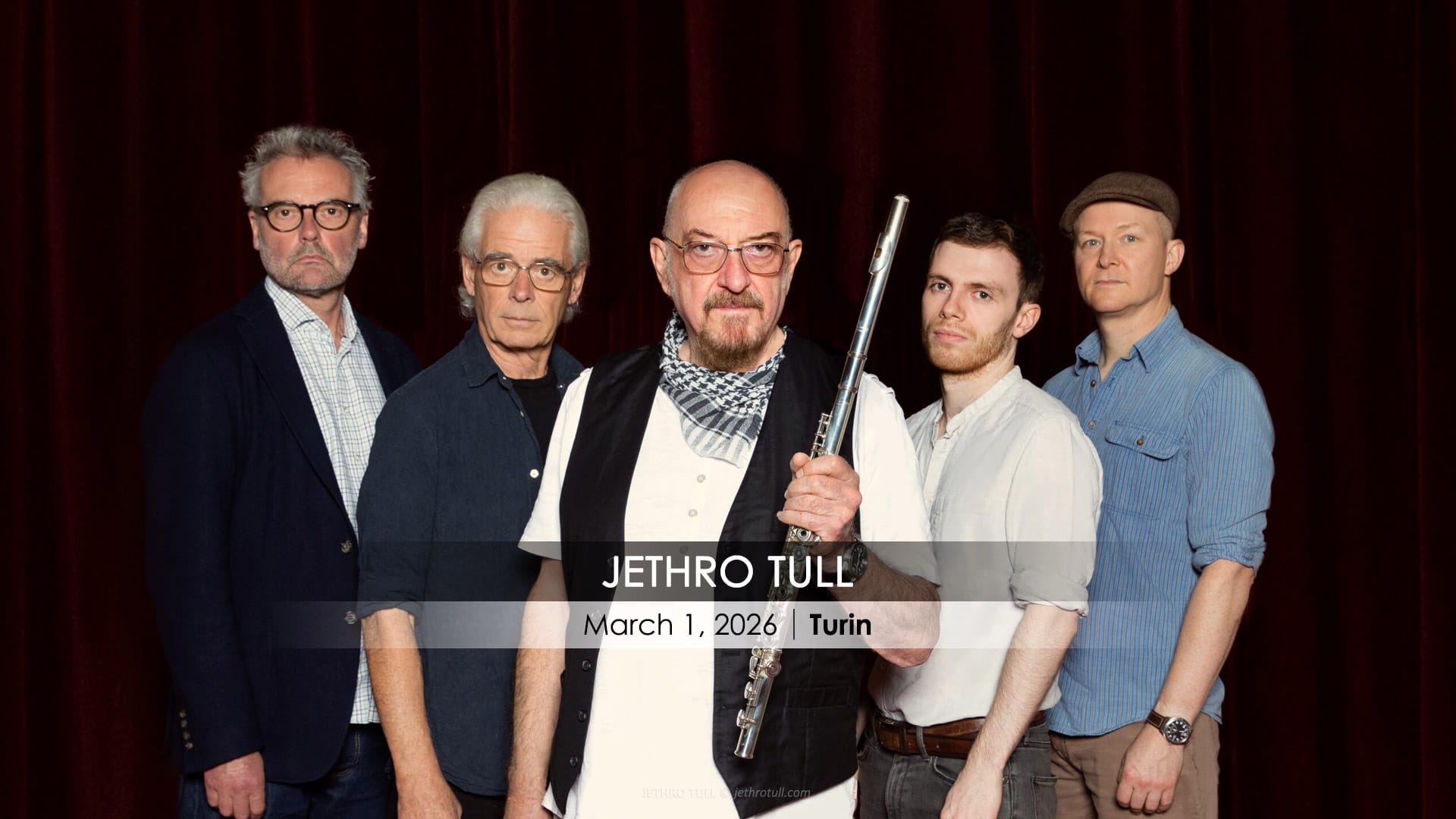
On March 1, 2026, at 8:30 PM, the legendary progressive rock band Jethro Tull will take the stage at the Teatro Colosseo in Turin, offering audiences a rare opportunity to experience one of the most distinctive and enduring acts in British rock history in an intimate theatrical setting.The concert is set to be one of the highlights of the winter cultural season in Turin, combining the refined acoustics of a historic venue with the complex, genre-defying sound that has defined Jethro Tull’s career for more than five decades.
Fans can expect a carefully curated setlist that balances classic material with later works, all delivered with the precision, wit, and musical sophistication that have become the band’s trademark.
Jethro Tull
Formed in 1967 in Blackpool, England, Jethro Tull emerged during a period of rapid musical experimentation, quickly setting themselves apart from their contemporaries.
Under the leadership of Ian Anderson, the band developed a sound that fused progressive rock, folk, blues, hard rock, and even classical music, distinguished above all by Anderson’s unconventional use of the flute as a lead rock instrument.
This choice alone made Jethro Tull instantly recognizable, challenging the norms of rock instrumentation and expanding the genre’s expressive possibilities.
The band’s early years were marked by frequent lineup changes, yet Anderson’s vision remained the constant driving force.
Their debut album, This Was (1968), leaned heavily toward blues rock, but it was with Stand Up (1969) that Jethro Tull began to carve out their own musical identity.
The album reached number one on the UK Albums Chart and featured songs such as Bourée, a jazz-inflected reimagining of a Bach composition that showcased the band’s willingness to blur stylistic boundaries.
The early 1970s represented a creative peak for Jethro Tull, producing a string of albums that would later be considered cornerstones of progressive rock.
Aqualung (1971) remains their most commercially successful and critically discussed release. Addressing themes of religion, social alienation, and personal identity, the album combined hard-hitting guitar riffs with acoustic passages and complex lyrical narratives.
Tracks like Aqualung, Locomotive Breath, and Cross-Eyed Mary became enduring staples of classic rock radio, helping the album sell over seven million copies worldwide.
Following this success, the band pushed even further into conceptual territory with Thick as a Brick (1972), an ambitious album consisting of a single, continuous piece of music split across two sides of vinyl.
Framed as a satirical adaptation of a fictional poem by a child prodigy, the album mocked the pretensions of progressive rock while simultaneously embodying them.
It topped the US Billboard 200 chart, proving that complex, long-form compositions could still achieve mainstream success.
The conceptual approach continued with A Passion Play (1973), an even more challenging work that divided critics and audiences but reinforced Jethro Tull’s reputation as fearless innovators.
Later in the decade, albums such as Songs from the Wood (1977) marked a shift toward a more explicitly British folk-influenced sound, drawing on rural imagery, traditional melodies, and seasonal themes.
Songs like The Whistler and Hunting Girl exemplified this pastoral phase, which remains a favorite among longtime fans.
Across their career, Jethro Tull have released over 30 studio albums and sold more than 60 million records worldwide, making them one of the best-selling progressive rock acts of all time.
Their accolades include a Grammy Award for Best Hard Rock/Metal Performance in 1989 for the album Crest of a Knave, a win that famously sparked controversy but also underscored the band’s ability to defy categorization even decades into their career.
In live performance, Jethro Tull have always placed strong emphasis on musicianship and theatricality.
Ian Anderson’s one-legged flute-playing stance has become iconic, while the band’s concerts often feature extended instrumental sections, reinterpretations of studio material, and moments of dry British humor.
Even in recent years, Jethro Tull’s live shows have been praised for their clarity, energy, and respect for musical detail, making the 2026 Turin concert a highly anticipated event for both longtime followers and newer listeners discovering the band’s vast catalog.
The Venue – Teatro Colosseo
Teatro Colosseo is one of Turin’s most respected and versatile performance spaces, located in the San Salvario district, an area known for its vibrant cultural life and proximity to green spaces and historic landmarks.
Situated just a short walk from Parco del Valentino and its iconic castle, the theater occupies a strategic position that blends urban elegance with easy accessibility.
Built into a residential complex along Via Madama Cristina, Teatro Colosseo is accessed through a discreet corner entrance that opens into a refined interior space.
With a maximum capacity of 1,522 seats, the theater offers a sense of intimacy that is particularly well suited to concerts where sound quality and audience connection are paramount.
The main hall is adorned with red velvet seating and is divided into two sections: the Platea, closer to the stage, and the Galleria, which provides excellent sightlines from an elevated perspective.
Reaching Teatro Colosseo is straightforward thanks to Turin’s efficient public transport network. The venue is well served by bus and tram lines running along Via Madama Cristina and nearby Corso Massimo d’Azeglio, providing direct connections to the city center.
The nearest bus stop is Valperga Caluso, conveniently located close to Teatro Colosseo and served by Bus Lines 18, 67, S18, and STAR 2.
For those arriving by metro, the Porta Nuova station is within walking distance, linking the area to other parts of the city and the main railway station.
Buy tickets
-
Photos
-
Video
Table of Contents
-
Map
-
Reviews
1 March 2026 8:30 pm
1 March 2026 12:00 am