
Table of Contents
Venice is not just a city – it is a phenomenon. Suspended between water and sky, built on a lagoon where logic says no settlement should exist, Venice defies the principles of ordinary urban planning.
Here, the environment is not conquered but embraced, shaping every aspect of life for over 1,500 years. The result is a place where infrastructure, culture, and identity are unlike anything else on Earth.
While other destinations may share fragments of Venice’s charm – canals, bridges, picturesque alleys – no other city offers the same combination of history, geography, engineering, and lifestyle.
The following seven elements are not curiosities; they are the pillars of Venice’s uniqueness, features so deeply woven into the fabric of the city that they cannot be transplanted elsewhere.
7. Public Water Transport with the Vaporetto
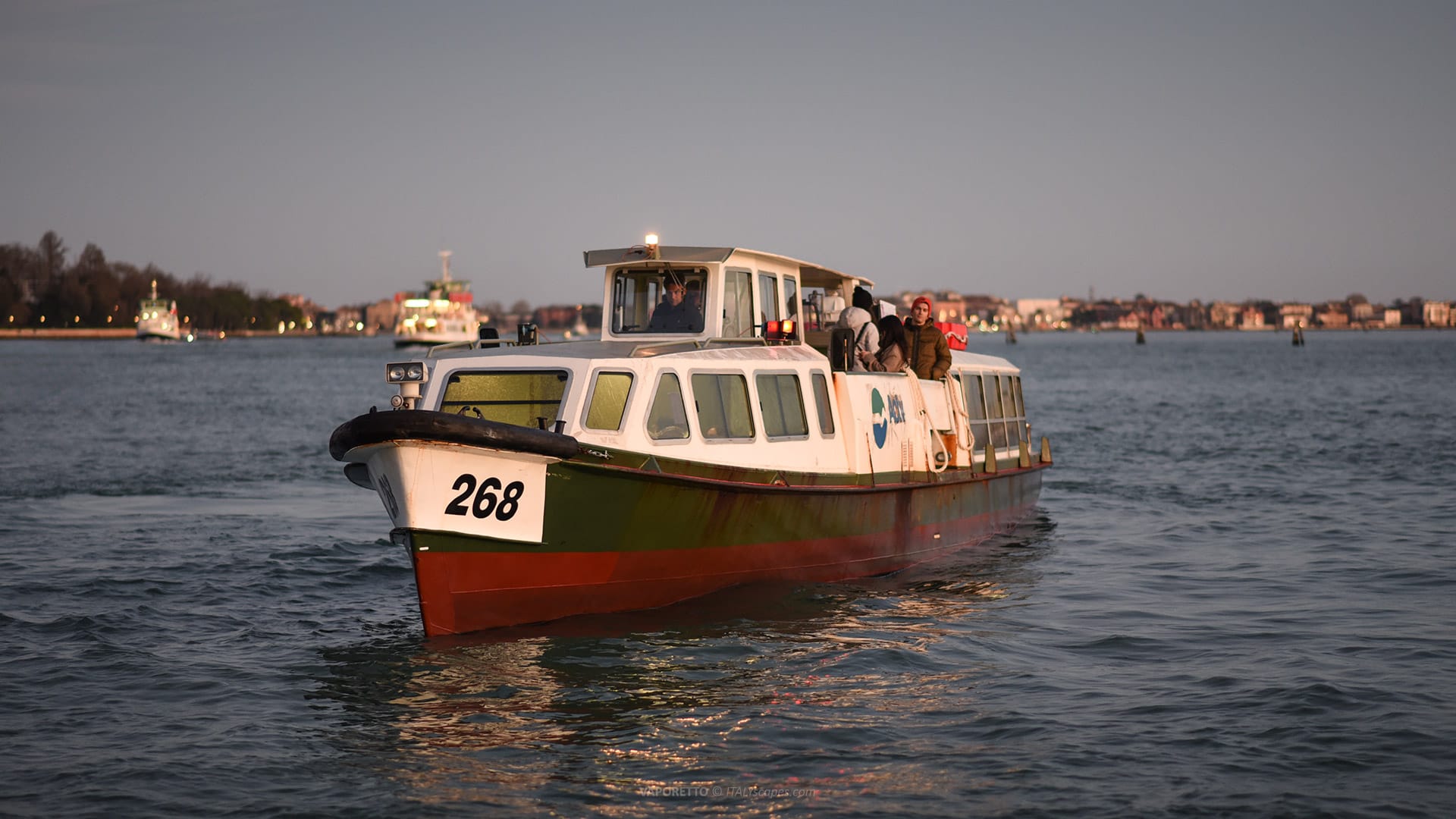
In most cities, public transportation hums along asphalt roads or dives underground into tunnels. Buses roar, subways rattle, and commuters flood pavements.
In Venice, none of this exists. Here, the city’s heartbeat flows through the vaporetto, a waterbus system as essential to Venetian life as the London Underground is to Londoners.
Introduced in the late 19th century, the vaporetto was the first organized mode of water-based public transport in the world. It is not a scenic accessory for tourists but a functional necessity.
Without it, Venetians would struggle to move between islands, access hospitals, reach schools, or carry out daily errands. Deliveries, weddings, police patrols, even hearse services – all ride the waves.
What makes the vaporetto truly unique is not that it operates on water, but that it replaces every other form of urban mass transit.
The lines weave through the arteries of the Grand Canal, stopping at palazzi, markets, and local hubs. Unlike boat tours found in other canal cities, the vaporetto maps Venice’s geography into a fluid grid, turning the lagoon itself into a transportation network.
Riding a vaporetto offers a living perspective on Venetian life. You don’t stare at billboards – you drift past centuries-old palaces. Your fellow passengers aren’t buried in phones – they are Venetians discussing tides, tourists scanning maps, students carrying sketchbooks.
It is mobility transformed into ritual, where travel becomes a sensory immersion into the city’s aquatic soul.
No other modern metropolis uses water the way Venice does – not as an obstacle to conquer, but as an element to inhabit, navigate, and honor.
6. Bridges Built Exclusively for Pedestrians

Venice has more than 400 bridges, yet none were designed for wheeled vehicles. Every bridge is an act of human scale and cultural design that reinforces the pedestrian identity of the city.
The Rialto Bridge, the oldest across the Grand Canal, was once mocked as an architectural absurdity. Today, it stands as one of the world’s most recognizable urban icons, a combination of marketplace, traffic artery, and theatre.
The Bridge of Sighs – poetic in name and tragic in purpose – served as the final passage for prisoners sentenced to the Doge’s Palace cells. The sigh was not romantic; it was despair.
Each bridge has meaning, texture, and story. They do not connect points – they connect eras. Crossing a Venetian bridge is not movement; it is participation in a narrative built over centuries.
Where other bridges solve logistical problems, Venetian bridges solve existential ones: how to live where land dissolves into water.
5. Canals Instead of Streets

The city floats atop a labyrinth of waterways – a maze of over 150 canals that form its essential infrastructure. Every canal is a street, every street a liquid passage, every corner an unpredictable curve of shimmering reflection.
The Grand Canal, the city’s monumental S-shaped boulevard, functions like Venice’s spine. Along it rise merchant palazzi, Gothic facades, Renaissance windows, and Byzantine mosaics – an architecture book written directly on the water.
Smaller canals connect every district, replacing driveways, alleys, and side roads with waterways so narrow that gondolas can barely glide through them.
What appears romantic today was once engineered necessity. With no space for traditional roads, Venice embraced the lagoon, turning water into the surface of everyday life.
While Amsterdam and Bruges offer postcard canals, they still revolve around land-based movement. Venice is different.
The canals also dictate the pace of life. There is no rushing, no sprinting across lanes, no acceleration of traffic. Movement is dictated by tides, engines, oars, and human attention.
Venice thus enforces a rhythm that resists the frenzy of modernity – not by choice, but by nature. To understand Venice is to understand that its roads are water – not metaphorically, but fundamentally.
4. The Tradition of Gondolas
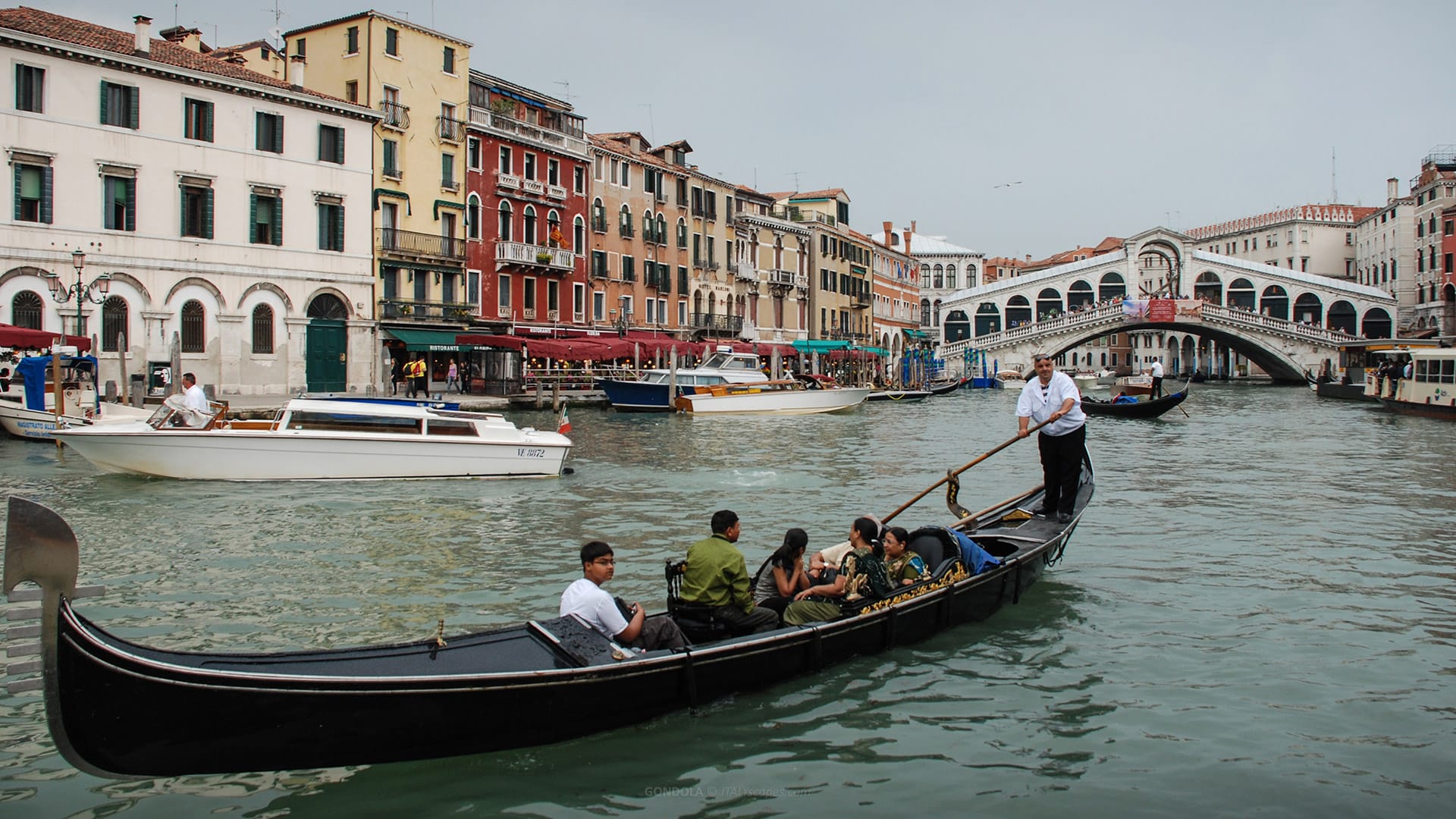
The gondola is the world’s most famous boat, yet it exists genuinely only in Venice. Other cities may attempt imitations, but none replicate the cultural ecosystem that produced it.
Gondolas were the limousines of the Venetian elite. Their history stretches back nearly a thousand years, evolving from broad merchant vessels into slender, streamlined crafts capable of navigating narrow canals.
Every gondola is handmade, taking over a year to complete, using eight distinct types of wood and exact proportions.
What sets gondolas apart:
- They are asymmetrical, built wider on the left to counterbalance the gondolier’s single oar stroke.
- The decorative ferro at the bow is symbolic architecture: six bars for the six districts; a curved blade for the Grand Canal; a tooth-like projection for the Doge’s cap.
- Gondoliers undergo rigorous qualification, apprenticeship, and tests – it is not a part-time tourist job but a hereditary, regulated profession.
The gondola is not transportation – it is identity. It embodies Venetian aesthetics: elegant, black, sinuous, reflective. It is a visual metaphor for Venice itself: refined but practical, fragile yet enduring, ancient yet alive.
To watch gondolas glide under bridges is to witness living architecture in motion.
3. Palazzi Built on Wooden Piles Beneath the Water

Perhaps the most astonishing aspect of Venice is not what you see, but what you do not see: the invisible engineering beneath the lagoon.
The iconic Venetian palazzi – Ca’ d’Oro, Ca’ Pesaro, Palazzo Ducale and hundreds more – appear to rise directly out of the water. Their facades seem to hover like stone curtains above canals. But beneath them lies a forest of wooden piles, driven deep into the sediment centuries ago.
These piles, mostly made from alder, oak, and larch, were sunk so densely that they formed a solid platform. Over time, submerged in oxygen-deprived saltwater, the wood mineralized rather than decayed, transforming into a petrified foundation.
This construction technique is unique in scale and complexity. No other city in the world has built a monumental architectural heritage directly atop waterlogged pilings. Venice is literally anchored in a forest – not above ground, but below sea level.
The palazzi themselves are masterpieces of Venetian-Gothic, Renaissance elegance, and Byzantine ornamentation. Their balconies and stone tracery are designed not only for beauty but for stability in a shifting environment. Every architectural decision was a compromise between ambition and survival.
Each palace, therefore, is not just a home or a building – it is an experiment in defiance. The engineering that supports Venice is as astonishing as the art that adorns it.
2. A City Without Cars

There are pedestrian zones in other cities, but Venice is the only city of its scale where cars are entirely absent. There are no taxis (except on water), no buses, no bicycles, no skateboards, no scooters – nothing with wheels.
The ban is not cultural. It is structural. Narrow alleys, bridges, steps, and canals make wheeled transport impossible. The city itself refuses it.
The result is a soundscape rare in urban centers: footsteps echo on ancient stone pavements; church bells carry across rooftops; conversations unfold without engines drowning them.
When a boat cuts through the water, the splash replaces the roar of exhaust pipes. Silence becomes a civic commodity.
Living without cars reshapes social interaction. Venetians recognize each other in the streets. Children walk freely. Elderly residents move at their own pace. Without asphalt arteries, there is no pressure to rush, no invisible timer pushing people from one place to another.
This absence also affects logistics. Every object – groceries, construction materials, furniture, refrigerators – arrives by boat, then is pushed through alleys on handcarts.
Visitors discover porters carrying mattresses over bridges, workers delivering vegetables from boats, fire brigades arriving on water.
Venice, therefore, is not simply car-free – it is a civilization that evolved without wheels. The modern city did not remove its motor vehicles. It never had them.
1. The Carnival of Venice

Carnivals exist elsewhere, but none rival Carnevale di Venezia – a festival where identity evaporates behind masks, where time seems reversible, and where theatre spills into public space.
The Venetian Carnival began in the Middle Ages and became legendary in the 18th century, when Venice was the pleasure capital of Europe. Here, anonymity was a political tool. Masks allowed citizens – noble, merchant, or servant – to mingle without hierarchy. In a rigid society, Carnival democratized desire.
The tradition nearly disappeared after Napoleon banned it in 1797. It was resurrected in 1979, and today it draws millions who come to witness an art form reborn: handcrafted masks, baroque costumes, ghostly silhouettes drifting through foggy alleys like apparitions of the past.
What makes Venice Carnival unique:
- It is not a parade-driven event. The city is the stage.
- Costumes are not casual – they are elaborate sculptures of silk, lace, feathers, and velvet.
- The masks themselves – bauta, volto, moretta – are art objects, each tied to social and historical meaning.
Carnival here is not imitation; it is inheritance. It is not about spectacle but transformation. Venice does not celebrate Carnival – Venice becomes Carnival.


