
Table of Contents
Italy has no shortage of famous destinations – Rome, Florence, Venice, Milan. But beyond the postcard clichés lies another Italy: quieter, authentic, full of culture, food, history, and landscapes that many travelers never discover.
If you want to avoid crowds and still experience the best of the Bel Paese, this guide highlights eight of the most underrated Italian cities that deserve a place on your travel list.
From North to South, each of these cities offers unique architecture, unforgettable cuisine, and a deep sense of identity that makes travel meaningful. Here are the top hidden Italian gems you should explore.
8. Turin (Torino)

Geography
Turin sits in northwest Italy, surrounded by the Alps and crossed by the Po River. Its broad avenues, Baroque palaces, and leafy parks reflect centuries of royal architecture.
The climate is cooler than much of Italy, and in winter the nearby mountains shine with snow.
Main Attractions
Turin was Italy’s first capital and remains a city of museums, cafés, and refined culture.
The Egyptian Museum is one of the most important in the world, second only to Cairo. The Mole Antonelliana hosts the National Cinema Museum and offers panoramic views.
Royal residences like Venaria Reale, Palazzo Madama, and Palazzo Carignano make Turin feel aristocratic and elegant. Modern travelers also come for the Juventus Stadium and world-class chocolate shops.
Food & Drink
Turin is the home of gianduja chocolate, bicerin (a hot drink made of espresso, chocolate, and cream), and Piedmontese classics such as vitello tonnato, truffles, agnolotti pasta, and hazelnut desserts.
The region produces Italy’s most famous wines – Barolo, Barbaresco, and Nebbiolo – making it paradise for wine lovers.
Why Visit
Turin combines French-influenced elegance with Italian warmth, world-class museums, winter sports access, and gourmet cuisine. It is refined, romantic, and still underrated internationally.
7. Ferrara
Geography
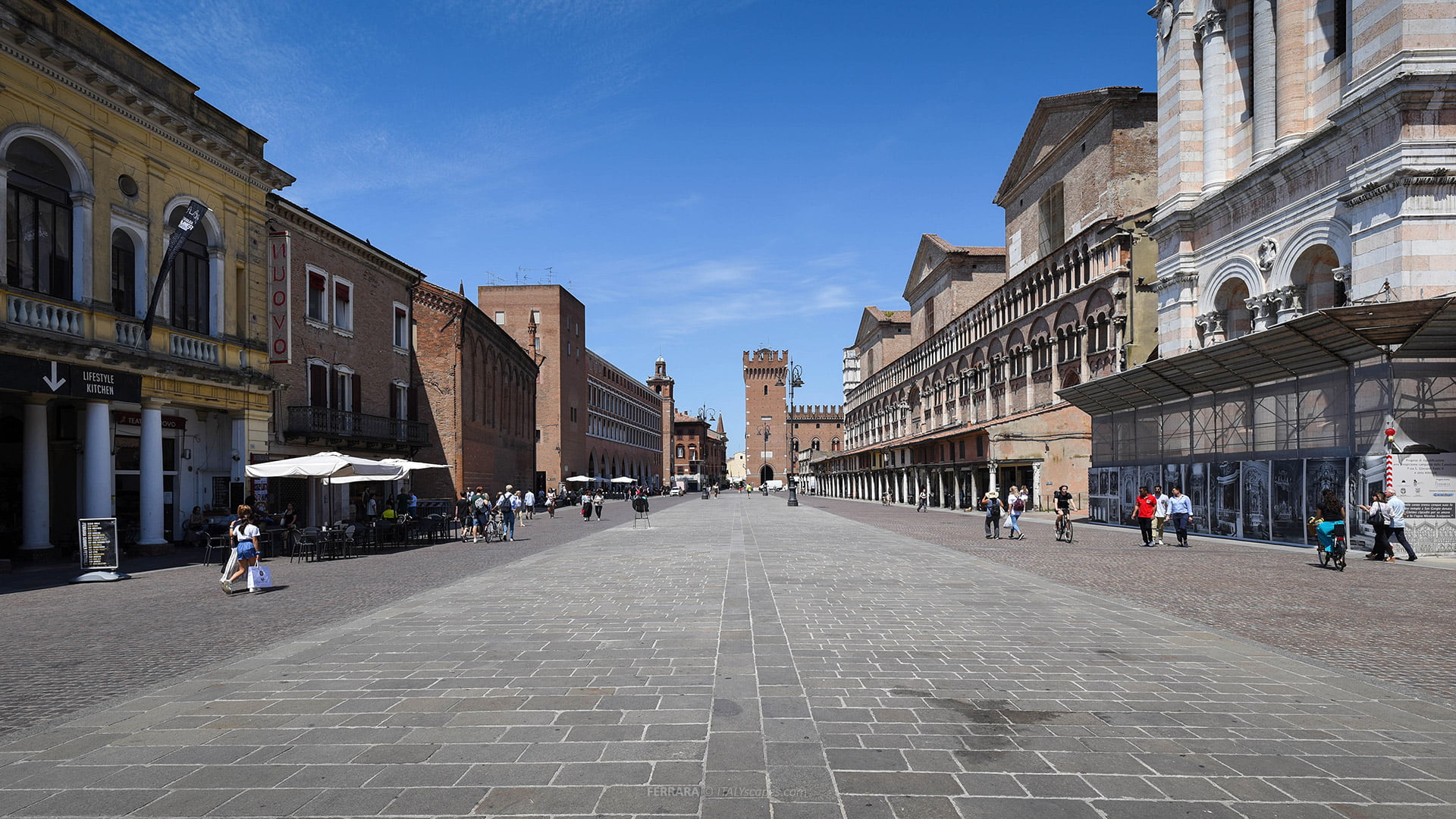
In the flat plains of Emilia-Romagna, Ferrara is surrounded by farmland, canals, and bike paths. Known as one of Italy’s most bicycle-friendly cities, it offers fresh air, open spaces, and peaceful squares.
Ferrara’s Renaissance architecture reflects centuries of intelligent urban planning – wide streets, elegant palaces, and fortified walls.
Main Attractions
At the heart of Ferrara stands the Castello Estense, a medieval castle complete with towers, a drawbridge, and a surrounding moat.
The Palazzo dei Diamanti, covered in marble diamond-shaped blocks, symbolizes the city’s artistic identity.
Ferrara’s Cathedral, Duomo Museum, and the Jewish Ghetto reflect a long cultural heritage. The city also hosts major art exhibitions and literary festivals.
Food & Drink
Emilia-Romagna is Italy’s food heaven, and Ferrara is no exception. Traditional dishes include cappellacci di zucca (pasta filled with sweet pumpkin and Parmigiano), salama da sugo, grilled eel, and chocolate-based desserts like pampepato.
With easy access to local vineyards, Ferrara offers excellent Lambrusco and Pignoletto wines.
Why Visit
Ferrara is quiet but elegant – perfect for travelers who love history, art, and food without tourist chaos.
The entire city is a UNESCO World Heritage Site, and every street feels like a movie set from the Renaissance.
6. Genoa (Genova)

Geography
Genoa stretches along the Ligurian coast between the Mediterranean Sea and steep mountains. Because space is limited, the city rises vertically – rooftops, hills, lifts, funiculars, and stairways create a dramatic, layered skyline.
Its port is one of the largest in Europe, historically making Genoa a powerful maritime republic.
Main Attractions
The old town is a labyrinth of alleys – caruggi – leading to medieval churches, aristocratic palaces, and local markets.
The Palazzi dei Rolli are UNESCO-listed Renaissance palaces once used for hosting ambassadors and royalty. The Aquarium of Genoa, one of Europe’s biggest, draws families and sea lovers.
To see the coastline at its best, visitors take a boat to Boccadasse, a colorful fishing neighborhood with a picture-perfect beach.
Food & Drink
Genoa is the birthplace of two worldwide icons: pesto and focaccia. Traditional Ligurian pesto uses basil, pine nuts, pecorino, Parmigiano, garlic, and olive oil – simple but perfect.
Focaccia can be plain, with onions, or filled with cheese. Fresh anchovies, seafood stews, and Vermentino wine also define the cuisine.
Why Visit
Genoa offers raw authenticity – historic, gritty, artistic, and surprisingly elegant. It’s ideal for travelers who love food, harbor views, and off-the-beaten-path Italian culture.
5. Reggio Calabria

Geography
Reggio Calabria lies at the very toe of Italy’s boot, where the Ionian and Tyrrhenian seas meet.
Across the Strait of Messina, Sicily seems close enough to touch. The city enjoys warm weather most of the year, and its wide beachfront promenade – called the most beautiful kilometer in Italy – offers views of Mount Etna on clear days.
Main Attractions
The most famous attraction in Reggio Calabria is the Archaeological Museum of Magna Graecia, home to the world-renowned Bronzi di Riace – two almost 2,500-year-old bronze warriors considered masterpieces of Ancient Greek sculpture.
Reggio also features the Aragonese Castle, the Liberty-style historic center, the botanical gardens, and beaches with turquoise water.
Food & Drink
Calabrian cuisine is bold, spicy, and unforgettable. The region is famous for ’nduja (spreadable spicy salami), bergamot citrus, swordfish, homemade pasta, chili peppers, and desserts flavored with fig or licorice.
Local wines include Greco di Bianco and Cirò, both ancient Mediterranean varietals.
Why Visit
Reggio Calabria is still off the mass-tourism radar, but it has everything: beaches, ancient history, southern warmth, and one of Italy’s best archaeological treasures.
It’s perfect for travelers wanting authenticity, nature, and culture in one place.
4. Bari

Geography
Located on the Adriatic coast of Puglia, Bari is a strategic port city connecting southern Italy with Greece, the Balkans, and the Middle East.
Its old town curves along the shoreline, while modern neighborhoods stretch inland. Long beaches, clear water, and limestone cliffs define its coastline, and the mild Mediterranean climate makes Bari enjoyable year-round.
Main Attractions
Bari Vecchia, the old city, is a maze of stone streets filled with churches, arches, laundry lines, and local residents chatting outside their doors.
The Basilica di San Nicola, a sacred Catholic and Orthodox pilgrimage site, houses the relics of Saint Nicholas – better known as Santa Claus.
The Swabian Castle, the elegant Petruzzelli Theater, and the seaside promenade Lungomare Nazario Sauro make Bari culturally rich and visually striking.
Food & Drink
The most iconic Bari experience? Watching grandmothers make fresh orecchiette pasta by hand on the street.
Bari’s cuisine is deeply tied to the sea and the land – raw seafood platters, mussels, fried polenta bites, focaccia Barese with tomatoes and olives, and the famous panzerotto (cheesy fried dough).
Local wines like Primitivo and Negroamaro pair perfectly with seafood dishes.
Why Visit
Bari deserves far more attention. It is safe, historic, authentic, and the ideal starting point to visit Puglia. With excellent food, affordable prices, beaches, and nightlife, it stands among Italy’s best hidden gems.
3. Udine

Geography
Udine lies in the heart of Friuli-Venezia Giulia, between the mountains and the sea. Surrounded by vineyards, hills, and rivers, the city enjoys Alpine freshness but Mediterranean sunshine.
Its geography makes Udine a perfect base for exploring nature, wine regions, and nearby Slovenia and Austria.
Main Attractions
Udine’s elegant historic center revolves around Piazza Libertà, often called the most beautiful Venetian-style square on the mainland.
The Castle of Udine, the Cathedral, and museums preserve centuries of art and history. The city is also close to Cividale del Friuli, a UNESCO-listed Lombard town, and the beautiful Collio wine hills.
Food & Drink
Udine is famous for frico, a dish of cheese and potatoes crisped into a golden cake. Polenta, game meats, mushrooms, and fresh mountain cheeses dominate the cuisine.
The region produces world-class white wines – Friulano, Ribolla Gialla, Sauvignon Blanc, and Pinot Bianco – considered some of the best in Europe.
Why Visit
Udine is clean, cultured, and exceptionally welcoming. With great wine, architecture, and natural beauty, it is one of Italy’s best underrated cities for slow, high-quality travel.
2. Brescia

Geography
Located in Lombardy between Milan, Verona, and Lake Garda, Brescia sits at the foot of the Alps. Its strategic location gives visitors access to mountains, lakes, vineyards, and medieval towns.
The climate is continental but pleasant, with warm summers and crisp winters.
Main Attractions
Few tourists know that Brescia has two Roman temples, one of Italy’s best archaeological museums, and a well-preserved medieval castle overlooking the city. Santa Giulia Museum, a UNESCO site, displays artifacts from prehistory to the Lombard era.
From Brescia, visitors can easily reach Lake Iseo and Monte Isola, one of Europe’s largest lake islands.
Food & Drink
Brescia’s cuisine differs from typical Italian menus – it features butter instead of olive oil, polenta instead of pasta, and alpine cheeses instead of seafood.
Local favorites include casoncelli ravioli, roasted meats, and spiedo bresciano, grilled pork or poultry slowly cooked over an open flame.
The area is also home to Franciacorta, Italy’s finest sparkling wine.
Why Visit
Brescia offers deep history, excellent museums, and access to nature – all without the Milan crowds. For cultural travelers and wine lovers, it is one of Lombardy’s best-kept secrets.
1. Trieste

Geography
Trieste sits on Italy’s northeastern edge, right against the border with Slovenia and facing the Adriatic Sea.
Protected by the Karst Plateau and shaped by centuries of cross-border influence, Trieste feels slightly Central European and Mediterranean at the same time.
With its grand waterfront, elegant Habsburg-style boulevards, and dramatic limestone cliffs, the city’s geography creates an atmosphere unlike anywhere else in Italy.
The bora winds that sweep across Trieste give the city character and clarity, offering some of the brightest, most crystalline skies in the peninsula.
Main Attractions
Among the best things to see in Trieste are Piazza Unità d’Italia, one of the largest seaside squares in Europe, and Castello di Miramare, a white marble castle overlooking the sea.
The historic Caffè San Marco and Caffè degli Specchi remind visitors that Trieste was once the intellectual heart of the Austro-Hungarian Empire, welcoming writers like James Joyce and Italo Svevo.
The Revoltella Museum, the medieval Castello di San Giusto, and the mysterious giant caves of Grotta Gigante add cultural and natural depth to a city many tourists skip.
Food & Drink
Trieste’s cuisine reflects its hybrid identity – Italian, Slavic, Austrian, and Hungarian influences come together on every plate.
Local specialties include jota (a hearty bean and sauerkraut soup), strudel and goulash, as well as seafood dishes from the Gulf of Trieste.
Perhaps the city’s most famous treasure, however, is coffee: Trieste is Italy’s coffee capital and the birthplace of the Illy brand. Coffee bars serve espresso, “capo in b”, and Viennese-style pastries.
Why Visit
Trieste is worth visiting because it feels like nowhere else in Italy – calm, refined, intellectual, and full of beauty without the crowds.
It is one of the most underrated Italian cities for travelers who love history, sea views, cafés, and culture.
Final Thoughts – The Hidden Italy Travelers Forget
These eight underrated Italian cities – Trieste, Bari, Reggio Calabria, Ferrara, Udine, Genoa, Brescia, and Turin – prove that Italy is far more than Venice and Florence.
If you want an Italian vacation that feels real, personal, and unforgettable, skip the usual tourist routes and explore Italy’s hidden gems.
The most underrated Italian cities are waiting – and they just might become your favorite places in the country.


