-
About
Table of Contents
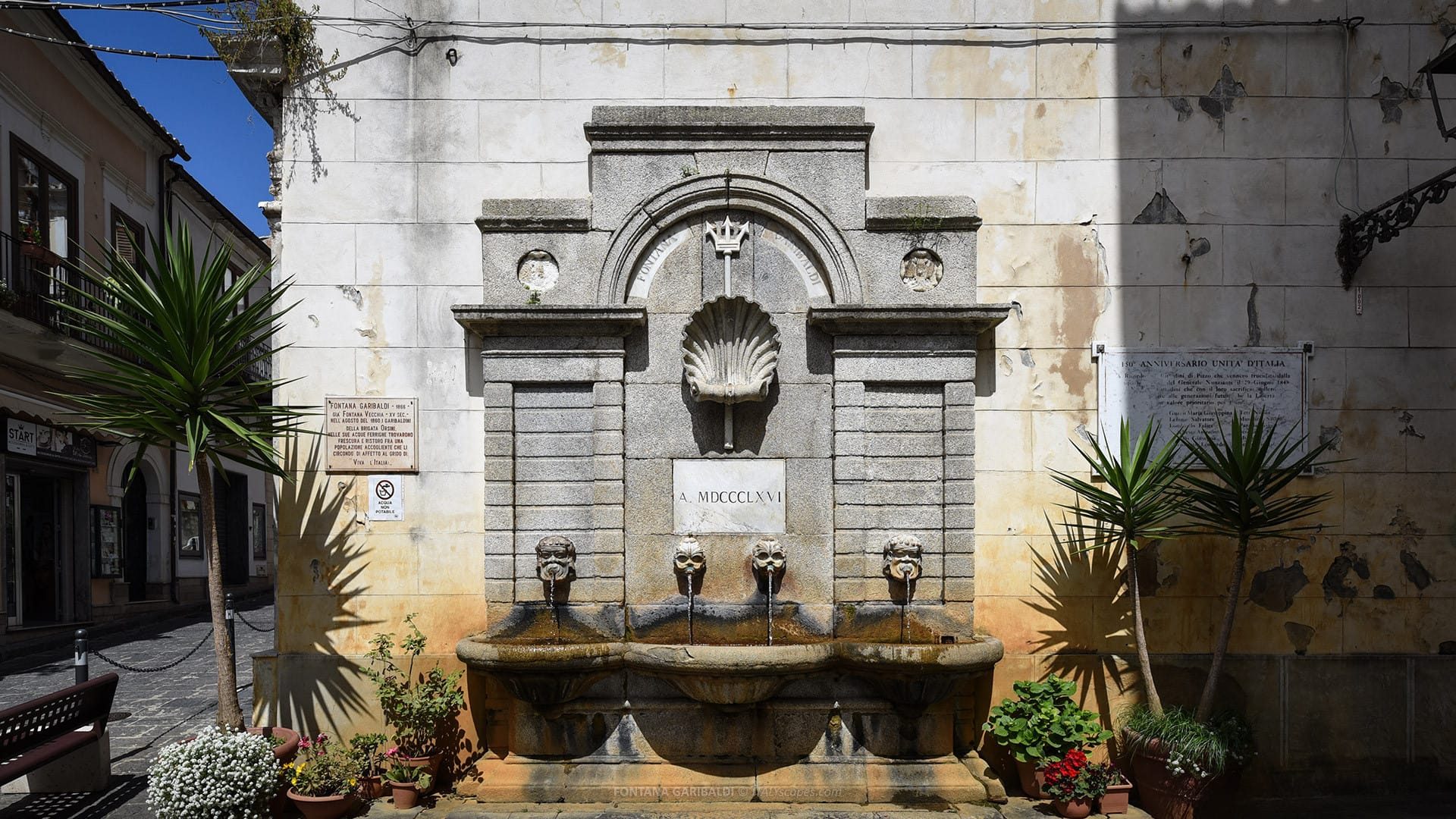
Fontana Garibaldi is one of the oldest public fountains in Pizzo. Located in Piazza Giuseppe Garibaldi, the fountain dates back to at least the 15th century and is historically connected with the old water supply system of the town.
Before 1866, the fountain was known as Fontanavecchia (Old Fountain). The current name, Fontana Garibaldi, appeared after restoration works carried out during the second half of the 19th century.
For centuries, local residents associated the fountain with medicinal mineral water. Historical sources describe the water as rich in iron, with a characteristic reddish color and a metallic taste. Even today, many visitors stop at the fountain to observe the mineral deposits left by the flowing water.
Powered by GetYourGuideShort History of Fontana Garibaldi
Origins of the Fountain
Historical evidence confirms the existence of Fontanavecchia before 1571. In that year, the Calabrian historian Gabriele Barrio mentioned the fountain in his work about the antiquities and settlements of Calabria.
The fountain probably dates back to the 15th century, when public fountains represented essential infrastructure for towns in southern Italy. In Pizzo, springs and fountains supplied drinking water to residents long before the arrival of modern aqueduct systems.
The historic importance of Fontanavecchia was also linked to its strategic position inside the town.
The Springs of Pizzo
In 1735, the scholar Ilario Tranquillo described Pizzo and its water resources in a historical publication dedicated to ancient Napizia, the old name associated with the territory.
According to Tranquillo, the area contained approximately 80 natural springs. Around fifty were located east of the town, while another thirty were situated westward, extending from the hills toward the sea.
Among these springs, two were considered particularly important because of their medicinal properties. One of them was Fontanavecchia, the future Fontana Garibaldi.
Historical accounts emphasized the unusual characteristics of the water, especially the strong mineral presence. The fountain became known locally for water believed to help certain physical conditions and digestive problems.
The Medicinal Water Tradition
The water of Fontana Garibaldi is traditionally associated with healing qualities. Local oral traditions described it as beneficial for certain illnesses and physical disorders.
The mineral composition of the water explains its unusual appearance and taste. The high concentration of iron gives the water a rusty color, especially visible inside transparent containers.
The water also has a distinct metallic flavor. Although some visitors may find the taste unusual, the water is generally considered drinkable.
The 1866 Restoration
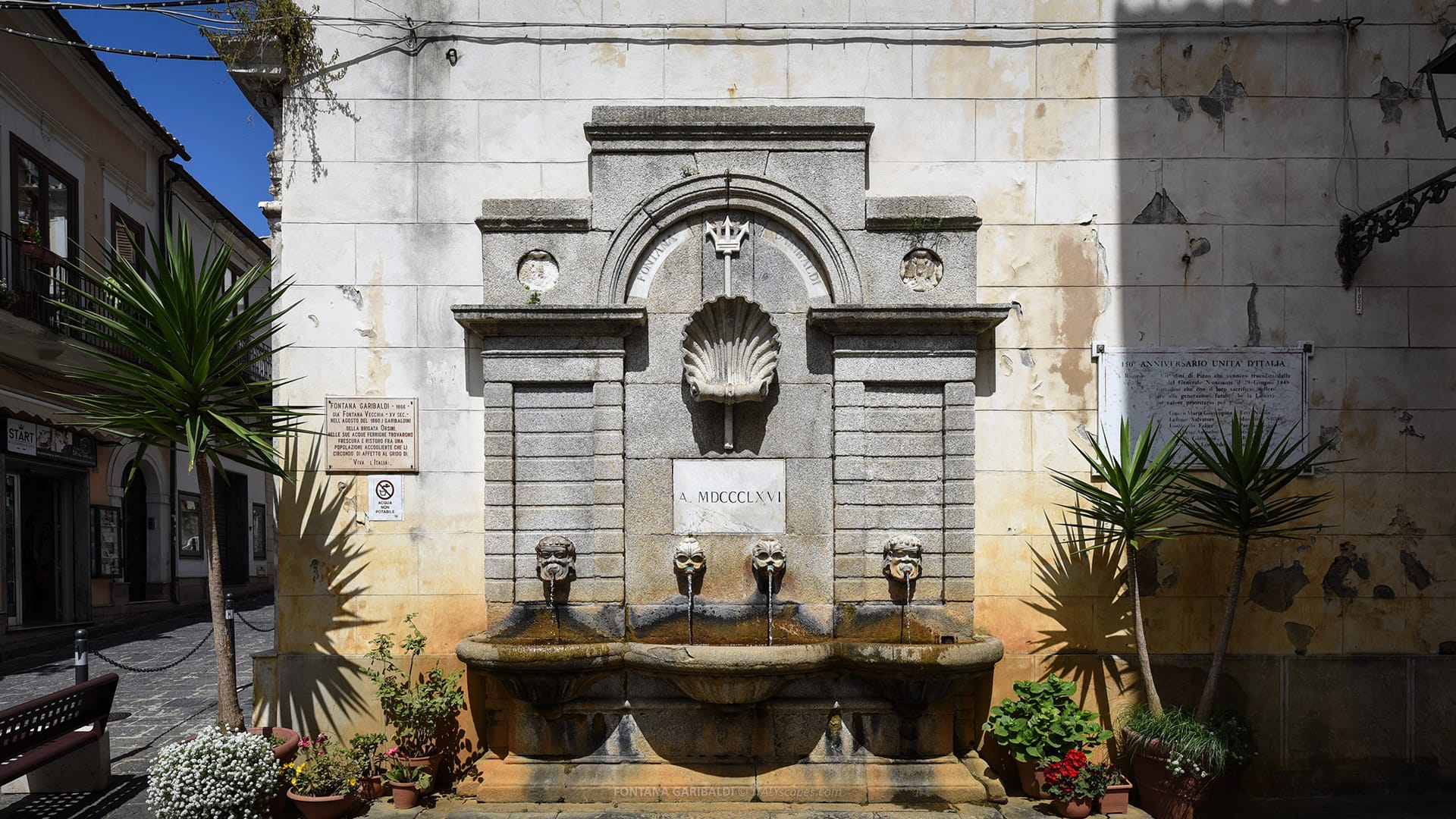
The fountain changed significantly in 1866, when restoration and decorative works transformed its appearance. During this intervention, the structure received a new facade made of gray granite.
After the restoration, the fountain adopted the name Fontana Garibaldi, reflecting the political and cultural climate of Italy after national unification. The dedication referred to Giuseppe Garibaldi, one of the leading figures of the Italian Risorgimento.
The restoration preserved the fountain’s original hydraulic function while improving its architectural appearance. The granite facade introduced during the 19th century still characterizes the monument today.
Architecture of Fontana Garibaldi
Fontana Garibaldi has a relatively simple architectural structure compared to monumental Baroque fountains found in larger Italian cities. Its historical value comes mainly from its age, water source and local cultural importance.
The fountain incorporates stone basins and a granite front added during the 1866 renovation. Continuous water flow creates visible mineral traces caused by the high iron concentration.
The reddish deposits around the fountain are produced naturally by oxidation processes linked to the mineral composition of the water. This phenomenon contributed to the fountain’s reputation through the centuries.
How to Get to Fontana Garibaldi
Fontana Garibaldi is located in Piazza Giuseppe Garibaldi, inside the historical center of Pizzo. The fountain lies approximately 200 meters from Piazza della Repubblica, the town’s main square and one of the busiest areas for restaurants and cafés.
The distance between Fontana Garibaldi and Pizzo railway station is approximately 1.4 kilometers.
Getting to Fontana Garibaldi on foot
Walking from the station generally requires between 20 and 25 minutes, depending on pace and weather conditions.
Getting to Fontana Garibaldi by car
Travelers arriving by car can access Pizzo through the regional road network connected to the Tyrrhenian coast of Calabria.
Frequently Asked Questions about Fontana Garibaldi
Where is Fontana Garibaldi located?
Fontana Garibaldi is located in Piazza Giuseppe Garibaldi, inside the historic center of Pizzo, Calabria, about 200 meters from Piazza della Repubblica.
What was Fontana Garibaldi called in the past?
Before receiving its current name, the fountain was known as Fontanavecchia, meaning Old Fountain, a name that reflected its long history in the town.
How old is Fontana Garibaldi?
Fontana Garibaldi probably dates back to the 15th century and is documented before 1571, when it was mentioned by the Calabrian historian Gabriele Barrio.
What is the fountain famous for?
Fontana Garibaldi is famous for its age, its historic connection to Pizzo’s water supply, and its iron-rich mineral water with reddish deposits and metallic taste.
Is the water of Fontana Garibaldi drinkable?
The water is traditionally considered drinkable, although its strong mineral character, reddish color, and metallic taste can feel unusual for visitors trying it today.
Sources:Powered by GetYourGuide -
Photos
-
Map
-
Reviews