-
About
Table of Contents
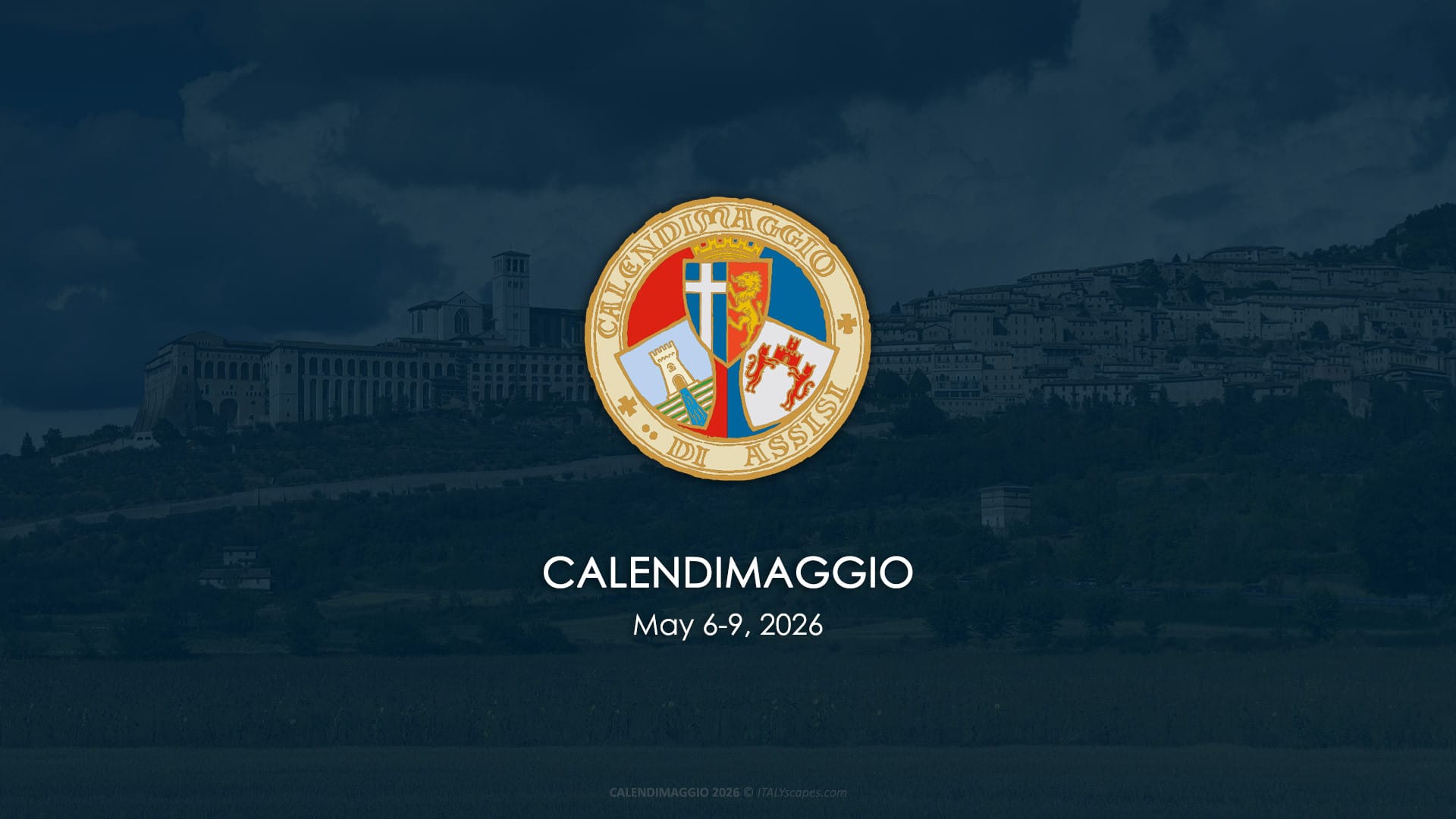
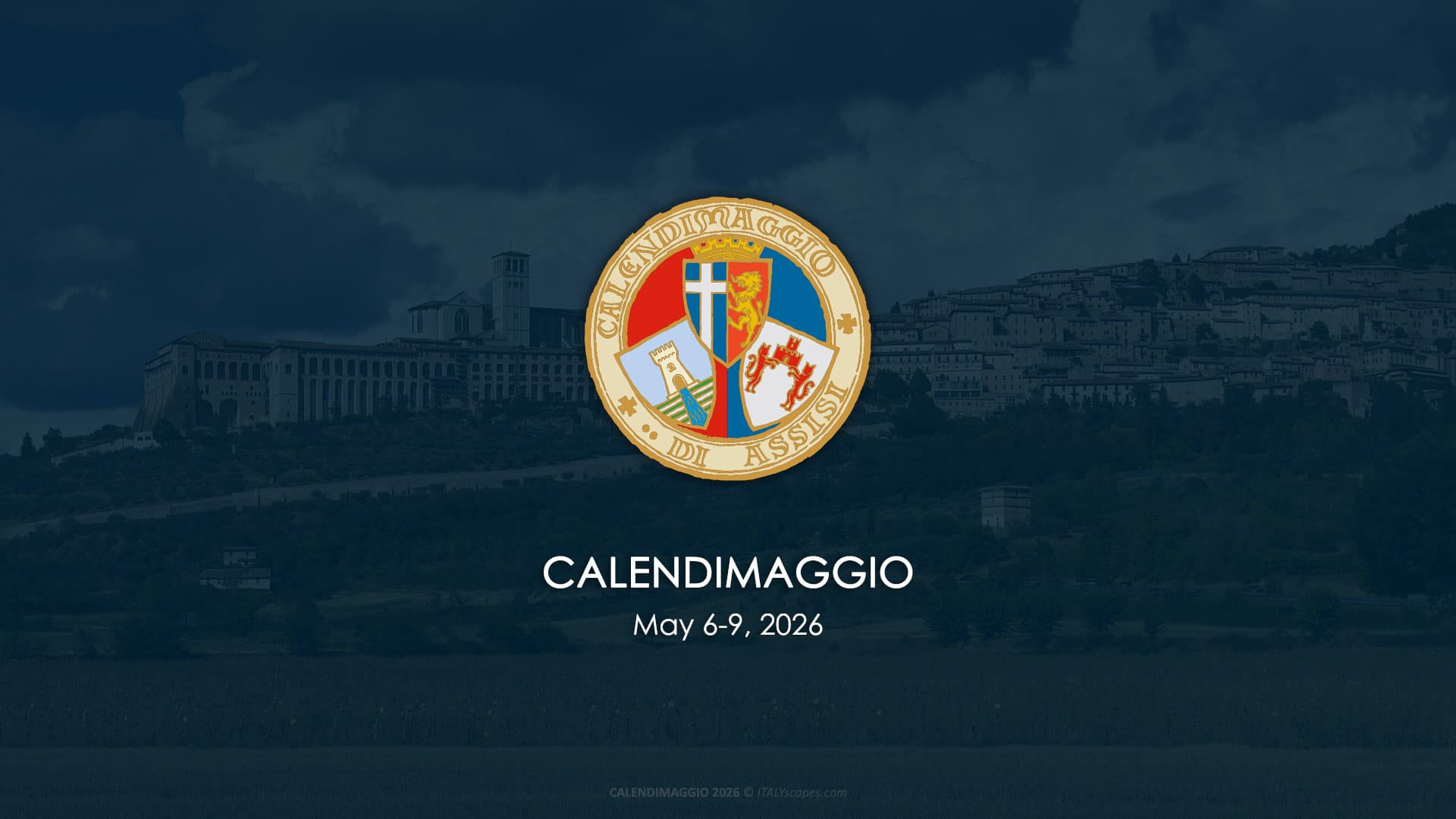
Calendimaggio 2026 will most likely be celebrated between Wednesday, May 6, and Saturday, May 9, 2026, in the historic Italian town of Assisi, located in the heart of Umbria.
This centuries-old festival is one of the most famous cultural events in central Italy, known for music, medieval costumes, theatrical performances, and symbolic competitions between the two traditional districts of the town.
Every spring, Assisi transforms into an open-air medieval setting, filled with processions, musicians, flag-wavers, dancers, and artisans.
Calendimaggio is not just a tourist attraction – it is a cultural celebration deeply rooted in the identity of the city, combining ancient pagan rituals, medieval traditions, and modern community spirit.
Below you will find everything you need to know about Calendimaggio 2026, including dates, location, history, events, and what visitors can expect.
When Will Calendimaggio 2026 Take Place?
Since 2015, Calendimaggio is scheduled according to a precise rule: the first Wednesday, Thursday, Friday, and Saturday after May 1st.
In 2026, May 1st falls on a Thursday. Therefore, Calendimaggio 2026 will most likely take place between Wednesday, May 6, 2026, and Saturday, May 9, 2026.
These four days are filled with ceremonies, games, parades, concerts, blessings, and the highly anticipated competition for the Palio, the prize contested each year by the two rival parts of Assisi.
Where Does Calendimaggio 2026 Take Place?
Calendimaggio 2026 will be celebrated in Assisi, Umbria, a UNESCO heritage destination world-famous as the birthplace of Saint Francis of Assisi.
While celebrations take place throughout the historic center, the most important events are usually held in:
- Piazza del Comune (the main town square)
- Cathedral of San Rufino
- The medieval streets connecting the Upper and Lower parts of the city
During the festival, the entire town is decorated with banners, shields, medieval flags, flowers, torches, and period symbols, creating a unique atmosphere where history comes to life.

A Short but Fascinating History of Calendimaggio
The origins of Calendimaggio stretch back to ancient times, long before the Middle Ages.
Historians believe that the celebration has roots in pagan rituals marking the arrival of spring, dedicated to rebirth, fertility, and the renewal of nature.
Pagan origins
The name derives from the Latin Kalendis Maiis, connected to the Calends of May, a period associated with spring and the renewal of life.
In Roman times, May 1st was dedicated to Flora, the goddess of flowers, and people celebrated with flowers and floral crowns, music and dances, and outdoor feasts.
The Christian influence
As Christianity spread across Europe, pagan festivals were gradually absorbed into Christian culture.
Instead of disappearing, many rituals were reinterpreted, and Calendimaggio survived through the centuries as a celebration of nature and community.
Medieval rivalries in Assisi
In the 14th century, Assisi reached a time of great splendor. The city expanded, its walls were enlarged, and many noble palaces and churches were built.
But this period was also marked by rivalry between two powerful local families:
- Parte de Sotto (Lower Part) – supporting the Guelphs
- Parte de Sopra (Upper Part) – supporting the Ghibellines
To reduce violence and tension, competitions gradually shifted from armed conflict to artistic and public celebrations.Calendimaggio became the symbolic arena where the two factions could compete peacefully through culture, music, costumes, and theater.
The festival through modern history
Calendimaggio continued over the centuries, surviving political change, wars, and social transformation. Key milestones include:
- 1927: Mayor Arnaldo Fortini reinvented and modernized the festival
- World War II: ceremonies were suspended
- 1947: festival was officially revived
- 1954: Calendimaggio adopted its modern format, thanks to local scholars and cultural experts
Since then, Calendimaggio has been celebrated every year and has become one of the most important historical festivals in Italy.
Calendimaggio Today – What Happens During the Festival
Modern Calendimaggio maintains its medieval structure. The town is divided into two competing factions:
Magnifica Parte de Sotto – The Magnificent Lower Part
Nobilissima Parte de Sopra – The Noble Upper Part
Each part prepares costumes, musicians, reenactments, and parades, competing to win the Palio, the official prize awarded at the end of the festival.
1. The Proclamation of Calendimaggio
The festival officially begins on Wednesday. A town herald dressed in medieval clothing reads the proclamation in Piazza del Comune, inviting locals and visitors to join the celebration.Immediately after, banners of both factions are blessed in San Rufino Cathedral. This ceremony opens the friendly cultural battle that continues for four days.
2. Corteo Storico – The Historical Parade
One of the most spectacular parts of Calendimaggio is the Corteo Storico, the historical parade held on Thursday.Both Parte de Sopra and Parte de Sotto march through Assisi wearing extraordinary costumes inspired by the 14th and 15th centuries.
The streets are filled with drummers, trumpeters, flag wavers, knights, noble ladies, peasants and artisans.
Every detail of the clothing is carefully reproduced according to medieval styles. The sound of drums and medieval instruments echoes through the ancient stone streets, transporting visitors back in time.
3. Canzoniere – Songs, Theater, and Poetry
On Friday evening, the competition moves to the artistic stage. Each faction presents shows that include medieval ballads, theater scenes, poetry and storytelling, and traditional music.These performances are carefully rehearsed for months, involving hundreds of locals. The jury evaluates creativity, historical accuracy, and artistic quality.
4. Medieval Games – Giochi di Calendimaggio
Saturday is the day of physical competitions inspired by medieval traditions, such as archery, tug-of-war, medieval races and symbolic duels.Each event awards points toward the final victory.
One of the most exciting moments is the Giostra della Quintana, a symbolic jousting tournament where a knight on horseback gallops at full speed to strike a target. While modern safety rules apply, the thrill and medieval spirit remain intact.
5. The Jury and the Palio
A jury of experts in medieval history and culture evaluates both factions throughout the four days. At the end of the final night, the winner is announced, and the Palio is awarded.For locals, this moment is emotional and meaningful. Victory represents honor, pride, and the legacy of tradition.

Calendimaggio 2026 – Official Program of Events
While the detailed program may be updated closer to the festival, the expected schedule for Calendimaggio 2026 is:
Wednesday, May 6, 2026
- Blessing of the banners
- Ceremony of handing over the keys of the city
- Official proclamation
- Reading of challenges between the two factions
- Return of the Palio
Thursday, May 7, 2026- Historical parades
- Medieval games
- Election of the Madonna Primavera (a symbolic figure of spring)
Friday, May 8, 2026- Musical competitions
- Challenge of the tambourines
- Night parades through the old streets
Saturday, May 9, 2026- Daytime parades
- Singing and theatrical challenge
- Medieval games and final scoring
- Evening ceremony and assignment of the Palio
Why Visit Calendimaggio 2026?
Visitors from around the world come to Assisi during Calendimaggio because:
- The city becomes a medieval stage
- Costumes and music create an unforgettable atmosphere
- It offers a rare view of local traditions still alive
- Many events are free and accessible to the public
- It combines history, culture, food, and celebration
Anyone interested in history, medieval reenactment, folklore, Italian culture, or spring festivities will find Calendimaggio 2026 an extraordinary experience.Final Tips for Travelers
- Book accommodation early: hotels in Assisi fill quickly
- Wear comfortable shoes: most streets are steep and paved with stone
- Arrive early for major events to get a good viewing spot
- Try local Umbrian food during the festival: wines, cheeses, cold cuts, and olive oil
Calendimaggio 2026 is set to be an unforgettable celebration in Assisi from May 6 to May 9. With centuries of history, medieval costumes, music, theater, games, and the symbolic rivalry between Parte de Sotto and Parte de Sopra, it is one of Italy’s most fascinating spring festivals.For travelers searching for culture, tradition, or a unique Italian experience, Calendimaggio 2026 remains a perfect reason to visit Assisi.
-
Photos
-
Video
Table of Contents
-
Map
-
Reviews
6 May 2026
9 May 2026