-
About
Table of Contents
Buy tickets
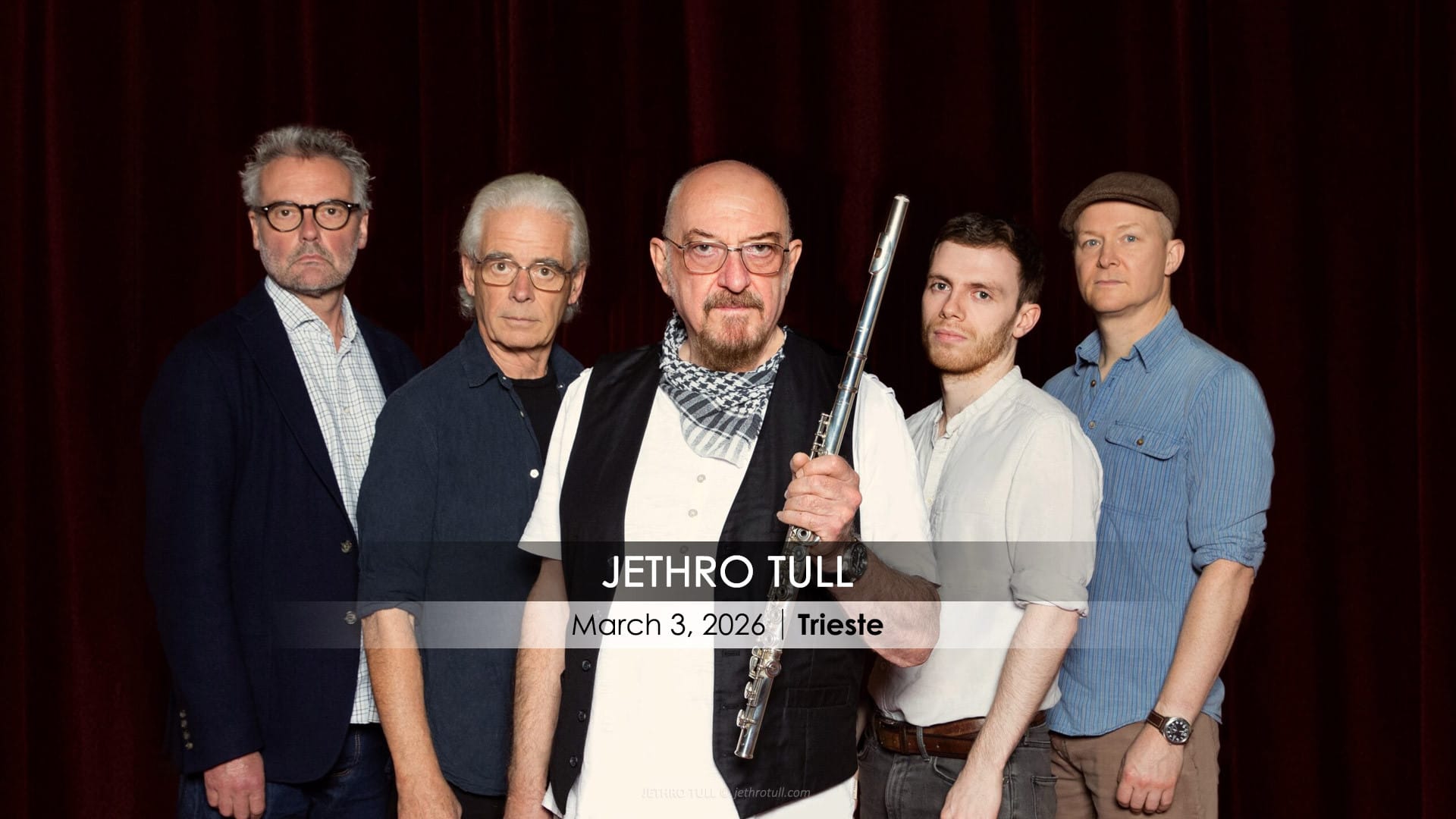
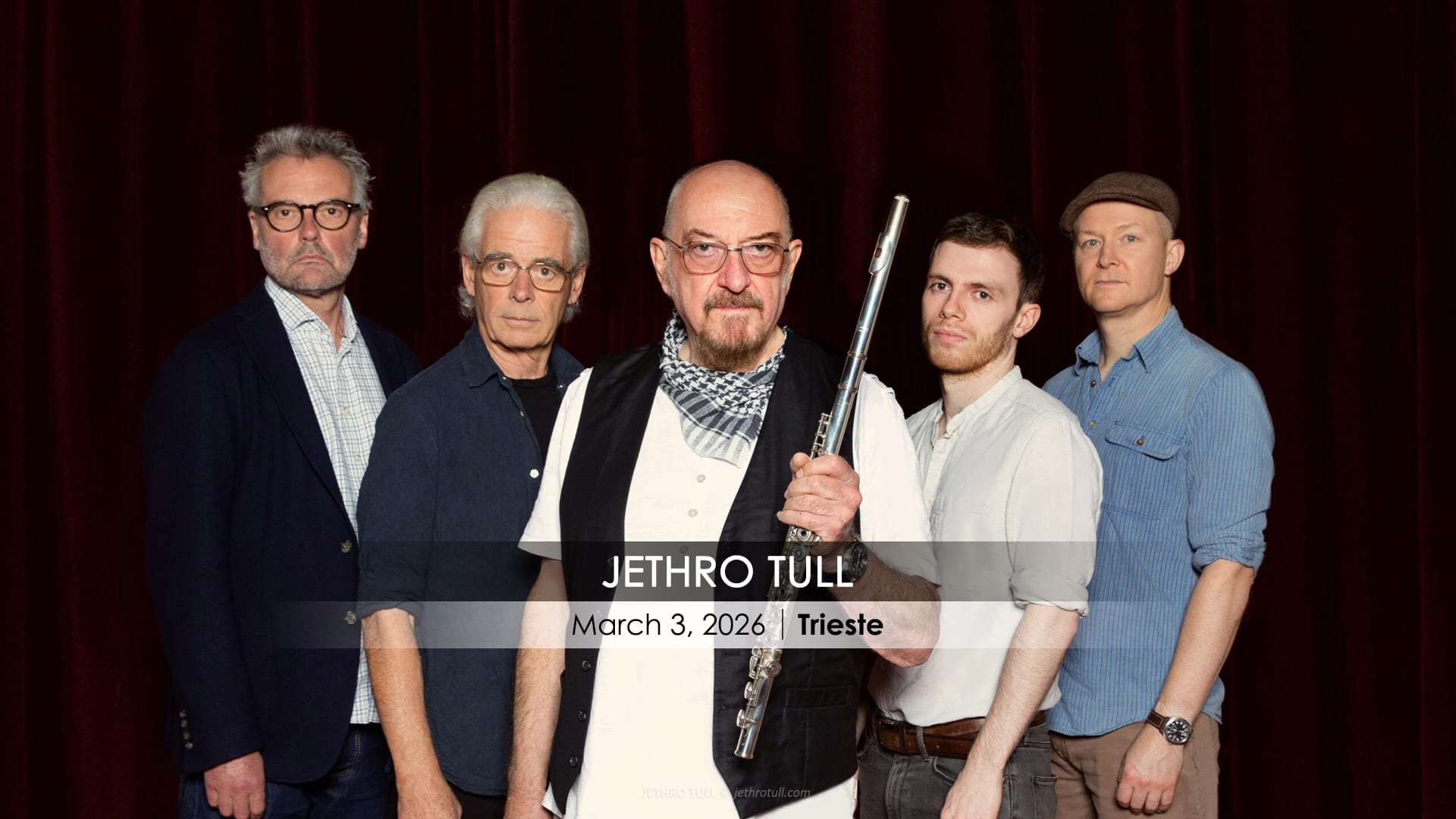
On March 3, 2026, at 9:00 PM, the legendary British band Jethro Tull will perform at the Politeama Rossetti in Trieste, bringing their unmistakable blend of progressive rock, folk influences, and theatrical musicianship to one of the country’s most prestigious stages.Set in a city historically positioned at the crossroads of cultures and artistic movements, this concert promises to be a refined and immersive live experience, perfectly suited to the intellectual depth and musical complexity that have defined Jethro Tull’s long career.
The Trieste date represents an important stop on the band’s 2026 European tour, offering fans the chance to hear timeless compositions performed in a venue renowned for its elegance, acoustics, and cultural significance.
Jethro Tull
Jethro Tull were formed in 1967 in England and rapidly distinguished themselves within the crowded late-1960s rock scene.
Guided by the creative vision of Ian Anderson, the band developed a sound that resisted easy classification, merging progressive rock, blues, British folk, and hard rock, while also incorporating elements of jazz and classical music.
Anderson’s decision to make the flute a central lead instrument in a rock context became one of the band’s most defining characteristics, setting them apart from nearly every contemporary act.
The group’s debut album, This Was (1968), revealed strong blues roots, but it was their second release, Stand Up (1969), that signaled a decisive artistic shift.
Topping the UK Albums Chart, the album demonstrated a growing confidence in experimentation and arrangement, with tracks like Bourée showcasing the band’s ability to reinterpret classical material through a modern rock lens.
The early 1970s marked Jethro Tull’s ascent to international prominence. Aqualung (1971) stands as their most iconic album, both commercially and artistically.
Its exploration of themes such as organized religion, marginalization, and personal morality resonated deeply with audiences, while songs like Aqualung, Locomotive Breath, and My God became enduring highlights of the rock canon.
The album has sold over seven million copies worldwide, cementing the band’s status as major figures in progressive rock.
Rather than repeating the formula, Jethro Tull pursued increasingly ambitious projects.
Thick as a Brick (1972) presented a single, extended composition spanning the entire album, wrapped in a satirical concept that poked fun at the excesses of progressive rock while simultaneously embracing them.
It reached number one on the US Billboard 200, proving that complex, long-form music could still achieve mainstream appeal.
This experimental spirit continued with A Passion Play (1973), a darker and more abstract concept album that divided critics but reinforced the band’s commitment to artistic risk.
In the latter half of the decade, Jethro Tull shifted toward a sound more deeply rooted in British folk traditions, particularly with albums like Songs from the Wood (1977).
This period emphasized pastoral imagery, acoustic textures, and traditional melodic structures, producing beloved tracks such as The Whistler and Ring Out, Solstice Bells.
Over the course of their career, Jethro Tull have released more than 30 studio albums and sold in excess of 60 million records worldwide.
In 1989, the band received a Grammy Award for Best Hard Rock/Metal Performance for Crest of a Knave, a win that famously defied genre expectations and underscored their enduring relevance.
Live performance has always been central to Jethro Tull’s identity. Their concerts are characterized by meticulous musicianship, dynamic reinterpretations of studio recordings, and a distinctive theatrical flair.
Ian Anderson’s expressive stage presence and iconic flute performances remain a focal point, while the band’s ability to balance technical precision with emotional storytelling continues to captivate audiences.
The March 3, 2026 concert in Trieste is expected to draw from multiple eras of the band’s catalog, offering a rich overview of a career defined by constant evolution.
The Venue – Politeama Rossetti
The Politeama Rossetti, officially known as the Teatro Stabile del Friuli Venezia Giulia, is the most important theatrical institution in Trieste and one of the most prestigious theaters in Italy, both artistically and economically.
Located in the Barriera Nuova district, the theater occupies a central position in the cultural life of the city and has long served as a reference point for high-quality stage productions.
As its name suggests, the Politeama Rossetti was conceived as a multi-purpose performance space, designed to host a wide variety of spectacles.
While it is traditionally regarded as a theater of prose, dedicated primarily to dramatic productions, its programming has expanded significantly over the years.
In recent decades, the venue has gained particular acclaim for its staging of operettas, musicals, dance performances, and large-scale theatrical events, while the operatic repertoire has remained the domain of Trieste’s Teatro Verdi.
The theater is dedicated to the memory of Domenico Rossetti De Scander (1774-1842), a prominent intellectual figure in Trieste’s history.
Reaching the Politeama Rossetti is easy thanks to its location within the urban fabric of Trieste.
The Barriera Nuova area is well connected by public transport, with several bus lines stopping nearby and providing direct links to the main railway station and other central neighborhoods.
The nearest bus stop is located at Via della Ginnastica 47, approximately 170 meters from the venue, and is served by bus lines 25, 26, and 26/.
Hosting Jethro Tull at the Politeama Rossetti on March 3, 2026, brings together a band renowned for artistic ambition and a venue celebrated for cultural prestige.
Buy tickets
-
Photos
-
Video
Table of Contents
-
Map
-
Reviews
3 March 2026 9:00 pm
3 March 2026 12:00 am