-
About
Table of Contents
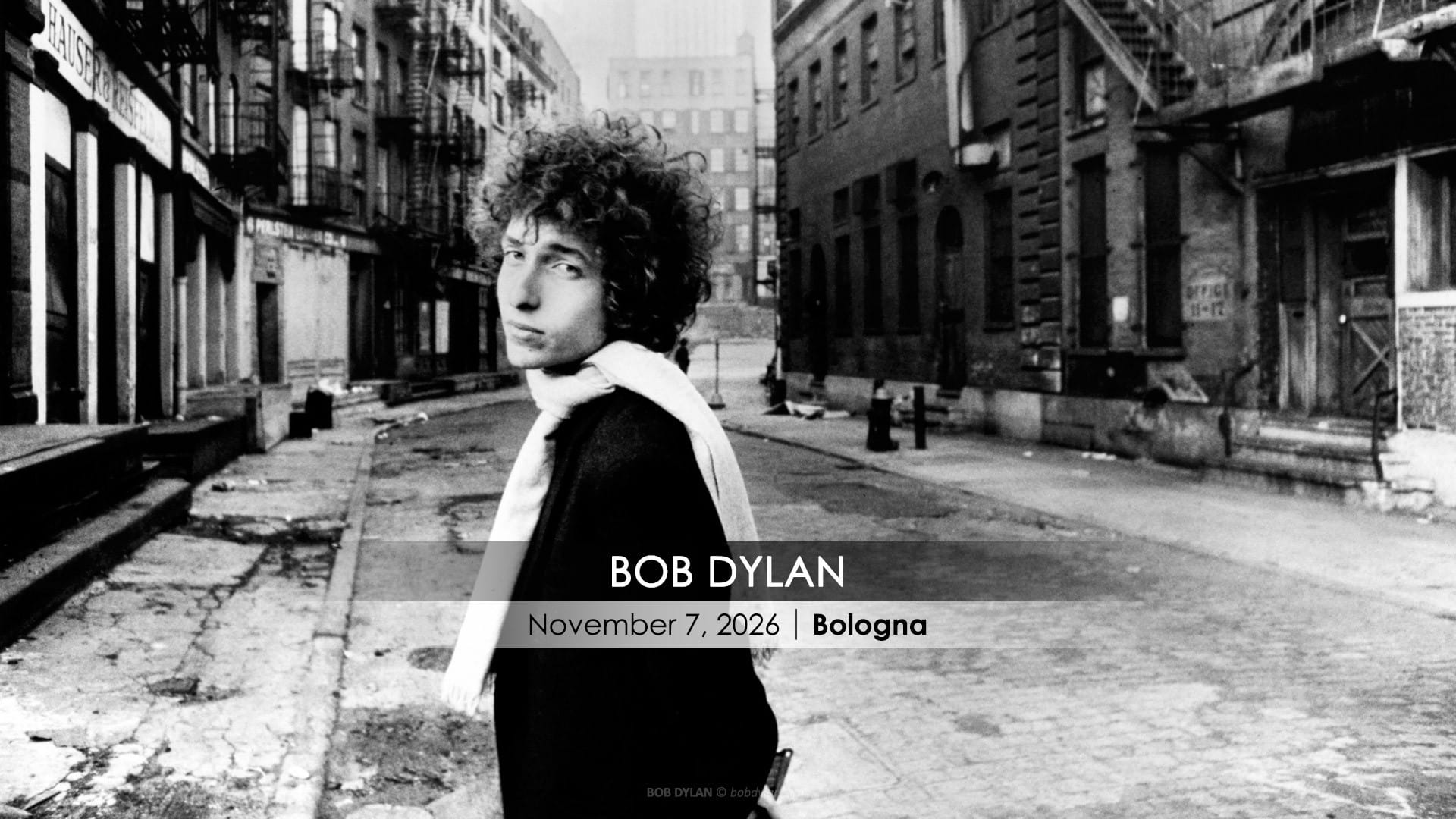
Buy tickets:TicketOneBob Dylan will perform in Bologna on Saturday, November 7, 2026, at Unipol Arena in Casalecchio di Reno. The concert is scheduled to start at 9:00 pm and completes his three-date Italian programme after the performances in Milan on November 2 and Rome on November 5.
The Bologna concert belongs to Bob Dylan’s autumn 2026 European schedule, which continues through several major indoor arenas across the continent.
The event will take place in collaboration with Yondr, creating a phone-free environment throughout the performance. Mobile devices must be secured inside special pouches at the entrance. Photography and audio or video recording are prohibited, allowing the music to remain the principal focus inside the arena.
About Bob Dylan
Bob Dylan was born Robert Allen Zimmerman on May 24, 1941, in Duluth, Minnesota. He grew up in Hibbing, where radio introduced him to country music, blues, rhythm and blues, and early rock and roll. These different traditions later became fundamental elements of his writing and musical vocabulary.
During his teenage years, Dylan performed with several local groups before enrolling at the University of Minnesota in Minneapolis. He became involved in the Dinkytown folk scene, began performing solo in cafés, and adopted the stage name Bob Dylan while studying traditional American songs and the repertoire of Woody Guthrie.
In January 1961, he travelled to New York City, where he visited the hospitalized Guthrie and performed in clubs around Greenwich Village. His growing reputation attracted producer John Hammond, who signed him to Columbia Records and supervised the recording of his first studio album.
Bob Dylan’s early original songs addressed war, racial injustice, poverty, and political responsibility through language influenced by folk ballads, biblical imagery, poetry, and contemporary events. Blowin’ in the Wind and The Times They Are a-Changin’ became closely associated with the American civil rights movement and social activism.
He soon moved beyond the expectations attached to protest music. His lyrics became increasingly personal, abstract, and surreal, while his arrangements incorporated electric guitars, organ, and rock rhythm sections. This transformation reached a decisive point with Like a Rolling Stone and the electric performances of 1965.
The albums recorded between 1965 and 1966 changed the relationship between rock music and literary songwriting. Dylan used extended verses, fragmented narratives, unusual characters, and ambiguous imagery, demonstrating that commercially released songs could sustain complex language and unconventional structures without abandoning the energy of popular music.
Following a motorcycle accident in 1966, Dylan reduced his public activity and temporarily withdrew from regular touring. His later work explored country, gospel, blues, traditional folk, rock, and pre-rock American popular standards, ensuring that no single sound permanently defined his constantly changing artistic identity.
Since beginning the concert sequence widely known as the Never Ending Tour in 1988, Dylan has maintained an intensive performance schedule. His band regularly transforms melodies, tempos, harmonies, and vocal phrasing, meaning that well-known compositions can sound markedly different from their original studio versions.
Bob Dylan Discography
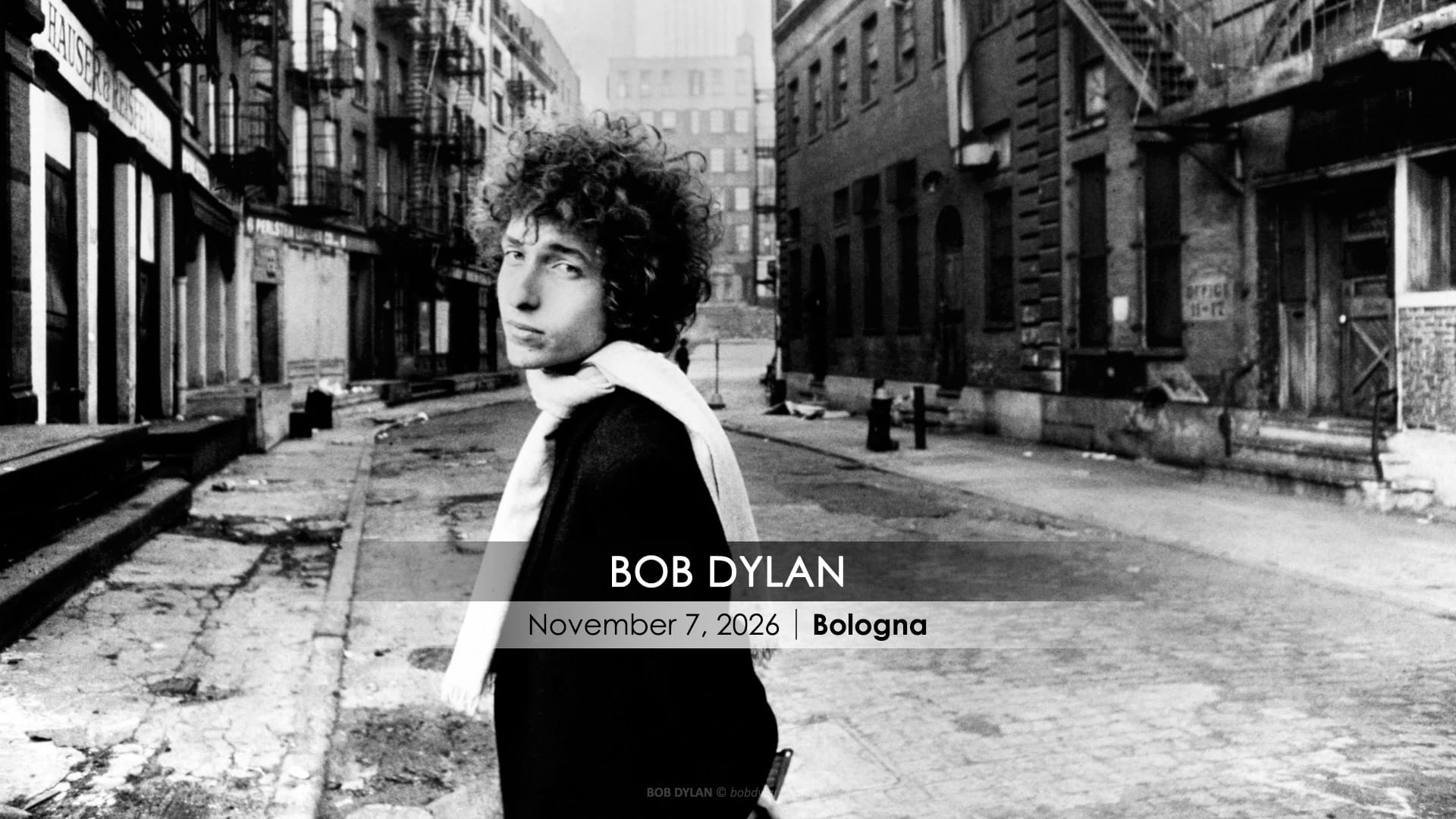
The Bob Dylan discography includes 40 studio albums, alongside live recordings, soundtracks, compilations, singles, and archival collections. Most of this catalogue was released through Columbia Records, creating a documented recording history extending from the early 1960s to the third decade of the 21st century.
His first album, Bob Dylan, appeared in 1962 and consisted mainly of traditional folk and blues songs. The substantially original The Freewheelin’ Bob Dylan followed in 1963, introducing compositions such as Don’t Think Twice, It’s All Right, Masters of War, and A Hard Rain’s a-Gonna Fall.
The Times They Are a-Changin’ concentrated on social and political subjects, while Another Side of Bob Dylan introduced more personal and poetic writing. Together, these records document his rapid transition from traditional folk interpreter to independent songwriter, capable of adapting established forms to contemporary experiences and language.
A further transformation occurred through Bringing It All Back Home, Highway 61 Revisited, and Blonde on Blonde. Released between 1965 and 1966, the albums combined electric rock instrumentation with blues, folk, and symbolic writing. Songs from this period include Subterranean Homesick Blues, Desolation Row, and Visions of Johanna.
After the intensity of the electric trilogy, Bob Dylan adopted a more restrained sound on John Wesley Harding. He then recorded the country-oriented Nashville Skyline, followed by Self Portrait and New Morning. These albums demonstrated his refusal to maintain the same musical direction simply because it had previously received critical or commercial approval.
His major 1970s releases included Planet Waves, Blood on the Tracks, and Desire. Blood on the Tracks featured interconnected songs about memory, separation, and emotional uncertainty, while Desire used narrative compositions and Scarlet Rivera’s violin to create a markedly different instrumental character.
Between 1979 and 1981, Bob Dylan released the Christian-themed albums Slow Train Coming, Saved, and Shot of Love. Later records such as Infidels, Empire Burlesque, and Oh Mercy reflected changing production methods, while his work with the Traveling Wilburys placed him within a major collaborative supergroup.
The release of Time Out of Mind in 1997 began a sustained period of critical renewal. It was followed by Love and Theft, Modern Times, Together Through Life, and Tempest, albums drawing on blues, swing, country, folk, and older American musical traditions while presenting newly written material.
Dylan later recorded Shadows in the Night, Fallen Angels, and Triplicate, interpreting songs associated with the American standard repertoire. His most recent album of original compositions, Rough and Rowdy Ways, appeared in 2020 and included I Contain Multitudes, Key West (Philosopher Pirate), and Murder Most Foul.
The continuing Bootleg Series provides another essential part of his discography. Its volumes contain demos, alternate takes, unreleased sessions, concert recordings, and complete creative periods, offering detailed evidence of the decisions behind finished albums and the many recordings that remained outside their original track lists.
Bob Dylan Awards and Sales
Bob Dylan has sold an estimated 125 million records worldwide. His commercial reach extends beyond recordings issued under his own name because thousands of artists have interpreted his compositions, introducing songs from his catalogue to audiences across folk, rock, country, blues, soul, pop, and other musical traditions.
He has received ten competitive Grammy Awards, together with the Grammy Lifetime Achievement Award. Time Out of Mind won Album of the Year, while recordings from several different decades have earned recognition in rock, folk, traditional folk, solo vocal, and contemporary folk categories.
His song Things Have Changed, written for the film Wonder Boys, received both the Academy Award and Golden Globe Award for Best Original Song. Dylan was also inducted into the Rock and Roll Hall of Fame, the Songwriters Hall of Fame, and the Nashville Songwriters Hall of Fame.
Dylan’s other distinctions include Kennedy Center Honors, the Presidential Medal of Freedom, and a special Pulitzer Prize citation. In 2016, he received the Nobel Prize in Literature for creating new poetic expressions within the American song tradition, becoming the first songwriter awarded the international literature prize.
Venue – Unipol Arena
Unipol Arena is a major indoor sports and entertainment venue situated in Casalecchio di Reno, approximately six kilometers southwest of central Bologna. Its position within the Bologna metropolitan area provides the space, transport infrastructure, technical facilities, and parking capacity required for concerts attracting audiences from across northern and central Italy.
The arena opened in 1993 as Palasport Casalecchio and was subsequently known as PalaMalaguti and Futurshow Station before adopting its current name. Since opening, it has hosted international musicians, Italian artists, basketball competitions, volleyball events, theatrical productions, conventions, exhibitions, and televised entertainment programmes.
For concerts, Unipol Arena can accommodate approximately 18,000 spectators, depending on the placement of the stage, production equipment, seating, and standing areas. The venue’s modular spaces can support configurations reaching 20,000 people, although the usable capacity is determined separately for each event.
The interior can be reorganized to meet the requirements of different productions. Flexible staging, substantial technical loading capacity, large suspended structures, video screens, lighting installations, and backstage facilities allow the arena to receive high-production international tours using complex sound, projection, rigging, and stage systems.
Public facilities include multiple entrances, nine bars, hospitality areas, dressing rooms, a press room, and dedicated routes connecting artists’ areas with the performance space. The arena also offers a VIP lounge and infrastructure designed to manage large audience flows before, during, and immediately after major events.
The complex provides more than 3,000 parking spaces, together with areas suitable for buses, production trucks, and touring vehicles. Its location near important motorway connections and a dedicated railway stop makes Unipol Arena particularly practical for events attended by visitors arriving from outside Bologna.
How to Get to Unipol Arena
The most efficient public-transport option from central Bologna is usually the regional railway service to Casalecchio Palasport. The station is located approximately 100 meters from the arena, allowing passengers to reach the entrances within a few minutes after leaving the train.
Services on the Bologna-Vignola corridor connect Bologna Centrale with Casalecchio Palasport. The journey normally takes approximately 19 minutes, although concert visitors should check the event-day timetable because frequency, stopping patterns, engineering works, and additional late-night services can alter the available connections.
For selected large events, organizers and transport providers may arrange special return trains or direct shuttles between Unipol Arena and central Bologna. These services are not automatically provided for every concert, so visitors should verify the official transport notice published specifically for the Bob Dylan performance.
Extraurban bus routes 83, 94, 671, and 686 serve Casalecchio di Reno and nearby areas. Suitable stops include those around Palasport and Futurshow Station, although the precise route, direction, and final evening departure should be confirmed through the current TPER timetable before travelling.
Visitors arriving by car can reach the arena through the A1, A13, and A14 motorway network. Drivers should use the Casalecchio di Reno exit, continue toward Exit 1 Bis, and follow temporary signs directing concert traffic toward the designated parking and entrance areas.
Although extensive parking is available around the complex, traffic can become congested before and after sold-out events. Drivers should arrive early, follow staff instructions, and check whether advance parking reservations or temporary road restrictions apply to the concert on November 7.
Frequently Asked Questions about the Bob Dylan Concert in Bologna
When is the Bob Dylan concert in Bologna?
The concert takes place on Saturday, November 7, 2026, completing the three Italian performances scheduled after the Milan and Rome dates earlier that week.
Where will Bob Dylan perform in Bologna?
The concert will be held at Unipol Arena in Casalecchio di Reno, approximately six kilometers southwest of Bologna’s central districts.
Is the Bologna concert phone-free?
Yes. Mobile phones must be placed inside sealed Yondr pouches before entering the performance area. Photography and audio or video recording are prohibited.
Which railway station is closest to Unipol Arena?
The closest stop is Casalecchio Palasport, located approximately 100 meters from the venue and served by regional trains on the Bologna-Vignola corridor.
Is parking available at Unipol Arena?
Yes. The complex provides more than 3,000 parking spaces, although heavy traffic and high demand are possible. Visitors should check event-specific parking instructions before departure.
Buy tickets:TicketOne -
Photos
-
Video
Table of Contents
-
Map
-
Reviews
7 November 2026 9:00 pm
7 November 2026 11:45 pm