-
About
Table of Contents
The Church of Piedigrotta is one of the most unusual religious sites in Pizzo. The church is carved directly into a coastal tuff rock cave near the Tyrrhenian Sea. It combines religious devotion, local legends, marine history, and sculptural art in a single monument.
Located close to the beach below the town of Pizzo, the church is famous for its rock-carved statues, underground chambers, and dramatic seaside setting. The site is officially known as Chiesetta di Piedigrotta and attracts visitors from all over Italy.
The Church of Piedigrotta is not a traditional church built with masonry and external facades. Instead, most spaces were excavated directly into sandstone rock formations over many decades.
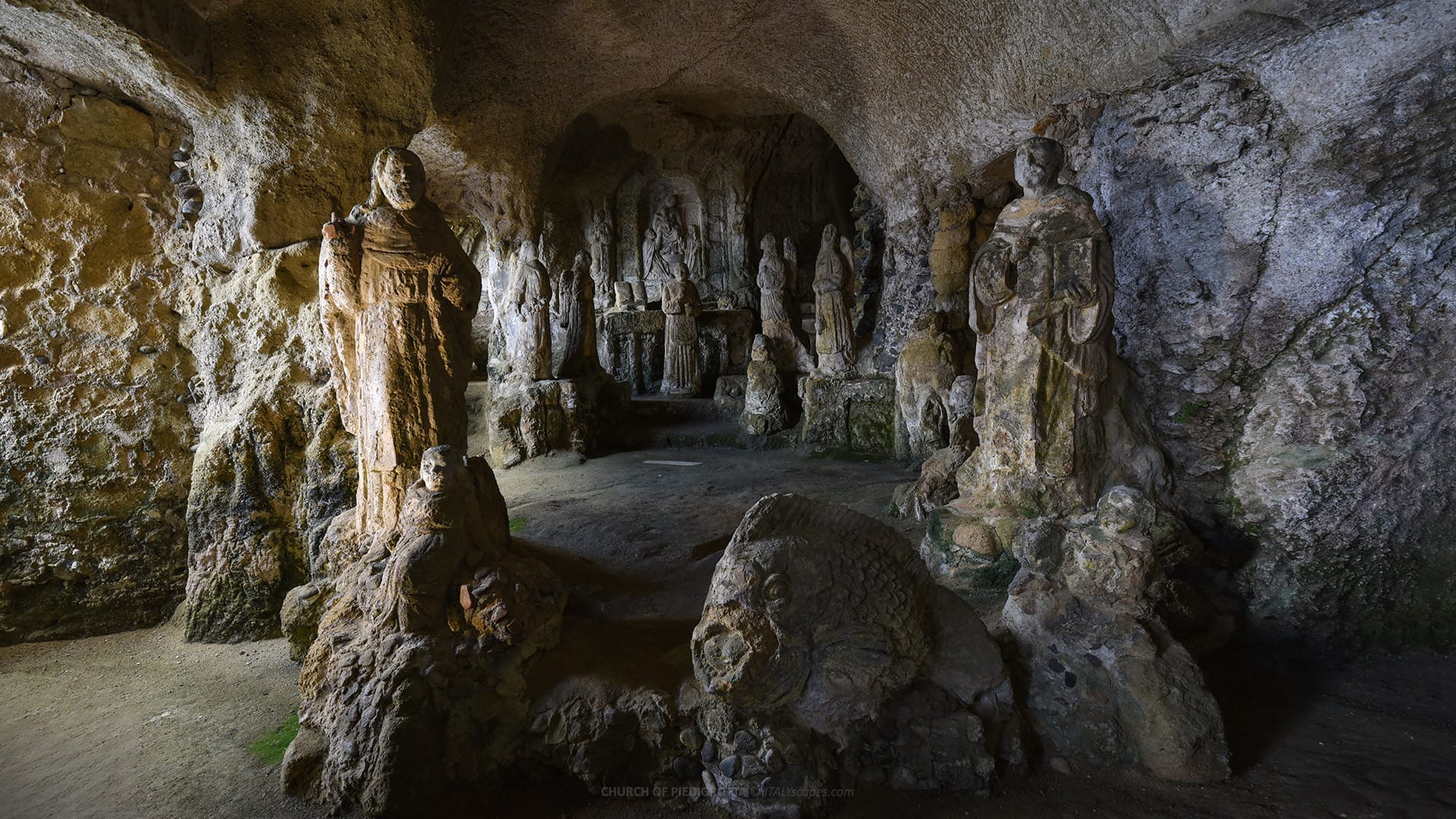
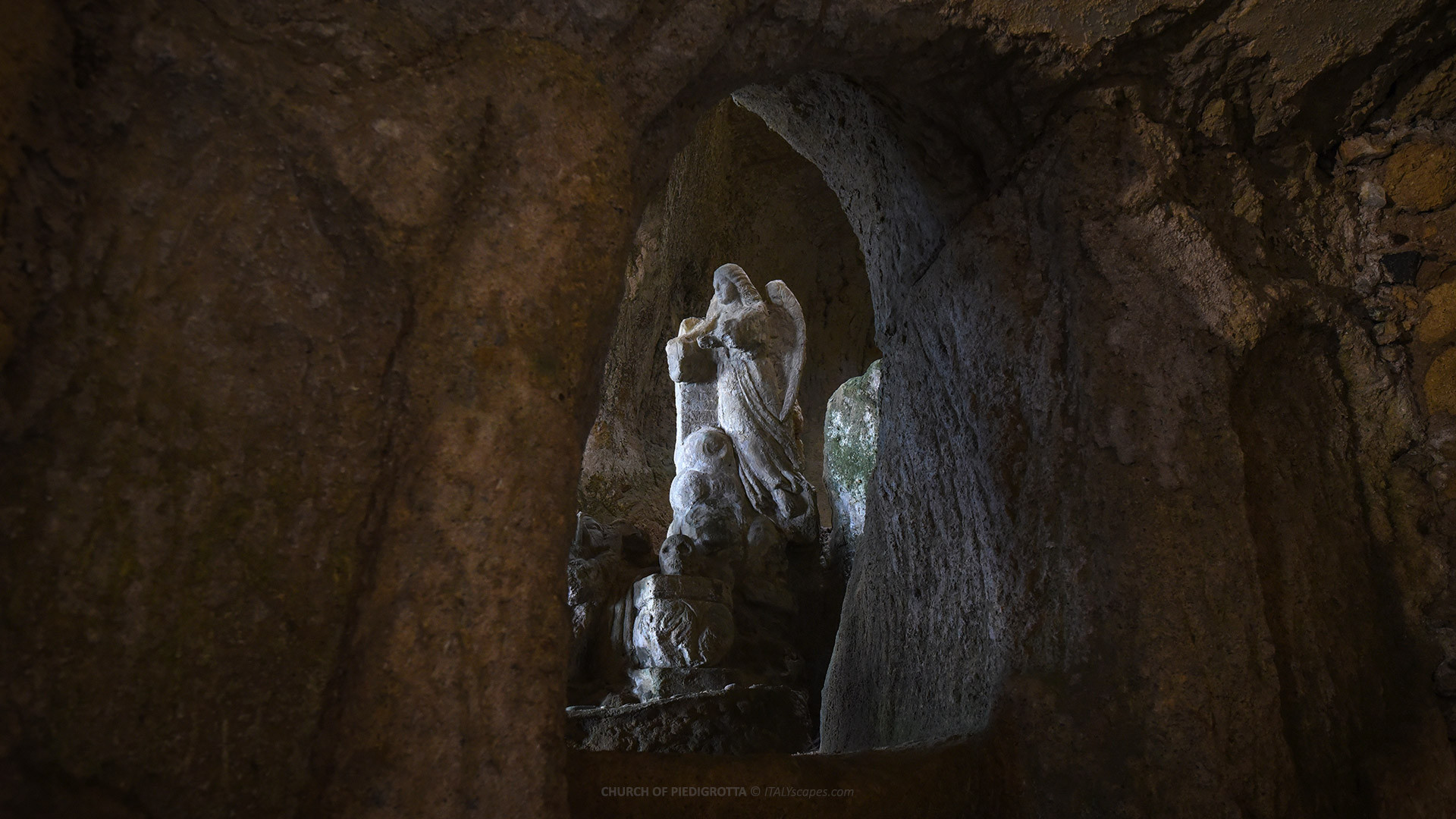
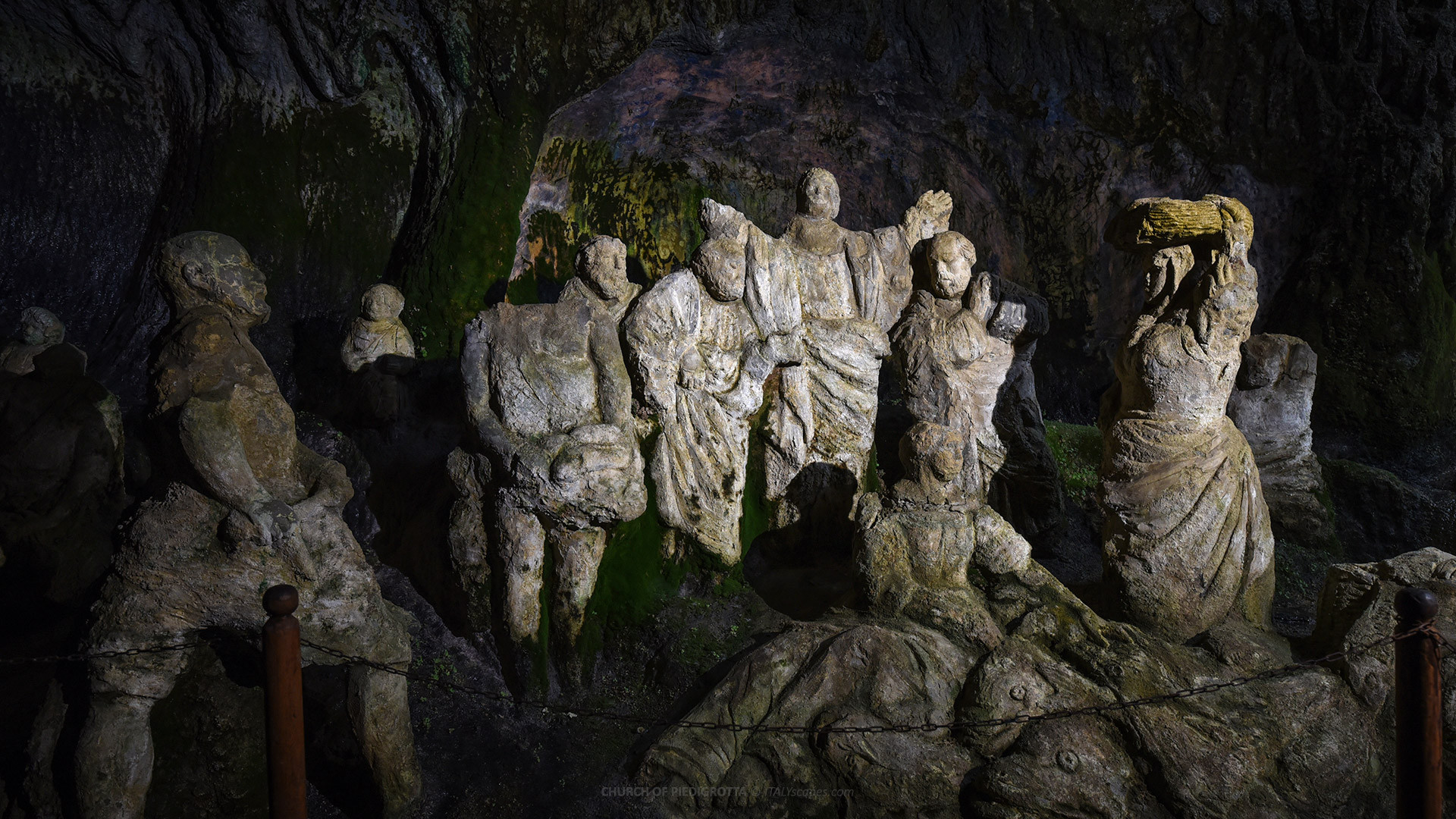
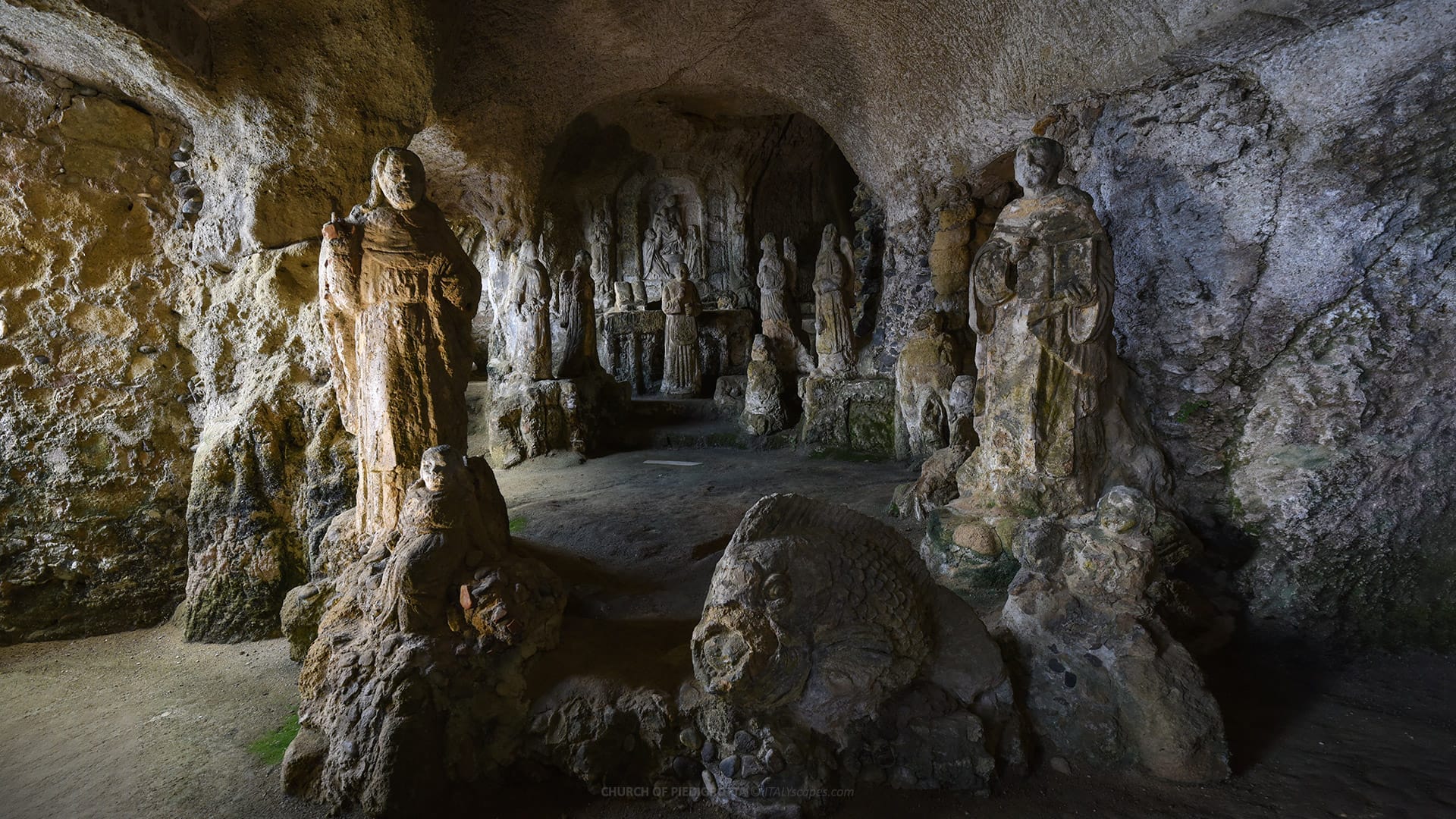
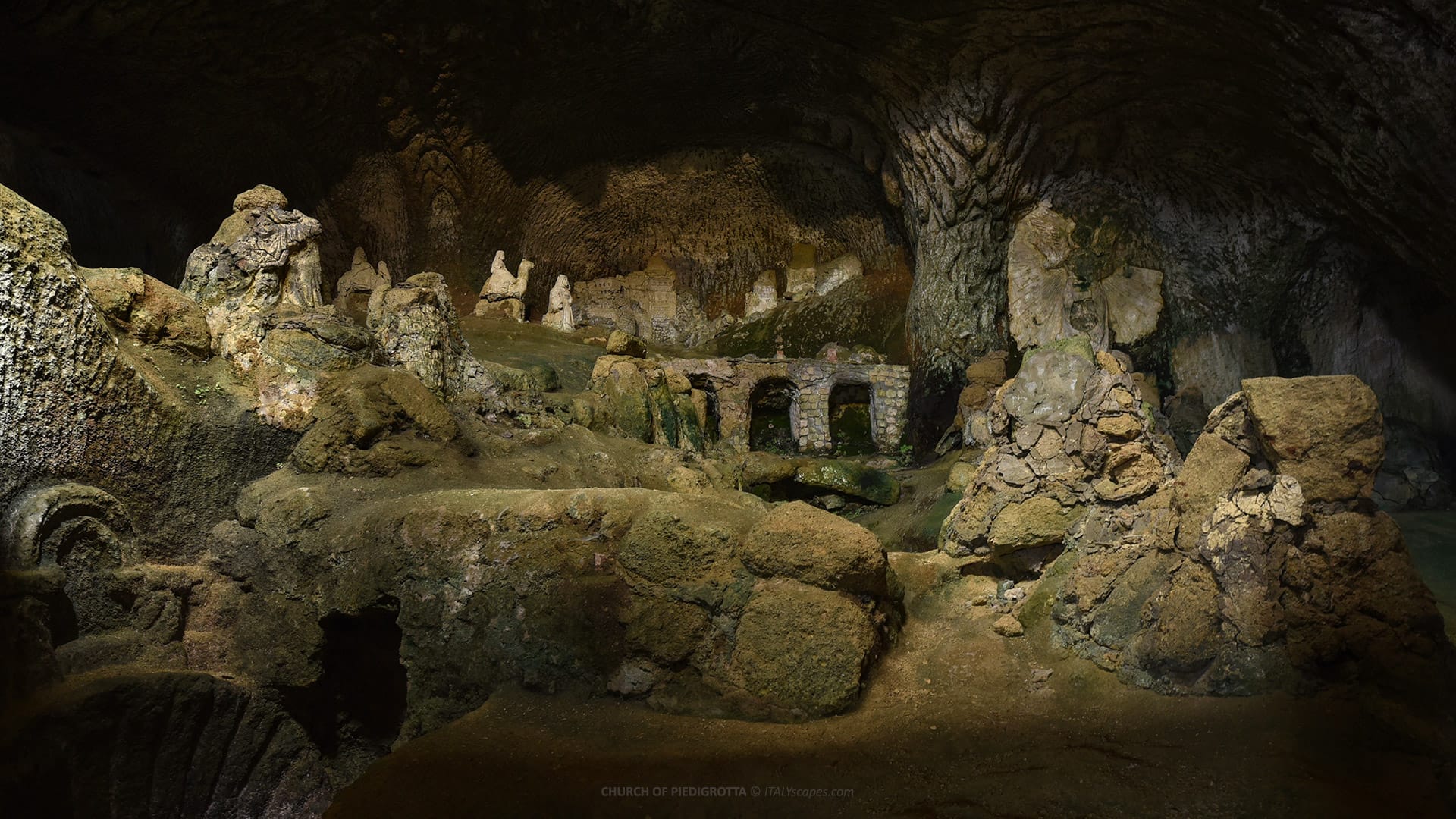
The interior contains numerous statues representing biblical figures, saints, angels, and scenes from Christian tradition. Many sculptures appear to emerge naturally from the cave walls.
The monument became widely known during the 20th century thanks to photographs and travel publications dedicated to Calabria. Its unusual appearance made it one of the symbolic landmarks of the Tyrrhenian coast.
Today, the Church of Piedigrotta represents one of the most important cultural attractions in the province of Vibo Valentia. It is also considered one of the most distinctive cave churches in southern Italy.
The site is protected as an important historical and artistic monument. It remains one of the most visited places in Pizzo and an important stop for travelers exploring the Calabrian coastline.
Short History of the Church of Piedigrotta
Origins of the Sanctuary
The origins of the Church of Piedigrotta are connected to a maritime legend dated to the 1600s. According to tradition, a sailing vessel encountered a violent storm near the coast of Pizzo.
The crew prayed to the Virgin Mary for protection during the storm. The sailors promised to build a chapel if they survived and reached land safely.
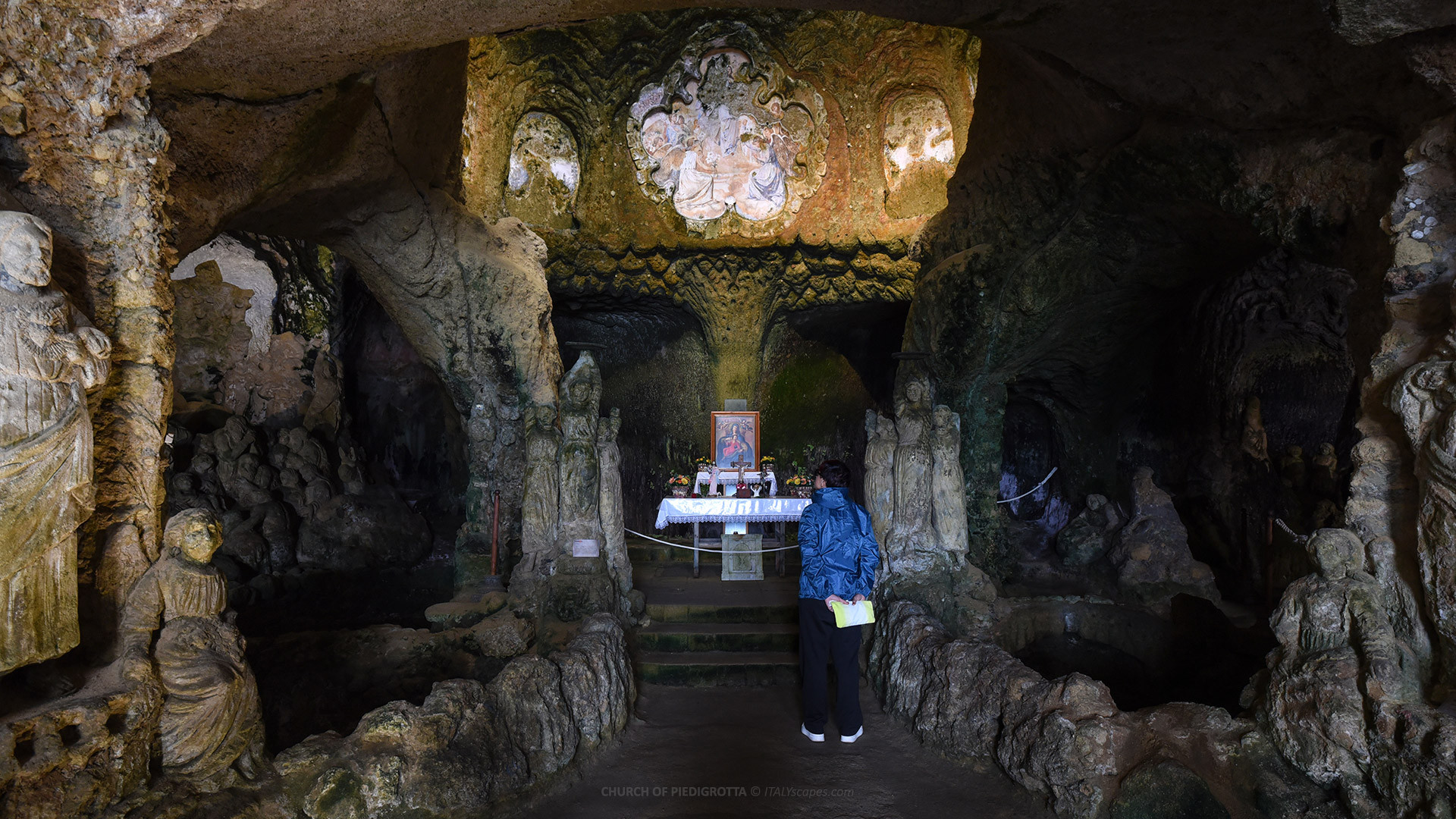
The ship eventually crashed near the coast below Pizzo. The sailors survived and recovered a painting of the Madonna from the wreckage. The image later became the spiritual center of the cave sanctuary.
The survivors discovered a natural cave near the beach. They transformed the cavity into a small place of worship dedicated to the Virgin Mary of Piedigrotta.
The name Piedigrotta refers to the position of the sanctuary beneath the rocky hillside. The church literally developed “at the foot of the grotto”.
Development During the 18th and 19th Centuries
During the following centuries, local inhabitants continued expanding the sanctuary. Additional chambers were excavated into the rock, increasing the size of the church complex.
The church gradually became an important devotional site for fishermen and sailors from Pizzo. The sea remained closely connected to the identity of the sanctuary.
Religious celebrations dedicated to the Madonna of Piedigrotta attracted local communities from surrounding coastal villages. The cave church became part of regional spiritual traditions.
The interior decoration evolved slowly. Sculptures, niches, and altars were added over time, transforming the original cave into a more elaborate religious environment.
Powered by GetYourGuideThe Work of Angelo Barone
A decisive phase in the church’s history began during the late 19th century with the sculptor Angelo Barone. He dedicated many years to carving statues directly into the tuff walls.
Barone was originally a local stonemason from Pizzo. Without formal academic training, he created a remarkable series of religious sculptures inside the cave church.
His work included figures of saints, angels, biblical characters, and scenes from Christian tradition. Many statues were carved directly from existing rock surfaces.
After Angelo Barone’s death, the artistic work continued thanks to Alfonso Barone, his son. He added further sculptures and contributed to preserving the sanctuary’s artistic identity.
Recognition in Modern Times
During the 20th century, the Church of Piedigrotta became increasingly famous throughout Italy. Travel guides and newspapers described it as one of Calabria’s most unusual monuments.
The church gained attention because of its unique combination of natural cave formations and hand-carved sculpture. Few religious sites in Italy present a similar structure.
In recent decades, local institutions invested in protecting and promoting the sanctuary. Conservation work became necessary because of humidity, sea exposure, and natural erosion.
Today, the Church of Piedigrotta represents one of the most recognizable cultural landmarks in Calabria. It remains strongly associated with the identity of Pizzo and the Tyrrhenian coast.
Architecture of the Church of Piedigrotta
The Natural Cave Structure
The architecture of the Church of Piedigrotta differs radically from traditional churches. The sanctuary originated inside a natural cave formed in coastal tuff rock.
Instead of constructing a building above ground, generations of local artisans excavated spaces directly into the cliffside. The cave itself became the architectural framework of the church.
The church is positioned only a short distance from the sea. Waves, humidity, and marine winds have influenced the appearance of the rock surfaces for centuries.
The entrance area opens toward the coastline and beach below Pizzo. The natural setting forms an essential part of the sanctuary’s architectural identity.
Interior Layout
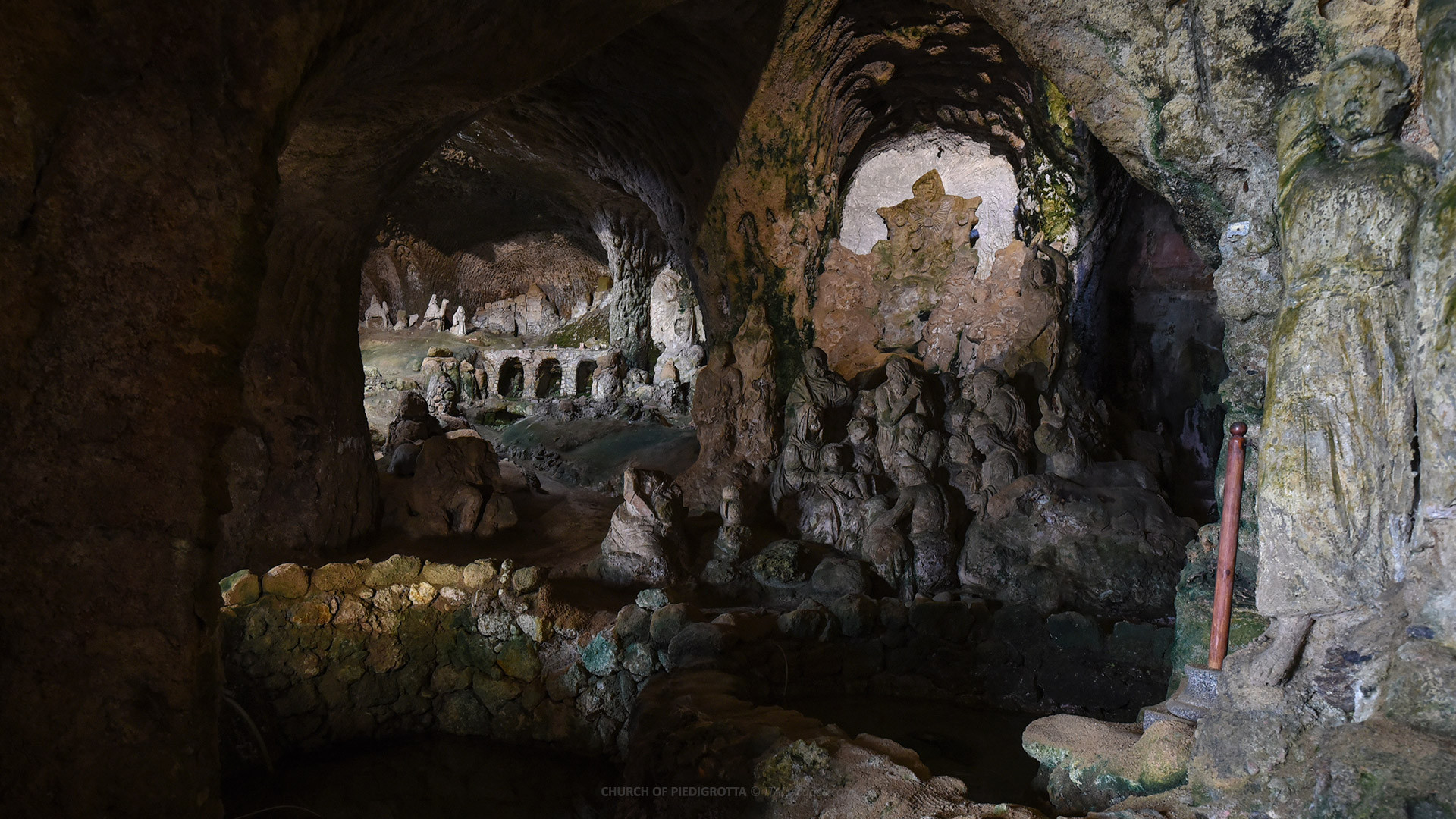
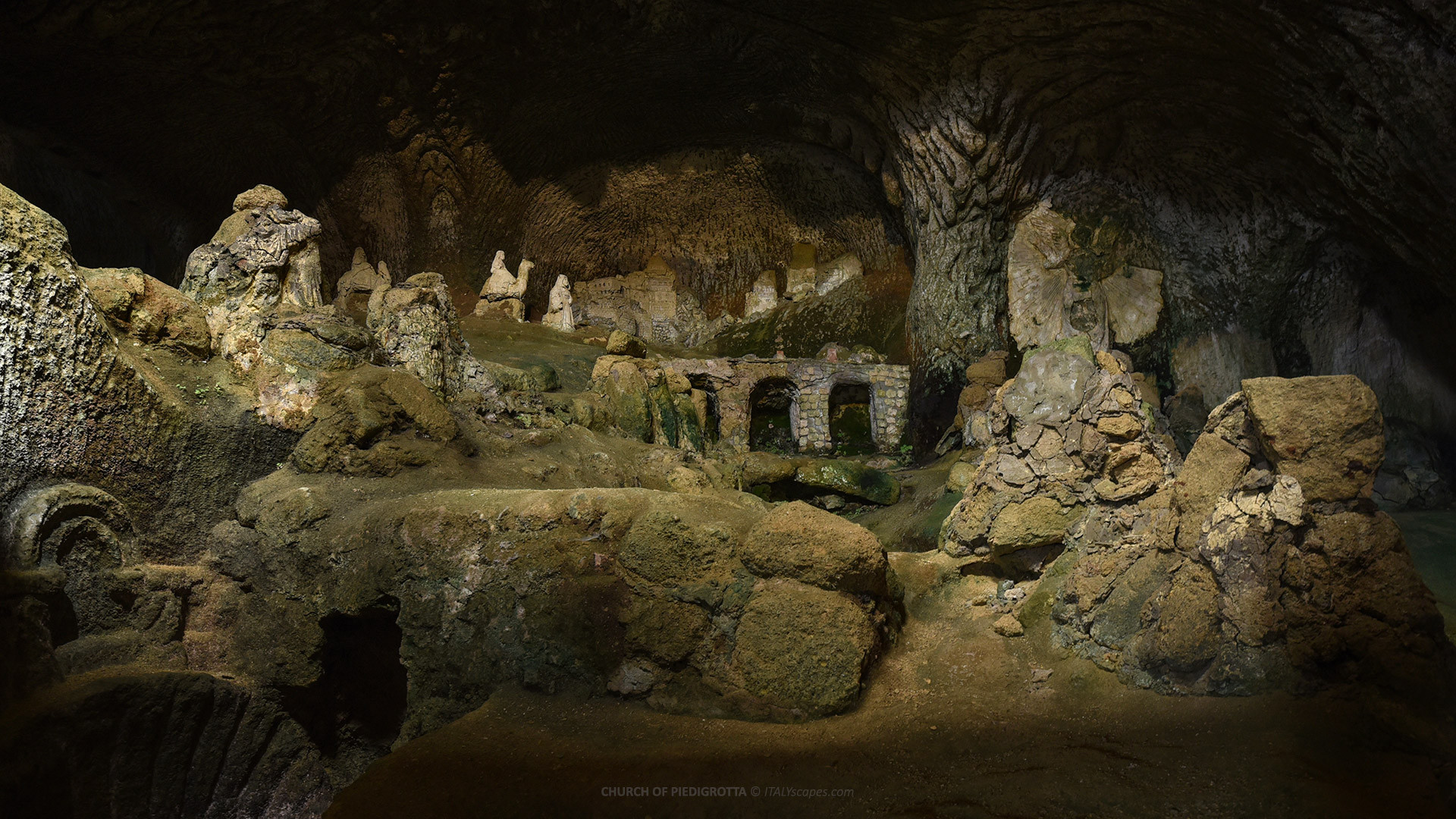
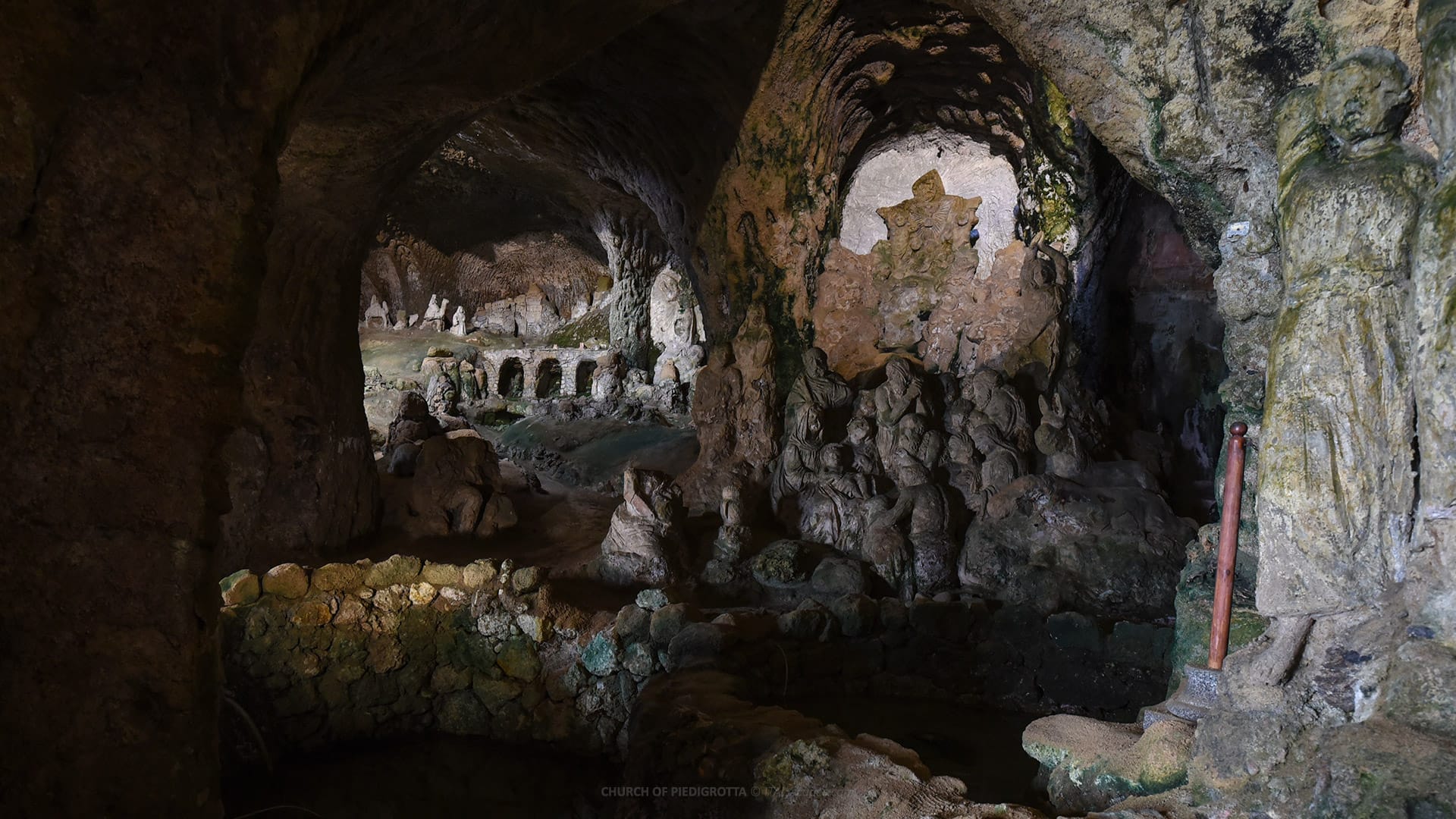
The interior consists of interconnected chambers carved into the rock. The spaces are irregular because they follow the natural formation of the cave.
Unlike classical churches, the sanctuary does not have symmetrical geometry. Passages, niches, and sculptural spaces developed gradually over different historical periods.
The main prayer area contains the principal altar and several religious sculptures. Smaller chambers branch from the central area and contain additional devotional figures.
Natural rock walls remain visible throughout the church. This creates a strong contrast between untouched geological surfaces and sculpted artistic elements.
Excavation Techniques
The cave church was shaped manually over many decades. Local artisans used traditional stone-working tools to excavate chambers and create sculptural decorations.
The tuff rock of the area is relatively soft compared to marble or granite. This allowed sculptors to carve figures directly into the cave walls.
Many statues remain partially connected to the surrounding stone. This technique gives the impression that the sculptures emerge naturally from the rock.
The sanctuary demonstrates a close relationship between architecture and sculpture. Structural spaces and artistic elements were created simultaneously inside the cave.
Art of the Church of Piedigrotta
Religious Sculptures
The Church of Piedigrotta is especially famous for its extensive collection of rock-carved religious sculptures. Most statues were created directly inside the cave.
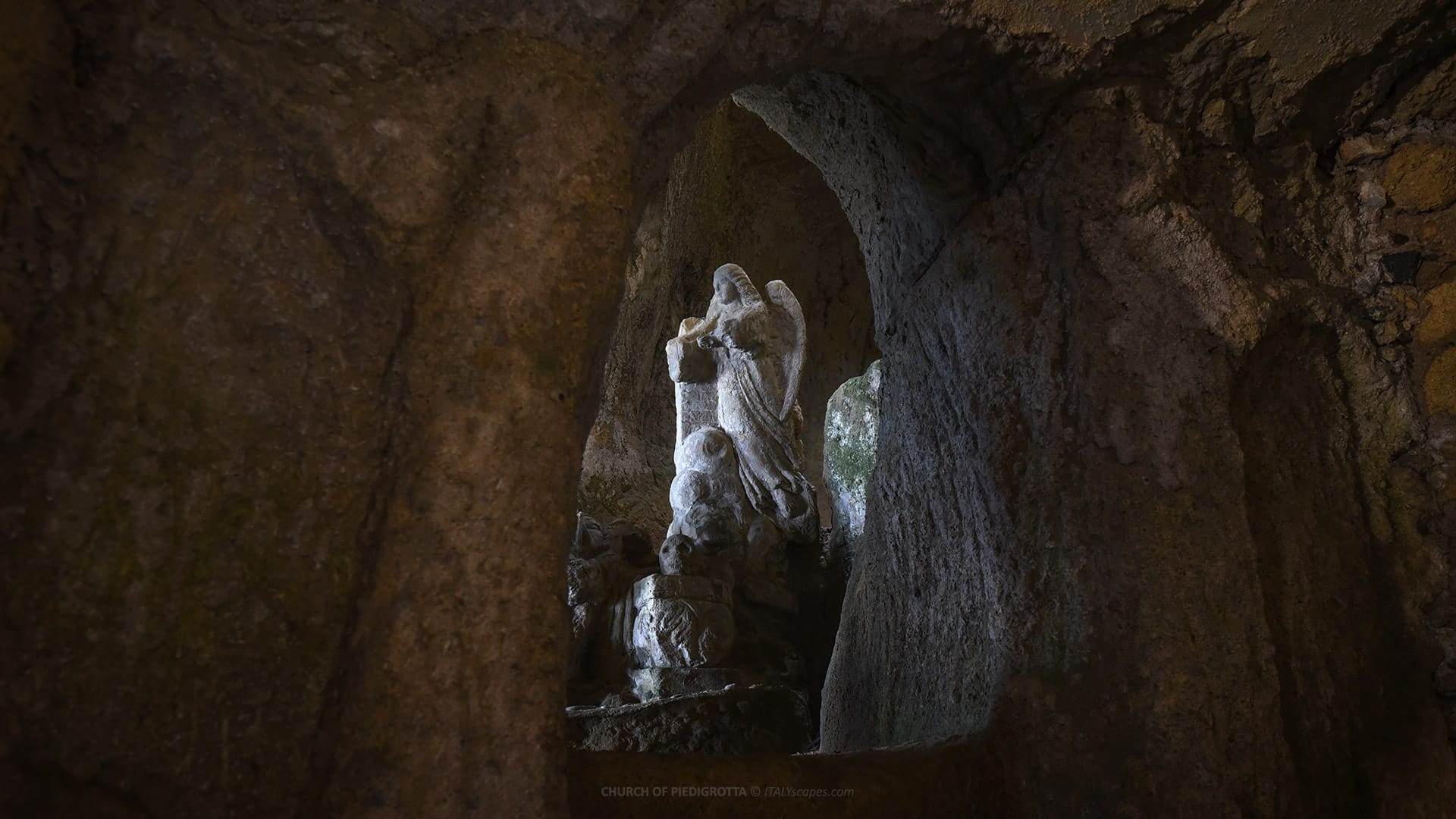
The sculptures depict saints, angels, Madonnas, apostles, and biblical figures. Many works are integrated into the cave walls rather than placed separately.
The artistic program combines devotional themes with local craftsmanship traditions. The sculptures were intended primarily for religious reflection and prayer.
Numerous statues appear in small niches excavated into the rock. Others occupy larger chambers and form more complex religious compositions.
Angelo Barone’s Artistic Contribution
Angelo Barone played a fundamental role in shaping the artistic appearance of the sanctuary. His sculptures transformed the cave into a unique religious environment.
Working during the late 19th century, Barone created many of the church’s most recognizable figures. His works display strong expressive qualities despite limited formal training.
The sculptor used simple tools to shape the tuff stone. His technique emphasized emotional expression rather than academic perfection.
Many visitors consider Angelo Barone’s work the defining artistic feature of the Church of Piedigrotta. His sculptures remain closely associated with the identity of the sanctuary.
Alfonso Barone and Later Additions
After Angelo Barone’s death, Alfonso Barone continued the sculptural tradition inside the church. He preserved and expanded the artistic heritage created by his father.
New statues and decorative elements were added during the 20th century. These additions respected the original cave environment and devotional character of the sanctuary.
The continuity between father and son helped preserve the stylistic unity of the monument. Their combined work defines much of the church’s current appearance.
How to Get to the Church of Piedigrotta
The Church of Piedigrotta is located relatively close to the railway station of Pizzo. The distance between the station and the sanctuary is approximately 3 kilometers.
The route connects the coastal railway area with the beach zone below the town of Pizzo.
Getting to the Church of Piedigrotta on foot
Visitors can walk from Pizzo railway station to the Church of Piedigrotta in roughly 35-45 minutes, depending on pace and weather conditions. The route follows local roads leading toward the coastal area near the church.
Getting to the Church of Piedigrotta by taxi
Visitors arriving at Pizzo railway station can also reach the Church of Piedigrotta by taxi. In front of the station, there are usually small taxis, which can take you to the Church of Piedigrotta in just a few minutes.
Getting to the Church of Piedigrotta by public transport
During the tourist season, local transportation services may also connect parts of Pizzo with the coastal area surrounding the sanctuary.
Frequently Asked Questions about Church of Piedigrotta
Where is the Church of Piedigrotta located?
The Church of Piedigrotta is located in Pizzo, Calabria, about one kilometer north of the historic center, in a dramatic seaside setting.
What is the Italian name of the church?
The Italian name is Chiesetta di Piedigrotta or Chiesa di Piedigrotta, referring to the small cave church carved into the soft coastal rock.
What is the Church of Piedigrotta famous for?
The church is famous for being carved directly into tufa rock and decorated with statues, bas-reliefs, biblical scenes, and folk religious sculptures.
When was the Church of Piedigrotta built?
The original chapel is traditionally connected to the late 17th century, with founders recorded in 1675 and major artistic enlargement beginning around 1880.
Who created the sculptures inside?
Most of the rock-carved sculptures were created by Angelo Barone and his son Alfonso Barone, later restored and partly expanded by Giorgio Barone.
What can you see inside the church?
Inside, visitors can see carved chapels, religious statues, biblical scenes, saints, angels, bas-reliefs, and figures sculpted directly from the surrounding tufa rock.
How much does it cost to visit?
The listed ticket price is €5 for a full ticket, €3.50 for a reduced ticket, and free entrance for children under 6 years old.
Sources:Powered by GetYourGuide -
Photos
-
Map
-
Reviews