-
About
Table of Contents
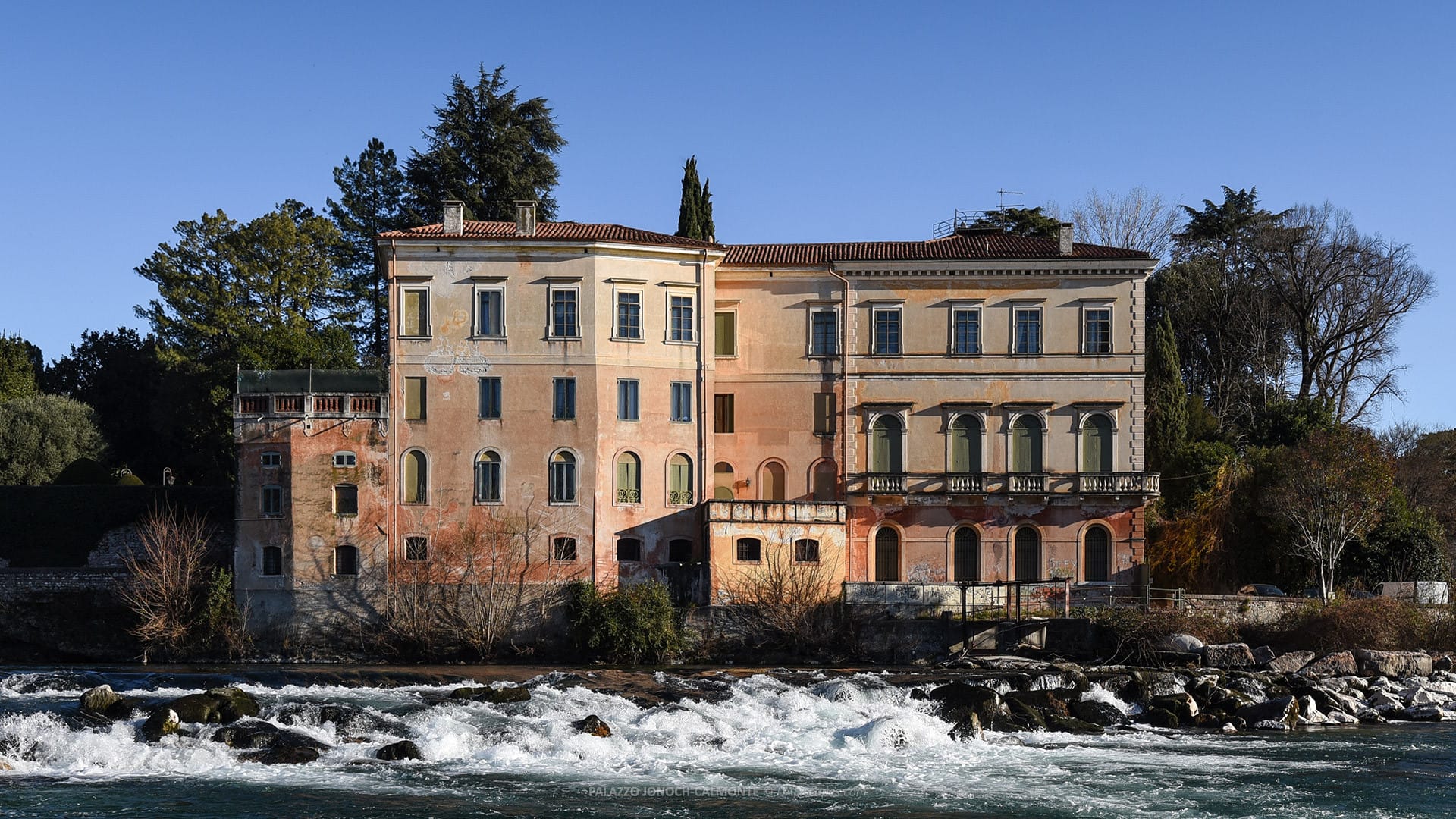
Palazzo Jonoch-Calmonte is one of the lesser-known but historically rich residences in Bassano del Grappa, in the Veneto region of northern Italy.
Overlooking the river Brenta at the end of Via Pusterla, this stately building is closely tied to the rise of a prosperous local bourgeoisie between the late 19th and early 20th centuries.
Today, Palazzo Jonoch-Calmonte is appreciated both for its refined interiors and for the panoramic viewpoint in front of it.
Short History of Palazzo Jonoch-Calmonte
The story of Palazzo Jonoch-Calmonte is rooted in the economic development of Bassano del Grappa in the 19th century, when the city saw the growth of a dynamic entrepreneurial class.
Among these new elites was the Jonoch family, associated with leather tanning (concia delle pelli) and landownership, sectors that played an important role in the local economy.
According to research published in the multi-volume Storia di Bassano, Palazzo Jonoch was built as a “sumptuous bourgeois residence” for tanning and landowning entrepreneurs.
It arose from the reconstruction of earlier buildings on the riverfront, at the very end of Via Pusterla, where the historic urban fabric meets the Brenta.
The main decorative phase of Palazzo Jonoch-Calmonte belongs to the late 19th century.
Its interiors, together with those of nearby houses such as Casa Vinanti and Casa Ferrari, form an important group of testimonies to bourgeois domestic culture in this period.
More recently, Palazzo Jonoch has undergone a substantial restoration and conversion.
A technical report by the construction company Faggion describes how the project transformed the historic building into a residential property with five housing units, while converting annexes on the north side into service and commercial spaces.
The intervention focused on renewing the roof structure and consolidating intermediate floors, installing new technological systems without damaging the historic Venetian terrazzo floors and frescoed ceilings of high artistic value.
Interior linings in plasterboard were added to improve comfort and hide new installations, and high-quality finishes were used both inside and in the common areas, aiming to preserve the palazzo’s character while adapting it to contemporary residential use.
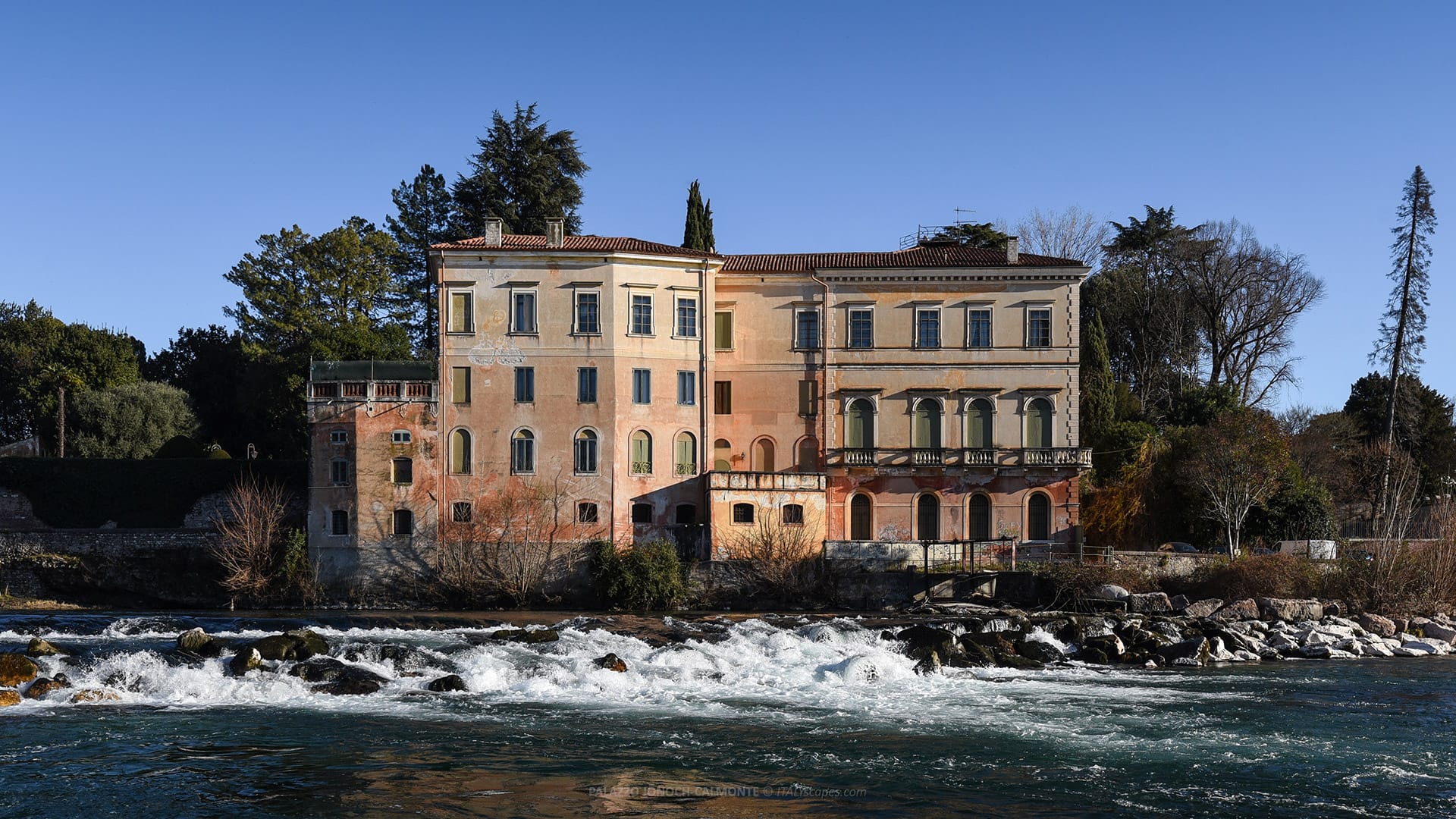
Palazzo Jonoch-Calmonte, seen from the opposite bank of the Brenta river
Art and Architecture of Palazzo Jonoch-Calmonte
From the outside, the building participates in the continuous frontage along Via Pusterla, culminating at the drop towards the Brenta river.
The main hall of the palace features a large decorated ceiling and a wide perimeter band with grottesche motifs – fanciful ornamental designs derived from Renaissance models, combining vegetal scrolls, masks and small figurative elements.
Local art historians cautiously attribute this work to Giuseppe Lorenzoni, a Bassano-based painter active between the 1880s and early 1900s, known for sophisticated decorative programs in private residences.
The attribution is not definitively documented but is supported by stylistic similarities to Lorenzoni’s confirmed projects and by documented friendly relations between the artist and the Jonoch family.
Other rooms of Palazzo Jonoch-Calmonte preserve Venetian-style terrazzo floors (pavimenti in veneziana) and additional frescoed ceilings.
How to Get to Palazzo Jonoch-Calmonte
The Bassano del Grappa railway station is located very close to the historic center of the city. In fact, the heart of the town is only about 0.44 km away from the station, making it easy and convenient for visitors to reach on foot.
The main bus station (autostazione), situated in Piazzale Trento beside the ancient town walls, is also nearby and can be reached with a pleasant five-minute walk from the trains.
- On foot: From the railway station, you can walk to the center of Bassano in a few minutes, following signs towards the old town; once you are in the historic center of Bassano del Grappa, near the Ponte Vecchio, look for Via Pusterla, a street that descends towards the Brenta river.
Sources: -
Photos
-
Map
-
Reviews