-
About
Table of Contents
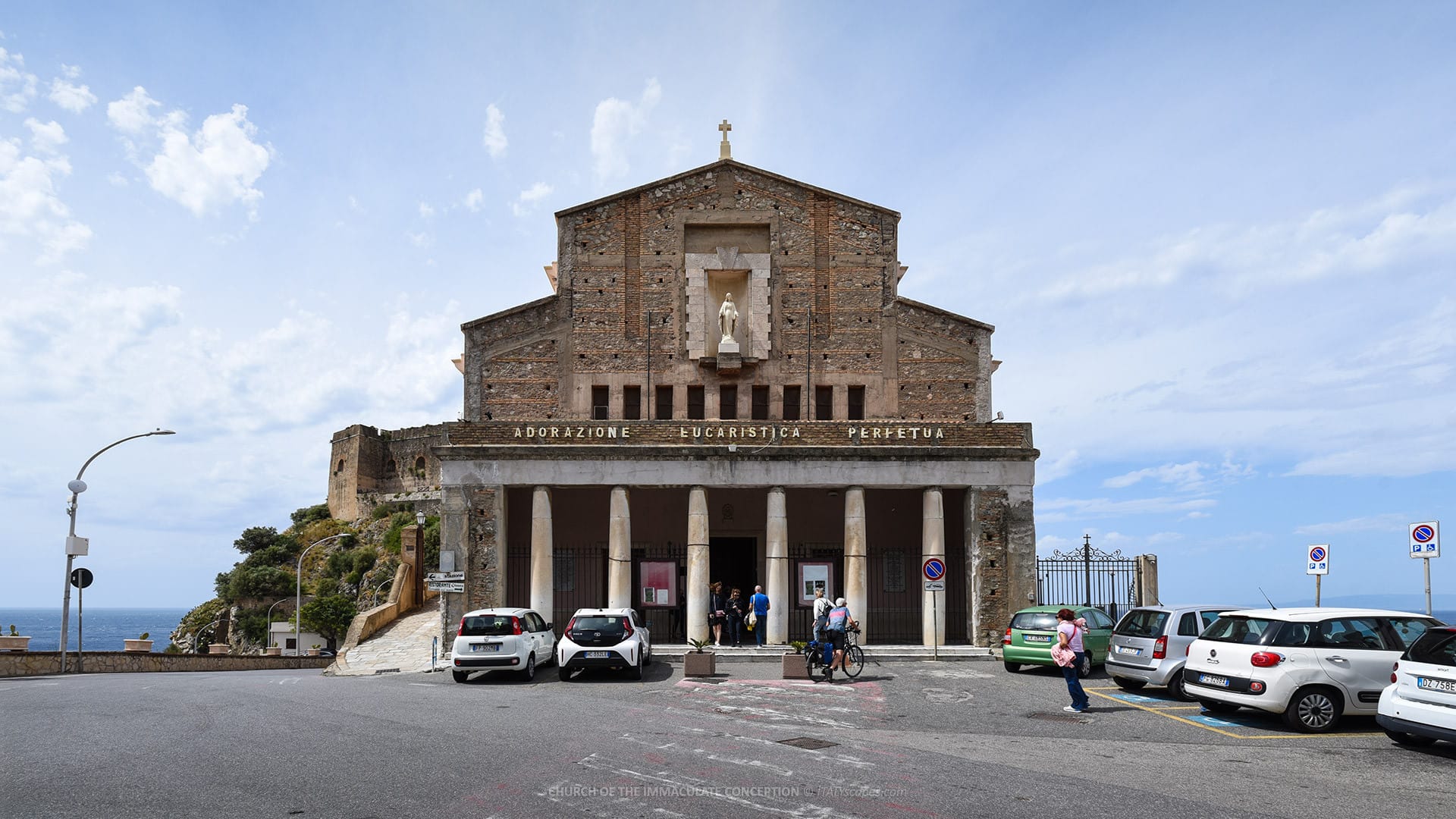
The Church of the Immaculate Conception is one of the most important religious landmarks in Scilla. Known in Italian as Chiesa dell’Immacolata, the church stands near the famous Ruffo Castle, overlooking the Strait of Messina.
The Church of the Immaculate Conception represents an important part of the religious and historical heritage of Scilla. Over the centuries, it was repeatedly damaged by earthquakes and rebuilt several times.
Today, the building combines historical architectural elements with modern reconstruction works completed during the 20th century.
Short History of the Church of the Immaculate Conception
Early Christian Origins
Ancient Greek parchments confirm the presence of a religious building on this site since the first centuries of Christianity. The church was closely connected to the nearby defensive fortress constructed around the 5th century.
The strategic position of the church near the castle highlights its importance for the local community. The area represented both a military and spiritual center overlooking the Tyrrhenian coast of Calabria.
Norman Period and the Madonna dell’Itria
During the Norman domination of southern Italy, the church was dedicated to the Madonna dell’Itria. This Marian devotion originated in the Greek religious tradition and later spread widely throughout southern Italy.
The title “Madonna dell’Itria” derived from Byzantine culture and reflected the strong Greek influence present in Calabria during the medieval period. Scilla maintained close cultural and religious connections with the Eastern Christian world for centuries.
Reconstruction After the Earthquakes of 1509 and 1599
The earthquakes of 1509 and 1599 seriously damaged the church. Following these destructive events, the building underwent extensive reconstruction and enlargement works.
After the rebuilding, the church was dedicated to the Holy Virgin under the title of the Immaculate Conception. This new dedication reflected the growing devotion to the Virgin Mary in southern Italy during the post-medieval period.
The reconstruction significantly transformed the appearance of the Church of the Immaculate Conception. New architectural elements were introduced, creating a larger and more monumental religious building near the Ruffo Castle.
The Catastrophic Earthquake of 1783
On February 5, 1783, one of the most devastating earthquakes in Calabrian history struck the region. The church suffered enormous structural damage during the disaster.
The roof and the magnificent dome collapsed immediately. Only two days later, the central vault also fell, leaving the church almost completely destroyed.
The earthquake of 1783 caused severe destruction throughout Calabria. Many religious buildings, castles, and entire villages were heavily damaged or abandoned after the catastrophe.
Powered by GetYourGuideReconstruction Between 1825 and 1875
The rebuilding of the Church of the Immaculate Conception started gradually during the 19th century. Between 1825 and 1875, the structure was reconstructed using brick and stone materials.
This long reconstruction phase gave the church a more solid appearance. Builders adopted architectural solutions intended to improve resistance against future earthquakes, which were frequent in Calabria.
The new church preserved several historical elements from earlier structures while introducing updated construction techniques typical of the 19th century.
Damage in 1894 and Structural Modifications
In 1894, another earthquake damaged the Church of the Immaculate Conception. Extensive restoration works became necessary to stabilize the structure and repair the most vulnerable sections.
During these interventions, the bell towers were lowered to reduce structural weight. The original brick vault was also replaced with a wooden roof considered safer during seismic activity.
These modifications significantly changed the appearance of the church. However, they helped preserve the building and allowed religious activities to continue.
Frescoes and the Earthquake of 1908
At the beginning of the 20th century, the interior of the church received beautiful fresco decorations. These artistic works enriched the building and enhanced its religious atmosphere.
Unfortunately, the catastrophic earthquake of 1908 caused new destruction. The frescoes and many architectural elements were heavily damaged or completely lost during the disaster.
Following the earthquake, parts of the church were rebuilt using wood. Temporary solutions became necessary due to the enormous devastation affecting the entire region of Calabria and Sicily.
Demolition and Final Reconstruction
After the damage suffered in 1908, the church progressively deteriorated for decades. Structural instability and continuous deterioration eventually made preservation impossible.
Before the last reconstruction project, the old church was completely demolished. The decision allowed engineers and architects to create a safer structure adapted to modern construction standards.
On June 14, 1958, the foundation stone for the current church was officially laid. This marked the beginning of a major reconstruction project intended to restore one of Scilla’s most important religious monuments.
Opening and Consecration of the Current Church
Although not entirely completed, the church was opened for worship on December 8, 1964. The reopening represented a major event for the religious community of Scilla.
The official consecration took place on February 10, 1970. Since then, the Church of the Immaculate Conception has continued to serve as one of the principal places of worship in Scilla.
Today, the church remains an important religious destination for both residents and visitors exploring the historic center of Scilla and the nearby Ruffo Castle.

Architecture of the Church of the Immaculate Conception
Architectural Styles of the Facade
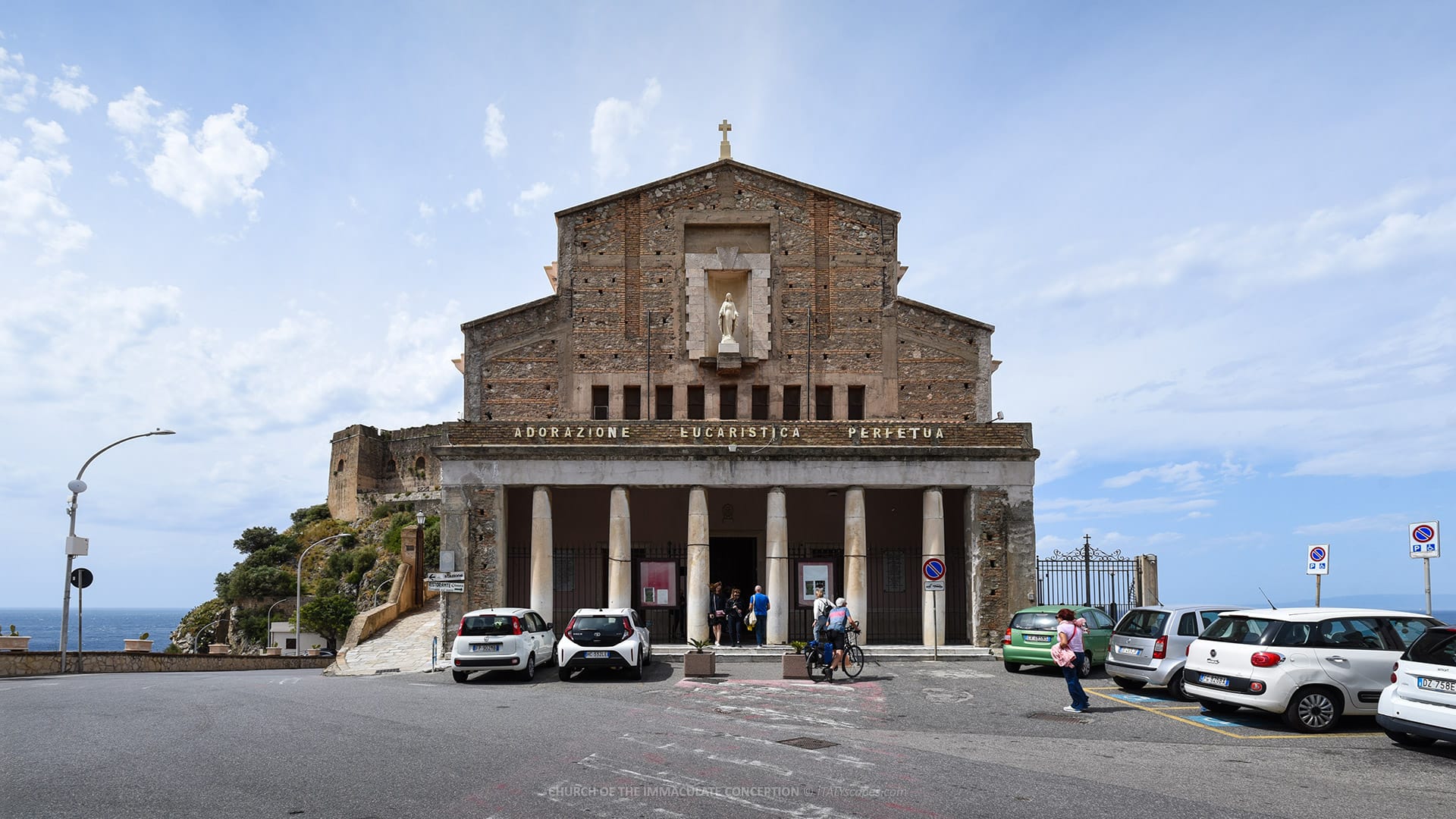
The facade of the Church of the Immaculate Conception combines elements belonging to different architectural styles. Among these influences, Gothic features are particularly evident.
The composition reflects the complex reconstruction history of the church. Multiple rebuilding phases introduced architectural details from different historical periods.
The facade presents a monumental appearance overlooking the surrounding urban landscape of Scilla. Its elevated position near the castle increases the visual impact of the structure.
Columns from the Ancient Church
The lower order of the facade includes six ancient columns originating from the previous church building. These columns do not feature bases or capitals.
The preserved columns represent one of the few surviving architectural connections with the older church structures destroyed by earthquakes over the centuries.
Their incorporation into the modern facade preserves part of the historical memory of the original building and emphasizes continuity between past and present.
Interior Structure and Layout
The Church of the Immaculate Conception follows a Latin cross plan, a traditional architectural layout frequently used in Christian religious buildings throughout Italy.
Inside, the structure is divided into three naves. The large central nave is separated from the lateral naves by eight imposing columns.
The interior space appears spacious and balanced. The arrangement of the columns creates visual harmony while supporting the roof structure above the central nave.
The architectural organization reflects both liturgical requirements and structural necessities linked to reconstruction in an earthquake-prone region.
The Bell Tower
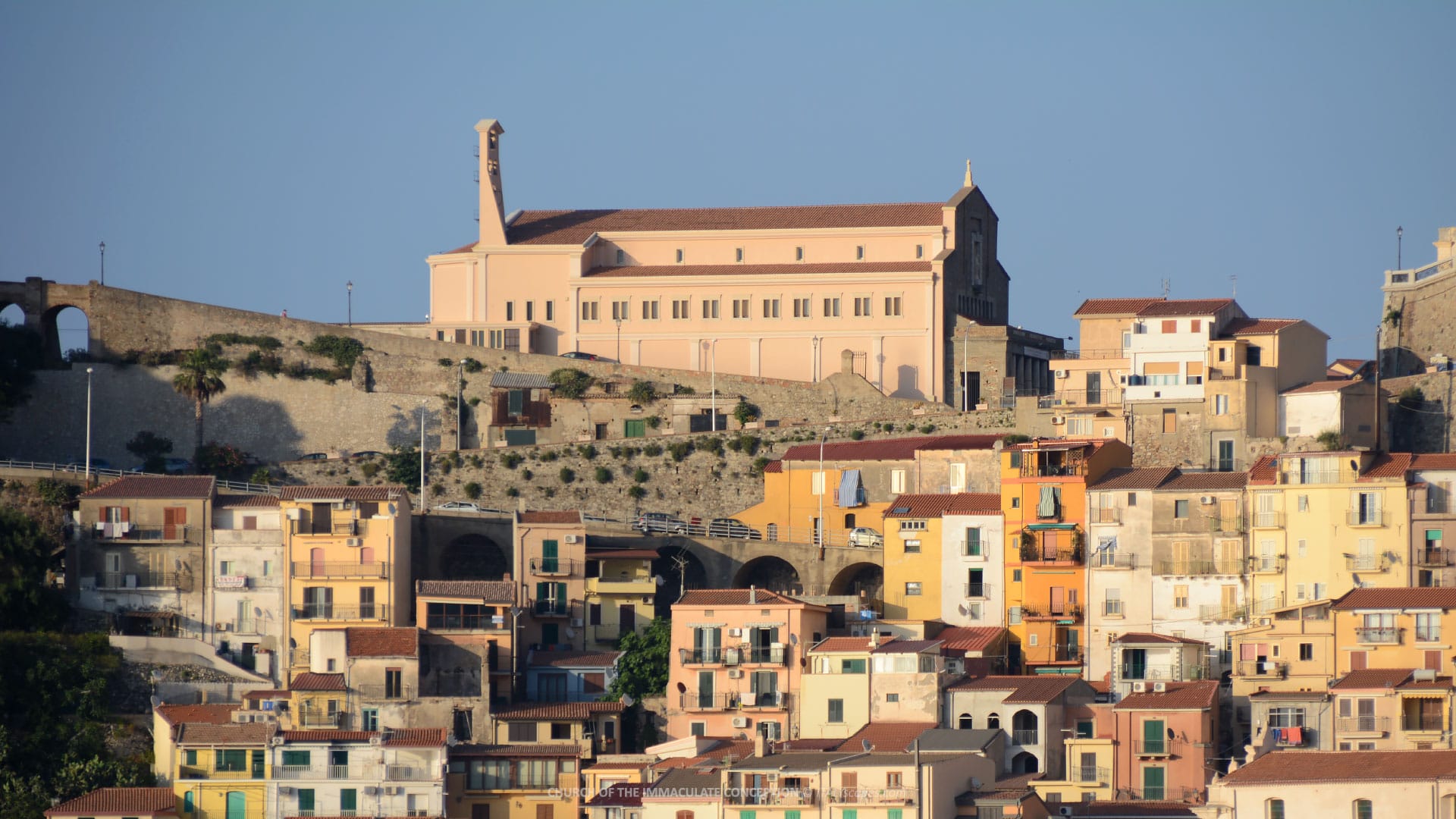
The slender bell tower rises behind the church and differs stylistically from the main structure. Architecturally, it creates a noticeable contrast with the rest of the building.
Its vertical form dominates the surrounding skyline near the Ruffo Castle. The tower contributes significantly to the recognizable silhouette of the Church of the Immaculate Conception in Scilla.
The stylistic separation between the bell tower and the main church reflects the multiple reconstruction phases that shaped the monument over time.
How to Get to the Church of the Immaculate Conception
The Church of the Immaculate Conception is located approximately 650 meters from the Scilla railway station. The church can easily be reached on foot through the historic streets of Scilla. The route offers panoramic views of the surrounding coastline and the historic district.
Frequently Asked Questions about Church of the Immaculate Conception
Where is the Church of the Immaculate Conception located?
The Church of the Immaculate Conception is located in Scilla, Calabria, in Piazza Matrice, very close to Ruffo Castle and the town’s panoramic historic area.
Who is the church dedicated to?
The church is dedicated to the Immaculate Conception of the Blessed Virgin Mary, although in Norman times the older church was dedicated to Madonna dell’Itria.
How old is the Church of the Immaculate Conception?
The site has very ancient Christian origins, while the current church was begun in 1958, opened for worship in 1964, and consecrated in 1970.
Was the church damaged by earthquakes?
Yes, the church was repeatedly damaged by earthquakes, especially in 1509, 1599, 1783, 1894, and 1908, before the present reconstruction took place.
What can you see inside the church?
Inside, visitors can see three naves, eight large columns, the central nave, the altar area, devotional furnishings, and architectural traces inspired by the older church.
Sources:Powered by GetYourGuide -
Photos
-
Map
-
Reviews