-
About
Table of Contents
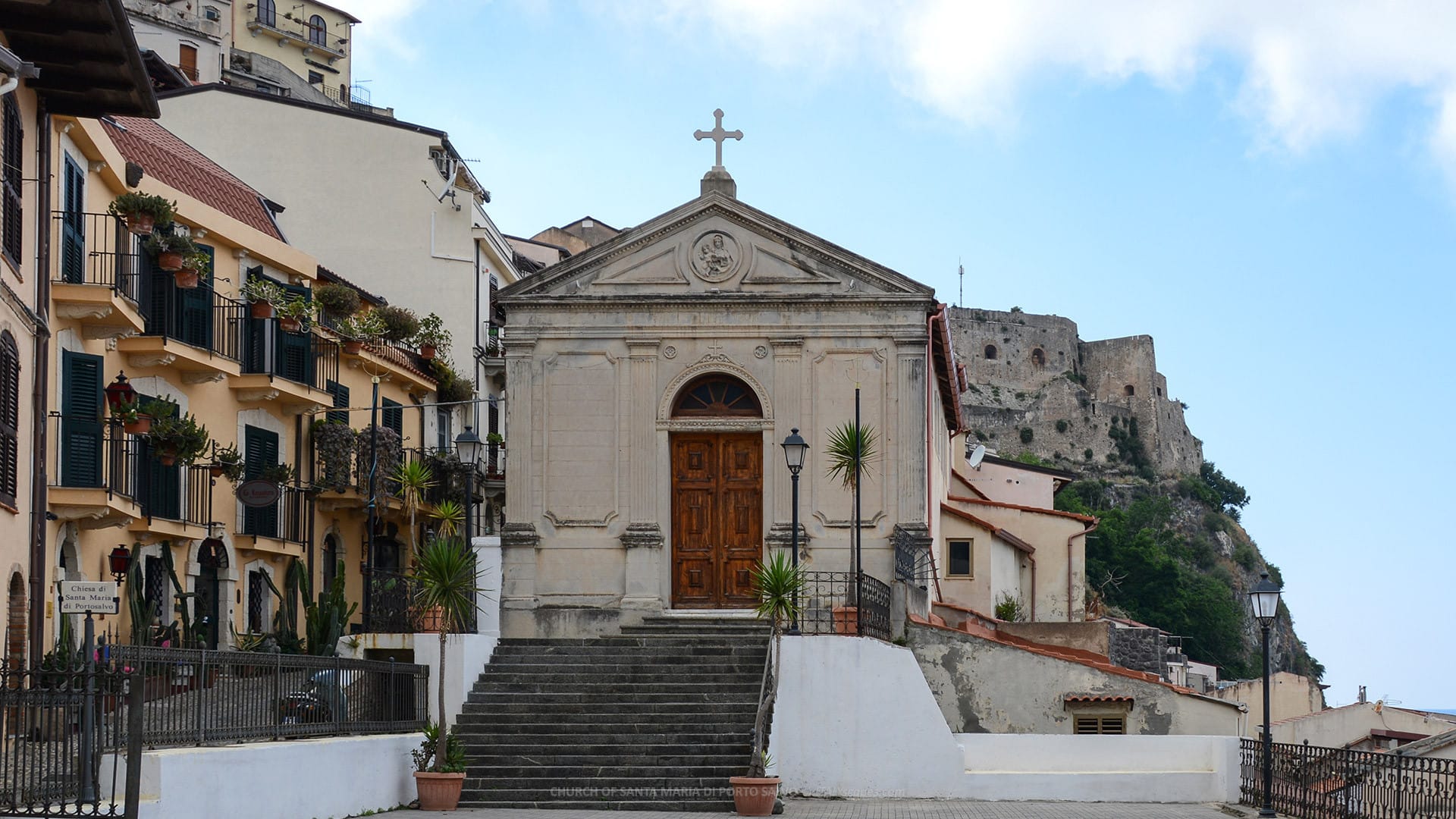
The Church of Santa Maria di Porto Salvo stands in the heart of Chianalea, the historic fishermen’s quarter of Scilla.
Located in a small square overlooking the narrow streets of the village, the Church of Santa Maria di Porto Salvo represents an important religious, artistic, and cultural landmark closely connected to the maritime identity of the community.
For centuries, the people of Chianalea have relied on the sea for their livelihood. As a result, devotion to the Virgin Mary under the title of Porto Salvo (Safe Harbor) became deeply rooted among local fishermen and sailors who sought divine protection before embarking on dangerous voyages through the waters of the Strait of Messina.
Today, the church remains one of the most recognizable monuments in Chianalea. Its elegant façade, historic artworks, surviving eighteenth-century furnishings, and strong connection to local traditions make it an essential stop for visitors exploring Scilla’s historic center.
Powered by GetYourGuideShort History of the Church of Santa Maria di Porto Salvo
The origins of the Church of Santa Maria di Porto Salvo date back to the early eighteenth century, when the Brotherhood of Santa Maria di Porto Salvo commissioned the construction of a new place of worship in the center of Chianalea.
The first major disaster occurred during the devastating Calabrian earthquake of 1783. On 5 February 1783, a powerful seismic sequence struck southern Calabria, causing extensive destruction throughout the region. The church suffered severe damage but remained partially standing.
A second catastrophe arrived on 28 December 1908, when the earthquake that devastated the Strait of Messina destroyed large portions of Scilla. The church was almost completely leveled by the seismic event, losing much of its structure.
Following the disaster, the Brotherhood decided to rebuild the church on the same site. Construction of the present building began shortly afterward and was completed around 1920, maintaining the original position and general appearance of the eighteenth-century structure.
The reconstruction, however, introduced several modifications. The nave was built with a lower height than the previous church, while the bell tower was also reduced in scale. The apse, on the other hand, was reconstructed with dimensions similar to the original building.
During the 1980s, another restoration campaign focused on the roof. The metal roofing sheets previously installed were replaced with traditional tiles, while the main entrance door was rebuilt following the design of the original eighteenth-century portal.
A major renovation began in 1994. The project included structural restoration, liturgical adaptation, installation of a new marble floor, and the enhancement of the church interior according to modern conservation standards.
The restoration also followed the liturgical guidelines introduced after the Second Vatican Council, leading to the installation of a new altar facing the congregation while preserving the historic character of the presbytery.
Architecture of the Church of Santa Maria di Porto Salvo
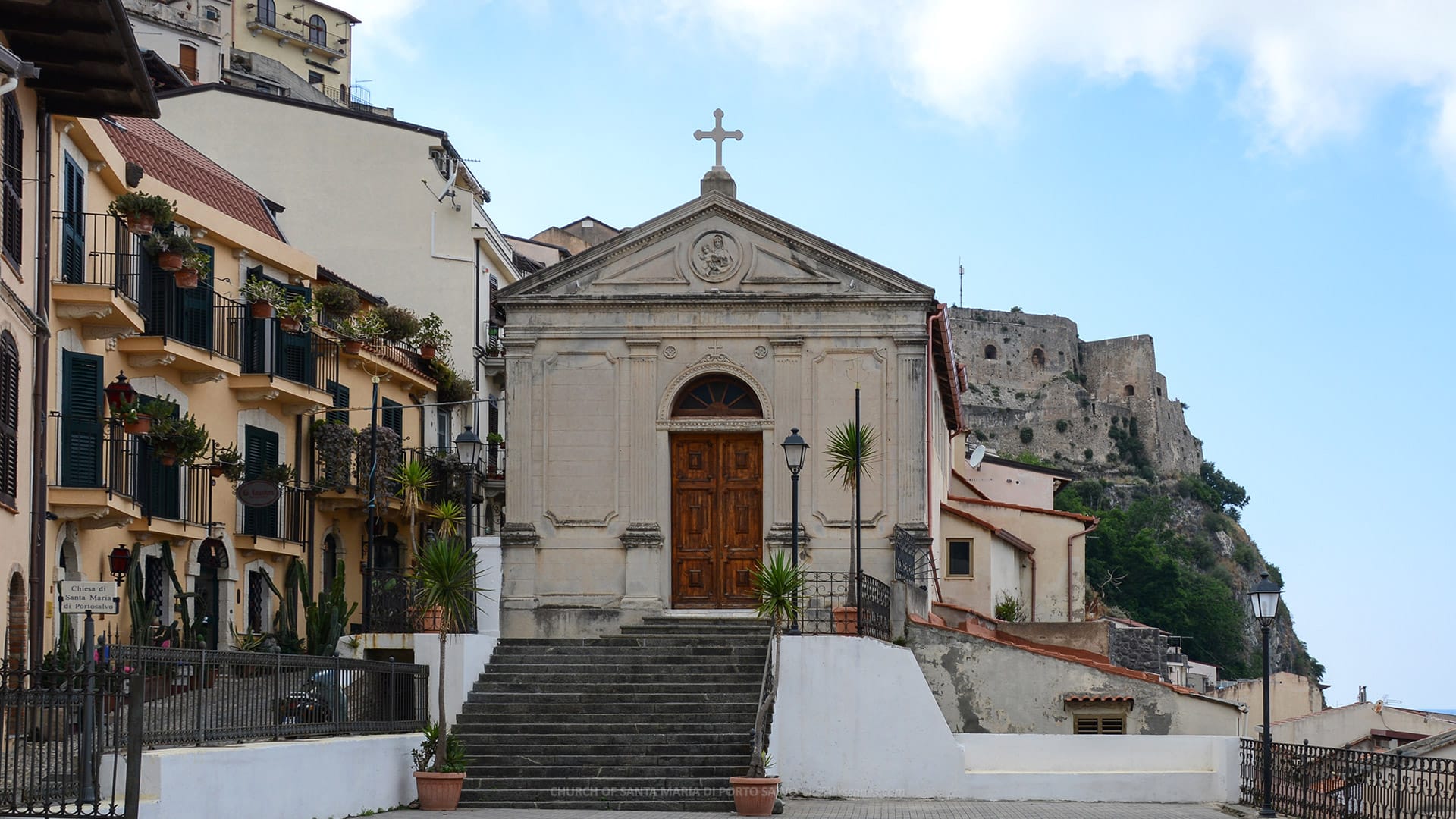
The Church of Santa Maria di Porto Salvo occupies a prominent position in the center of Chianalea. It stands above an elevated square built over older stone storage structures and is reached through an impressive stone staircase.
The building was intentionally designed in a Neo-Classical style, inspired by the appearance of the eighteenth-century church that previously occupied the site. Its proportions and decorative elements create a harmonious and balanced architectural composition.
The façade is dominated by four giant fluted pilasters rising from a high base. These architectural elements divide the front into symmetrical sections and emphasize the vertical character of the structure.
Above the façade rises a triangular pediment, one of the most distinctive elements of the building. At its center is a circular decorative medallion depicting the Virgin of Porto Salvo in high relief.
The entrance portal occupies the central section of the façade. Although rebuilt in recent decades, it faithfully reproduces the appearance of the original eighteenth-century wooden door and preserves the historical character of the church.
The side portions of the façade contain simple decorative panels that reinforce the building’s geometric balance.
Behind the church rises a square bell tower. Unlike the original structure, the present tower was intentionally built lower after the reconstruction following the 1908 earthquake.
The Church of Santa Maria di Porto Salvo follows a rectangular single-nave plan, a common layout among many religious buildings in Calabria. The nave terminates in a semicircular apse reached through a slightly elevated presbytery.
The building is constructed primarily of masonry using stone and brick. Reinforced structural elements were incorporated during twentieth-century rebuilding campaigns to improve stability and seismic resistance.
The roof consists of two sloping sections covered with traditional tiles. Supporting the roof is a wooden framework made of seasoned chestnut timber, much of which remains visible inside the church following the 1990s restoration.
The decorative program of the interior includes pilasters, cornices, ornamental garlands, heraldic motifs, and architectural details emphasizing the transition between the nave and the presbytery.
One of the most notable features introduced during the restoration works is the marble flooring. Red Sicilian marble is combined with white marble inserts, creating an elegant geometric composition throughout the nave.
Three glass openings incorporated into the floor allow visitors to observe the crypt below, revealing part of the church’s historical foundations and burial spaces.
The presbytery floor features a distinctive black-and-white marble pattern arranged in a diamond configuration, adding visual contrast to the liturgical area.
Originally, the Church of Santa Maria di Porto Salvo contained five marble altars dedicated to Saint Lucy, Saint Andrew, Saint Camillus, the Holy Cross, and the Madonna di Porto Salvo.
Today, only part of this original arrangement survives. The altar dedicated to the Holy Cross has been reconstructed, preserving an important element of the earlier church.
The presbytery remains enclosed by the original marble balustrade with a bronze gate, one of the significant eighteenth-century elements that survived both major earthquakes.
In 1994, a new marble altar facing the congregation was installed. Remarkably, it incorporates decorative components recovered from one of the eighteenth-century side altars.
Powered by GetYourGuideArt of the Church of Santa Maria di Porto Salvo
The most important artwork inside the Church of Santa Maria di Porto Salvo is the monumental altarpiece depicting Santa Maria di Porto Salvo accompanied by Saints Cosmas and Damian.
The painting occupies the entire back wall of the apse and dominates the visual experience of the interior. Behind the sacred figures appears a landscape representing Scilla, reinforcing the connection between the church and the local community.
Saints Cosmas and Damian held particular significance in the history of the Church of Santa Maria di Porto Salvo. Before the establishment of the Brotherhood of Santa Maria di Porto Salvo in 1799, they were the principal patron saints associated with the building.
Another important devotional object is the statue of the Virgin of Porto Salvo, displayed on an elaborately decorated processional platform used during religious celebrations and local festivals.
Among the most valuable furnishings is an eighteenth-century pipe organ, which remains functional today.
Another notable feature is the richly decorated wooden pulpit, reflecting the craftsmanship of earlier centuries and the artistic heritage of the original church.
A wooden display case houses a statue of Saint Thérèse of Lisieux, adding another layer to the church’s collection of devotional artworks.
How to Get to the Church of Santa Maria di Porto Salvo
The Church of Santa Maria di Porto Salvo is located in the center of Chianalea, the historic fishing district of Scilla, on the Tyrrhenian coast of Calabria.
Getting to the Church of Santa Maria di Porto Salvo on foot
From Scilla railway station, the church is approximately 750 meters away, corresponding to a walk of about twelve minutes through the town’s streets.
Getting to the Church of Santa Maria di Porto Salvo by car
Travelers arriving by car can park in designated areas near the historic center and continue on foot, as many of Chianalea’s narrow lanes are not accessible to regular vehicle traffic.
Frequently Asked Questions about Church of Santa Maria di Porto Salvo
Where is the Church of Santa Maria di Porto Salvo located?
The Church of Santa Maria di Porto Salvo is located in Chianalea, the historic fishermen’s quarter of Scilla, in Calabria, close to the sea.
Who is the church dedicated to?
The church is dedicated to Santa Maria di Porto Salvo, a Marian title traditionally connected with fishermen, sailors, sea voyages, and protection from maritime danger.
When was the church built?
The origins of the church date back to the early 18th century, while the present building was completed around 1920 after the 1908 earthquake.
Was the church damaged by earthquakes?
Yes, the church was damaged by the 1783 Calabrian earthquake and almost completely destroyed by the 1908 earthquake that devastated the Strait of Messina area.
What can you see inside the church?
Inside, visitors can see the main altarpiece, the statue of the Virgin of Porto Salvo, an 18th-century pipe organ, marble elements, and devotional furnishings.
Sources:Powered by GetYourGuide -
Photos
-
Map
-
Reviews