-
About
Table of Contents
The statue of Domenico Modugno is one of the most recognizable landmarks in Polignano a Mare and a powerful tribute to the legendary Italian singer-songwriter born in the town.
Alongside the monument, the Lungomare Domenico Modugno, the scenic seafront promenade named in his honor, preserves the memory of an artist whose music left a lasting mark on Italian and international culture.
The seafront is located in the northwestern part of the town and stretches along the cliff edge, offering panoramic views of the Adriatic Sea.
In its immediate vicinity stands the statue dedicated to Modugno, forming a symbolic link between the artist, the sea, and the place that shaped his early life.
Domenico Modugno
Domenico Modugno was born in Polignano a Mare on January 9, 1928. His childhood was deeply influenced by music and popular tradition.
His father introduced him at an early age to the guitar and the accordion, instruments that would become central to his artistic expression and creative development.
As a teenager, Modugno showed an early aptitude for songwriting. At just 15 years old, he composed his first song, already demonstrating an instinctive ability to combine melody, emotion, and storytelling. This early creativity marked the beginning of a career that would later span multiple artistic fields.
After moving away from his hometown to pursue broader opportunities, Modugno studied acting and became involved in theater, radio, and television. His versatility allowed him to move fluidly between different forms of artistic expression, gaining recognition not only as a singer but also as an actor and performer with a strong stage presence.
Throughout his career, Modugno became a central figure in Italian popular culture. He played leading and supporting roles in more than 45 films, appearing in both dramatic and musical productions. At the same time, he recorded approximately 230 songs, exploring a wide range of themes and musical styles.
One of the defining achievements of his musical career was his repeated success at the San Remo Music Festival, Italy’s most prestigious and influential song contest. Domenico Modugno won the festival four times, an extraordinary accomplishment that confirmed his lasting impact on Italian music.
His international breakthrough came in 1958 with the release of Nel Blu Dipinto di Blu, universally known as Volare. The song represented a radical departure from traditional Italian music of the time, introducing a more expressive and emotionally charged style. It quickly became a global phenomenon.
Volare was translated into more than 20 languages and achieved unprecedented international success. It topped charts around the world, became one of the best-selling songs of the 20th century, and remains one of the most recognizable Italian songs ever recorded.
Its imagery of open skies and freedom would later directly inspire the visual language of Modugno’s statue.
Despite his international fame, Modugno maintained a strong emotional connection to Polignano a Mare throughout his life.
This bond was powerfully reaffirmed on August 26, 1993, when he returned to his hometown to perform the last major concert of his career. The event drew an estimated 70,000 people, transforming the town into a vast open-air celebration of music and memory.
One year later, Domenico Modugno died of a heart attack on the island of Lampedusa. His passing marked the end of an era, but his artistic legacy continued to live on through his music, films, and the deep affection of the public.
The Statue of Domenico Modugno
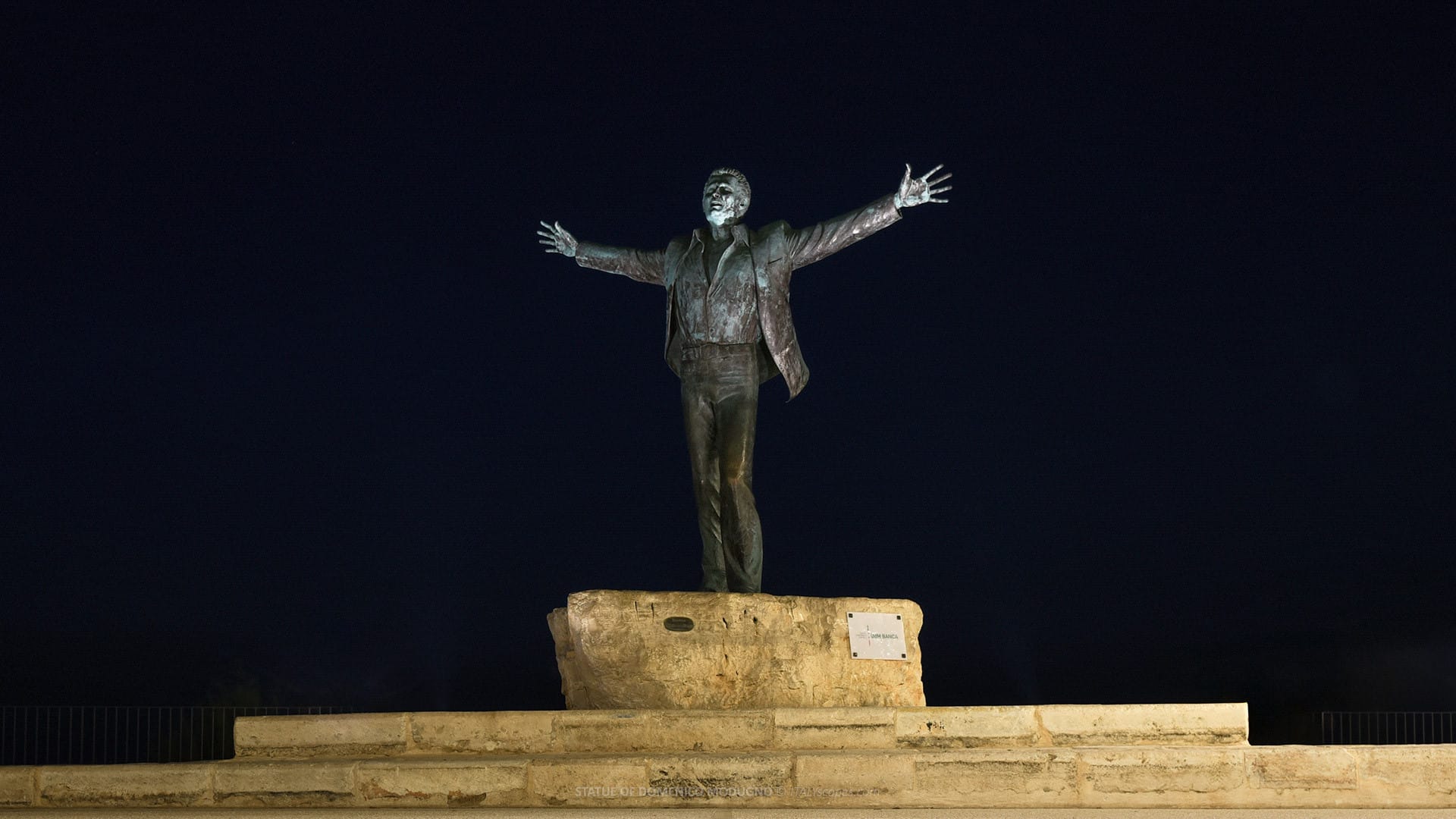
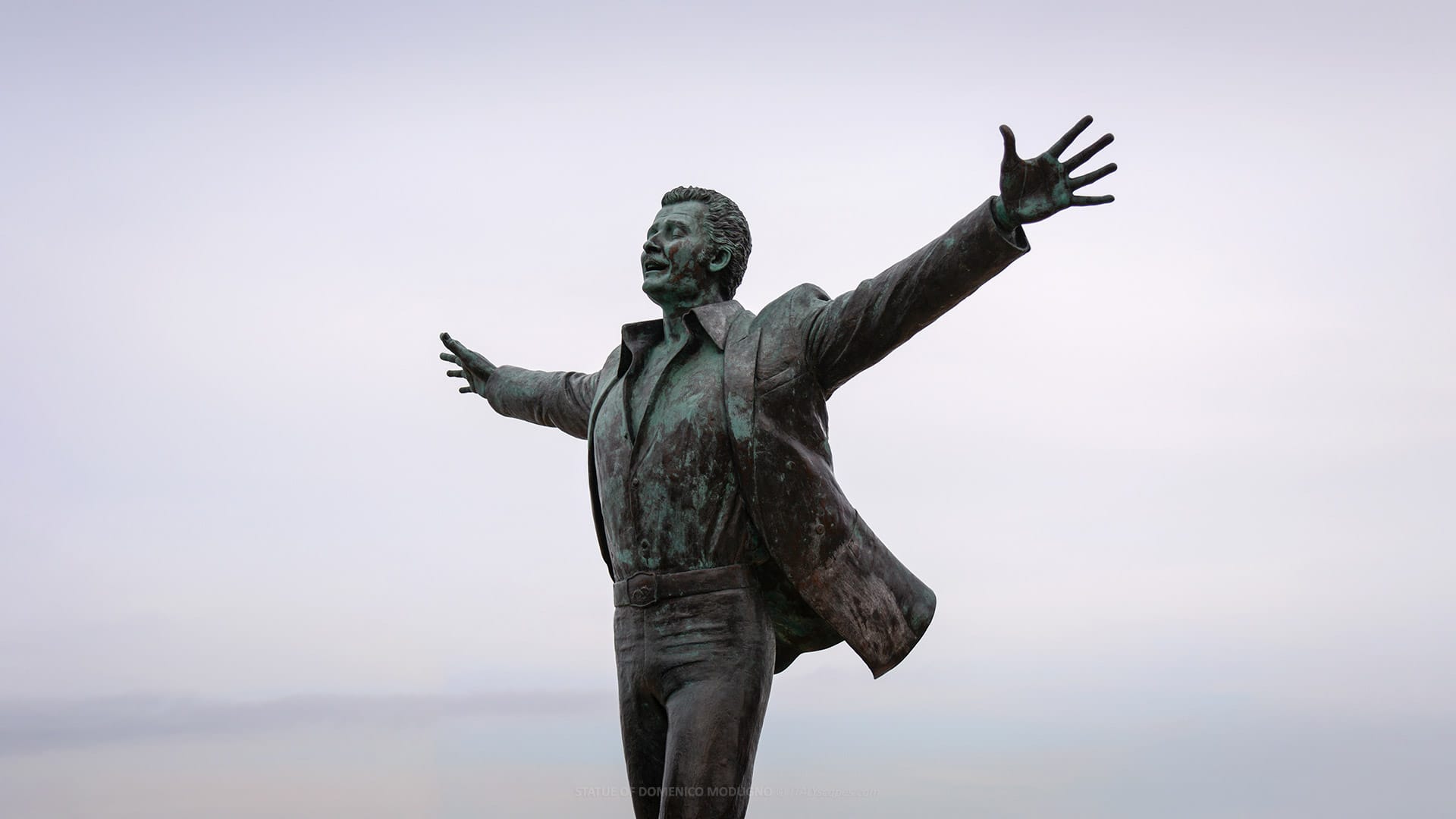
The statue of Domenico Modugno was officially unveiled on May 31, 2009, in a prominent position near the eastern end of the Lungomare Domenico Modugno. Standing approximately three meters tall, the monument immediately became a defining feature of Polignano a Mare’s coastal landscape.
The statue was commissioned by the town as a tribute to its most famous son. The rock base on which the sculpture stands was donated by Banca Popolare di Bari, reinforcing the symbolic collaboration between local institutions and the community in honoring Modugno’s legacy.
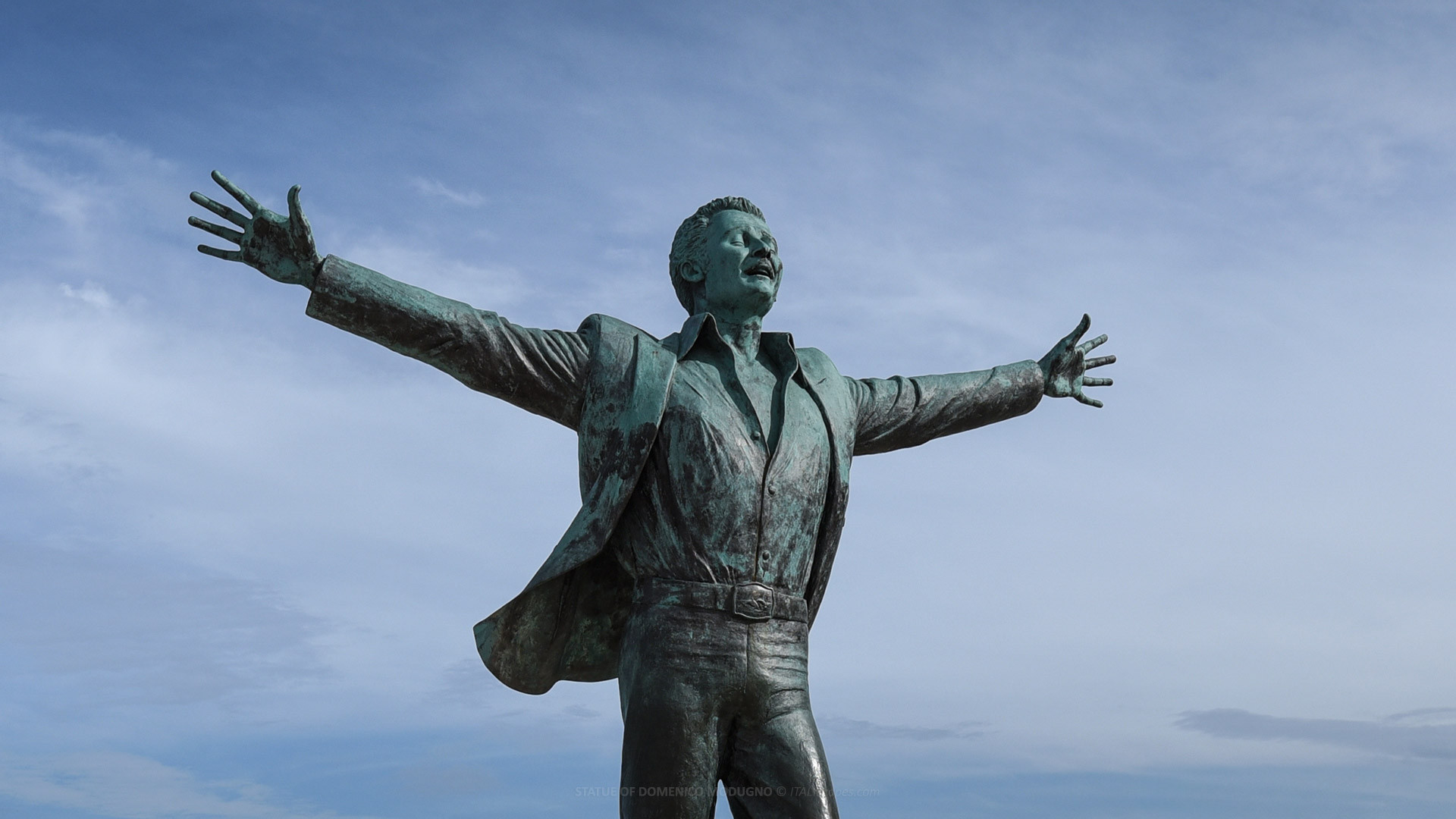
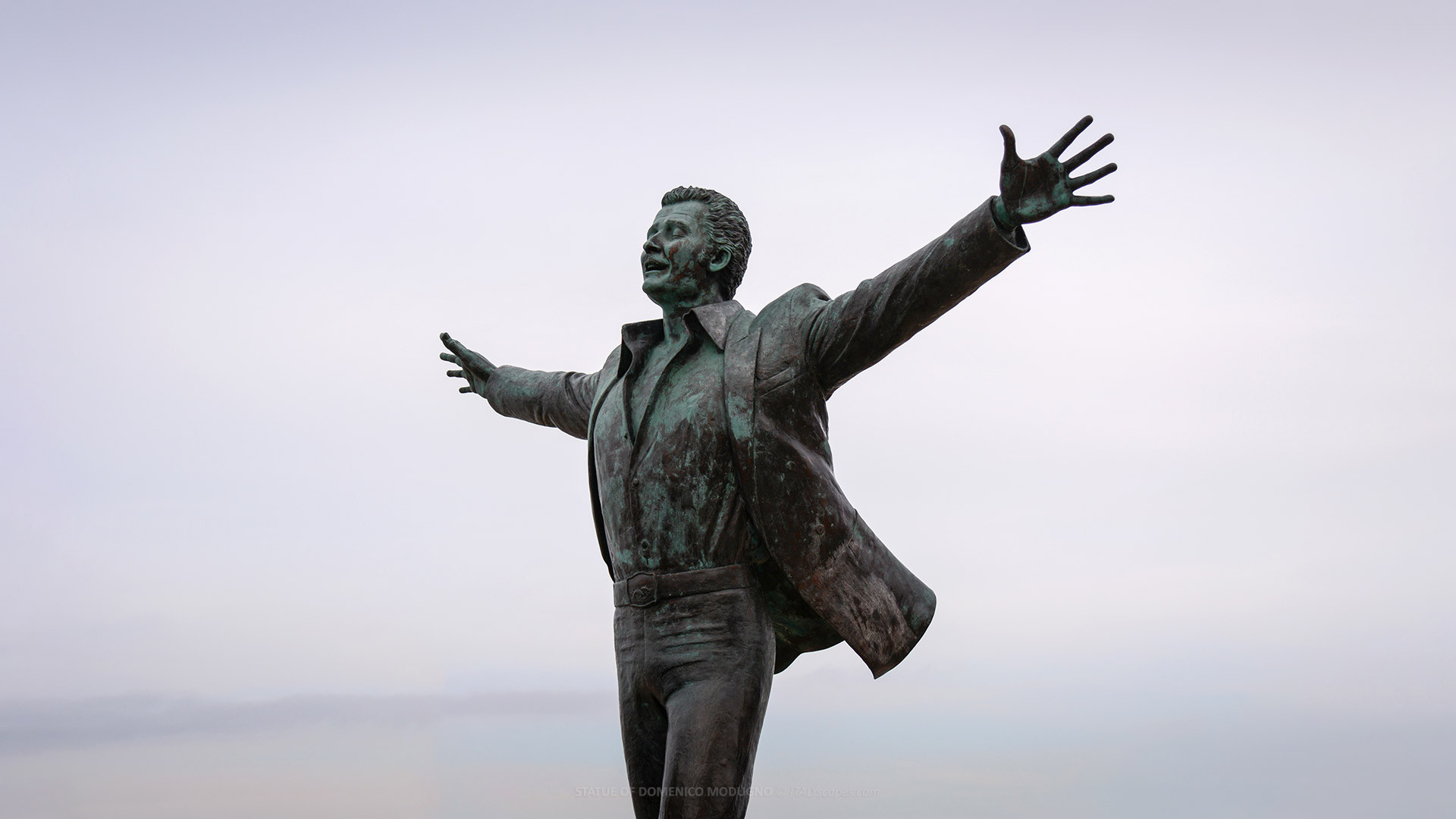
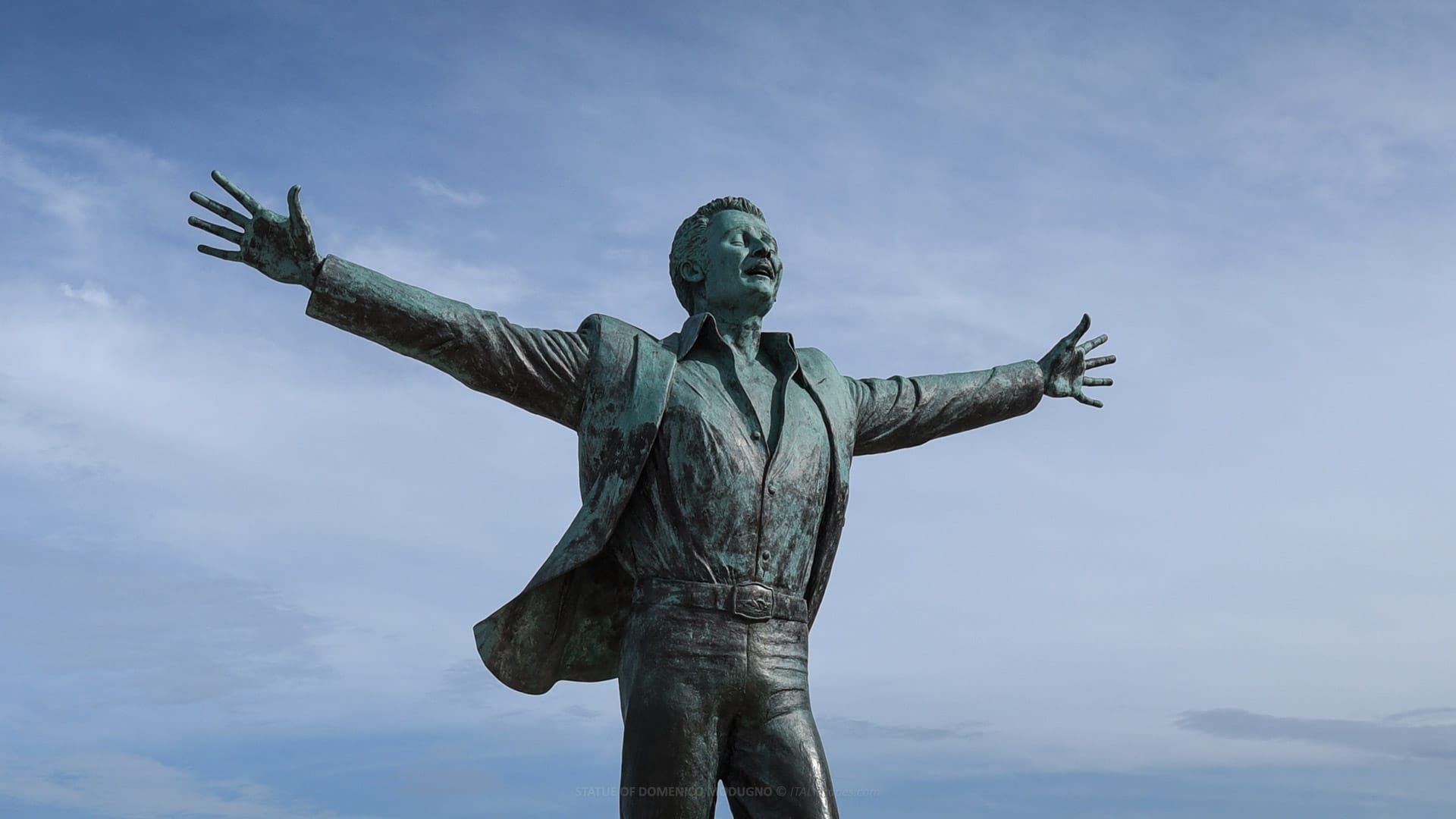
The work was created by contemporary sculptor Hermann Majer, who conceived the statue as a dynamic and expressive representation of the artist. Modugno is portrayed with his arms wide open, a gesture that clearly evokes the iconic imagery associated with Volare and the sensation of flight.
Originally, the sculptor envisioned the statue facing the sea, symbolizing openness, freedom, and the infinite horizon that inspired much of Modugno’s music.
However, the people of Polignano a Mare expressed a strong desire for the statue to face the town itself, as a sign of Modugno’s enduring connection to his birthplace.
Ultimately, the statue was oriented toward the city. This decision transformed the monument into a dialogue between the artist and the community, with Modugno symbolically embracing both the town and its inhabitants.
The sculpture’s style combines realism with expressive movement. The flowing lines of the figure and the expansive posture reflect not only the energy of Modugno’s performances but also the emotional openness that characterized his music.
Located on a panoramic cliff overlooking the Adriatic Sea, the statue has become a natural gathering point. Visitors often stop here to take photographs, enjoy the view, or simply reflect on the cultural significance of Domenico Modugno.
Over time, the Statue of Domenico Modugno has transcended its role as a commemorative monument. It has become a symbol of Polignano a Mare itself, appearing in countless photographs, travel guides, and cultural references.
How to Get to the Statue of Domenico Modugno
The Statue of Domenico Modugno is located approximately 900 meters from the Polignano a Mare railway station, making it easily accessible on foot for visitors arriving by train. The walk takes around 12 to 15 minutes at a relaxed pace.
From the railway station, visitors can head toward the historic center and then continue along the seafront promenade. The route is well signposted and passes through some of the most scenic parts of the town, including viewpoints overlooking the sea and cliffside paths.
Walking toward the Lungomare Domenico Modugno, the statue becomes visible from a distance due to its elevated position. Its open-armed silhouette stands out against the sky, guiding visitors naturally toward the monument.
Sources: -
Photos
-
Video
Table of Contents
-
Map
-
Reviews